
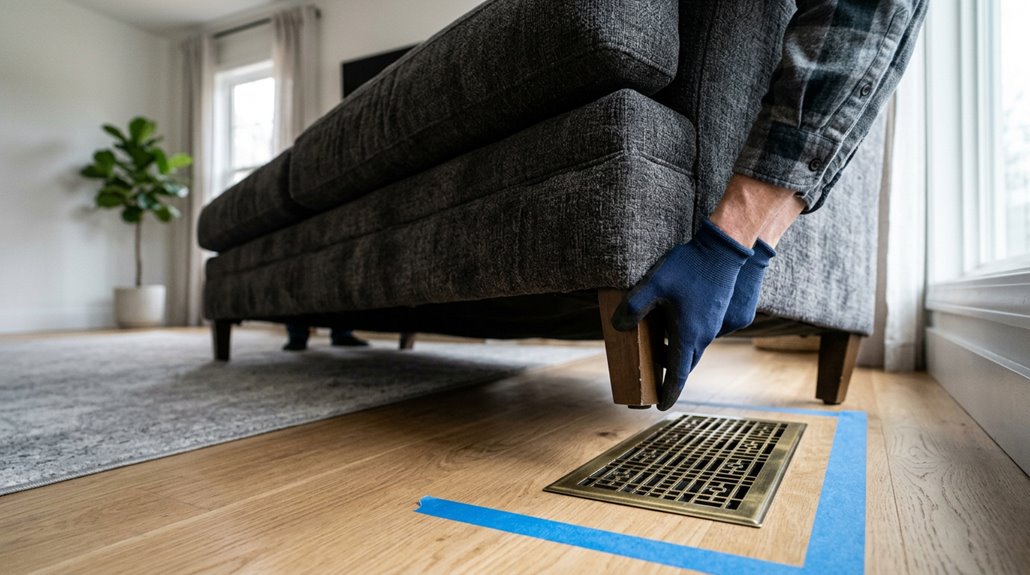
Leave at least a 2-inch gap under your couch so air can circulate properly. If you block vents completely, you’ll reduce your HVAC system’s efficiency, which increases heating bills and creates dead zones in your room. Magnetic deflectors (inexpensive options available) redirect airflow around your furniture instead of restricting it. Check your couch monthly for heat damage underneath, such as softened glue or warped frames. Ignoring these precautions can result in costly repairs and reduced system performance.
Is It Safe to Put Your Couch Over a Floor Vent?
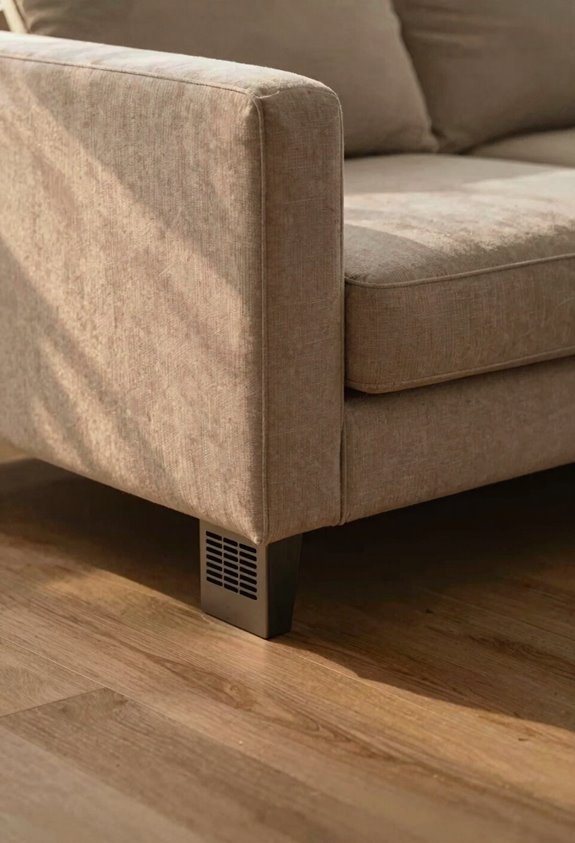
Have you ever noticed how your living room feels stuffy in winter or that one corner never seems to cool down in summer? That’s probably your couch blocking the floor vent underneath it. Placing furniture directly over vents reduces your HVAC system’s efficiency. Heating bills often increase significantly when vents are blocked.
If you must position your couch over a vent, leave about 2 inches of clearance to let some air slip through. Alternatively, use vent covers or airflow deflection tools like adjustable extenders that redirect warm or cool air around your furniture instead.
These solutions maintain your system’s performance and keep your room comfortable. Proper vent clearance also reduces energy costs.


Heavy duty construction allows for walking on floor vent
Keep a 2-Inch Gap for Air to Flow Under Your Couch
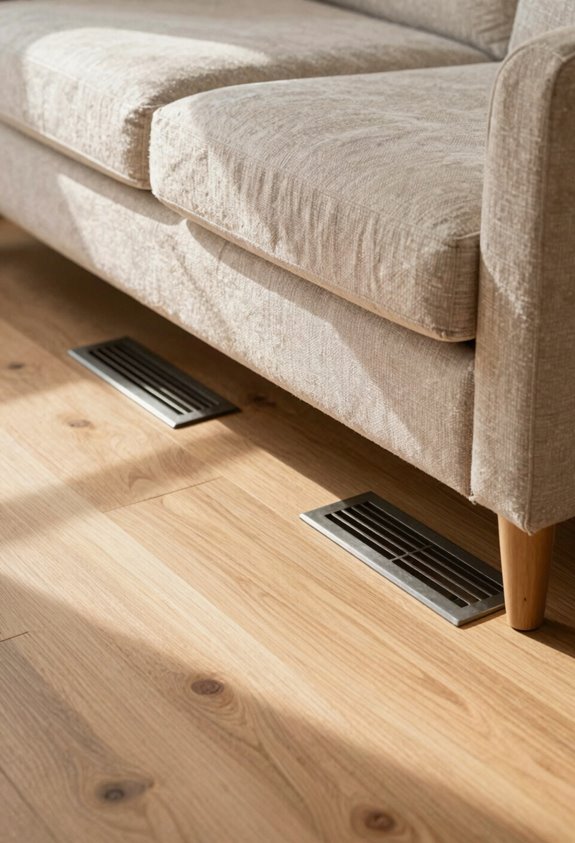
Why does that 2-inch measurement matter so much? This tiny gap is your HVAC system’s best friend. When you keep those floor vents slightly exposed, you’re letting air flow under your couch instead of getting completely blocked. Think of it like giving your heating and cooling system breathing room, literally.
That 2-inch clearance does something clever: it maintains airflow without blasting you with direct air velocity. Your room stays at a consistent temperature because air can actually circulate properly. Small obstructions significantly reduce efficiency, so this gap balances comfort with system performance. You can always add deflectors to direct air where you need it most, making that gap work more effectively for your specific needs.
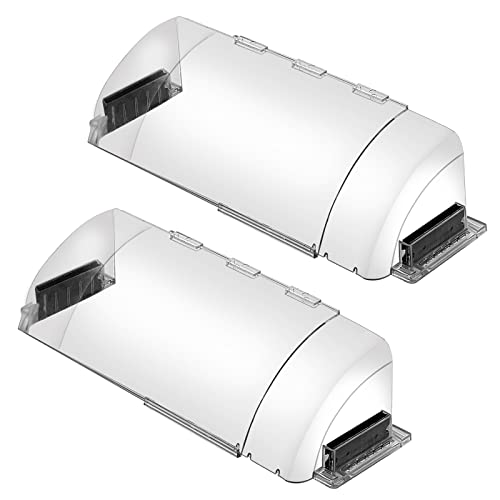
【ADJUSTABLE AIRFLOW CONTROL】Redirect heat or cool air exactly where you need it with this adjustable air vent deflector. Unique two part expandable design,made of High transparent unbreakable plastic.And helps improve airflow direction from floor vents, sidewall registers, and ceiling registers for better room comfort.

Made of quality polycarbonate material, high transparent, unbreakable and durable.
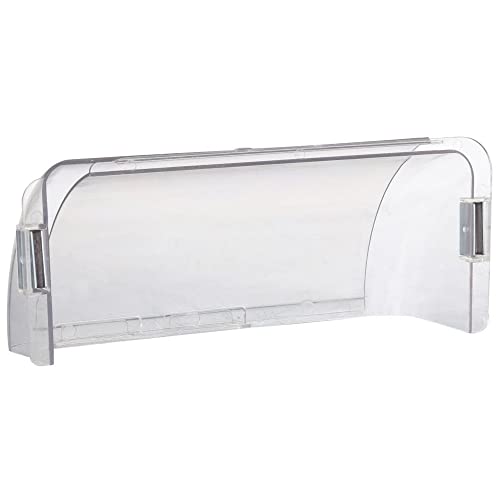
IMPORTANT: The deflector attaches with magnets so the register must be made of metal. It will not stick to plastic or wood registers.
Use Deflectors to Redirect Air Around Your Couch
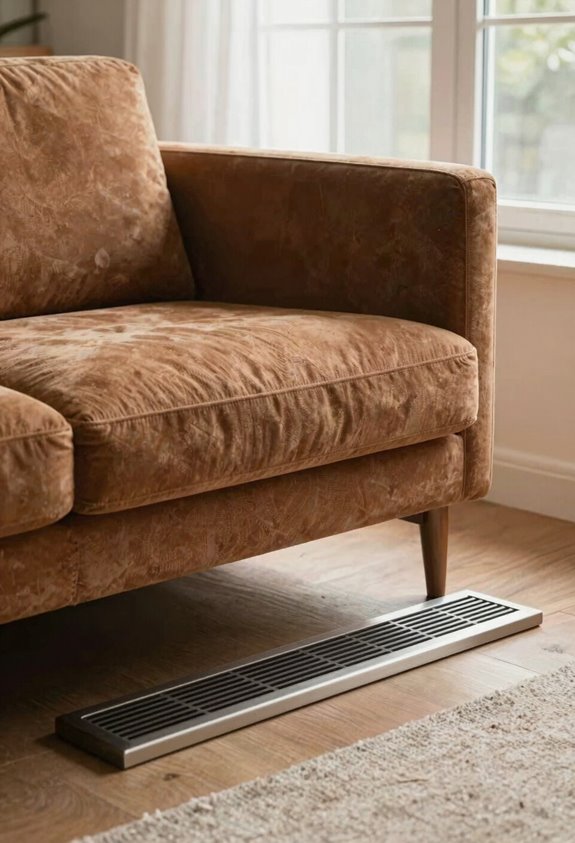
Once you’ve got that 2-inch gap working for you, deflectors become your next smart move. Think of them as air traffic controllers for your HVAC system. Magnetic or adjustable deflectors position behind your couch redirect airflow without completely blocking your floor vent. They’re compatible with central forced-air systems and come in sizes up to 11 inches wide, so you can match your vent perfectly.
Vent deflectors guide hot or cold air up or down, away from where you’re actually sitting. You can use them alongside extenders to avoid direct blockage, creating more balanced room temperature. They solve the problem when furniture placement makes even airflow tricky. Install one, adjust the angle, and your HVAC system works more efficiently by directing conditioned air where it’s needed rather than wasting it on occupied seating areas.

[WIDELY COMPATIBLE]: Binazon Magnetic air deflector fit for 9 "- 14" wide vents in all positions, floor, walls or Ceilings, and can change the air outlet direction of air conditioners or heaters.

【Air Vent Deflector Demensions】The Air Vent Extender measures is 11.5" in width and 1.50" in height, can be extended from 17" to 33" in length, suitable for most standard floor vents and under most furniture. You can detach the extension from a second set of air vent deflectors to meet your individual needs.

SIMPLE TRANSPARENT DESIGN: Almost invisible design to blend into your home
How Blocking One Vent Affects Your Room’s Temperature
When you block a floor vent with furniture like a couch, your HVAC system must work harder while some rooms receive less conditioning. A single blocked vent causes a 33% heat reduction, and the remaining vents compensate unevenly. Some areas receive concentrated airflow while others stay cooler. Vent extension tools address this problem effectively.
| Scenario | Heat Loss | Airflow | Solution |
|---|---|---|---|
| One vent blocked | 33% reduction | Uneven | Deflector |
| Two vents fighting | Redirected airflow | Higher velocity | Extension |
| No adjustments | Wasted energy | Stagnant zones | Deflector + extender |
| Strategic placement | Balanced delivery | Even distribution | Vent extension |
Deflectors redirect air around obstacles and maintain proper airflow distribution throughout your room. Closing vents entirely disrupts system balance and increases energy consumption. Instead, use an affordable vent extension to direct warm air where needed. This approach prevents wasted energy and maintains consistent temperatures across your space.

【Vent extender for under furniture】:This floor vent extender made from anti-rust aluminum alloy is designed to fit standard US floor vent sizes (confirm your vent dimensions before ordering).

OPTIMIZE COMFORT: Easily redirect airflow from those tricky vents under furniture, ensuring efficient heating or cooling. Redefine interior design with the balance of aesthetics and function
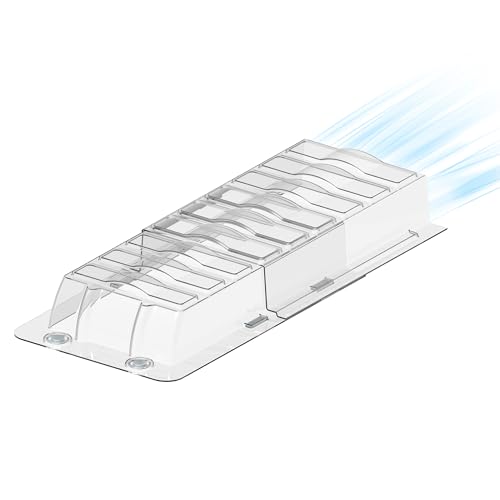
Versatile Design: This vent extender is designed to fit under furniture. such as sofa,dressers,chairs desk,bed and more, allowing for improved air circulation and distribution from vents. (Invention Patent Pending US19/390,657)
Check Your Couch for Heat Damage Over Time
If you’ve had your couch parked over a floor vent for months, it’s worth peeking underneath to see if the heat has damaged your furniture. Check for sticky glue residue, cracked upholstery, or any spots that look more worn than they should. Heat from those vents can reach around 90°F, and when that warmth gets trapped under your sofa day after day, it gradually degrades the materials and structural integrity of your couch.
Inspect your furniture every few months, especially if you don’t regularly move it, because addressing early damage prevents the need for a full replacement.
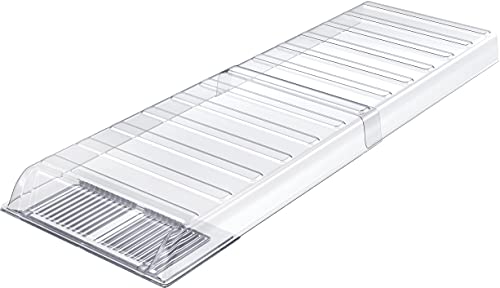
Redirects cool and warm vent air from under your bed, chair or sofa and into the room for your comfort. Low profile design being 1.5" Tall, it will fit under almost any piece of furniture
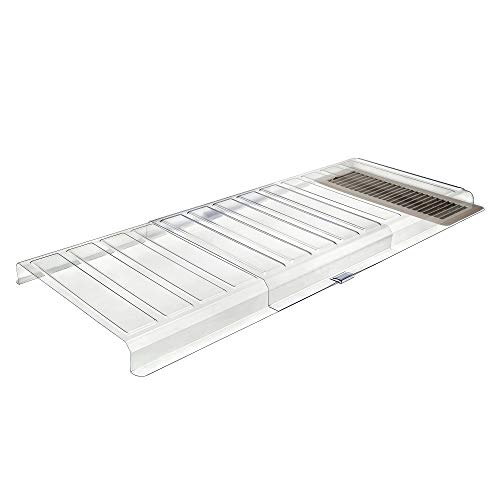
Use on floor registers up to 11" wide.

【OPTIMIZE COMFORT】 Effortlessly reroute airflow from those tricky vents under furniture, ensuring efficient heating or cooling. Redefine interior design with the ideal balance of aesthetics and function.
Inspect Glue And Materials
How’s your couch holding up under that vent?
Get up close and personal with your furniture’s underside. You’re looking for sneaky signs that heat’s doing damage to the glue and materials holding everything together.
What to check for:
- Softened adhesives that feel tacky or rubbery instead of firm
- Fabric seams pulling apart at the edges
- Cushions sagging more than they used to
- A warped or bowed frame underneath
- Brittle fabric that cracks when you bend it
These red flags indicate the consistent airflow’s taking its toll. The glue joints get weakened over time, and materials become less flexible. If you spot any of these issues, it’s time to move that couch or install a deflector. Catching problems early prevents dealing with a falling-apart sofa later.
Monitor For Long-Term Wear
You’ve done the detective work and caught the damage before it’s too late. Heat damage doesn’t happen overnight, and it won’t stop just because you’ve spotted one problem.
I check under my couch every few months like clockwork. That vent’s still pumping out 90°F air, and your cushions are basically sitting on a slow cooker.
| Time Frame | What to Look For | Action |
|---|---|---|
| Monthly | Fabric discoloration, soft spots | Take photos for comparison |
| Quarterly | Warped springs, adhesive separation | Measure cushion firmness |
| Seasonally | Overall wear patterns, sagging | Rotate couch or adjust deflector |
| Yearly | Cumulative damage assessment | Decide if repositioning needed |
Watch how your upholstery behaves near the vent. Shifting airflow patterns mean shifting wear zones. Regular monitoring will help you prevent irreversible damage to your furniture.
Should You Close the Vent or Use a Deflector?
When your couch decides to camp out over a floor vent, you’ve got a real choice to make: shut the whole thing down, or get clever with a deflector.
Closing that vent entirely cuts your heat delivery by about 33%. That’s a recipe for uneven temperatures and a frustrated HVAC system. Deflectors are the practical answer.
Closing vents entirely cuts heat delivery by 33%, causing uneven temperatures and HVAC strain. Deflectors are the practical solution.
Your deflector game plan:
- Magnetic deflectors redirect airflow sideways, away from under furniture
- Adjustable models let you customize direction without blocking airflow
- Under-furniture extenders push conditioned air into the room where you actually sit
- Flexible positioning keeps circulation flowing smoothly
- Blocking airflow entirely defeats the purpose of your heating system
Think of deflectors as air traffic controllers. They keep everything moving and maintain room temperature balance. Your couch and your comfort both benefit.

【Premium Metal Construction】 Crafted with heavy-duty Metal Material, our vent extender withstands temperatures up to 570°F, eliminating risks of melting, warping, or toxic fumes from plastic alternatives. Durable and fire-resistant for long-term safety under furniture

Package of 6 vents.

☛【APPLICABLE 3.5 INCH】3.5 inch non slip furniture pads is suitable for most furniture legs. Please carefully measure the diameter of your furniture legs before purchasing.