
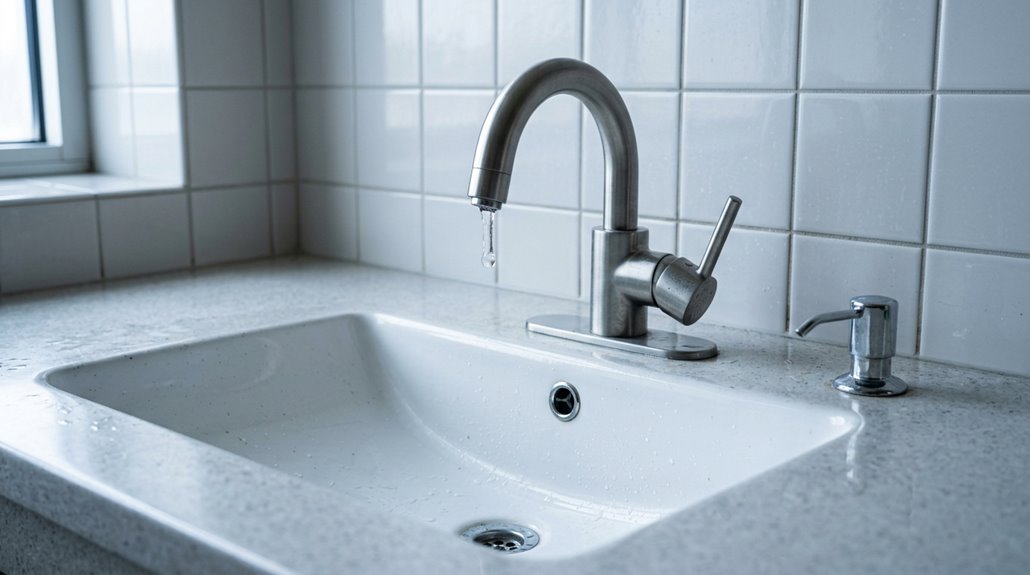
School bathroom sinks are built like tanks because they need to handle thousands of hands daily. You’ll find porcelain and ceramic most often. These materials are smooth and stain-resistant, but they chip easily.
Stainless steel resists scratches and withstands heavy use.
Solid surface and cultured marble offer easy cleanup for custodians.
Some schools choose concrete for a modern aesthetic.
Each material involves trade-offs between initial cost and long-term durability.
What Materials Are School Bathroom Sinks Made Out Of?
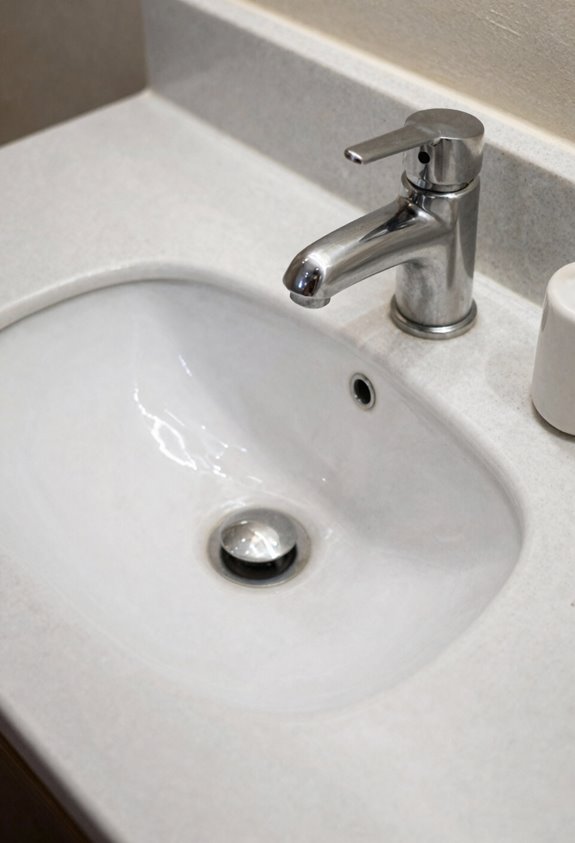
School bathroom sinks remain durable despite thousands of kids splashing water everywhere because of the materials used in their construction.
Schools use tough materials like porcelain and vitreous china, which are essentially fired clay products. These materials create smooth, non-porous surfaces that resist stains effectively. They can be wiped down and restored to their original condition.
Solid surface sinks offer seamless designs that resist bacteria and maintain hygiene standards. Some facilities also use cast iron with enamel or cultured marble for additional durability.
Schools select these materials because they withstand heavy use. They resist scratching and chipping, handling the daily wear from hundreds of students without deterioration. This represents a sound infrastructure choice.


The Decision Framework: Cost, Durability, and Maintenance
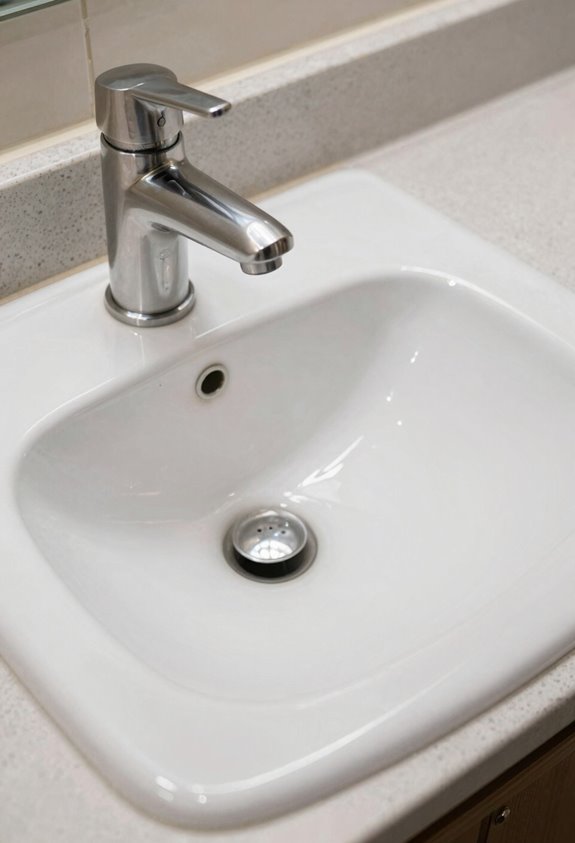
When schools pick bathroom sinks, they’re juggling three interconnected factors: budget constraints, required lifespan, and maintenance demands. Porcelain offers longevity of 50–100 years but requires gentle, non-abrasive care to prevent glaze damage. Cast iron provides exceptional durability and resists damage but weighs significantly more and requires reinforced structural support that increases installation costs. Schools must weigh the tradeoffs between selecting a durable fixture requiring regular maintenance versus one demanding minimal upkeep but potentially needing replacement within a shorter timeframe.

STAINLESS STEEL COMMERCIAL SINK: Multi-Faucet trough sink is made of thick stainless steel, with a heavy-duty and stable structure, wear-resistant and scratch-resistant, will not rust, and built for high-traffic commercial use, can calmly cope with high-frequency washing work

30" Large Dimension: Our farmhouse kitchen sink features a front apron design, offering enhanced aesthetics and more usable space. You can simultaneously wash, drain, and chop, easily accommodating and cleaning large dishware. Moreover, it tackles the hassle of water splashing during washing.

Sink Dimensions: 17" X 19" X 6-3/16" Min. Cabinet Size: 21" Drain Size: 3.5"
Budget Constraints Matter
Why do you think most school bathrooms look so similar? Budget constraints. Schools operate with limited funding, so they make practical choices:
- Factory-mass-produced sinks beat custom options every time. They’re cheaper and easy to replace when damage occurs.
- Porcelain gets the nod because it lasts 50–100 years, meaning fewer replacements down the road despite higher upfront costs.
- Standard shapes dominate because schools can’t afford to special-order oddball designs.
Administrators weigh durability against what they can actually afford. Porcelain costs more initially, but its longevity justifies the budget investment. Ceramic and vitreous china offer cheaper alternatives, though they chip more easily. Acrylic is the budget option for secondary sinks. This approach reduces long-term replacement costs and maintenance expenses for school districts.
Balancing Durability Needs
School administrators face a genuine challenge: selecting a sink that withstands daily use by hundreds of students. The decision requires weighing three factors: upfront cost, long-term durability, and maintenance requirements.
Porcelain has remained the standard choice due to its low initial cost and ability to handle daily wear. However, porcelain chips easily, and those cracks accumulate dirt and bacteria.
Stainless steel requires higher upfront investment but offers superior durability. It resists scratches and staining, reducing custodial labor.
The optimal solution combines stainless steel with porcelain. This hybrid approach delivers durability that lasts for years with minimal repairs, resulting in measurable long-term cost savings.
Maintenance Demands Consideration
Beyond picking a sink that’ll last through years of student use, maintenance demands serious consideration. Some materials require significantly more cleaning effort than others.
- Porcelain sinks need regular wiping but resist stains inherently thanks to low moisture absorption. They demand minimal upkeep compared to other options.
- Natural stone requires constant sealing and specialized cleaners, making maintenance labor-intensive and costly.
- Solid surface materials offer durability without excessive maintenance demands, handling daily grime with simple soap and water.
The durability-maintenance balance directly impacts your total cost of ownership. A sink that resists staining and cleans easily will reduce your custodial expenses over time and maintain its appearance longer than high-maintenance alternatives.
Ceramic and Porcelain School Sinks
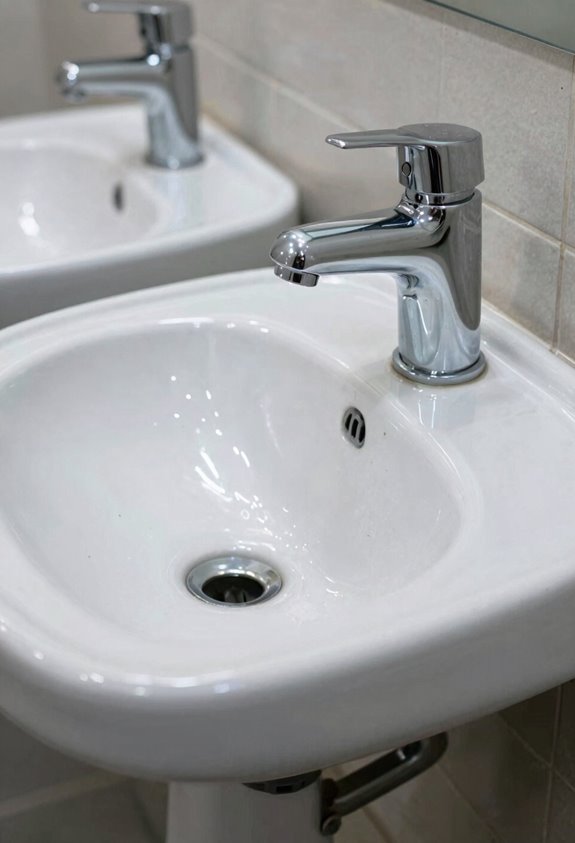
Ceramic and porcelain sinks are the workhorses of school bathrooms. They’re built tough and can handle years of student traffic without losing their shine. While these materials resist stains and chemicals effectively, they’re surprisingly fragile when it comes to dropping heavy objects or slamming things around. Durability depends on how carefully people treat them. Maintenance is straightforward. You’ll need to wipe them down with gentle cleaners and dry them regularly to avoid water spots and mineral deposits that make even quality sinks look grimy.

✔️ ELEGANT MARBLE-LOOK DESIGN (GOLDEN VEIL) - White surface with subtle gold veining delivers a refined marble aesthetic—perfect for elevating small bathrooms, powder rooms, and modern spaces.

SEAMLESS ONE-PIECE SINK TOP – Integrated sink and countertop design creates a clean, modern look with no visible seams, making it a stylish upgrade for bathroom vanity projects.

Dimensions: With overall dimensions of 47.24" L x 18.90" W x 4.33" H, this sink provides a spacious design that fits seamlessly into a variety of bathroom layouts.
Durability and Longevity
How many times have you walked into a school bathroom and noticed a sink that’s still holding up after decades of use? Ceramic and porcelain achieve this through their material properties. These materials are fired at temperatures between 1200–1400°F to create surfaces that withstand daily use.
What makes them stick around:
- Heat and chemical resistance keep them unfazed by hot water and harsh cleaners
- Non-porous surfaces prevent stains from settling in permanently
- Durability for decades when properly mounted and handled carefully
These sinks can chip or crack if dropped. Older school installations often fused porcelain onto cast iron or paired it with stainless steel supports to address this vulnerability. With gentle cleaning and regular maintenance, ceramic and porcelain sinks typically last 20-40 years or longer.
Maintenance and Care Requirements
Want to know the secret to keeping a ceramic or porcelain sink looking pristine for decades. The answer is gentle cleaning. Both materials are damaged by abrasive cleaners and bristle brushes. Instead, use non-abrasive cleaners with soft sponges or cloths for daily maintenance. This approach is effective and simple.
For porcelain especially, exercise caution since it can chip on impact. After each cleaning session, rinse thoroughly and dry the surface completely. Water stains develop when surfaces are left wet. Hand-painted glazed sinks require the same protocol. A soft dry cloth for daily wipe-downs keeps everything looking fresh. The maintenance commitment is minimal when you avoid aggressive cleaning methods and stick with gentle, consistent care.
Stainless Steel: Sanitation and Durability
Stainless steel sinks are the workhorses of school bathrooms. They’re tough, they don’t rust, and they’re surprisingly easy to keep clean. These fixtures handle everything students throw at them.
Why stainless steel dominates school environments:
- Sanitation powerhouse: The chromium alloy resists bacteria growth and staining, keeping your sink looking fresh without harboring nasty surprises
- Built to last: Stainless steel withstands constant use, scratches, and the occasional aggressive scrubbing without falling apart
- Eco-friendly choice: About 60% recycled material goes into each sink, and they’re 100% recyclable when they finally retire
Maintaining one takes minimal effort. Use mild soap, warm water, and a quick dry wipe to prevent mineral deposits. Regular care keeps these reliable fixtures performing at their best.

Quickly Restore Glossy Finish of Tubs, Tiles: SENVEN touch up paint with excellent adhesion for precise coating application; portable, quick drying, water resistant; works on porcelain, fiberglass, enamel, acrylic, cast iron in bathroom
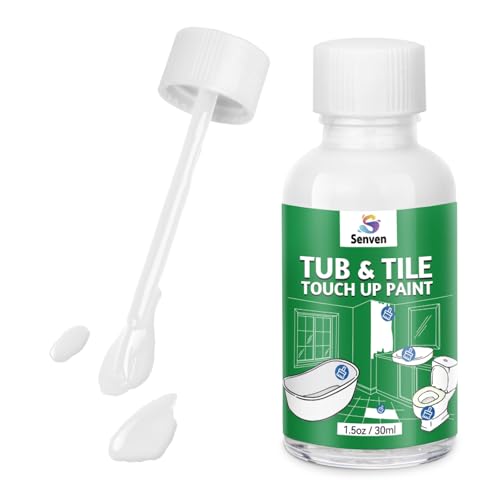
Quickly Restore Glossy Finish of Tubs, Tiles: SENVEN touch up paint with excellent adhesion for precise coating application; portable, quick drying, water resistant; works on porcelain, fiberglass, enamel, acrylic, cast iron in bathroom

Waterproof and very firm after curing, Fiberglass Repair Kit can be used to repair chips, scratches, dents, patch, worn, holes etc. Apply to fiberglass bathtub, acrylic bathtub, ceramic bathtub, enamel bathtub, cast iron bathtub, porcelain sink, ceramic tile, toilet, and cultured marble.
Solid Surface and Cultured Marble: Low-Maintenance Alternatives
Solid surface sinks are made from poly-resin blended with natural minerals, making them nonporous and bacteria-resistant. Cultured marble combines plastic, ground marble, and resins to mimic real marble’s look without the fuss. Both options resist staining and maintain consistent color. They require only wiping with a dry cloth and mild cleaner, with no fancy treatments needed. Schools prefer them because they’re durable, affordable, and withstand heavy daily use. These materials deliver the low-maintenance performance that institutional bathrooms demand.

DURABLE CULTURED MARBLE COMPOSITE DESIGN: Built to resist everyday wear, this bathroom sink top offers strong protection against stains and chips, ensuring long-lasting quality for your bathroom sink upgrade.

【DURABLE MATERIAL】: This vessel sink uses high quality kaolin, highlights glaze layer, high and durable Black White Marble porcelain. The glaze is clean and smooth which fired at a high temperature between 800 and 1300 ℃,the bright glaze is made at one time, smooth but not rough, not easy to crack.Faucet :solid brass constrution fits most decor style. Drip-Free operation ceramic disc valves ensuring durable performance for life.
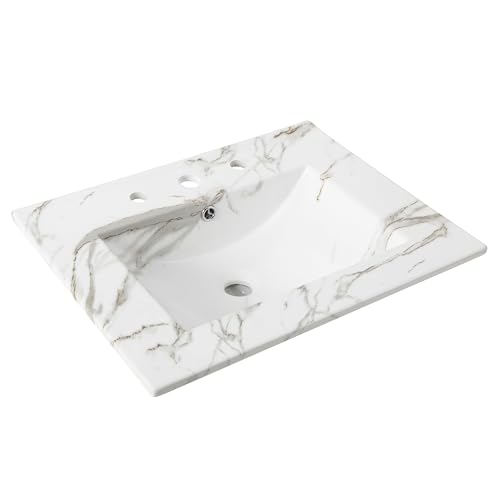
This sink basin is a classic semi-gloss faux white marble ceramic, bringing a traditional touch to any bathroom
Natural Stone and Concrete: Modern School Bathroom Options
Natural stone sinks bring distinctive appeal to school bathrooms. Each sink is totally unique with different colors, veining, and mineral flecks that no two sinks share alike.
Here’s what you need to know about keeping them looking great:
- Sealing matters. Natural stone is porous, so you’ll need a heavy-duty sealer applied yearly or biannually to maintain the finish.
- Daily care is simple. Just use mild detergent and dry everything after use to prevent water stains.
- Concrete’s the modern choice. It offers design flexibility and pairs beautifully with concrete vanity tops for that monolithic, seamless look.
Both materials require proper installation due to their weight and density.
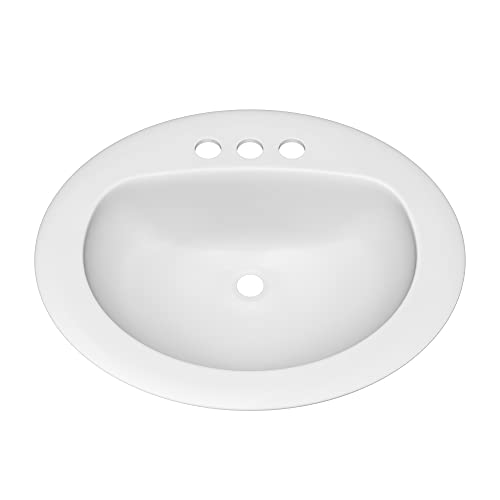
Constructed of vitreous china

SUPERIOR CERAMIC SINKS made from scratch-resistant vitreous china using proprietary molding technology that creates ULTRA-SLIM EDGES without sacrificing an ounce of durability

White Undermount Bathroom Sink: This KARAMAG rectangle undermount bathroom sink with curved sides-style to any bathroom, vanity, lavatory, restroom.No faucet holes
Installation Challenges in High-Traffic Schools
Why do school bathrooms destroy sinks faster than anywhere else? Installation failures are common because most people underestimate the impact of 500 students using one bathroom between classes.
When you’re installing porcelain or vitreous china sinks in high-traffic schools, you can’t simply bolt them down and expect them to last. Sturdy mounting systems are essential. You need heavy-duty brackets, serious wall support, and vanities built for durability. Without these components, you’ll see wobbling sinks that crack within months.
Water sealing represents a critical installation step. Reliable sealing around the sink prevents water damage from spreading behind walls. Poor installation in this area creates leaks that compromise everything underneath.
Schools that invest upfront in durability reduce long-term maintenance costs and emergency repairs.

STAINLESS STEEL COMMERCIAL SINK: Multi-Faucet trough sink is made of thick stainless steel, with a heavy-duty and stable structure, wear-resistant and scratch-resistant, will not rust, and built for high-traffic commercial use, can calmly cope with high-frequency washing work
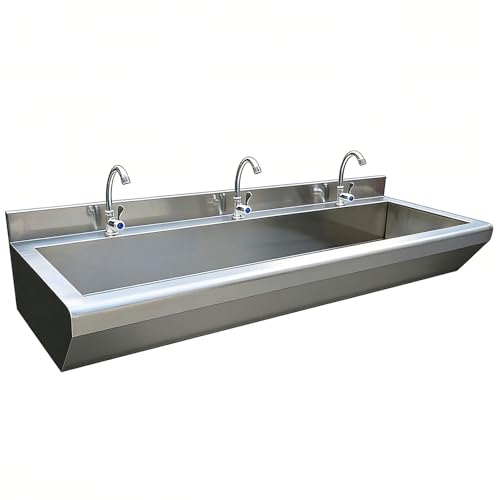
STAINLESS STEEL COMMERCIAL SINK: Multi-Faucet trough sink is made of thick stainless steel, with a heavy-duty and stable structure, wear-resistant and scratch-resistant, will not rust, and built for high-traffic commercial use, can calmly cope with high-frequency washing work

Heavy Duty Stainless Steel: This stainless steel utility sink is crafted of high-quality stainless steel, which is strong, durable, and rust-resistant. The sink is also spacious enough to accommodate many dishes or laundry, with a capacity of 11 gallons.