
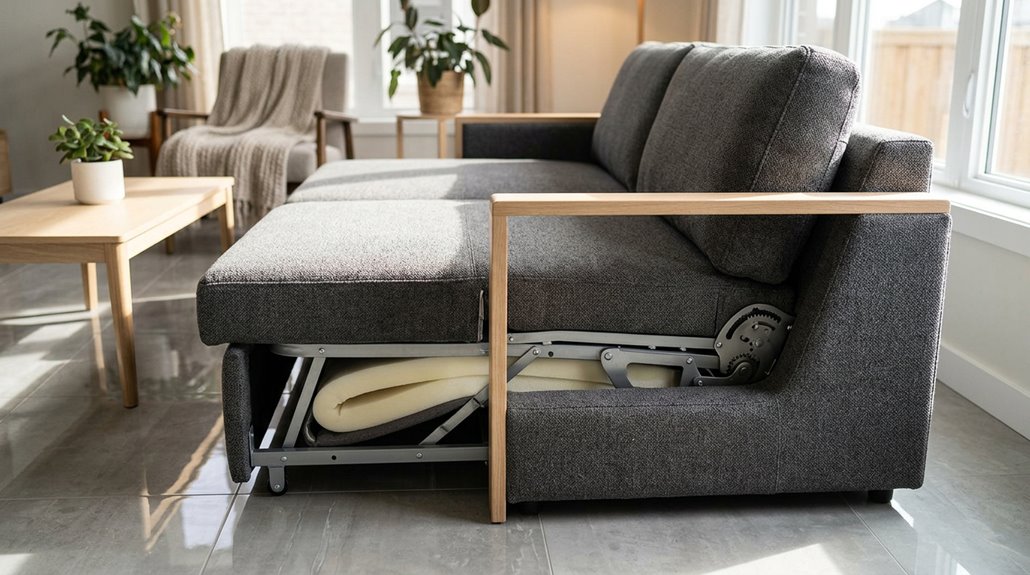
A sleeper couch hides a real mattress inside its frame and uses one of three main mechanisms to transform into a bed. Pull-out models slide the mattress forward, similar to opening a drawer.
Click-clack designs are lighter and cheaper but fold rather than pull.
Easy-open sofas use a single lever for instant conversion.
Each mechanism involves tradeoffs between convenience, comfort, and available floor space.
Understanding these differences will help you select the type that best suits your specific situation.
The Basic Mechanism: Hidden Mattresses and Folding Frames
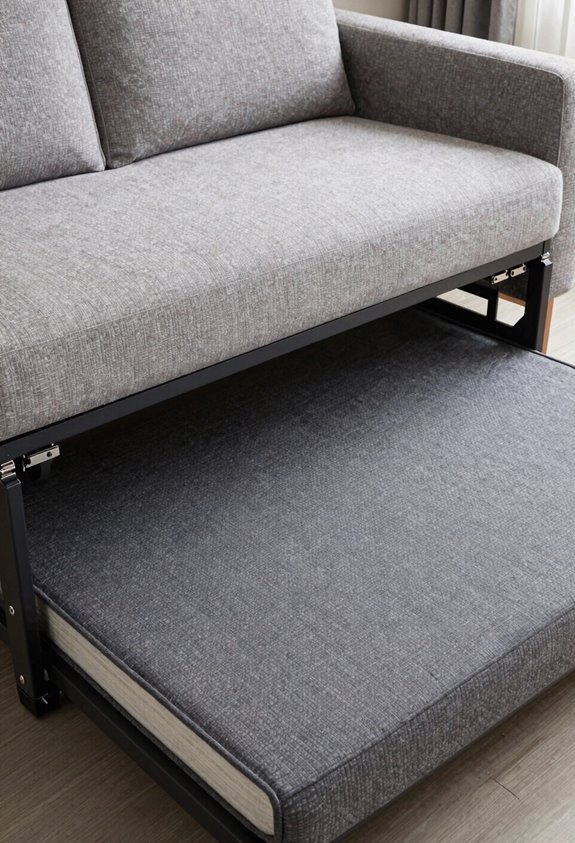
Let me pull back the curtain on what’s actually happening inside your sleeper couch. Inside that compact frame lives a hidden mattress tucked beneath cushions, waiting for its moment. When you’re ready for bed, you’ll activate the pull-out mechanism, which slides the entire bed frame inside the sofa outward. Supporting legs unfold as it extends, creating a sturdy sleeping surface. This collapse and extend mechanism transforms your living room furniture into genuine bedding in seconds. The sofa bed mechanism compresses everything vertically during the day; mattress, frame, and legs are all stacked ingeniously. This design lets you skip the guest room while keeping your living space uncluttered.

INSTALL ONCE, NEVER REMOVE — The Meliusly SleeperSaver is the only sofa sleeper support board that installs permanently inside your pull out couch. Place it under the mattress one time and it folds away with the sofa bed mechanism every time you close it. No setup before guests arrive. No storage after they leave. This sleeper sofa board is always ready.

EXPERIENCE UNMATCHED COMFORT: The Milliard Memory Foam Sleeper sofa bed mattress is the premium pull-out sofa mattress replacement. Ditch your old bed spring mattress and feel the difference that foam makes. Sweet dreams are made of this.
Common Sleeper Couch Types and How They Transform
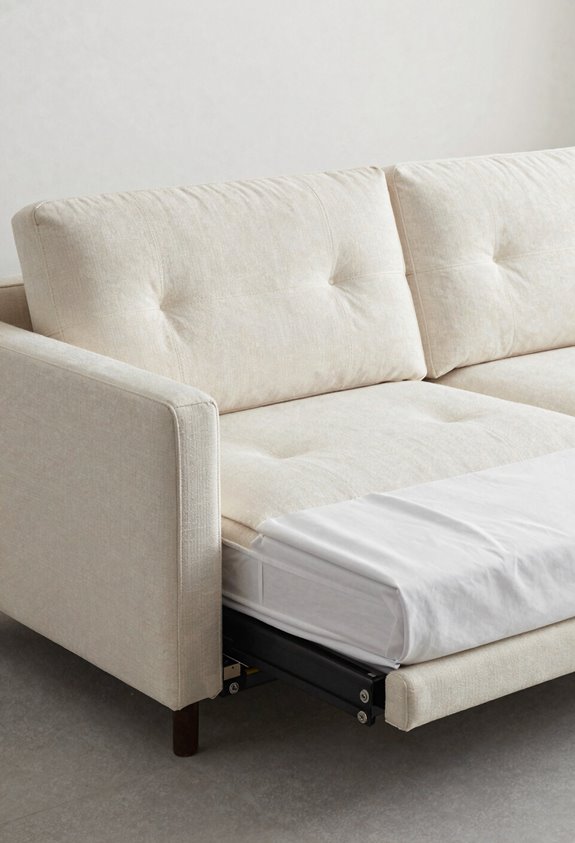
Different bed mechanism types make all the difference in sleeper couch functionality. A pull-out sleeper sofa hides its mattress inside the frame. You’ll remove cushions and yank out the base, giving you a genuinely comfortable flat sleeping surface. Click-clack mechanisms are lighter and cheaper; you just fold the back down, though they feel firmer due to compact cushions. The Easy-Open Sofa Bed uses a single lever to convert the sofa instantly. These handy options cost more but save you from wrestling matches. Each mechanism type offers trade-offs between convenience, comfort, and price, so choose based on how often you’ll actually use it and what your space allows.

【Compact Elegance Meets Versatility】Transform your space with our 'loveseat sofa' that effortlessly expands into a 'small sofa bed', tailored for snug environments. Measuring 65"L x 30.3"W x 29"H in its couch form, it becomes a full 65"L x 36.6"W x 14.6"H convertible sofa bed when you need it. Ideal for studios, dorm, home offices, or the cozy corner of your bedroom, our small sofa ensures functionality without compromising on style

【Soft & Elastic Material】MIFXIN futon armless sofa covers are made of soft elastic material: 92% polyester fiber + 8% spandex, highly stretchy and comfortable, soft but durable. 360 degree all-cover stretch design. A variety of patterns, freshen up any home decoration.

【Premium Fabric & Foam】Breathable fabric in dark gray is durable and fashionable. High density memory foam triple fold down sofa bed is very comfy, soft with great support, so you won't "sink in" or feel the hard floor.
Why Your Mechanism Choice Matters (Comfort, Durability, Ease)
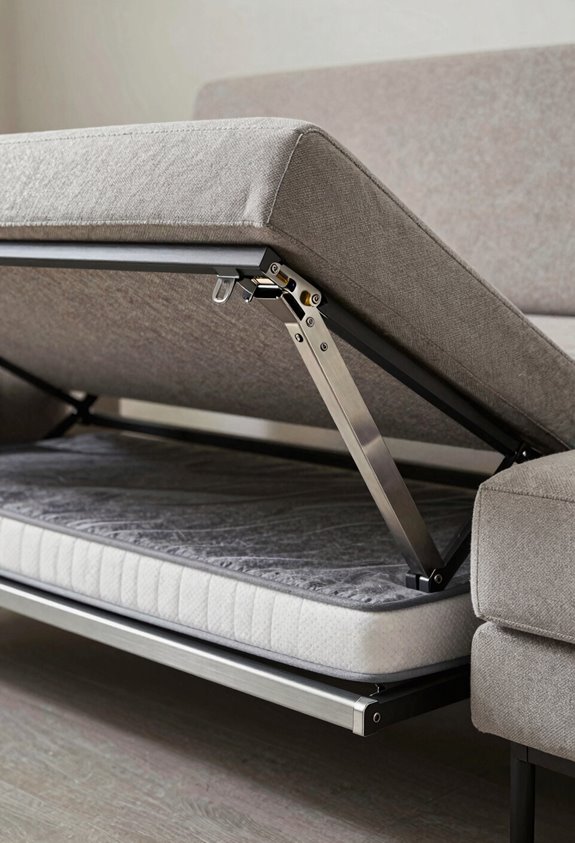
Now that you know what mechanisms exist, picking the right one determines your sleep quality and furniture longevity. Click-clack couches are lightweight and affordable, but their firm seating surface lacks an actual mattress, resulting in poor sleeping comfort.
Pull-out sleepers represent the more durable option. The actual mattress inside provides genuine comfort for sleeping, though they are heavier and require significant floor space. Easy-open mechanisms cost more but eliminate the effort of manual conversion.
Choose click-clack for compact spaces. For durability and ease of use without compromise, invest in a pull-out sleeper with a quality mattress inside.

3-in-1 Conversion Design: The Gizoon sofa bed easily transforms into a seat, sofa bed, or lounge chair. Its pull-out design includes removable wheels for easy setup. With a minimalist style, it complements any home décor

Chair Converts to Bed: This multifunctional sleeper chair bed adopts a multi-functional design, by using the auxiliary pull strap, you can easily convert this sofa chair into a chaise lounge chair or a comfortable single bed. Its compact and space-saving design makes it perfect for living rooms, bedrooms, dormitories, apartments, studios, offices and any small room. It can also be used as a guest bed, alleviating worries about unexpected guests

[Tool-Free Assembly & Instant Readiness]This Convertible Sofa Bed features a unique fixed-shape frame and requires no assembly, arriving fully ready for use. Simply unpack your sofa bed couch, let the high-density foam rebound for 48-72 hours, and snap the metal support framework into place tool-free. Set up your new boneless couch in minutes for home, office, or waiting room use.
Built-In vs. Modular Sleeper Couches: Which Fits Your Space?
When you’re standing in your living room trying to figure out which sleeper couch won’t drive you absolutely bonkers, you’re really asking yourself one thing: do I want a couch that transforms in place, or one that lets me rearrange the whole setup.
Built-in frame sleepers stay put. Their pull-out bed mechanism unfolds from within the sofa itself, creating a compact sleeping surface without requiring extra floor space. They’re perfect if you’ve got tight square footage.
Modular sleeper sofas offer a customizable alternative. Independent components shift around to form your transforming surface, offering significant space efficiency and layout flexibility. Modular is the better choice if you love rearranging furniture or live in a smaller space where sofa-to-bed conversion needs to feel effortless.

3-in-1 Convertible Sofa Bed Easily converts from a comfortable loveseat into a sleeper sofa, ideal for small spaces, apartments, guest rooms, or home offices.

TRUE 60" QUEEN WIDTH FOR MODERN COMFORT: Upgrade to a "True Queen" sleeping experience with a full 60-inch width that fits standard queen sheets perfectly—no more loose or baggy bedding. Lay back and enjoy the rest you deserve.

𝟭. 𝗘𝗮𝘀𝘆 𝗧𝗼𝗼𝗹-𝗙𝗿𝗲𝗲 𝗔𝘀𝘀𝗲𝗺𝗯𝗹𝘆: Designed for fast and stress-free setup, this sleeper sofa features a simple modular structure that allows two adults to complete assembly in about 10 minutes without any tools. The clear instructions and snap-fit connections make the process smooth and straightforward, even for first-time furniture assembly. You can quickly enjoy your new sofa without scheduling installation services or spending extra time on complicated steps.
Selecting by Space, Comfort, and Budget
Once you’ve decided whether a built-in or modular setup works for your lifestyle, the real puzzle begins: fitting your choice into your actual life and your actual wallet.
Space dictates everything. Measure your spot ruthlessly. You’ll need at least 2 feet clearance for a pull-out sofa bed to fully extend. Then consider comfort. A pull-out offers thicker mattresses for genuine sleeping support, while click-clack relies on firm cushions that work fine for occasional guests but might leave you sore after three nights.
Budget matters too. Easy-open mechanisms cost more but reward you with convenience. Click-clack beds are lighter and cheaper, yet potentially less durable. The mattress type seals the deal. Match your bed mechanism to your actual needs, not some fantasy guest scenario.

Transform Your Space in Seconds:From a cozy boneless loveseat to a spacious sofa bed, this versatile convertible sofa bed adapts effortlessly to your lifestyle. Whether you're hosting overnight guests, enjoying movie nights, or creating the perfect relaxation corner, this multifunctional couch bed provides comfort whenever you need it.

【3-in-1 Versatile Design】 Experience ultimate flexibility with our convertible sofa bed. In seconds, it effortlessly transforms from an 3 person sofa for daily lounging, to a relaxing chaise lounge for stretching out, and finally into a spacious floor futon that comfortably sleeps three adults. Perfect as an apartment sofa bed, dorm sleeper chair, or office guest seating

🔄 【2-IN-1 CONVERTIBLE COUCH】Experience the ultimate space-saving flexibility with this premium boneless couch that effortlessly transforms from a cozy daytime loveseat into a full-size futon sofa bed at night. As a highly versatile convertible sofa bed, it serves as both a relaxing seat for an afternoon nap and a convenient temporary sleeper sofa for overnight guests, making it the perfect furniture solution for small apartments, studios, dorms, or home offices.
Fixing Stuck, Squeaky, or Misaligned Mechanisms
I’ve dealt with my fair share of creaky sleeper couches that refuse to cooperate, and most problems boil down to three fixable issues: stuck mechanisms from misalignment or jammed locks, squeaky noises from loose screws or dry hinges, and frames that’ve gone slightly wonky from uneven floors. The good news is that I can usually tackle these headaches myself with basic tools and some lubricant, though occasionally a mechanism’s so bent or worn that replacement becomes the smarter move than stubbornly fighting it. Let me walk you through how to spot what’s actually wrong, what you can fix in an afternoon, and when it’s time to call in a professional before things get worse.

Comfort Design: Soft gel memory foam mattress provides superior support and transforms any pull-out couch, sleeper sofa, or even your existing mattress into a comfortable sleeping surface; Perfect as a replacement or as a topper for added comfort.

INSTALL ONCE, NEVER REMOVE — The Meliusly SleeperSaver is the only sofa sleeper support board that installs permanently inside your pull out couch. Place it under the mattress one time and it folds away with the sofa bed mechanism every time you close it. No setup before guests arrive. No storage after they leave. This sleeper sofa board is always ready.

Supportive Comfort: A 0.5-inch gel-infused memory foam top layer provides a body-contouring hug that helps prevent overheating, while the 3.5-inch high-resiliency foam base offers firm support to prevent sagging. (Please NOTE this is a mattress only; bed frame and other items are not included)
Identifying Common Mechanism Problems
Why does your sleeper couch suddenly feel like it’s fighting back? Wrestling with a bed frame that refuses to cooperate is a common frustration. Sleeper couch mechanism problems usually fall into three categories: stiffness, squeaking, and misalignment.
The culprit is often worn latches or loose locking devices in your click-clack or easy-open system. These components prevent smooth operation and cause partial opening. Heavy metal frames compound the issue, making the bed frame difficult to move.
Misalignment typically stems from deteriorating latches and locks. When these components wear out, your sleeper couch becomes unreliable and frustrating. You can identify these problems yourself before they worsen, preventing further damage and maintaining functionality.
Lubrication And Maintenance Solutions
The good news? You don’t need fancy tools to keep your sleeper couch running smoothly. Consistent care prevents most headaches down the road.
What actually works:
- Apply silicone-based spray or light machine oil to squeaky hinges and latches every 6 to 12 months
- Clean dust and debris from moving parts before lubricating; gunk blocks everything
- Gently work stuck latches back and forth after applying lubricant to contact points
- Tighten loose screws on the bed frame to fix misalignment issues
- Inspect springs and rollers for wear; replace damaged components immediately
Regular maintenance is essential. Spending fifteen minutes oiling your mechanism prevents jammed sleepers that won’t operate properly.
Professional Repair Or Replacement
Sometimes your fifteen minutes of preventive maintenance just isn’t enough. Life happens, parts wear out, and suddenly you’ve got a sleeper couch that won’t budge no matter how much lubricant you throw at it. That’s when I call in the professionals.
If your click-clack or pull-out bed mechanism fails beyond simple fixes, worn components like the lift, locking devices, or support legs need replacing. Identifying your exact sleeper couch mechanism type matters, whether it’s click-clack, pull-out, or easy-open, because compatibility parts aren’t universal. A technician knows how to source the right replacement pieces and install them correctly without causing additional damage. Sometimes professional repair costs less than wrestling with it yourself. Getting expert help eliminates the frustration of attempting complex repairs without proper tools or knowledge.