

Your fence ownership hinges on three key clues. First, grab your title deeds from HM Land Registry and look for a “T” mark, which indicates you own that side. Next, examine the fence itself: if you’re standing on your property and seeing the rough, unfinished side, it’s yours. Posts typically sit on the owner’s land. Still confused? Have a chat with your neighbor and review those deeds together. Understanding shared fences and boundary agreements requires knowing what you’re actually looking at.
Check Your Title Deeds and Land Registry Documents
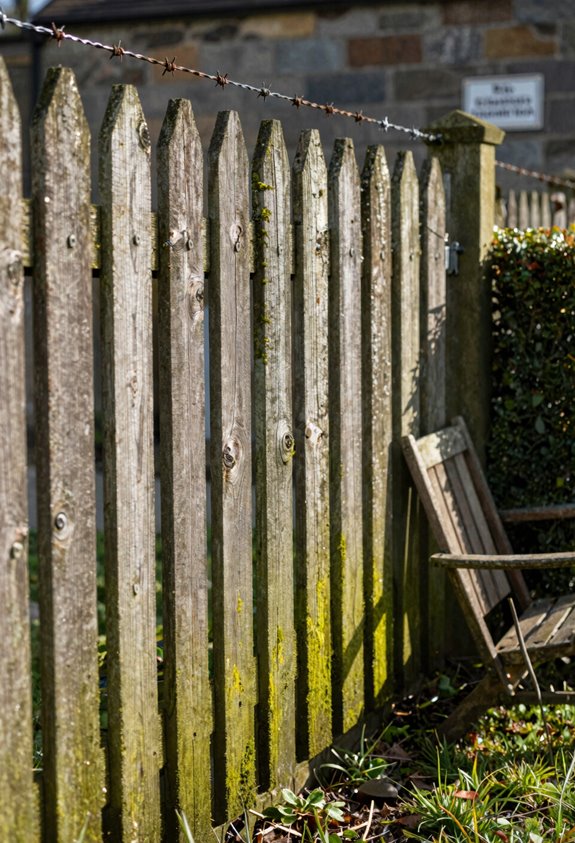
Where do you start looking to figure out whose fence is whose? Your title deeds are your best friend here. You can obtain yours from HM Land Registry online. There is a fee involved, but it provides valuable information. Look for boundary symbols on the deeds, especially the T mark. If you see a T on both sides, you have a shared fence situation.
England and Wales do not always make this crystal clear on paper. You might need to check the boundary plans registered with Land Registry for actual boundary information. Older properties are trickier; sometimes fences do not even show up in deeds. Hunt for boundary markers or maintenance history instead. If everything remains unclear, you have other options available.

Package including: the quantity of electric fence warning signs is for your choice, each measures approx. 10 x 4 inch/ 26 x 11 cm, sufficient quantity to meet your daily use and replacement, durable and stick firmly

HIGH VISIBILITY TRAINING FLAGS: Bright boundary flags help dogs visually recognize underground fence perimeter lines during E-Fence training and boundary learning

🎖️ 50 Training Flags - Will cover up to 500 linear feet of boundary wire. Set one flag every 10 feet
What Posts and Rails Reveal About Ownership
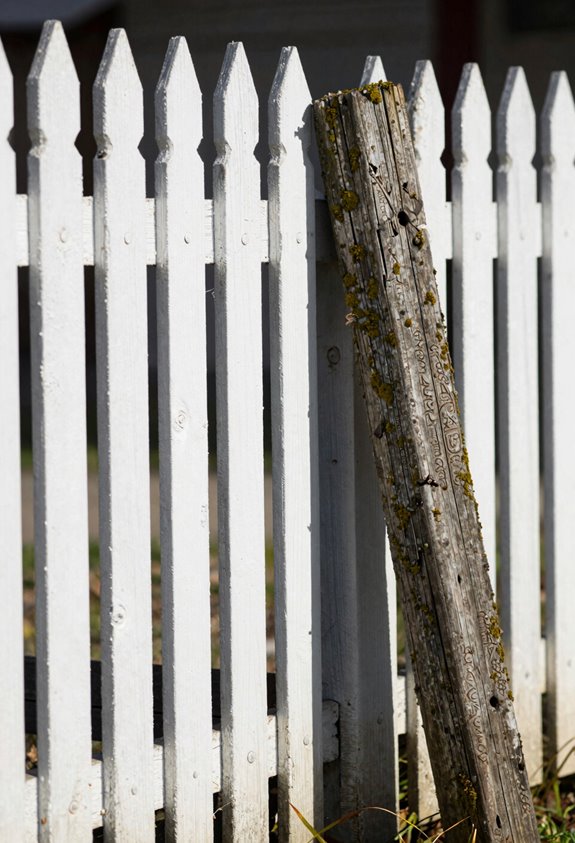
Ever wonder why your fence looks so different from your neighbor’s side. Fence posts are typically installed on the owner’s side, embedding into your property. This means if you’re looking at the structural guts (those posts and rails), they’re yours. The smooth, finished “good side” usually faces outward toward your neighbor, which is backward from what most people assume. When you’re standing on your property and see the rough side, that’s your fence. For party fences where you share ownership, both sides look similar since maintenance gets split. Always cross-check this post-and-rail detective work with your actual survey and boundary documents. Posts are reliable indicators, but they represent only one piece of the ownership puzzle.

(1) 5"x5"x78" 3-rail vinyl ranch line post

Sturdy & Durable Fence Post: Made from 2 mm (0.08") thick Q235 carbon steel, this fence post offers high strength and rigidity. The U-shaped channel design improves bending resistance, while the powder-coated finish provides UV protection and corrosion resistance, ensuring durability in all weather conditions.

𝐒𝐞𝐚𝐦𝐥𝐞𝐬𝐬 𝐅𝐞𝐧𝐜𝐞 𝐒𝐲𝐬𝐭𝐞𝐦 (V4 ONLY): This sturdy metal post is designed to be paired ONLY with our V4 Horizontal Guard Rail Section Kit for a continuous daisy-chain layout providing reliable protection and privacy for residential areas. Expand your fence by adding modern balusters for deck railing sections with our end posts for an aesthetic and finished look.
Talk to Your Neighbor: Clarifying Ownership and Responsibilities
Now that you’ve played fence detective and checked out those posts and rails, visual clues only get you so far. It’s time to have an actual conversation with your neighbor.
Visual inspection only tells half the story—it’s time to have an honest conversation with your neighbor about the fence.
Here’s what you’ll want to discuss:
- Ownership clarification – Ask directly: whose deed includes this fence? Check boundary markers together.
- Maintenance responsibilities – Who’s been fixing it? Who should pay for repairs going forward?
- Party fence possibilities – If you both own it, a boundary agreement formalizes cost splits and upkeep duties.
Start calm and collaborative. Most neighbors don’t want conflict; they want answers too. If things get murky, that’s when deeds and Land Registry records become useful. Legal advice might follow, but honest conversation comes first.

⛳【MARKING FLAGS】Made of PVC, Not faded, the flags do not tear easily, and they are attached to a high carbon steel wire pole with a high-strength adhesive. These poles are also able to easily penetrate the soil without deforming. Support writing on it for better markup, Marking flags are best marking solution. Reuse many times.

Installs flush with ground so you can easily mow, walk, play or drive right over them

⛳【PVC MARKING FLAGS】 - Our marker flags are glued on, not wrapped, which makes them much harder to get blown away or removed. The pole itself is made of steel metal wire rather than plastic for better durability.
Shared Fence Ownership: Splitting Costs and Maintenance
So your fence sits right on the property line. What does that actually mean for your wallet? You’re looking at shared fence ownership, which means you and your neighbor share responsibility. With a party fence, you’ve got mutual responsibility. That means maintenance costs get split 50/50, or you can negotiate different terms if you want. The key is creating a boundary agreement that spells everything out. When ownership uncertainty creeps in, get it in writing. A legal boundary marked with “H” on your title plan signals shared territory. Talk through specific maintenance arrangements now. Determine who fixes what, when, and who pays before something breaks and you’re stuck arguing about it. Clear cost-sharing prevents disputes later.

When Ownership Is Unclear: Mediation and Legal Options
What happens when you and your neighbor can’t figure out whose fence it actually is? It’s a common frustration. Consider these options:
- Start with calm conversations about responsibilities before disputes escalate.
- Check your boundary plan at the Land Registry. The “T” or “H” markings indicate fence ownership.
- Consider mediation first before spending money on legal remedies.
When ownership stays unclear, a boundary agreement works effectively. You agree together on who maintains what, then record it as a continuing legal document. This approach typically resolves disputes faster than court battles.
If disputes with your neighbor persist, mediation becomes valuable. A neutral third party helps you both reach solutions. Only then should you explore legal options through solicitors.

PVC (Vinyl) Top or Bottom Rail