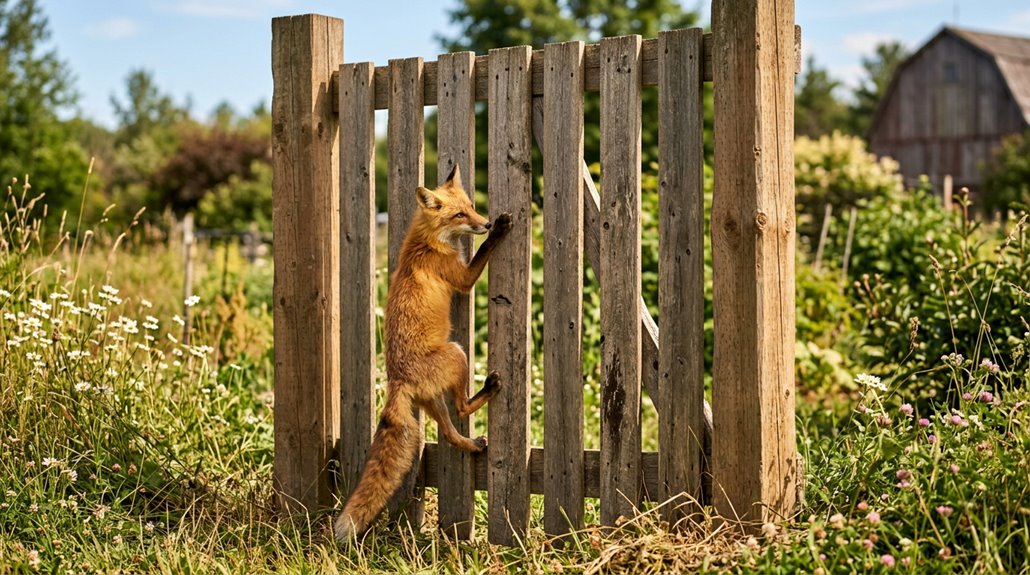
Six feet won’t cut it. I’ve watched foxes vault over those like Olympic gymnasts.
You need at least 8 feet in high-risk areas, but height alone is insufficient. The real effectiveness comes from stacking defenses together: rigid, outward-tilted tops that kill their grip, tiny mesh under 3 inches, and buried fencing 12 inches deep. Combine these three, and you’ve got a fortress. Each component addresses a specific vulnerability in fox escape attempts.
The Minimum Fence Height to Stop a Fox
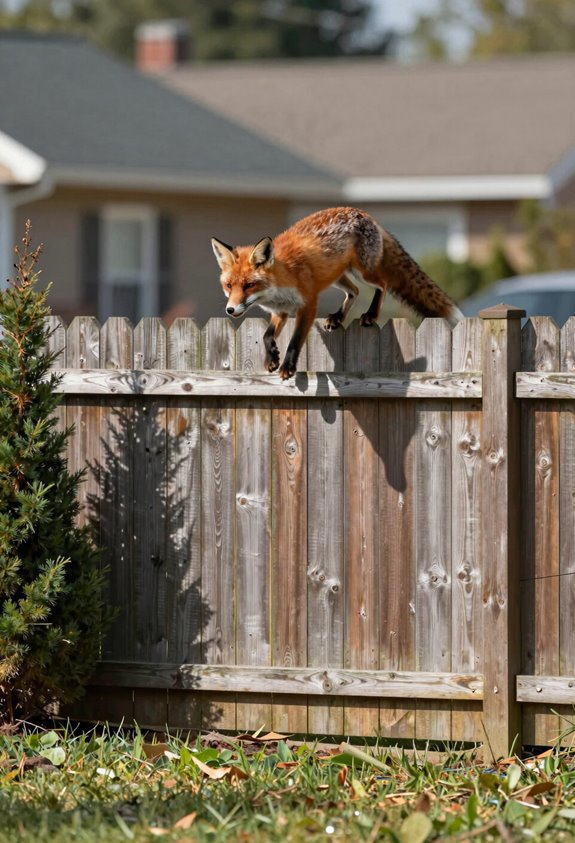
How tall does a fence really need to be to keep a fox out. Most folks cite 6 feet as the minimum fence height for deterrence, but foxes are sneaky climbers. Reports document them scaling 6-foot barriers with ease. In areas where foxes frequently attempt entry, an 8-foot fence works better as a stronger deterrent. The key is this: don’t rely solely on height. Pair your tall fence with additional defenses like buried bases and top protection. These combined measures significantly reduce the likelihood of fox entry. Without those extras, even impressive fence height becomes negotiable to determined foxes.

Premium Quality: The UPGRADE privacy screen for fences is made from 170 GSM non-recycled High-Density Polyethylene (HDPE). This ensures lasting durability, reliable privacy protection, and excellent weather resistance. A high-density composition makes it a dependable solution for outdoor privacy needs.

Various Sizes for Your Needs:The deer fencing comes in two practical sizes: 8FT*165FT and 8FT*100FT. Whether you need to protect a small family garden or a large agricultural area, we have the perfect size for you. The large coverage area ensures comprehensive protection for your plants.

Various Sizes for Your Needs:The deer fencing comes in two practical sizes: 8FT*165FT and 8FT*100FT. Whether you need to protect a small family garden or a large agricultural area, we have the perfect size for you. The large coverage area ensures comprehensive protection for your plants.
Why Foxes Jump and Climb Better Than You’d Expect
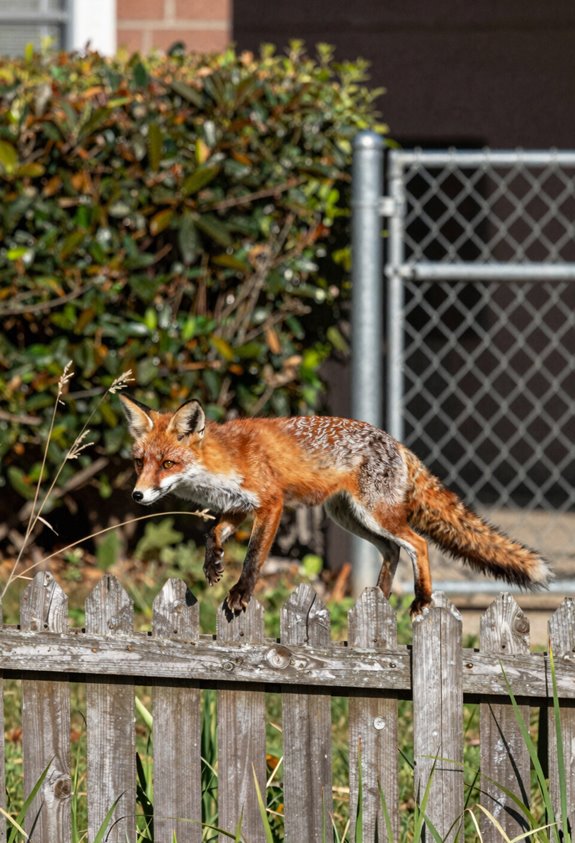
You’d think a 6-foot fence would stop a fox, but these creatures are basically the gymnasts of the animal world, with jumping power and climbing skills that surpass most expectations. I’ve seen reports of foxes scaling 8-foot walls and using their quick footwork to grip surfaces you’d swear were too smooth, especially when they spot a nearby structure they can use as a ladder to reach your coop. The real problem is that foxes don’t just rely on pure height; they’re strategic climbers who exploit gaps, pivot outward-tilted fence edges, and dig underneath when they need to. This means a tall fence alone won’t cut it.

1/2-inch Heavy Duty Spire Fence Topper

CRITICAL SIZING CHECK (FITS 0.5" SQUARE PICKETS ONLY): Fits over standard 1/2" (0.5" / 12.7mm) square pickets. 🛑 WILL NOT FIT 5/8", 3/4", or 1" pickets, or round poles/tubes. Please measure your picket width with a tape measure before ordering!
Fox Physical Agility Capabilities
Most people underestimate just how athletic foxes really are, and that’s exactly the problem when you’re trying to keep them out. Foxes can scale 6-foot fences with ease, and some have cleared 8-foot walls. What makes them effective climbers isn’t just raw jumping power. Fox agility involves using their whole bodies; they find grip points, capitalize on surrounding structures, and contort around obstacles that would stop most animals. They shimmy up with surprising grace, their lightweight frames giving them advantages we don’t possess. A rigid fence with overhangs works better than simple height alone. Without proper protection details, even impressive fence height becomes just another launching pad for these nimble climbers.
Climbing And Jumping Techniques
Ever watched a fox size up your fence like it’s scanning a menu? These creatures are surprisingly athletic. They’re quick jumpers and climbers capable of clearing fences in single leaps when the angle works in their favor. Fencing height alone won’t stop them. Foxes scale 6-foot barriers routinely, and they’ve even conquered 8-foot walls. Your protective features matter more than pure height. Tight mesh openings under 3 inches, smooth vinyl surfaces, and outward-tilted edges reduce their grip significantly. Combine these climbing defense techniques with buried fencing 12 inches deep, and you achieve serious protection. Foxes aren’t just jumping over; they’re problem-solving. Beat them at their own game.
Real-World Fence Breach Examples
Theory meets reality when a fox shows up at your gate with a completely different skill set than you’d anticipated. Fence height alone won’t save your rabbits or guinea pigs. Real-world incidents prove it.
Here’s what actually happens:
- A fox cleared a 6-foot fence to snatch a rabbit from a run, leaving owners stunned
- Another fox dragged an entire guinea pig cage across a neighbor’s garden like it weighed nothing
- Foxes reach up to 11 feet when they’ve got roof access or surrounding structures to climb from
That 5-foot fence you’re counting on? Foxes vault over it constantly. Even 8-foot barriers fail when top design isn’t rigid or properly secured. Fence height matters, but without an overhang and solid top design, you’re inviting a breach.
What Makes Foxes Such Good Climbers
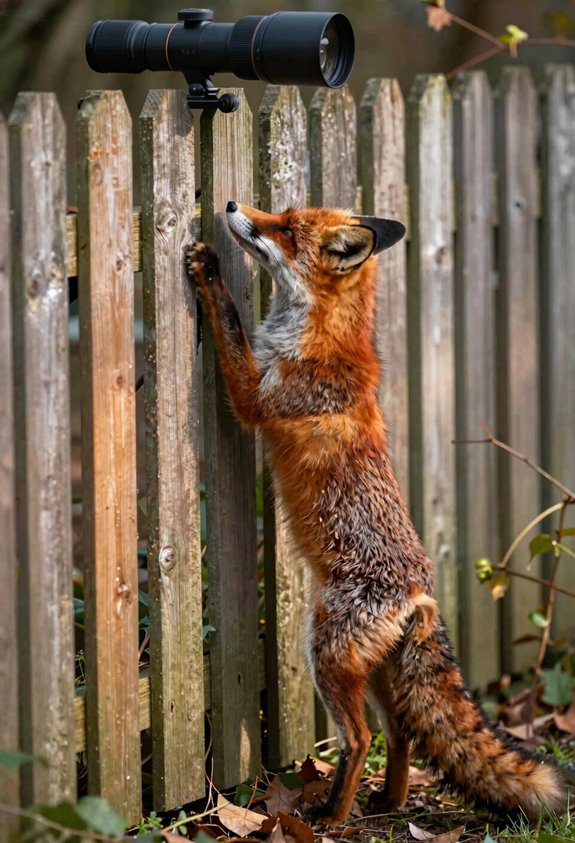
Foxes are remarkably skilled climbers, and their success scaling 8-foot walls stems from specific physical adaptations rather than chance. Their bodies possess sharp claws for grip, lightweight frames that distribute weight efficiently, and spines flexible enough to twist in ways that would be uncomfortable for larger animals. Combined with their agility, explosive jumping power, and predatory hunting instinct that drives them to pursue prey across any terrain, these small creatures approach obstacles like fences without hesitation.

WELDED WIRE FENCE ROLL FOR ANIMAL ENCLOSURES AND GARDEN PROTECTION – 2 in. x 3 in. mesh welded wire fence roll designed for animal enclosures, rabbit fencing, chicken runs, garden protection, and property boundaries, providing secure containment while maintaining visibility and airflow.

【Effective Pet & Garden Barrier】 Create a safe, invisible boundary. Perfect for stopping small dogs from squeezing through railings or escaping the yard, and for keeping rabbits, deer, and other critters away from your vegetable garden, flower beds, and roses. Works great for closing gaps under porches and around decks.

High-quality and Durable Material: The welded wire garden fence mesh is made of high-quality galvanized steel wire, which is strong and not easy to break, and the black vinyl coating on the surface provides additional protection against rust and corrosion
Physical Adaptations For Climbing
Why are foxes so good at climbing? Foxes possess several physical adaptations that make them excellent climbers:
- Quick, agile bodies that twist and turn with remarkable flexibility
- Sharp claws and grip strength comparable to experienced rock climbers
- Natural balance that allows them to scale obstacles most animals cannot
Foxes use footholds and leverage similar to how humans climb a jungle gym. Their climbing adaptations make fox escape and avoidance particularly challenging for fence builders. A smooth, low-grip surface like vinyl or slick metal works against their climbing ability, since these surfaces lack purchase for their claws. Rough, textured surfaces provide the grip they need to climb effectively. Combining smooth exterior surfaces with proper top-protection features significantly reduces the likelihood of escape from an enclosure.
Agility And Jumping Capabilities
Just how nimble are these little escape artists? I’ve watched foxes demonstrate remarkable agility that’d put many animals to shame. These creatures combine impressive jumping ability with exceptional climbing skills, making a standard fence height laughably easy to overcome. They’ll use their flexible spines to contort around obstacles, their sharp claws for grip, and their lightweight frames for leverage. A 6-foot fence? They’ll scale it like you’d climb stairs. Their talent for spotting handholds, such as rough edges and horizontal surfaces, gives them the purchase they need. They’ll bound upward, twist mid-air, and grip with precision. I recommend 8 feet minimum for real fence height protection. Their agility combined with determination makes climbing almost inevitable unless you’ve seriously fortified your barriers.
Natural Predatory Hunting Skills
So what exactly gives foxes their almost unfair advantage regarding scaling barriers? It’s their predatory hunting skills combined with natural athleticism. These critters didn’t evolve to respect our property lines; they evolved to survive and hunt. That means they’re constantly assessing their environment for opportunities, weaknesses, and escape routes.
What makes them formidable climbers:
- Sharp, retractable claws that grip rough surfaces like tiny mountaineering tools
- Flexible spines allowing them to twist and navigate awkward angles
- Lightweight frames distributing pressure efficiently across unstable surfaces
The climbing risk escalates when fences lack rigid tops or overhangs. A fox doesn’t just see a barrier; it sees a puzzle with handholds, footholds, and potential advantages. A 5-foot fence with a weak top is actually less effective than expected because foxes approach obstacles as hunting problems requiring solutions.
Mesh Size and Material: Why They Matter More Than Height Alone
Building a fox-proof fence requires more than just height. You can stack fence panels sky-high, but if your mesh has holes bigger than a golf ball, a determined fox will squeeze through like it’s on a diet.
Mesh size under 3 inches is essential. Pair that with proper gauge wire, and you’ve transformed your fence into climb resistance that actually works.
| Gauge | Strength | Fox Resistance |
|---|---|---|
| 20 | Minimum | Moderate |
| 18 | Better | Good |
| 16 | Excellent | Superior |
| 14 | Heavy-duty | Excellent |
| 12 | Maximum | Superior |
Tiny openings plus sturdy wire outperforms a tall fence with loose mesh. The combination of small mesh size and heavy-duty gauge wire creates a physical barrier that foxes cannot penetrate.

Our squirrel baffle and anti squirrel spikes provide ultimate protection for your bird feeders, the squirrel proof device effectively prevents squirrels, raccoons, cats,...
Rigid Tops and Outward-Tilted Edges: The Real Barrier
Why do so many people build 6-foot fences only to discover foxes treating them like Olympic hurdles?
The secret isn’t just height; it’s what you put on top. Rigid tops and outward-tilted edges are your real allies in fox deterrence. Here’s what actually works:
- Rigid tops eliminate grip, making it impossible for foxes to haul themselves over
- Outward-tilted edges remove handholds and create unstable approaches that foxes can’t navigate
- Right-angle additions and coyote rollers discourage climbers from even attempting the jump
When you combine a solid 5-foot fence with a rigid, tilted design, you’re not just raising a barrier; you’re changing the game entirely. Foxes aren’t stupid; they’ll move on to easier targets. This approach works because it removes the physical advantage climbers need to succeed.

material type: Plastic


Complete Garden Fencing Solution - Transform your outdoor space with our 76FT flat top garden fencing kit. Includes 9 sturdy 6 x 8 feet fence panels, providing ample coverage for gardens, backyards, and more. Enhance accessibility with a fencing gate included in the set. Secure installation is ensured with 11 durable fence posts and 62 connectors, offering stability and longevity to your fencing project. Enjoy convenience and reliability with this all-in-one solution for your fencing needs.
Dig Deep: Burying Your Fence 18 Inches to Block Underground Entry
To begin with, while a solid, angled lid stops foxes from vaulting over your fence like gymnasts, you’d be making a rookie mistake if you ignored what’s happening below ground. Foxes are basically furry miners. They’ll dig under your defenses faster than you can say “backyard invasion.” Burying your fence depth matters just as much as fence height. I’d recommend going 12 inches deep minimum, though 18 inches is substantially more effective. Dig a trench, sink that fence, and pack the soil tight. This digging prevention strategy stops foxes cold. You’re basically telling them, “Not today, sneaky friend.” Combine this with your rigid top, and you’ve built a fortress they can’t breach from any angle.
When Electric Strands Beat Height Alone
I’ve found that electric strands can actually outperform a shorter fence because they’re like giving your barrier a shock collar for foxes. When you strategically place conductive lines at the top, middle, and bottom of your fence, you’re creating multiple “don’t touch me” zones that deter both climbers and diggers, compensating for height limitations that a passive barrier alone can’t handle. Combining even a modest 4-foot fence with three electric strands gives you better protection than relying on height alone, since foxes learn to respect the sting faster than they learn to scale higher.

Heavy-Duty Plastic Chicken Wire Mesh: Our 0.1" thick garden fence animal barrier protects your pets, flower beds, vegetable patches and poultry. This durable and long-lasting bird netting resists chewing and tearing from cats, dogs or pests
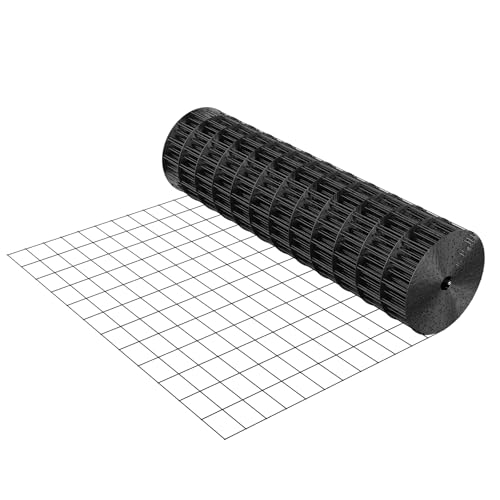
Livestock Protection Barrier: The farm fence features 2x3-inch mesh designed for livestock, ranches, gardens, and animal enclosures. Dual-purpose: it keeps wildlife out and protects plants and pets all year long. Stronger than traditional ranch fencing, it withstands livestock impact while maintaining its shape

Effective Animal Barrier: Our deer fence netting helps keep deer, rabbits, squirrels, raccoons and other small animals out of your garden while protecting vegetables, fruit trees, shrubs and flowers from damage. This heavy-duty deer netting is also strong enough to work as a temporary fence for chickens, dogs and other pets. Reinforced black rope edges on the top and bottom make the fence easier to secure to stakes, T-posts or frames while helping it stay upright without sagging
Electric Fence Effectiveness Levels
When you’ve built a solid 6-foot fence and a fox still treats it like a climbing gym, adding electric strands becomes necessary.
Electric fencing delivers measurable results:
- Real consequences: A quick shock teaches foxes that your fence isn’t worth the trouble, creating lasting memory that discourages return visits
- Strategic placement: Top strands at 4-6 inches above fence height catch climbers mid-attempt, forcing them to retreat before they gain momentum
- Affordable insurance: Electric systems cost far less than rebuilding after a breach, protecting your investment without breaking the bank
Electric fencing works best when combined with solid fence height and top protection like rollers. The shock itself matters less than consistency. Foxes learn quickly that your property demands respect.
Combining Height With Electric
Why does a 6-foot fence sometimes feel like a challenge rather than a barrier? Foxes are basically furry ninjas. Height alone doesn’t cut it. Combining electric wire with height creates a one-two punch that actually works. When you install electric strands at multiple levels, top, middle at nose height, and bottom, you’re not just adding deterrence. You’re creating a shocking surprise at every attempt. A fox expects to climb. It doesn’t expect a zap. A 6-foot fence paired with strategically placed electric wire delivers the message far better than relying purely on height. This combination approach keeps determined foxes from even trying.
Multi-Strand Protection Strategy
So you’ve built your 6-foot fortress, and you’re feeling pretty good about it until you realize a determined fox treats it like a climbing gym. Fence height alone won’t cut it. Multi-strand electric fencing is where the real effectiveness happens.
Instead of relying solely on how tall your barrier is, you’ll want to strategically place electric wires at three key points:
- Nose height (about 4-6 inches): catches them right at snout level
- Mid-height (around 2-3 feet): stops mid-climb attempts cold
- Near the top (6+ inches from the peak): deters those climbing acrobats
This layered approach transforms your fence into an actual deterrent. Battery-powered electric fencing with a pulser keeps everything running smoothly when recharged every six months. You’re building smarter, not just taller.
Combine Height, Mesh, Burial, and Electricity for Full Protection
Foxes are like tiny, furry ninjas who’ve studied every trick in the book, so you can’t just pick one defense and call it a day. I learned this the hard way. You need to layer your defenses like you’re building a security system, not just a fence.
| Defense Layer | Measurement | Why It Works |
|---|---|---|
| Fence Height | 6+ feet | Stops climbing attempts |
| Mesh Openings | Under 3 inches | Reduces grip points |
| Burial Depth | 8–12 inches | Prevents digging under |
| Electrified Wires | Nose, middle, bottom | Deters both climbers and diggers |
When you combine fence height with tight mesh openings, add burial protection, and integrate electrified deterrence, you’ve created a multi-layered barrier. Each layer tackles different fox behaviors: climbing, digging, and attempting to breach weak points.
Five Installation Errors That Compromise Your Fence
Even the best fence design falls apart when you mess up the installation, and I’ve seen it happen more times than I’d like to admit. You can buy premium materials and follow every guideline, but poor execution sabotages your climbing prevention efforts instantly.
Here’s what I watch people mess up:
- Skipping the overhang or top design – Your fence height means nothing if foxes can grip and vault over the top
- Burying mesh too shallow – Foxes dig; a 6-inch burial won’t stop determined diggers
- Leaving gaps between fence sections – They’ll squeeze through overlaps you thought were tight
The installation is as crucial as the fence height itself. One careless mistake and you’re basically inviting foxes in for dinner. Take your time during setup.
Durable and weather-resistant: Constructed from 100% polypropylene, this fence will not rust, rot, or corrode when exposed to the elements.

Complete Garden Fencing Solution - Transform your outdoor space with our 100FT garden fencing kit. Includes sturdy 8 feet width fence panels, providing ample coverage for gardens, backyards, and more. Enhance accessibility with a fencing gate included in the set. Secure installation is ensured with durable fence posts and connectors, offering stability and longevity to your fencing project. Enjoy convenience and reliability with this all-in-one solution for your fencing needs.
Tailor Your Fence Height to Your Local Fox Threat
What’s your neighborhood’s fox situation actually like? That’s your starting point for real fox deterrence. If you’re in an urban area with frequent fox activity, you’re playing a different game than someone in a quieter suburb. Fox climbing behavior varies by location and individual boldness. Some foxes barely touch a 5-foot fence, while others treat 6-foot barriers like jungle gyms.
The practical breakdown: aim for 8 feet in high-risk zones where foxes are known jumpers and climbers. For moderate threat areas, 6 feet paired with 16-gauge wire provides solid protection without unnecessary expense. Lower-risk neighborhoods can manage with 5 feet.
Know your local fox activity level by talking to neighbors and checking with wildlife experts. Your fence height should match your actual threat, not worst-case scenarios.
Your Fox-Proof Enclosure Checklist: Build It Right
Since height alone won’t stop a determined fox, you’ve got to think like you’re building a fortress with multiple defense layers. This integrated approach is what actually works.
Build your fox enclosure like a fortress—multiple defense layers working together is what actually stops them.
Here’s what you need on your checklist:
- Fence height of 8 feet minimum. Anything less leaves your enclosure vulnerable.
- Ground barriers buried 12 inches deep with outward-turning bottoms. This combination effectively prevents foxes from digging underneath.
- Top reinforcement like coyote rollers or angled edges. These make climbing difficult for foxes attempting entry.
You’ll want sturdy 12 or 16 gauge material holding everything together. The trick isn’t picking one defense; it’s stacking them smartly. When you combine proper fence height, solid ground protection, and top reinforcement, foxes will be unable to breach your enclosure.