
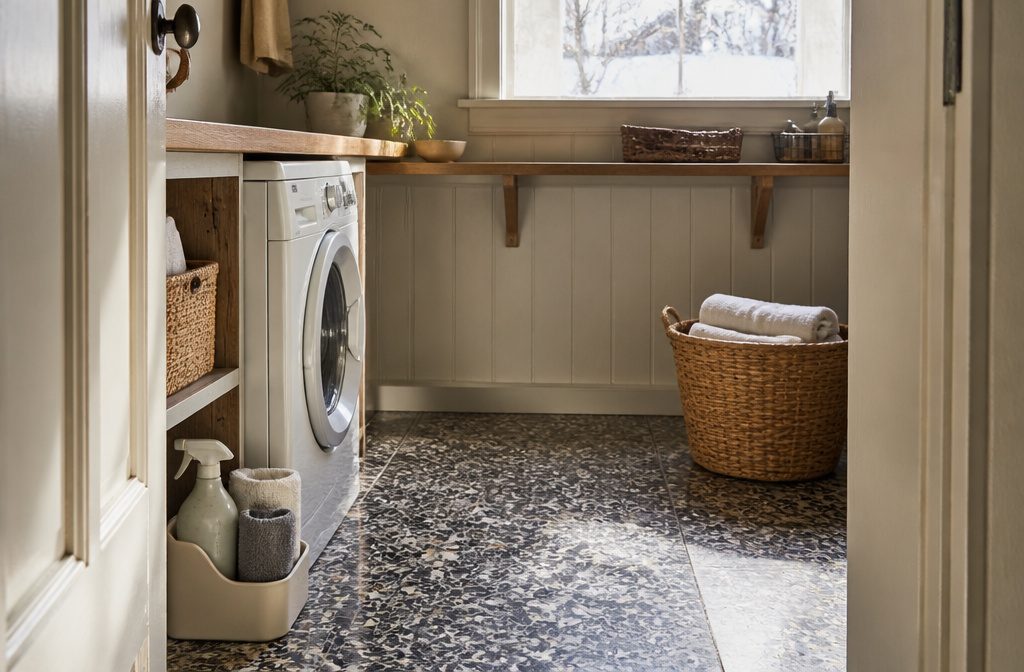
Keeping a home clean long-term comes down to reducing what you own, assigning what’s left to a fixed spot, and handling small tasks daily instead of letting them compound into weekend projects.
The friction that stops most people is the gap between where cleaning supplies sit and where the mess actually happens.
A caddy of microfiber cloths and spray bottles under the bathroom sink gets used; a hall closet full of the same things gets walked past.
1. Remove What You Don’t Use and Give Everything Else a Place
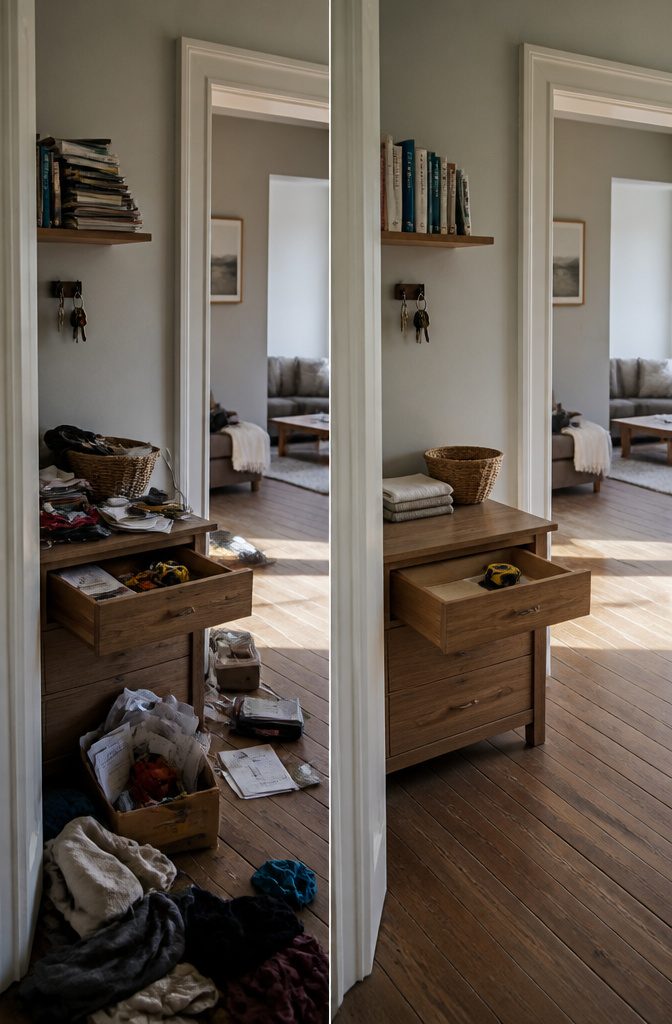
Remove What You Don’t Use and Give Everything Else a Place
The fastest way to make a home easier to clean is to own less of it.
Go through each room and pull out anything you haven’t touched in a year. If you haven’t used it in the past year, get rid of it.
That cutoff is ruthless but it works. Donate what’s still good to Goodwill, sell higher-value items on Craigslist or eBay, and throw away the rest.
Once you’ve cleared the excess, assign every remaining item a specific spot. A book goes on that shelf, keys hang on that hook, the tape measure lives in that drawer.
When each thing has a clear home, putting it back becomes automatic. You won’t circle the apartment looking for where it ended up, and tidying takes seconds instead of decisions.
Fewer things mean fewer surfaces to wipe, fewer piles to move when you vacuum, and less visual noise when you walk in the door. The cleaning itself gets faster because you’re not constantly shifting clutter out of the way.
2. Set a Schedule for Recurring Tasks
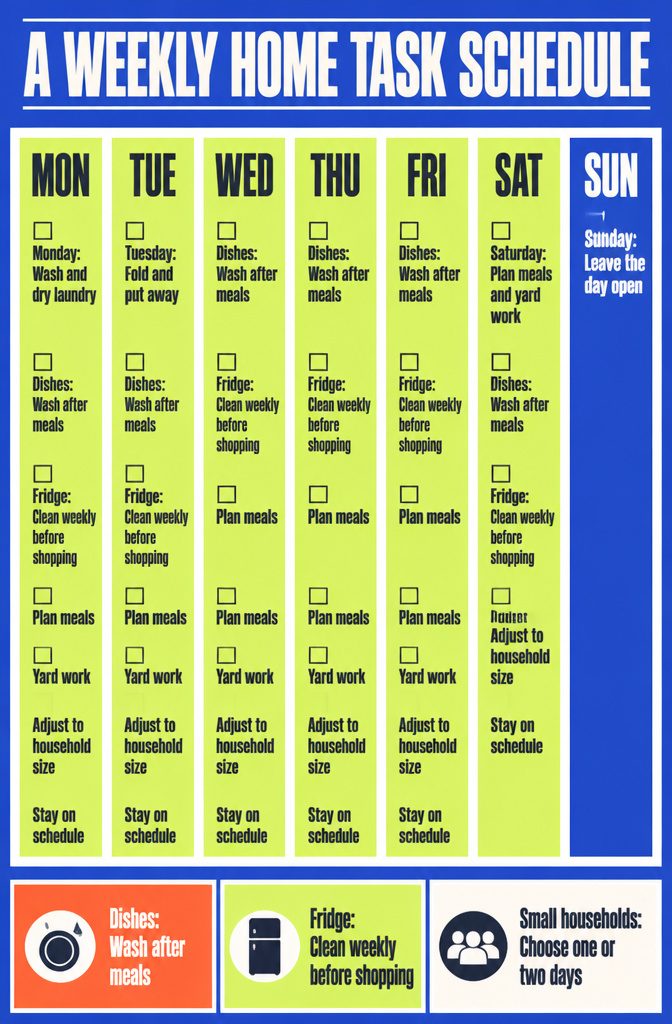
Routines stop cleaning from piling into a weekend crisis. Assigning tasks to specific days keeps laundry, dishes, and surfaces from building up faster than you can get to them.
One working schedule runs laundry on Monday — change sheets, wash and dry — then folds and puts away Tuesday, tackles meal planning and yard work Saturday, and leaves Sunday open.
Larger households often run a load daily to keep it manageable; smaller ones pick one or two set days each week and stick to them. The cadence matters more than the day.
Dishes follow the same principle: wash them right after eating or load the dishwasher throughout the day and run it at night, rather than letting a week’s worth harden in the sink.
I build the frame around daily, weekly, monthly, seasonal, and yearly tasks, then adjust the timing to match what actually happens in the house.
A fridge cleanout every week before grocery shopping catches expired food before it takes over a shelf.
The schedule adapts to how many people live there and what gets dirty fastest, but the structure keeps small tasks from turning into all-day projects.
3. Keep Countertops and Tables Clear
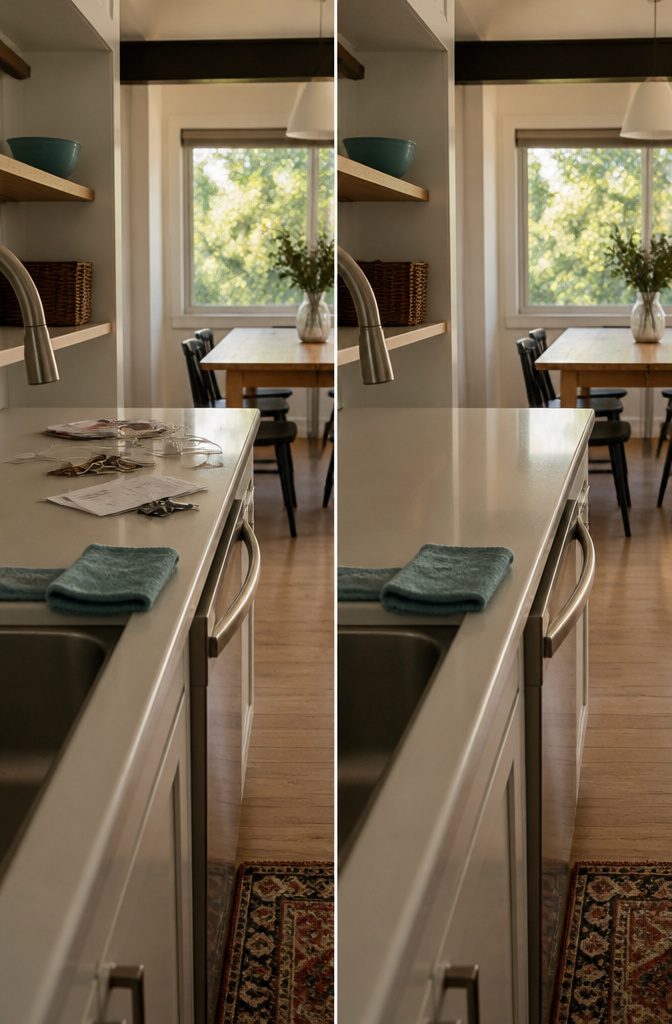
Keep Countertops and Tables Clear
The problem with any flat surface is that it begs to be used as temporary storage.
Kitchen counters and dining tables collect mail, keys, phone chargers, and whatever else came through the door with you, and suddenly a quick wipe becomes a rearranging session before you even start.
Put things away the moment you’re done with them. Dirty dishes go straight into the dishwasher throughout the day, papers get filed or tossed, remotes go back in their basket.
Stop things from piling up before they start, because once a surface looks cluttered, adding one more thing feels harmless.
A quick pickup before bed keeps shared spaces ready to use. Walk through the kitchen and dining area, return anything that migrated there during the day, and wipe the counters clean.
The actual cleaning takes a couple of minutes when you’re not moving jars, small appliances, and stacks of who-knows-what out of the way first.
Storage helps, but only if you use it. A decorative box on the counter is just another object unless things actually go in it.
4. Make Your Bed Each Morning
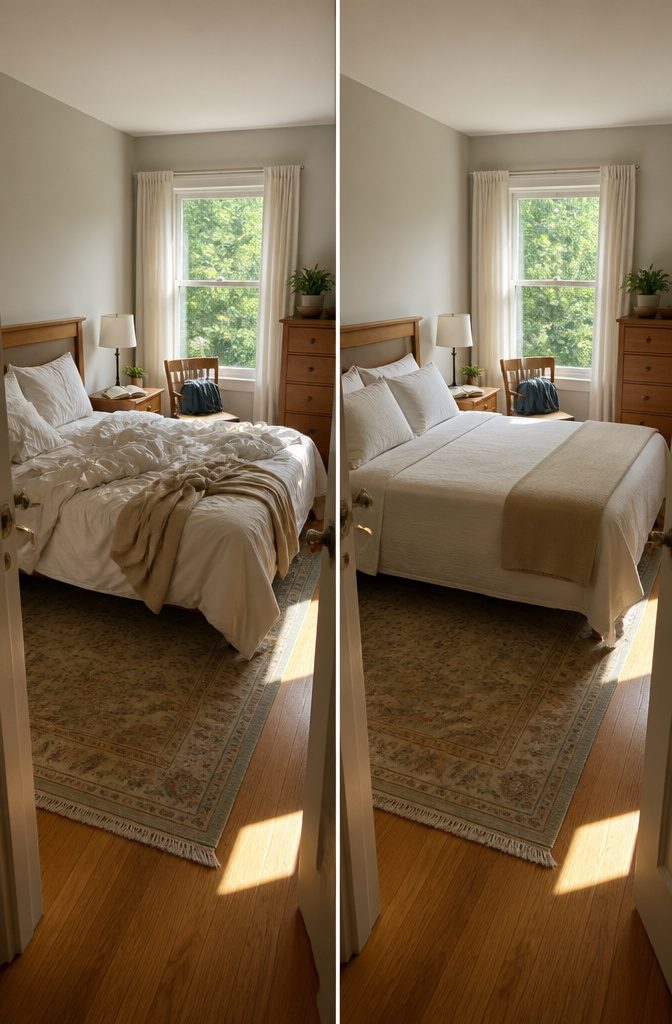
Make Your Bed Each Morning
A made bed takes a few minutes and changes how the whole bedroom reads.
Even when the rest of the room has laundry on a chair or a book left open on the nightstand, a smoothed comforter and fluffed pillows make the space look tidier than it actually is.
The bed is the largest surface in the room, so it sets the visual baseline for everything else.
Starting the day with one small completed task builds momentum. I find that finishing something simple first thing makes it easier to tackle the next chore, and the next.
A well-made bed also keeps dust and allergens from settling into the sheets during the day, which matters if you have allergies or just want to climb into something that feels fresh at night.
The calm of walking into a neat bedroom at the end of the day is worth the two minutes it takes in the morning.
5. Wash Dishes Right Away or Load Them Into the Dishwasher
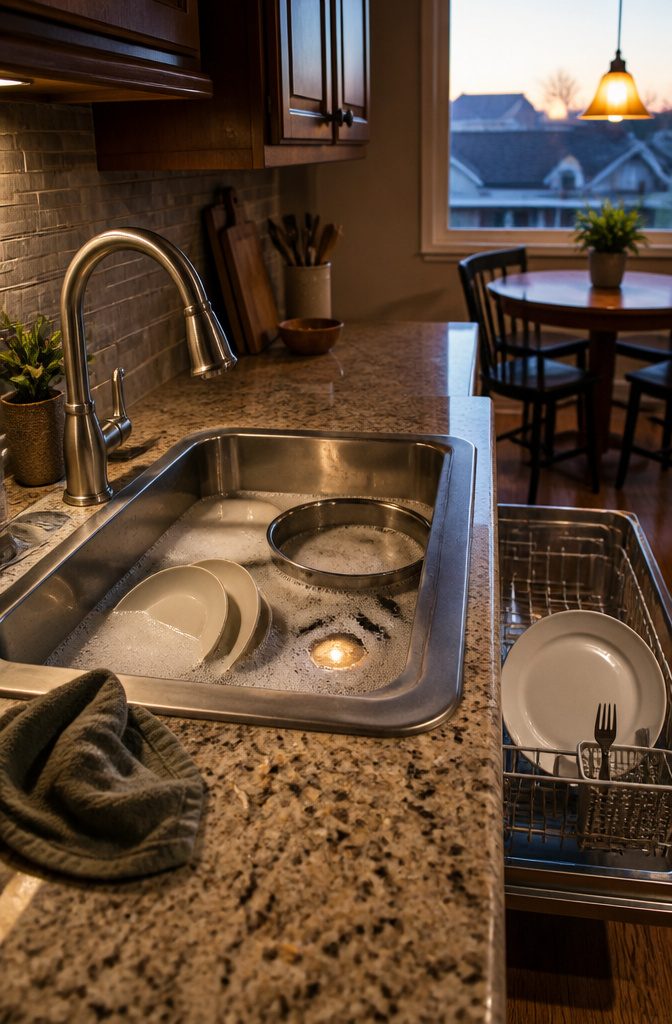
The kitchen stays cleaner when you deal with dishes right after a meal. Food left on plates and cookware hardens, making it tougher to scrub off later, and sitting grime attracts bacteria and odors that settle into the whole space.
Fill the sink basin with a few inches of warm soapy water before you start cooking.
As you finish with each utensil or pot, give it a quick rinse and load it straight into the dishwasher if it fits, or drop it in the basin to soak.
Keep a damp rag within reach and wipe up spills and crumbs as they happen instead of letting them bake onto the counter or stovetop.
Washing dishes takes about 10 minutes. If you stay on top of it daily, the task never builds into the kind of pile that turns cleanup into a project.
Dishwasher owners can scrape and load throughout the day, then start a cycle in the evening. Hand-washed pieces dry while you eat, so putting them away after dinner closes the loop without much extra effort.
6. Vacuum, Sweep, or Mop as the Floor Needs It
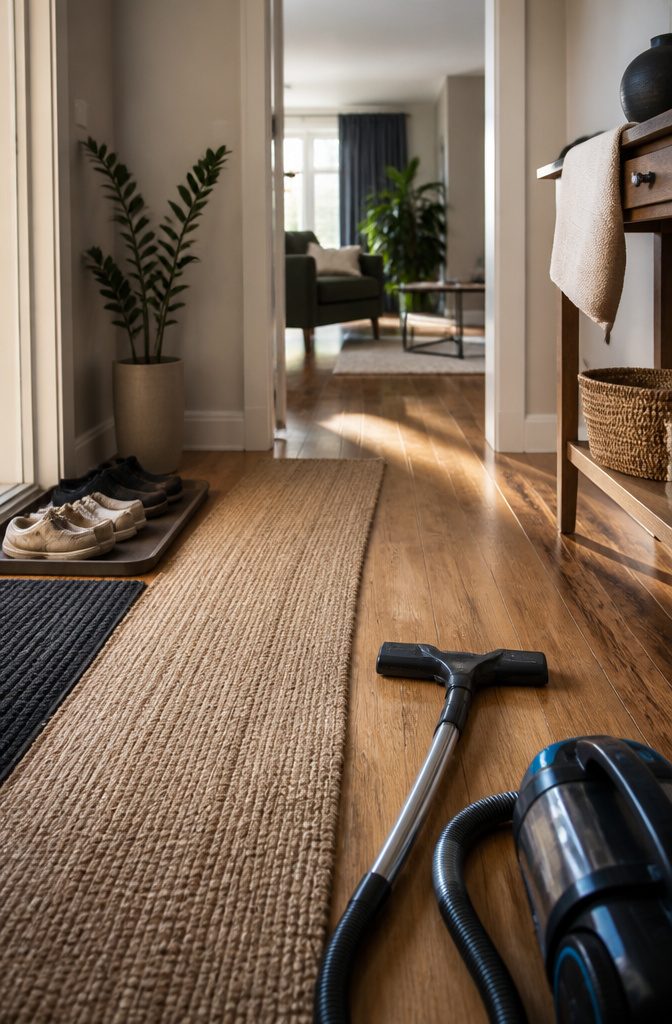
Floors are where dirt stops or where it gets carried room to room, so they sit at the center of any cleaning routine.
I vacuum high-traffic areas twice a week and handle the rest weekly, adjusting up or down depending on what the floor shows me.
Hard floors get mopped when they look dull or feel gritty underfoot; tile in the bathroom and kitchen usually needs it weekly, while wood in the bedroom stretches longer.
A no-shoes rule cuts down on what comes in from outside. Shoes track allergens, mud, and bacteria straight through the house, and removing them at the door keeps floors cleaner and improves indoor air quality.
If going barefoot inside doesn’t work for everyone, wiping shoes on an entryway mat before stepping in does most of the same work without the adjustment.
I dust surfaces with a damp cloth before I vacuum so the floor picks up what falls, then vacuum or sweep starting from the far corner and working toward the door to avoid walking over what I just cleaned.
Merry Maids® handles dusting, vacuuming, mopping, and window cleaning if regular floor maintenance isn’t something you want to manage yourself.
7. Share Tasks With the People You Live With
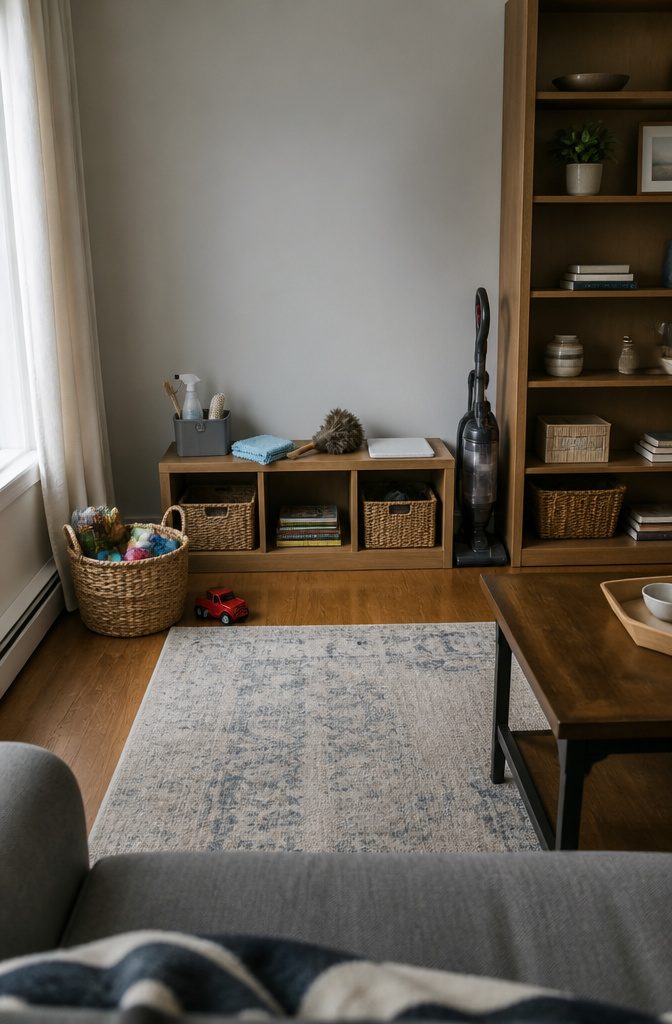
Cleaning a whole place alone wears you down faster than the mess builds back up.
Split the work with whoever else lives there. If kids are in the house, age-appropriate chores teach them the work and lighten what falls to you at the same time.
Younger children respond to timers—set five minutes and see who can clear the most toys before it rings.
Older kids need a chore chart so expectations stay visible, and teens may need an incentive tied to screen time or curfew to actually follow through.
If you would rather buy the time back, hire a cleaning service.
Weekly or monthly visits handle the repetitive tasks that eat your weekends—dusting, vacuuming, mopping—and a one-time deep cleaning every 6 to 12 months keeps the place from sliding past what regular maintenance can fix.
Service costs money, but you get the hours back for anything else.
8. Keep Cleaning Supplies and Storage Where You Actually Use Them
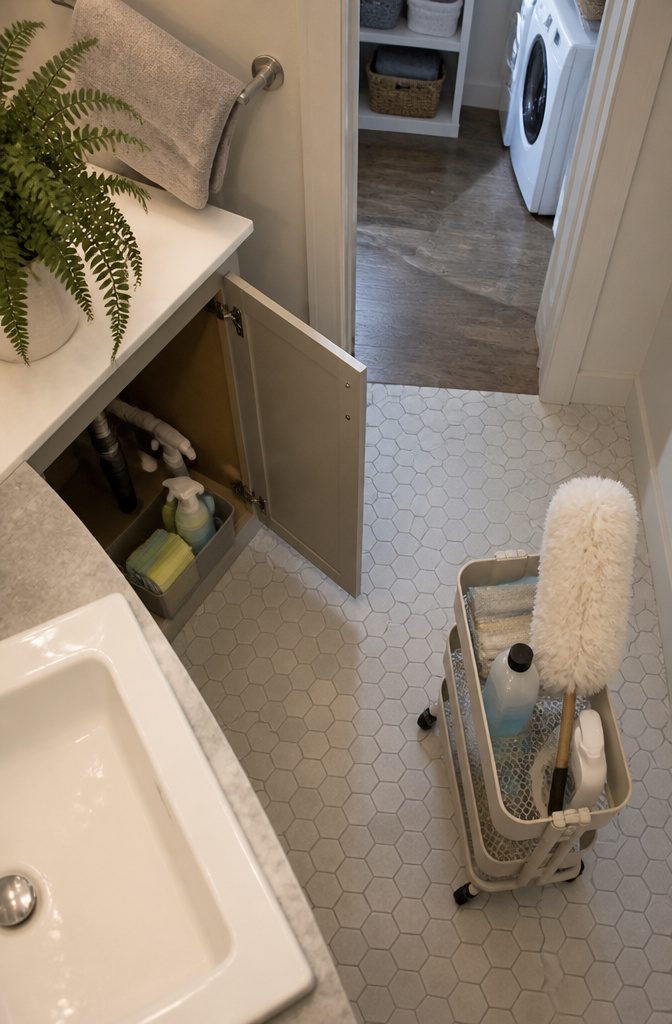
I keep a caddy of microfiber cloths and spray bottles under the bathroom sink, another set in the kitchen, and a third near the laundry room.
When the supplies are already in the room where you use them, you actually clean instead of meaning to.
I used to keep everything in a hall closet, which sounds tidy until you realize it means walking past a smudged mirror three times before you finally go get the glass cleaner.
The friction was enough that counters stayed sticky longer than they should have.
For the main floor, I use a rolling cart from Target that holds the vacuum attachments, a duster, and the bottle of floor cleaner I go through fastest. It lives in a corner of the mudroom and moves with me.
Storage furniture works when the room has space for it—a bench with a lift lid near the entryway, a cabinet in the bathroom—but open bins and caddies do the job when floor space is tight.
The Container Store and Kmart both carry organizers that fit under sinks or inside narrow cabinets, and I have found that a HEPA filter tucked into a bedroom closet pulls double duty as both storage spot and the reason the room needs less dusting in the first place.
Start Small and Work With How You Actually Use a Room
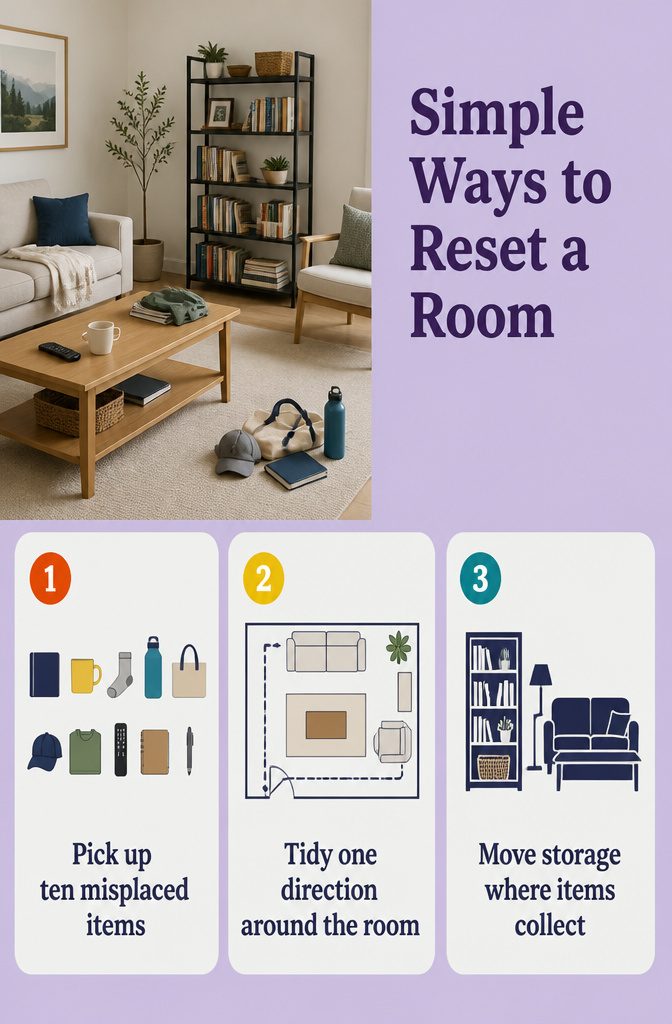
The pick-up-ten-things method gets you moving without a plan: walk into a room, grab the first ten items that don’t belong, and put them where they go.
You’re done in two minutes, the surface looks better, and you didn’t stop to reorganize a drawer.
If ten feels arbitrary, it is. The number just keeps you from spiraling into a whole-room project when you only had five minutes to start with.
Another way in is to work around a room in one direction—say, clockwise from the door—so you don’t zigzag back to the same pile three times. Pick a corner, tidy what’s there, then move to the next section.
The route matters less than sticking to it; otherwise you’re straightening the coffee table, then the bookshelf, then back to the coffee table because you just noticed the remotes.
The systems that hold are the ones that fit how you already use the space.
If bedtime books land in the living room every night, putting a bookshelf in the bedroom just means you’ll have books on the floor in the living room.
Move the shelf to where the books actually pile up, even if it wasn’t the original plan, and suddenly they have a place that takes no extra effort to reach.
Declutter Before You Clean, Then Work Top to Bottom
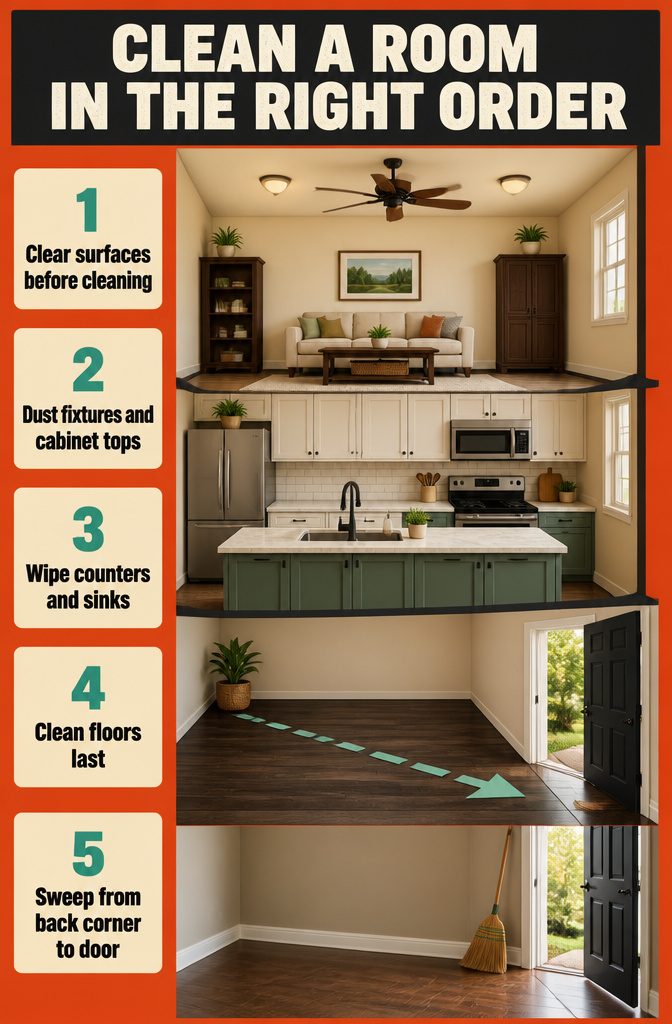
I clear off every surface before I touch a single cleaning tool.
Clutter turns what should be a fifteen-minute pass into stop-and-start shuffling, and anything left out while you wipe down a counter just means you wipe around it instead of under it.
I pull magazines off the coffee table, put shoes back where they belong, and toss mail into its bin. The room looks half-done already, and the actual work goes faster because nothing is in the way.
Then I start high and finish low.
Dust falls, so cleaning the ceiling fan after you vacuum the floor means you vacuum twice. I wipe light fixtures and cabinet tops first, then move to counters and sinks, and save floors for last.
In the kitchen, the top of the fridge gets done before the stovetop does. It sounds obvious written out, but I spent years cleaning in whatever order I felt like and wondering why rooms never looked finished.
One more thing that cuts time: sweep or vacuum from a back corner toward the door. You are not stepping back over what you already cleaned, and dirt does not get tracked through on the way out.
Frequently Asked Questions
What is a good daily cleaning routine for a house?
Wash dishes right after meals, wipe counters as you use them, and do a quick pickup before bed to return anything that migrated during the day.
A made bed in the morning and cleared surfaces at night keep the house ready to use without turning cleanup into a project.
How often should I schedule a deep cleaning service?
A one-time deep cleaning every 6 to 12 months keeps the place from sliding past what regular maintenance can fix. Weekly or monthly visits handle repetitive tasks like dusting, vacuuming, and mopping if you’d rather buy the time back.
How can I prevent clutter from accumulating on my kitchen countertops?
Put things away the moment you’re done with them. Dirty dishes go straight into the dishwasher, papers get filed or tossed, and remotes go back in their basket so a quick wipe doesn’t turn into a rearranging session first.
Why is making the bed important?
A smoothed comforter and fluffed pillows make the whole bedroom look tidier than it actually is, even when the rest of the room has clutter.
Starting the day with one small completed task builds momentum, and a well-made bed keeps dust from settling into the sheets during the day.
Why should I remove my shoes at the front door?
Shoes track allergens, mud, and bacteria straight through the house. A no-shoes rule keeps floors cleaner and improves indoor air quality without much adjustment.
Why is it important to wash dishes daily?
Food left on plates and cookware hardens, making it tougher to scrub off later, and sitting grime attracts bacteria and odors that settle into the whole space.
Staying on top of it daily means the task never builds into the kind of pile that turns cleanup into a project.
What is a clean habit?
A clean habit is a repeated action that keeps mess from building up in the first place.
Washing dishes right after eating, putting items back where they belong the moment you’re done with them, and making your bed each morning are examples that take seconds but stop small tasks from turning into weekend projects.
What is the 20 minute rule in cleaning?
The 20 minute rule suggests spending 20 minutes on a cleaning task before stopping, which keeps the work from feeling overwhelming while still making visible progress.
Setting a timer gives you permission to quit after a set block of time rather than spiraling into a whole-room project when you only had a few minutes to start with.