
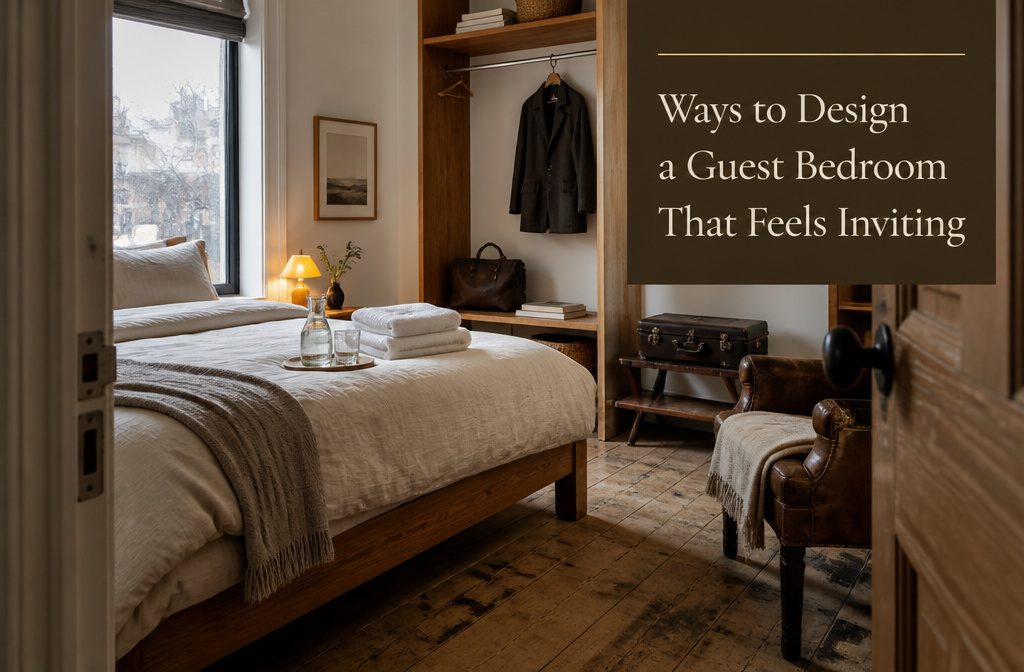
A guest bedroom works when it anticipates what someone needs before they ask, and that starts with a mattress deep enough to sleep through the night on a frame that doesn’t fold out.
Most rooms fail at storage—guests end up living out of a suitcase because there’s nowhere to hang a coat or set down a bag.
Fresh towels stacked on the bed, a water carafe within reach, and a chair that isn’t the mattress make the difference between a place someone stays and a place they’d choose to come back to.
1. Start With a Bed That Actually Sleeps Well
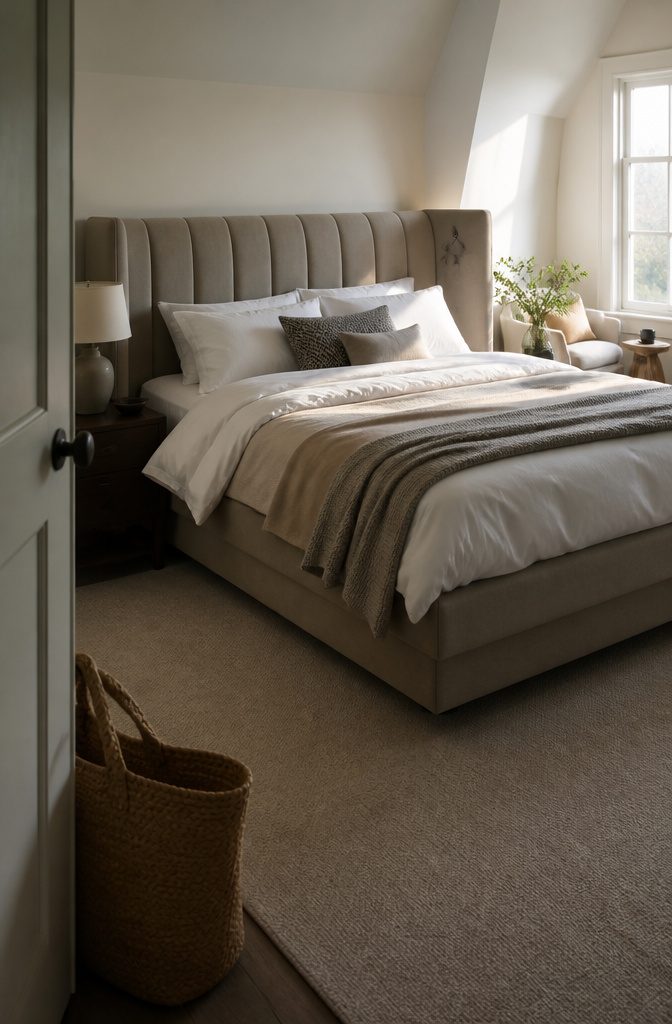
The mattress decides whether guests sleep or stare at the ceiling.
A full-depth mattress on a real bed frame beats a pull-out every time, but if the room doubles as an office or sitting area during the day, the Oscar Sofa Bed or Lumo Sofa Bed give you a two-seater that opens to a double bed without pulling off cushions.
Both come with a Sleep+ Mattress built in, so comfort holds up against a dedicated frame.
For a room that stays a bedroom, the Horizon Bed anchors the space with channel detailing and optional side panels that wrap the sleep zone in a little privacy.
Pair it with the Sleep+ Mattress and adjust the interchangeable layers to match what the guest prefers. A floating base keeps the floor open for bags.
Bedding should layer so guests can kick something off or pull more on.
Percale sheets at 270–290 thread count work in warm climates and seasons; sateen and a duvet hold heat when it turns cold. Keep extra blankets within reach and a mix of feather and synthetic pillows for anyone with sensitivities.
2. Pick Colors That Help People Sleep
Pick Colors That Help People Sleep
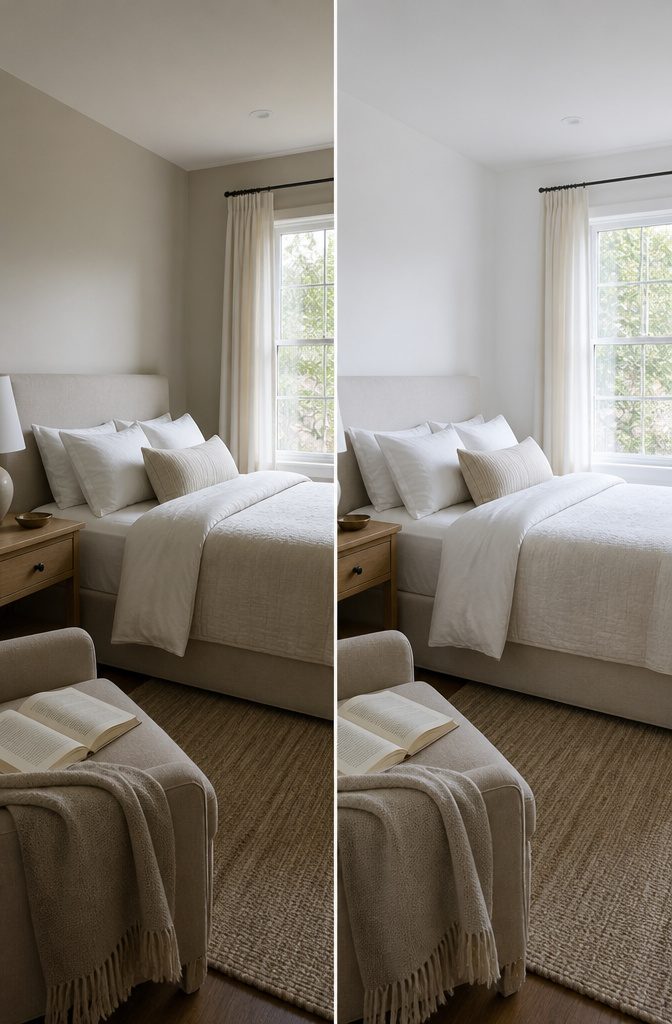
The fastest way to make a guest room feel restful is to start with soft neutrals or whites that recede rather than demand attention.
White Dove OC-17 and Butter Pecan OC-89 give you that clean, calm backdrop most people sleep easiest in, and they work especially well in smaller rooms where a lighter palette makes the space feel larger.
About 95% of the time, that approach wins in tight quarters.
Dark or bold color can succeed if you balance it carefully. Cushing Green HC-125, Smoke 2122-40, and Inner Balance 1522 all land on the deeper, more saturated side but still read as calming rather than jarring.
You want to keep the rest of the room light enough that the walls don’t close in.
A dark scheme works when the bedding, curtains, and furniture lighten the load, but the margin for error shrinks fast in a small footprint.
3. Make the Room Work When No One Is Visiting
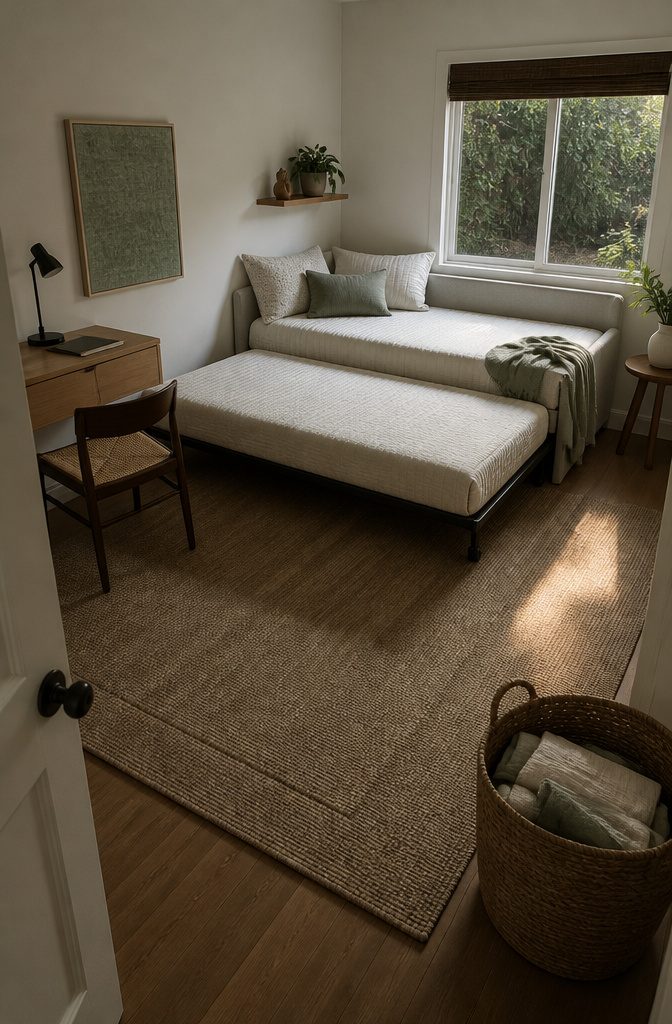
I designed my guest bedroom to work as an office most of the year, because guests arrive three weekends out of fifty-two and I need a desk the other forty-nine.
A daybed with a trundle sits against the wall like a sofa until someone needs to sleep, then the lower bed rolls out for two.
The desk folds flat to the wall when I pull the trundle forward, giving the room to whichever use actually needs it that day.
A Murphy bed opens the floor completely between visits, which matters if the space doubles as a workout room or play area.
Fold it down for the weekend, flip it up Monday morning. Storage beds give you drawers underneath for linens and off-season clothes without claiming closet space, so the room can hold work supplies and guest bedding in the same footprint.
I keep the layout simple enough that shifting from one mode to the other takes five minutes, not an hour of rearranging furniture.
4. Leave Space for Their Clothes and Bags
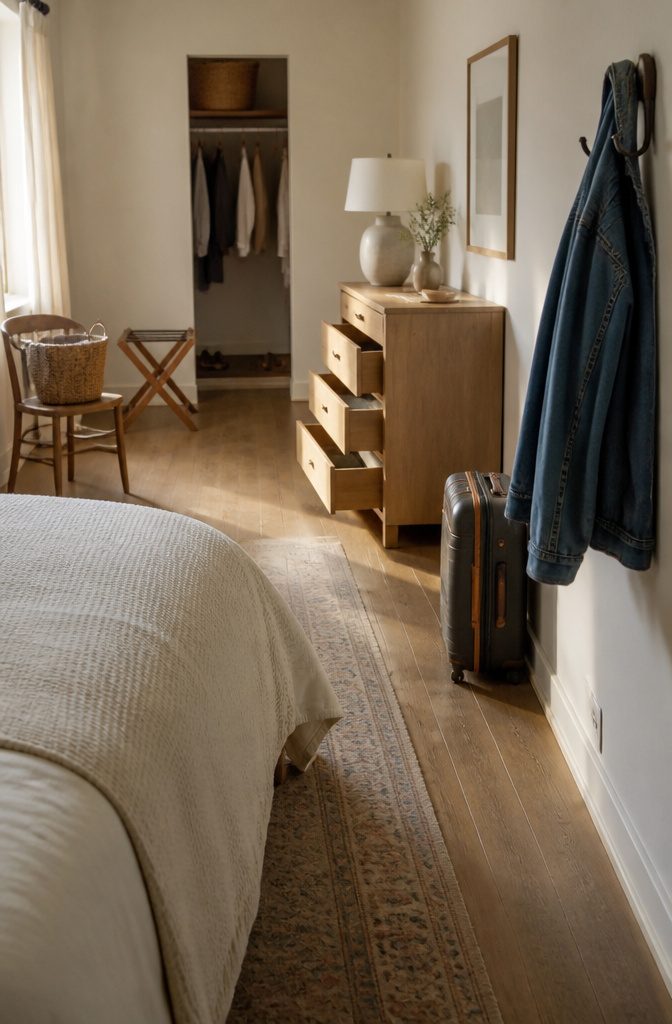
I make sure guests have someplace to put their belongings other than digging through a suitcase on the floor.
Hooks on the wall or back of the door handle the immediate drop when they walk in: purse, jacket, tomorrow’s outfit, anything they want off the nightstand.
A basket on a chair or shelf works for shoes or smaller items that need a home during the stay.
For visits past a weekend, a dresser becomes worth the floor space. Even a narrow three-drawer unit gives them enough room to unpack, and unpacking changes how a stay feels.
If drawer space doesn’t exist, I set out a lidded basket and let them know it’s for worn clothes they want washed later.
The other thing I think about is where luggage sits. Suitcases lean against walls, and hard corners scrape paint or leave marks on anything lighter than satin.
A luggage rack solves it outright, but so does clearing enough floor space that the bag can sit a few inches out from the wall without blocking the walkway.
5. Layer the Lighting for Reading and Sleep
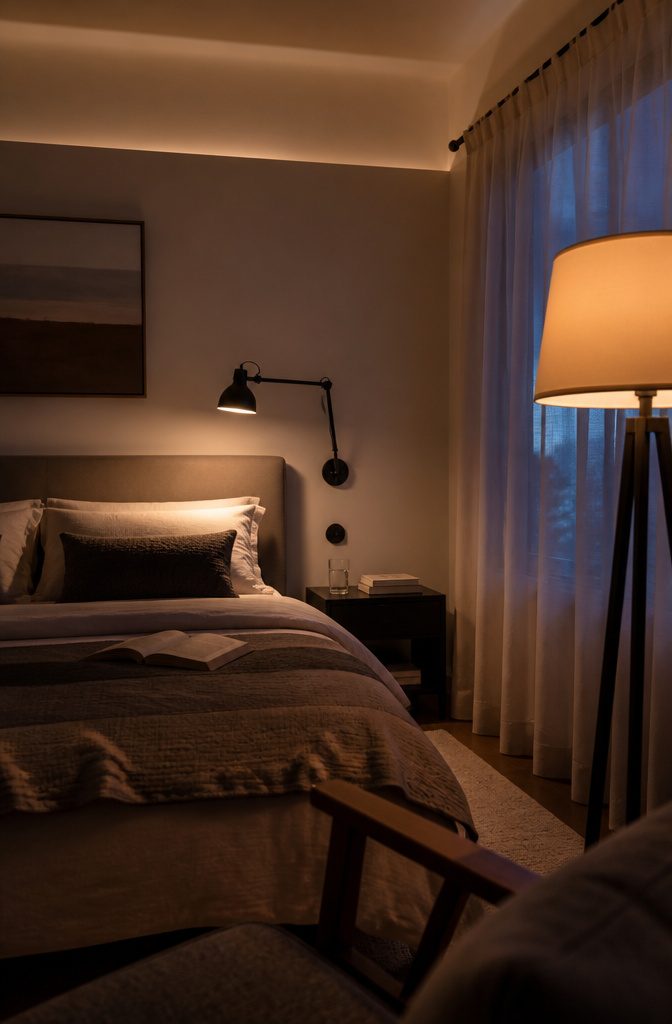
Lighting matters more than most first-time hosts realize, because every guest uses a bedroom differently at night. Some read, some scroll on their phones with the lights dimmed low, and some prefer total darkness.
I’ve found the easiest way to cover all of it is to layer two kinds of light: gentle ambient that washes the whole room and a dedicated reading source guests can point exactly where they need it.
Dimmers solve half the problem on their own. They let someone who wants flattering evening light dial it back without reaching for a phone flashlight later.
Three-way bulbs work the same way if you’d rather not rewire a fixture. For reading light, articulated floor lamps beat table lamps in tight rooms because guests can swing the arm over the bed without shoving a nightstand closer.
Wall sconces… free up space on the sleek black nightstands, leaving room for a stack of books and other personal touches.
That advice holds for any wall-mounted fixture. Swapping a table lamp for a sconce or a compact pendant opens up surface space for water, a phone, or a book without losing the light itself.
6. Add a Chair or Bench Apart From the Bed
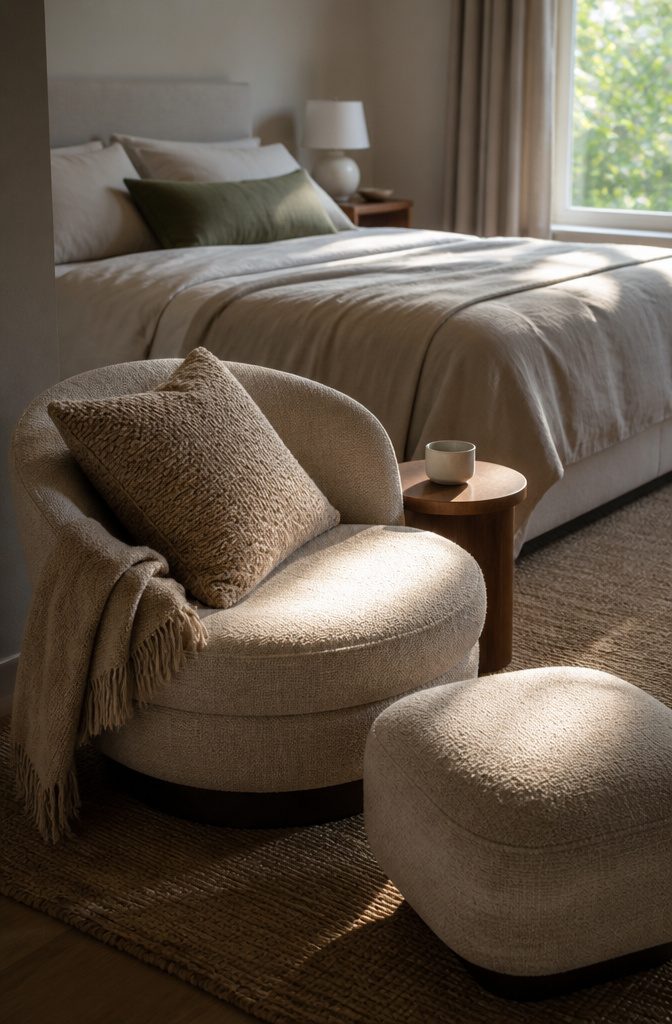
A separate seat makes the room feel like more than a place to crash.
An armchair or slim bench gives guests somewhere to sit for morning coffee, to read before bed, or just to set down a bag they haven’t unpacked yet.
If you’re housing two people in the room, that second spot to sit keeps one person from being stuck on the bed while the other gets ready.
The Seymour Chair works well here if you have the floor space.
It comes with different back heights and base options, so you can spec it for the way the room actually gets used. A high back turns it into a usable desk chair if the room doubles as an office.
The low back with a footstool sets up a reading corner. The swivel base lets you move it around to follow light through the day.
If the room is tight, a bench at the foot of the bed takes up less visual space and still gives guests a place to sit while they put on shoes or lay out clothes.
7. Set Out Water, Towels, and Charging Access
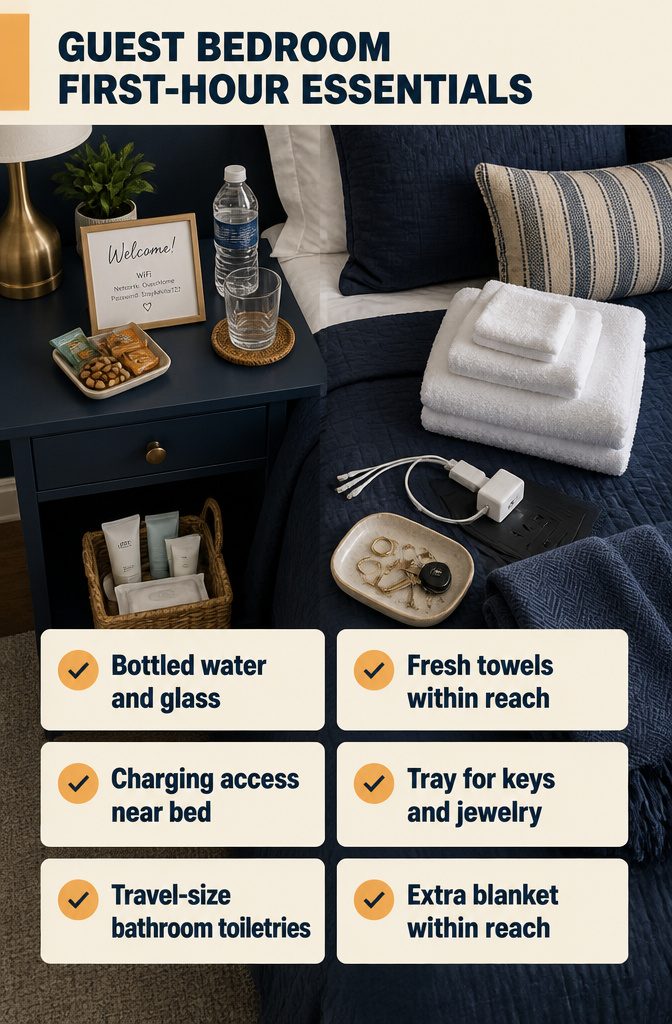
A bedside tray with bottled water and a glass is the simplest way to show someone they were thought of before they arrived.
Add a couple of snacks, a small welcome note with the WiFi password, and you’ve covered the basics before they have to ask.
Other details that make a real difference:
- Fresh towels stacked on the nightstand or bed, not buried in a closet they have to hunt through
- A charging station or visible outlet near the bed, ideally with a multi-device cable if you have one
- A small tray or dish for jewelry, keys, or pocket things
- Travel-size toiletries if the bathroom is shared or they flew in without checked bags
- Extra blankets folded at the foot of the bed or on a chair, so they can adjust without tracking you down at midnight
A scented candle adds warmth if you know they’ll like it, and a book or two on the nightstand gives them something to flip through if they wake up early.
Anticipate what they’d need in the first hour and keep it within reach.
8. Hang a Mirror Where They Can Use It
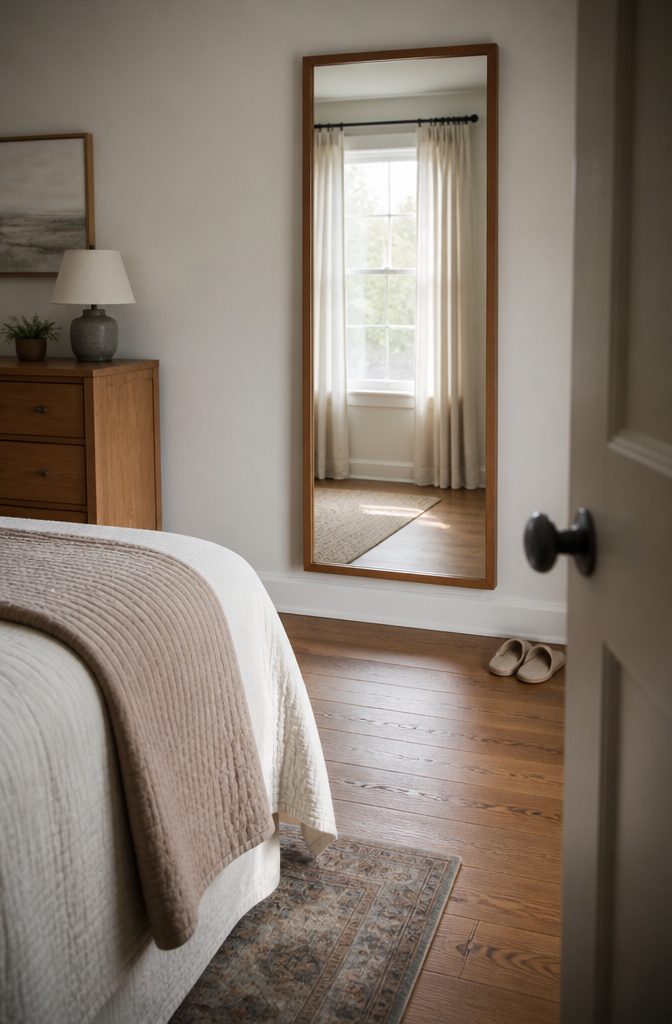
A full-length mirror belongs somewhere a guest can stand in front of it and check an outfit before heading out.
I hang mine on the back of the door or lean it against the wall opposite the bed so it stays out of the way until someone needs it.
If your guest is sharing the bathroom with your family or other visitors, having a mirror in their room means they can get ready without waiting for the space to open up.
Mirrors do more than help with outfit checks. A large one bounces light around the room and can make a small guest bedroom feel bigger than it actually is.
Position it across from a window if the layout allows it, and you’ll amplify whatever natural light comes through. Even in a room with good overhead lighting, that reflected brightness makes the space feel more open and less closed-in.
9. Bring In Plants or Fresh Flowers
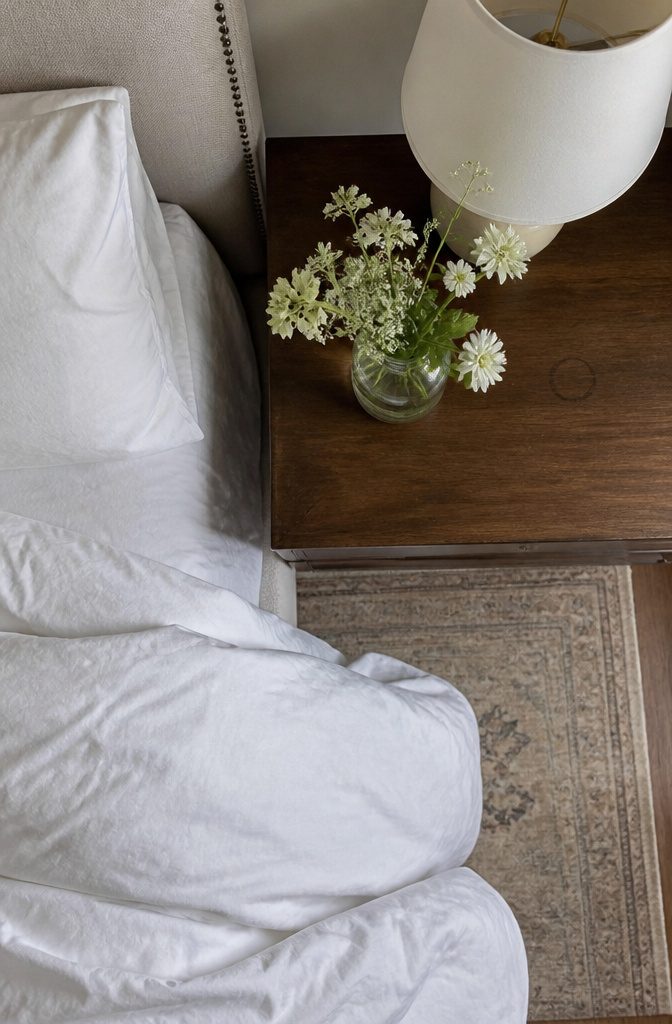
A small vase of fresh flowers or a potted plant makes the space feel cared for without much effort.
I grab whatever’s blooming at the farmers’ market or clip greens from the yard and drop them in a vase on the nightstand. The color lifts the room, and the soft fragrance says someone thought about this.
If you rotate guests often or don’t want to worry about watering, faux stems work just as well. High-quality artificial plants look realistic enough to pass, and they let you add greenery year-round without the maintenance.
A snake plant or succulent keeps things easy if you want something live. Greenery also purifies the air, which makes the room smell cleaner.
When plants aren’t an option at all, I’ve added the greenery through artwork instead. A print with leaves or botanical detail gets you the fresh look without a pot to tend.
10. Layer Throws, Rugs, and Other Textures
Layer Throws, Rugs, and Other Textures
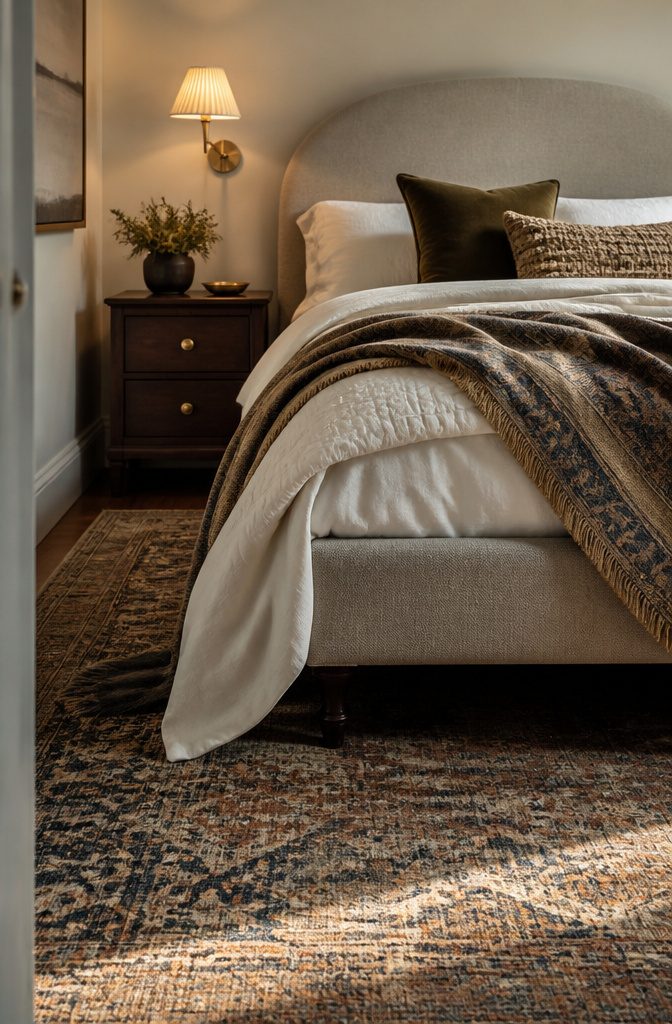
Mixing soft linens, throws, and a vintage rug brings warmth to a guest room without crowding it with more furniture.
The bedroom can handle crisp white sheets, a patterned throw at the foot of the bed, and a rug with some history—each material pulls the eye without asking for floor space you might not have.
I prefer layered bedding that guests can peel back: a duvet, a quilt, and a throw let someone add or shed warmth instead of guessing at their temperature in advance.
An upholstered bed frame adds one more texture against the linens, and swapping in a velvet or woven pillow cover makes the bed feel finished.
Wall sconces or pendant lights free up the nightstand for a stack of books, leaving the bed itself to do the layering work.
Pair dark wood tones with touches of brass if you want the room to feel pulled together rather than assembled from leftovers.
11. Cover the Windows for Privacy and Light Control
Blackout shades win if your guests are traveling across time zones or need real darkness to sleep—they block daylight completely, which matters more than most people admit when jet lag is running the show.
Roller shades keep the lines clean and modern while cutting heat, or you can go with woven seagrass shades for texture and a warmer feel.
Either way, opt for a programmable remote so no one has to crawl out of bed to let the morning sun in or block it out again.
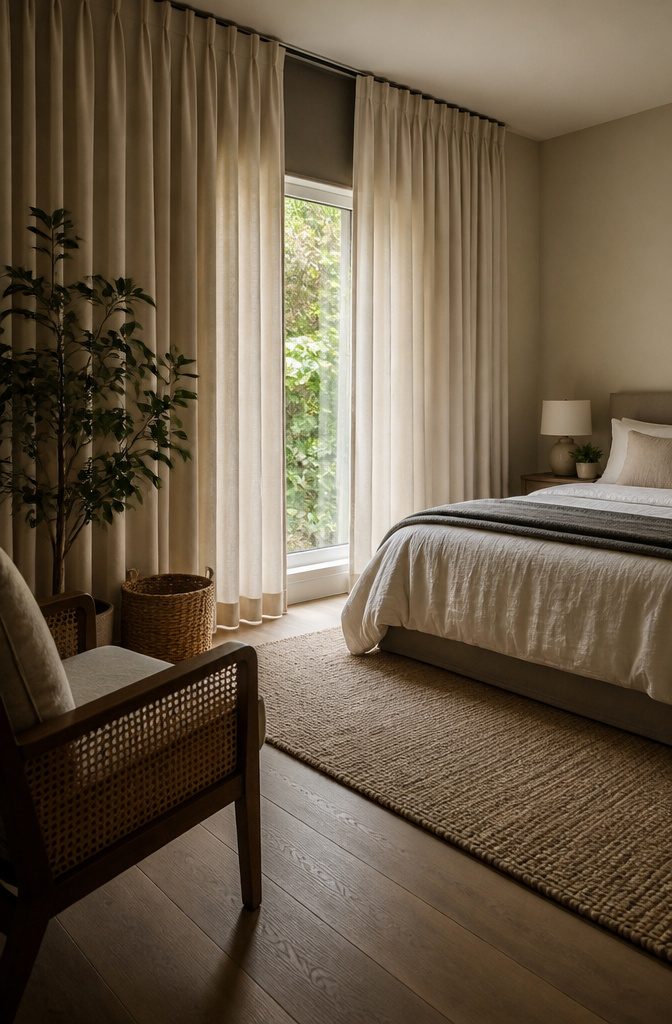
Floor-to-ceiling drapes add a finished look that makes the room feel more intentional, and they give enough coverage for real privacy without sealing the space off entirely.
If total blackout isn’t the priority, sheer curtains or semi-transparent woven shades filter natural light while still keeping the view private during the day.
The drape route costs more upfront but reads as more thoughtfully styled, and that matters in a guest room where someone is forming an impression of the whole stay in the first ten minutes.
12. Add Art, Books, or Wallpaper That Feels Like You
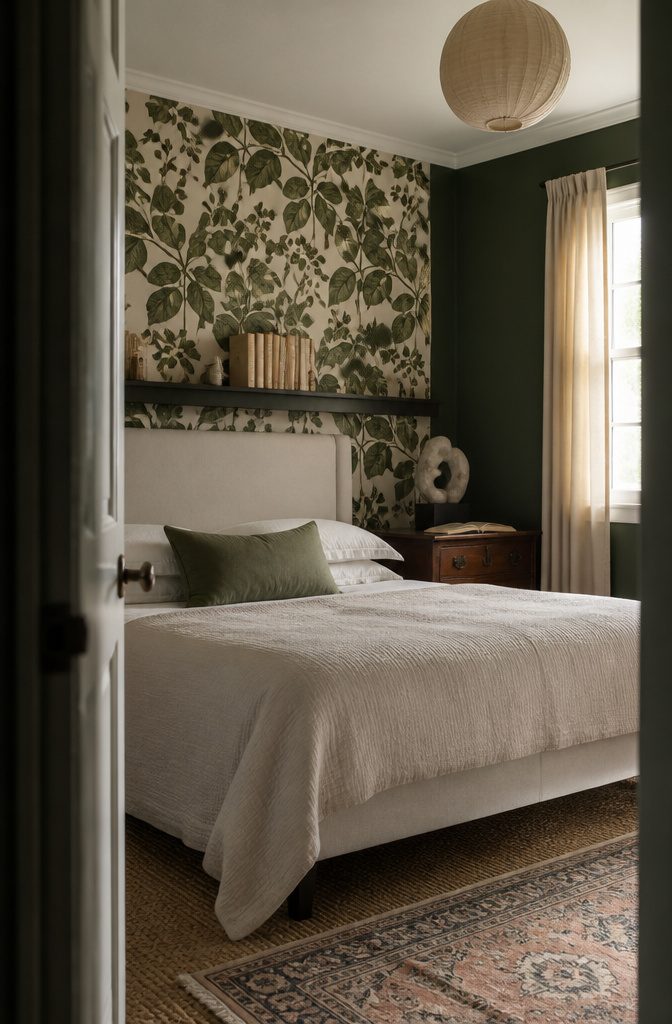
A guest bedroom can hold the personality choices you love but might hesitate to use in your own room, since you won’t wake up to them every morning.
Foliage-patterned headboards from The Inside anchored one two-person guest room I came across, paired with moody green walls that turned the space into a cozy hideaway rather than a bland neutral box. Wallpaper works the same way.
A transportive Schumacher park mural in one guest room offered something closer to an exciting getaway than just another bed. If papering four walls feels like too much commitment, an accent wall still makes an impact.
Books and art carry the same weight.
Shelves stocked with classic literature, sculpture on a dresser, or a bobbin mirror over an antique chest all signal that the room belongs to the house rather than sitting as generic extra square footage.
Retro floral wallpaper with matching woodwork and a checkerboard rug brought an enveloping, nostalgic feel to one vintage-forward guest room, proving that a busy print reads as intentional rather than overwhelming when the rest of the palette stays tight.
13. Use Furniture That Folds or Mounts to the Wall
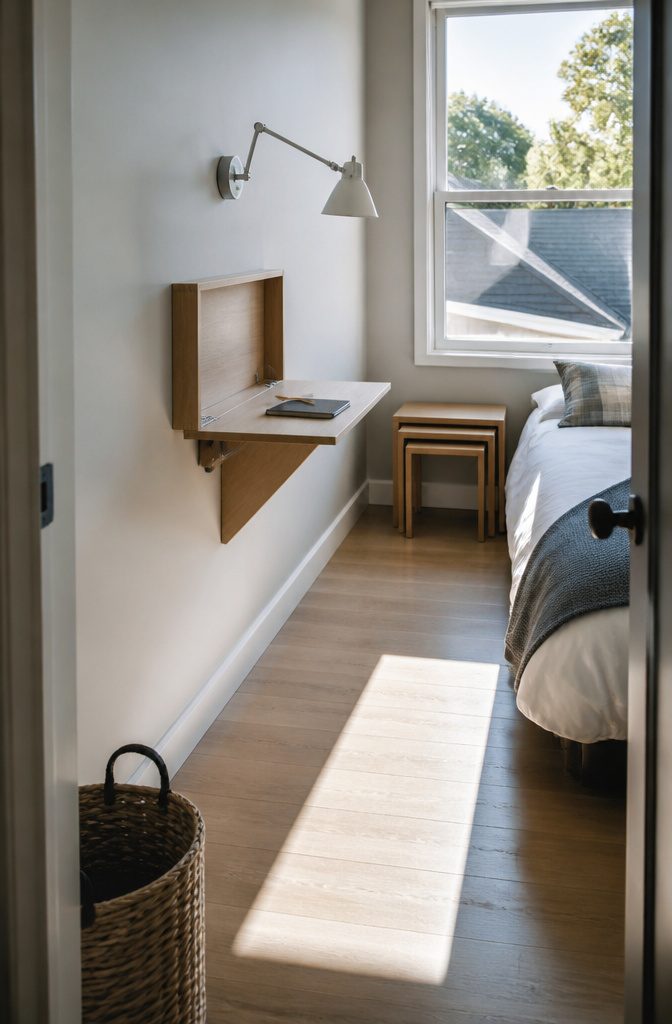
A fold-out desk takes up eight inches of depth when it’s closed, which matters most in rooms smaller than 11 by 11 feet.
I like wall-mounted versions because they disappear entirely when guests aren’t working, leaving the floor clear for luggage or an extra chair.
Nesting tables work the same way: pull them out when someone needs a surface for a book or a glass of water, then tuck them back under each other when the room resets between visits.
Built-ins let you use corners and walls that would otherwise sit empty. A shallow cabinet or shelf unit fitted into an alcove holds clothes or toiletries without eating into the path between the bed and the door.
The Pallino Portable Table Lamp mounts to the wall and swings where you need it, so you can skip the bedside table altogether if space is tight.
That trade gives you room for a chair or a place to set a suitcase flat on the floor, which guests actually use.
14. Quiet the Room or Give Them a Way to Tune It Out
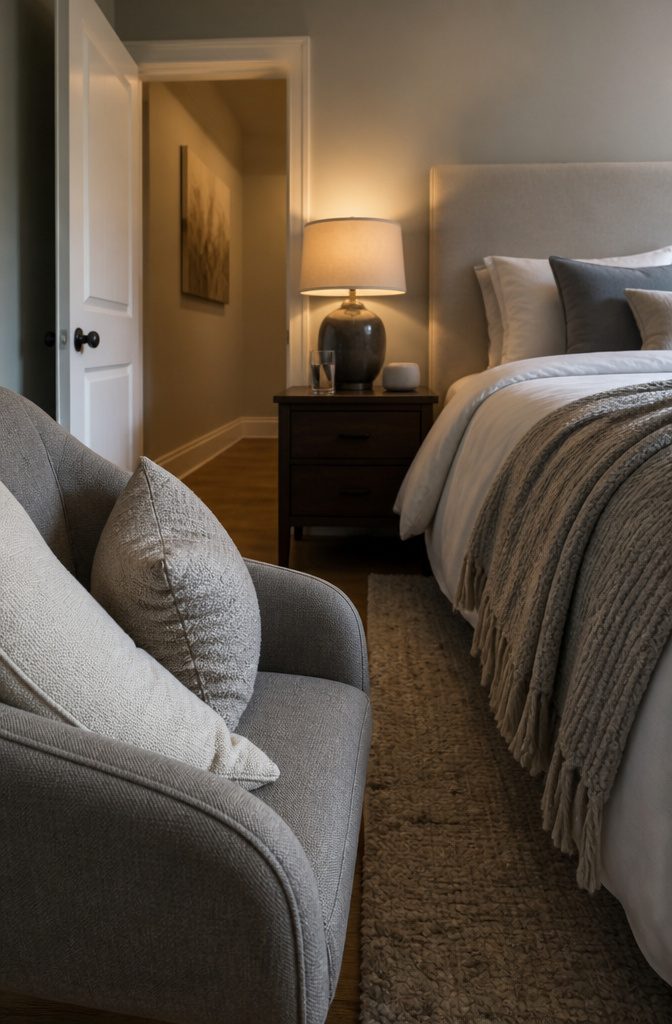
Sound travels differently in every house, but if your guest bedroom shares a wall with a noisy hallway or sits above a loud kitchen, a few quick fixes can make sleep easier.
Extra pillows and throws absorb sound better than bare surfaces, so stacking a couple of cushions on a chair or draping a textured throw over the bed does double duty.
The fabric softens the room acoustically and visually at the same time.
When blocking noise outright is not practical, giving guests a way to tune it out works just as well. I keep a fresh pair of earbuds tied with a ribbon at the bedside, ready if they need them.
A small white noise machine or a fan pointed away from the bed can mask intermittent sounds without adding cold air. Both are inexpensive and take up almost no space on a nightstand.
15. Add Subtle Fragrance if You Want To
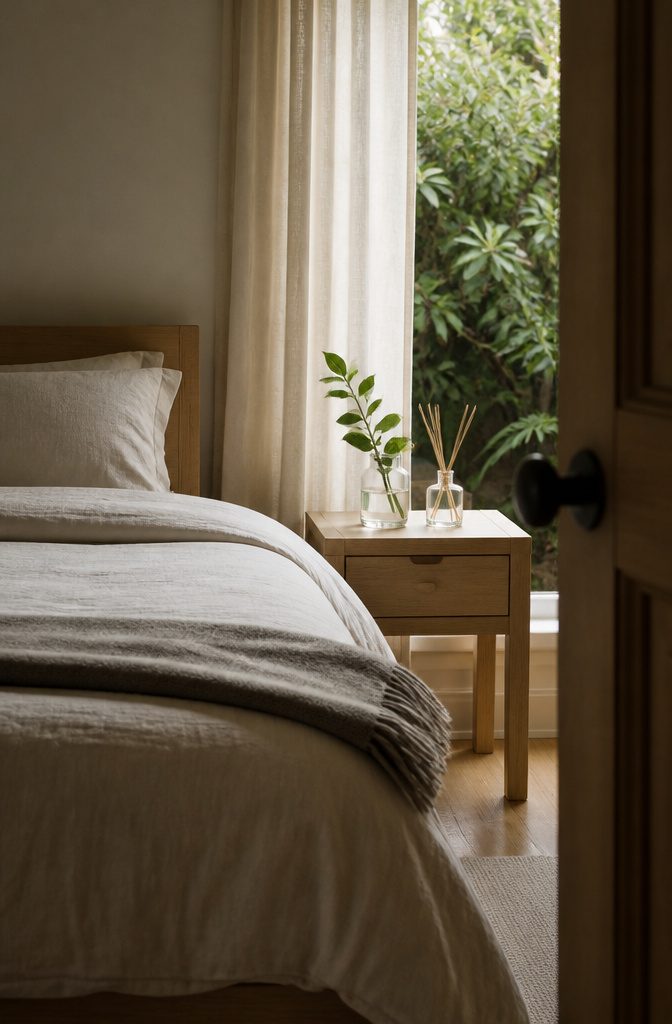
I skip scent most of the time, but fresh flowers or a light diffuser can shift how a guest bedroom feels the moment someone walks in.
The effect is immediate — not decorative so much as atmospheric — and it works best when it stays subtle enough that they notice the room feels welcoming before they notice what made it that way.
I grab whatever is blooming in the yard or pick up a small bunch at the farmers’ market and drop it in a vase on the nightstand.
Even clippings from an overgrown shrub work if the greenery looks intentional. The fragrance is gentle, and it says someone thought about this space before they arrived.
If I am rotating guests or I know the room will sit empty between visits, I use faux stems instead.
High-quality artificial plants hold up better than real ones left unwatered, and they still bring in color and a seasonal feeling without the maintenance.
A potted succulent or snake plant is another low-effort option that keeps the air feeling fresh without much attention.
You want a hint of something alive in the room, not a statement arrangement. If it reads like an effort, it is too much.
16. Adjust Storage and Laundry Access for Longer Stays
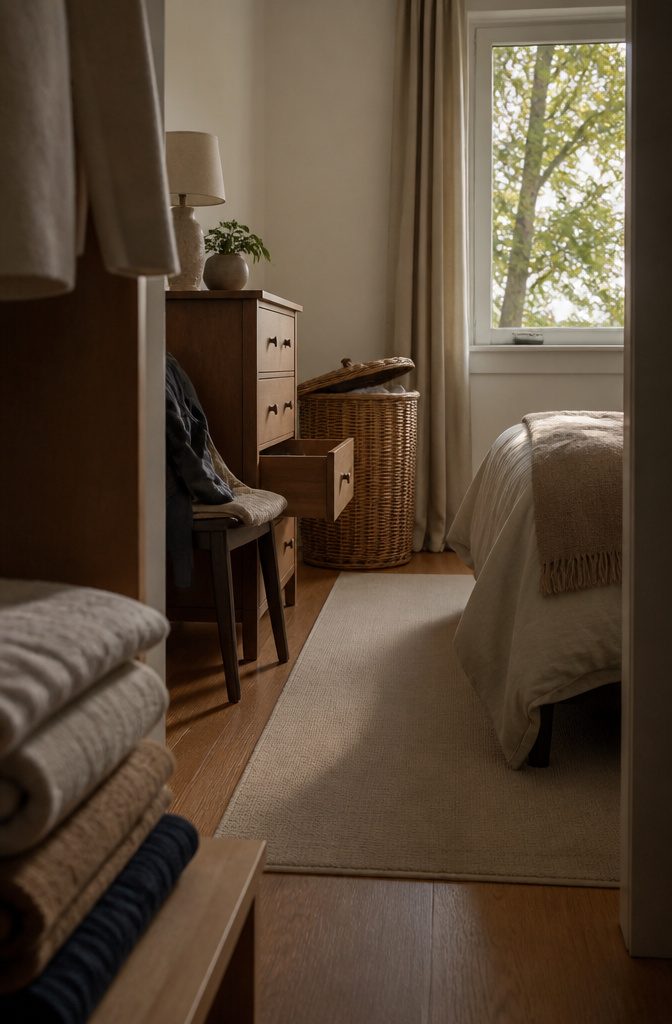
The hamper turns from optional to essential somewhere around day four. A weekend guest can pack everything out again, but anyone staying longer needs a place to keep worn clothes separate without letting a pile build up on a chair.
A larger lidded basket tucked in the closet or beside the dresser handles it without taking over the room.
Storage follows the same line.
Baskets work fine for a short stay, but a dresser matters more once someone is unpacking enough to need drawers. Even a narrow three-drawer piece gives guests a real place to settle in rather than living out of a suitcase.
If the room doubles as an office or reading space when no one is visiting, a slender standing dresser fits along a wall without crowding the layout.
Clear a few drawers before anyone arrives so they know the space is actually theirs to use.
Keep the Window Clear When the Layout Allows It
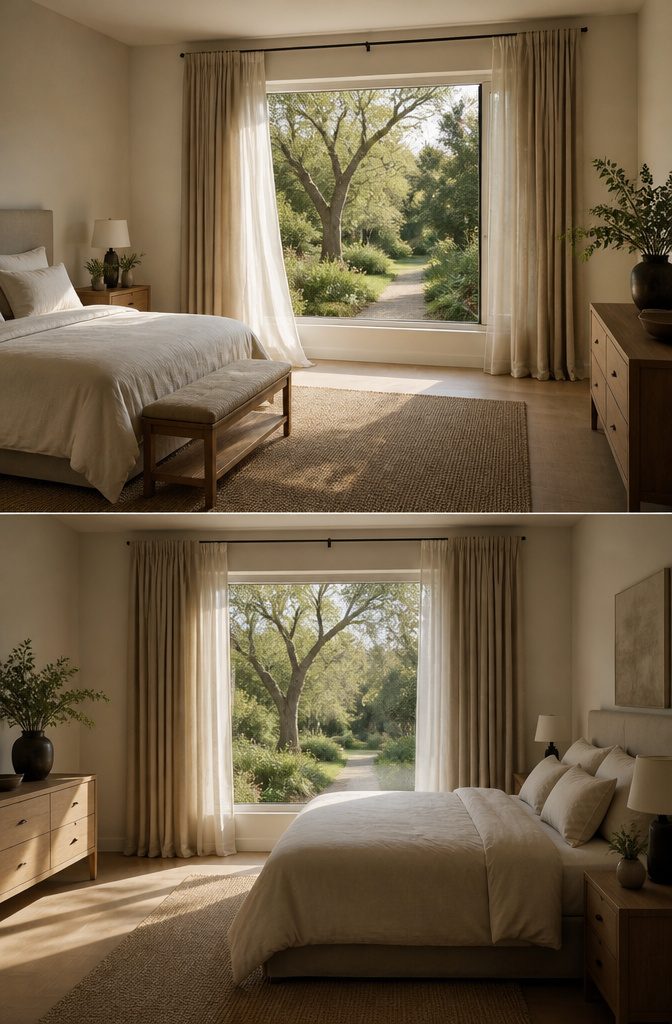
I try to arrange the guest bedroom so the bed doesn’t sit directly in front of the window when the layout allows it.
That setup lets your guest open the window for fresh air, look outside easily, and keeps the room feeling more open.
The natural light flows in without being blocked, and you can hang floor-to-ceiling curtains rather than stopping short at mattress height.
Most people see better out the window when the bed isn’t parked right underneath it. You can glance over from anywhere in the room rather than having to climb onto the mattress for the view.
Some small guest rooms leave no alternative.
A built-in daybed or an extremely narrow footprint sometimes forces the bed against the only window, and that’s fine when the layout demands it. This is about air and light, not a rule you break the room to follow.
Use Washable Paint Where Luggage Hits the Wall
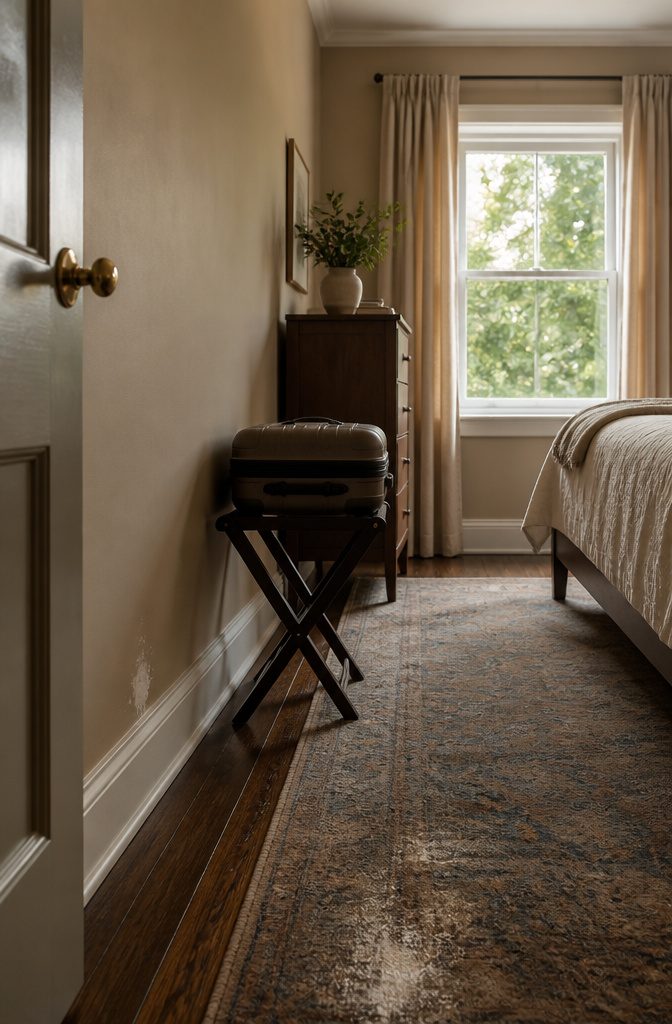
Guest-room walls take more abuse than most people expect.
Luggage gets knocked against the baseboard when someone wheels in a rolling bag, closet doors swing open and closed half a dozen times a weekend, and the bedroom door itself takes contact every time someone steps in.
The paint you choose matters more than the sheen.
I always recommend Regal Select Interior for guest rooms. It’s a washable paint with enhanced stain-release technology, so scuffs and marks come off with a damp cloth instead of repainting every year.
The coating resists mildew, which matters if the room sits unused for weeks at a time without much airflow. Application is straightforward enough for a weekend project, and the finish holds up better than standard wall paint in high-contact zones.
Sheen gets all the attention, but durability is what decides whether the room still looks fresh after three or four visits.
Sleep in There Once Before Anyone Else Does
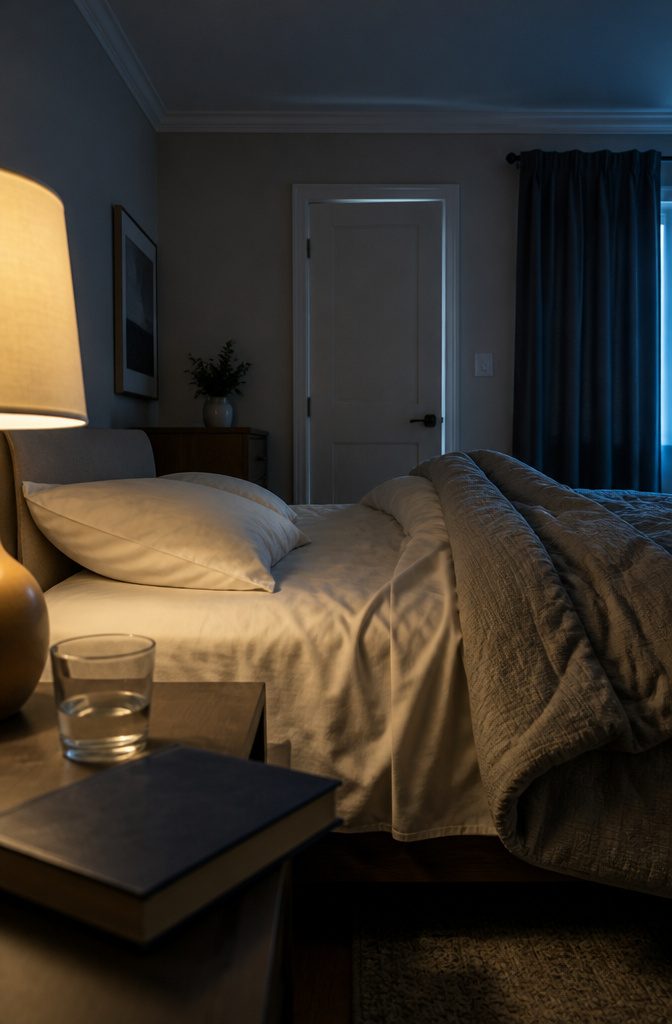
I sleep in the guest room about once a quarter, usually when we have sheets in the wash or when I want to test a change before the next visitor arrives.
Spending a night there shows you exactly what the room needs before someone else has to tell you the pillow is flat or the lamp switch is out of reach from the bed.
I notice things lying there at ten o’clock that I miss completely during the day: whether the blackout curtains actually block the streetlight, if the mattress has a soft spot on one side, how cold the room gets overnight when the vent is in the corner.
I adjust what I find. If the duvet slides off by morning, I add clips or switch to a heavier option.
If the bedside light is too dim for reading, I swap the bulb before anyone arrives. Testing everything yourself means your guests sleep better without having to ask for fixes you could have caught earlier.
Frequently Asked Questions
What should every guest bedroom have?
At minimum, a comfortable bed with good linens, a nightstand with a lamp, and storage for clothes and bags.
Add fresh towels, charging access near the bed, water and a glass, and extra blankets within reach. A separate seat like a chair or bench and a full-length mirror make the room more functional.
How do you make a guest room look like a hotel?
Start with quality bedding you can layer, then add multiple light sources guests can control from the bed.
Keep surfaces clear except for a few thoughtful touches: water, snacks, the WiFi password, and fresh towels stacked where they can see them.
A luggage rack or clear floor space for bags and a scented candle or fresh flowers complete the effect.
What are common guest bedroom mistakes?
Skipping real storage is the biggest one.
Guests need a place to unpack and put worn clothes, not just hooks and a basket. Poor lighting comes next: one overhead fixture is not enough when someone wants to read in bed.
Ignoring sound control, blocking the window with the bed when the layout does not require it, and using paint that shows every scuff are close behind.
What kind of bed is ideal for a guest bedroom?
A full-depth mattress on a real frame beats a pull-out, but the Oscar Sofa Bed or Lumo Sofa Bed work when the room doubles as an office or sitting area.
For a dedicated bedroom, the Horizon Bed with a Sleep+ Mattress gives you adjustable comfort. In tight spaces, a daybed with a trundle or a Murphy bed opens the floor between visits.
Should you put a dresser in a guest bedroom?
Yes, if the visit goes past a weekend.
Even a narrow 3-drawer unit gives guests somewhere to unpack instead of living out of a suitcase, and unpacking changes how the stay feels. For shorter visits, a basket and some hooks handle what they need.
What guest bedroom ideas work best for small spaces?
Use furniture that folds or mounts to the wall: a fold-out desk, nesting tables, or a wall-mounted lamp that swings where you need it.
Keep the palette light, add a mirror to bounce light around, and choose a daybed with a trundle or a Murphy bed to free up floor space when no one is visiting.
What are the best guest room paint colors?
Soft neutrals like White Dove OC-17 and Butter Pecan OC-89 work in most rooms and make small spaces feel bigger.
Cushing Green HC-125, Smoke 2122-40, and Inner Balance 1522 sit on the darker side but still read as calming when you balance them with light bedding and curtains.
What is the best paint for a guest room?
Regal Select Interior holds up better than standard wall paint because it is washable and resists stains.
Guest room walls take contact from luggage, doors, and bags, so durability matters more than sheen. Marks come off with a damp cloth instead of requiring touch-ups after every visit.
Can you put a bed in front of a window?
Avoid it when the layout allows. Placing the bed away from the window keeps airflow open, makes the view accessible, and lets you hang floor-to-ceiling curtains without stopping short.
Some small rooms force the bed against the only window, and that is fine when the footprint demands it.