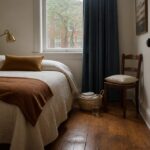
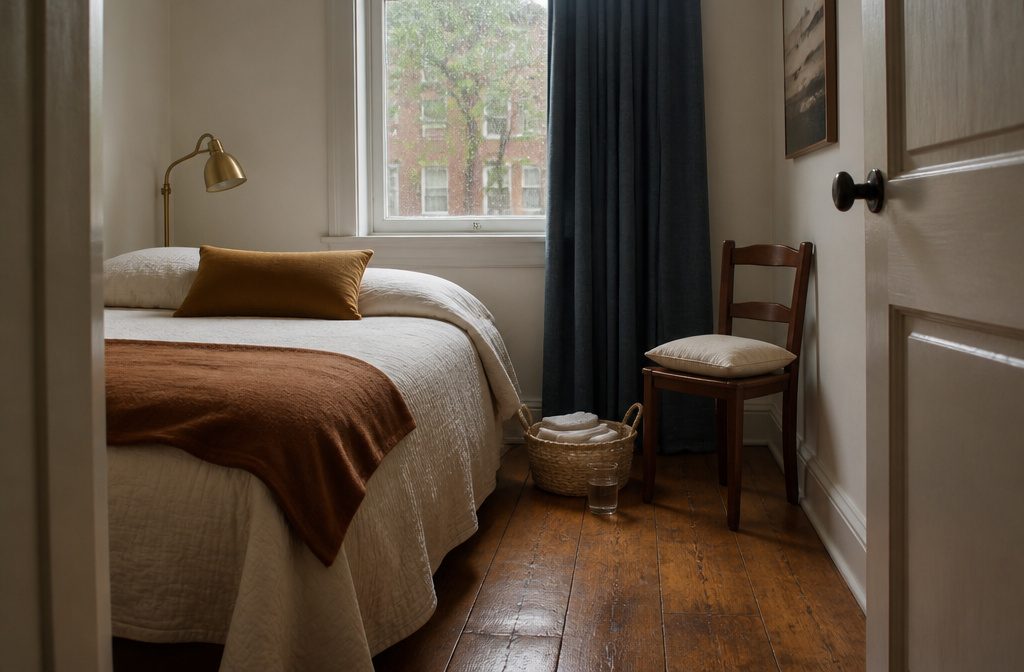
A guest room that works costs about an hour of setup and $200 in bedding, storage and bathroom supplies.
Most people skip the overnight test: sleeping in the space yourself before anyone else does is the only way to catch the streetlight that shines through the curtains or the mattress that feels fine at first but too firm by morning.
1. Choose and Clear the Space
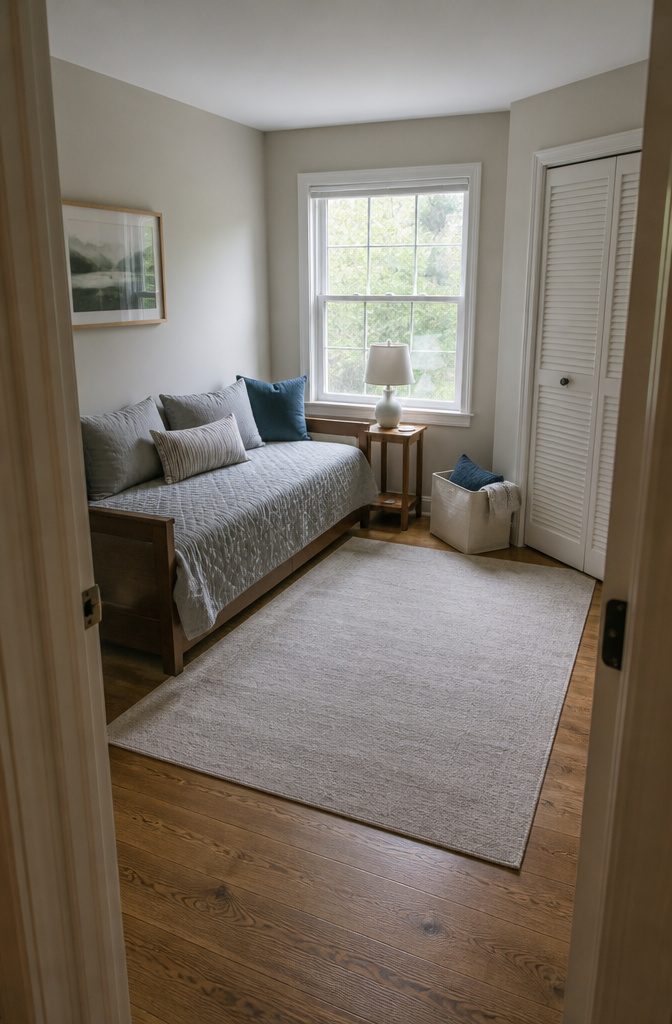
A guest area does not require a spare bedroom. An office with a daybed, a living room with a sleeper sofa, or even a child’s room temporarily converted all work when the setup respects the person sleeping there.
The room choice matters less than what you do with it once guests arrive.
The space has to stay clear between visits. A guest room that doubles as storage—holiday decorations stacked in the corner, boxes shoved under the bed, closets packed with off-season clothes—leaves nowhere for a suitcase or a hanging garment.
I keep portable guest supplies in a bin: extra pillows, a folded throw, charging cables.
They come out when someone books a visit and go back to the closet after checkout. The room stays usable because it is not doing three jobs at once.
If the guest spot is a child’s room, pack toys and school clutter into that same bin system before someone arrives, then swap them back after.
If it is the living room, the coffee table and end table become the bedside setup: a lamp, an outlet within arm’s reach, a coaster for water.
Overfilling any of these spaces with furniture or decor you thought looked welcoming just shrinks the usable square footage a guest actually needs.
2. Set Up a Comfortable Bed or Sleeping Arrangement
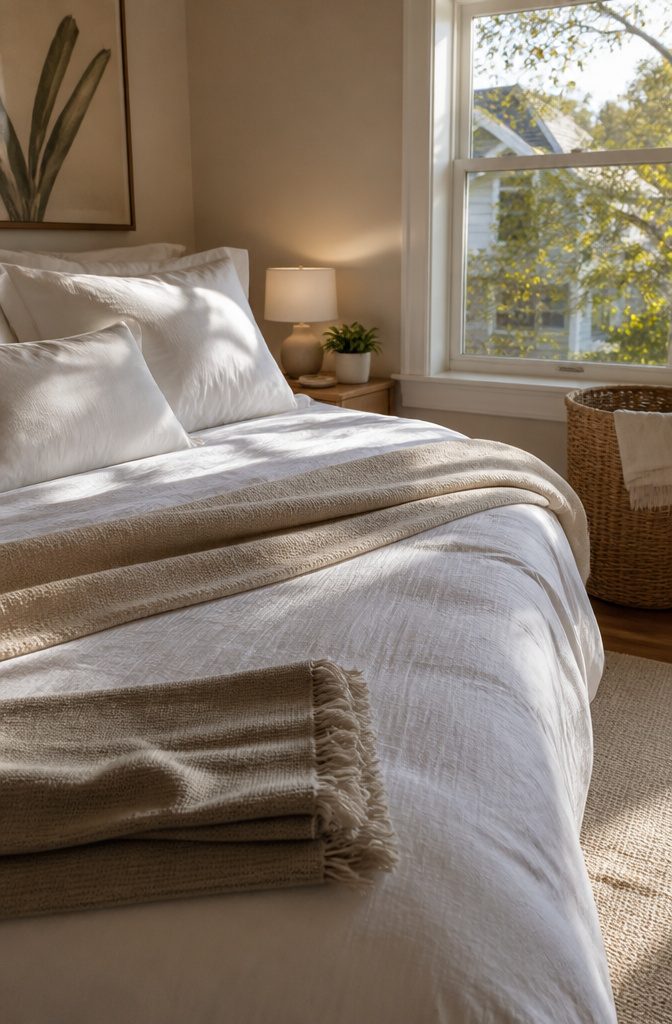
The foundation is clean sheets, enough pillows, and a mattress that does not leave your guest stiff by morning. Before anyone arrives, I check that the mattress still has real support left in it.
If it sags or feels too firm, a memory foam topper goes on first. That one addition turns an adequate mattress into something people actually want to sleep on again.
For sheets, percale cotton at 270–290 thread count hits the right balance of crispness and breathability without the cost of luxury hotel linen.
I keep a second set on hand so I can strip and remake the bed between guests without waiting on laundry.
Most people prefer sleeping with two or more pillows, so I stock at least three per bed, mixing foam and down fill to cover sensitivities.
If the sleeping arrangement is temporary—an air mattress, futon, or sleeper sofa—the same bedding basics still apply. A mattress topper softens the seams and the thinner support underneath.
Layer a flat sheet, a warm blanket, and a throw at the foot of the bed so guests can adjust to their own temperature without hunting through closets at midnight.
3. Provide Storage and Practical Furniture
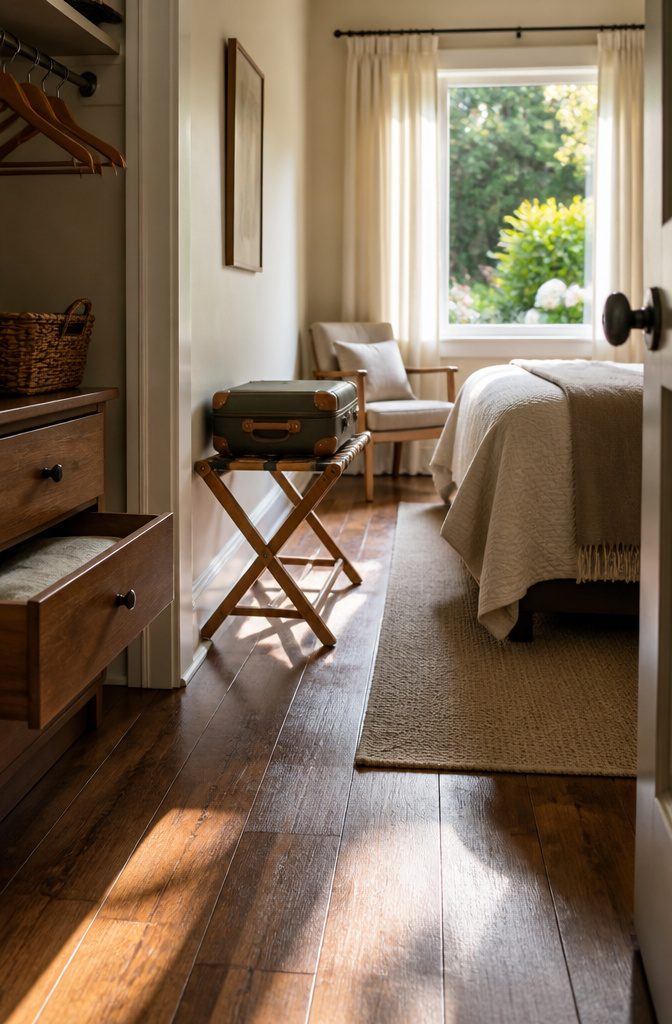
Guests need somewhere to put their things that is not the floor. Clear out a few drawers in the dresser or nightstand, or make room in the closet with a handful of empty hangers.
If you do not have spare drawers, a basket tucked on a shelf or beside the bed gives them a place to stash clothes and toiletries without digging through a suitcase every morning.
A guest room should feel like a retreat, but also offer a place for guests to unpack and settle in.
That means giving them somewhere to set a suitcase. A luggage rack keeps bags off the floor and saves your guests from bending over to fish out a shirt, which nobody wants to do before coffee.
A bench at the foot of the bed, a low trunk, or even a sturdy chair works just as well.
If the room has space, a small desk or an extra chair gives guests a surface for getting ready or catching up on work.
When you are housing more than one person, that second seat makes the room feel less like sleeping in shifts.
4. Make the Bedside Area Usable
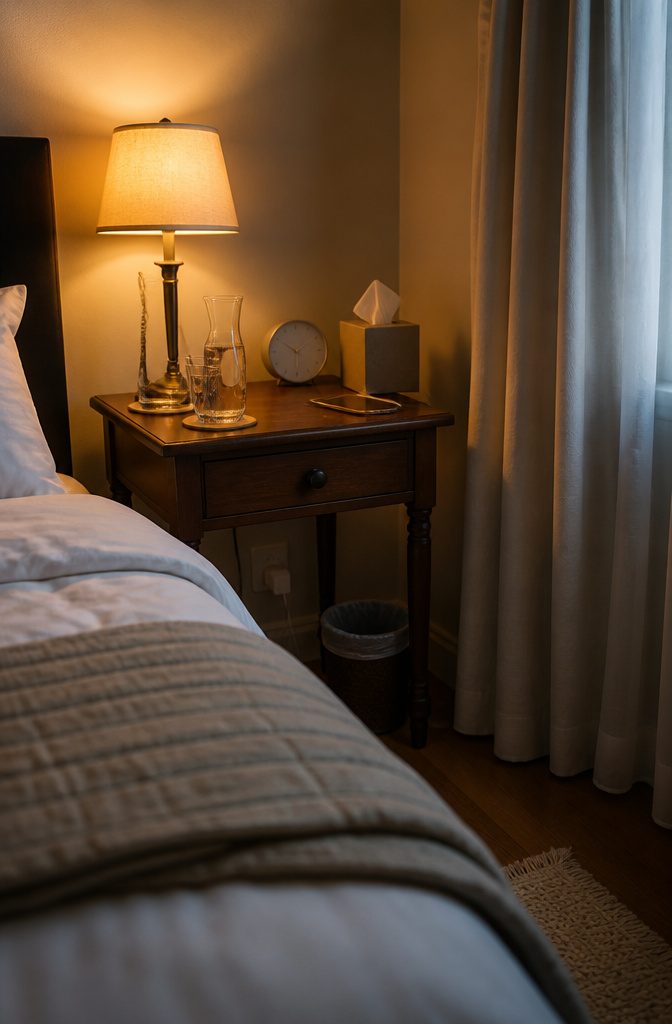
A bedside table anchors the whole setup. It holds what your guest needs within reach at night and eliminates the hunt for an outlet or a place to set their phone.
I keep a small lamp on mine because overhead lighting is too harsh for reading in bed, and a lamp gives control over the mood in the space.
A clock matters more than you might think if your guest tends to wake up disoriented or checks the time before deciding to get up.
Water is not optional.
A carafe looks finished, but a bottle works just as well if that is what you have. Tissues and a small trash can belong on or near the table, not across the room.
I add a charger or make sure the outlet is accessible enough that your guest can plug in without moving furniture. If the outlet sits behind a heavy nightstand, the convenience disappears.
Function beats looks here. A floating shelf or a stool can serve as a bedside surface if space is tight, but it still needs to hold the lamp, the water, and the phone without tipping.
5. Stock Bathroom Supplies and Useful Extras
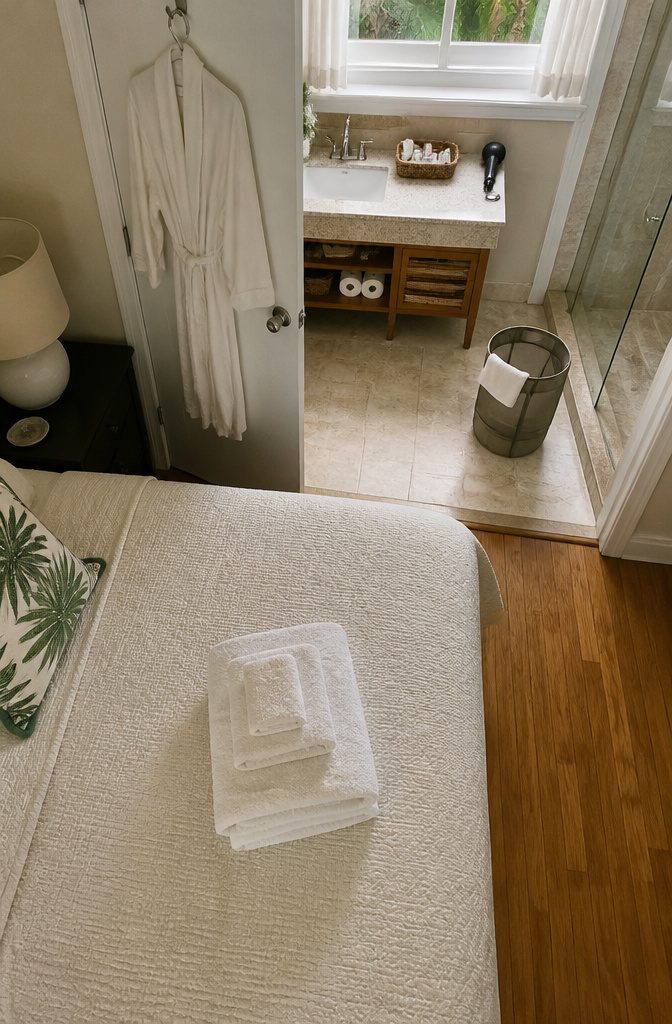
I set out one bath towel, one hand towel, and one washcloth per guest, folded on the bed so nobody mistakes a decorative towel for a usable one.
A basket of travel-sized toiletries goes on the bathroom counter or a visible chair: shampoo, conditioner, body wash, toothpaste, toothbrush, lotion, razors, feminine products, pain relievers, contact solution. I stock extras after guests leave and replenish whatever got used.
Extra toilet paper lives in plain sight, not hidden under the sink. A small hamper helps guests staying more than a few days, especially if they have wet swimsuits or workout clothes.
I keep a pop-up hamper available and mention where the laundry room is if they need it. A robe hanging in the closet and a hair dryer plugged in near the mirror finish the setup without making guests ask.
6. Share Household Information and Add Welcoming Touches
Wi-Fi information belongs where a guest can see it without asking.
Write the network name and password on a small card and tape it to the dresser or the back of the door. I frame mine instead of taping it, which keeps it readable and makes the room feel more intentional.
If you have an alarm system, include the code on the same card. A guest who opens the door at six in the morning without disarming it will wake everyone, and you will both regret it.
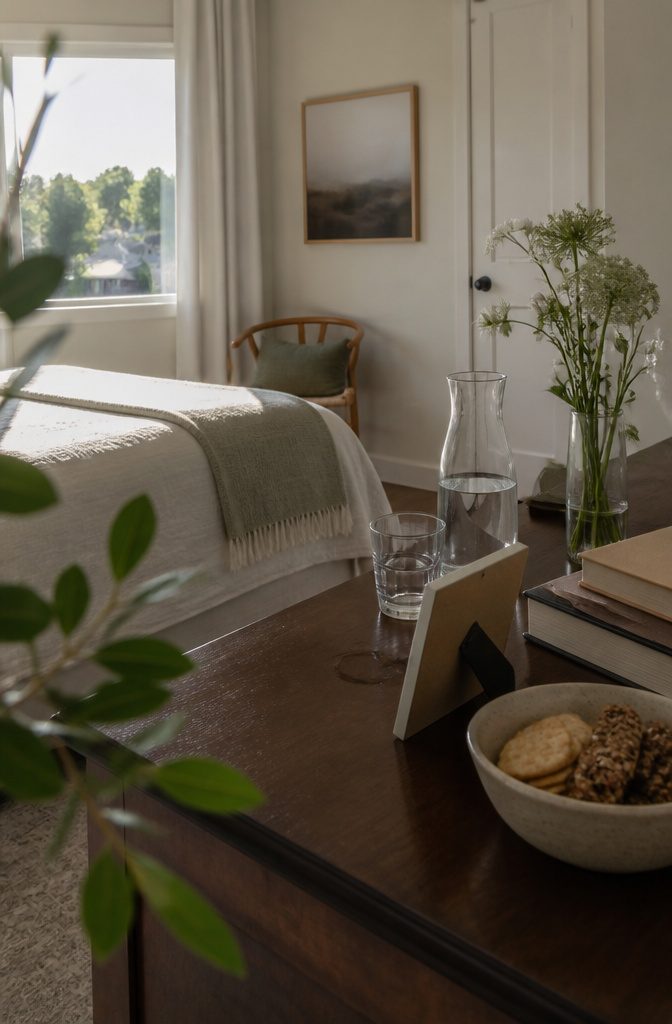
Snacks in the room mean a late arrival can eat without wandering through an unfamiliar kitchen.
I keep granola bars, crackers, or trail mix on the nightstand or next to a coffee station. If you know what a guest likes or needs, stock that instead.
A welcome note does not need to be long. A sentence or two on decent paper makes the room feel like it was set up for a person rather than anyone.
Fresh flowers, a carafe of water with a glass, and a few books or magazines add warmth without adding cost. The flowers can be artificial if you spritz them with something floral.
7. Check the Room From a Guest’s Point of View
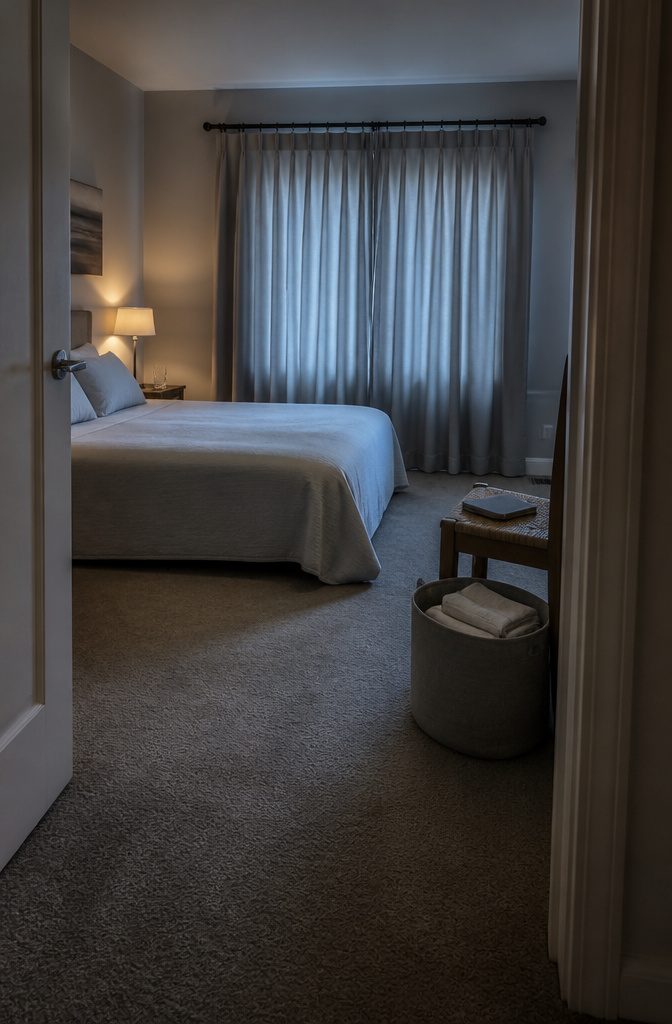
I sleep in the guest room for a night before anyone else does.
That sounds excessive until you discover at two in the morning that the streetlight shines straight through the curtains or that the room holds heat in a way the rest of the house does not.
I test the mattress myself — not for five minutes while making the bed, but for the eight hours a guest would actually use it — because a mattress that feels fine when you sit on the edge can turn out too firm or too soft by morning.
The same night tells me whether the room gets loud when someone uses the bathroom down the hall or whether the heating vent rattles when the system kicks on.
I also pack up the guest supplies once and see how long it takes and what I forget.
If I am converting a space that does double duty, knowing that the whole setup fits in two bins and takes me twelve minutes makes it easier to repeat the next time someone books a weekend.
I write down where I put the spare sheets and which drawer holds the phone charger, because six months later I will not remember, and neither will anyone else in the house.
How I Make the Room Work for Different Guests
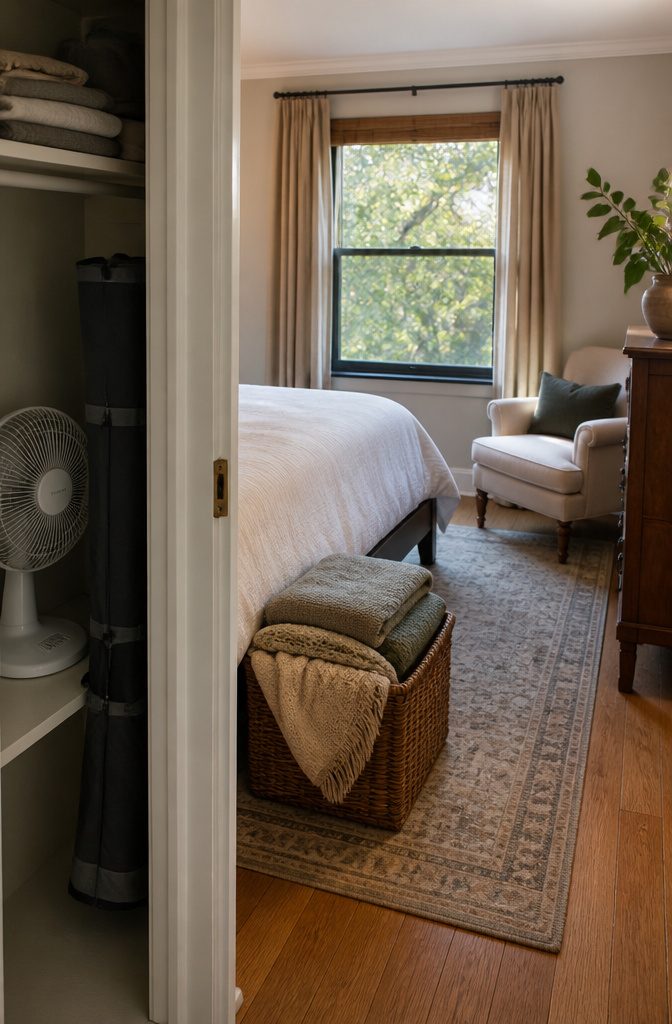
People have wildly different temperature settings, so I always put extra blankets within reach at the foot of the bed or folded in a basket on the floor.
That way someone who runs cold at night can layer up without hunting through closets at three in the morning.
A small electric fan in the closet covers the opposite problem and doubles as white noise if your guest needs it.
When families visit, I keep a pack and play stored in the closet.
It takes up almost no space folded, and it means a toddler or baby has somewhere safe to nap even if the visit is just for an afternoon. The same goes for how long people stay.
Someone crashing for a night tolerates a tighter space and you can get away with bolder decor, but if a relative is staying for weeks or months, the room has to work more like their own bedroom and less like a hotel vignette.
Guest Independence and Accessibility
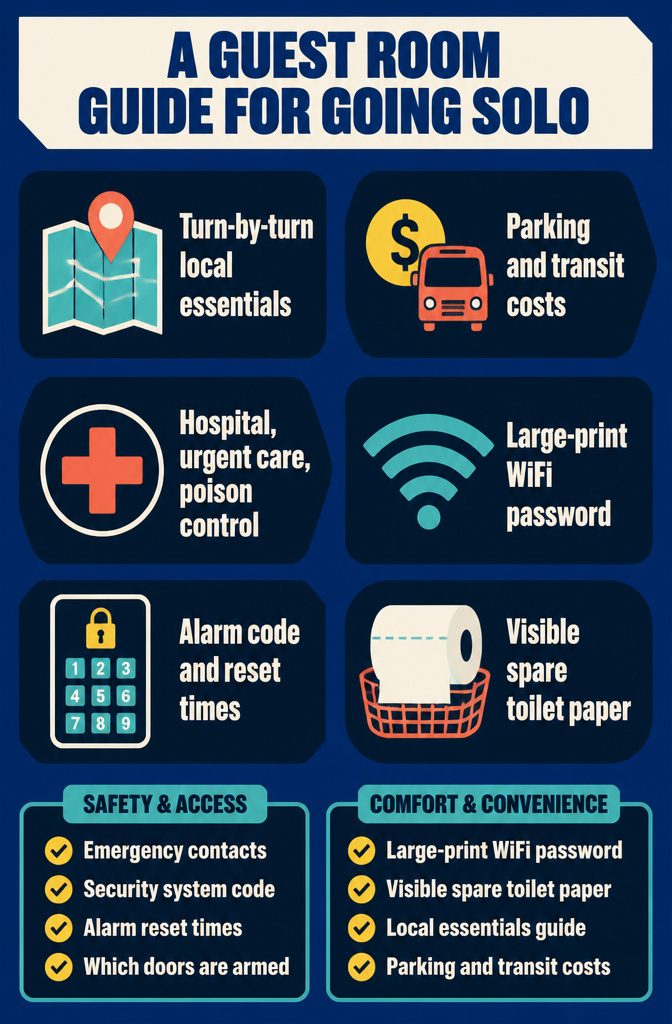
I leave a printed local guide in the room with everything guests need to get around on their own. I include:
- Distances and directions to the nearest grocery store, pharmacy, and gas station — written out turn by turn, not just addresses, since not everyone trusts GPS in an unfamiliar neighborhood
- Costs for parking, public transit, or rideshare estimates to key spots they might visit
- Emergency contacts: local hospital, urgent care, poison control, and my cell number
- WiFi password printed large enough to read across the room — I tape it to the back of the bedroom door so guests can connect every device without asking me to repeat a fifteen-character string
- Security system code if I have one, along with which doors are armed and when the system resets. I learned this after a guest set off the alarm at six in the morning trying to take out the trash.
- Where to find extra toilet paper — I keep a few rolls visible on a shelf or in a basket, not buried under the bathroom sink where someone has to hunt in the middle of the night
Room Style and Personal Character
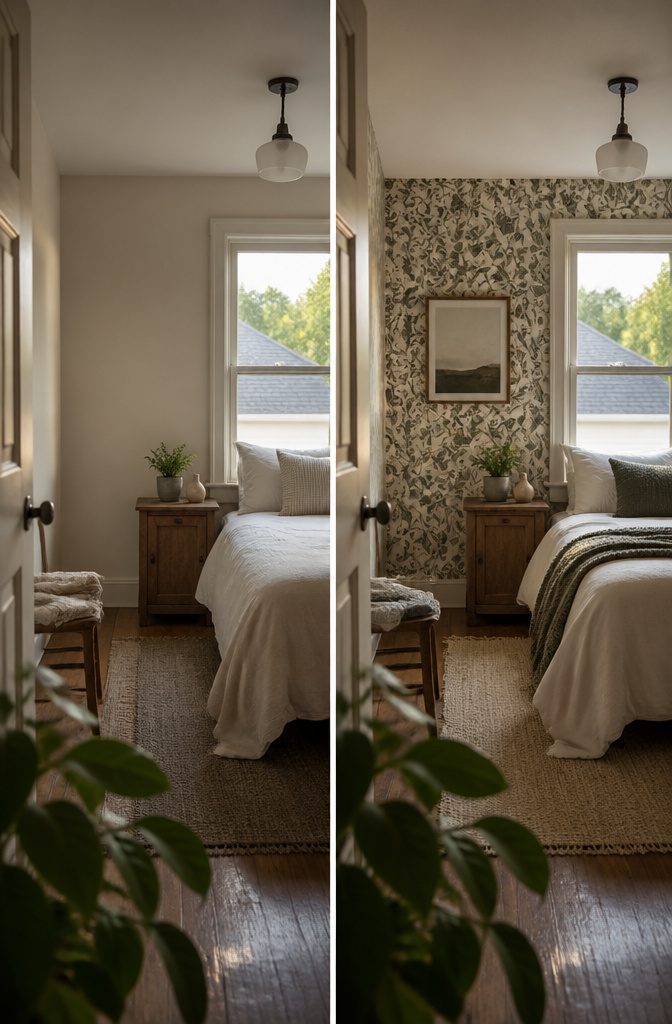
I keep the style clean and let a bold pattern or a single piece of vintage furniture carry the personality.
A graphic wallpaper on one accent wall reads as intentional; covering every surface with personal collections makes the space feel borrowed rather than welcoming.
The room still reflects how I decorate the rest of the house, just dialed back enough that a guest can settle in without working their way through someone else’s entire aesthetic.
Greenery adds life without demanding much wall real estate. I set a small arrangement or a potted plant on the nightstand, and if guests rotate through often or I travel for weeks at a time, I use faux stems instead.
One less thing to water, and it still brings in a hint of seasonal color. A simple bud vase works when the room skews minimal; a trailing plant softens things if the furniture runs modern and geometric.
Monochrome palettes make it easier to keep decor tasteful and spare.
I can layer texture through bedding and a single throw without the room reading busy, and any vintage nightstand or secondhand chair I bring in lands as a considered choice rather than clutter.
Frequently Asked Questions
What does every guest room need?
Clean sheets, at least 3 pillows, a supportive mattress, empty storage space for unpacking, a bedside table with a lamp and water, fresh towels, and basic bathroom supplies.
The room also needs visible Wi-Fi information and enough blankets within reach so guests can adjust to their own temperature.
What are some simple ways to design a guest room?
Keep the style clean with a bold pattern or single vintage piece carrying the personality, rather than covering every surface.
Use a monochrome palette to layer texture through bedding without the room reading as busy. Add greenery with a small potted plant or faux stems on the nightstand.
What should your guest room have?
A comfortable bed with extra blankets, cleared dresser drawers or empty hangers in the closet, a luggage rack or bench for suitcases, and a functional bedside setup with a lamp and accessible outlet.
Stock bathroom supplies in plain sight: towels, toiletries, extra toilet paper, and a hamper for longer stays.
What to do instead of a guest room?
An office with a daybed, a living room with a sleeper sofa, or a child’s room temporarily converted all work when the setup respects the person sleeping there.
Use portable guest supplies stored in bins that come out when someone visits and go back after, so the space stays usable without doing three jobs at once.
How do you make a guest room look like a hotel?
Use percale cotton sheets at 270–290 thread count, layer bedding with a throw at the foot of the bed, and keep a luggage rack or bench for suitcases off the floor.
Add a bedside lamp instead of relying on overhead lighting, make sure the outlet is accessible for charging, and leave travel-sized toiletries visible on the bathroom counter.
How do I style my guest room?
Let a bold pattern or single vintage piece carry the personality while keeping the rest clean and spare. Someone staying one night tolerates bolder decor choices, but longer stays need the room to work more like their own bedroom.
The style should still reflect how you decorate the rest of the house, just dialed back so a guest can settle in.
What are common guest bedroom mistakes?
Overfilling the space with furniture or decor that shrinks usable square footage, using the guest room as storage between visits, and overlooking practical needs like empty drawers or accessible outlets.
Another mistake is neglecting a cohesive design so the room feels like an afterthought instead of aligning with the home’s overall aesthetic.