A coffee bar can fit into one free foot of counter or occupy an entire wall, and which setup works depends on whether you’re working around existing appliances, starting from scratch, or trying to avoid any permanent installation.
The constraint that matters most is whether you can mount shelves or drill into cabinetry, because that splits the list into built-in architectural solutions and freestanding ones that move with you.
A waterfall-edge counter uses the same stone from top to floor with no base underneath, a cantilevered marble slab needs concealed steel brackets, and Miele’s built-in espresso machines start around $3,000 installed.
1. Countertop Corner or Kitchen Counter Station
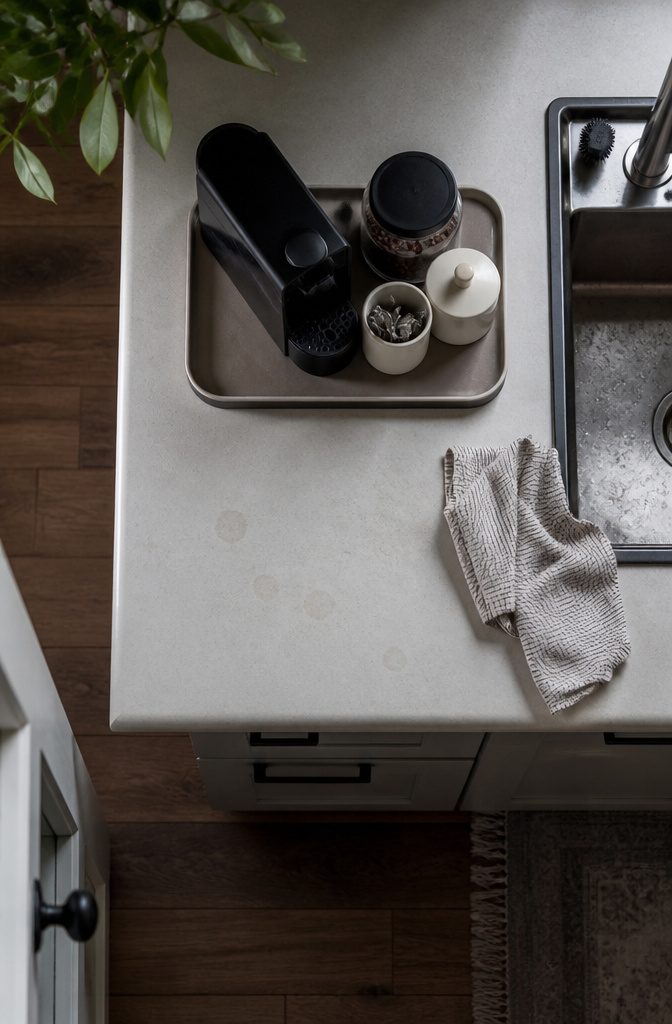
A kitchen counter needs one to two feet of space near the sink to work as a coffee bar.
You’re already next to water and outlets, and the plumbing means you don’t have to carry a wet carafe across the room every morning.
A tray keeps the setup visually separate from food prep without any permanent changes.
I use it to corral the machine, a canister of beans, and whatever else belongs there, and it prevents the coffee corner from bleeding into the rest of the counter clutter.
Canisters for beans, sugar, and spoons add definition and make the area feel organized instead of improvised.
The same corner can serve as a self-serve station when guests show up. They pour their own refills without opening cabinets or asking where things are, which keeps conversation moving and takes one task off your list.
2. Floating or Wall-Mounted Shelves
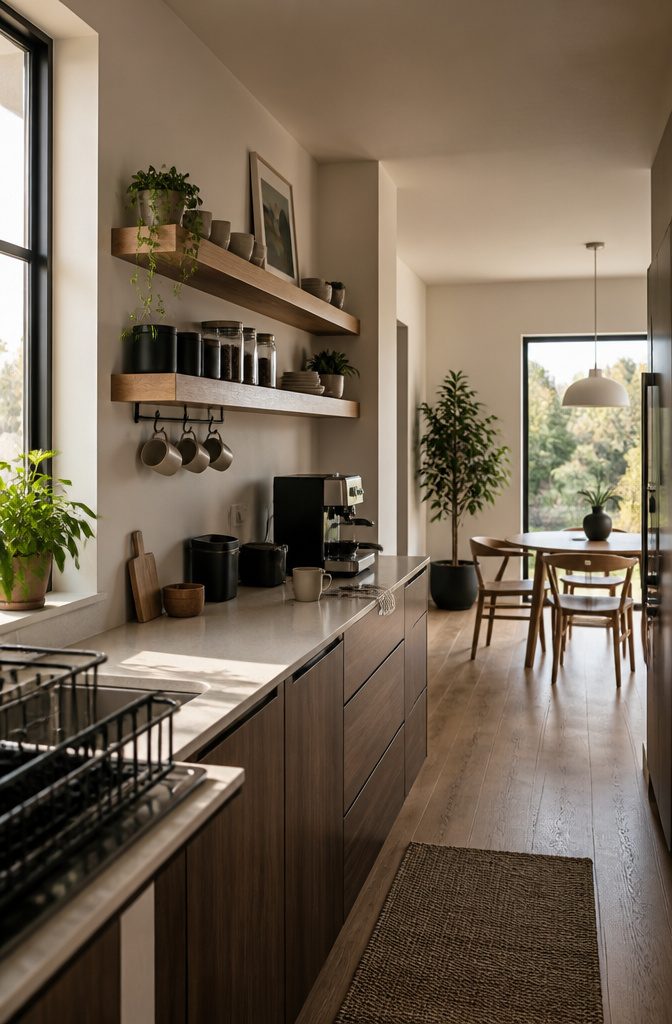
Floating shelves claim wall space when counters run out. Two or three shelves above the machine hold mugs, canisters, the grinder if counter space below runs tight.
Thick shelves — two to three inches — read as intentional rather than provisional, especially in wood. Oak, walnut or ash in a floating mount disappears the hardware and keeps the look minimal.
The shelves work two ways.
First, as overflow storage: machine and prep zone below, everyday mugs and beans above, hooks underneath if you want them. Second, as the station itself when a full counter is not an option.
A few shelves on their own become the coffee bar — machine on the lowest shelf, supplies and mugs stacked above. Either way, the vertical arrangement leaves floor space alone.
Transparent acrylic shelves take the same approach but with different geometry. Mugs appear to float against the wall, and the transparent brackets stay out of sight.
Clear shelving supports more weight than most coffee setups ask for, and the effect is architectural rather than decorative. If the modern look matters more than the warmth of wood, acrylic wins.
3. Pantry, Closet, or Cabinet Conversion
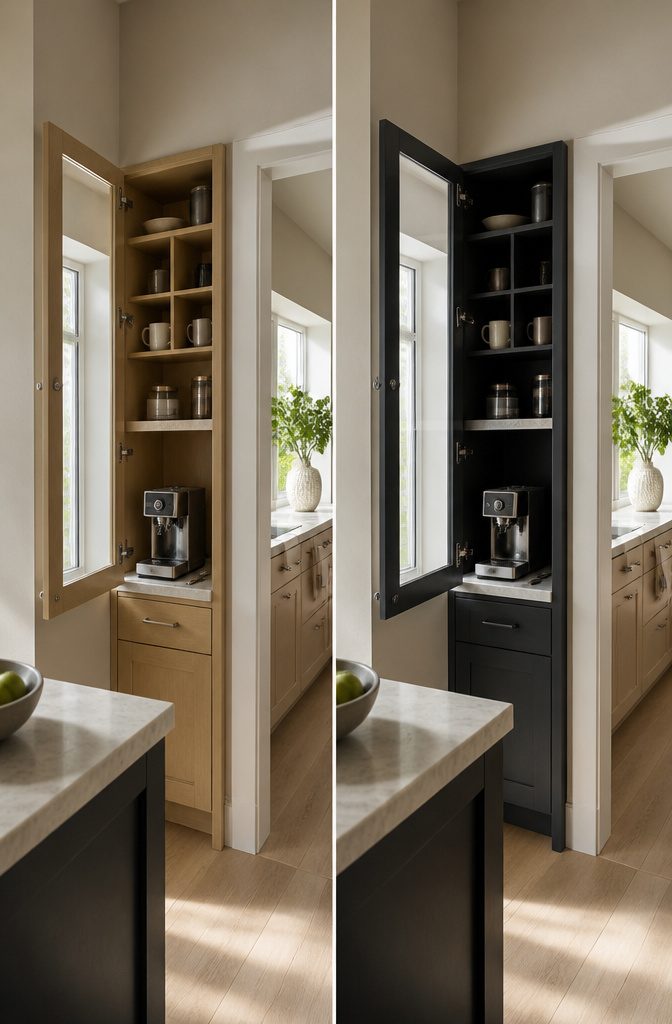
A closet, pantry, or narrow cabinet keeps the coffee setup hidden between uses and stores everything you need within arm’s reach.
The setup works when counter space is spoken for or when you prefer clean sight lines in the kitchen itself. Open the door, pull a shot, close it again when you’re done.
A shallow pantry or linen closet holds more than it looks like it should.
Anchor the machine on a marble or laminate work surface at elbow height, tuck pods or beans into a narrow drawer below, and use cubby shelves for mugs and canisters.
A glass-front cabinet trades concealment for display but keeps the appliances off the main counter, which matters more in a galley kitchen than whether guests see your grinder.
The approach scales down to renters: no installation, no holes, just repurpose what’s already there.
I’ve seen this done in closets barely wider than the coffeemaker, and it still beats a corner of the main counter when that corner also holds your toaster, your keys, and last night’s mail.
4. Utility Shelving on a Kitchen Wall
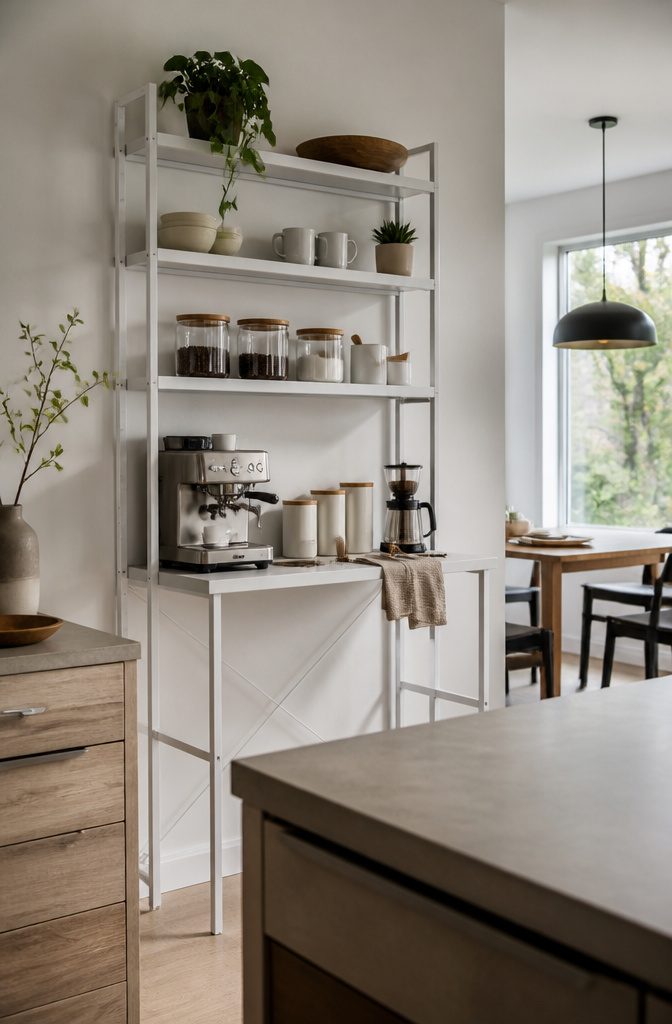
A wall-mounted utility shelving unit gives you vertical storage without the cost or commitment of built-ins. I’ve seen these work well in rentals and tight kitchens where counter space is already spoken for.
The setup is straightforward: anchor the unit to studs, load it with your machine, mugs, and canisters, and you’re done. A simple white steel unit pairs with any kitchen aesthetic, or you can paint it to match your cabinets.
The real advantage is flexibility.
Unlike cabinetry, you can take the shelving with you when you move or shift it to a different wall if your layout changes. The cost stays well below custom work, and installation takes an afternoon rather than a contractor’s schedule.
Exposed storage means everything on those shelves becomes part of the visual. If that bothers you, stick to matching containers and keep the clutter off the top shelf.
5. Multifunctional Furniture
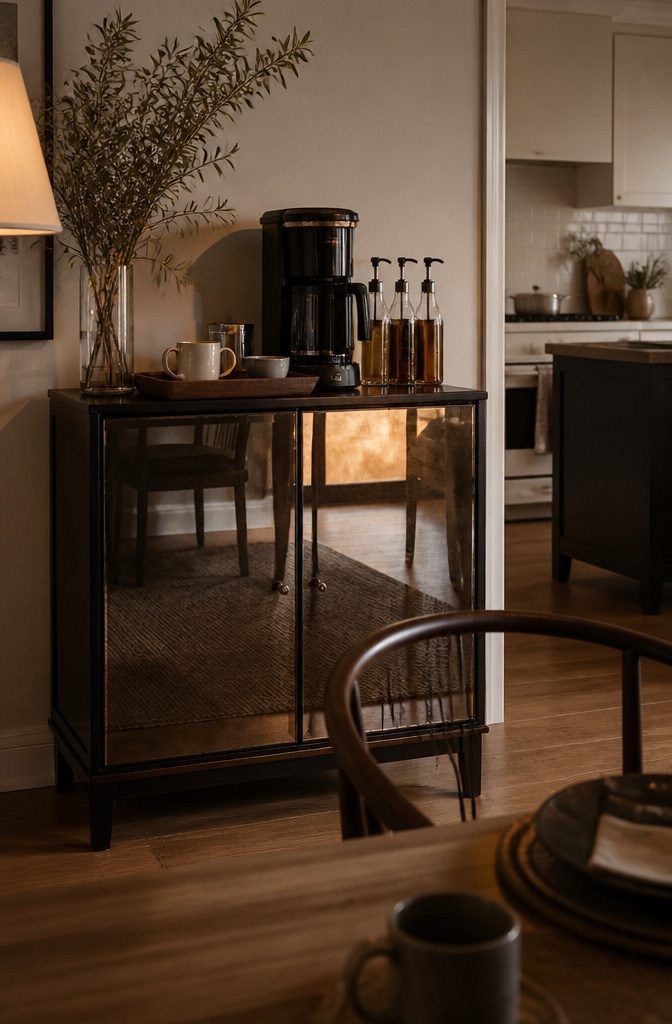
A sideboard meant for serving dinner can just as easily hold a coffee maker, and when you need the counter back for a party or a meal, the whole setup packs down in two minutes.
The Jaidon Sideboard runs about three feet wide with adjustable shelves behind mirrored doors, enough room for a brewer, mugs, and syrups without giving up the surface to clutter.
Smaller spaces can use an accent cabinet instead: the Dumas 2-Door Accent Cabinet has a tighter footprint and includes two USB ports built into the body, which means your phone charges while the coffee brews.
I’ve seen a wine rack work the same way in a 500-square-foot Toronto apartment, positioned next to existing shelves so the coffee tools share storage with glassware and everything stays within reach. The advantage is flexibility.
A dedicated coffee bar station is locked into one job; a piece of furniture you already planned to own does double or triple duty, and when the party moves from coffee to cocktails, you’re using the same surface for both.
6. Kitchen Nook or Awkward Counter Space
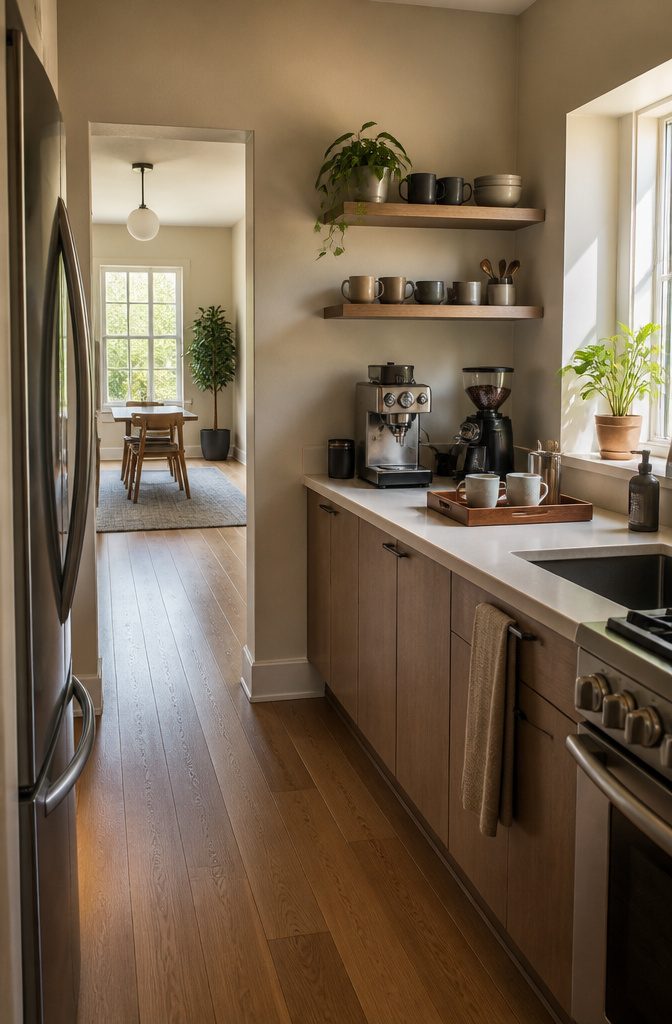
A kitchen nook that sits between the fridge and the stove, or a stretch of counter near the sink that never gets used for prep, turns into a coffee bar faster than most other setups.
You’re already next to water and outlets, so the machine plugs in without fishing for an extension cord.
One to two feet of counter space is enough if you keep the machine, a grinder, and a small tray in that zone.
The tray matters more than it looks like it should. It draws a line between the coffee gear and whatever else lands on the counter, so the setup reads as a station instead of blending into the clutter.
When you have people over, it doubles as a self-serve spot without blocking the main work triangle.
If the nook feels tight, mount floating shelves above it. Mugs and spoons go up, the counter stays clear, and you gain styling space without eating into the footprint you actually cook in.
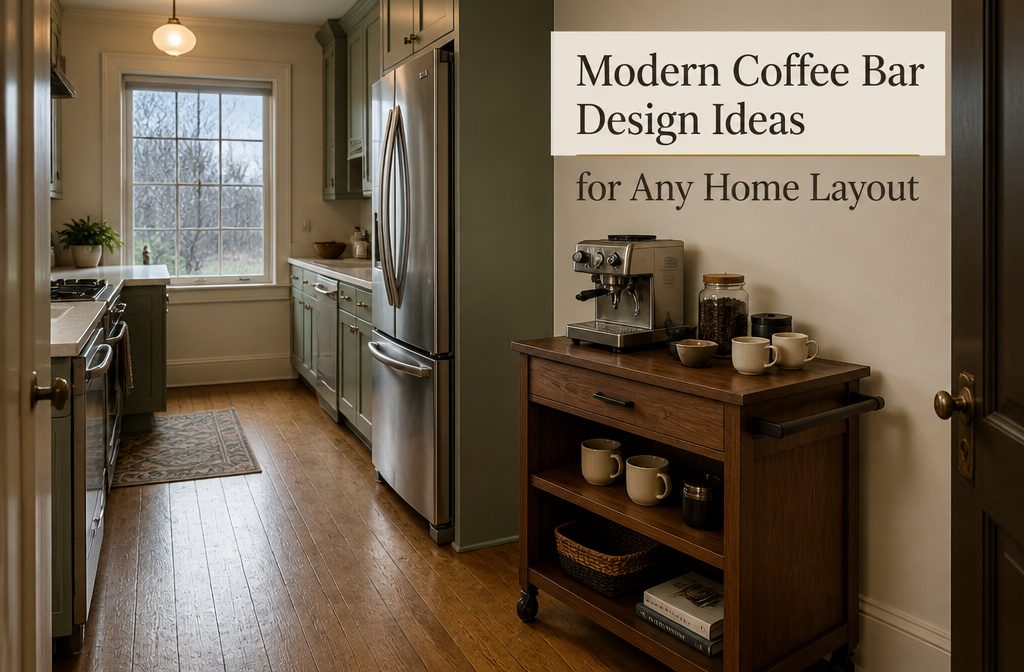
7. Cart or Trolley
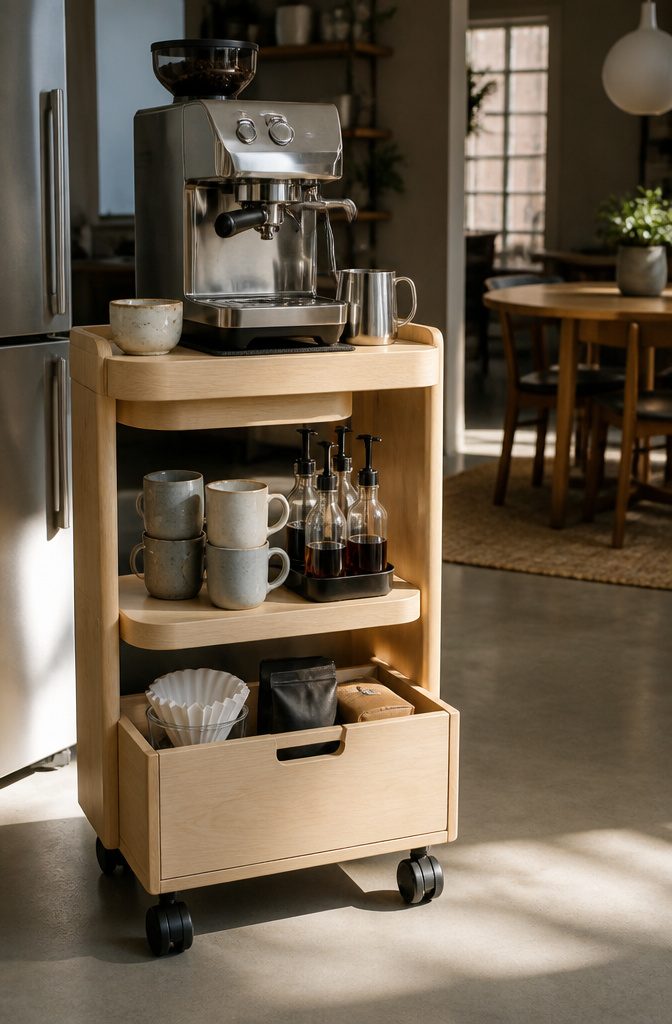
A rolling cart or bar trolley gives you a coffee station that can disappear when you need the floor back.
I’ve relied on this in a studio and again in a first rental where counter space came down to eighteen inches next to the stove, and being able to roll the whole setup into a corner or against the wall meant guests could actually move through the kitchen.
The IKEA FÖRHÖJA is the one that shows up most often for good reason: birch veneer, three levels, narrow enough to tuck beside a fridge.
You can stack the machine on top, mugs and syrups on the middle shelf, and coffee bags or filters in the drawer.
A vintage bar cart works the same way and adds some glam if you find one with a brass or gold finish, though watch the weight limit if you’re putting an espresso machine on it.
The real win is flexibility. You set it up for morning coffee, then wheel it out of the way for meal prep or when someone needs room to work at the table.
That mobility matters more in a small home than it does in a kitchen with twenty linear feet of counter.
8. Plant Wall Backdrop
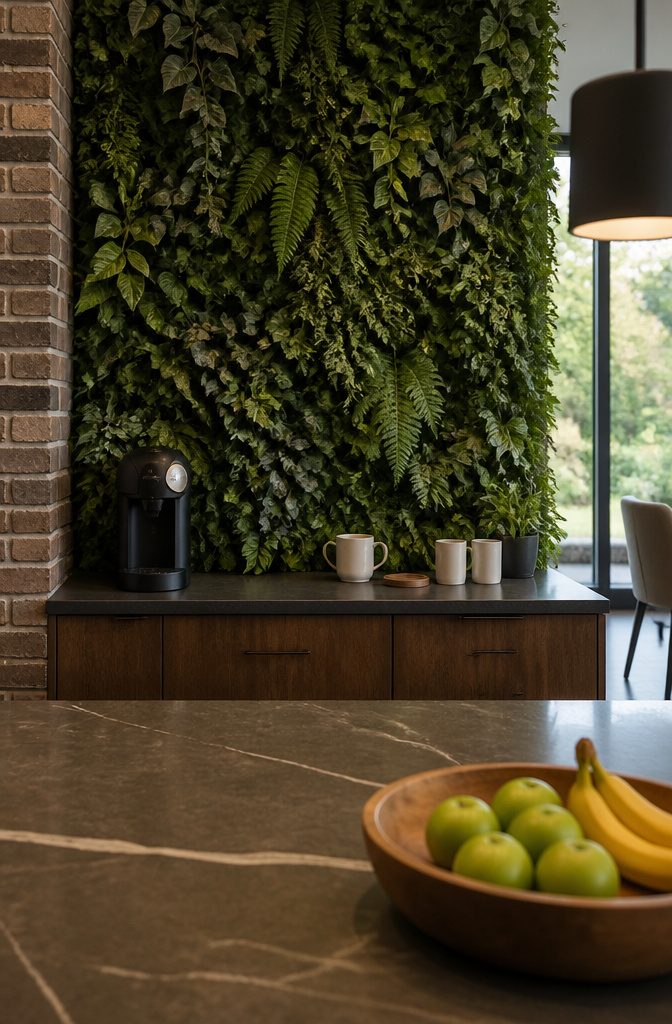
A faux plant wall turns a coffee bar into a focal point instead of letting it blend into the wall behind it.
The vertical greenery adds height and visual weight, making a small counter setup read as an intentional design moment rather than an afterthought squeezed into leftover space.
A full wall of faux foliage behind the bar creates a backdrop that rivals what you’d see in a cafe, giving the station presence even when it only occupies a few feet of counter.
The effect works because the eye travels upward along the plants before it registers the size of the counter itself.
A coffee maker and a few mugs sitting against a blank wall look like kitchen overflow; the same items against greenery look like a deliberate zone.
Faux plants hold the advantage here since real ones demand light the wall may not offer, and you skip the maintenance that would make a dramatic installation feel like a second job.
9. Table, Desk, or Console
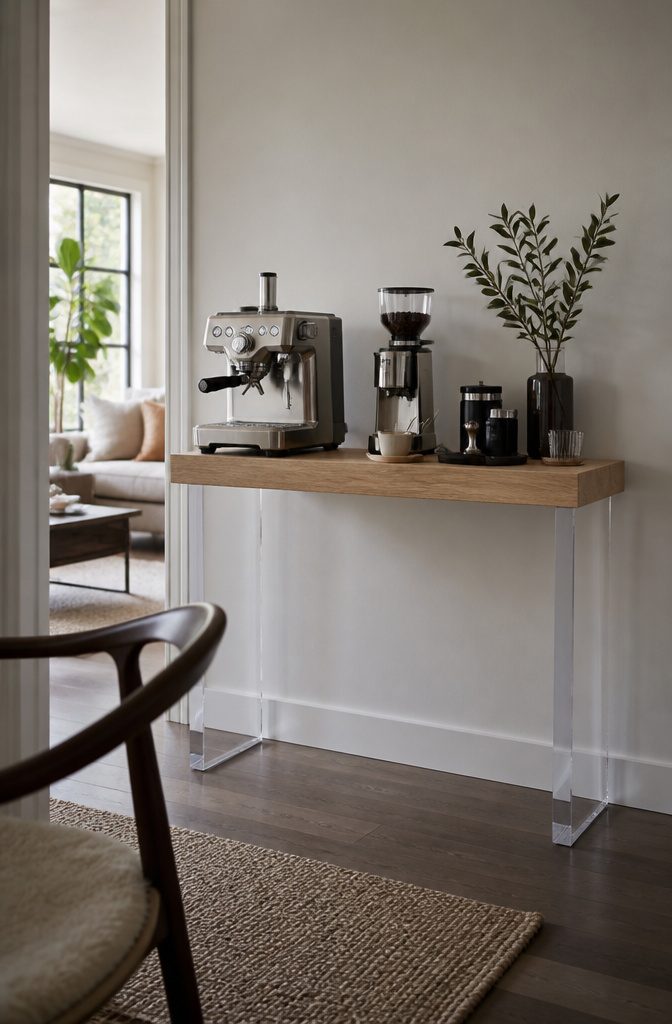
A separate table, desk, or console works when you need a full coffee station but wall shelving is not an option.
This is particularly useful in rentals, where you cannot install brackets, or in rooms outside the kitchen where a freestanding piece looks more intentional than a makeshift counter setup.
The Zephyr Acrylic Console Table at 47 inches wide and 15.7 inches deep fits a full espresso machine, grinder, and accessories without overwhelming a compact modern kitchen.
The narrow depth keeps the footprint proportional, and the transparent acrylic legs create the appearance that the station hovers rather than sits heavily on the floor. A solid oak top adds warmth without ornament.
Freestanding pieces beat built-in options when you move frequently, when the kitchen counter is already committed to meal prep, or when you want the coffee bar in a dining room, living room, or home office instead.
A wheeled metal desk or small side table works just as well if the Zephyr depth or price does not fit.
The key advantage is flexibility: the station moves with you, requires no installation, and converts to another use when your routine changes.
10. Sign, Art, or Chalkboard
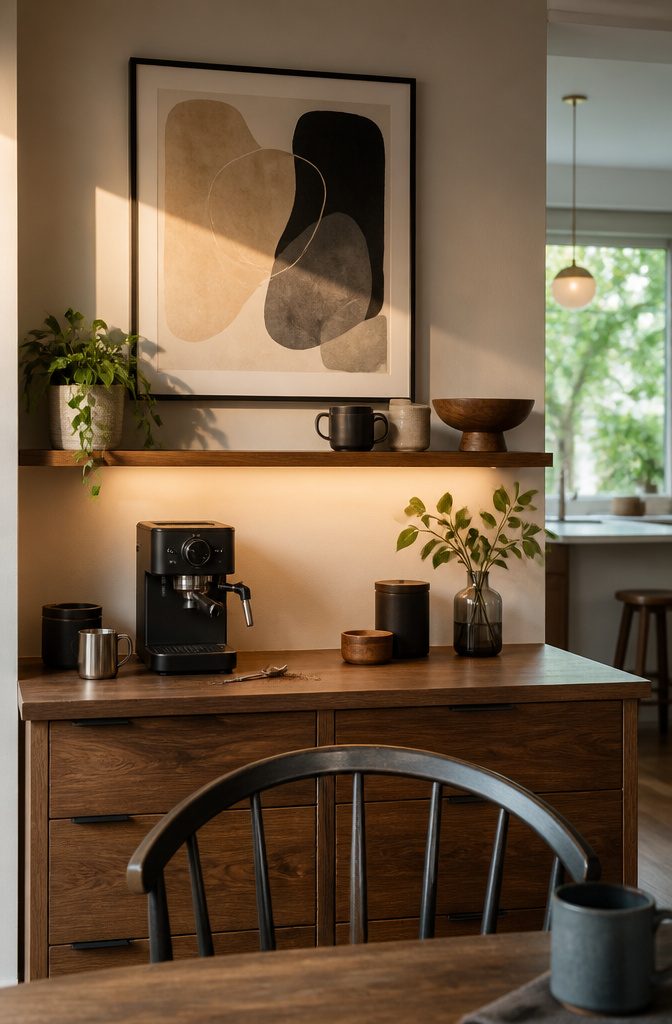
A chalkboard wall, a neon sign, or a single framed piece of art turns the coffee station into something you designed rather than counter clutter that accumulated.
The focal point signals intent. Without it, the corner reads as leftover appliances between other kitchen tasks.
A chalkboard gives you flexibility. Write the week’s menu, a greeting, or whatever fits the morning, and change it whenever the routine shifts.
It works best behind the station rather than beside it, where it competes with the equipment for attention. The rustic, homespun look pairs well with wood counters and open shelving.
A neon LED sign does the opposite. Bright, minimal, often just a word or a symbol, it anchors a modern setup and works in tight spaces where a full chalkboard would overwhelm.
I’ve seen it above single-appliance stations in studio kitchens, where every visual choice has to justify the wall space it takes.
The sign makes the coffee maker look like the most important appliance in the room, which for most of us it is.
11. Monochromatic or Coordinated Palette
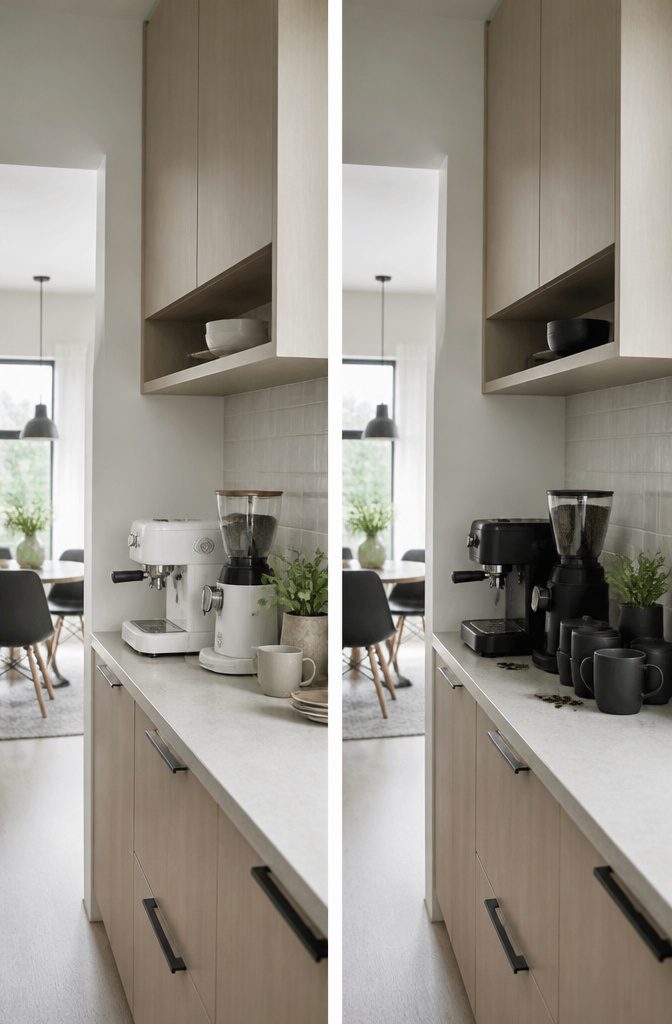
A single color family or a matched material keeps the station from reading as leftover appliances.
When the grinder, machine, mugs, and canisters all live in white or all in matte black, the setup looks like a choice rather than what happened to be on the counter.
That discipline matters most when the station itself is small: three white items placed together register as a coffee bar, while three random colors scattered on the same surface just look like clutter.
The palette can match the kitchen or stand apart from it. If the cabinets and counter already run neutral, white ceramic mugs and glass canisters blend the station into the background without adding visual noise.
If you want the bar to feel like its own zone, commit to a contrasting material the rest of the kitchen does not use.
All-glass works: a Chemex, glass canisters, a clear sugar bowl. So does all-black: black grinder, black machine, black mugs.
Partial commitment does not. A mostly white setup with two wooden pieces and a stainless machine reads unfinished.
12. Glass Cabinet Display
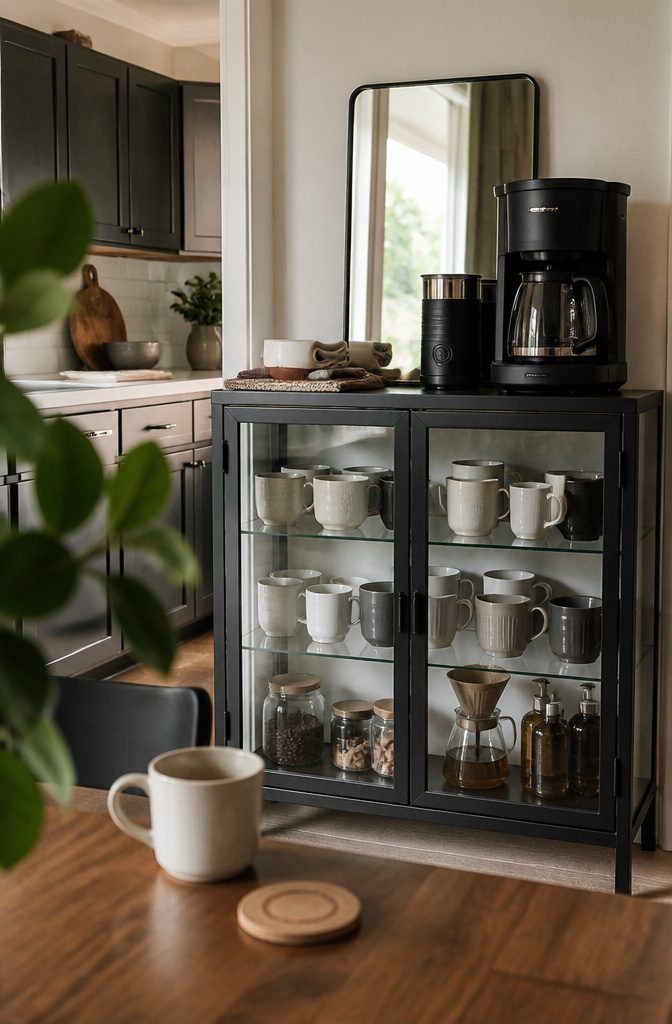
A glass-front cabinet keeps your mugs visible and dust-free at the same time, which makes it better than open shelving if you don’t brew daily.
I like using the shelves to hold the mugs I actually reach for, then stacking syrups, beans, and backup filters behind them where the glass still lets me see what I have.
The top surface holds the maker and frother where they’re plugged in and ready. A mirror leaned behind the setup bounces more light across the counter, and a small plant softens the look if there’s room.
This works best when the cabinet sits at counter height so you’re not lifting a full carafe overhead, and when the glass is clear rather than frosted so the display reads as part of the bar instead of hidden storage.
13. Recessed Niche with Backlit Stone
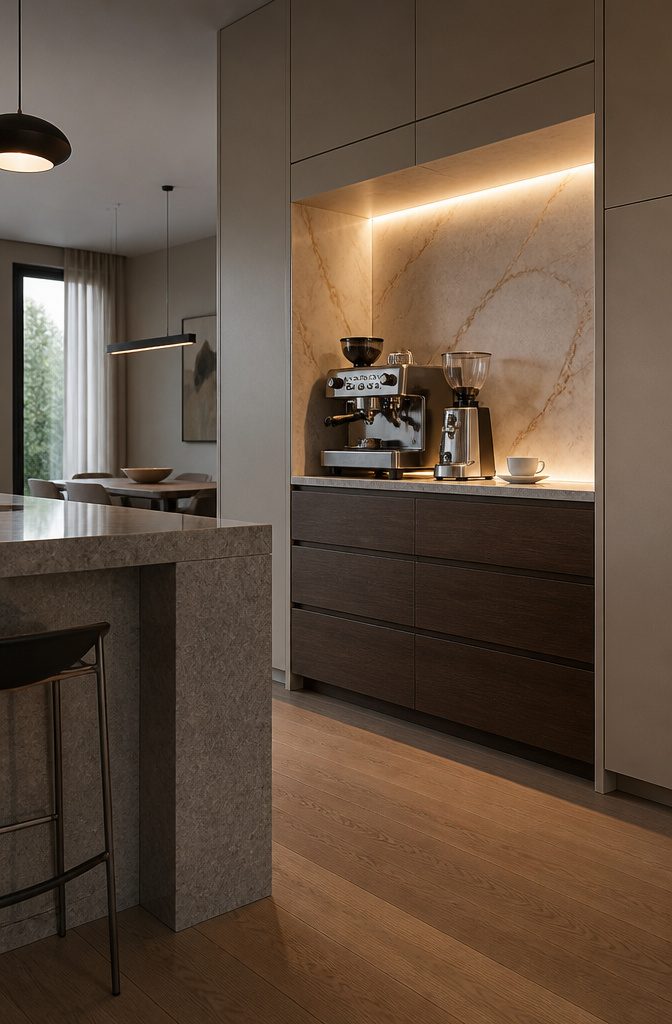
A recessed wall niche clad in honed marble, quartzite, or limestone turns the coffee bar into permanent architecture rather than furniture.
The station sits inside the wall itself, with no freestanding pieces, no visible structure. A slim LED strip lighting the back surface from both the top and bottom illuminates the stone and the espresso machine at once.
The niche is cut deep enough for the machine and grinder, with concealed wiring and a hidden power outlet that eliminate every cord.
This works best for new construction or active kitchen renovations where the wall can be opened.
It’s the highest-commitment option — and the most architectural result. If you’re renovating anyway, budgeting for a backlit niche is worth the investment.
14. Floating Acrylic Console
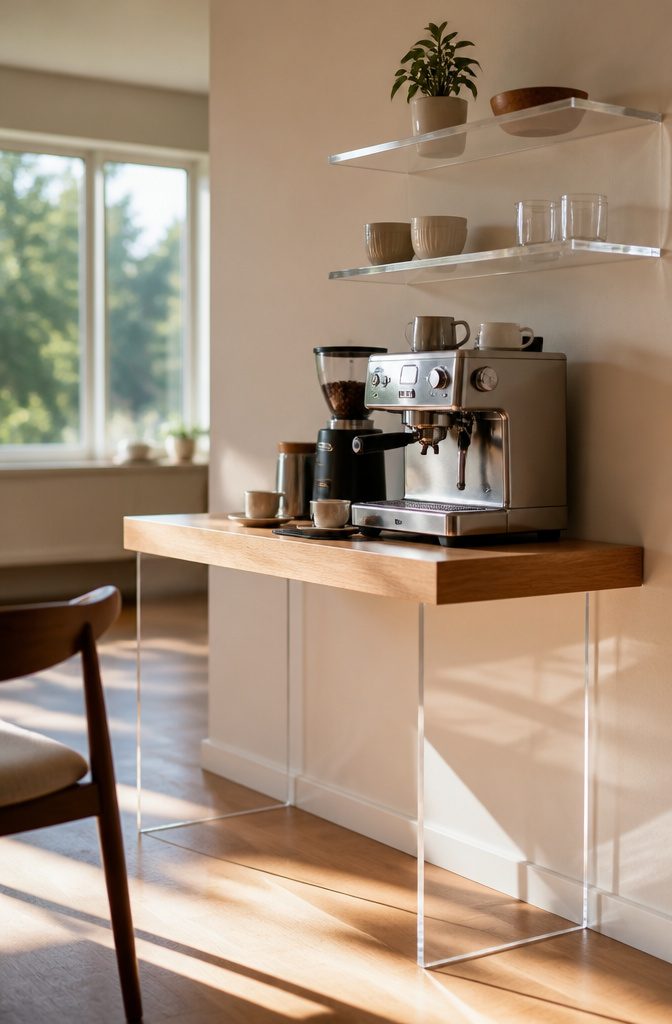
A transparent-legged console creates the optical trick of a station that hovers rather than sits.
Acrylic legs matter when floor space looks tight but is not actually short: the footprint stays the same as any console, but the visual weight drops because you can see straight through to the floor and the wall behind.
The room reads larger even though you have not saved an inch.
The Zephyr Acrylic Console Table runs 47 inches wide with a 15.7-inch depth, enough for a full espresso machine, grinder, and accessories without jutting too far into a compact kitchen.
The solid oak top grounds the setup, and the clear legs do the rest. Pair it with transparent shelving above and the whole station reads as one floating piece rather than furniture blocking the wall.
15. Monolithic Stone Counter
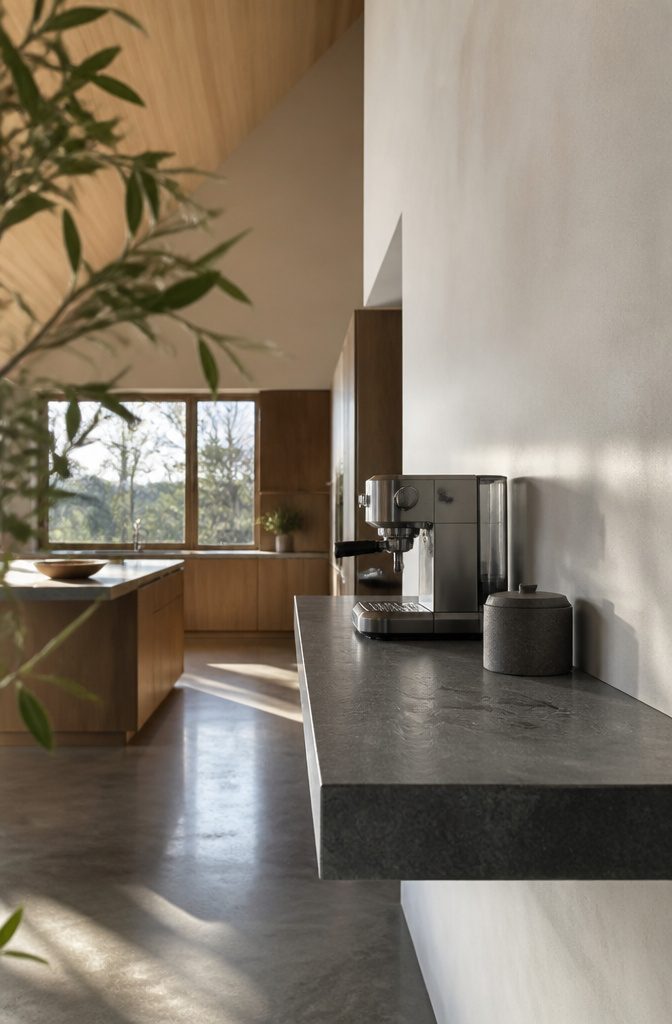
A single cantilevered stone slab mounted to the wall becomes the coffee bar when the material itself is the design.
One piece of honed marble, soapstone, or quartzite hangs with no visible supports, holding an espresso machine and nothing else. The counter is the statement.
The cantilever needs concealed steel brackets embedded in the wall, standard for stone countertops deeper than about 12 inches.
Use the same stone you already have on your kitchen counters rather than introducing a new material. One stone running through the space reads cleaner than a different slab on every surface.
Pair the counter with a single matching stone canister if you need one, and stop there. Anything else on the slab competes with the material, and the material is what you paid for.
16. Matte Black Cabinetry with Brass Fixtures
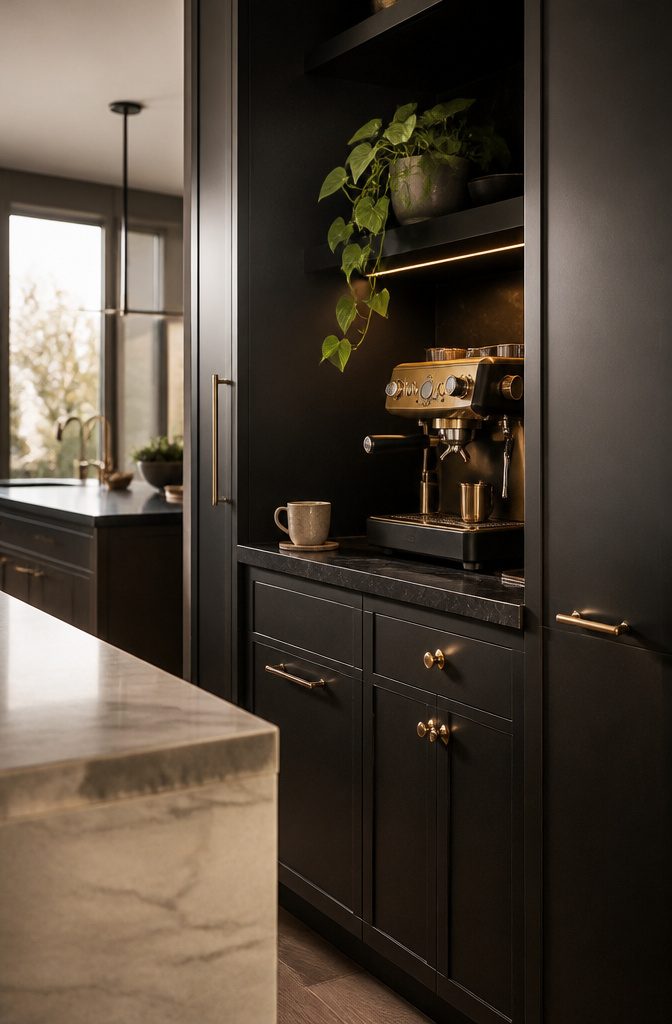
Matte black cabinetry with brass or bronze hardware belongs distinctly to this decade. The combination reads as sophisticated and confident without leaning into industrial coldness, because the warmth of polished brass cuts the severity of the black.
Build the coffee station into lower or upper cabinetry in this palette, pair it with a brass-finished espresso machine (La Marzocco’s Linea Mini in black and brass is the reference point), and finish with a black stone counter.
The palette stays disciplined.
A single trailing plant introduces the only organic element: a pothos or small-leaf philodendron against the precision of matte black and polished brass. The contrast is intentional.
One living thing keeps the space from reading sterile, and limiting it to one keeps the modern edge sharp. Everything else stays hard material.
17. Waterfall-Edge Counter
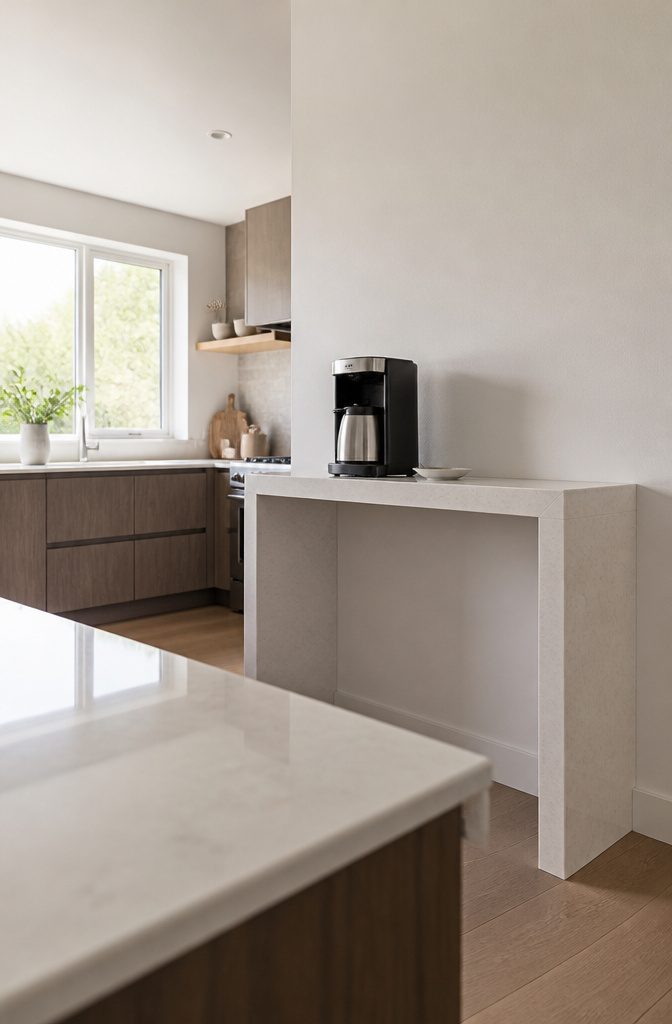
Extend the countertop material down both sides to the floor in one continuous piece.
Quartz, marble, or poured concrete all work. The coffee station sits on top, and there’s no base underneath, no legs, no cabinet: just a sculptural block of material that reads as one solid element rather than a piece of furniture.
The waterfall edge is a signature modern detail.
It turns a functional counter into something architectural. If the rest of your kitchen uses the same countertop material, matching it here creates visual continuity across the room.
For maximum effect, keep the wall behind it plain. No tile, no backsplash, just the stone edge against a painted surface.
The extra cost comes from the additional material and the fabrication. You’re paying for two vertical runs in addition to the horizontal top.
That makes sense if the coffee station is a focal point in an open kitchen or if you’re already using a statement material elsewhere and want the station to feel permanent and integrated rather than added on.
18. Built-In Coffee Machine
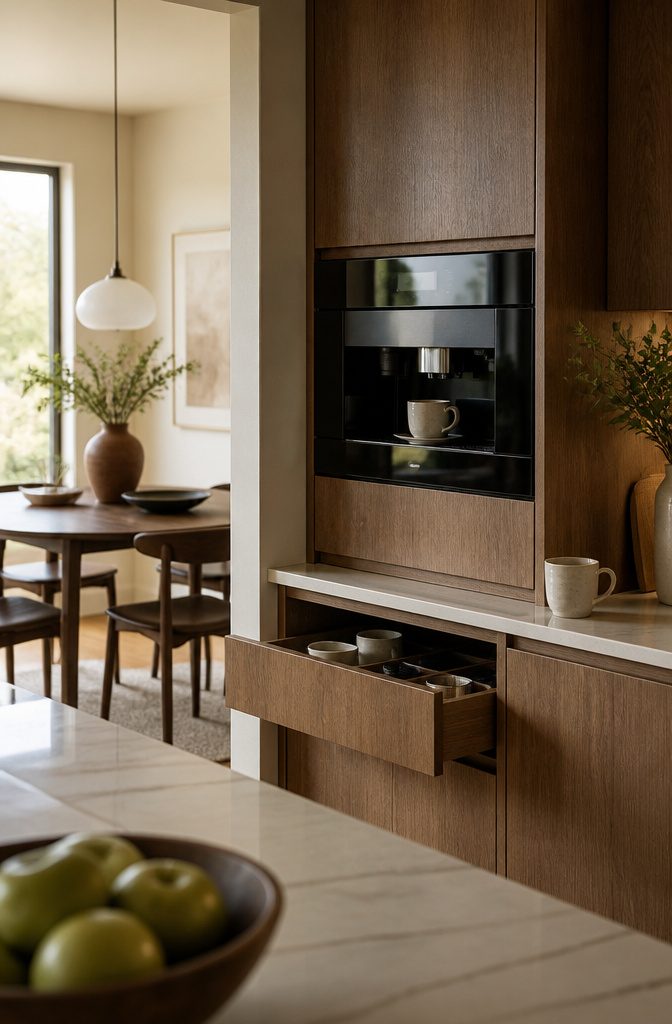
A built-in espresso machine sits flush inside upper cabinetry — no counter space, no appliance sitting out.
Miele, Jura, and Wolf all make units that install directly into the cabinet box, turning the coffee function into kitchen architecture rather than something placed on top of it.
The Wolf Built-In Coffee System works without special plumbing, so you can mount it wherever the layout makes sense. Add a dedicated drawer below for cups and accessories, and the whole setup disappears until you open the cabinet door.
The cost reflects the design benefit. Machines start around $3,000 and climb from there, which makes this a renovation-budget item rather than a rental fix.
Built-in makes sense when you are already designing cabinetry and want the counter completely clear, or when you use an espresso machine daily and prefer it integrated rather than visible.
Plan the cutout dimensions and electrical early — retrofitting after cabinets are hung is expensive.
19. Concrete or Microcement Counter
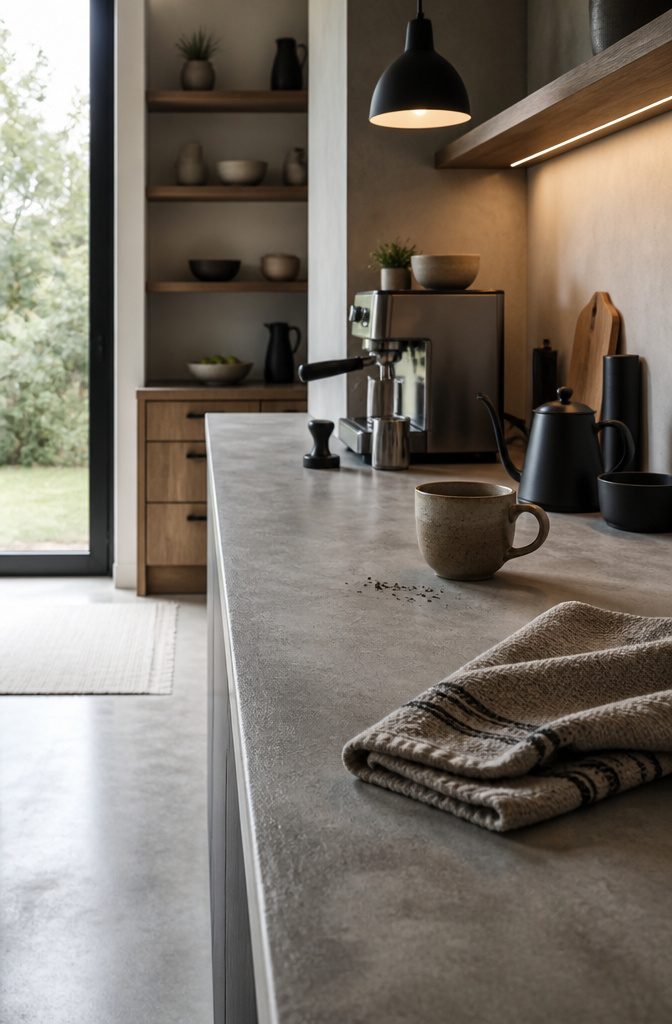
Polished concrete or microcement gives you that raw, gray, architectural surface that reads as industrial and unmistakably modern.
The material works equally well in a standard residential kitchen and in a converted loft, and the matte texture pairs beautifully with a steel espresso machine, matte black tools, and a single earth-tone ceramic mug for a tonal, contemporary palette.
Both surfaces need two to three coats of penetrating sealer before you use them, then one more coat every year to stop coffee and water from leaving permanent stains.
Microcement has a practical advantage if you are retrofitting: it can go directly over existing tile or laminate counters without demolition, so you skip the mess and the cost of tearing out what is already there.
Concrete usually requires a fresh substrate or a complete counter replacement, which adds labor and timeline. Either way, the annual resealing is not optional if you want the surface to stay clean and even-toned over time.
20. Single Pendant Light
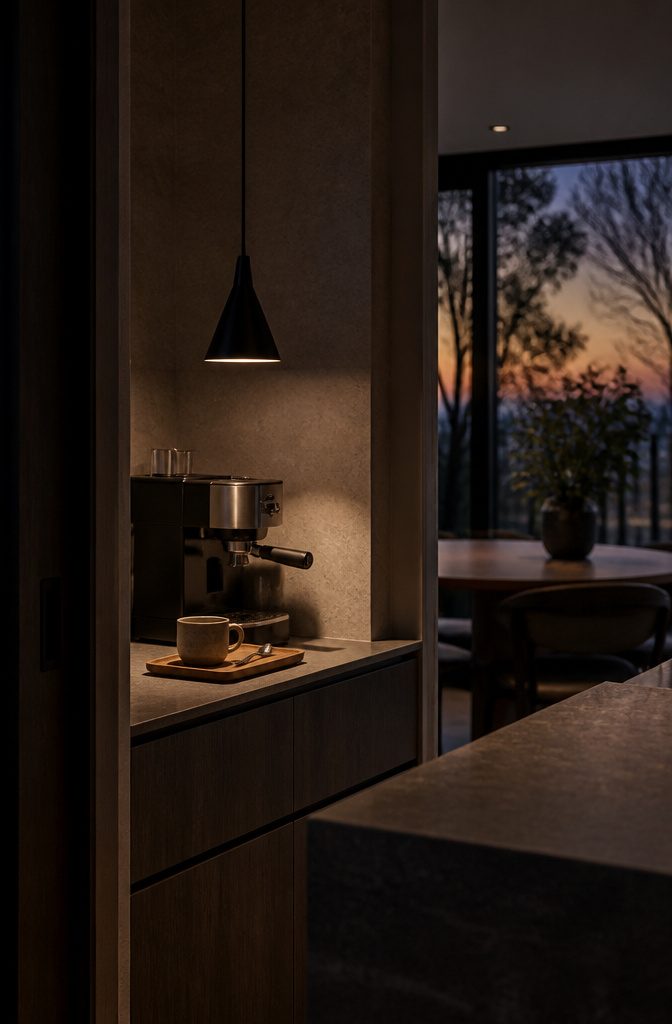
One pendant hung directly over the coffee bar — a sculptural glass sphere, a black cone, a brass fixture — marks the station as designed rather than accidental.
The fixture itself becomes the focal point, and the pool of light it throws down separates the coffee corner from the rest of the kitchen without any physical boundary.
Install it on a dimmer switch.
That changes how the station reads depending on the hour. Bring the pendant down to 20 percent at night and the coffee bar becomes a quietly lit corner instead of a brightly lit workstation.
One pendant, centred over the station, with no other task lighting immediately nearby. The contrast is the point.
21. Gallery-Style Mug Display
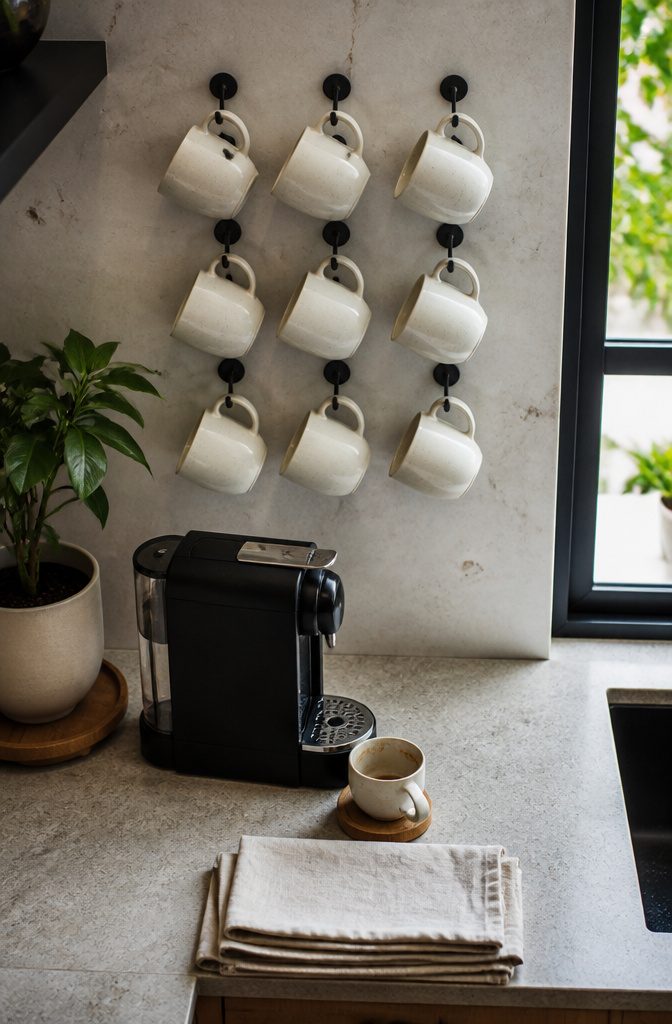
A precise grid of identical mugs turns everyday storage into a graphic statement. Mount six to nine ceramic mugs on brass or matte black hooks, spaced exactly the same distance apart, aligned exactly straight.
The repetition is what makes it contemporary. Against a white or light stone wall, the mugs read as designed objects rather than stored items.
Every mug has to match. Same maker, same glaze, same form.
Brands like Jono Pandolfi, East Fork or Mud Australia make production ceramics that look uniform without looking generic. The grid is the design; the mugs are just the medium.
A collected-over-time look destroys the effect. Buy all the mugs at once, or skip this entirely.
22. Transparent Acrylic Wall Shelves
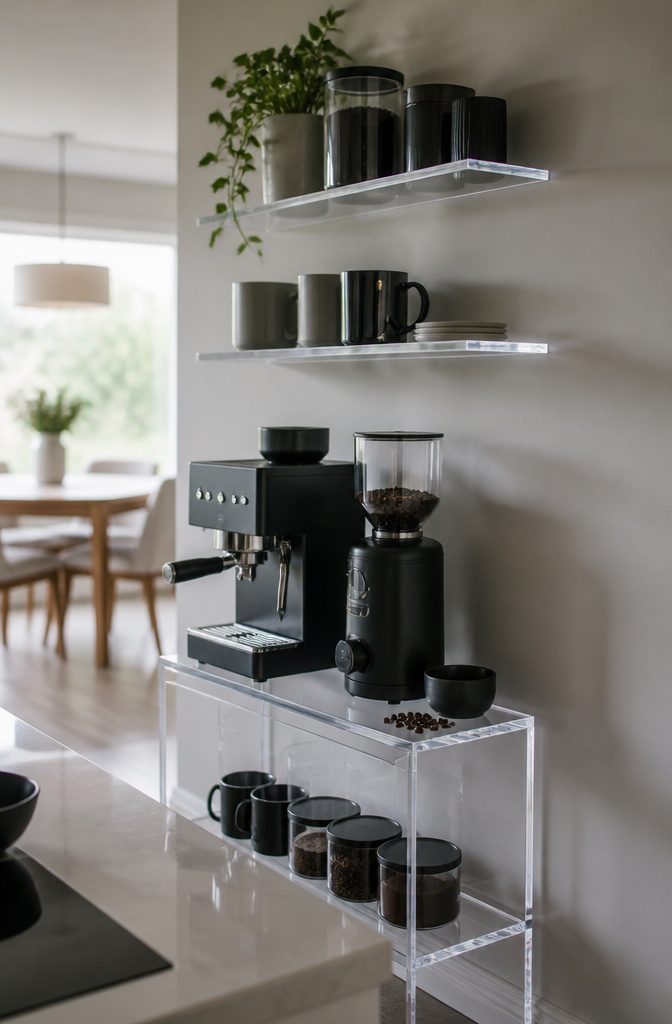
Transparent acrylic shelves create the floating display that defines a modern coffee bar. Mount clear shelves above your station and the mugs appear to hover against the wall—an effect solid wood shelving cannot produce.
The Aria Seconda spans 23.6 to 35.4 inches wide for compact setups, while the Aria Tertia runs 47.2 to 59 inches and covers the full width of a console-style coffee bar.
Both options hold up to 150 pounds, far more than any collection of cups and canisters weighs.
Acrylic wins over wood for visual lightness.
Wood shelves add mass to the wall, which works for farmhouse or traditional kitchens but reads heavy in a minimal modern space. Acrylic keeps the wall open and lets the items themselves become the statement.
The beveled polished edges read as intentional rather than decorative. When the Aria Tertia sits above a transparent console, the two pieces form a single cohesive coffee bar wall: transparent support below, transparent shelving above, everything else absent.
23. Concealed Outlets and Wiring
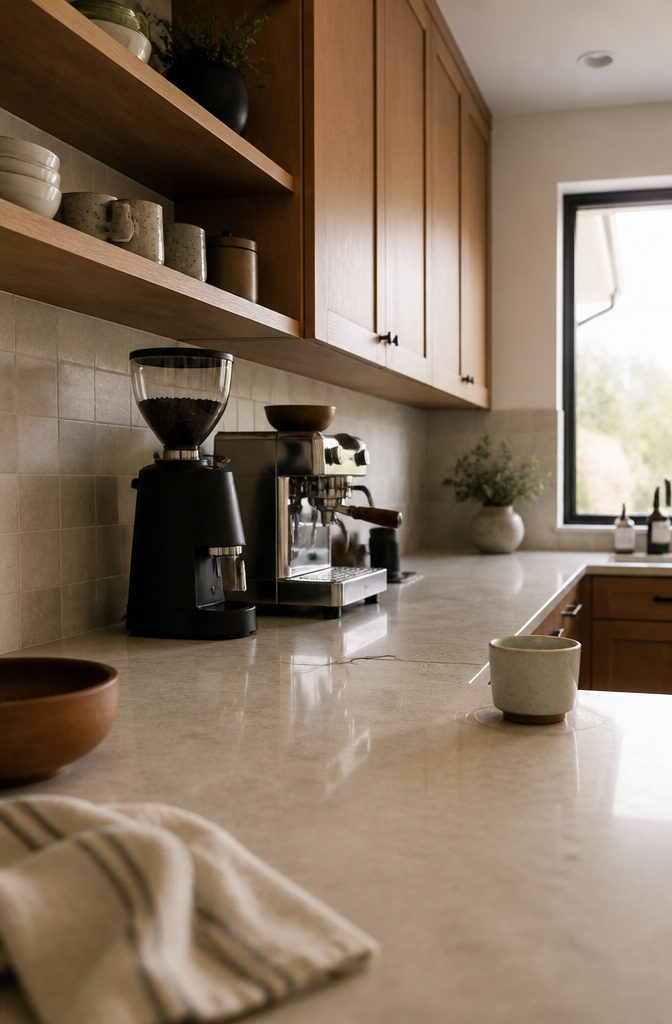
Power outlets belong behind the machine and grinder, not to the side where cords have to cross countertop.
Placing them there eliminates every visible cord and power strip — the single biggest visual difference between a clean coffee bar and one that looks cluttered.
Pop-up outlets recessed into the counter, outlets installed behind a backsplash lip, or in-drawer charging modules all work. Include USB-A and USB-C outlets alongside standard power, since most people charge a phone while making coffee.
This is a renovation-phase decision. Adding concealed wiring to an existing kitchen means opening walls or counters, so plan it alongside any counter replacement or cabinet installation.
If you are designing a recessed wall niche for the coffee bar, the outlet goes inside the niche where the machine sits — invisible from every angle.
The result is permanent: no cable management product ever makes visible cords look as clean as cords that were never visible to begin with.
24. One Plant as the Only Decoration
One Plant as the Only Decoration
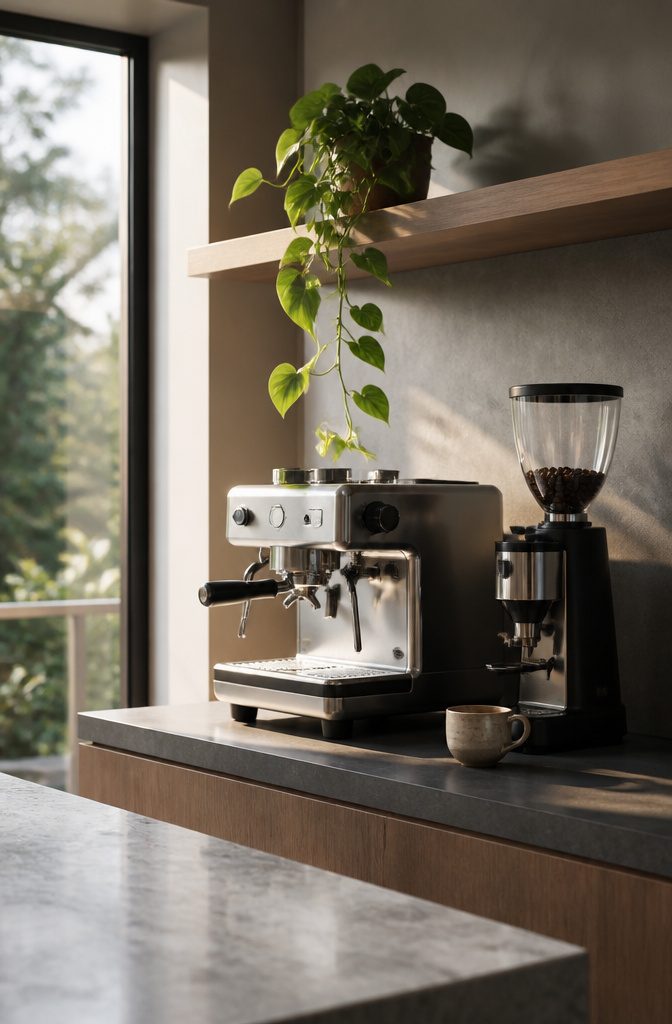
A single living plant against a clean, geometric coffee station creates the kind of contrast that a shelf full of decorative objects never quite manages.
The organic form of a potted fern, a trailing pothos, or a sculptural sansevieria reads as architecturally intentional when it stands alone. The modern espresso setup provides hard lines and precision; the plant provides the only soft, irregular element.
The placement matters. A trailing variety belongs on a high shelf where it can fall freely rather than being trained into a tidy shape.
That loose, natural growth is the counterpoint. Nothing else competes for attention on the counter: one machine, one grinder, one plant.
The constraint is the idea. If you add a second plant or any other accessory, the effect dilutes into general greenery rather than deliberate contrast.
What Equipment and Supplies Belong
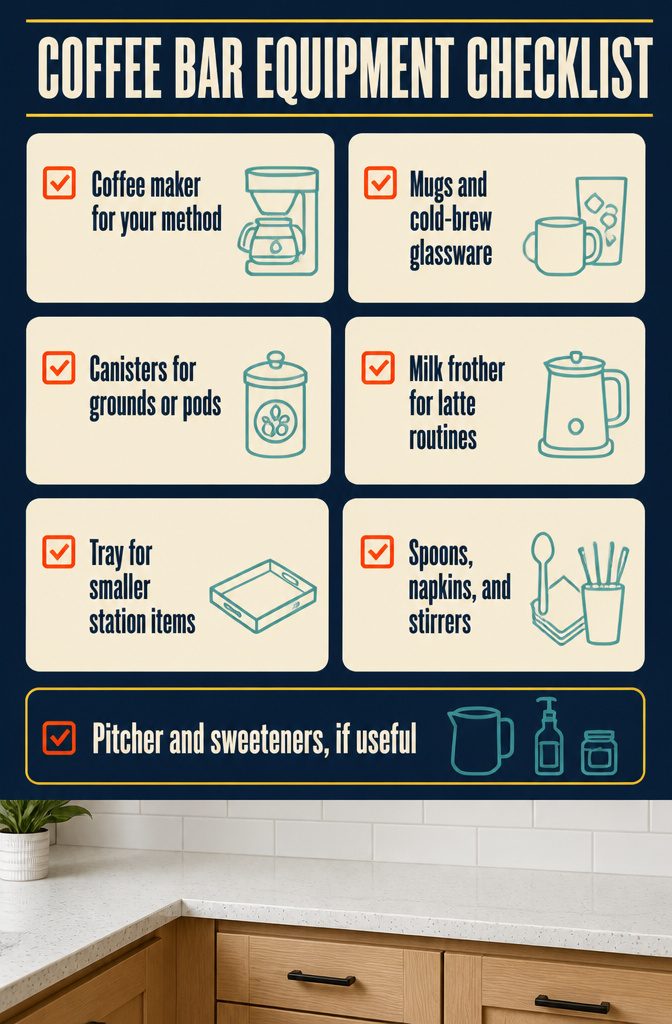
Choose equipment based on how you actually make coffee, not what a complete station is supposed to hold.
An espresso machine, bean grinder, portafilter with basket, mugs, a compact scale, and beans cover the serious routine. A drip machine or single-serve brewer fits the weekday grab-and-go better than espresso gear does.
Keep these on hand based on what you reach for:
- Coffee maker matched to your method: drip, pod brewer, espresso setup, pour-over gear, French press, or electric kettle
- Mugs and any glassware for cold brew
- Storage canisters for grounds or pods
- Milk frother if lattes are part of the routine
- Tray to contain smaller items
- Spoons, napkins, and stirrers
A milk pitcher helps if refrigeration is far from the station.
Flavored syrups and sweeteners give guests options without stocking six different creamers. Multiple brewers work if weekend espresso and weekday French press are both regular habits, but one good machine beats three mediocre ones.
Frequently Asked Questions
What should a coffee bar have?
An espresso machine, bean grinder, mugs, a compact scale, and beans form the core setup.
Add a tray to define the space visually, canisters for beans and sugar, and hooks or shelves for mugs if counter space is tight. Function without clutter: everything you need to brew, nothing extra.
Does a coffee bar have to be in the kitchen?
No. A coffee bar works in any room with access to power and water, or where you’re willing to carry water in.
Dining rooms, home offices, and living rooms all support freestanding setups using a console, desk, or cart. The location depends on your routine and layout, not a rule.
What is the ideal size for a coffee station?
One to two feet of counter space is enough for a machine, grinder, and small tray.
Tight spaces can use vertical storage with floating shelves above or a narrow cart that rolls out of the way. The size depends on what you brew daily, not a fixed minimum.
How to set up the perfect coffee bar?
Start with proximity to water and outlets, then define the zone with a tray or dedicated surface.
Keep the machine, grinder, mugs, and supplies within arm’s reach, and use matching containers to prevent visual clutter. A single focal point like a pendant light, chalkboard, or plant makes the setup look designed rather than accidental.