
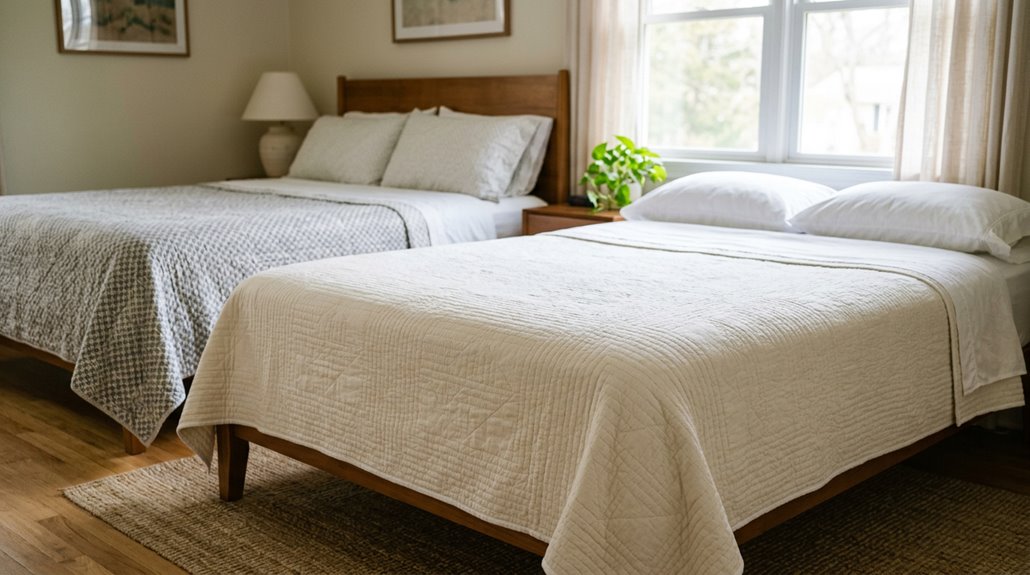
Full and double mattresses are the same bed. Both measure 53 to 54 inches wide and 75 inches long, with no difference in dimensions. The terms come from different eras, and manufacturers use both interchangeably, which can create confusion during shopping. Your sheets will fit regardless of which label appears on the box.
The real consideration is whether this size actually works for your specific needs.
Full and Double Mattresses Are Identical
When you’re buying sheets, toppers, or bedding labeled “full” or “double,” they’ll fit your mattress perfectly. There are no surprises and no returns needed. Both terms refer to the same mattress size, just with different names.

Rest Line's Bamboo Waterproof Mattress Protector in Full / Double Size is a fusion of innovation and comfort for your sleep sanctuary. Effortless installation is guaranteed with the fitted sheet style, accommodating mattresses up to 18" deep with extra-length stretchy sides. Our protector is easy to maintain, whether hand washed and air dried or machine washed and dried on low. Designed to fit a 39x80” mattress, our Twin XL size mattress protector comes with a 10-year warranty.

Box spring cover is independently lab-tested

NOISELESS & WATERPROOF - Safeguard your mattress with our fully encased, waterproof protector, offering a peaceful night's sleep with soft & hypoallergenic fabric, fine-tooth zipper, and noiseless waterproofing. Experience unmatched protection with our Cell-Tight TPU Technology, ensuring a dry and immaculate mattress against sweat, spills, or accidents.
Standard Dimensions: 53 by 75 Inches for Both
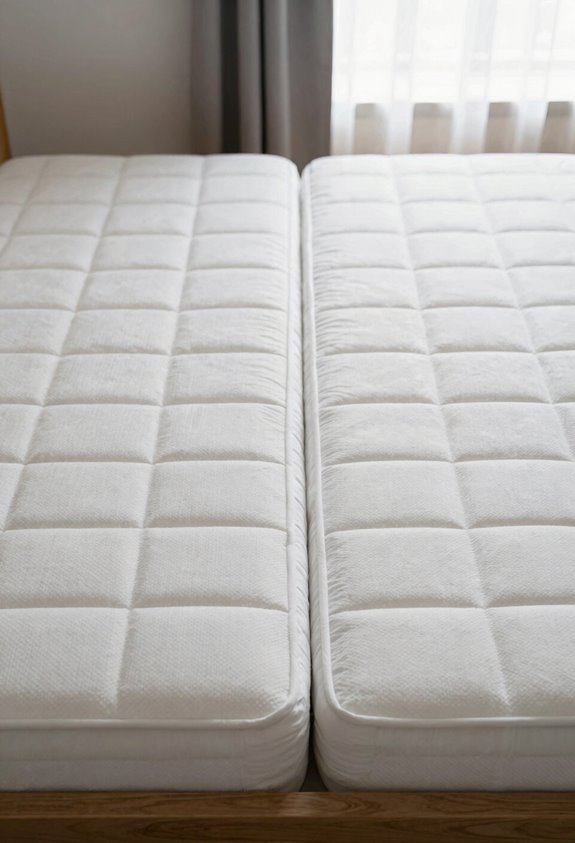
Now that you know full and double are basically twins, let’s get specific about what you’re actually dealing with: both measure 53 (or sometimes 54) inches wide by 75 inches long, depending on which manufacturer made it. Those interchangeable terms describe the exact same standard footprint. You’ll notice slight variations, maybe a quarter to half-inch difference between brands, but the differences are negligible. When you’re shopping, these mattress dimensions are consistent enough that you can treat “full” and “double” as completely swappable in your mind. Whether the tag says one or the other, you’re getting that identical rectangular footprint that’s been the go-to couple’s size since the 1870s.
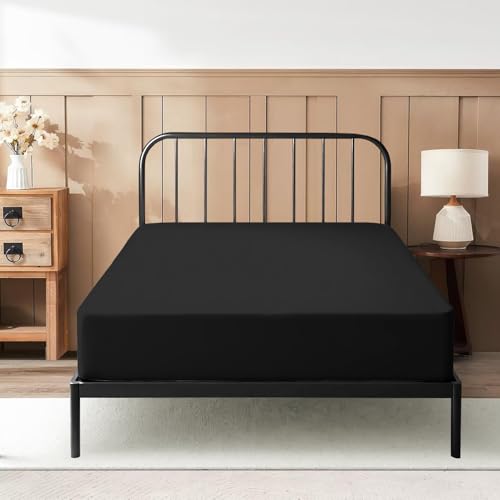
Package Includes :- 1 Piece Full Size Fitted Sheet Only Full 54" x 75" Inch With 6" Inch Deep Pocket Black.

SNUG FIT THAT STAYS ON ALL NIGHT – Designed with deep pockets and 360° all-around elastic, this Full fitted sheet hugs mattresses up to 16” thick—even with toppers or pads. No more slipping corners or bunching up while you sleep.

Package Includes :- 1 Piece Full Size Fitted Sheet Only Full 54" x 75" Inch With 4" Inch Deep Pocket White.
Why Two Names Exist for the Same Mattress
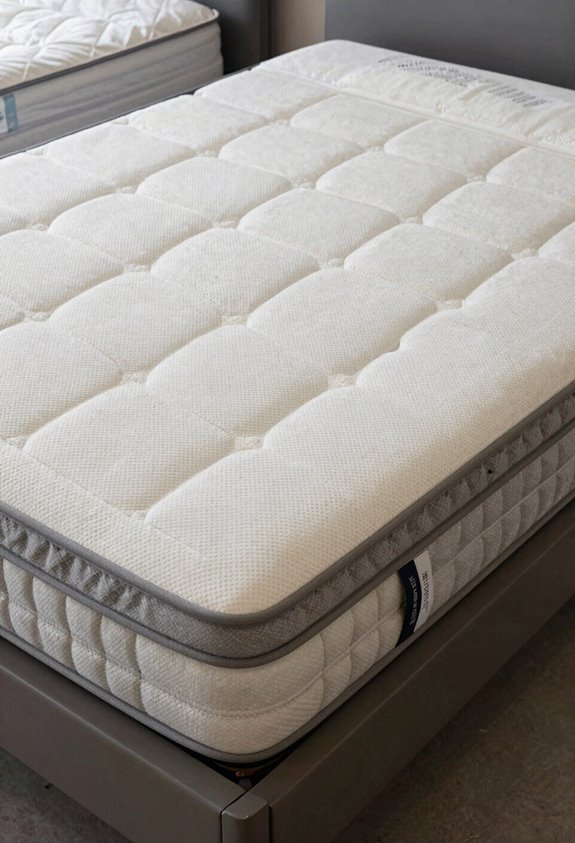
The naming confusion stems from mattress size nomenclature established in the 1870s when “double” was the standard term. Over time, “full” gradually replaced it and became the modern convention. Manufacturers now list both names on packaging, even though they refer to the identical 54-by-75-inch mattress. This inconsistency creates confusion for consumers shopping for a new mattress.
The situation parallels other outdated terminology. For example, older generations call a couch a “davenport” while current usage simply calls it a “couch.” The furniture hasn’t changed, but the language has.

KEEP YOUR MATTRESS CLEAN: This mattress protector is lined with a high quality waterproof TPU membrane backing that protects your expensive mattress from sweat, urine, and other liquid spills. Perfect for families with babies or pets.

TOP PROTECTION: A fitted-sheet-style mattress protector keeps your mattress surface safe and fresh. Flexible, skin-friendly, and healthy microfabric stays secured in place. Fits 6/7/8/9/10/11/12/13/14/15/16/17/18 Inch depth full size bed mattresses. The depth of the full mattress protector is 14 inch, which is stretchy and supports mattresses up to 18 inches deep

WATERPROOF MATTRESS PROTECTION – TPU backing layer helps block spills, sweat, and everyday moisture from reaching your Full mattress while maintaining a soft and comfortable sleep surface.
Historical Naming Conventions
The mattress naming confusion stems from historical standardization. Back in the 1870s, mattress makers standardized sizes and called this particular bed the “double” because it fit two sleepers.
Here’s what happened with terminology evolution:
- The 1870s standardization labeled this 54 x 75 inches mattress as “double”
- Marketing strategies introduced “full” as a more appealing term for buyers
- Both terms persisted, creating the naming inconsistency present today
- “Full” eventually became the dominant term in modern usage
Modern Terminology Standardization
Why do mattress tags sometimes say “double” and sometimes say “full” when they’re literally the same bed. This confusion stems from inconsistent naming conventions across decades. Manufacturers are standardizing around “full” because it’s clearer and more consistent across the bedding industry. The term “double” stuck around from earlier decades, but today’s product labeling increasingly favors “full” for clarity. Both measure 54 by 75 inches, which is the official standard. Think of it like how the industry stopped calling things “record players” and started saying “turntables.” The shift toward unified full/double terminology reflects the bedding industry’s move toward straightforward mattress size classifications. Standardization has become the dominant practice, with “full” now the preferred term across most manufacturers because consistency reduces consumer confusion.
Full vs. Double: What’s in a Name?
- Both measure exactly 54 inches wide by 75 inches long
- The terms date back to 1870s standardization and remain interchangeable today
- “Full” dominates modern naming, while “double” lingers as a historical alternative
- Each sleeper gets roughly 27 inches of personal width, basically your shoulders’ worth of space
Manufacturers standardized these mattress sizes over 150 years ago, yet both labels persist in use. “Full” prevails in contemporary conversation, though “double” remains in circulation. For two sleepers, that 54-inch width provides limited personal space. Single occupants have adequate room.
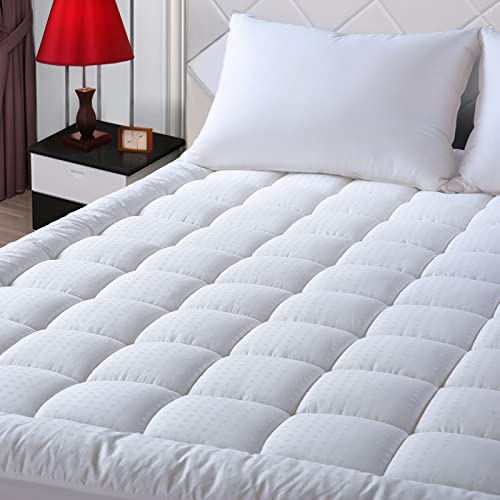
Full Mattress Pad 54X75 inch,21 inch Deep Pocket, 42 oz Elastic & Hollow Down Alternative Microfiber

【5 Inches of Plush Comfort & Firm Support】Get better sleep with the ELNIDO QUEEN 5-inch 2000 GSM memory foam topper. It combines gel memory foam and supportive shredded foam for a perfect mix of softness and support. The high-density foam evenly distributes weight, aligns your spine, eases pressure points, and may help reduce back pain.

【Cloud-Like Comfort & Softness】 Instantly upgrade your firm or old mattress with our plush pillow top topper. Overfilled with premium down alternative fiber, it adds an extra layer of loft that mimics the feel of a soft cloud, helping you fall asleep faster and wake up refreshed.
Full and Double Mattresses vs. Twin: Space Differences
When comparing a full to a twin, the width difference is immediately apparent. A full mattress provides 16 extra inches of space (54″ versus 38″), which makes a noticeable difference for restless sleepers or anyone who needs room to stretch without falling off. The length remains at 75 inches for both, so you’re not gaining additional sleeping length, just considerably more elbow room and side-to-side freedom. If a twin feels cramped, a full provides adequate breathing room without consuming the square footage of your entire bedroom that a queen would require.
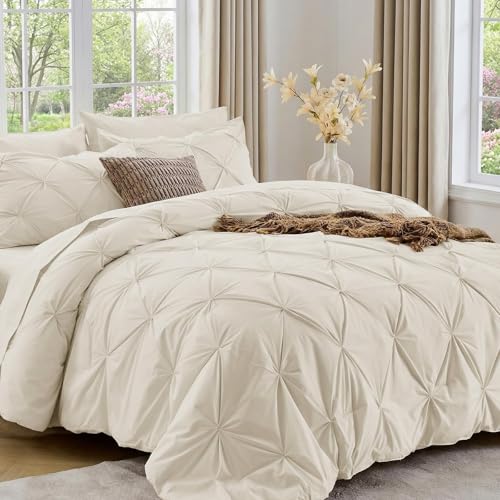
Effortless Bedroom Upgrade: Featuring a pintuck design and geometric pattern, our full comforter set brings luxury, elegance, and modern charm to any room. Ideal for master suites, guest spaces, or anyone seeking a timeless stylish refresh

7 PIECE FULL SIZE COMPLETE LINEN SET INCLUDES: 1 fitted sheet 54" (W) x 75" (L) featuring deep pockets and fits 10-12" thick mattress. 1 flat sheet 81" (W) x 96" (L). 2 standard pillow cases 20" x30". 1 twin/full reversible comforter 72" (W) x 86" (L). Designed to fit a standard full size bed.

Double-Tone Elegance: A sophisticated linen-like matte top meets a cooling, buttery-soft brushed reverse. It's the perfect way to upgrade your space with JOLLYVOGUE's comforter set, allowing you to flip for a fresh look and reverse for a soothing touch
Width Advantage Over Twin
The width difference between full/double and twin mattresses significantly impacts shared sleeping arrangements. Consider these key factors:
- Full/double measures 53-54 inches wide versus twin’s 38 inches, providing 15-16 extra inches of space
- Shoulder-to-shoulder space improves significantly when two sleepers share a full/double instead of a twin
- Both lengths stay at 75 inches, so you’re gaining width, not height
- That extra width transforms the sleeping experience from constant contact to actual personal space
Twins feel restrictive for couples. A full/double gives you and your partner the shoulder space needed without anyone hanging off the mattress. You’re not competing for space anymore; you actually have room to sleep comfortably.
Length Remains Consistent
Why doesn’t anyone talk about the length problem? Both your full mattress and double bed share that same 75-inch mattress length as a twin. So while you’re getting extra width over a twin, you’re not gaining any length. If you’re taller than average, that identical measurement becomes a real issue. You’ll feel cramped with legs dangling off the edge. The double bed doesn’t solve this like queen or king options do. You get horizontal space but stay vertically limited.
Before you commit to either size, measure yourself against that 75 inches. Your feet will thank you.
Practical Space Comparison
Space is everything when you’re picking a mattress. The extra 16 inches of width between a twin and a full/double creates a measurable difference in comfort and usability. You’re not just buying a bigger mattress; you’re investing in comfort you can actually feel.
Here’s why the full/double footprint matters:
- 3,948.5 square inches of sleeping territory versus a twin’s cramped quarters
- 27 inches of shoulder room per person, barely enough for two, which explains the tossing and turning
- Perfect for dorms and smaller rooms where you need breathing room without massive sacrifice
- Queen-sized comparison: full/doubles fall short at 33.1 sq ft versus queens at 33.1 sq ft
A full/double mattress size offers the balance between cozy efficiency and personal space. This size works well for single sleepers who want room to move, or couples in smaller spaces who need a functional compromise.
What You Get With a Queen vs. Full
Upgrading from a full to a queen gives you a noticeable difference that will actually change how you sleep. You’re getting 6 inches wider and 5 inches longer, which expands your sleeping footprint significantly. This provides real shoulder room and actual legroom you can stretch into.
One consideration is bedding compatibility. Your full/double sheets won’t fit a queen. Neither will your protectors or toppers. Queen size mattress dimensions require queen-sized everything: sheets, blankets, and all accessories.
Most folks find it worth the investment. The extra space transforms how couples rest together, giving everyone their own territory without awkward edge battles.
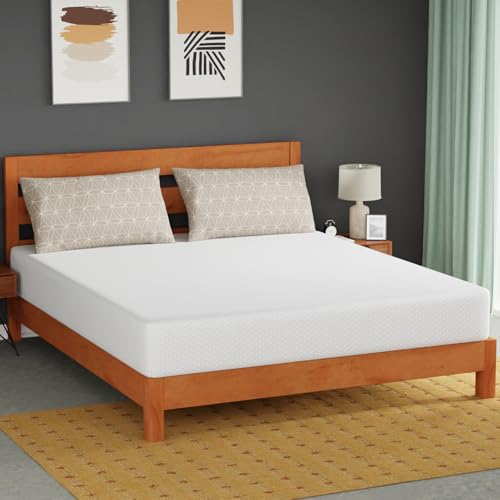
-- About the Pad "Core" Circulation & Ventilation System: -- This mattress cover uses breathing sponge, soft, breathable and comfortable. It has good perspiration and moisture absorption, three-dimensional design, keeping the air circulation instantly, quick drying and moisture absorption, safe and non-stimulating. It has a number of small breathable holes on the surface, so that you can not stuffy in the hot summer days, not sticky sweat. Keep a lasting fresh sleep.

Full-size memory-foam mattress with 3 foam layers for optimal softness and support

Mattress Rebound Note - Allow 24 to 72 hours for your memory foam to fully expand. Warm rooms speed up this process, while colder ones may slow it. Follow the instructions to witness the magic of a cake like mattress expanding
King Beds: The Size Step Up From Full
Ready to stop feeling cramped? King beds offer the ultimate upgrade from your Full/Double size. If you’ve been squeezing into a Full, a King’s generous dimensions will provide significantly more space.
Here’s what makes Kings the game-changer:
- Extra width: King beds stretch to 76 inches across, giving couples genuine breathing room
- Comparable length: They match Queen beds at 80 inches, perfect for taller sleepers without needing a Full XL compromise
- Mattress size chart placement: Kings dominate the chart as the largest standard option
- Double the comfort: You’re not just upgrading dimensions; you’re investing in better sleep quality
Check any bed dimensions guide and you’ll see why people move beyond their double vs full debate once they experience a King. They require larger rooms and come at a higher price point, but the spaciousness delivers tangible benefits for sleep quality and partner comfort.

【Luxury Hotel Quality 】 Constructed from brushed microfiber fabric, our bottom sheet is incredibly soft, silky, and cool to the touch, providing you with that hotel-quality feel. It's durable enough to last a long time, ensuring many restful nights.

OTHER WHITE FULL SHEETS OFTEN PULL LOOSE FROM THE MATTRESS while you’re sleeping and are a struggle to get on your bed, even when you buy the right size. At CGK Unlimited, we’ve designed our white full bed sheets with extra deep pockets to easily fit mattresses 18”–24” deep, so it’s a cinch to put on the bed – even with a mattress topper! our deep fitted white sheets full also feature elastic all the way around its edges to hug your mattress securely – no more balled up sheets!

[ FULL FITTED SHEET ]: 1 Fitted Sheet Only, 54" wide x 75" long + 16" standard deep pockets Bottom Sheet, fits mattresses from 10" to 16".
Who Should Choose a Full or Double Mattress?
If you’re flying solo or working with a tight bedroom, a full mattress at 54 by 75 inches provides adequate space to stretch out without consuming your entire room. Couples can technically share a full mattress, but you’re essentially asking two grown adults to share something barely wider than a twin, which is only 38 inches wide. This arrangement creates practical sleep disturbances due to limited personal space. The decision comes down to whether you prioritize cost savings or prefer the additional comfort and personal sleeping space that a queen-sized mattress provides.

SIZE LISTED TO CHECK BEFORE PURCHASE| This size fits 54 wide by 74 long. Depth is a stretch wall but will not work if your mattress is Iess than 9 or more than 13 so be sure to check before purchase

SAFE & OEKO-TEX Certified: The material used in this Quilted Sofa Bed Mattress Pad Waterproof has passed the OEKO-TEX certification, the most authoritative and influential textile eco-label in the world, to ensure the ecological safety of the product and satisfy the demands of healthy living.

SIX SIDED ZIPPERED ENCASEMENT - Completely encases your mattress on all sides. Our premium zippered encasements are equipped with a Velcro zipper seal to ensure that nothing gets in! Say good-bye to troublesome pets that can ruin your mattress and bring discomfort to your life. Take precaution and sleep worry-free knowing that your mattress is shielded and protected. Be smart and protect your investment with a quality mattress encasement!
Single Sleepers and Space
So you’re sleeping solo but feeling cramped in a twin bed. A full/double mattress might be your answer. Here’s why it works for single sleepers craving more space:
- You’ll gain 16 inches of width compared to a twin, which is noticeable when you’re sprawling out
- The 54-inch width gives you room to shift positions without hanging off the edge
- Full/double bedding accessories are everywhere, so finding sheets and toppers is straightforward
- You’re not paying for a queen’s extra length you don’t need
If you’re tall, that 75-inch length might feel snug. For most single sleepers wanting breathing room without oversizing their bedroom, full/double provides a practical balance between cozy and spacious.
Couples and Comfort Trade-offs
Why do so many couples wake up feeling like they’ve been wrestling all night? A full size bed might be the culprit. The reality is that you’re getting just 27 inches of shoulder-to-shoulder space per person. That’s cramped.
A full size bed works if you genuinely enjoy cuddling and don’t mind tight quarters. Most couples, however, find this sleeping space trade-off frustrating. You’re constantly negotiating blanket territory and dodging elbows.
Consider your situation carefully. If you’re planning to stay together long-term, upgrading to a queen later is super common. Room for two significantly affects sleep quality and relationship satisfaction. A double versus full conversation often ends with couples realizing they need more breathing room.
Space Requirements for a Full or Double Bed
How much room does a full mattress actually need. It requires more space than many people anticipate.
- Standard dimensions: Your full mattress or double bed measures 54×75 inches, which sounds roomy until you’re squeezing furniture around it
- Room size requirement: You’ll want a 10×10 feet minimum to avoid that claustrophobic feeling
- Clearance space: Plan for 2–3 feet on open sides so you’re not stubbing toes at midnight
- Length option: Consider a Full XL at 80 inches if you’re taller. Those extra five inches matter.
Space requirements aren’t just about fitting the mattress through your door. They’re about creating breathing room. Underestimating space needs often results in a bedroom that feels crowded and difficult to navigate. Adequate clearance directly impacts comfort and functionality in your sleeping area.

THICK MATTRESS PAD FOR BACK PAIN - The thickness is the first difference you can immediately feel between it and a common mattress pad. This mattress pad is overfilled with premium down alternative filling. Designed for people who need more cushioning, it provides great comfort and support to relieve back pain. Though thick like a foam topper, the breathable fiberfill won’t cause body overheat like memory foam during sleep. With it, your mattress will be as comfortable as those in luxury hotels

ULTRA SOFT: The Niagara full mattress topper is made from soft cotton on top and fits mattresses 8-20 inches deep. The mattress topper full is gentle on sensitive skin, elastic, and ultra-soft.

Superior Pressure Relief: This memory foam mattresses contour to your body, targeting pressure points for immediate pain relief. Ideal for back pain sufferers, they reduce discomfort by evenly distributing weight.
Finding Full Mattress Bedding and Accessories
Once you’ve settled on a full or double mattress, finding bedding is straightforward. Bedding and accessories for standard/full-size beds are widely available at almost every retailer. Whether you’re shopping for a Full mattress or Double mattress, the selection is abundant.
Manufacturers sometimes label things differently. You’ll spot “Full,” “Double,” or “Full XL” tags, which measure 54×80 inches for extra legroom. If you’re taller, Full XL bedding provides those extra five inches. The wide availability means you have plenty of choices without compromise. Your Full/Double size is a mainstream dimension, making accessory shopping straightforward and accessible.

Super Soft Duvet Cover Set: Woven from durable, high quality, 110 GSM microfiber and double brushed for ultimate softness, our cooling duvet cover is lightweight, breathable, and cool to the touch - an all-season solution for serene sleep.

Ultra Soft: This duvet cover set is made from polyester microfiber that offers exceptional softness. The smooth and breathable fabric provides maximum comfort without any rustling noise, giving your little one the utmost comfort
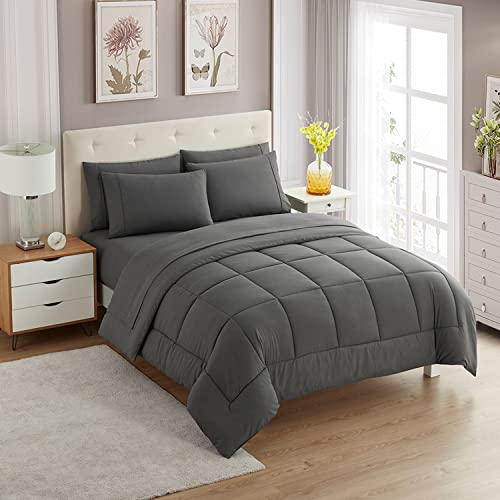
OUTSTANDING 7 PIECE SET - Ready to update your bedroom decor? Get everything you need in one set! This soft and comfortable down alternative comforter set includes all you need to transform your bed into a home décor dream. In each pre-packaged set you will receive 1 all season brushed microfiber comforter, 1 fittd sheet, 1 flat sheet, and 4 pillowcases. Update your bedding with our Sweet Home Collection 7 Piece Bed in a Bag Comforter Set today!
Why Single Sleepers Prefer Full Over Twin Mattresses
What’s the sweet spot between feeling cramped and wasting precious floor space? That’s where the full mattress shines for single sleepers. The extra 16 inches of width compared to a twin makes a real difference when you’re sprawling out at night.
Why choose a full mattress:
- You’ve got breathing room without sacrificing your bedroom
- The 54-inch width lets you actually move around
- You’re not contorting yourself like a pretzel during sleep
- It fits comfortably in smaller spaces where a queen won’t squeeze through the door
The 75-inch length might feel snug if you’re tall, but for most single sleepers, this size hits that perfect balance. You get genuine comfort without hogging unnecessary square footage.
Can Couples Share a Full Mattress Comfortably?
So, can two adults actually sleep on a full mattress without staging a nightly battle for territory. It’s possible, but you’ll be cozy in ways you might not expect.
A Full mattress measures 54 by 75 inches, giving you decent width but not much wiggle room for two people. Here’s the reality:
| Situation | Space Per Person | Comfort Level |
|---|---|---|
| Single sleeper | Spacious | Excellent |
| Cuddling couple | 27 inches | Good |
| Restless sleepers | Limited | Challenging |
| Tall adults | Cramped | Poor |
| Budget-conscious pair | Tight | Acceptable |
Most couples find a Full leaves limited room for movement and edge comfort. You’ll share body heat constantly, which sounds romantic until someone steals the blankets. If you both value personal space, upgrading to a Queen mattress provides significantly more surface area and reduces nighttime disturbances between partners.
Full Mattress Pricing: Budget vs. Queen and King
Now that we’ve established whether couples can actually share a Full without declaring mattress independence, let’s talk about what this budget-friendly option costs compared to its roomier siblings.
Here’s the real deal with full mattress pricing:
- Full/double mattresses typically run $100–$300 cheaper than queens initially
- Queen vs full cost difference compounds with bedding, sheets, and toppers
- Budget vs queen calculations reveal long-term savings with full sizes
- King price comparison shows even steeper jumps, often doubling full costs
The $100–$300 upgrade gap between full and queen sounds small until you’re actually shopping. You’re getting the same quality construction, just fewer inches. For singles or tight spaces, full mattresses offer genuine affordability advantages without sacrificing comfort. You’re making a smart financial move that lets you allocate budget elsewhere.
How to Choose Between Full, Queen, and King Mattresses
Choosing the right mattress size is about matching your situation to your actual needs. Consider three things: how much space you have, who’s sleeping there, and how much room you need without disturbing your partner.
If you’re sleeping alone or your room is compact, a Full or Double works well at 54×75 inches. Sharing a bed requires a Queen for significantly more space. A King offers the maximum separation between sleepers.
Measure your room size first. A Full fits snugly in compact spaces. Queens and Kings require more floor space but provide comfort proportional to that investment. Match your mattress size to your actual life and room dimensions, not theoretical ideals.
Full-Size Mattress Options From Purple
I’ve found that Purple makes picking a full-size mattress easy. They offer options across different firmness levels so you can get the support that works for your body, not just whatever they had in stock. Whether you prefer your bed feeling like a cloud or need that firmer hug, their full collection gives you real choices in that 53×75 footprint. A smaller mattress doesn’t mean settling for fewer options.
Purple’s Full Mattress Collection
What makes Purple’s Full mattresses such a solid pick for solo sleepers and tight living spaces? Purple has nailed the sweet spot between comfort and practicality.
Purple’s Full mattress collection spans that standard 53–54 inches wide by 75 inches long footprint, fitting perfectly into cozy bedrooms without eating up your entire floor. Here’s what you’re getting:
- GelFlex Grid technology in varying configurations for targeted support
- Memory foam and hybrid constructions combining comfort with responsiveness
- Cooling comfort layers like Bio-Pur keeping you fresh through the night
- Pocketed coils adding bounce and airflow throughout
The Double/double size designation confirms this isn’t a cramped compromise; it’s genuinely designed for your needs. Purple includes matching protectors and toppers that stretch with the grid, extending the lifespan of your mattress.
Firmness And Support Options
When you’re hunting for a full-size mattress, how firm should it actually feel. Mattress firmness is totally personal. Purple offers multiple firmness levels, so whether you’re a side sleeper who wants cushioning or a back sleeper craving support, they’ve got options for your needs.
Purple’s PurpleFlex Grid adapts to your body, offering that balance between soft and firm. Their Ultra Comfort layer adds extra pressure relief on top. Both options work great on full-size and double bed dimensions (54 x 75 inches).
The key benefit is that you’re not stuck choosing between comfort and support. Purple delivers both in a single mattress. Their mattresses adjust to what you need rather than forcing you into someone else’s preference.