
A rectangle planter outdoor is a long, narrow container built for rows of plants on patios, decks, and walkways.
The catch is timing: stock sizes ship in 1 to 2 weeks, but the custom fiberglass pieces that solve real layout problems stretch to 6 weeks.
That gap between ordering and planting can cost you an entire spring if you plan around the faster number.
Fiberglass Rectangular Planters
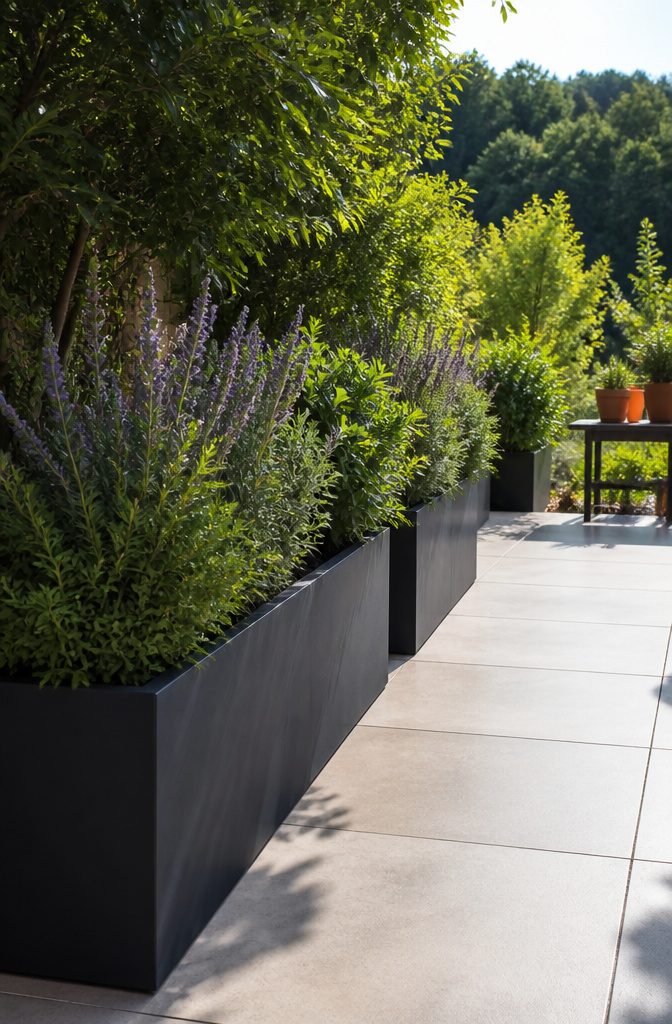
Fiberglass catches my eye because it solves the weight problem without looking like it did.
A full-size rectangle planter in fiberglass can run from 30" L × 12" W × 18" H up to 120" L × 42" W × 48" H, which covers anything from a patio herb row to a full property-line divider.
The larger ones would bury you in concrete; in fiberglass, two people can still shift them when the seasonal layout needs a reset.
The catch is timing.
Stock sizes that ship from US warehouses usually land in 1 to 2 weeks, but the real draw is customization, and that flips the calendar. Made-to-order pieces with custom dimensions or a specific finish run 1.5 to 6 weeks depending on the manufacturer.
If you are lining up a backyard reveal with a housewarming or a lease renewal, that six-week ceiling is the number to plan around, not the optimistic two.
Fiberglass also does not rot, rust, or warp, which matters more than it sounds for anything sitting through freeze-thaw cycles with wet soil inside.
The non-porous surface means indoor use is on the table too, if you want matching planters from the patio straight through the entry hall.

DURABLE PLANT POTS - Crafted from high-quality, recyclable plastic, these outdoor planter boxes ensure longevity. Designed to withstand sun, rain, and snow without discoloration, they remain sturdy and lightweight. The smooth surface of these indoor window planters makes cleaning effortless.
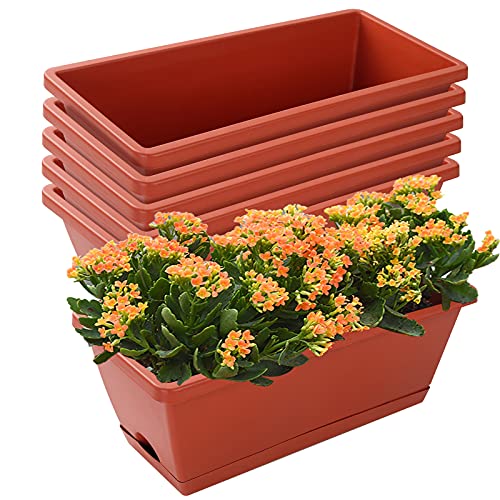
WINDOW BOX PLANTERS DIMENSIONS - Includes pack rectangular plastic planters. The size of plastic flower planters: L16.6 x W7 x H5.9 inches, large enough to support any projects and ideas. Great for herbs, flowers, foliage, grass, cactus, succulents, ferns, arborvitae and more.

Artisanal Handmade Quality:Each 24 - inch planter is meticulously crafted by hand. This hands - on approach ensures unique details and a high - quality finish, making it a standout piece for your indoor or outdoor space.
PVC Rectangular Planters
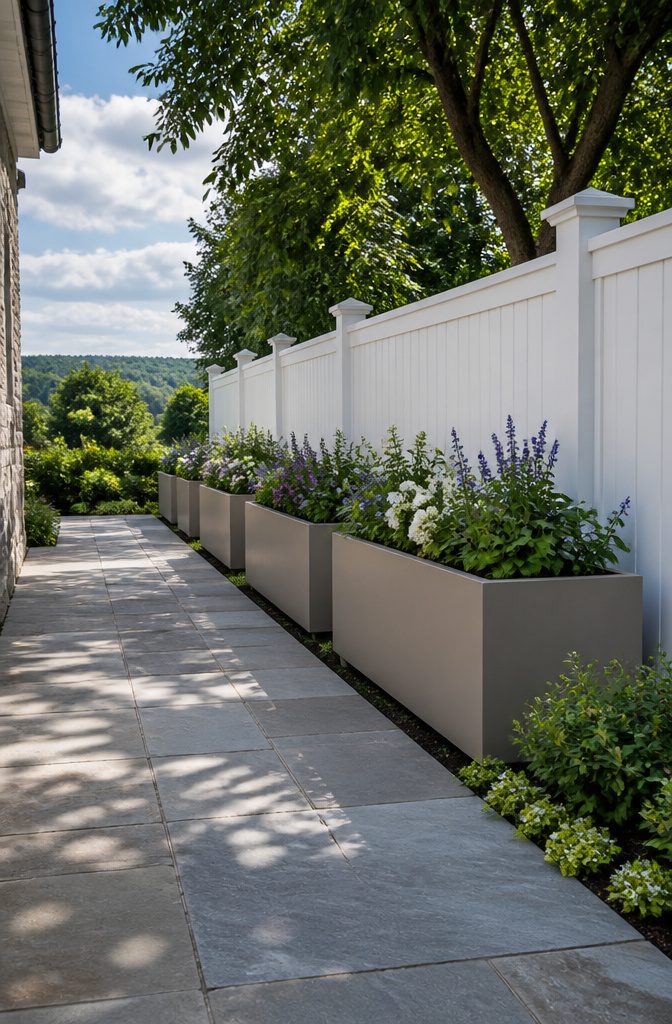
PVC planters land in an odd spot between lumber and synthetic: they cut and paint like wood but never rot, which matters more than it sounds if you’ve ever peeled a soggy planter apart after three winters.
The material itself is architectural-grade PVC, worked by carpenters rather than injection-molded, and that handcrafting shows in the fit.
The size range is where these stand out. Over 100 stock sizes run from compact window-box depths to oblong troughs, and custom lengths push to 16 feet if you’re lining a railing or dividing a rooftop space.
That kind of reach in one continuous piece is hard to find off the shelf; most materials either seam or ship as kits.
They arrive fully assembled, which I count as a feature after wrestling snap-together boxes that never quite square up.
The solid build also means no cracking in freeze cycles; you can leave soil in year-round without the seasonal anxiety that comes with thinner-walled options.
Painting is straightforward too: match your trim, match nothing, leave the factory white. The surface takes it without the priming gymnastics that some synthetics demand.
For something that weighs practically nothing compared to concrete or ceramic, the longevity claim holds up: lifetime guarantee against rot, sag, crack, or split. The trade is that you’re buying built-to-order, so peak-season lead times run about two weeks.

The outer basin is made of high quality plastic, safe, non-toxic and durable, and is also suitable for outdoor use.The surface is treated with a lacquer finish and has a high...
Resin Rectangular Planters
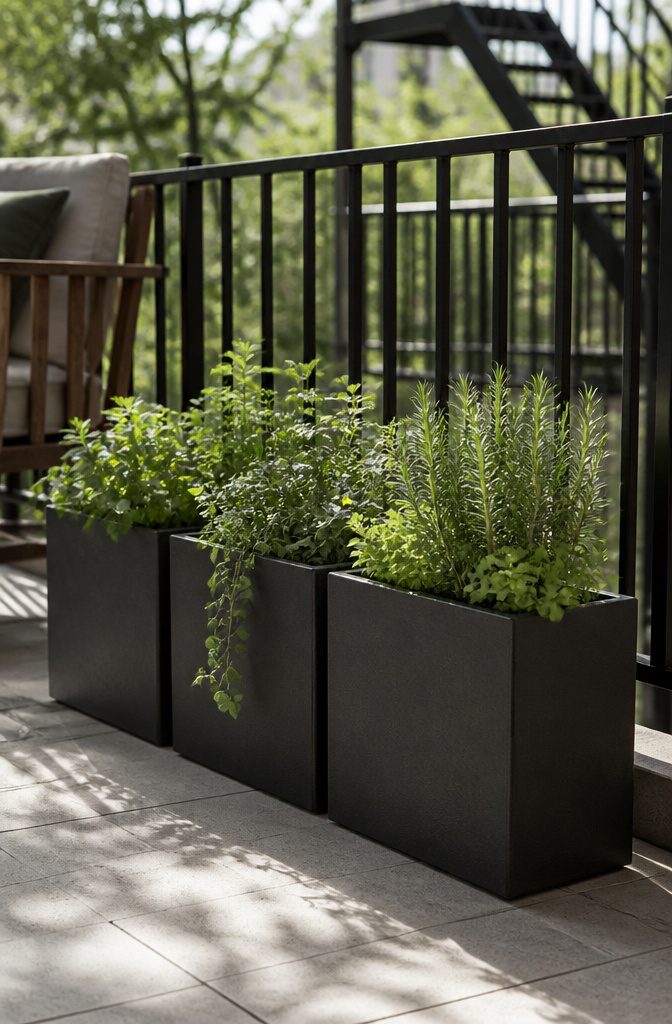
Resin rectangular planters owe their popularity to a simple geometry: 24", 30", and 36" lengths, every one of them 12" high.
That trio is the most standardized size set among outdoor planter materials, which means you can plan a row or a corner grouping without hunting for matching heights.
The resin itself, usually a poured polyethylene, is light enough to lift with one hand even at the 36" length.
That matters when a sudden frost sends you scrambling to cluster plants against a wall, or when you are renting and need to clear a patio for a landlord inspection.
The same material shrugs off the cycle of sun, rain, and freeze-thaw without the fading, chipping, or cracking that terracotta invites.
Add-on saucers and sub-irrigation units fit every size, so a 24" box can sit on a balcony railing with a drip tray while a 36" box on the ground runs its own water reservoir.
Only the 36" length offers an alternate 15" height, which is worth the extra soil depth for tomatoes or small shrubs but does break the clean visual line if you are mixing lengths.
For most layouts the 12" height wins, since it lets you set multiple sizes in a single row without staggered tops and still gives enough root room for annuals and leafy greens through a full growing season.

Spacious Window Boxes: These planter boxes measure 35.88" L x 7.88" W x 7.25" H each, perfect for creating a cohesive, decorative window garden display that enhances curb appeal and brings greenery to any space.
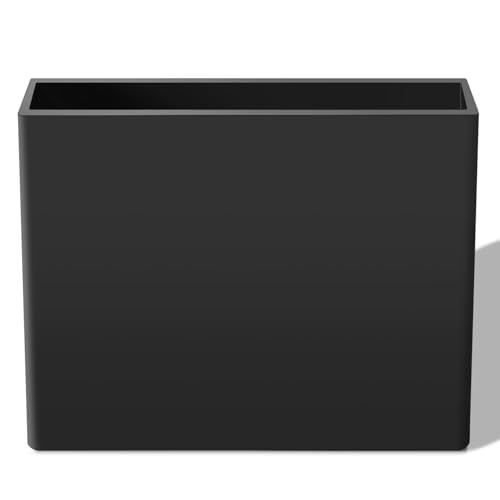
MADE FROM QUALITY RESIN PLASTIC-STONE COMPOSITE: All-weather resistant to scratches, cracks, deformation, UV and fading

Self-Watering Rectangular Planters
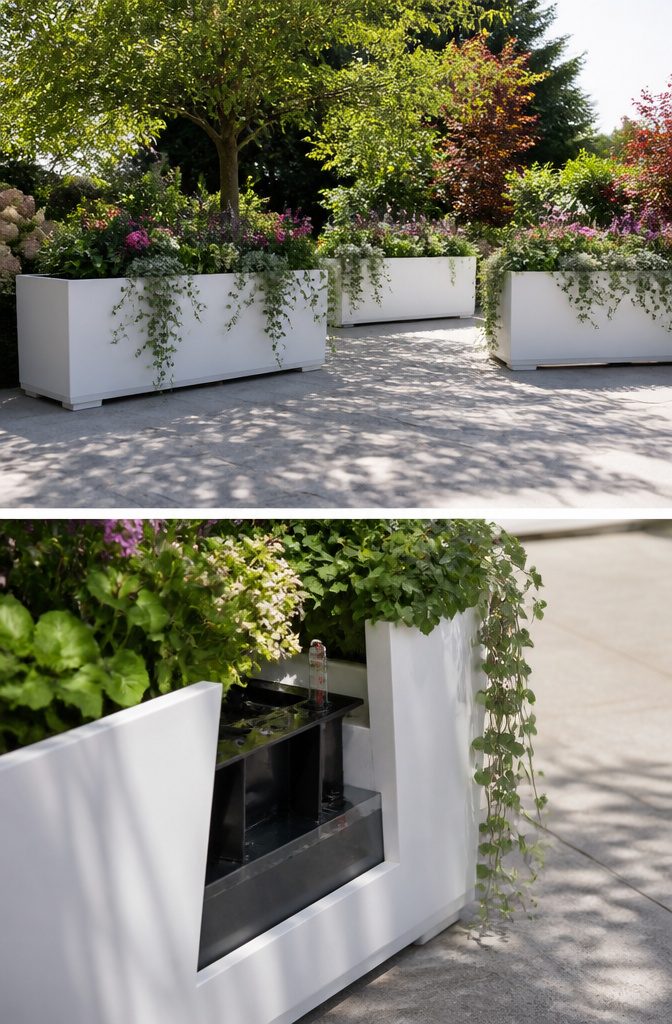
A self-watering reservoir turns a rectangle planter outdoor into something you can leave for a week without coming home to wilted leaves.
Water sits in a hidden chamber below the soil, and the plant draws it up through capillary action as needed. The surface stays dry enough to discourage mosquitoes, and the roots stay damp enough to survive a forgotten Tuesday.
The people who get the most from this setup are the ones whose schedules fight their good intentions.
Renters who fly out Thursday for a long weekend, or first-home owners who treat watering as a Sunday task and then lose it to a hardware store run.
The reservoir buys you that grace period, roughly doubling the time between checks compared with a standard drilled pot.
Both PVC and fiberglass lines offer this add-on. A carpenter-built PVC window box at Flower Window Boxes can ship with the feature installed, no assembly kit involved.
Fiberglass planters in the modern line from Planters Unlimited list reservoirs among their add-ons alongside casters and drainage holes. Lead time stretches to roughly 2–6 weeks for either route, since these are built to order rather than pulled from a shelf.
The real cost is upfront money for later convenience. For a planter that lives on a second-story balcony you reach through a sliding door in July heat, that trade usually pays out by August.

Durable Stainless Steel Construction: Made from 1.5mm thick stainless steel with a brushed finish for a clean modern look.
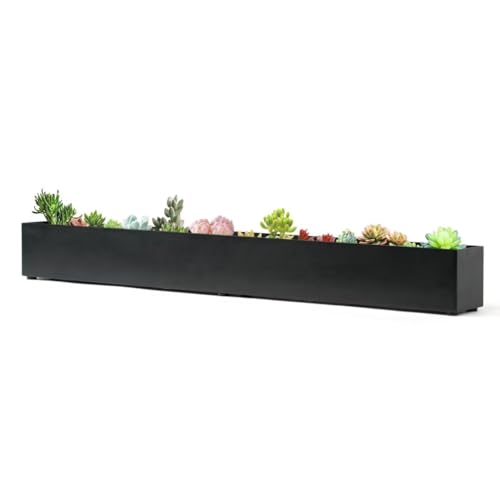
【Trough Rectangle Planter】 All-Weather Resistant. Modern design style, oblong planters for indoor plants can provide a miniature plant garden in a small space, decorate your space, beautiful, enhance happiness and atmosphere, high-quality metal materials, indoor window sill planter box can be freely used indoors and outdoors

Planter body made from a patented stone-plastic composite which provides the look of stone and durability of plastic
Custom Rectangular Planters
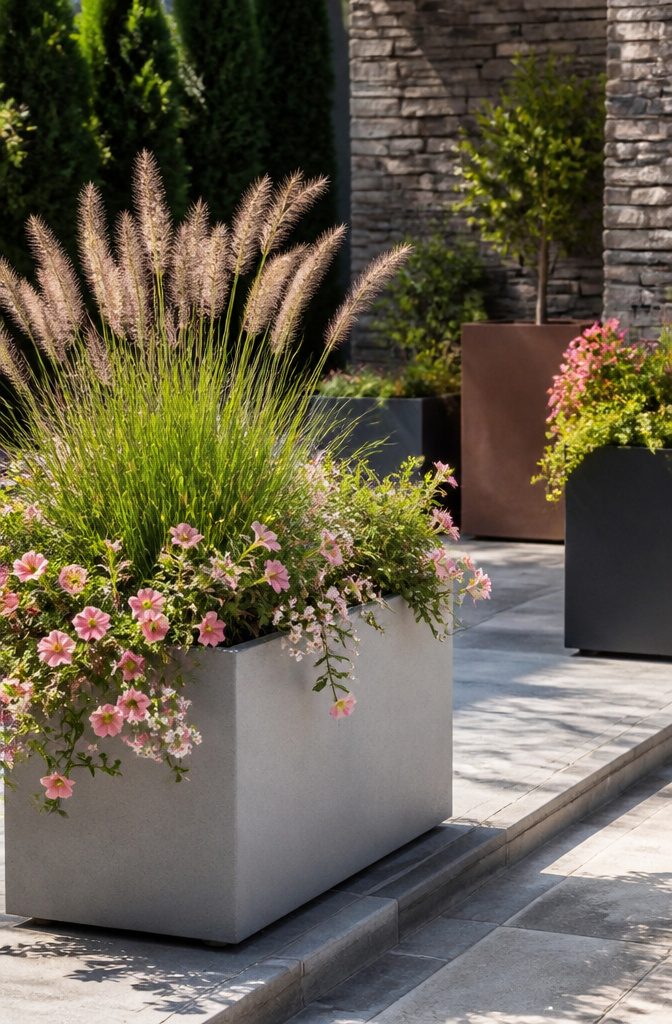
Custom work starts when the catalog sizes quit fitting the project. Fiberglass planters can run as small as 30″ L × 12″ W × 18″ H or scale up to 120″ L × 42″ W × 48″ H, and the depth of the color matches that flexibility.
One line carries 24 standard colors with four finishes, plus branded color matching if the exact shade matters for a deck or facade.
Drill holes for drainage or leave them sealed. Add casters if the planter needs to roll from sun to shade.
The catch is time: anything built to spec waits longer than a stock box. One carpenter-built line ships in roughly 1.5 to 2 weeks at peak season; custom fiberglass lead times run longer still.
That wait carries some reassurance.
Riverside Plastics backs its builds with an 8-year limited warranty on material and workmanship, replacement in kind for anything that fails. The maker’s bet is that the planter outlasts the impatience of ordering it.

SIMPLE YET ELEGANT: Line your front walkway or patio space, entrance, interior or outdoor as well as garden, public space, or storefront display with a planter of immediate elegance. Create your own stylish greenery corner and add sleek and timeless look to your décor with this modern eye-catching elongated Black Matte planter.

Space-Saving Solution: Maximize your limited space to enjoy gardening by utilizing vertical space and attaching the planters to windows, balconies, or fences. Size of 17x 6.7x 6 inch, it's ideal for urban residents and those with small gardens, allowing you to create beautiful green displays indoors or outdoors without worrying about space constraints.

TASTEFUL OUTDOOR DECOR: Transform walkways, entrances, decks, patios, and more with a modern planter to add a touch of style.
What Sizes Actually Mean for Your Space
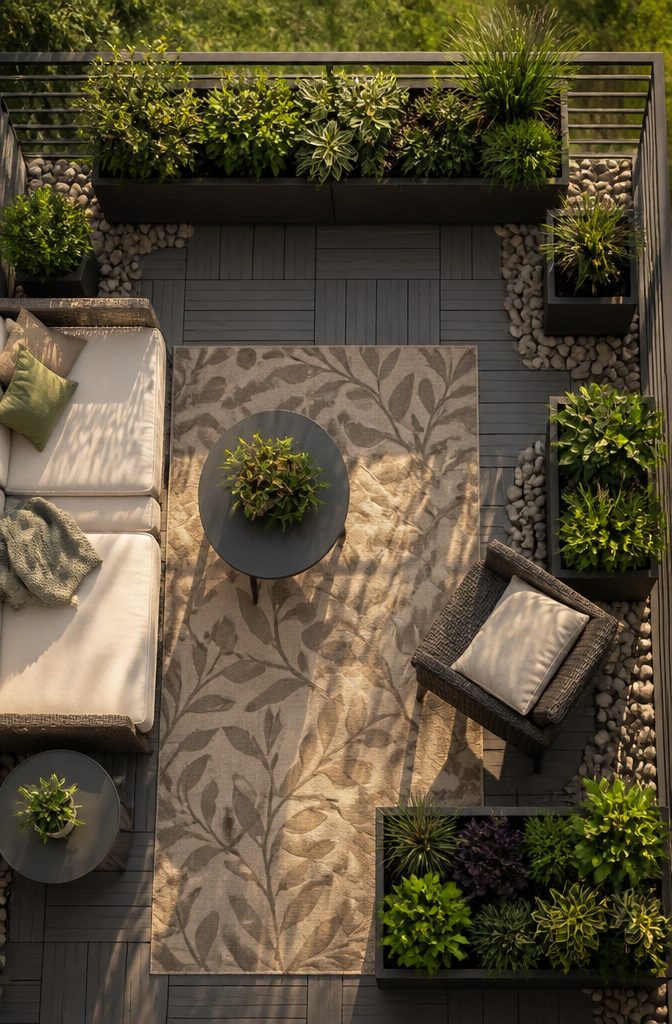
A 36-inch planter looks generous in a product photo and cramped on a 40-inch balcony once you account for the door swing.
The compact 18-to-24-inch accent forms fit the ledge behind a railing without blocking the view, while 48-to-60-inch statement pieces need walkway clearance on all sides and usually anchor a patio rather than a narrow deck.
Heights run from low-profile 10-to-14-inch border forms, which tuck under windowsills, up to tall 48-inch column profiles that function as room dividers.
What convinced me, comparing the standard footprints, is that depth matters more than length for root health.
A 24-by-18 or 36-by-18 footprint gives tomatoes or dwarf shrubs usable soil, whereas a long 24-by-48-inch box with only 10 inches of height forces you into shallow-rooted annuals.
The 12 to 15 inch heights common in polyethylene models suit herbs and lettuces; if you want perennials to survive winter, the 22-to-30-inch commercial depths hold enough soil to buffer freeze-thaw cycles.
Match the dimension to the constraint.
A 48-inch-long planter against a wall needs 18 inches of depth for visual balance. A railing-height box should clear the rail by at least two inches so water drains outward, not onto the decking below.
When standard sizes fail, custom dimensions exist, but most balcony and walkway projects resolve with the 24, 36, or 48-inch lengths already on the shelf.

【SELF WATERING】Every self watering planter comes with a matched water reservoir and a cotton wick that draw water up to the potting soil to keep the soil at a fairly consistent moisture level, it can offer 7-14 days self watering after filled up. (The rate of water consumption depends on the potting soil and weather.)

【SELF WATERING】Every self watering planter comes with a matched water reservoir and a cotton wick that draw water up to the potting soil to keep the soil at a fairly consistent moisture level, it can offer 7-14 days self watering after filled up. (The rate of water consumption depends on the potting soil and weather.)

Effortless Self-Watering Plant Pots: No more daily watering! The cotton rope wicking system draws water from the reservoir, keeping soil perfectly moist—ideal for busy plant lovers and beginners. A must-have self-watering pot for indoor plants that keeps your greens thriving.
Indoor Use and Drainage
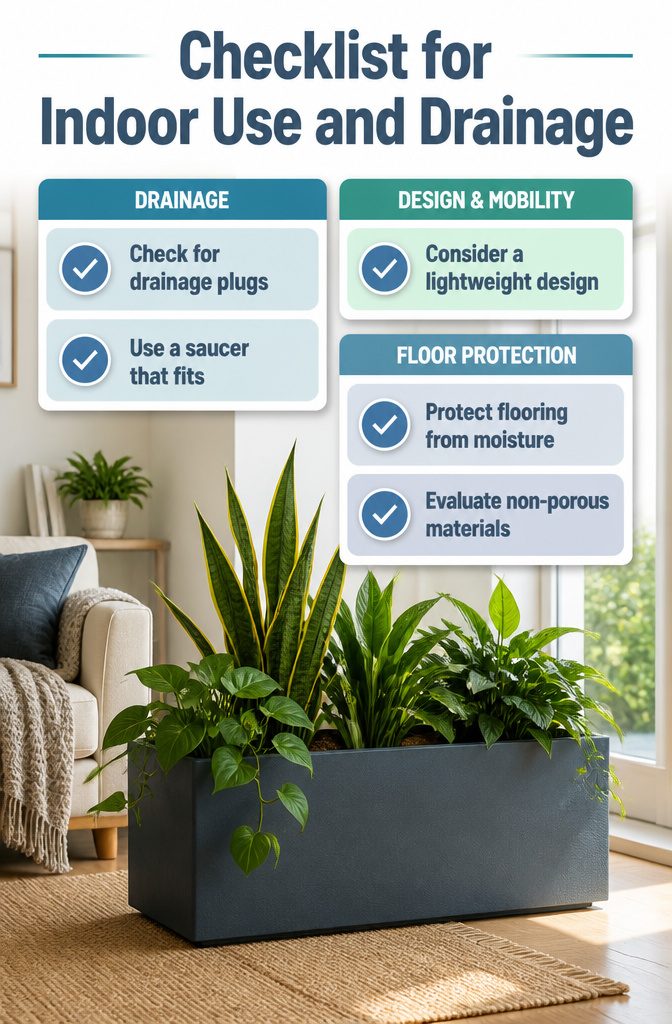
A rectangle planter marketed for the patio often ends up living inside for at least part of the year, especially if you rent and need to move plants out of frost or reclaim a security deposit later.
The question is whether it can do both jobs without ruining your floor.
Drainage is the detail that decides it.
Outdoor planters usually ship with open holes. Indoors, water on hardwood or carpet gets expensive fast, so you need a plug, a liner, or a saucer that actually fits the footprint.
Some polyethylene models offer optional saucers and sub-irrigation units sized to the specific length, which is worth requesting when you order rather than improvising with a mismatched tray later.
Weight matters more than people expect. A 36-inch fiberglass box, even empty, is manageable for one person if it is truly lightweight material, but filled with damp soil it becomes something you drag, not lift.
If seasonal migration is part of your plan, the lighter build pays off every trip through the door, and casters, where available, save both the planter and the floor from the scrape of shifting it twice a year.
Floor protection goes beyond water.
Non-porous finishes, like sealed fiberglass, will not leach moisture or stain onto the surface beneath. That is the difference between a planter that spends winter on your living room rug and one that stays banned to the balcony.

Premium Resin Materials: Made of high-quality resin with no harmful coatings, safe for vegetables, herbs and fruits. Waterproof, corrosion-resistant, fade-proof and easy to clean, more durable and secure than wooden planters.

MADE FROM QUALITY RESIN PLASTIC-STONE COMPOSITE: All-weather resistant to scratches, cracks, deformation, UV and fading

Modern Design for Any Setting: the set of 2 tall planters for outdoor feature a stylish tapered design in classic black, which are ideal for front porch decor, patios, or as large planters for indoor plants; Adding a sophisticated touch to your indoor or outdoor decor
Materials Compared
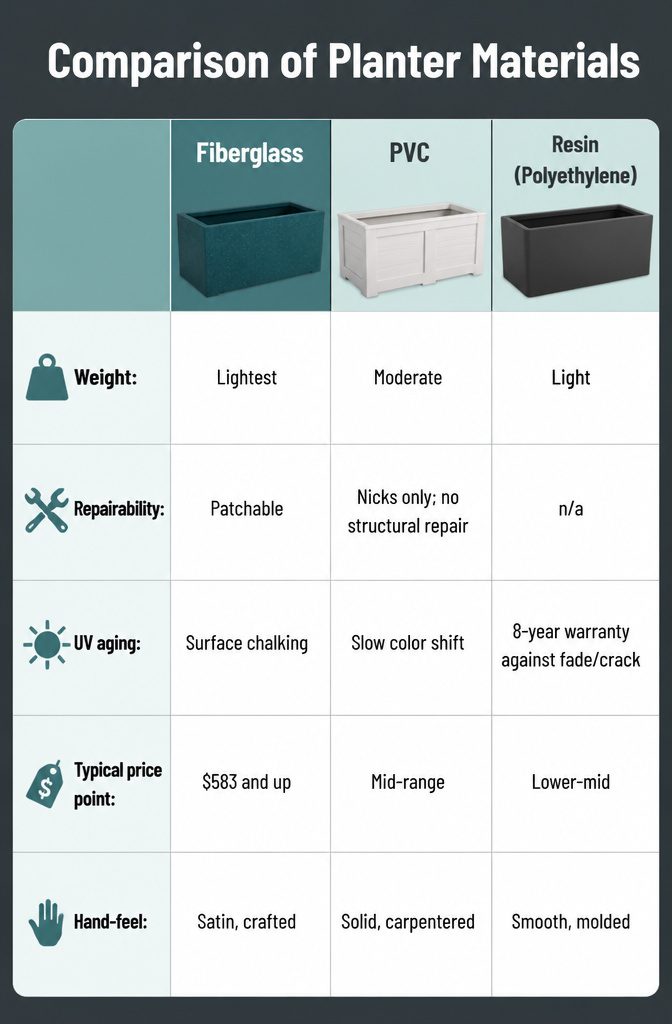
Fiberglass, PVC, and resin all skip the rust and rot problem that kills metal and wood planters, but they age and handle differently once you live with them.
Fiberglass weighs the least, which matters when you’re dragging a 30-inch box off a deck for winter.
Planters Unlimited quotes theirs at $583 for a 30-by-12-by-18-inch model with custom color and drainage options. That hand-laid finish can be repaired if you crack it, but it will chalk in sun over time.
PVC from Flower Window Boxes ships fully assembled and can carry a self-watering reservoir.
The material feels more like painted wood than plastic and takes a screw if you want casters. It does not sag or split, though a sharp hit can nick it.
Resin here means rotationally molded polyethylene, like Riverside Plastics uses.
The seamless build and UV-inhibited colorants carry an 8-year warranty against fading or cracking. It is tougher than it looks and fully recyclable, but a puncture or deep scratch is permanent; you cannot patch it the way you can fiberglass.
| Attribute | Fiberglass | PVC | Resin (Polyethylene) |
|---|---|---|---|
| Weight | Lightest | Moderate | Light |
| Repairability | Patchable | Nicks only; no structural repair | n/a |
| UV aging | Surface chalking | Slow color shift | 8-year warranty against fade/crack |
| Typical price point | $583 and up for 30" customized | Mid-range | Lower-mid |
| Hand-feel | Satin, crafted | Solid, carpentered | Smooth, molded |
For a renter who might move in two years, resin hits the utility mark. If you are staying and want the planter to look built-in, fiberglass justifies the cost.

【Trough Rectangle Planter】 All-Weather Resistant. Modern design style, oblong planters for indoor plants can provide a miniature plant garden in a small space, decorate your space, beautiful, enhance happiness and atmosphere, high-quality metal materials, indoor window sill planter box can be freely used indoors and outdoors
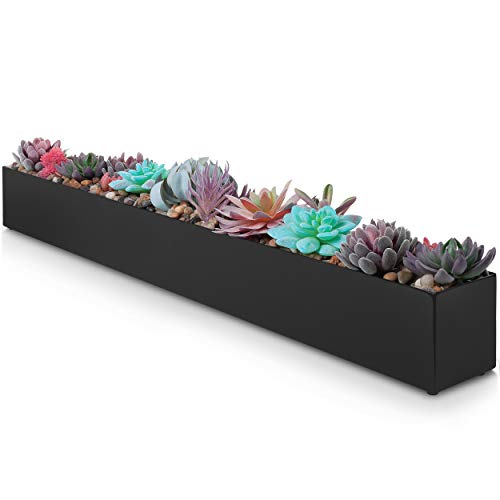
MODERN ROOM DÉCOR: Our stylish rectangular planter box makes a decorative statement on its own. It is simple yet elegant. This minimalist design has been powder coated with a matte black easy to clean finish. This finish is resistant to scratches, chips and fading. It is perfect to elevate and blend into any home décor! Please note that PLANTS AND ROCKS ARE NOT INCLUDED

Built for Lasting Outdoor Endurance: Constructed from premium rust-resistant metal, this planter is specifically engineered to endure harsh weather. It maintains structural integrity and aesthetic appeal through seasons of rain, snow, and intense sunlight, guaranteeing exceptional longevity for your outdoor space.
Lead Times and What to Expect
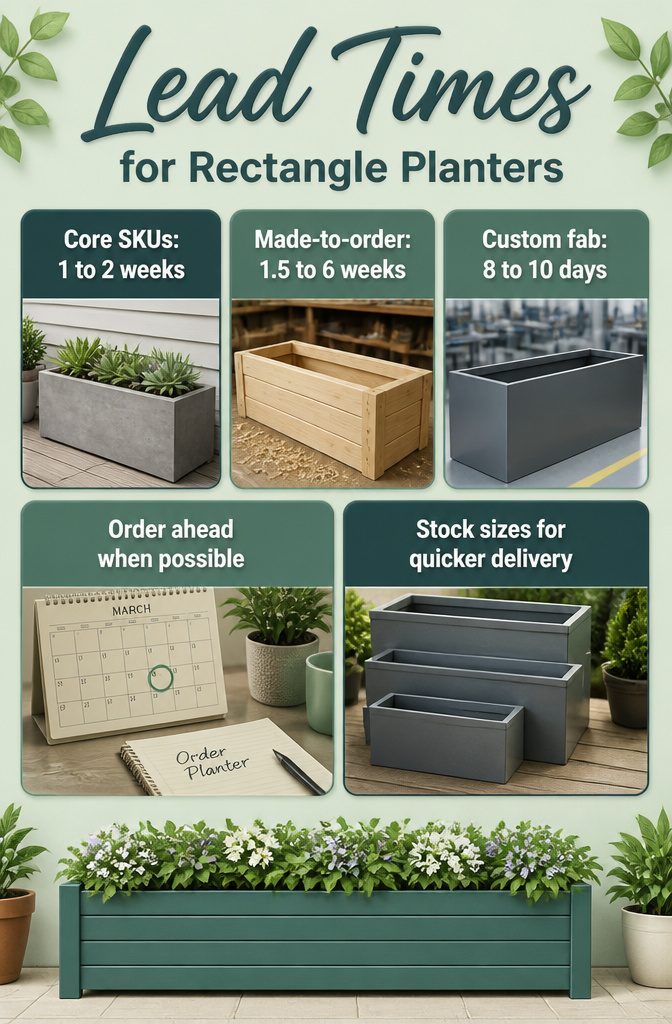
Waiting on a rectangle planter to show up can throw off a whole spring planting calendar if you do not build it into the plan.
Core SKUs ship in 1 to 2 weeks from US warehouses, which is workable for most weekend projects. Made-to-order pieces stretch that out, and the range lands somewhere between 1.5 and 6 weeks depending on how the manufacturer keeps stock.
I learned to order ahead the hard way one March. The planter I needed was built to order by carpenters, and the lead time clocked in at about two weeks.
Not catastrophic, but my seedlings outgrew their nursery pots before the box arrived. That pushed the whole layout back into April.
If you are timing around a move-in date or a boxwood hedge going in on a specific weekend, build in the longer end.
Custom fabricated polyethylene planters run closer to 8 to 10 days direct from the manufacturer, with no returns to fall back on if the timing slips.
The self-watering and deluxe builds sometimes sit at the slower edge too. Order the plain stock sizes when speed matters; save the custom lengths for projects where you can afford to wait.
![Arcadia Garden Products PSW Pot Collection [17.5 inch] Plastic/Stone/Wood Composite Window Box Rectangular Planter – No Drainage Hole (Drillable), Indoor/Outdoor Pot for Flowers and Vegetables, Taupe](https://m.media-amazon.com/images/I/41Om-tc3InL._SL500_.jpg)
Made with Recycled Materials: A blend of recycled plastic, stone powder, and wood dust, PSW Pots are eye-catching and long-lasting for mindful gardening

【16inch Window Box Planter】Dimensions: 16×3.8×3.3" (planter) + 15.1×3×1.2" (saucer). Perfect for herbs, succulents, cacti, lilies, or faux plants. Holds soil, pebbles, or decorative stones.

DURABLE MATERIAL: Made from a patented plastic-stone composite, this fluted planter has a subtle textured finish and is all-weather resistant to cracks, scratches, UV and fading; perfect for hot or cold climates ranging from -20 to +120 degrees
Low Maintenance in Practice
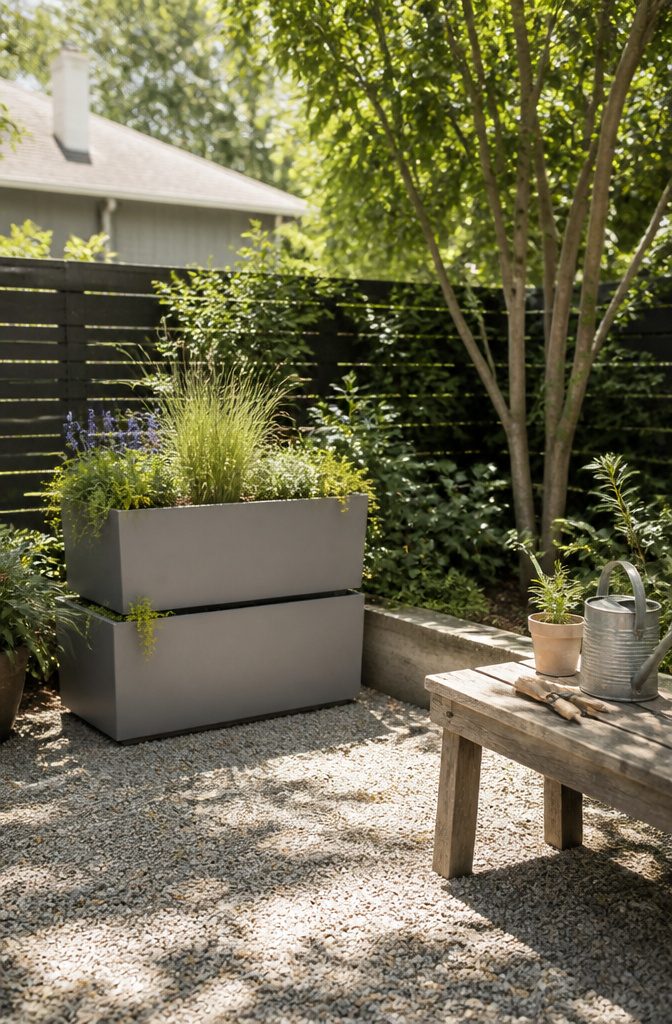
The winter after I bought my first two rectangle planters outdoor, I dragged them into the garage still half full of wet soil and learned the hard way that was not the plan.
Now I tip them, hose them, and let them dry stacked upside down on a couple of scrap two-by-fours so they do not freeze to the concrete.
It takes maybe twenty minutes for a pair of them, and that single afternoon in November saves the cleanup that used to greet me in April.
Fiberglass, PVC, and resin do not rust, rot, or crack the way wood and metal eventually will, which is why the category gets away with the "low maintenance" label.
But low maintenance still means some. A scrub brush and dish soap once a season lifts the algae that colonizes any surface holding damp potting mix; a Magic Eraser takes off the mineral ring from hard water.
The UV inhibitors in the polyethylene resists the chalky fading that turns cheaper plastic planters gray after a couple of summers, and the rotational molding leaves no seams to split.
Riverside covers that performance with an 8-year warranty against defects in material and workmanship, which is about as close as you get to a manufacturer staking money on how long these actually last in the yard.
Normal wear and the occasional rock your mower kicks up are on you; replacement is for structural failure, not scuffs.
After five seasons my oldest pair still looks close to new, so the eight-year number feels like a real estimate rather than marketing padding.
Frequently Asked Questions
What sizes are rectangular planters available in?
Rectangle planters outdoor range from compact 18-to-24-inch accent forms up to large 48-to-60-inch statement pieces, with heights from 10-to-14-inch low profiles to 48-inch column dividers.
Fiberglass models specifically span 30" L × 12" W × 18" H to 120" L × 42" W × 48" H, while PVC lines can stretch to 16 feet in custom lengths.
Depth matters more than length for root health: 12 to 15 inches suits herbs and lettuces, while 22 to 30 inches buffers perennials through freeze-thaw cycles.
Can rectangular planters be used indoors?
Yes, though you need to manage drainage to protect floors. Outdoor rectangle planters usually ship with open holes, so for indoor use you’ll want a plug, liner, or fitted saucer.
Non-porous materials like sealed fiberglass won’t leach moisture or stain rugs, and lighter builds with optional casters make seasonal migration through doorways far easier.
Do you offer custom dimensions for rectangular planters?
Custom dimensions are widely available when stock sizes fail to fit.
Fiberglass can be made to order in any size within a broad range, PVC lines can be built to virtually any length, and custom polyethylene planters ship in roughly 8 to 10 days direct from the manufacturer.
Expect lead times of 1.5 to 6 weeks for made-to-order pieces, versus 1 to 2 weeks for core SKUs.