
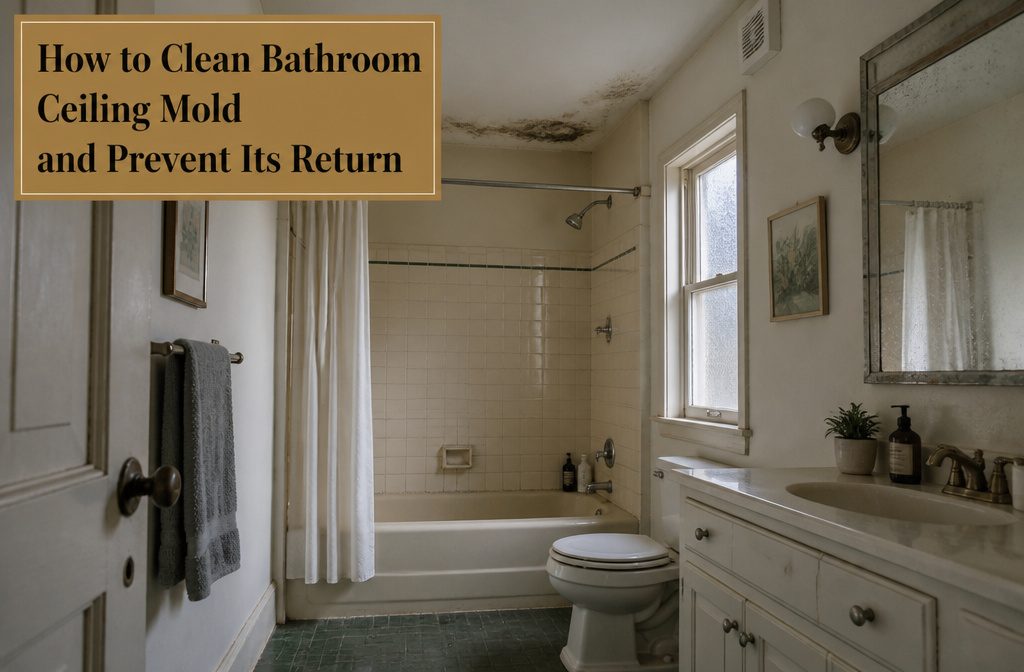
Surface mildew on a bathroom ceiling wipes away in under an hour with white vinegar or hydrogen peroxide, gloves, and a scrub brush.
The clean fails if you stop there: without fixing airflow or drying habits, growth returns in days or weeks and the cycle repeats.
Most people skip the post-shower ventilation window. Running the exhaust fan for 15 to 20 minutes after every shower pulls moisture out before it settles into paint and drywall, where mildew takes hold within 24 to 48 hours.
1. Understand the moisture problem
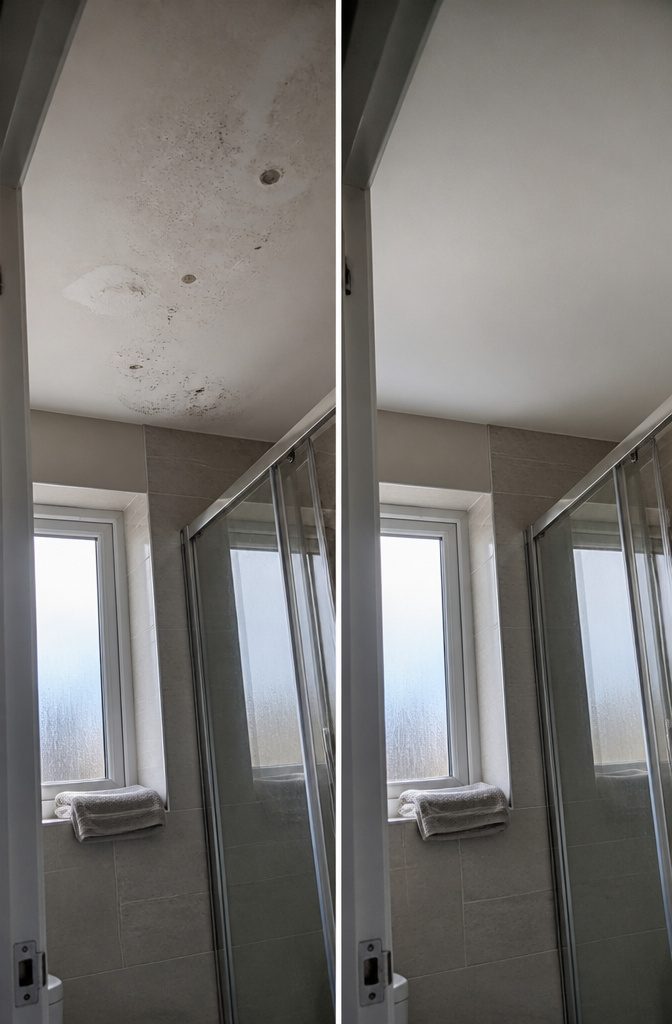
Steam from a hot shower rises straight to the ceiling.
Without airflow to carry it away, that moisture settles into paint and drywall, and mildew can begin growing within 24 to 48 hours. The pattern repeats every time someone showers, and over weeks the ceiling shifts from clean to marked.
Flat, powdery patches in white or gray are mildew, a surface fungus that wipes away and leaves firm material underneath.
Darker spots that look fuzzy or slimy signal mold, which penetrates deeper. Surface mildew is straightforward to clean.
Bubbling or peeling paint, soft drywall when you press it, water stains with defined edges, a musty smell that lingers after cleaning, or mildew that returns within days all point to damage below the surface.
That scenario needs professional assessment rather than a spray bottle.
2. Decide whether to call a professional
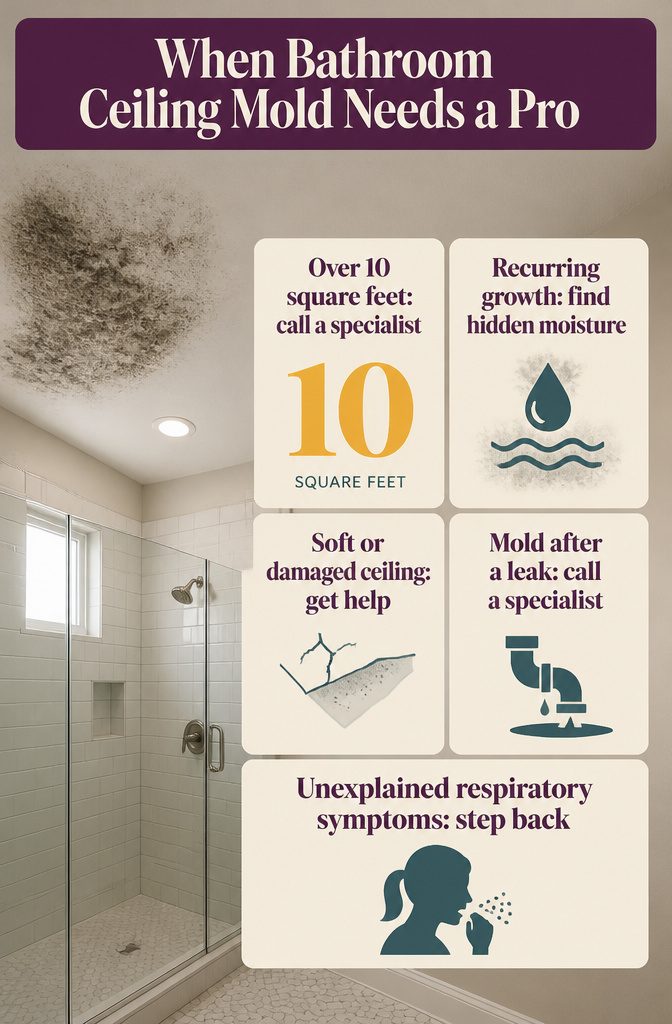
The ten square foot threshold is the point where a DIY clean moves into professional territory. Mold covering more than about ten square feet—roughly a three by three foot patch—calls for a remediation specialist, following EPA guidance.
That same call goes for growth that returns after cleaning, a ceiling that feels soft or damaged when pressed, or mold that appeared after a leak or water intrusion.
Anyone in the house experiencing unexplained respiratory symptoms is another signal to step back.
Smaller patches, typically under ten square feet, are manageable with gloves, goggles, and a mask. Surface mold that wipes away without revealing spongy or stained material underneath usually responds to the cleaning methods covered elsewhere in this guide.
But recurring growth means there is a hidden moisture source driving it—a slow leak, inadequate ventilation, something beyond what a spray bottle can address.
Professionals go past the surface treatment and fix the underlying cause so the problem does not keep cycling back.
3. Gather supplies and prepare
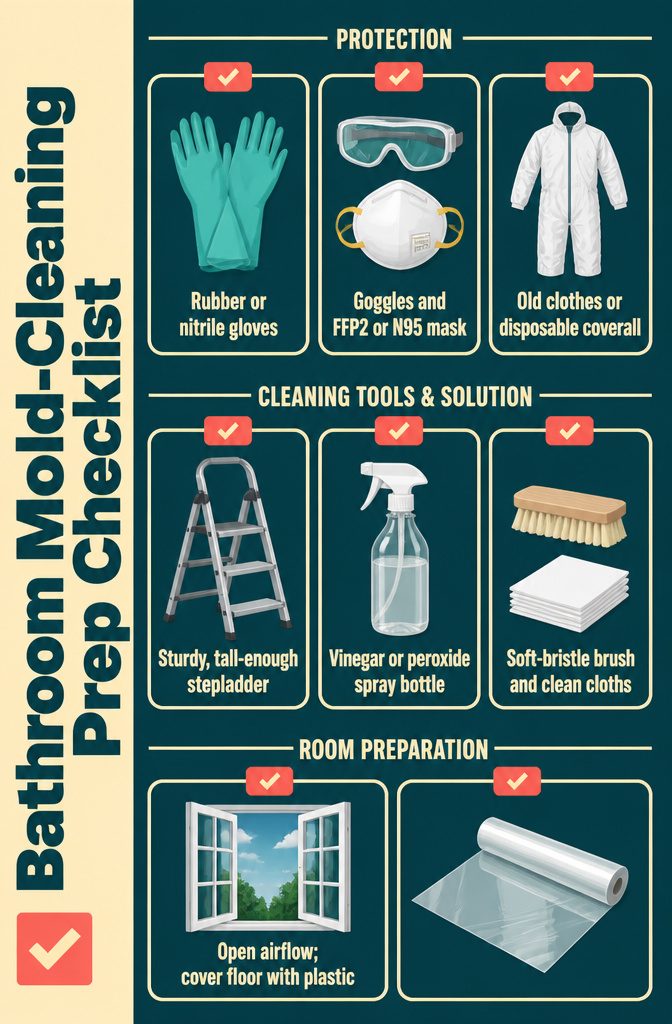
Before you climb anything, lay out what you need and set up the space so you’re not chasing supplies mid-scrub.
Put on rubber or nitrile gloves, safety goggles, and a face mask rated FFP2 or N95 — ceiling work means whatever you disturb falls straight onto your face.
Throw on old clothes or a disposable coverall you don’t mind speckled with cleaner.
You’ll need:
- A sturdy stepladder tall enough that you’re not stretching
- White vinegar or hydrogen peroxide in a spray bottle
- Soft-bristle scrub brush
- Clean cloths or paper towels
- Plastic sheeting to cover the floor
Open a window or run the exhaust fan before you start.
Scrubbing mold kicks spores into the air, and you want them carried out, not settling back onto the ceiling or into your lungs. Lay plastic sheeting on the floor to catch drips and debris.
4. Clean the ceiling
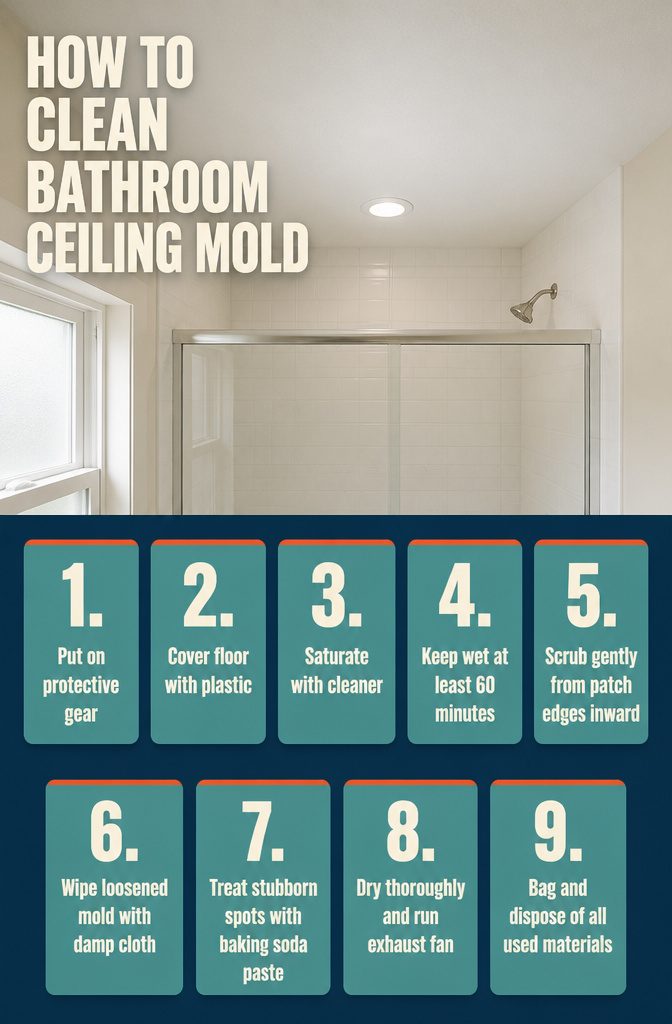
Clean the ceiling
- Put on protective gear before you start. A face mask and eye protection keep mold spores out of your lungs and eyes.
- Lay plastic sheeting on the floor to catch debris and drips.
- Fill a spray bottle with undiluted white vinegar or 3% hydrogen peroxide. Vinegar kills roughly 82–90% of mold species; peroxide hits closer to 99% and penetrates deeper. Spray the moldy area generously until saturated.
- Let it sit for at least 60 minutes. Heavy growth needs two to three hours of contact time. The cleaner has to stay wet long enough to break down the mold.
- Scrub gently with a soft-bristle brush, working in circles from the outside of each patch inward. Rinse the brush often in clean water.
- Wipe away loosened mold with a damp cloth, rinsing the cloth frequently.
- For stubborn spots that resist the first round, mix three parts baking soda to one part water into a paste. Apply it, wait 15 minutes, scrub, then wipe clean.
- Dry the ceiling thoroughly with a dry towel or fan. Run the exhaust fan for several hours. Mold returns fast if the surface stays damp.
- Bag and dispose of all used materials immediately.
5. Monitor and prevent return
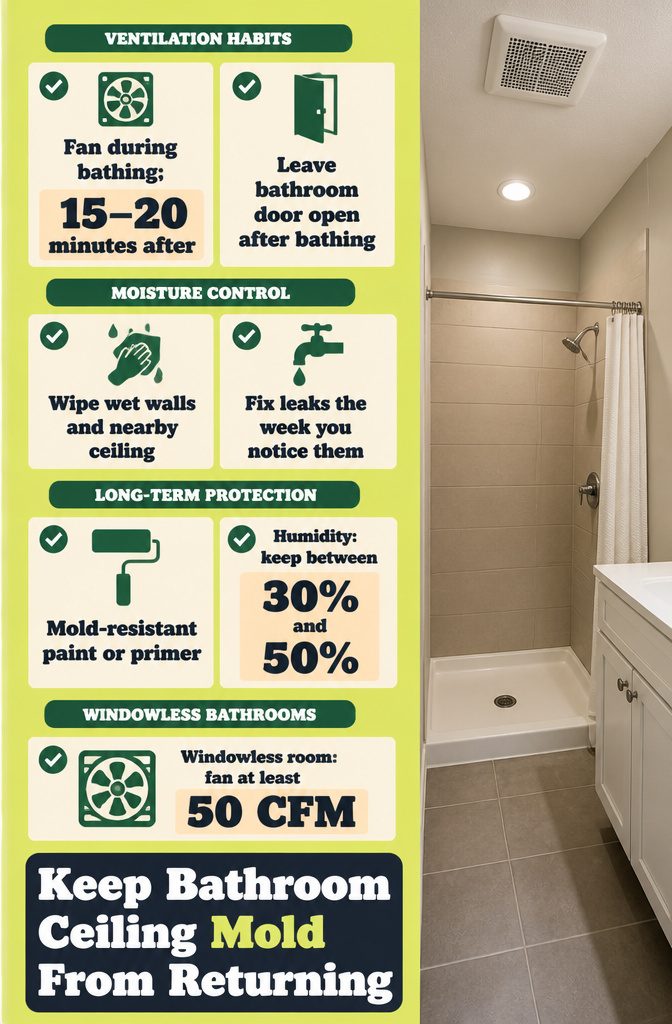
Check the cleaned area every few weeks or monthly to catch any return before it spreads. Bathrooms hold moisture longer than most rooms, and mold finds its way back if the ventilation habits don’t change.
A few habits make the difference:
- Run the exhaust fan during every shower or bath and for 15–20 minutes afterward. Some sources stretch that to 20–30 minutes; I stick to 15 and have not seen it fail yet.
- Leave the bathroom door open after bathing to pull drier air through.
- Wipe down walls and the ceiling near the shower when they look wet.
- Fix leaks the week you notice them, not the month after.
- Paint the ceiling with mold-resistant paint or primer during your next refresh.
For windowless bathrooms, check that your exhaust fan moves at least 50 CFM for spaces up to 100 square feet. Installation costs typically run $150–$400 when you hire an electrician.
A fan timer costs $15–$25 and removes the guesswork. Indoor humidity should stay between 30% and 50%.
Which cleaner works for bathroom ceilings
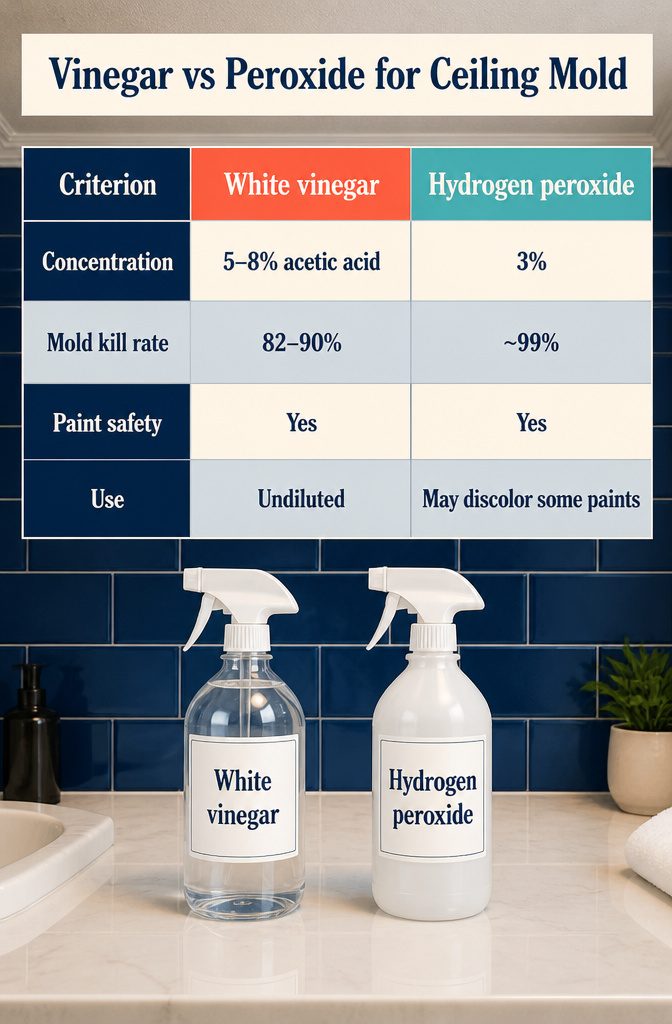
White vinegar and hydrogen peroxide handle most bathroom ceiling mold without the fumes or paint damage that bleach brings. Vinegar contains 5–8% acetic acid and kills around 82–90% of mold species, and you can spray it straight from the bottle.
Hydrogen peroxide at 3% concentration kills roughly 99% of mold and works well on stubborn spots. Both are safe for painted drywall, which is porous enough that bleach sits on the surface without reaching the roots.
| Cleaner | Concentration | Mold Kill Rate | Safe for Paint | Notes |
|---|---|---|---|---|
| White vinegar | 5–8% acetic acid | 82–90% | Yes | Use undiluted |
| Hydrogen peroxide | 3% | ~99% | Yes | May discolor some paints |
| Baking soda | 1 tablespoon per cup water | Low | Yes | Better for odor than killing mold |
| Tea tree oil | 1 teaspoon per cup water | Moderate | Yes | Natural option |
| Bleach | 1 part bleach to 3–10 parts water | High on nonporous surfaces | Risky | Damages paint, creates fumes |
Bleach works on nonporous surfaces like tile but not on drywall, and mixing vinegar with Dawn dish soap drops the acidity that makes vinegar effective.
When cleaning routine dust matters
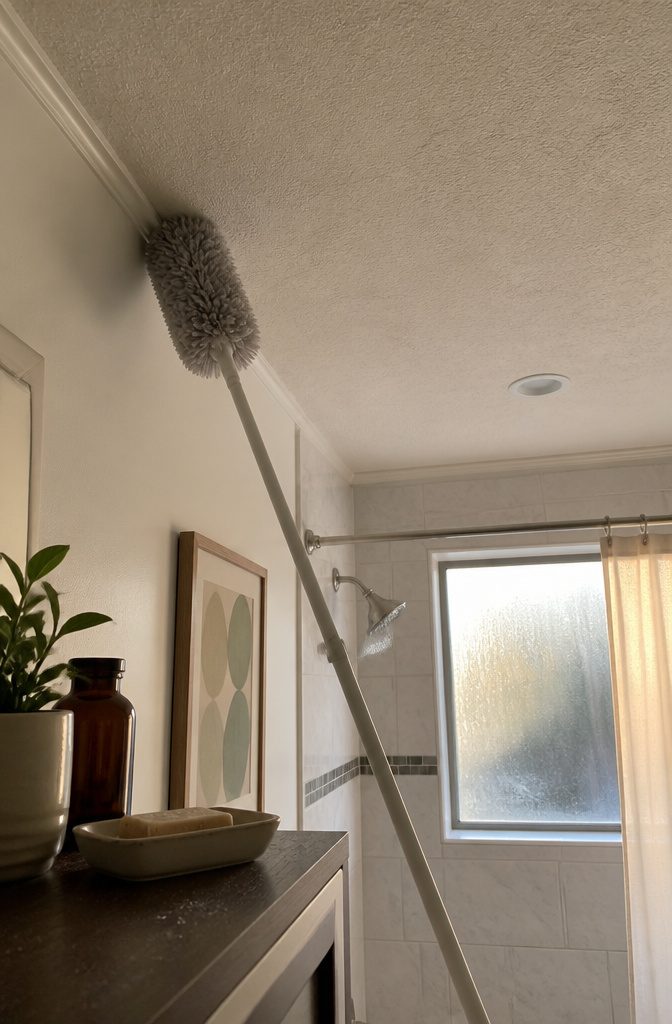
Dust and cobwebs land on bathroom ceilings whether mold is present or not.
Dry cleaning first keeps you from adding moisture where it does not belong: a long-handled duster or a vacuum with a soft brush attachment on low suction sweeps away surface debris without wetting anything.
Porous materials and textured ceilings trap moisture once it gets in, so the less water you introduce, the safer the ceiling stays.
For general stains unrelated to moisture, test any cleaner on a hidden patch before you commit to the whole surface. Good Housekeeping lays out the safest approach when dry methods are not enough:
Lightly dampen a microfibre cloth or mop head, and wring it out thoroughly. Clean the ceiling in small sections, using overlapping strokes. Rinse with a clean, damp cloth to remove residue, then follow up with a dry one to soak up any lingering moisture.
Over-wetting porous ceiling materials can lead to watermarks or new mold, exactly what you were trying to avoid in the first place.
Frequently Asked Questions
How can I tell the difference between mildew and mold on my bathroom ceiling?
Mildew appears as flat, powdery white or gray patches that wipe away easily, leaving firm material underneath. Mold shows up as darker, fuzzy or slimy spots that penetrate deeper into the surface.
If the ceiling feels soft when pressed, paint is bubbling or peeling, or growth returns within days, you’re dealing with mold that has gone below the surface.
How do you get rid of mold on a bathroom ceiling?
Spray undiluted white vinegar or 3% hydrogen peroxide on the moldy area until saturated, then let it sit for at least 60 minutes.
Scrub gently with a soft-bristle brush, wipe away loosened mold with a damp cloth, and dry the ceiling completely with a towel or fan.
For stubborn spots, apply a paste of 3 parts baking soda to 1 part water, wait 15 minutes, scrub, and wipe clean.
How to remove mold from bathroom ceiling without bleach?
White vinegar kills around 82–90% of mold species and hydrogen peroxide at 3% concentration kills roughly 99%, both without the fumes or paint damage bleach causes.
Spray either one directly on the mold, let it sit for an hour or more, scrub, and wipe clean. Both work well on porous drywall where bleach only sits on the surface.
What is the best thing to put on a bathroom ceiling?
Mold-resistant paint or primer keeps growth from returning during your next refresh.
Pair it with consistent ventilation habits: run the exhaust fan during every shower and for 15–20 minutes afterward, leave the door open after bathing, and wipe down wet surfaces. Indoor humidity should stay between 30% and 50%.
Is black mold on the bathroom ceiling dangerous?
Black mold can pose serious health risks, especially for children, older adults, and anyone with respiratory conditions or allergies.
Exposure may cause coughing, sneezing, and irritated eyes or skin. If you spot black mold on your bathroom ceiling, contact a remediation professional.
When should I call a professional to remove mold on the ceiling?
Call a professional for mold covering more than 10 square feet, growth that returns after cleaning, a ceiling that feels soft or damaged when pressed, or mold that appeared after a leak or water intrusion.
Anyone in the house experiencing unexplained respiratory symptoms is another signal to step back.
Can I use bleach to remove mold from my ceiling?
Bleach works on nonporous surfaces like tile but not on porous drywall, where it sits on the surface without reaching the roots.
It also damages paint and creates fumes. White vinegar and hydrogen peroxide are safer and more effective for most bathroom ceiling mold.
How do I stop mold from coming back?
Run the exhaust fan during every shower and for 15–20 minutes afterward, leave the bathroom door open after bathing, and wipe down wet walls and ceiling near the shower.
Fix leaks the week you notice them and paint the ceiling with mold-resistant paint during your next refresh.
Can mold on the ceiling spread to the walls?
Yes.
Mold releases spores that travel through the air and settle on damp surfaces throughout the bathroom. If humidity extends beyond the bathroom, those spores can grow in adjacent rooms where there are cold walls, poor insulation, or soft furnishings nearby.
Do I need to replace the ceiling if mold returns?
Not always.
Surface growth may respond to cleaning and repainting if you fix the moisture source driving it. Soft or damaged drywall, bubbling paint, or fast recurrence after cleaning suggests the material is compromised and may need replacement.
Does Dawn and vinegar kill mold?
No.
Mixing vinegar with Dawn dish soap drops the acidity that makes vinegar effective against mold. Use undiluted white vinegar or 3% hydrogen peroxide instead.
How long should you leave vinegar on a bathroom ceiling?
At least 60 minutes.
Heavy growth needs 2 to 3 hours of contact time. The cleaner has to stay wet long enough to break down the mold.
Can you leave vinegar on mold overnight?
Yes, but keep the room ventilated and stop if the ceiling bubbles, sags, drips, or develops brown or yellow stains. Those signs mean the material is absorbing too much liquid or reacting poorly to extended contact.
Does mold come back after cleaning?
Yes, if the moisture source is not fixed.
Mold returns fast when ventilation habits don’t change, leaks go unrepaired, or humidity stays high. Cleaning removes visible growth, but recurring mold means there is a hidden moisture source driving it.
How do I know if the mold is surface-level or deeper in the ceiling?
Easy-to-wipe growth with intact material underneath is more likely surface-level.
Softness when you press the ceiling, bubbling or peeling paint, water stains with defined edges, a musty smell that lingers after cleaning, or mold that returns within days all point to deeper damage.
Will painting over mold kill it?
No.
Remove the mold first, then use mold-resistant paint or primer only after treatment. Painting over growth traps it underneath where it continues to spread.
Does cold weather make bathroom mold worse?
Yes.
Colder surfaces and closed windows increase condensation, giving mold more moisture to grow. Keep the exhaust fan running and crack a window when possible to move humid air out.
What humidity level prevents mold growth?
Indoor humidity should stay between 30% and 50%. Above that range, moisture settles into porous materials like drywall and paint, creating conditions for mold to grow.
Can I use hydrogen peroxide instead of vinegar?
Yes.
Use 3% hydrogen peroxide, leave it for at least 10 minutes, then scrub. Peroxide kills roughly 99% of mold species and penetrates deeper than vinegar, though it may discolor some paints.
How often should I clean my bathroom ceiling to prevent mold?
Check the ceiling monthly and do a light cleaning quarterly when ventilation and moisture control are good. Treat visible mold or mildew promptly rather than waiting for a scheduled clean.
Does bathroom ceiling mold indicate a roof leak?
Not always.
Poor ventilation is a common cause, but repeated or stained areas near the same spot may warrant checking for roof or plumbing leaks. If mold returns quickly after cleaning or appears with water stains that have defined edges, investigate further.