
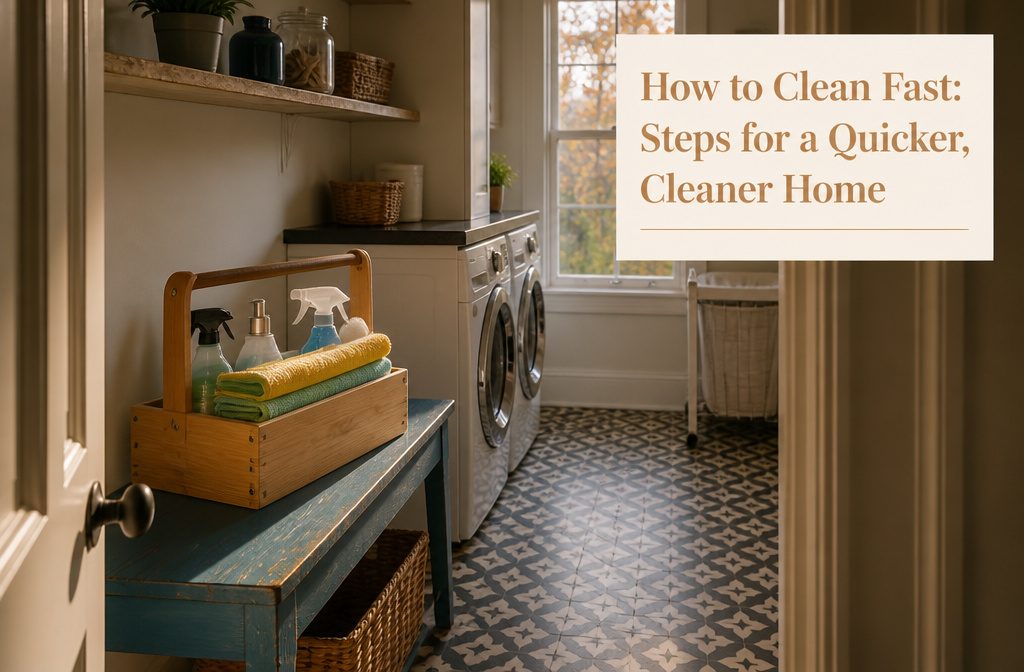
A speed clean takes 15 to 60 minutes depending on how organized the home is to start with, and it keeps visible surfaces presentable without tackling the buildup that requires a deep session.
Most people lose time by cleaning surfaces they just made messier: they wipe counters before clearing clutter, or they mop before dust from higher shelves has finished falling.
The portable caddy stocked with microfiber cloths, all-purpose spray and a Magic Eraser cuts the trips back to fetch supplies mid-room.
1. Gather supplies in a portable caddy or basket
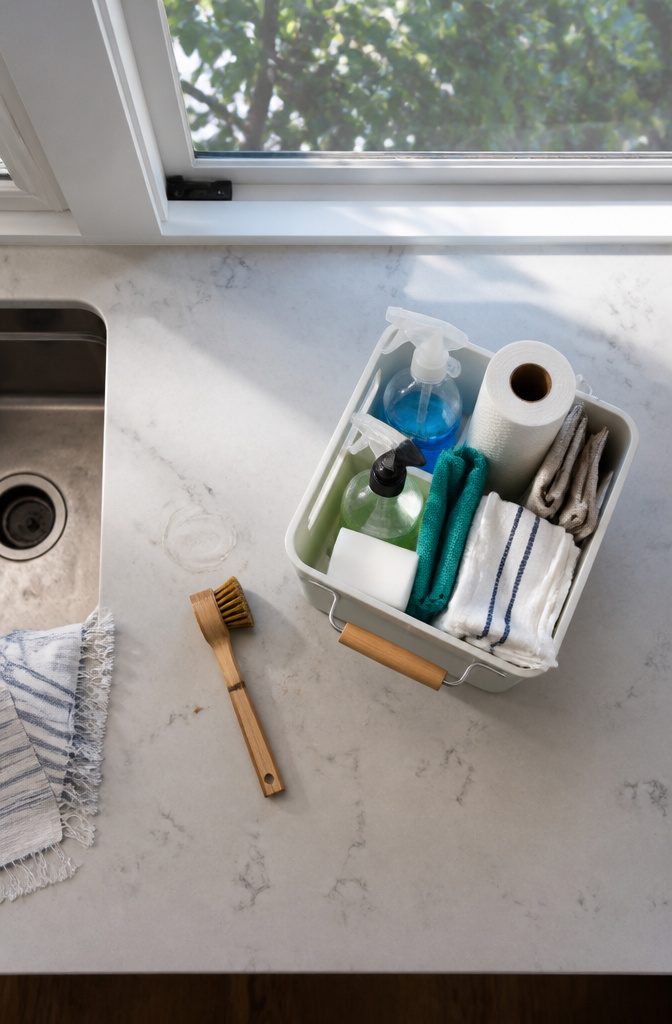
I start by putting every supply I need in a single portable caddy or basket.
That eliminates the trips back to the kitchen mid-clean when I realize the glass cleaner is still under the sink. Window cleaner, an all-purpose spray, a Magic Eraser, microfiber cloths and paper towels cover most surfaces without guesswork.
I keep flour sack dish towels in the rotation because they hold up better than paper on bigger spills, and they wash clean.
Avoid a common window-cleaning mistake by brushing or vacuuming dust from the window frame before wetting the surface.
Dry-dusting first keeps you from smearing grit across glass. Once the caddy is stocked, I keep it somewhere central rather than tucked in a closet two rooms away.
The less distance between the mess and the tools, the more likely I am to actually deal with it instead of adding it to a list for later.
2. Set a timer and choose room-by-room or task-by-task
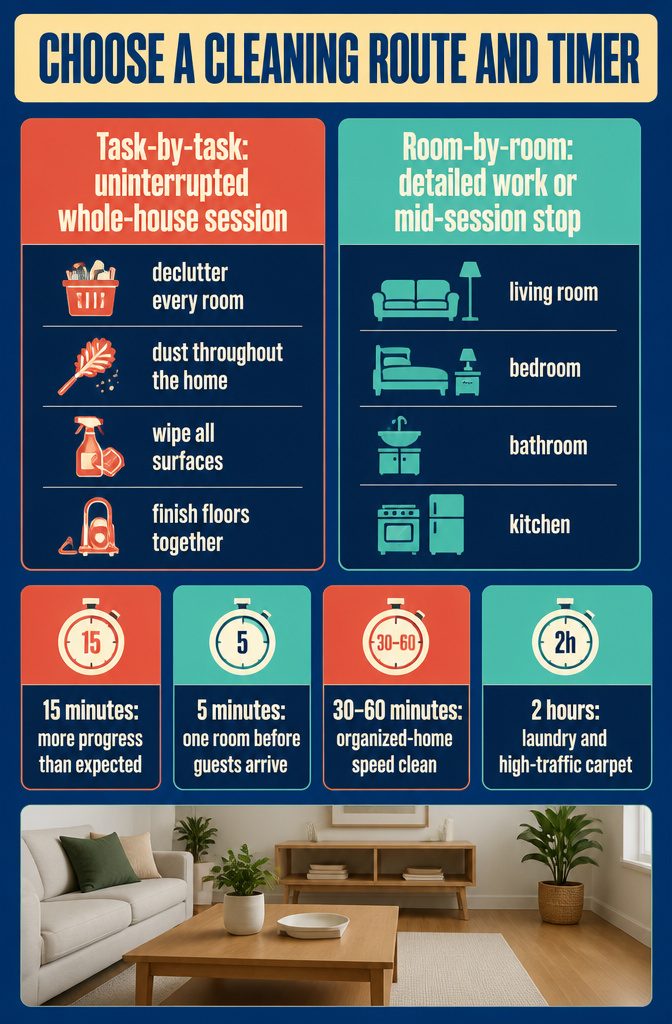
Before anything else, decide whether you’ll work room by room or task by task, then set a timer to keep yourself moving.
A task-by-task approach works best when you have uninterrupted time for a routine whole-house session: declutter every room, dust throughout the home, wipe all surfaces, then finish floors together.
Room by room suits detailed work or a day when you might need to stop halfway. Either way, you stay focused instead of wandering between half-finished spaces.
The timer matters more than most people expect. Set it for 15 minutes and you’ll get through far more than you think.
A five-minute room routine handles one space when guests are on the way. For a full house, 30 to 60 minutes covers a speed clean if the home starts organized.
A two-hour schedule leaves room for laundry cycles and high-traffic carpet. Pick a number that fits the day, start the clock, and stop second-guessing which room comes next.
3. Collect trash, dishes, laundry, and misplaced items
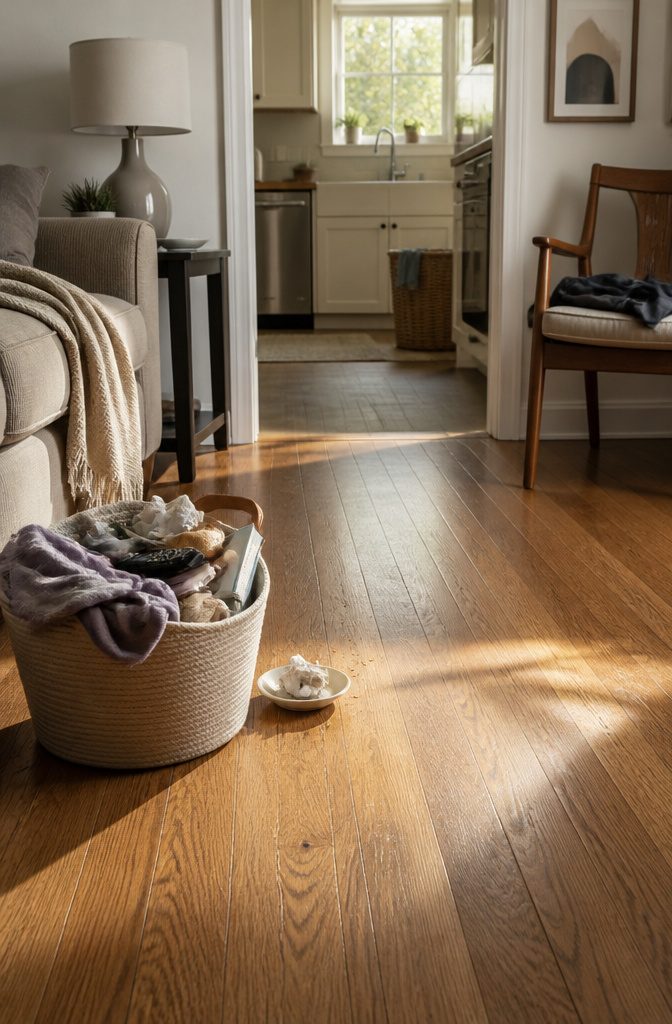
Collect trash, dishes, laundry, and misplaced items before you touch any cleaning product. Clutter slows the work and makes rooms look messier than dirty surfaces do, so clearing it first delivers the biggest visual shift in the shortest time.
Carry a basket for anything out of place. Toss in toys, books, remotes, mail, whatever landed on the counter or the floor, and set the basket aside until the cleaning pass is done.
This keeps you moving instead of stopping to file papers or return three things to different closets mid-task.
Put dirty dishes in the sink, throw out trash, and move laundry to the hamper. You want a clear surface to wipe, not a perfectly organized house.
Skip the drawer sorting, skip the closet overhaul. Cleaning with objects in the way leaves patches untouched and doubles the time it takes to finish one room.
4. Focus on high-traffic areas and visible surfaces first
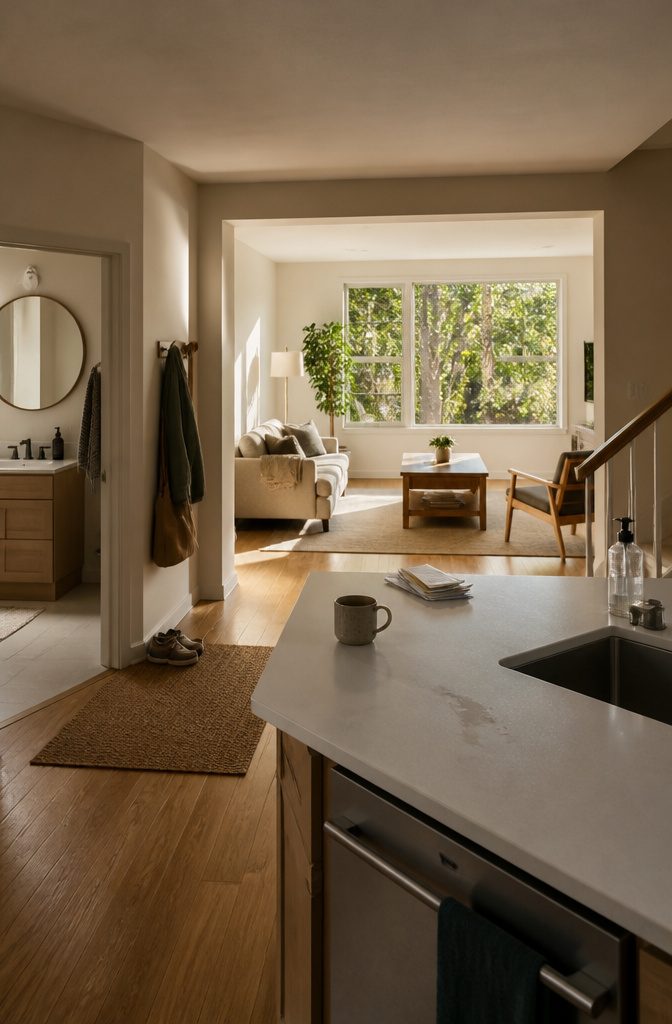
Kitchen counters, bathroom fixtures, the entryway, and the living room are the four spaces that decide whether your home reads as clean or chaotic.
A visitor’s eye lands there first, and these rooms get used enough that dirt accumulates faster than anywhere else.
I wipe kitchen counters and the bathroom sink before I touch bedrooms, because a cleared counter and a rinsed basin do more for how a house feels than a vacuumed back hallway.
Clear the surface before you clean it.
Move the mail pile, the coffee mug, the soap bottle. A bare counter looks tidy immediately and takes seconds to wipe once nothing is in the way.
Then work fast: 5 minutes for the living room, 5 for bathrooms, 3 for kitchen counters, 2 for the entryway. That rhythm keeps you from lingering on details that matter less when time is short.
5. Dust and wipe surfaces high to low
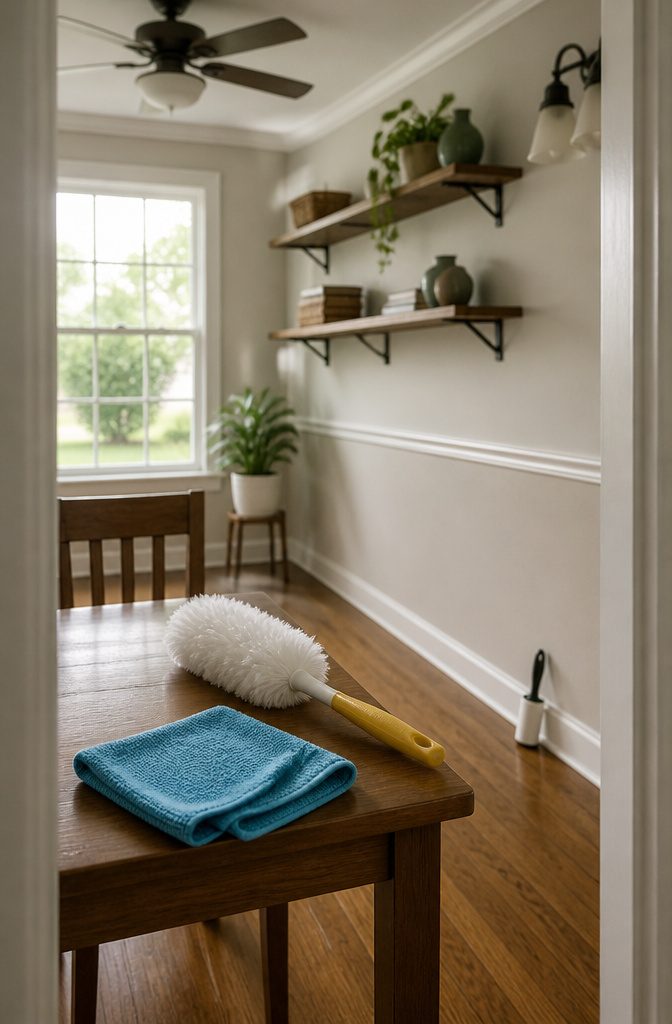
I start at the ceiling fan and work down.
Dust falls while I clean, and anything I wipe high lands on surfaces I have not touched yet, so I save the floor for last and avoid cleaning the same spot twice.
I move around the room in one direction — clockwise or counterclockwise, whichever keeps me from backtracking — and that rhythm means I skip less.
A microfiber cloth picks up more than a feather duster, and I keep both in a caddy so I’m not hunting for the right one mid-room.
For narrow gaps between slats or along baseboards, a lint roller works faster than wiping.
I hit shelves and light fixtures first, then counters and tables, then chair rails and baseboards. The floor comes last, after everything above it has dropped what it was going to drop.
6. Apply cleaner and let it sit while doing another task
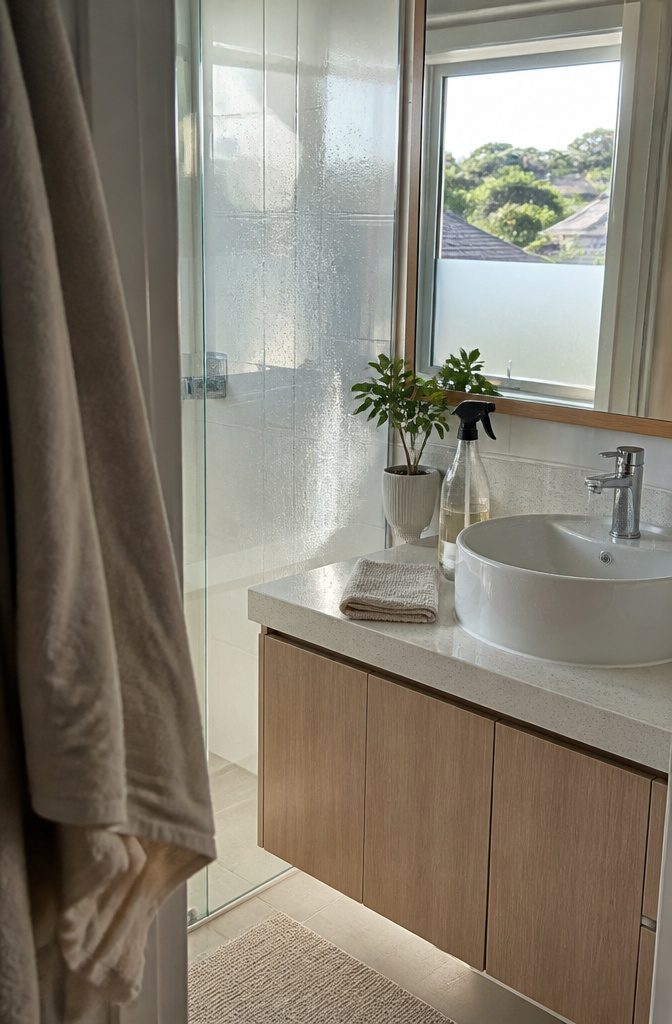
Most bathroom and kitchen cleaners work better when you give them a minute to actually do their job.
Spray the surface, let the product sit for one to ten minutes depending on how dirty it is, then move to something else while the cleaner breaks down whatever is stuck there.
Light soil usually needs one to two minutes of contact time.
Moderate buildup calls for three to five minutes. Heavy grease or hard water stains can take five to ten minutes before the formula loosens them enough to wipe clean.
If you need to disinfect rather than just clean, follow the label’s contact time, which is typically five to ten minutes, and keep the surface wet the entire time.
Pair this with something dry while you wait.
Spray the shower, then wipe mirrors and counters. Hit the stovetop with degreaser, then go collect trash or sort mail.
When you come back, the grime rinses off with almost no scrubbing. Skipping the dwell time just means you scrub harder for the same result, and that eats the time you were trying to save.
7. Vacuum or sweep visible areas and mop hard floors
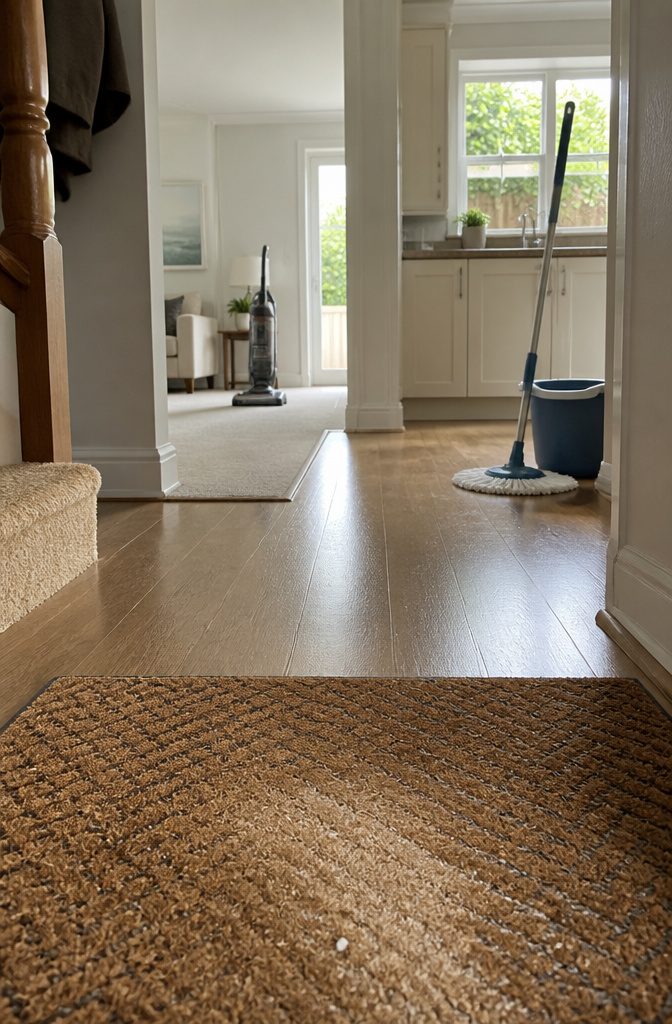
Floors come last because everything you did before this put dust and crumbs on them. By the time you reach this step, most of the mess is already on the ground where it is easiest to deal with.
When time is short, focus on the visible paths and skip the corners.
That means the walk from the door to the kitchen, the hallway, anywhere a guest will stand. A vacuum pass down the center of a carpeted room does more for the overall look than scrubbing a baseboard nobody will see.
Hard floors show streaks and footprints faster than carpet shows dirt, so a quick mop makes a bigger difference than the effort suggests.
I keep a spin mop ready because the wringing step takes seconds and the mop head stays damp enough to clean without leaving puddles.
The kitchen floor and entryway usually take under fifteen minutes together, and those two zones alone change how the whole house reads when someone walks in.
8. Return basket items or set them aside
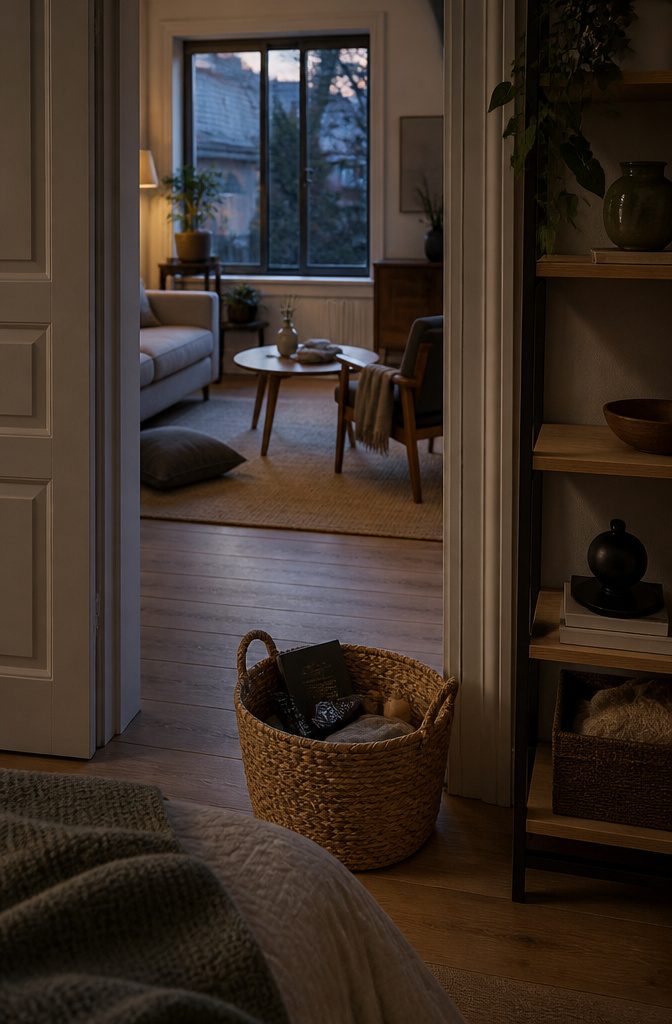
Once the cleaning pass finishes, grab the basket and put everything back where it belongs.
Walk room to room, drop items in their spots, and empty the basket completely. Batch collecting means you return things all at once instead of zigzagging around mid-clean.
If guests are arriving and you’re out of time, tuck the basket in a closet or bedroom and close the door.
The main spaces look clean, and you can deal with the basket after everyone leaves. Just don’t let it sit for days.
One thing to watch: putting items away can pull you into organizing drawers or straightening closets, and suddenly twenty minutes are gone.
If something doesn’t have an obvious home, drop it on a shelf or counter in the right room and move on. Speed cleaning is about visible surfaces, not fixing storage problems you’ve been ignoring for months.
Why speed cleaning is not deep cleaning
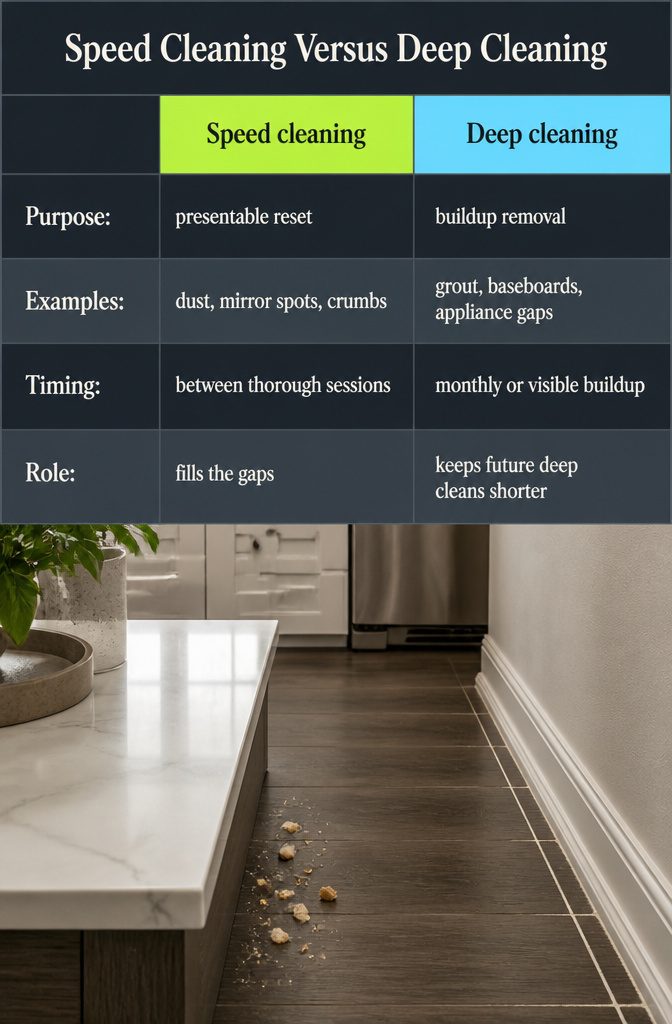
Speed cleaning keeps a home presentable between more thorough sessions, not instead of them. You’re after a manageable reset that makes visible surfaces look good when time is short or someone is about to knock on the door.
It handles the layer of dust on a coffee table, the toothpaste spots on a bathroom mirror, and the crumbs tracked across the kitchen floor.
Deep cleaning tackles what builds up over weeks: grout lines, baseboards, the space behind appliances, ceiling fan blades. That work happens monthly or whenever buildup becomes visible.
Quick cleaning fills the gaps in between. A few minutes of wiping and sweeping each day or week means the next deep session takes less time, because grime never gets the chance to settle in hard.
Trying to do both at once guarantees neither gets finished. Know which one the moment calls for before the timer starts.
Clean first, then disinfect only when needed
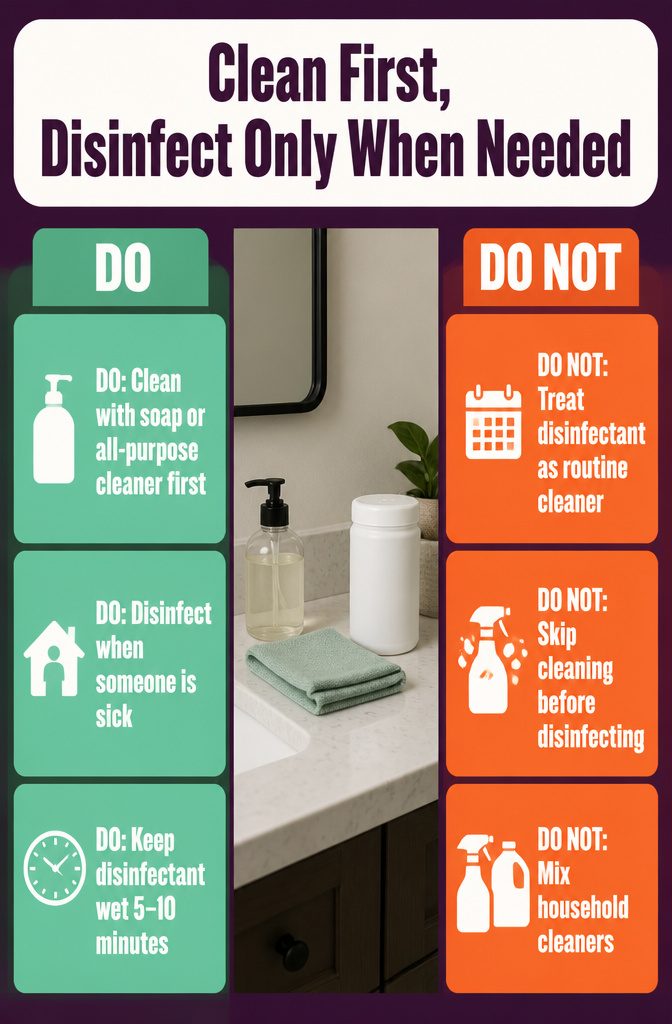
Clean a surface with soap or an all-purpose cleaner before reaching for disinfectant. Disinfecting is not the same as cleaning, and most routine work stops at the first step.
You need disinfectant when someone in the house is sick, a surface has been contaminated, or the product label specifically names the use you have in mind.
Otherwise, soap and water or a standard household cleaner gets the job done faster and skips the extra chemical step.
When you do disinfect, clean first so the disinfectant can work. A grimy surface blocks contact, and disinfectants are built to kill germs on a surface that is already clean.
Then follow the product label exactly. Most disinfectants list a contact time of five to ten minutes, meaning the surface stays wet that long.
If it dries sooner, you have to reapply. That waiting period is why I save disinfecting for the times it actually matters rather than treating it as default.
Never mix cleaners. Combining products can create dangerous fumes, and layering them does not clean better than using one correctly.
Small daily resets prevent buildup
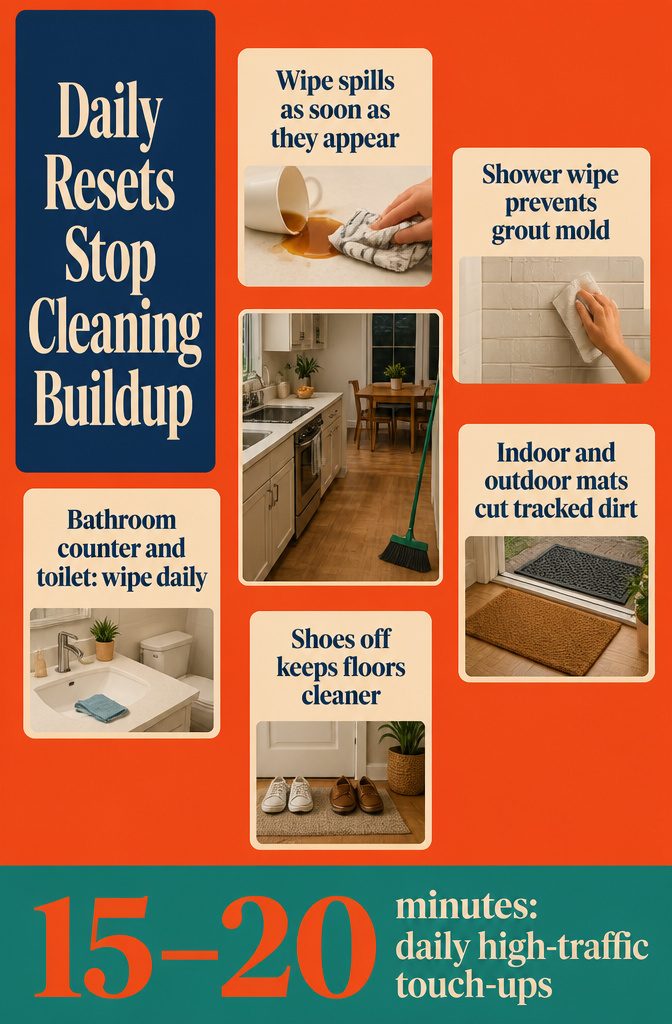
The two-minute habit that makes the real difference: wipe up spills and fresh messes the moment you see them. Crumbs swept at the end of the day, counters wiped after dinner, dishes washed as they come in.
None of it takes long alone, but each one skipped becomes work that waits for you later with stuck-on residue and a longer scrub. I keep a broom in the kitchen for exactly this reason.
Prevention makes the next session shorter.
Wiping the shower after each use stops mold from building up in the grout. A doormat outside and one inside cuts down on tracked-in dirt.
Taking shoes off at the door keeps floors cleaner between sweeps. The bathroom gets a quick counter and toilet wipe at least once a day.
Daily touch-ups run fifteen to twenty minutes. That short block handles the high-traffic zones before dirt accumulates, and it means the next speed cleaning session starts from tidy instead of backlog.
Frequently Asked Questions
What is the most efficient order to clean a house?
Gather all supplies in a portable caddy, clear clutter and misplaced items, then work from high to low so dust falls onto surfaces you have not cleaned yet. Finish with floors last after everything above has been wiped or dusted.
Should I clean one room at a time or complete one task throughout the house?
Task-by-task works best when you have uninterrupted time for a routine whole-house session: declutter every room, dust throughout the home, wipe all surfaces, then finish floors together.
Room by room suits detailed work or a day when you might need to stop halfway.
How can I clean my house faster without overlooking important areas?
Focus on kitchen counters, bathroom fixtures, the entryway, and the living room first since these high-traffic spaces decide whether your home reads as clean or chaotic.
Set a timer, keep supplies in a portable caddy, and work in one direction around each room to avoid backtracking.
Do I need to disinfect every surface during routine cleaning?
No. Clean a surface with soap or an all-purpose cleaner first, then disinfect only when someone in the house is sick, a surface has been contaminated, or the product label calls for it.
Disinfecting is not the same as cleaning, and most routine work stops at the first step.
How often should I follow this cleaning method?
Use speed cleaning as a manageable reset between more thorough sessions, not instead of them. Daily 15 to 20 minute touch-ups handle high-traffic zones before dirt accumulates, while deep cleaning tackles buildup monthly or whenever it becomes visible.
How do house cleaners clean so fast?
Experience and repeatable systems let them prioritize high-impact tasks, work in a consistent top-to-bottom pattern, and avoid getting sidetracked by less pressing items. They also use effective tools designed for different surfaces and keep all supplies within reach.
What tools and supplies are essential for speed cleaning?
An all-purpose spray, window cleaner, a Magic Eraser, microfiber cloths, paper towels, and flour sack dish towels cover most surfaces. Keep everything in a single portable caddy so you never have to go back for a forgotten product mid-clean.
How can I prepare my home for efficient speed cleaning?
Collect trash, dishes, laundry, and misplaced items before you touch any cleaning product. Clutter slows the work and makes rooms look messier than dirty surfaces do, so clearing it first delivers the biggest visual shift in the shortest time.