
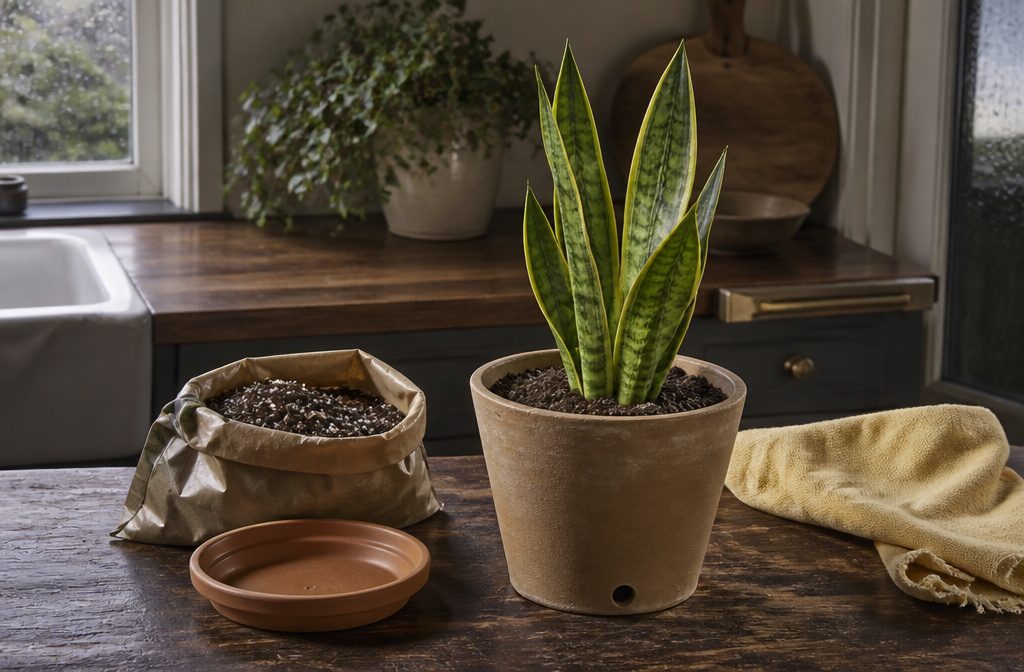
A snake plant takes about thirty minutes to repot and needs a pot only 2 inches wider than its current one, cactus mix, and a container with drainage holes.
Most people kill the plant by watering it right after replanting, before checking whether the fresh soil is already moist.
Clay or ceramic pots work better than plastic because they let excess moisture evaporate through the walls, and roots that sit wet in a sealed container rot within days.
1. When Your Snake Plant Needs a New Pot
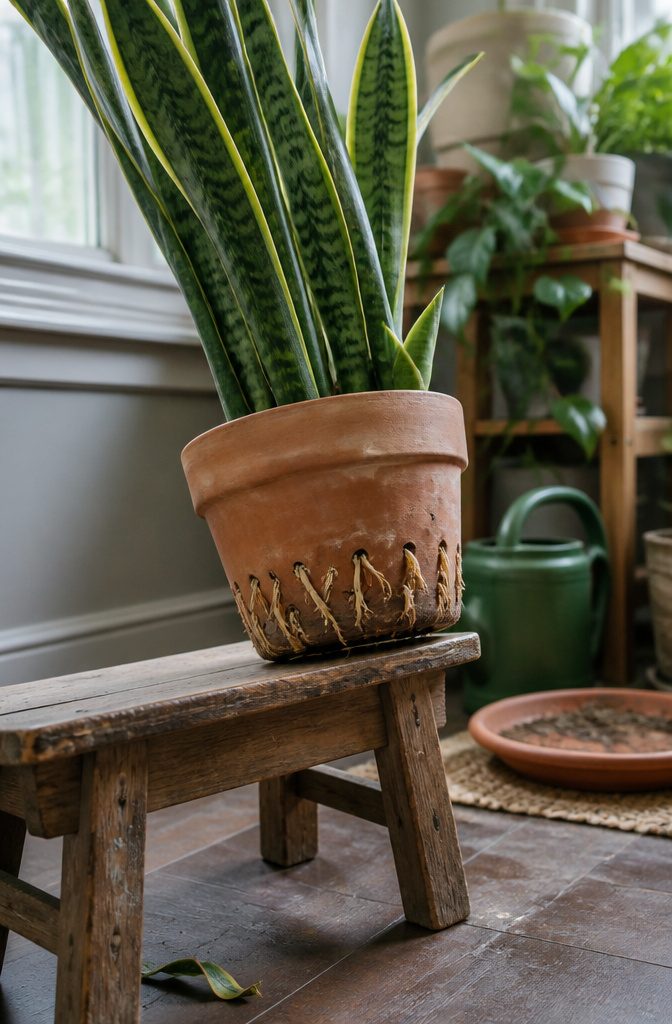
The plant itself shows you when it needs more room. Roots growing through the drainage holes are the clearest signal, but the plant may also tip over repeatedly, or the pot itself may crack as roots push outward.
Water that drains within seconds usually means the soil is depleted and the roots have taken over the space where moisture should sit.
Snake plants are slow growers so won’t need repotting that often.
That slow pace means you can wait until spring to repot, when the plant wakes up from winter dormancy and begins active growth.
New pups emerging at the base are another reason to move up a pot size, though that gives you the option to separate them at the same time.
Yellowing or wilting leaves, a foul smell from the root ball, or more than three years in the same pot all point to the same conclusion: time for fresh soil and a slightly larger home.
2. The Pot and Mix I Use
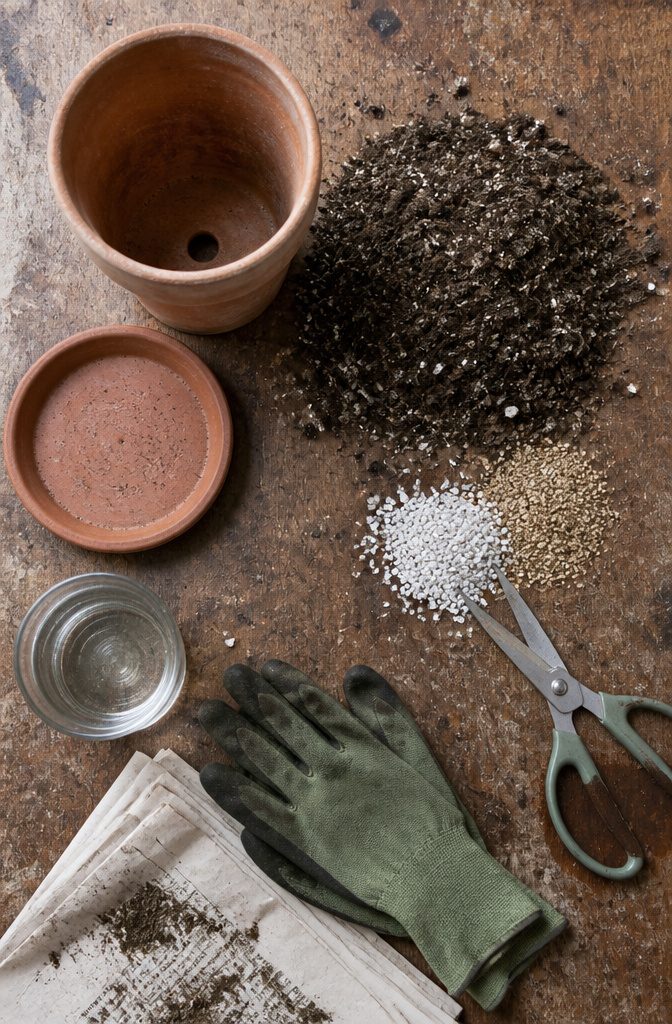
I always go with clay or ceramic with at least one good drainage hole in the bottom.
The pot needs to be about 2 inches wider than the one the plant is in now, which gives you 2 inches of clearance on each side once the roots are settled.
If the container you like comes with a permanently attached saucer, check how the drainage actually works.
Some have small side holes that let water out, but a lot of them trap standing water at the bottom, and that kills snake plants faster than anything else. A removable saucer is safer.
For soil, I use cactus mix straight from the bag. If I only have regular potting soil on hand, I mix in perlite and coarse sand to lighten it.
Houseplant compost or peat-free multi-purpose compost with horticultural grit mixed through works just as well. The mix should feel coarse and crumbly when you work it through your fingers, never dense or heavy.
Keep sterilized scissors or pruning shears nearby, along with room-temperature water that has not been treated with chemicals.
I lay down a plastic sheet or old newspaper before I start, and I wear gardening gloves if the pot is rough or if I am handling a big plant.
3. Getting the Plant Out Without Tearing Roots
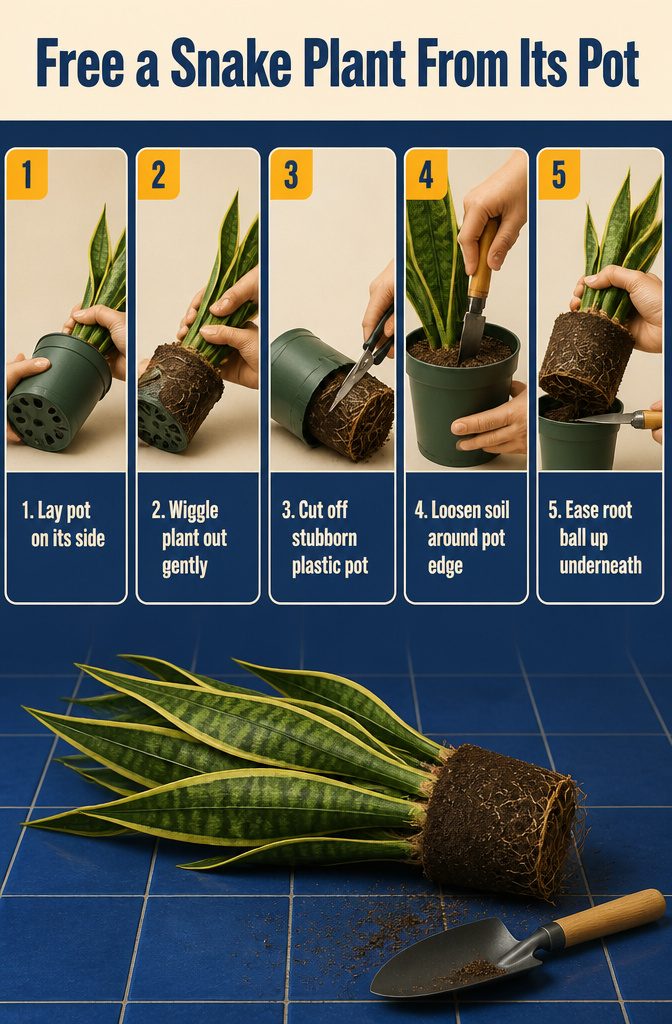
- Lay the pot on its side and hold the plant at the base with one hand, the pot bottom with the other.
- Pull gently and wiggle to ease the plant out. Snake plants sit tight after a year or two in the same pot, so this takes patience more than force.
- If the root ball won’t budge and you’re working with plastic, cut the pot off with scissors rather than yanking harder.
- For pots you want to keep, run a garden trowel or knife around the inside edge to loosen the soil. Keep the blade straight up and down, not angled toward the center where roots sit.
- If the plant still resists, work a clean flat knife under the root ball and ease it upward from the bottom.
4. What Healthy Roots Look Like
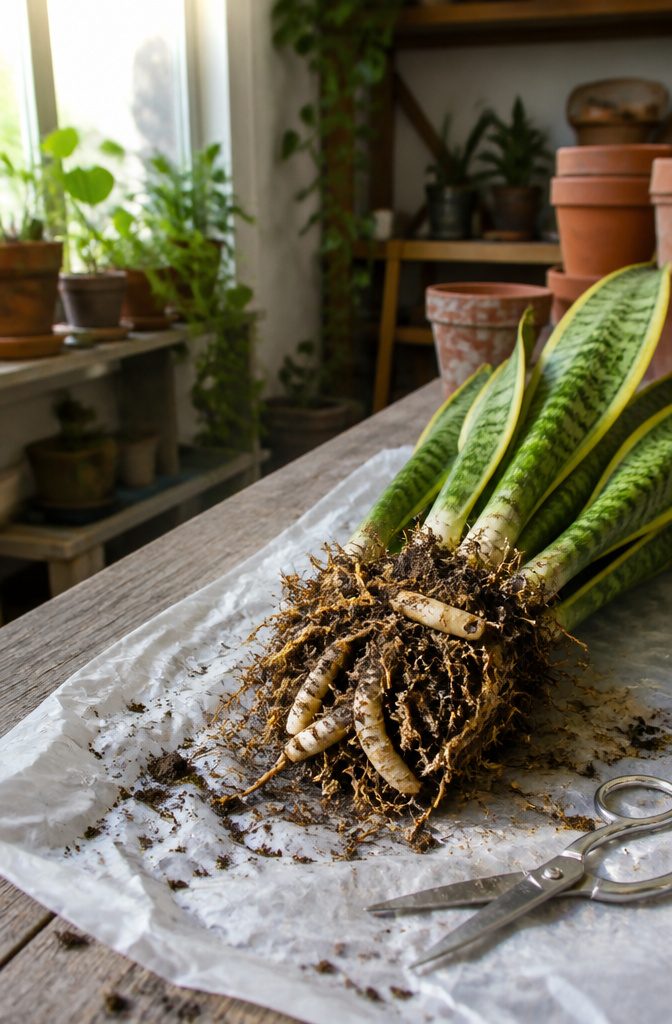
Once the plant is out, work your fingers through the root ball to comb away as much old soil as you can. Healthy roots are large, white and easy to see — thick rhizomes that look almost fleshy.
Give the root system a quick scan: anything mushy, soft or blackened needs to go. Trim damaged roots with sterilized scissors or pruning shears, cutting cleanly above the affected section.
Brown or badly damaged leaves should come off too.
A sharp knife or scissors will do it. If you want to control height, this is the time to cut taller leaves at the base — you can propagate those cuttings later.
Root damage is rare unless the plant has been severely over or underwatered, but better to check now than find out after replanting.
5. Setting the Plant at the Right Depth
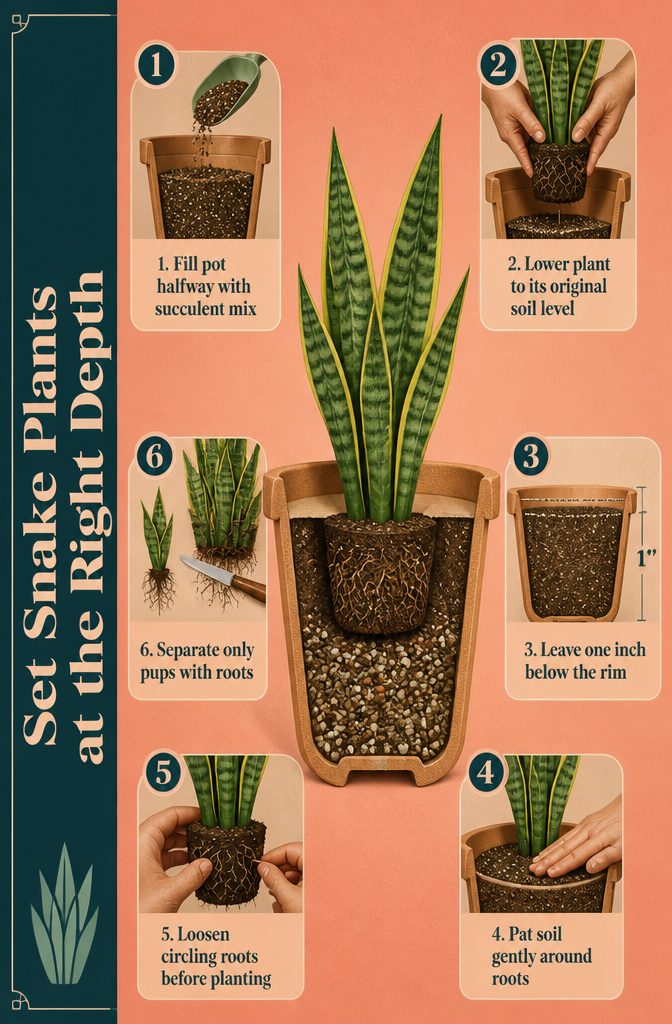
- Fill the new pot halfway with cactus or succulent mix before you place anything in it.
- Hold the plant at its base, close to where the leaves meet the root ball, and lower it into the center of the pot. Keep it at the same soil level it sat at before — burying it deeper invites rot at the rhizome.
- Fill in around the root ball with more mix, leaving about 1 inch of clearance below the rim so water does not spill over when you irrigate.
- Pat the top layer gently to settle the soil and press out air pockets around the roots.
- If the root ball feels tight or circling, loosen the outer roots with your fingers before you set the plant in place.
- Pups with their own root systems can be cut off at the rhizome with a clean blade and potted separately; leave pups without roots attached to the mother plant.
6. Watering After You Replant
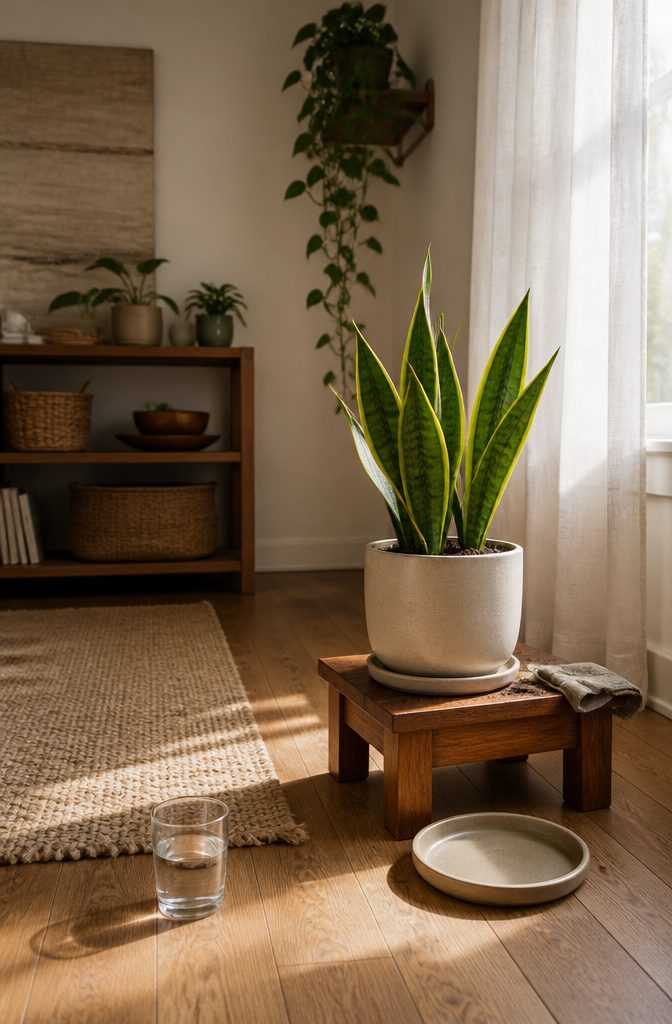
If the soil in the new pot feels moist, wait a few days before watering. Fresh mix usually holds enough moisture, and snake plants store water in their leaves the way succulents do.
Watering too soon adds stress rather than relief. If the mix is dry when you finish repotting, water until it drains from the bottom, then stop.
Check the saucer after ten minutes and dump any water still sitting there. Standing water is the fastest route to root rot.
Set the plant somewhere with bright, indirect light. Direct sun can scorch leaves that are already adjusting to a new container.
From there, resume normal watering only when the soil is dry two to three inches down. Stick a finger in to check rather than guessing by the calendar.
How Drainage Prevents Root Rot
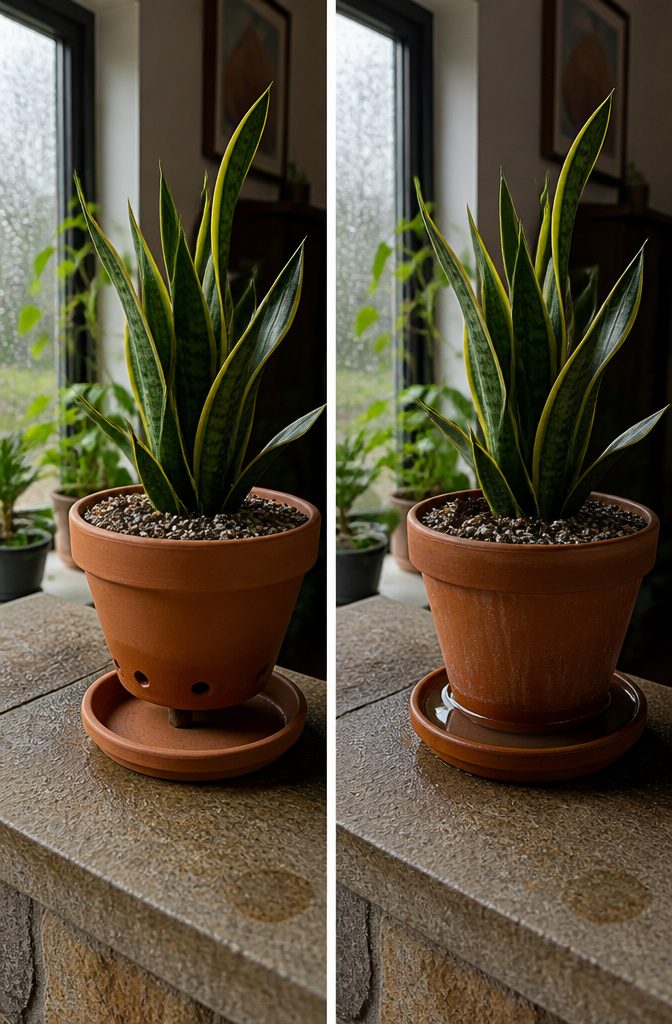
Snake plants store water in their thick leaves the way most succulents do, which makes them drought-tolerant but leaves them vulnerable to root rot if water sits around the roots.
That risk goes up when light is low: the plant uses less water, so the soil stays damp longer and roots sit wet.
The forum discussion flagged this directly — low-light snake plants are especially prone to rot, and in those conditions you want the smallest pot and the driest soil you can manage.
Drainage holes are non-negotiable. A pot without them traps water at the bottom no matter how carefully you pour, and that standing water is what kills roots.
If the saucer is permanently attached, you need to tip the whole pot and drain it after watering, or the plant ends up sitting in runoff.
A removable saucer makes that easier — water thoroughly, wait ten minutes for excess to drain into the saucer, then dump it.
The soil matters as much as the pot. Snake plants need a mix that drains fast, ideally one with perlite, coco coir and sand, or equal parts cactus mix and standard houseplant soil.
Heavy, dense potting mix holds moisture too long, and roots rot before the plant can use what is there. Coarse, crumbly soil lets air through and dries between waterings, which is what a succulent root system expects.
How Often to Repot
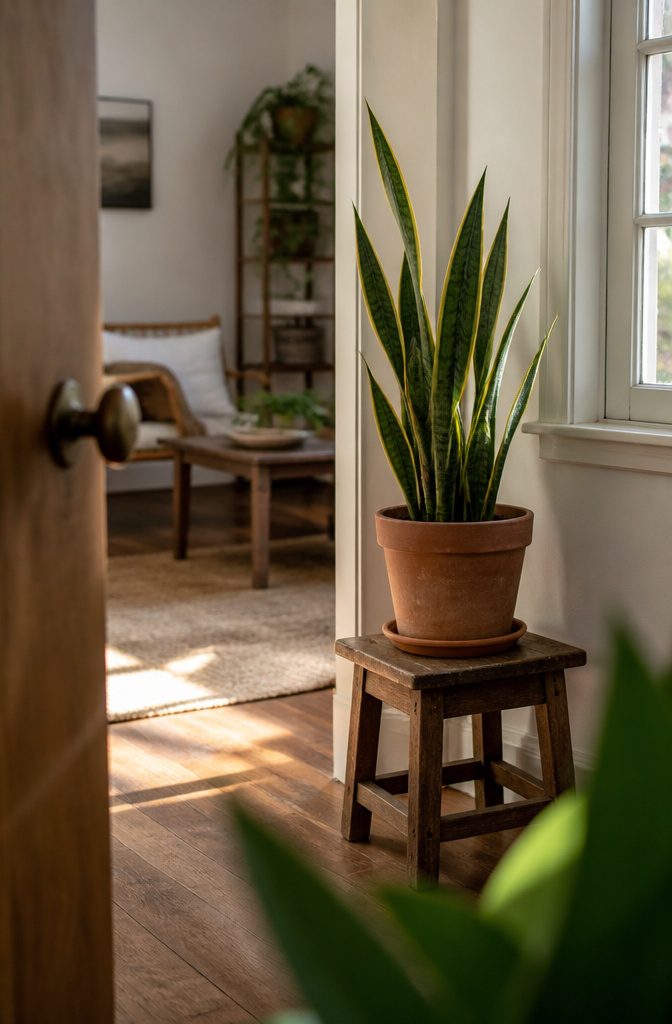
Snake plants grow slowly enough that repotting becomes a once-every-few-years task rather than an annual one.
I aim for every two to three years as a baseline, which gives the plant time to fill its pot with roots and new stems without staying cramped long enough to stunt growth or yellow leaves.
Growth rate changes the schedule. A snake plant in bright light can shoot up three to six feet a year and may need a wider pot every two years.
Most indoor setups keep them growing much slower, closer to a foot a year in ideal conditions, and those slower plants can go five years between repots.
The goal is fresh soil and enough room for the roots, not a strict calendar.
Separating Pups During Repotting
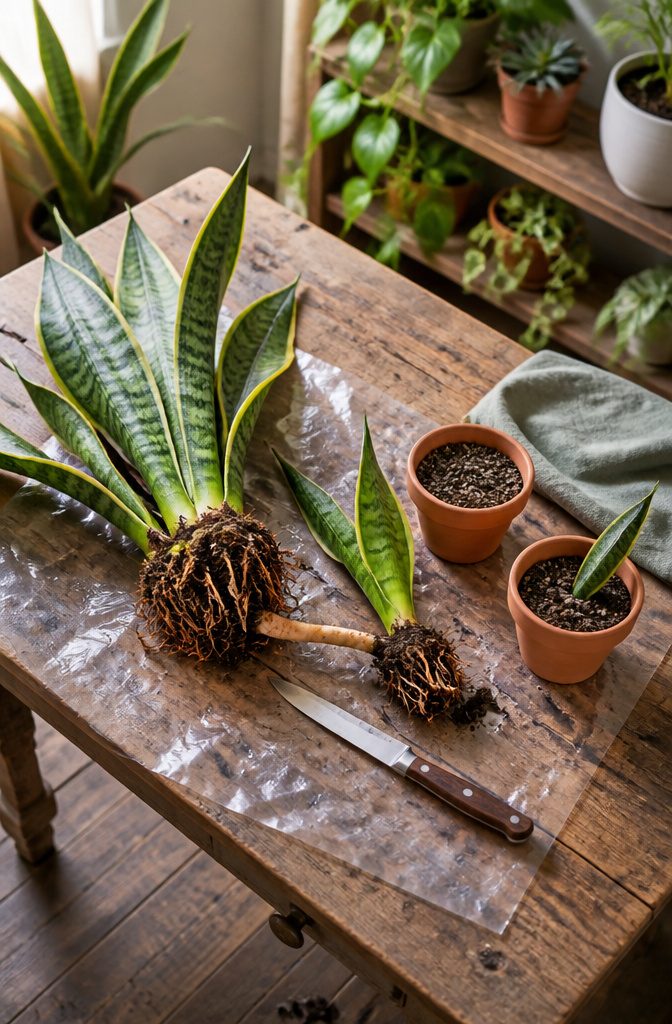
If you want more plants without buying more, division is the move.
Snake plant pups can be separated during repotting by cutting through the rhizome that connects them to the mother plant, as long as each piece has its own roots.
Use a clean, sharp knife and slice straight down where pups branch off. Pups without their own roots yet should stay attached so they can keep pulling water and nutrients from the parent.
You can also propagate from cut leaves that include a piece of root. Plant separated pups or rooted leaf cuttings in small pots with the same cactus mix, water them in, and set them in bright indirect light.
One exception to the usual post-repot watering rule: if the cuts are fresh, wait a few days before watering so the wounds callous over. Watering open cuts can let moisture into the leaf tissue and cause rot.
Why Snake Plants Droop or Yellow After Replanting
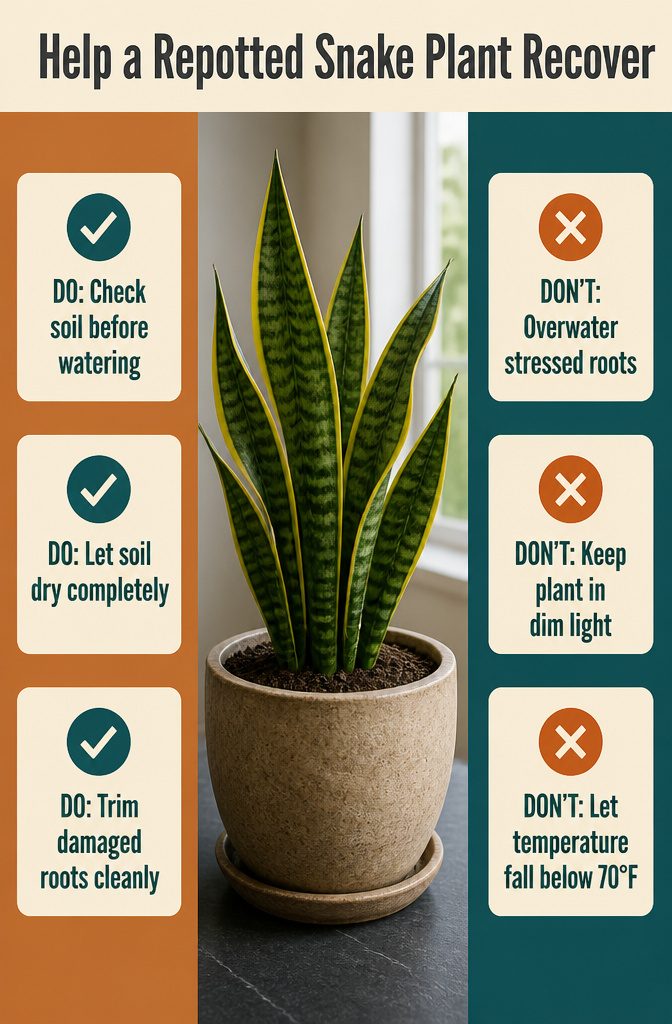
Snake plants often look worse before they look better after a move to a new pot.
Drooping or yellowing leaves in the first few weeks usually point to transplant shock, root damage during the transfer, or overwatering in soil that drains too slowly.
An oversized pot holds moisture longer than the roots can use it, and that standing water turns healthy roots soft and brown.
If leaves yellow or droop, check the soil moisture before you add water.
Let it dry completely between drinks. Trim any damaged roots with sterilized scissors, and keep the plant in indirect light while it adjusts.
Below 70°F, growth stalls and the plant cannot recover from stress as quickly, so a warm spot helps. Most plants bounce back in two to three weeks once the watering schedule steadies and the roots settle into the new mix.
Frequently Asked Questions
How do I know when to repot my snake plant?
Roots growing through drainage holes are the clearest sign, but the plant may also tip over repeatedly, crack its pot, or drain water within seconds.
Yellowing leaves, a foul smell from the root ball, or more than 3 years in the same pot all point to the same need.
What kind of soil do snake plants need?
Use cactus mix straight from the bag, or regular potting soil mixed with perlite and coarse sand to lighten it.
Houseplant compost or peat-free multi-purpose compost with horticultural grit works too. The mix should feel coarse and crumbly, never dense or heavy.
Can I use succulent soil for snake plants?
Yes.
Snake plants are succulents and need soil that drains quickly, so cactus or succulent mix is ideal. You can use it as is or combine it with regular potting soil if you want to adjust drainage.
Should I put my snake plant in the sun after repotting?
No, give it bright indirect light instead. Direct sun can scorch leaves that are already adjusting to a new container, adding stress rather than helping recovery.
When should I water my snake plant after repotting?
Wait a few days if the new soil feels moist, since fresh mix usually holds enough moisture.
If the mix is dry when you finish, water until it drains from the bottom, then stop. Snake plants store water in their leaves and watering too soon adds stress.
Why is my snake plant drooping after repotting?
Drooping leaves usually point to transplant shock, root damage during the transfer, or overwatering in soil that drains too slowly.
An oversized pot holds moisture longer than the roots can use it, and that standing water can turn healthy roots soft and brown.
Why is my snake plant turning yellow after repotting?
Yellowing leaves usually mean poor drainage, root damage, transplant stress, or overwatering.
Check soil moisture before adding more water and let it dry completely between drinks. Trim any damaged roots with sterilized scissors and keep the plant in indirect light while it adjusts.
How often should you repot a snake plant?
Every 2 to 3 years as a baseline, though growth rate changes the schedule.
A snake plant in bright light may need a wider pot every 2 years, while slower plants can go 5 years between repots. The goal is fresh soil and enough room for the roots, not a strict calendar.
What kind of pot is best for a snake plant?
Clay or ceramic with at least one good drainage hole in the bottom.
The pot should be about 2 inches wider than the current one, giving 2 inches of clearance on each side once the roots are settled. A removable saucer is safer than one permanently attached.
Do snake plants like big or small pots?
They prefer a pot about 2 inches wider than the root ball, which gives space without holding excess moisture.
Snake plants tolerate being slightly rootbound, but an oversized pot holds water longer than the roots can use it and increases the risk of root rot.
Why is my snake plant dying after repotting?
The plant may be dying from overwatering, root damage, or transplant shock.
Let the soil dry completely before watering again, trim damaged roots with sterilized scissors, and keep the plant in indirect light while it adjusts. Most plants bounce back in 2 to 3 weeks once the watering schedule steadies.
How do you separate and replant a snake plant?
Cut through the rhizome that connects pups to the mother plant with a clean, sharp knife, as long as each piece has its own roots.
Pups without roots yet should stay attached so they can pull water and nutrients from the parent. Plant separated pups in small pots with cactus mix and wait a few days before watering so the cuts callous over.