
Modern kitchens range from minimal white boxes to warm, layered rooms with wood and stone, and the direction you choose depends on how much visual weight you want the space to carry.
The tradeoff sits in maintenance and light: dark cabinetry shows fingerprints faster than pale neutrals, and a small kitchen with little natural light reads smaller in black or navy than it measures.
Handleless cabinets and J-pull profiles cost less than custom hardware runs, and swapping pulls on existing doors refreshes the room without replacing anything structural.
1. Use Clean-Lined Cabinets and Hardware
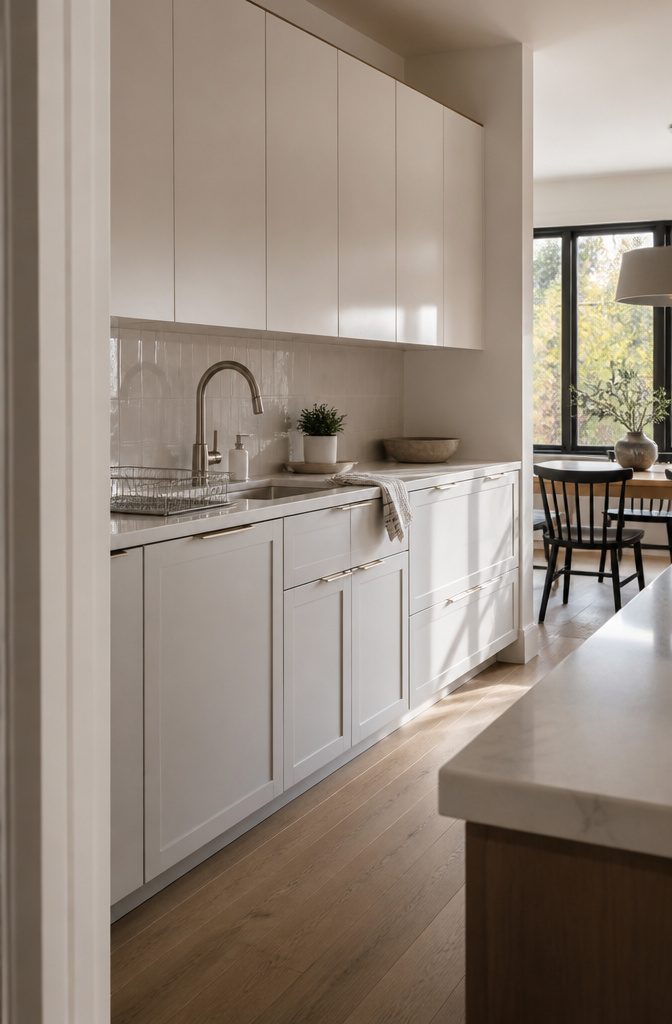
Flat-panel slab doors are the foundation of modern kitchen styling. They deliver clean lines and smooth surfaces without extra detail, and the look holds up across price points.
Handleless profiles and J-pull styles push the streamlined effect further. J-pull gives you a recessed grip along the top or bottom edge of the door, so you skip separate hardware entirely while keeping the cabinet easy to open.
Handleless cabinets rely on push-to-open mechanisms or integrated finger pulls, and the result is a completely unbroken face.
Modern shaker updates the traditional frame-and-panel door by narrowing the frame, flattening the center panel, and finishing it in matte rather than gloss. The squared-off rails still read as shaker, but the proportions feel current rather than country.
You can mix door styles in the same kitchen: slab uppers with shaker lowers, or handleless runs where you want a smooth sweep and pulls where you need a fast grab.
If your cabinets are structurally sound but the hardware feels dated, swapping pulls and knobs refreshes the whole bank without replacement cost.
Match the finish to your faucet for a more deliberate look, and position bar handles horizontally on doors for a linear modern line.
2. Choose a Color Direction
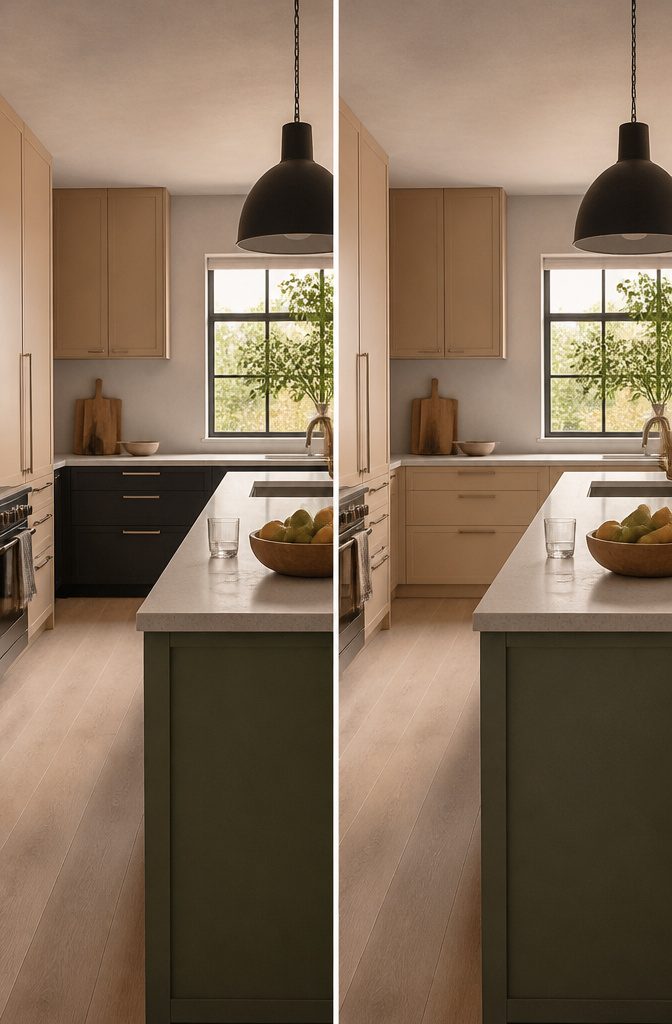
Neutral and light palettes calm the space and hold up over time. White, light gray, and beige brighten the room without fighting other finishes, and they stretch small kitchens visually in a way that darker walls won’t.
I lean toward these when I want a backdrop that adapts as tastes shift or when the bones of the room need to stay neutral so counters and hardware can carry the personality.
That said, warmer and bolder directions are gaining traction. Kashmir, terracotta, dark greens, and sober blues all showed up in 2024 trends, and black made its way onto surfaces and fixtures alike.
For 2026, the palette moves toward warm neutrals like sandstone and sand grays, plus earthy ash green and deeper charcoal and navy blue. The shift reflects a move away from immaculate white toward colors that feel lived-in and grounded.
If your taste runs warm or you want the kitchen to anchor the house rather than recede, these tones deliver that weight without reading traditional.
3. Mix Materials and Finishes
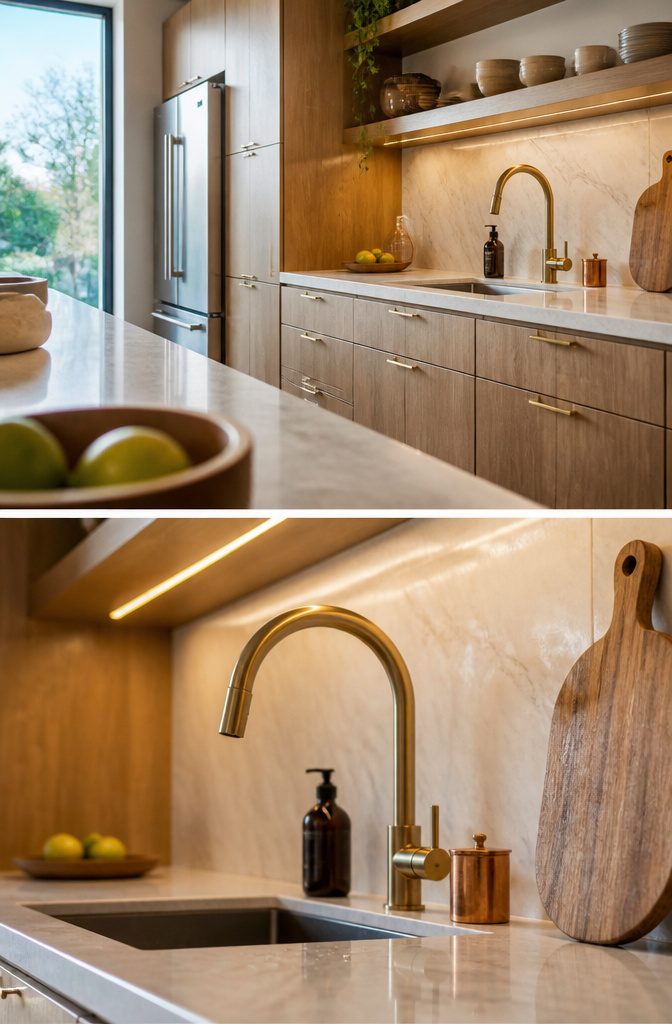
Combining wood with stone or metal finishes brings the warmth modern kitchens often lack.
I pair treated wood cabinets with marble countertops or granite work surfaces — the contrast between organic grain and polished stone keeps the room from feeling too sterile. Solid oak shelving next to stainless steel appliances works the same way.
Metal finishes matter more than most people expect. Brushed brass and copper read warmer than chrome, and mixing metals in similar tones — gold with copper, for instance — looks intentional rather than mismatched.
I’ve started matching the handle finish to the tap; that small consistency ties the room together without making it predictable.
Wood veneers hold up better than I thought they would.
The treated surfaces repel stains and handle moisture without constant worry, which matters more than the look when you’re wiping down cabinets twice a day. Quartz countertops resist stains the same way, and both clean faster than their higher-maintenance alternatives.
4. Make Storage Work Harder
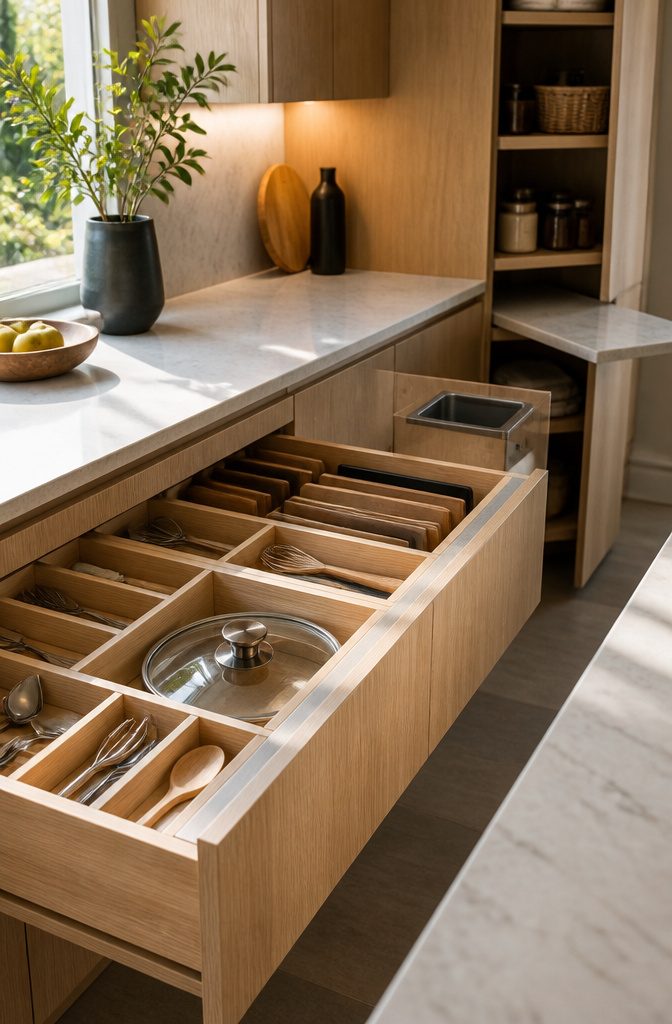
Deep drawers outfitted with dividers turn the catch-all mess into something you can actually scan at breakfast.
I use slim dividers for utensils and wider ones for cutting boards; the wood expandable kind install in seconds and move with you if you relocate or downsize.
Deep drawers work better for pots and pans than stacking them in a cabinet, and pull-out shelves bring what sits in the back within reach without the archaeology.
Tall units and pull-down storage make vertical space count.
Wall-to-wall cabinets free up counter real estate and give you the built-in look modern kitchens lean on. Built-in waste bins clear the floor, and door balconies turn a standard cupboard into usable vertical rows instead of wasted depth.
The pantry is staging a comeback in modern kitchens, showing up as open shelves or closed cupboards that keep ambient-temperature staples organized and visible.
More than bulk storage, it cuts down on counter clutter and gives the room a functional anchor point. If the whole kitchen feels overwhelming, start with one drawer and work outward from there.
5. Use Open Shelves or Glass-Front Cabinets
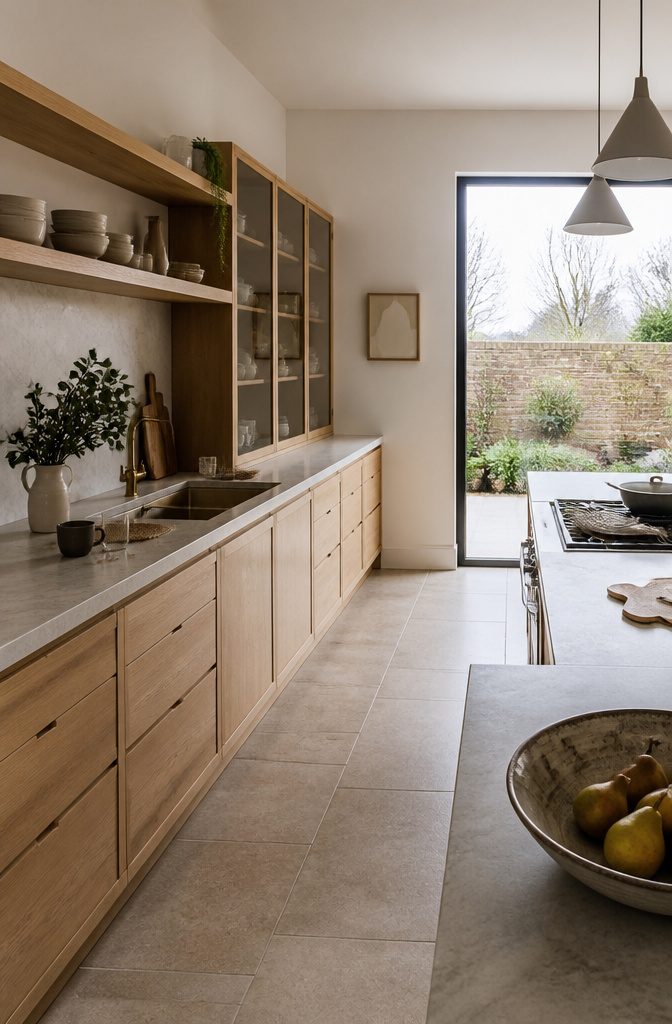
Open shelving trades the clean sweep of solid doors for something looser and more deliberate.
I replaced the uppers on one wall with floating shelves because I wanted dishes and cookbooks to sit in plain view, part of the room rather than hidden behind it.
The trade is real: what you stack is what everyone sees, and a week of grab-and-go meals leaves the shelf looking like it. If you cook hard and put things back later, open shelving turns into visual clutter fast.
Glass-front cabinets split the difference. The dishes still show, but the door keeps dust off and gives you a place to stop when the inside gets messy.
If you’re swapping solid doors for glass, check that the cabinet interiors match the finish on the outside or plan to paint them first.
One coat of interior paint fixed it, but it’s a step I didn’t plan for. When you style glass fronts, leave space between pieces and keep the palette narrow—three colors of dinnerware read cleaner than six.
6. Plan Lighting and Use Natural Light
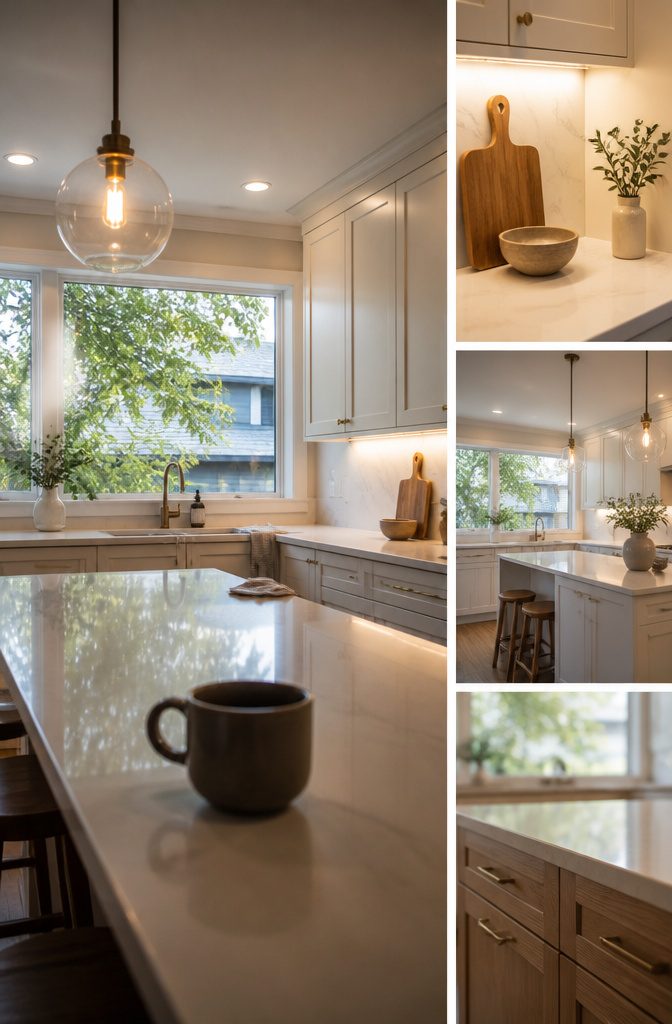
I run the same lighting layer most designers do: ambient light overhead, task light under the cabinets, and accent or decorative fixtures where they belong.
The overhead fixture sets the baseline brightness for the whole room. Under-cabinet strips or pucks aim straight down at the counter where you chop, read recipes, and need to see what you are doing.
Accent fixtures — a pendant over the island, a strip inside a glass-front cabinet — add depth and keep the room from reading as flat.
Natural light from windows or skylights does more than save on the electric bill. A kitchen flooded with daylight looks bigger, cleaner, and noticeably more welcoming than one that depends on fixtures alone.
If you can cut a window from ceiling to floor or drop in a skylight where the roof allows it, the room opens up in a way no amount of wattage will match.
One warning if you are working with a small kitchen: dark colors on the walls or cabinets make a poorly lit room feel even smaller.
Black, dark gray, and navy can look sharp in a bright space, but in a dim one they close in fast.
If your kitchen does not get much natural light, stick to lighter surfaces or plan for more task and ambient fixtures than you think you need.
7. Add a Backsplash or Statement Surface
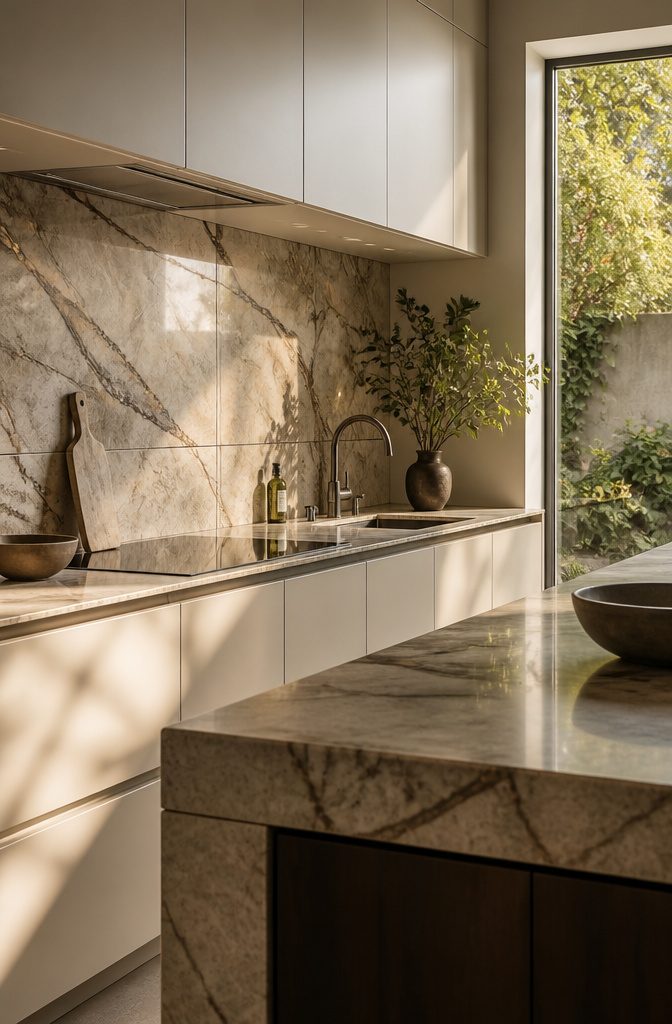
A backsplash does two things at once: it keeps grease and water off the wall, and it gives you a surface where the room’s personality can land.
Painted beadboard runs under $200 for material if you’re working with a standard run of counter, and you can finish it in a weekend.
Marble tile sits at the other end of the price spread and the visual weight, but both solve the same problem while adding pattern or color the rest of the room leans on.
If you want the backsplash to stay neutral so the cabinets and counters do the talking, white subway tile keeps the budget low and the options open later.
If you’d rather use that vertical strip for contrast, bold stone in a darker tone or a warm vein pulls attention without fighting the other finishes.
The choice turns on whether you want the backsplash to anchor the palette or stay out of its way.
8. Style Counters With Useful or Personal Objects
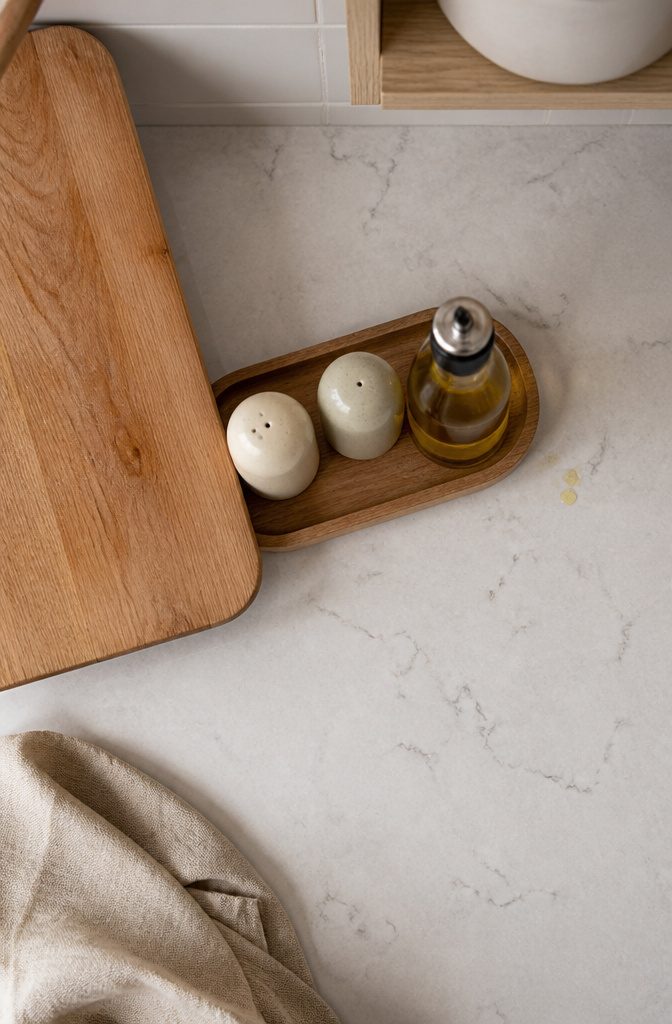
Countertops are prime real estate, and the simplest approach is to group everyday items neatly on a small tray—a matching salt and pepper set, an oil dispenser, or other frequently used pieces you reach for while cooking.
When those items are chosen thoughtfully and kept together, the counter reads as organized rather than cluttered.
If you want something purely decorative, keep it minimal. Lean a framed piece of art against the backsplash, or prop a large wood cutting board upright against the wall.
These add warmth and visual interest while taking up almost no usable space. The cutting board works double duty: you can pull it down for prep, then stand it back up when you’re done.
Personal touches matter. Framed recipe cards from family favorites or artwork that speaks to you make the kitchen feel like yours, not a catalog page.
I aim to keep only what I use daily within reach, but the few pieces I do leave out are ones I actually care about.
9. Bring in Plants, Herbs, or Greenery
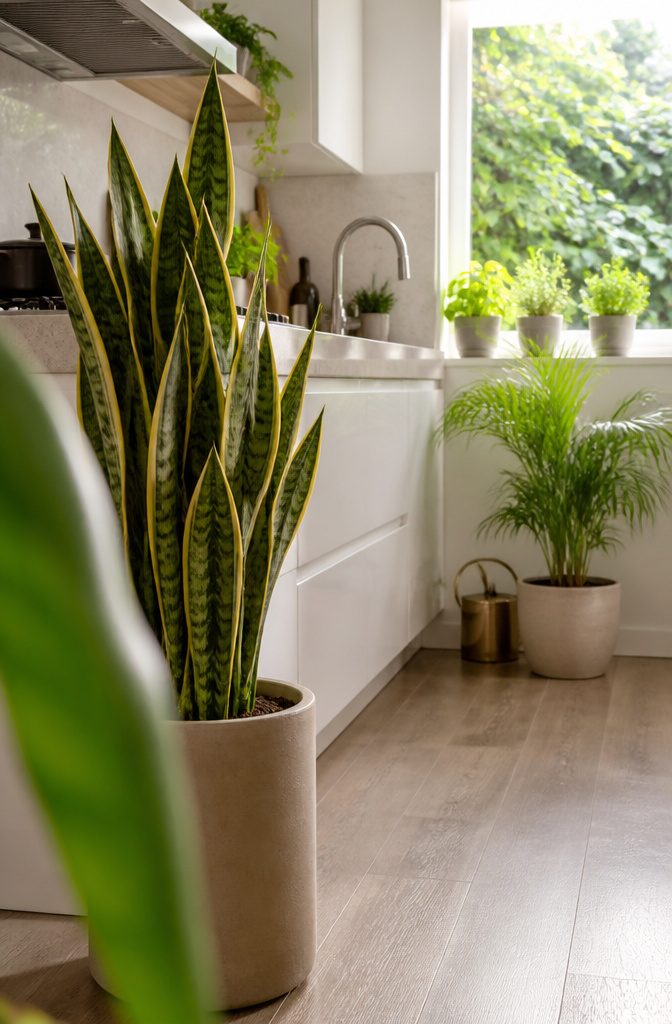
Plants add color and life to a modern kitchen, especially if the room skews white or neutral.
Snake plants and areca palms work well because they release oxygen at night and help clean the air, and they do not demand much attention.
Herbs are another option: keep basil, thyme or cilantro in small mason jars or pitchers on the counter, and they are ready when you need them. The scent is a bonus, and the space requirement is minimal.
A wall-mounted planter board combines function with decoration if you want something beyond a few pots on the sill.
You can grow ingredients you actually cook with and bring a bit of green into a room that otherwise runs hard and reflective.
Choose plants that fit your light and your willingness to water, then let them sit where they belong rather than making them the centerpiece.
10. Refresh Fixtures and Accessories
Refresh Fixtures and Accessories
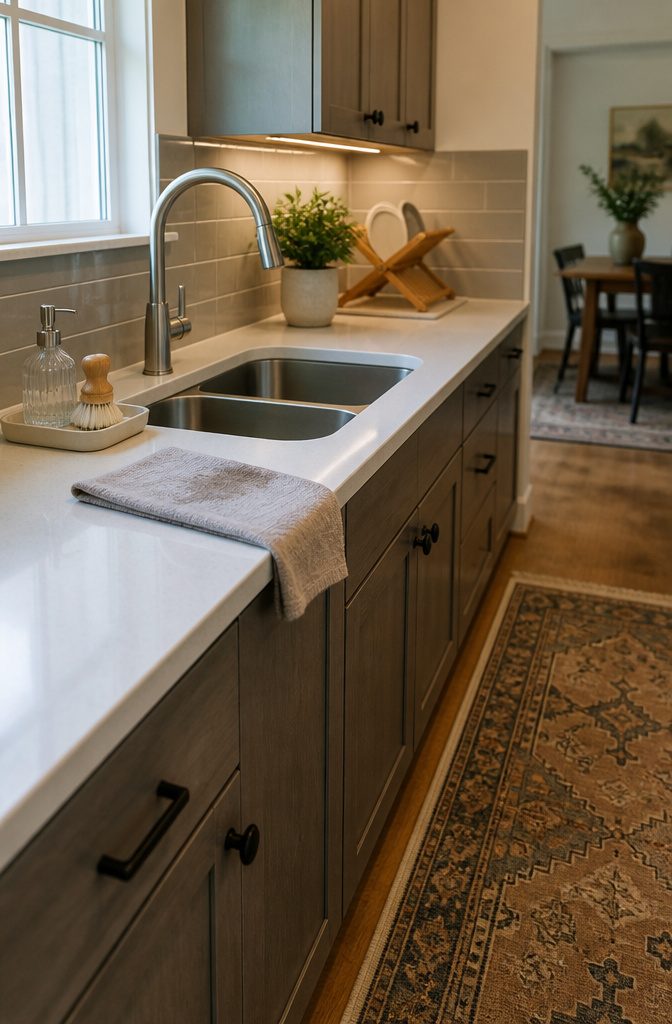
A new faucet takes about thirty minutes to swap and changes how the whole sink area reads.
Stainless steel keeps the look clean and matches most appliances, while oil-rubbed bronze brings warmth if the rest of the kitchen skews traditional. I kept my stainless double sink but went larger on the faucet, and the difference was immediate.
The sink surround is where small upgrades pile up fast. A glass soap dispenser and a decent scrub brush look intentional where plastic bottles look forgotten.
Add a small tray to corral them and the counter feels finished instead of cluttered. Hand towels are another quick win: a set in a color that ties to your backsplash or runner costs almost nothing and reads as thoughtful.
Underfoot, a kitchen runner adds color and saves your knees during long cooking sessions.
Vintage-pattern runners hide stains better than pale jute, but jute is durable and inexpensive if spills are rare. Either one softens the space without the full commitment of an area rug.
Match Choices to How You Use the Room
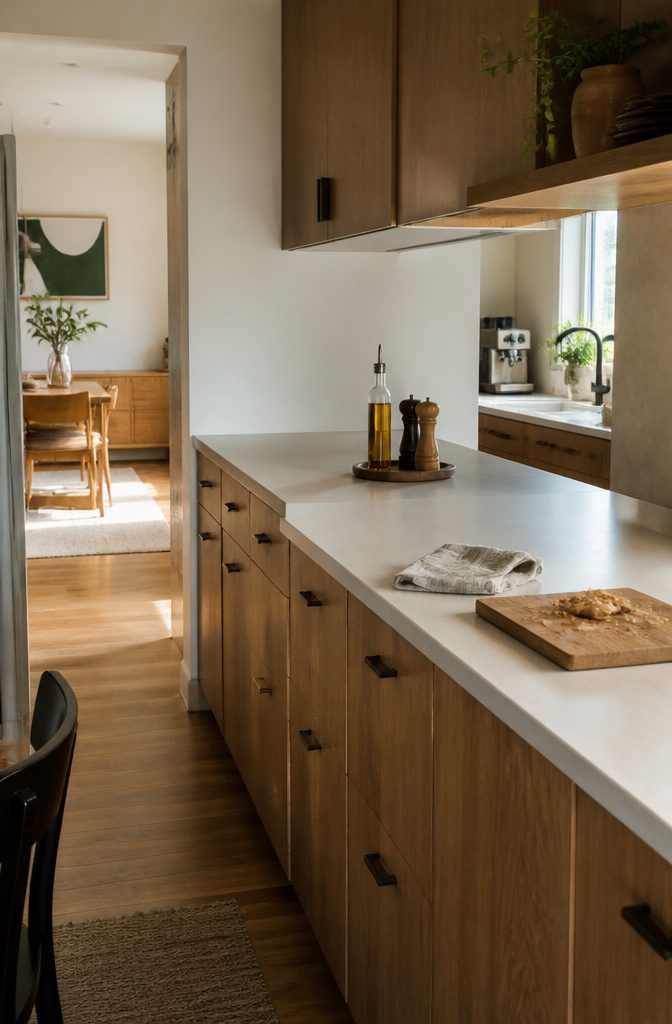
The kitchen has to suit the way you actually live in it. That means keeping work surfaces mostly clear, with only what you use daily within reach.
A salt and pepper set, an oil dispenser, or other essentials grouped on a small tray make cooking more efficient and keep the counter from looking cluttered. The rest stays in storage or off the counter entirely.
Storage matters just as much as style. If you have the space and a big family or host often, a dirty kitchen attached to the main one handles heavy-duty cooking, grilling, and all the messy prep work.
It keeps smoke and noise out of the main house and protects your primary kitchen from damage.
The space should reflect your own taste and how you want to use it. Mix finishes, swap colors, or blend cabinet styles to design something that feels personal rather than prescriptive.
Smart technology can simplify daily tasks if that suits your routine. The kitchen is a gathering point, so it should adjust to you, not the other way around.
Small-Kitchen Tradeoffs
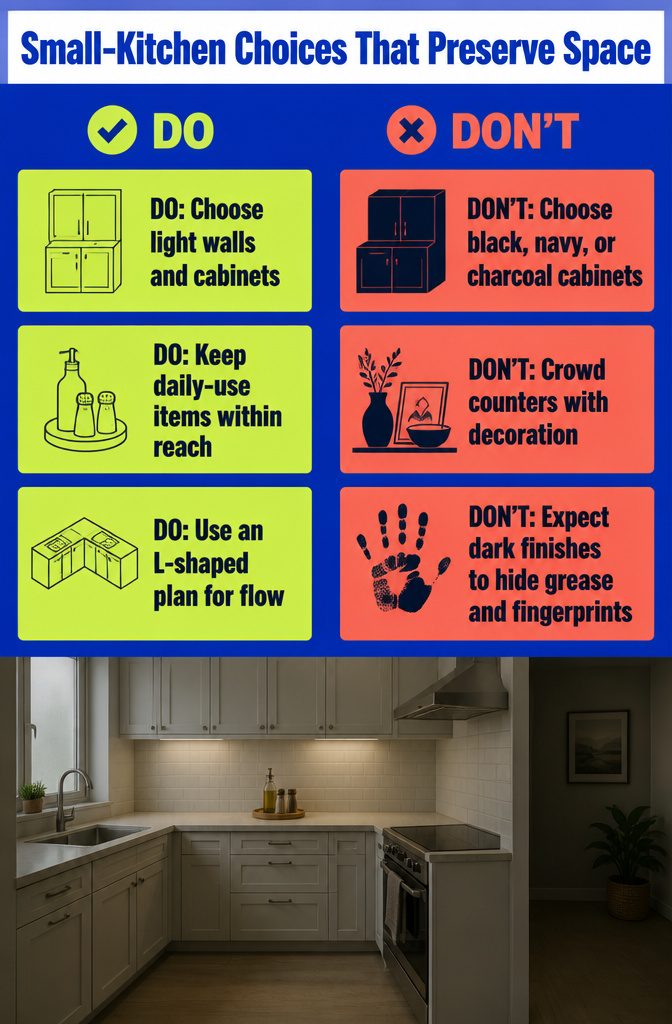
Dark colors look great in magazine spreads, but they shrink a small kitchen visually and make a dim one feel darker. Black, navy, or charcoal cabinetry absorbs light instead of reflecting it, and the space reads smaller than it measures.
If your kitchen gets little natural light, lean toward lighter neutrals on the walls and cabinets to keep it from feeling closed in.
Dark tones also show grease and fingerprints more than pale ones do, which means more frequent cleaning in a high-traffic room.
Countertops present a different squeeze.
In a small kitchen, horizontal surface is scarce, and only daily-use items should stay within reach. A matching salt and pepper set or an oil dispenser on a small tray keeps cooking efficient without crowding the counter.
Anything purely decorative needs to earn its real estate. A large cutting board leaned against the backsplash or a single framed piece adds warmth without claiming usable space.
Layout matters more in a reduced footprint. An L-shaped plan tucks into a corner and opens one side for flow.
A U-shaped layout wraps workspace on three sides, keeping prep, cooking, and cleanup zones close. For a narrow or galley kitchen, the one-wall setup lines everything along a single run and leaves the opposite side open.
Frequently Asked Questions
What is the most popular kitchen style now?
Current kitchens blend classic and modern rather than following one dominant style.
You might pair slab uppers with shaker lowers, or combine handleless runs with J-pull details to get a contemporary look that still feels personal. The trend is about curating your own version instead of sticking to one rule.
What kitchen design never goes out of style?
Neutral palettes and natural materials hold up over time.
Light neutrals like white, beige, and light gray adapt as tastes shift and stretch small kitchens visually. Choose a style that suits your lifestyle rather than chasing trends.
What color cabinets are in for 2026?
Warm neutrals like sandstone and sand grays lead the palette, along with earthy ash green, charcoal, and navy blue. The shift moves away from stark white toward colors that feel grounded and lived-in.
How do I make my kitchen look beautiful?
Start with clean-lined cabinets, a cohesive color direction, and mixed materials like wood with stone or metal. Add functional storage that works harder, style counters with only what you use daily, and refresh fixtures like the faucet and hardware.
Small upgrades like a new faucet or a set of hand towels in a color that ties to your backsplash make the space feel finished.
What are the 7 types of kitchen layouts?
Each layout responds to the space you have and how you move through it.
What are the most common kitchen design mistakes?
Using dark colors in a small or dim kitchen makes the space feel smaller and closed in.
Leaving too many items on the counter creates visual clutter, and choosing style over how you actually use the room leads to a kitchen that looks good but does not work.
Match storage, layout, and finishes to your daily routine instead of copying what looks good in photos.