

Pruning, adding propagated cuttings and improving light all make a pothos bushier within a few months without spending anything.
Most people skip the step that matters most: cutting vines back hard, close to the soil, which forces new growth low on the plant instead of letting it stretch.
Every node behind the cut becomes a branching point, so a single pruning session can double the number of stems filling out the pot.
1. Prune Long or Leggy Vines
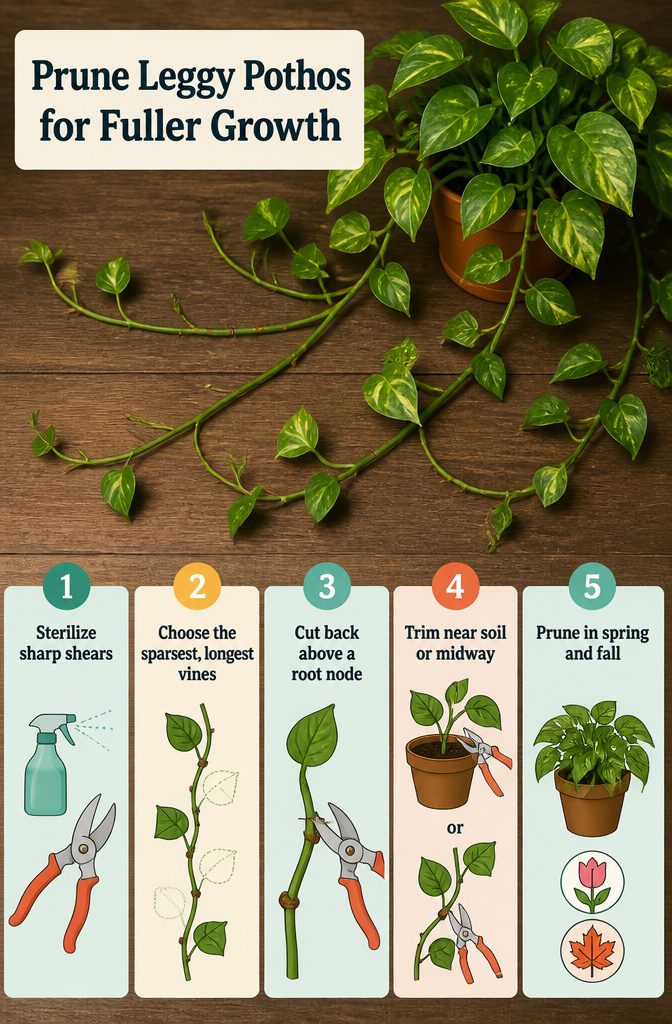
- Sterilize a pair of sharp gardening shears before you start. Wiping them down between plants keeps pests and diseases from moving across your collection.
- Identify the longest, sparsest vines — the ones with the most distance between leaves or the smallest leaves at the end. Those are the ones draining energy without adding fullness.
- Cut some vines back to within a few inches of the soil to force new growth low on the plant. For others, cut partway down their length wherever they look most scraggly.
Wherever you trim the stems, new leaves will sprout from each node behind the cut.
That means every brown bump along the stem — the root node — becomes a branching point once you make the cut above it.
- Make each cut just after a root node, the knobby brown aerial root where a leaf meets the stem. Save the cuttings if you want to propagate them.
- Prune twice a year, spring and fall, to stay ahead of legginess. You can leave a few long vines if you want mixed growth rather than an all-over hedge look.
2. Propagate Cuttings and Add Them to the Pot
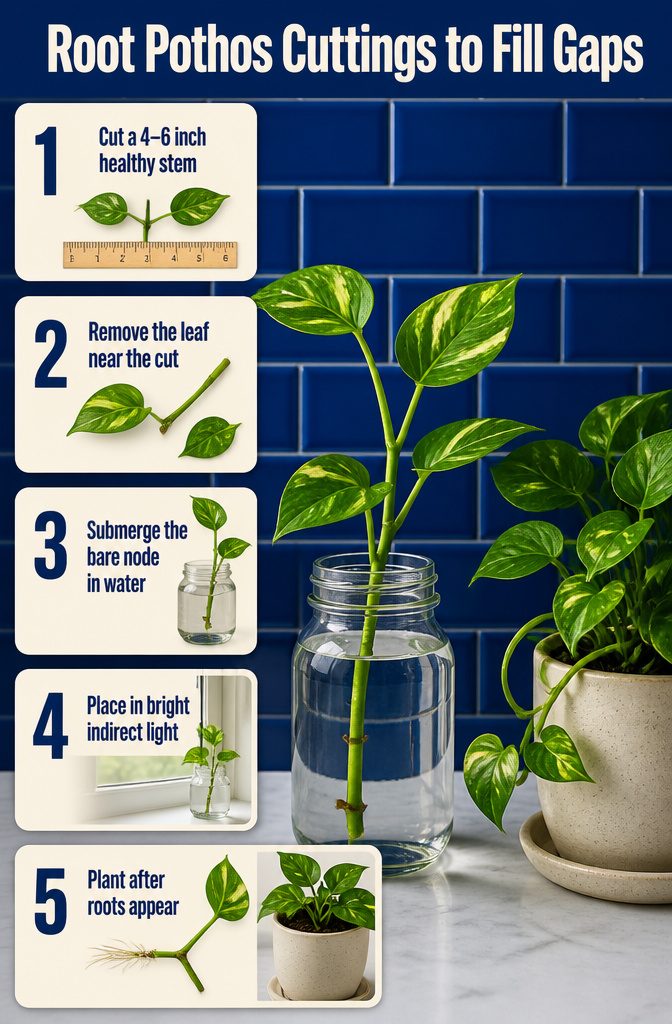
- Cut a 4–6 inch (10–15 cm) stem from a healthy vine with at least four leaves attached.
- Strip off the leaf closest to the cut end. That node is where roots will emerge.
- Place the cutting in a jar of water. A Mason jar works, or any clean glass that holds the stem upright with the node submerged.
- Set the jar in bright indirect light. Skip direct sun.
- Roots should sprout after a few weeks. Once they do, plant the cutting right back into the original pot.
The new stem fills in the gaps between older vines.
If the plant looks really sparse, root two or three cuttings at once and add them all. Pothos propagates so easily that this method almost never fails.
You can also root cuttings directly in soil instead of water. Use moist potting mix, keep it from drying out, and give the same light.
For faster rooting, dip the cut end in rooting hormone before planting and use a chopstick to poke the planting hole so you don’t damage the node.
3. Improve the Light
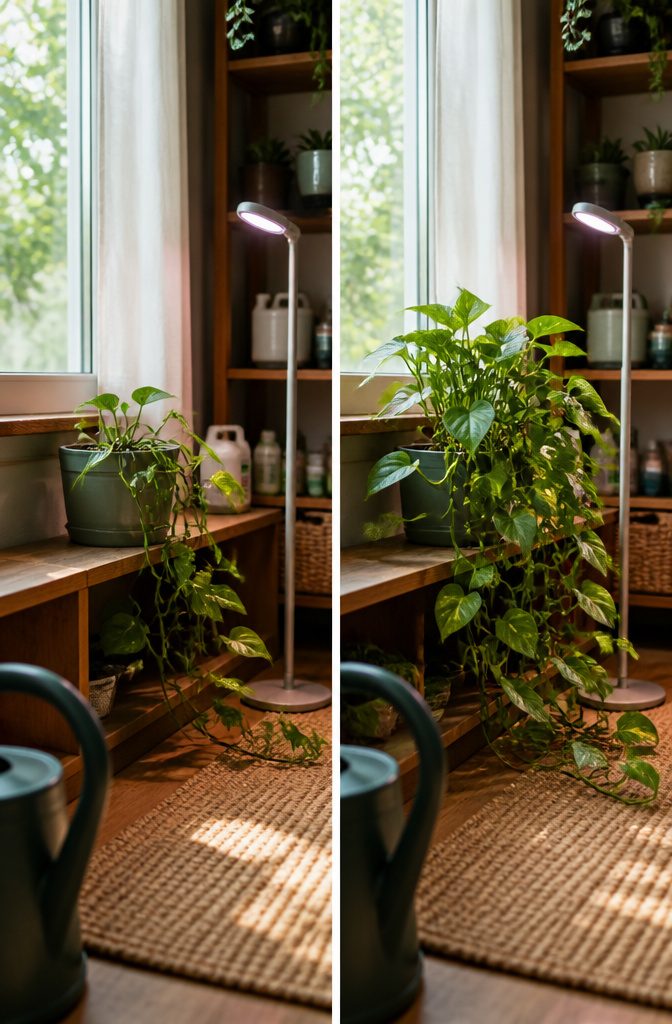
Pothos can tolerate low light, but bright indirect light is what actually makes the plant put out thicker vines and larger leaves.
In lower light, the leaves stay small and the vines thin. With more light, the leaves grow noticeably bigger and the vines fill out.
An east- or west-facing window works well. If you can manage partial shade with one to two hours of direct sunlight, even better.
The plant grows on forest floors in its native range and climbs trees to reach brighter spots in the canopy, so it responds strongly when you give it more light than it strictly needs to survive.
If your window doesn’t provide enough natural light, grow lights close the gap.
Set them on a timer near the plant and let them run daily. They mimic the sun’s light frequencies and give the plant the boost it would otherwise miss in a dark room.
4. Give the Plant Consistent Care
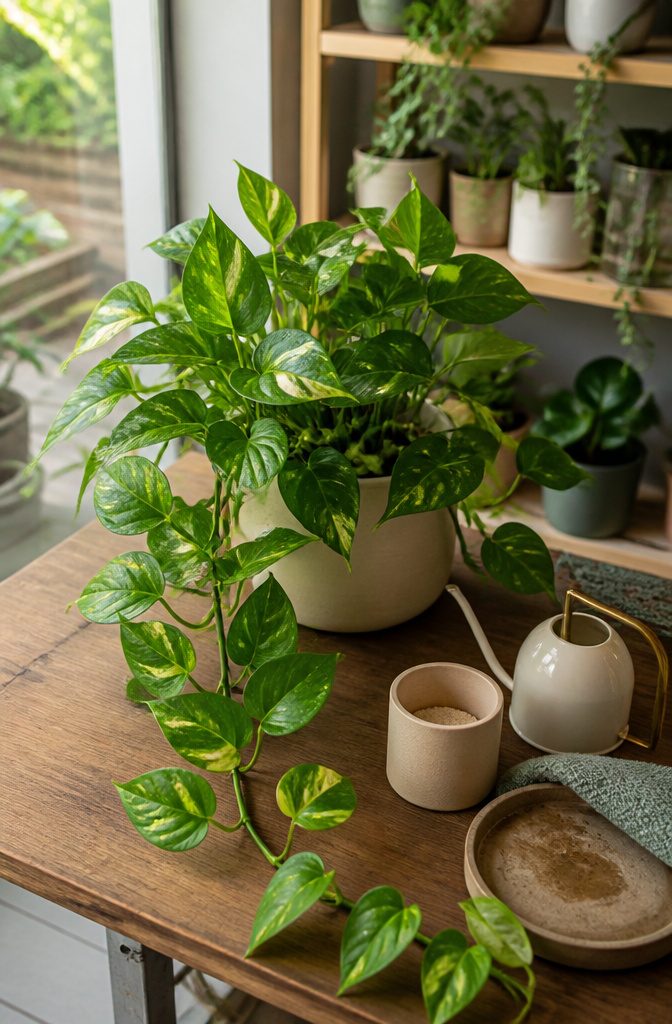
Watering and feeding consistently keeps pothos producing leaves all along the stem rather than stretching out sparsely between nodes.
The plant wants consistent moisture with some drying out between waterings. I check the soil with a finger before adding more water; if the top inch (2.5 cm) feels dry, it’s time.
Soggy soil invites root rot, while overly dry soil shows up as yellow or brown leaves. Well-draining soil matters here, and adding perlite or vermiculite helps the mix tolerate any excess water without sitting heavy.
Fertilizer schedules vary depending on how actively the plant is growing. One approach applies a normal dose once or twice a year during the growing season, which keeps things simple.
Another feeds every two weeks from spring through fall and once a month in winter with a balanced houseplant fertilizer. Either way, fed plants respond with bright green, shiny leaves that hang on longer and fill in the vines.
5. Train Vines to Climb on a Stake or Trellis
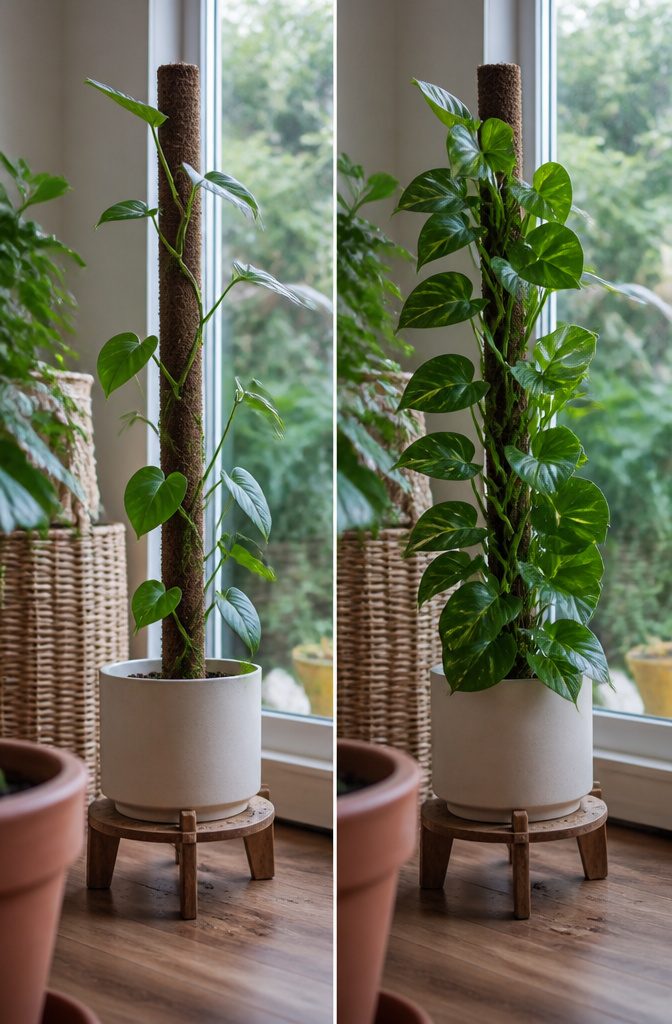
A pothos trained to climb produces larger leaves than one left to trail, and those bigger leaves fill in the profile of the plant.
The method works because climbing mimics how pothos grows in the wild, where it climbs tree trunks and develops more surface area to catch light through the canopy.
Place a moss pole, coir stake, or trellis in the center of the pot without crushing roots or stems.
As new growth appears, gently tuck the vines behind the support or use soft plant ties to guide them upward. The plant takes a few weeks to latch on with aerial roots, after which it climbs on its own.
Staked pothos grows taller rather than wider, so the fuller look comes from the increased leaf size rather than a change in the number of vines.
6. Repot Mature Plants
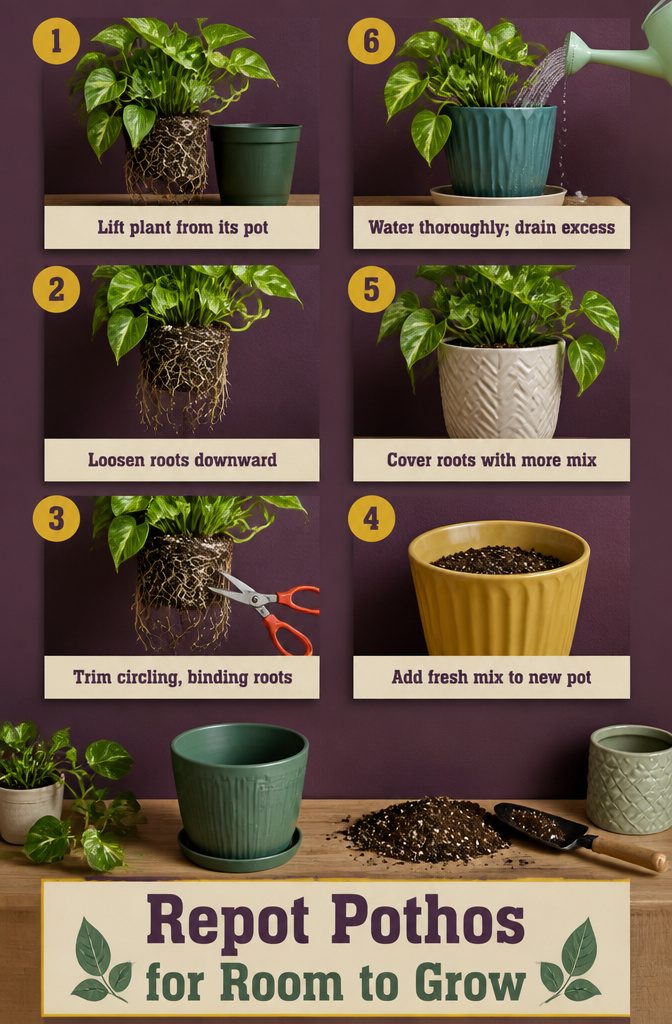
Once a pothos outgrows its pot, the roots start circling the bottom and the plant slows down. Repotting gives it fresh soil, more space, and the nutrients it needs to fill out.
- Remove the plant from its current container. A few stems might break off, but they’ll root if you stick them back in the soil.
- Loosen the roots so they hang downward instead of staying in a tangled ball.
- Cut away any roots that circle or bind. They’ll restrict growth once the plant settles into its new home.
- Add fresh potting mix to the bottom of the new container.
- Set the plant on top, then backfill around the roots until they’re covered.
- Water thoroughly and let the excess drain out completely.
The plant will need a few weeks to adjust. Watch for drooping or yellowing leaves during that window; both usually mean you’re watering too much or too little while the roots reestablish.
Temperature and Humidity

Pothos grows best at room temperature between 60 and 80°F. The plant tolerates the usual range in a heated home, and you won’t need to do anything special unless the room drops below 60°F in winter.
A cold windowsill or an unheated mudroom in January can slow growth or damage leaves, so move the plant if temperatures fall that low.
Humidity is not a concern. Pothos handles typical indoor air without misting, pebble trays or a humidifier.
That makes it easier to keep than a lot of other houseplants, and it’s one reason the plant does well in offices and apartments where humidity runs low in winter.
If the room is comfortable for you, it works for the pothos.
Frequently Asked Questions
How do I get my pothos bushy?
Prune long vines back to within a few inches of the soil to force new growth low on the plant.
Feed the plant monthly during the growing season and give it bright indirect light. Propagate cuttings and plant them back in the same pot to fill gaps between older vines.
How long does it take for pothos to grow big?
Pothos grows slowly in low light but speeds up with bright indirect light and regular feeding.
The plant needs time to fill out, often several months to a year for noticeable fullness depending on starting size and care. Consistent watering and fertilizing produce faster, healthier growth.
Do pothos like big pots or small pots?
Pothos grows well in a pot that fits its root system with a little room to expand.
Once roots circle the bottom, repot to a container one size larger. Too large a pot holds excess moisture that can cause root rot.
Will coffee grounds help pothos?
Coffee grounds add nitrogen to soil but can make the mix too acidic and clump when wet, blocking drainage.
Use a balanced houseplant fertilizer instead for more predictable results. Organic options like worm tea or fish fertilizer work well if you prefer natural feeding.