

Snake plant cuttings root in water in 2–3 months and transplant to soil once roots reach an inch long.
The method is slower than division and riskier than rooting straight into potting mix, but it lets you watch the roots form so you know exactly when the cutting is ready.
Water-rooted cuttings also adapt poorly to soil and may brown at the tips while they adjust.
1. Take Cuttings From a Healthy Leaf
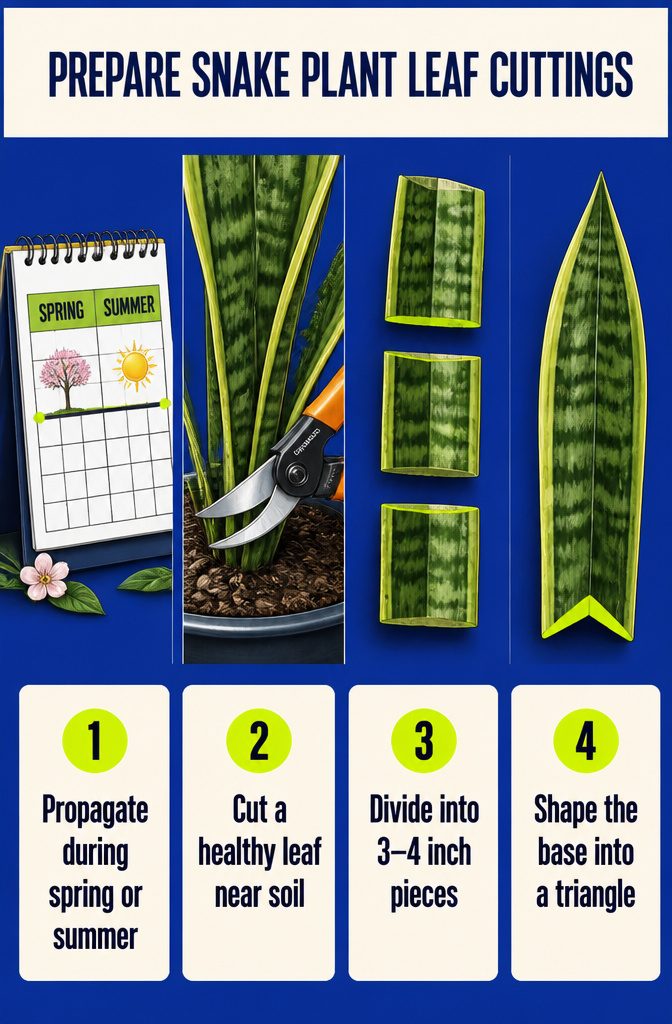
- Propagate in spring or summer when the plant is actively growing — cuttings root faster and more reliably during those months than they do in fall or winter.
- Pick a healthy leaf and use clean pruners to cut it close to the soil. I use Fiskars pruners for this; clean blades matter because a dirty cut invites rot before roots have a chance to form.
- Divide that leaf into pieces 3–4 inches (7–10 cm) long. Each piece becomes a separate cutting.
- Make the bottom cut triangular rather than straight across. The angled cut creates more surface area for roots to grow from, which speeds up the process and gives you a stronger root system from the start.
2. Place Cuttings in Water and Bright Light
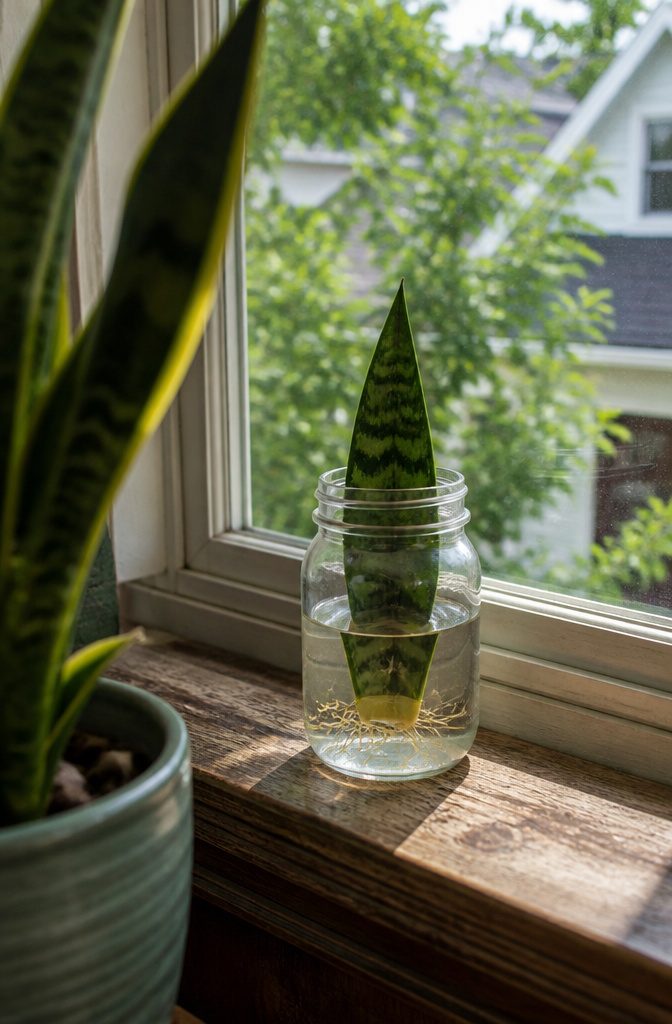
- Set cuttings pointed-end up in a Mason jar or any clear glass container. The cut end goes down into the water, and the pointed tip that grew toward the soil stays above the rim. A wide-mouth container works better than a narrow vase because snake plant leaves need room and stability.
- Place the jar in bright, indirect light for several weeks. A spot near an east or north window gives enough light to push root growth without scorching the leaf. Roots usually start showing in two to four weeks, though some cuttings take longer.
- Change the water whenever it turns cloudy or drops low enough to expose the developing roots. Keep the roots submerged at all times. Letting them dry out, even briefly, slows growth and can kill the cutting before it establishes.
3. Transplant Once Roots Reach an Inch Long
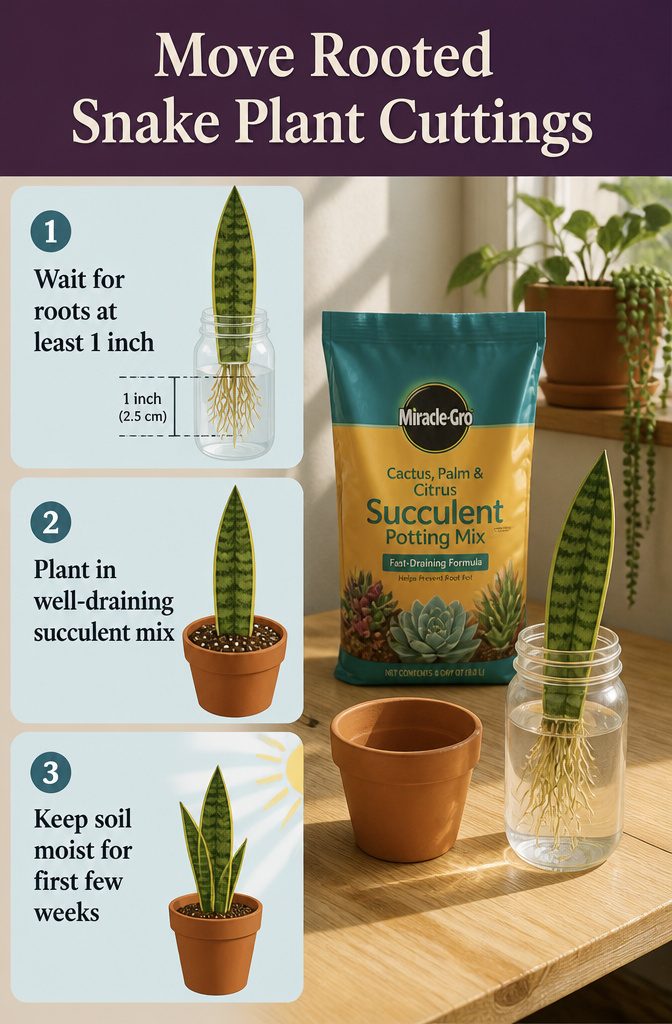
- Wait until roots reach at least an inch long before moving the cutting to soil. Snake plant cuttings root slowly compared to most houseplants, and you’ll typically see well-established roots after 2–3 months in water. An inch (2.5 cm) is the minimum; longer is fine.
- Plant the rooted cutting in a small pot filled with well-draining potting medium made for succulents. Miracle-Gro offers a mix designed specifically for snake plants and similar succulents that prevents the root rot these plants are prone to in standard potting soil.
- Place the newly potted cutting in bright, indirect light and keep the soil moist for the first few weeks. After that, care for it the same way you would a snake plant bought from a nursery: water only when the top two inches of soil dry out, and don’t fuss over it. These plants thrive on neglect once they settle in.
Why Water Propagation Is the Easiest Method
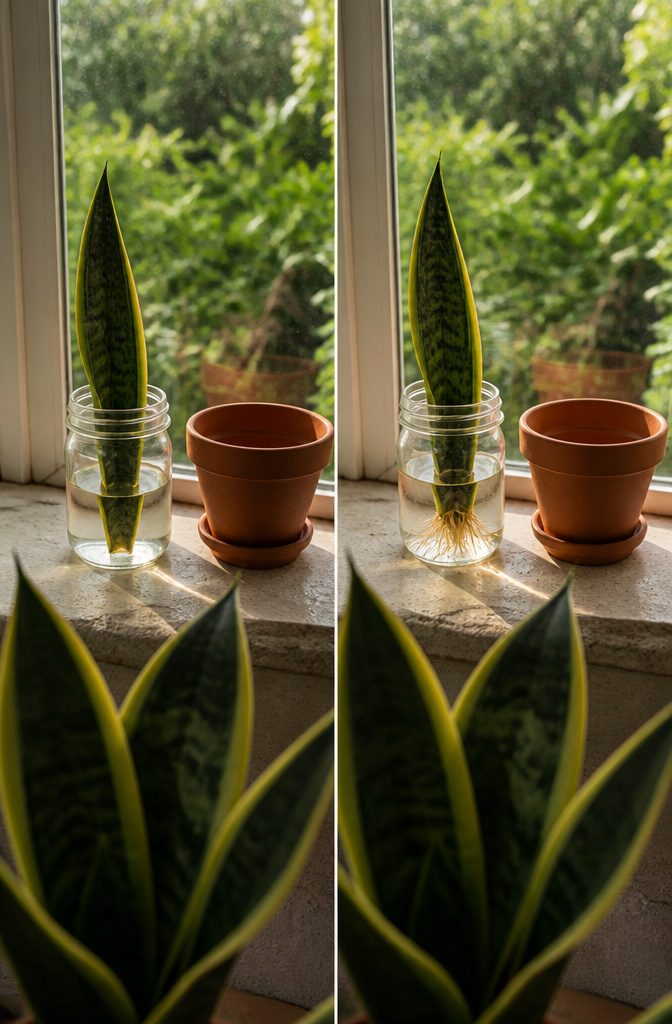
Propagating snake plant cuttings in water beats the other methods because you can watch the roots grow. That visibility tells you exactly when the cutting is ready for soil, which takes the guesswork out of timing.
Leaf cuttings planted straight into soil root just as well, but you have to tug gently or unpot them to check progress, and neither move is great for fragile new roots.
Division and rhizome propagation work too, and both are faster if you already have a mature plant to split.
Water propagation asks for less up front. You need one healthy leaf, a jar, and patience.
The cutting sits in plain sight on a windowsill, and the day those roots hit an inch long is the day you pot it up. No digging, no checking, no second-guessing whether it took.
Water-Rooted Cuttings and Variegation
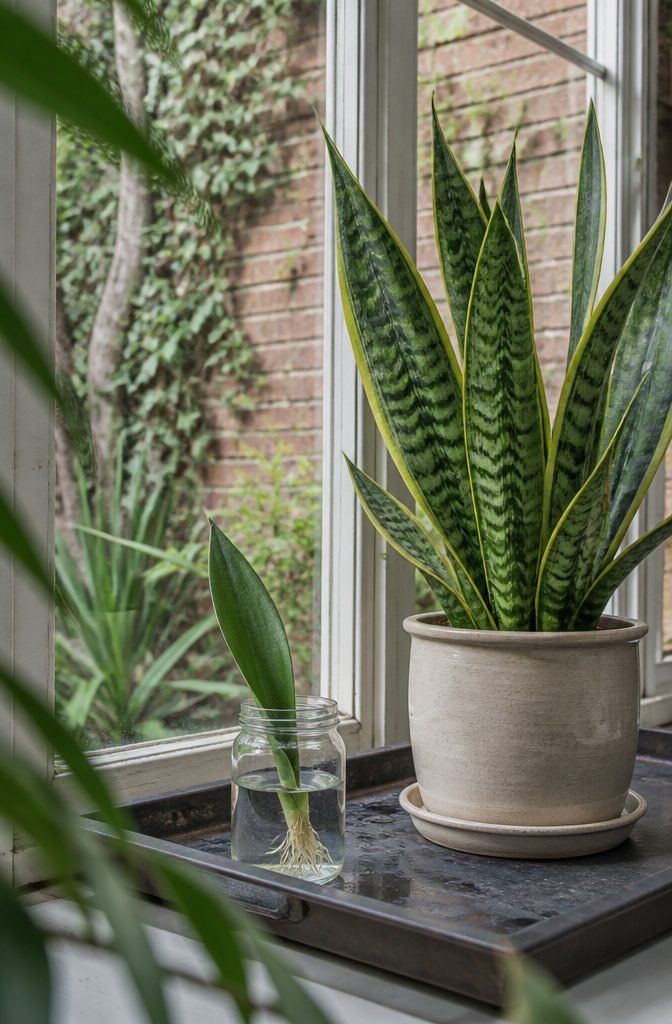
Water-rooted leaf cuttings do not reliably reproduce variegated patterns. If you have a variegated snake plant and you want new plants that repeat those exact markings, water propagation from leaf cuttings is the wrong method.
The resulting plants will most often revert to solid green, losing the striping or banding you started with.
Division keeps variegation intact better than other methods.
When you divide a variegated plant, you separate established offsets that already carry the pattern rather than starting from a single leaf cutting. That means the new plants look like the parent.
Water propagation still works for variegated varieties if you simply want more snake plants and don’t mind that the offspring will likely be green.
The cuttings root just as easily, and the plants grow just as vigorously. You just give up the pattern in exchange for the ease of the method.
What Water Propagation Gets You and What It Costs
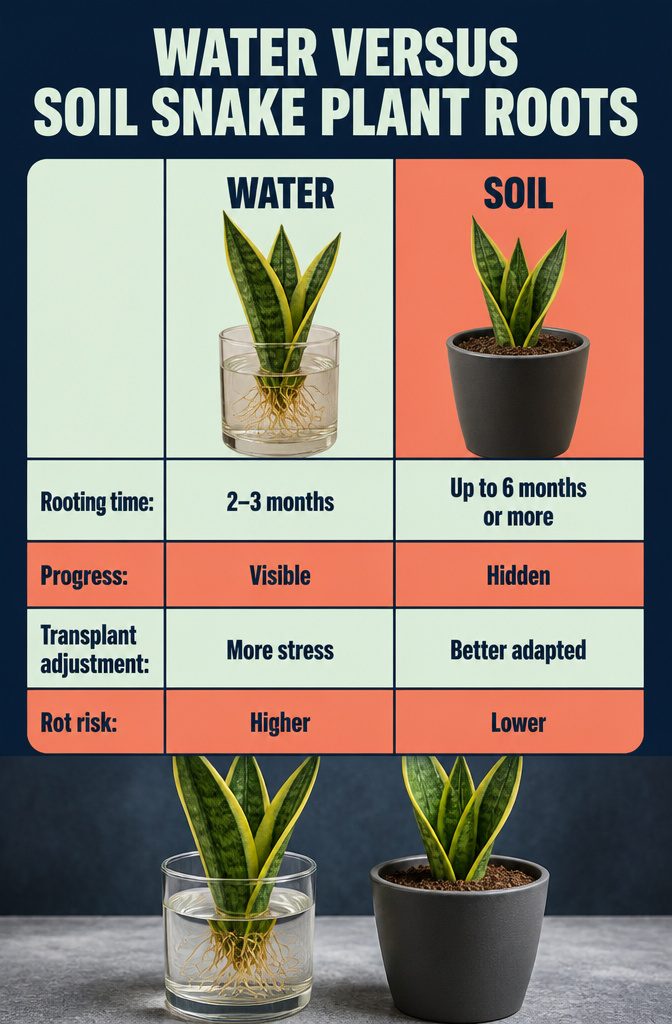
Water propagation wins for one reason: you can watch the roots form. That tells you exactly when they are ready for soil and spares you the guesswork that comes with burying a cutting and hoping something happens below the surface.
Soil-rooted cuttings can take up to six months or more to form roots, and in that time you have no way to check progress without disturbing the cutting.
Water cuts that wait down to two to three months and keeps the whole process visible.
Another downside to rooting cuttings in water vs. potting medium is that the resulting roots are less adapted to growing in soil. Thus they are more prone to stress like browning or tip die-back than cuttings rooted directly in soil medium.
That means water-rooted cuttings struggle more once you pot them up.
The roots they grew in water adapt poorly to soil, and the plant may brown at the tips or lose leaves while it adjusts. Water also raises the risk of rot, especially during the long wait for roots to appear.
Frequently Asked Questions
Can you propagate a snake plant in water?
Yes. Water propagation is one of the easiest methods for rooting snake plant cuttings because you can watch the roots develop instead of guessing what’s happening below the soil.
Cut a healthy leaf into 3–4 inch sections, place them in water with the cut end down, and wait 2–3 months for roots to form before transplanting to soil.
How long does it take to root snake plant cuttings in water?
Roots typically appear in 2–4 weeks, but you need to wait 2–3 months for them to reach at least an inch long before transplanting.
Snake plants root slowly compared to most houseplants, and moving them to soil too early will stress the cutting and slow its growth.
What are the pros and cons of propagating snake plants in water?
Water propagation lets you see exactly when roots are ready for soil, which eliminates guesswork and cuts rooting time to 2–3 months instead of 6 or more in soil.
The downside is that water-grown roots adapt poorly to soil once transplanted, making the plant more prone to tip browning and leaf loss during the adjustment period.
Do snake plants like to live in water permanently?
No. Snake plants are succulents that need well-draining soil once their roots develop.
Water propagation is a temporary stage used only to start roots on cuttings, not a permanent growing method. After roots reach an inch long, the cutting must be transplanted to soil or it will eventually rot.