
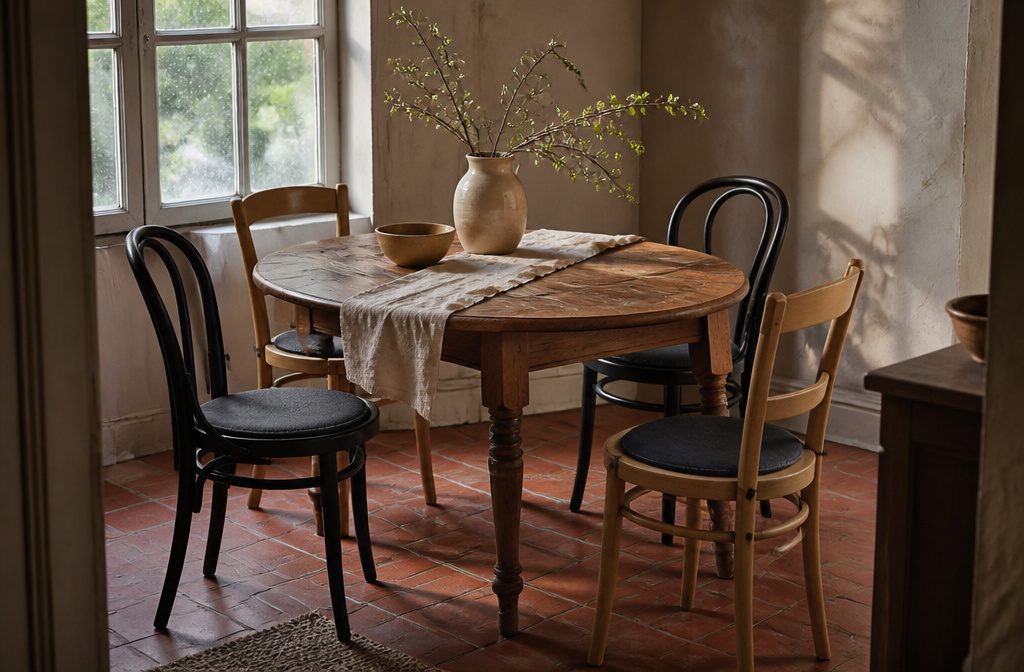
Mismatched chairs work when they share at least one element—same color across different shapes, same shape in different colors, or colors pulled from a single palette.
The mistake is mixing without a pattern: scattered colors and scattered forms together read as leftovers rather than a set.
Paint every thrifted chair the same matte black, or alternate two colors in the same Parsons frame, and the variety stops looking random.
1. Use One Shared Color Across Different Chair Designs
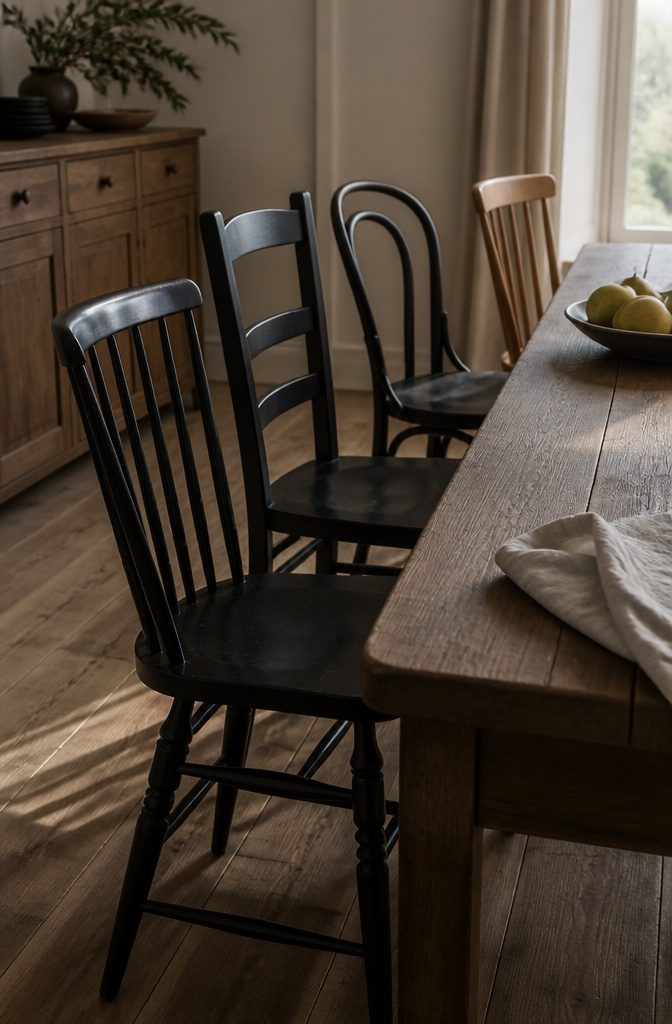
Mismatched chairs in different shapes stop looking random when you paint them all the same color. The unified finish pulls the eye to the silhouette variety rather than letting color differences break up the set.
I’ve seen thrift-shop finds — a spindle-back Windsor next to a ladder-back farmhouse chair next to a bentwood café seat — sprayed matte black and lined up at one table, and the shapes read as a collection instead of leftovers.
The paint choice matters less than consistency: white works, navy works, sage works, as long as every chair gets the same treatment.
You can leave one chair unpainted if it complements rather than competes.
A natural wood tone among painted chairs lands as intentional when the wood reads warm against a cool paint color or vice versa, but two unpainted chairs in slightly different stains will look like you ran out of paint halfway through.
2. Repeat Colors Around the Room
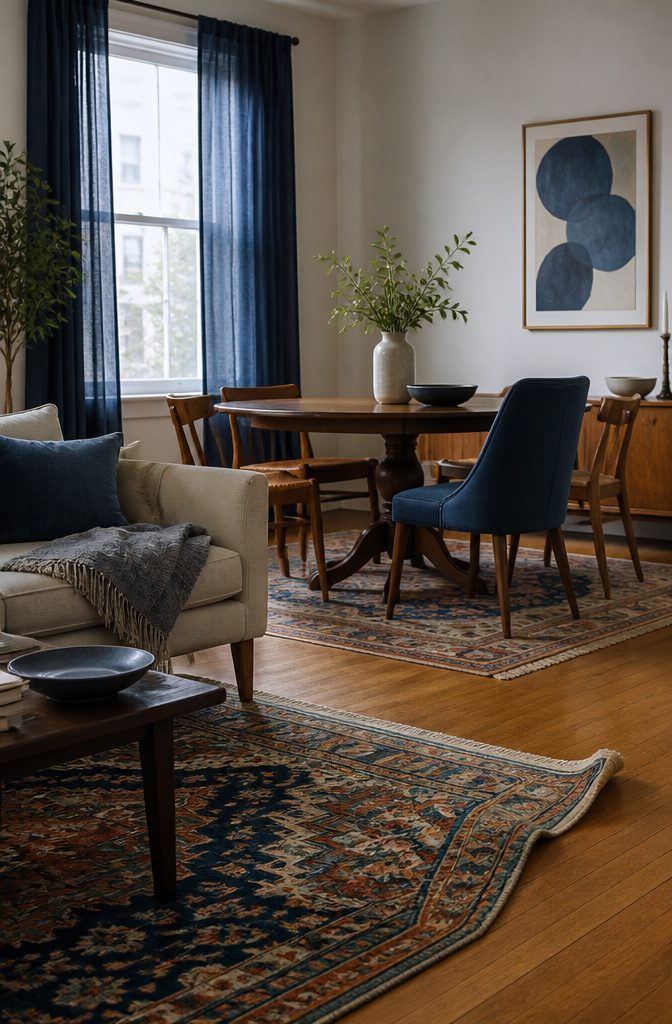
The chair color is just the start.
Coordinate it with something else already in the room, and the mix stops looking random. A black dining chair pulls together if you have black in the chandelier above.
A navy upholstered seat lands better when the rug or curtains carry the same blue. The eye reads the echo before it reads the mismatch.
You can coordinate with lighting, window treatments, artwork, wallpaper, cushions or the sofa. Pick one element and repeat that color two to three times across the space.
Cobalt accents that show up in a throw pillow, a framed print and the chair seat read as intentional. The repetition is what makes the variety look planned instead of random.
I check what is already anchoring the room before I bring in a new chair color.
If the space has a patterned rug with rust and teal, those are the colors worth pulling into the seating. The chair does not need to match the table at all.
3. Use Different Colors in the Same Chair Design
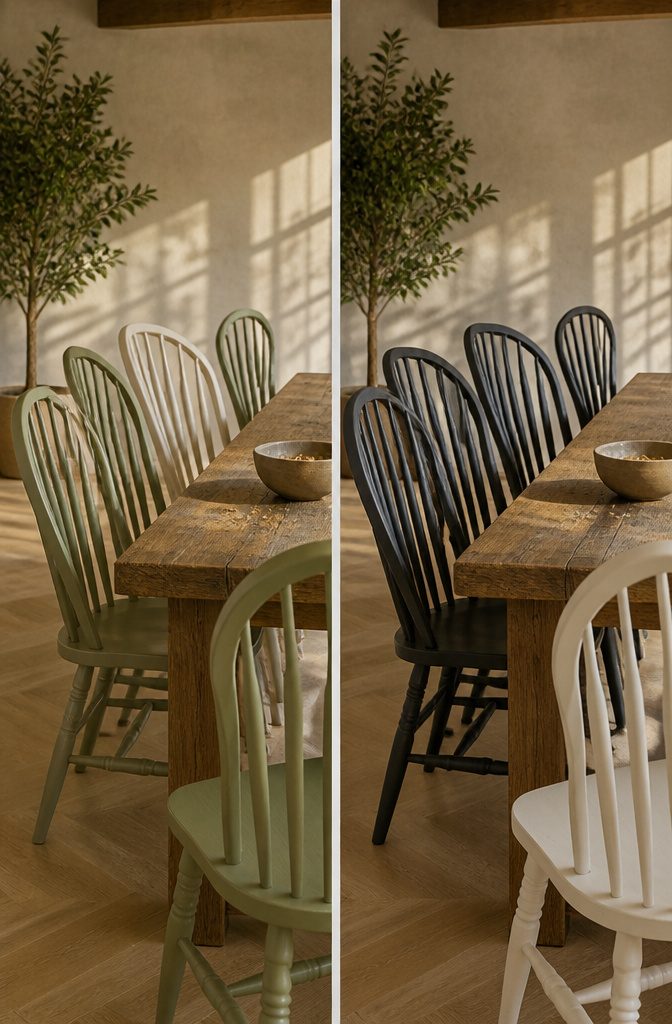
The same chair in different colors keeps the form consistent while letting you play with rhythm. The silhouette stays unified, so an alternating pattern around the table reads as intentional rather than random.
I’ve seen this work with Windsors in sage and cream, Parsons chairs in charcoal and blush, even Eames shells toggling between two colors every other seat.
The color choices decide whether it lands playful or restrained.
Bold contrasts add energy—think navy and ochre, or black and white—while subtle tonal shifts (gray fading into taupe, or three shades of blue) keep the look quieter. Either way, the repeated shape holds it together.
This approach works best when you commit to the pattern. Two colors alternated evenly around a six-top feels deliberate; three colors scattered without rhythm starts to look accidental.
4. Choose Colors From One Palette or Tonal Family
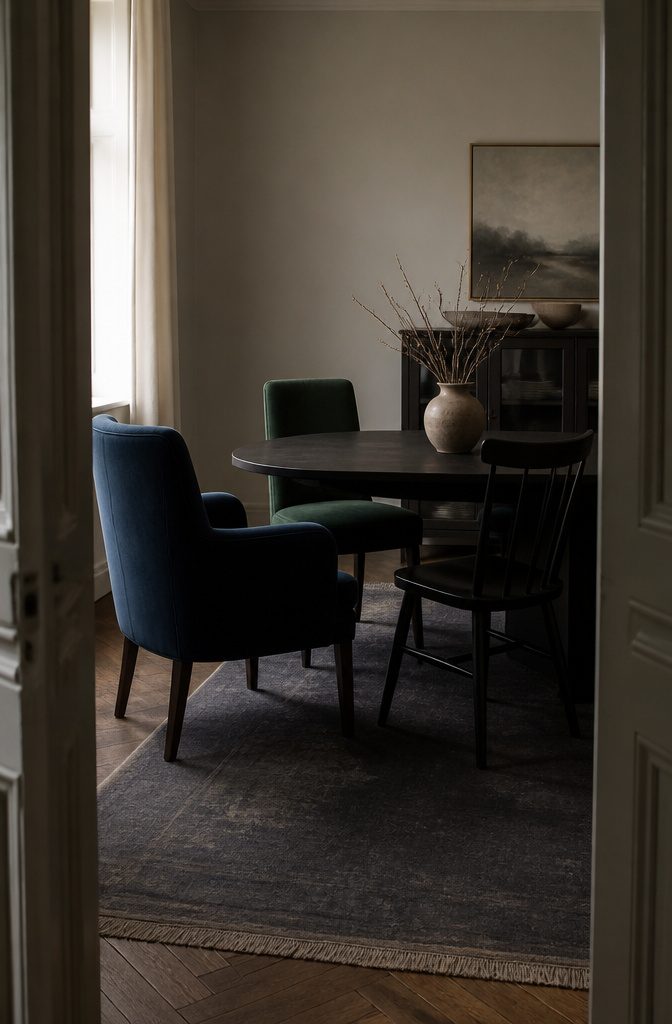
Different chair colors work when they share a single color scheme—complementary pairs, a monochromatic run, or tonal cousins that sit close on the wheel.
The scheme keeps the mix from reading as random. A navy velvet armchair next to a forest-green side chair and a black wood dining chair looks deliberate if all three live in the same deep, saturated family.
The same three chairs in navy, mint, and black read as leftover furniture because the tones pull in different directions.
Sticking to one palette gives you freedom everywhere else. You can change the chair style, the material, the shape, and the arrangement stays cohesive because color holds it together.
A monochromatic scheme in black, charcoal, and slate creates a sophisticated effect without needing matched silhouettes. Complementary colors—opposite each other on the wheel—create a bolder look but still read as a system.
The color becomes the narrative that ties the different pieces into a single story rather than a collection that happened to land in the same room.
5. Make a Patterned or Color-Blocked Mix
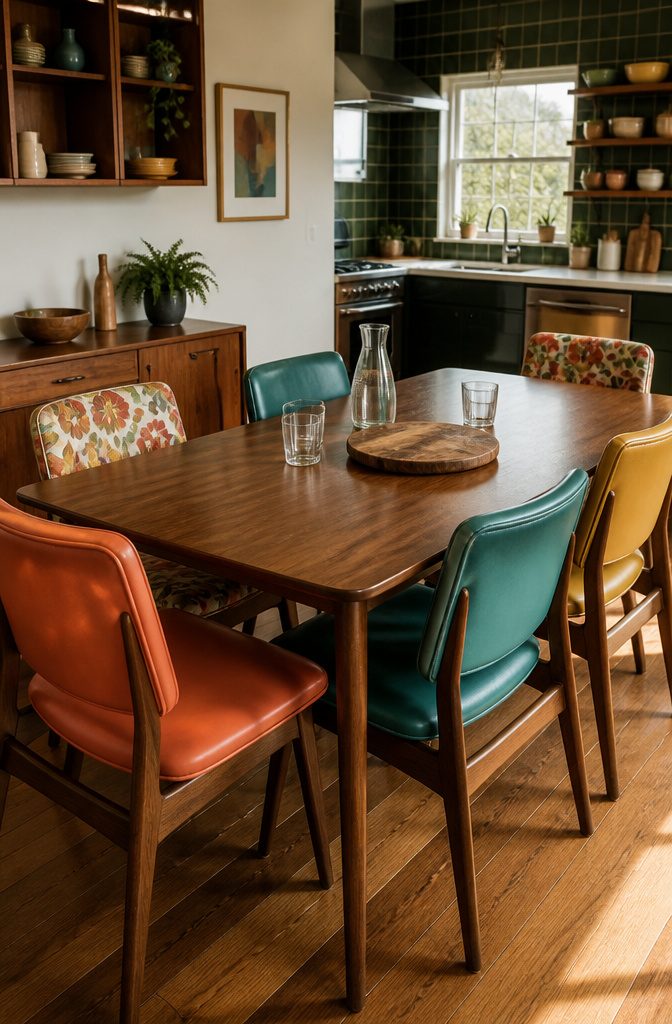
Patterns and color blocking let you use the same wood base with completely different upholstery and keep the look coherent.
I saw this done in durable vinyl — one chair in coral, another in teal, a third in mustard, all on the same walnut finish.
The wood held them together even when the colors didn’t touch on a wheel. The vinyl also meant real spills didn’t end the chair, which matters around a table that sees use.
The balance happens by distributing patterns and colors evenly around the table rather than clustering them on one side. If two chairs wear a bold floral, put them across from each other.
If three are solid and one is striped, the stripe goes at a head rather than next to the other accent. Totally different fabrics work as long as you spread the visual weight instead of stacking it.
6. Use Color to Distinguish Accent Chairs
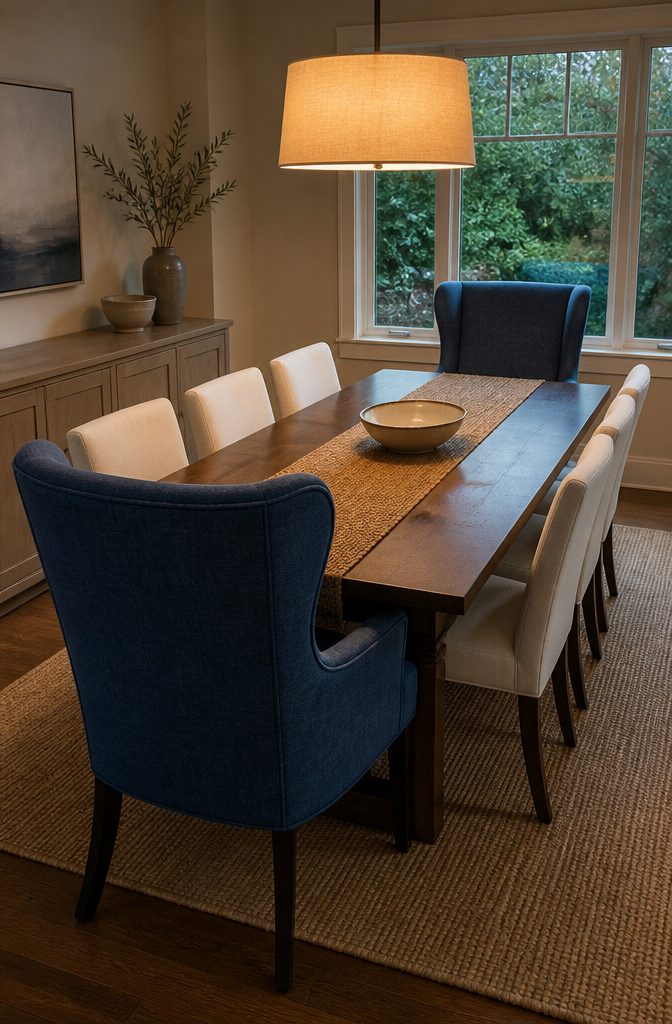
One or two standout chairs at the head and foot of the table pull the eye and give the arrangement structure.
The rest stay uniform. That contrast makes the setup read as a choice rather than a mismatch.
Wingback accent chairs work well for this. Place them at opposite ends while the sides repeat a simpler frame.
The wingback shape alone sets them apart, even if the upholstery or finish ties back to the rest. I prefer this over scattering different styles around the perimeter, which can look scattered rather than anchored.
Another option: use the same chair design but upholster the end chairs in a different fabric or color from the sides.
Blue wingbacks at the ends with white parsons chairs along the sides keep the palette linked while marking the head positions. The shape stays cohesive, the color does the work.
7. Mix Painted and Unpainted Chairs
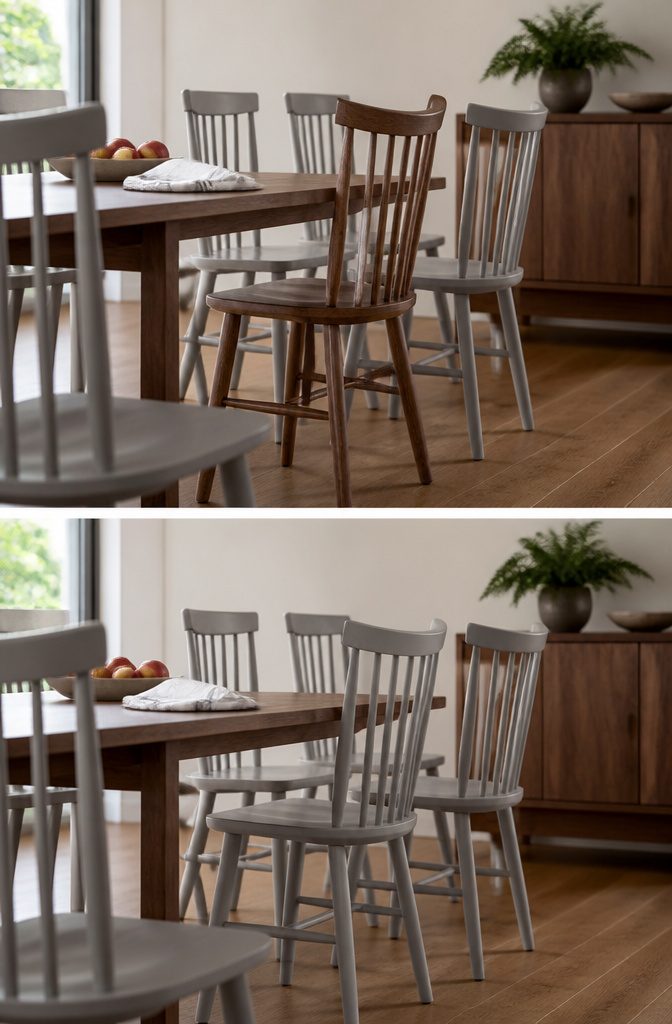
A chair left unpainted can anchor a group where everything else matches.
I did this with a set of five dining chairs after repainting four in the same soft gray — the fifth stayed its original walnut finish, and the natural wood broke up what would have been too much uniformity.
The wood tone repeated the dining table’s finish, which tied the mismatched chair back into the room rather than making it look forgotten.
This works when the unpainted chair shares the same silhouette as the painted ones.
Different colors read as intentional; different shapes plus different colors can tip into randomness. The wood finish also needs to complement something else visible in the space — a table, a cabinet, trim — or it floats without context.
The unpainted chair does not need to be darker.
A light ash or bleached oak against painted chairs in charcoal or navy gives the same contrast in reverse, and it keeps the room from feeling heavy when most of the seating is dark.
How to Distribute Colors Around the Table
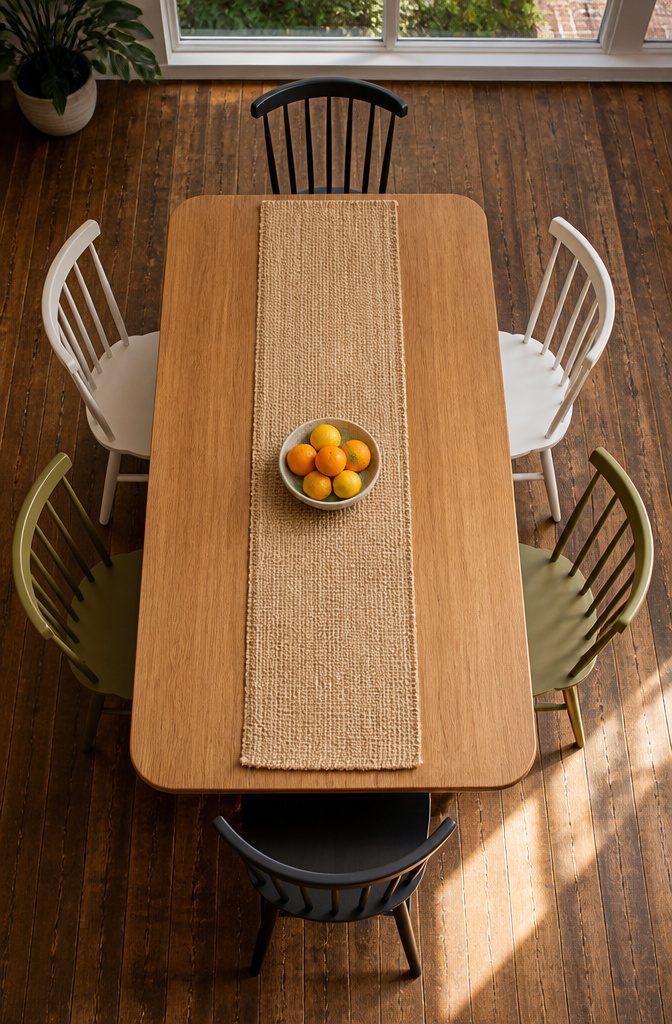
Once you know which chairs you’re mixing, the arrangement makes or breaks the result. A few basic patterns give the setup structure so it reads as intentional rather than random.
- Alternate two styles along the sides (A-B-A-B). This works best when the two chairs share height or scale, so the rhythm stays clean.
- Anchor the ends with standout chairs (B-A-A-A-A-B). I use matching side chairs and save two distinct pieces for the head and foot of the table. The contrast lands exactly where you want focus.
- Work in pairs across from each other. Two pairs for a table seating four people, three pairs for six guests. Each pair sits opposite, which keeps the setup balanced without forcing symmetry on every side.
- Use one style at the head, another along the sides. This is the simplest split: one chair at the head of the table, a different design for everything else. For a round table, alternate the two styles instead.
The pair rule holds across all of these: buy chairs in twos and place them where they mirror each other, even if the overall mix includes three or four different designs.
Pick a Unifying Thread
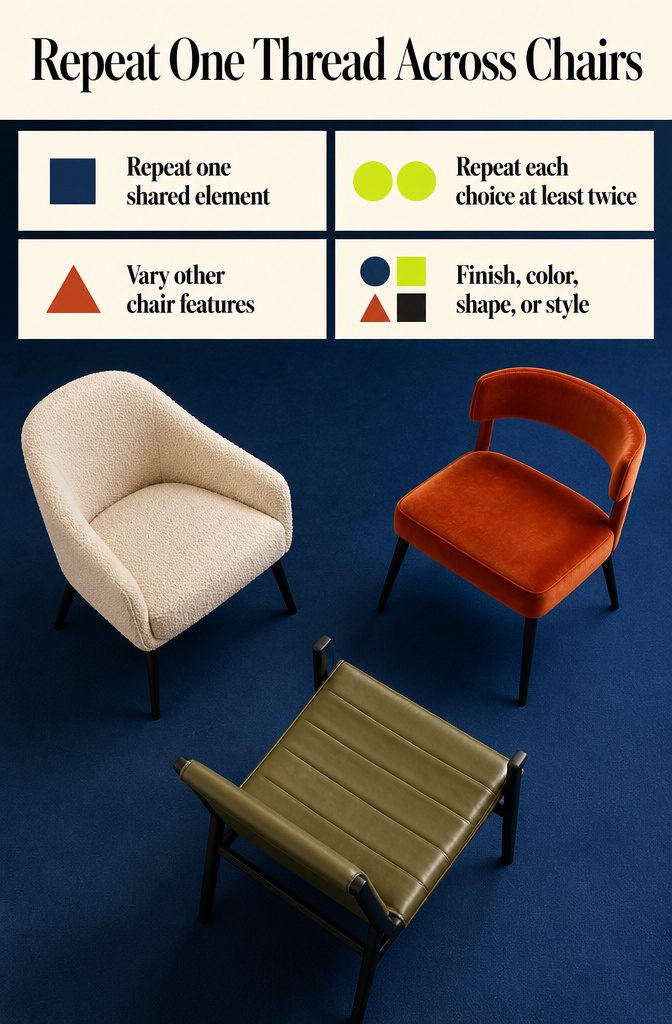
The chairs do not need to match, but they need to share at least one element that tells the eye they were chosen together. Pick a thread and repeat it two to three times across the room.
That thread could be color: every chair carries the same navy blue, or all the legs share a matte black finish. It could be material: bleached oak runs through the side chairs and the bench.
It could be shape: curved backs on every seat. It could be style: all the pieces pull from mid-century modern, even if their silhouettes differ.
By finding the similarities in certain aspects of your accent chair choice, you can then experiment with other elements while keeping things cohesive.
Ground one element so the rest can vary. I anchor on finish and vary the forms, or hold the shape steady and swing the colors.
Each color, style or shape should appear at least twice in the set. The repetition reads before the variety does, which is what makes the variety feel deliberate rather than accidental.
Keep Chair Heights Visually Consistent
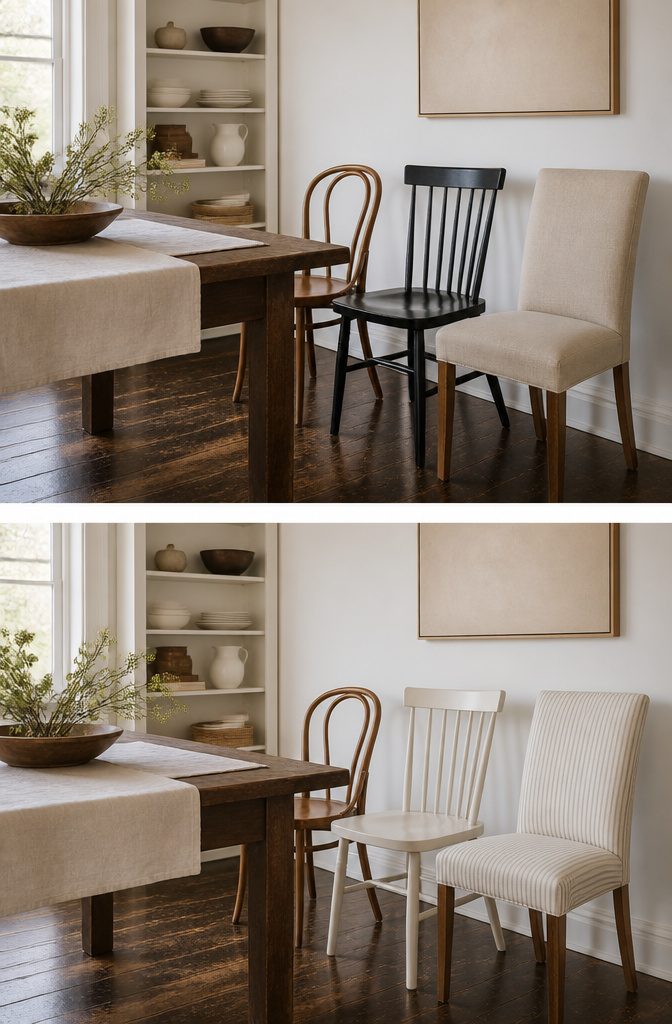
Chair backs at similar heights hold a mixed arrangement together. Tall and short chairs next to each other read as cluttered rather than intentional, and the height jump pulls attention in a way color never does.
I keep seat heights within an inch or two of each other and let the backs land in the same general zone — all mid-height or all low — so the line stays steady when you stand back.
Scale works the same way. A delicate bentwood next to a heavy upholstered wingback looks like a mistake, even if the colors are perfect.
Similar proportions in the seat and frame make wildly different styles feel like they belong in the same room. That consistency is what lets you mix aggressively on finish, fabric and leg style without the whole thing falling apart.
Frequently Asked Questions
Is it okay to mix and match dining chairs?
Yes. Mixing chairs adds character and depth to a dining space, as long as the combination stays cohesive.
Pick one unifying thread (color, material, shape, or style) and repeat it across the set so the variety reads as intentional rather than random.
Can you have different colored dining chairs?
Yes.
Different colors work when they share a single color scheme, whether complementary pairs, a monochromatic run, or tonal cousins that sit close on the wheel. The scheme keeps the mix from reading as random.
Do all dining chairs need to be the same?
No. Different designs, finishes, or upholstery variations create a personalized look, provided the chairs share at least one element (color, material, shape, or style) that tells the eye they were chosen together.
How do you mix and match table and chairs?
Complement or contrast the table’s style by balancing material, color, and design. The chair does not need to match the table at all if it coordinates with something else already in the room, like lighting, window treatments, or the rug.
Should the dining table wood match the chairs?
No.
Coordinating or complementary wood tones support cohesion, but matching is not required. A natural wood tone among painted chairs lands as intentional when the wood reads warm against a cool paint color or vice versa.
Can you mix modern chairs with a traditional table?
Yes. Mixing styles adds interest and personality, as long as you pick a binding element (color, finish, or silhouette) and repeat it across both the modern and traditional pieces.
Should dining room chairs and bar stools match?
They do not need to match exactly, but complementary elements help the design feel cohesive. Pick one shared thread (color, material, or finish) and repeat it between the chairs and stools.
Do all the wood tones in a room need to match?
No.
Varied wood tones can work together as long as the finishes complement something else visible in the space, like a table, a cabinet, or trim. The wood tone needs context to avoid looking forgotten.
How many furniture styles can you mix in one room?
Two or 3 styles are suggested. More than 4 may feel chaotic without other elements (like a repeated color or material) holding the room together.
What’s the easiest way to start mixing furniture styles?
Start with neutral, transitional anchor pieces (a simple dining table or restrained console) and then mix bolder, era-specific pieces in the smaller categories: accent chairs, lighting, side tables, or art.
The anchors give you a foundation, and the accents do the style work.
Should dining chairs be lighter or darker than a table?
Either works. The chair color does not need to match the table at all if it coordinates with something else already in the room, like lighting, window treatments, artwork, or the rug.
The repetition is what makes the variety look planned instead of random.