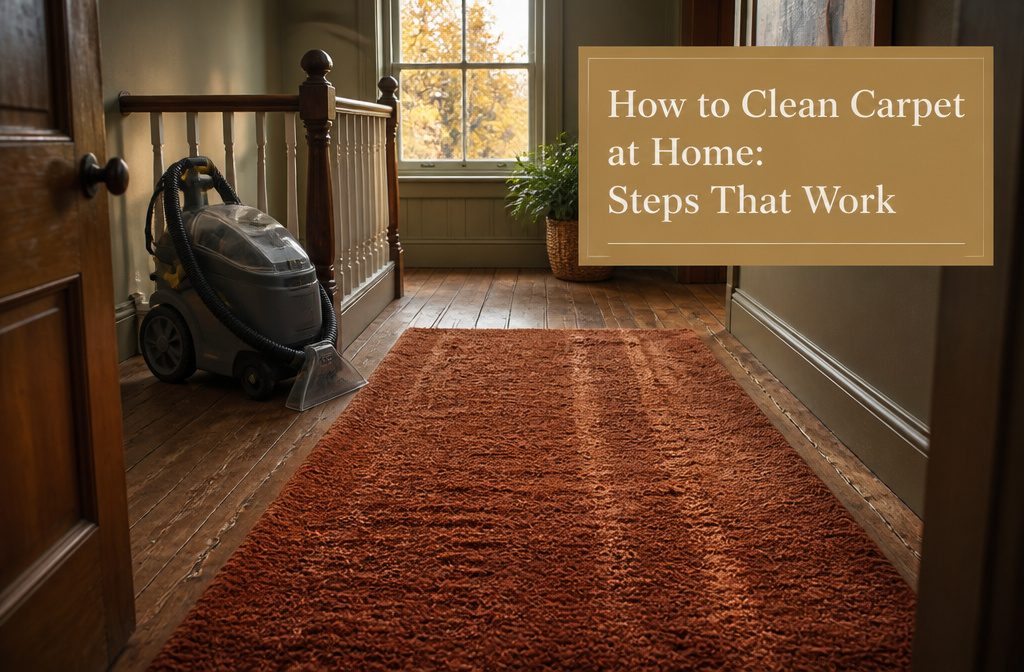
Most carpet cleans itself at home in 4 to 8 hours with a rental machine, hot water and the right formula for your fiber type.
The step that decides whether the result looks clean or just wet is the vacuum pass before any water goes down: loose dirt turns into mud the moment liquid hits it, and a rushed once-over leaves enough behind to sabotage everything that follows.
1. Check the Carpet and Decide What It Needs
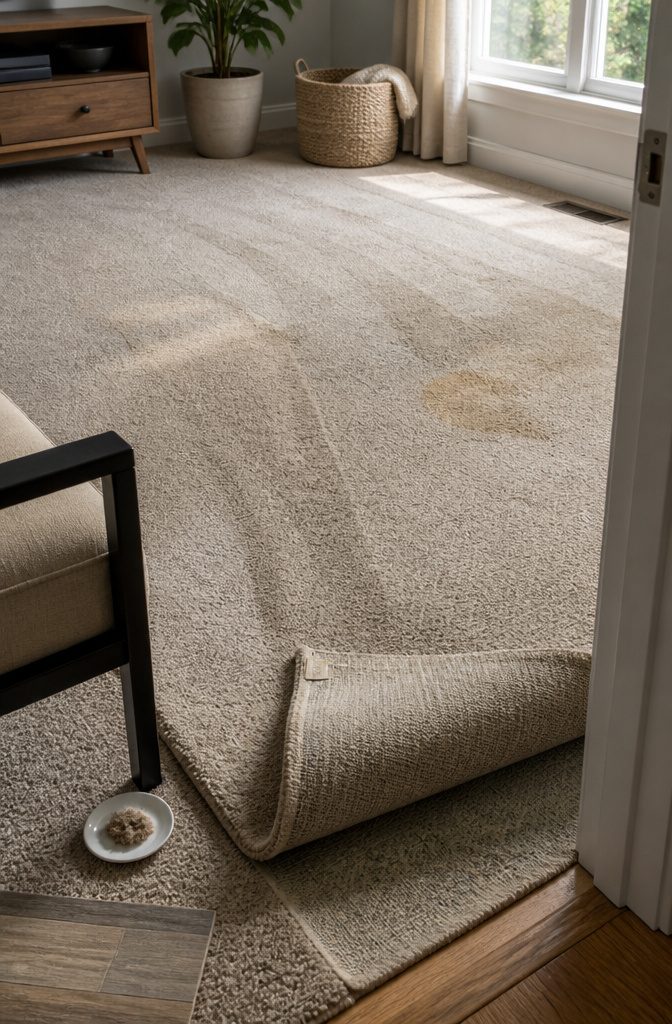
Pull up a corner of the carpet and look for a tag sewn into the backing. That label usually names the fiber—nylon, polyester, olefin, wool, or triexta—and gives cleaning directions the manufacturer tested.
If the tag is missing or faded, you can feel the texture: wool feels warm and a little springy, while synthetics tend to be slicker.
When that still leaves you guessing, snip a tiny piece from a hidden edge and take it to a flooring shop; someone there can identify it in seconds.
Once you know the fiber, walk the room and note what you’re actually dealing with.
Track patterns show you where foot traffic has ground dirt deepest. Stains need names—coffee, wine, mud, pet accidents—because the fiber and the stain together decide which product works and which one sets the damage permanently.
Polyester and nylon tolerate most cleaners; wool can shrink under heat and too much water.
Check for any fading near windows or matting where the pile has flattened. That tells you whether the carpet needs a light pass or something closer to restoration.
2. Clear the Area and Protect the Furniture
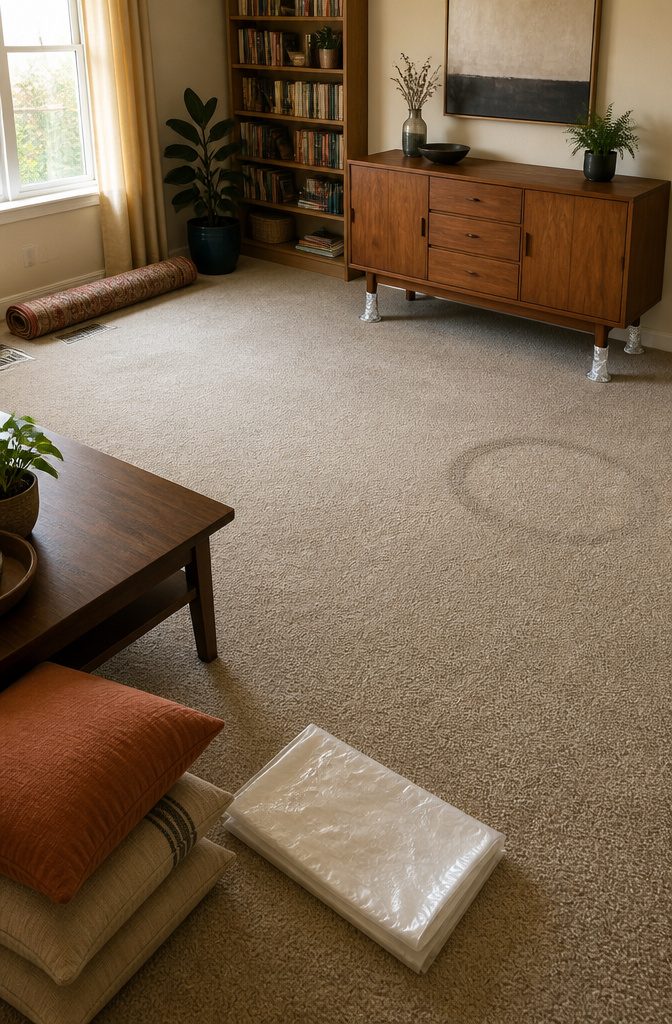
Pull furniture far enough from the carpet that you can work without reaching around chair legs or ottoman feet.
Cleaning around furniture leaves dirty halos where the carpet stayed untreated, and spotting those after everything dries means you get to move it all again.
Damp carpet can stain wood and metal legs if they sit directly on it while it dries.
I wrap the base of anything I can’t move with plastic sheeting or aluminum foil before I start cleaning. Foil takes about ten seconds per leg and holds up to a few hours of drying time without slipping.
If you can move a piece to another room entirely, that works better than any wrap, but most of us are working with limited space and furniture too heavy to relocate alone.
3. Vacuum Thoroughly Before You Add Water
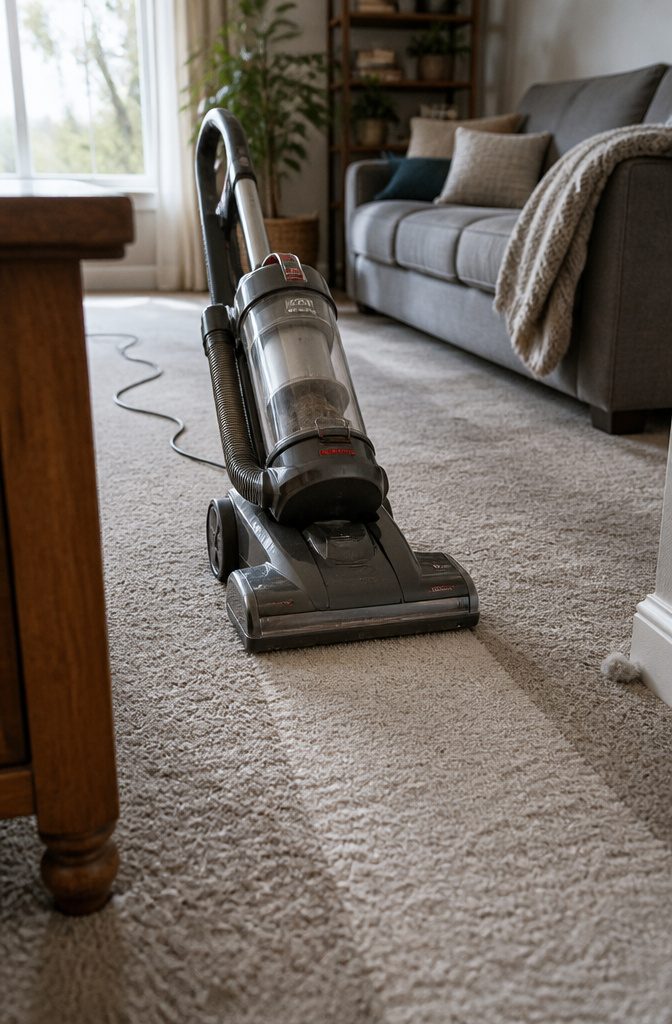
Vacuum Thoroughly Before You Add Water
Loose dirt sits at the surface until water hits it, and then it turns into mud deep in the pile.
That is why every carpet cleaning starts with a slow, thorough vacuum pass before any liquid goes down. Go over each strip twice at a walking pace, working in different directions to lift embedded debris out of the fibers.
High-traffic lanes and entry paths hold more than you think, and a rushed once-over leaves enough behind to sabotage the cleaning step that follows.
I always check the vacuum filter and canister before I start.
A clogged machine moves dirt around instead of picking it up, and that wastes the one prep step that actually decides whether the deep clean lifts grime or smears it. If your vacuum has a beater bar, use it.
The agitation dislodges pet hair and stubborn particles that suction alone will not pull free. Skipping this step or rushing through it is the most common reason rental machine results disappoint.
4. Treat Stains and High-Traffic Areas First
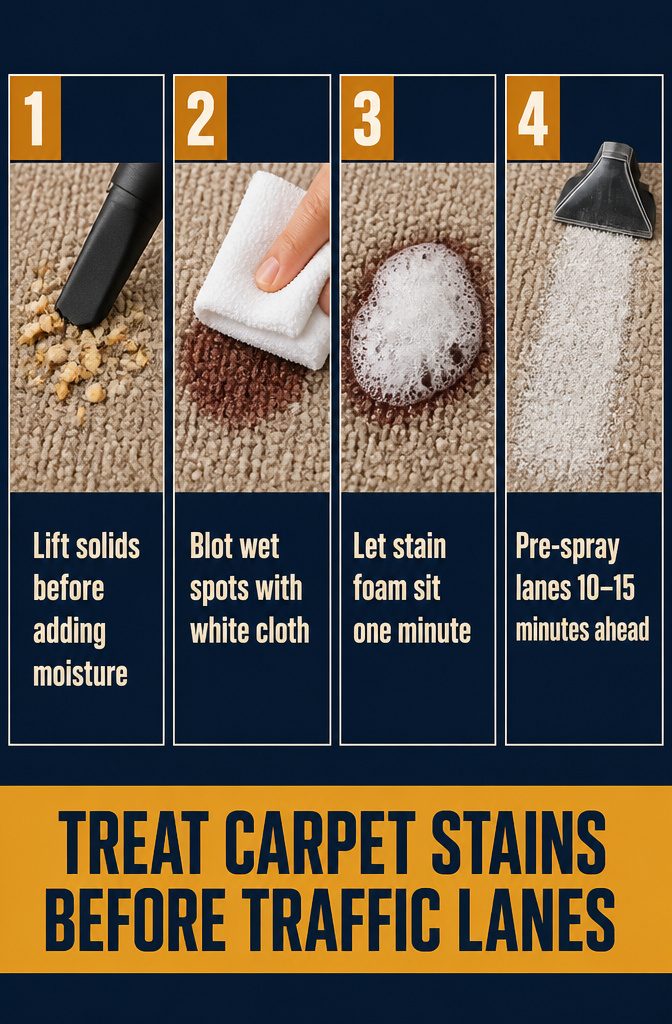
Treat Stains and High-Traffic Areas First
Debris comes off before anything wet touches the carpet. Lift crumbs and solid bits gently without pushing them deeper into the pile, then blot any wet spots with a clean cloth rather than rubbing.
A white towel works better than paper towels, which leave fibers behind as they break up.
Spray Blue Magic Carpet Stain and Spot Lifter directly onto the stain and let it sit for a minute. Foam cleaners bind to carpet fibers without soaking the pad underneath.
Blot again with a fresh cloth until the stain lifts, repeating if needed. I’ve seen this method pull red wine, grease, and coffee from all sorts of carpet.
For odor, sprinkle Arm & Hammer Carpet & Room Extra Strength Odor Eliminator on the spot and leave it one to three hours before vacuuming.
OdoBan concentrate diluted per bottle directions handles spills that smell. Pre-spray traffic lanes and entry paths ten to fifteen minutes before the machine runs so the chemistry can break down oily buildup instead of fighting it during the pass.
5. Deep-Clean by Hand or Machine
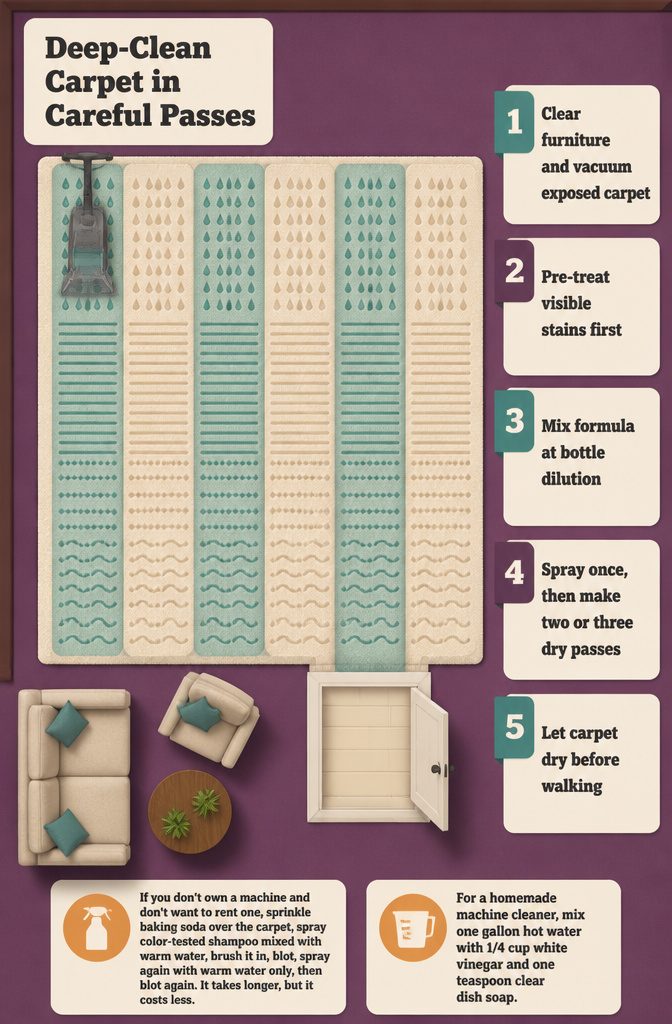
- Remove furniture from the room, or move it all to one half. Vacuum every inch of exposed carpet before you start.
- Pre-treat visible stains with your chosen spot cleaner. Let it sit for the time the label calls for.
- Fill the machine with hot tap water and carpet formula at the exact dilution the bottle specifies. Too much soap leaves residue; too little cleans poorly.
- Work in sections about 3 feet wide. Make one slow pass while spraying solution—half your normal walking speed—then release the trigger and make two or three dry suction-only passes over the same section. Keep going until the machine stops pulling up visible water. Overlap each new section slightly onto the last one, and plan your path so you finish at the doorway.
- Let the carpet dry completely before walking on it.
If you don’t own a machine and don’t want to rent one, sprinkle baking soda over the carpet, spray color-tested shampoo mixed with warm water, brush it in, blot, spray again with warm water only, then blot again.
It takes longer, but it costs less.
For a homemade machine cleaner, mix one gallon hot water with 1/4 cup white vinegar and one teaspoon clear dish soap.
6. Dry Fully and Keep Traffic Off
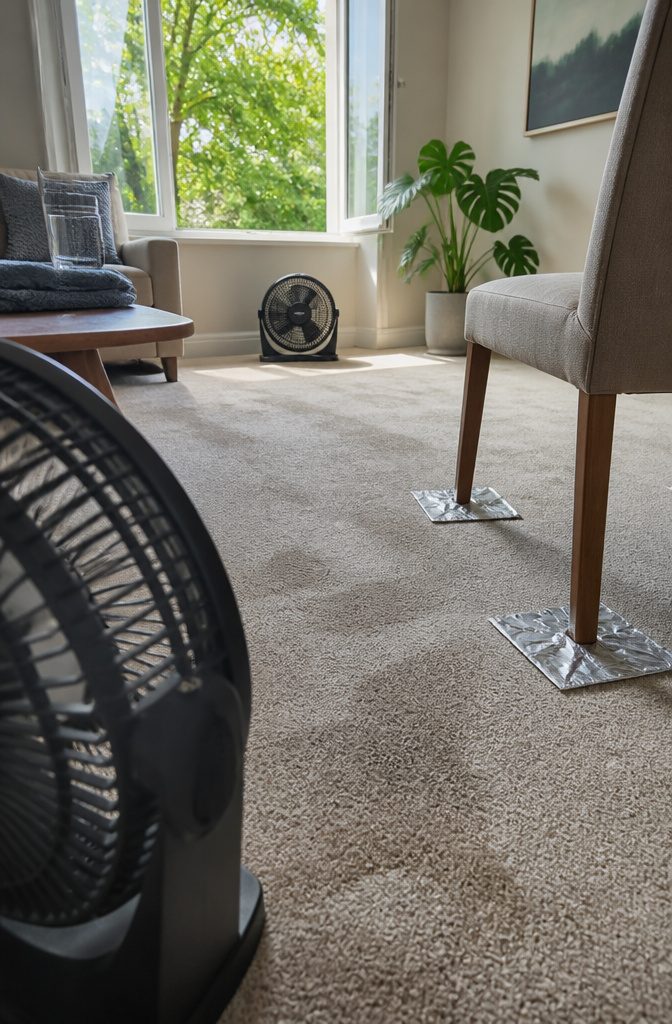
Once the machine shuts off, the carpet is still wet, and foot traffic or furniture before it dries invites soil tracked back in, rust stains from chair legs, or mold if the fibers stay damp past a day or two.
I run fans across the floor immediately, open windows if humidity is low, and keep everyone off the carpet until it feels dry to a firm hand press.
Steam-cleaned carpet usually dries in 2–4 hours with good airflow; shampooed carpet can take up to 24 hours because more water goes down. Most properly extracted carpet is ready for light traffic in 4–8 hours.
Wait until fully dry before moving furniture back, or slip foil squares under legs to stop wood stain and metal rust from bleeding into damp fibers.
Once dry, vacuum one more time. That lifts the pile back up and pulls out any soil that wicked to the surface as the water evaporated.
Vacuum Regularly Between Deep Cleans
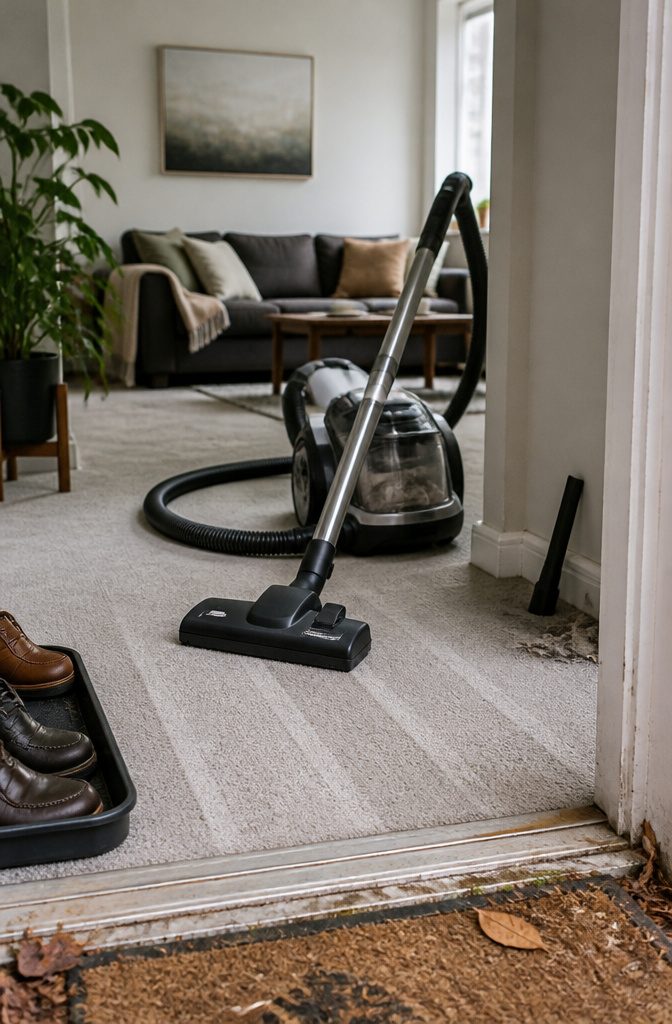
The frequency that works depends on how much foot traffic you actually see. For high-traffic areas like entryways and living rooms, vacuum at least once a week to catch dirt before it gets ground into the fibers.
Bedrooms and low-traffic rooms can go every two weeks without looking neglected. If you have shedding pets, daily passes might be necessary to stay ahead of hair and dander, and twice a week is a reasonable baseline even without animals.
The technique matters as much as the schedule. Slow, overlapping passes give the vacuum time to pull debris up rather than just pushing it around.
I switch directions every few sessions to lift the pile from different angles, which helps dislodge anything that has worked its way down to the base of the fibers.
Use the crevice tool along baseboards and in corners where dust collects, and adjust the height setting if your vacuum has one so the brush bar sits at the right depth for your carpet’s pile.
Act on Stains the Day They Happen
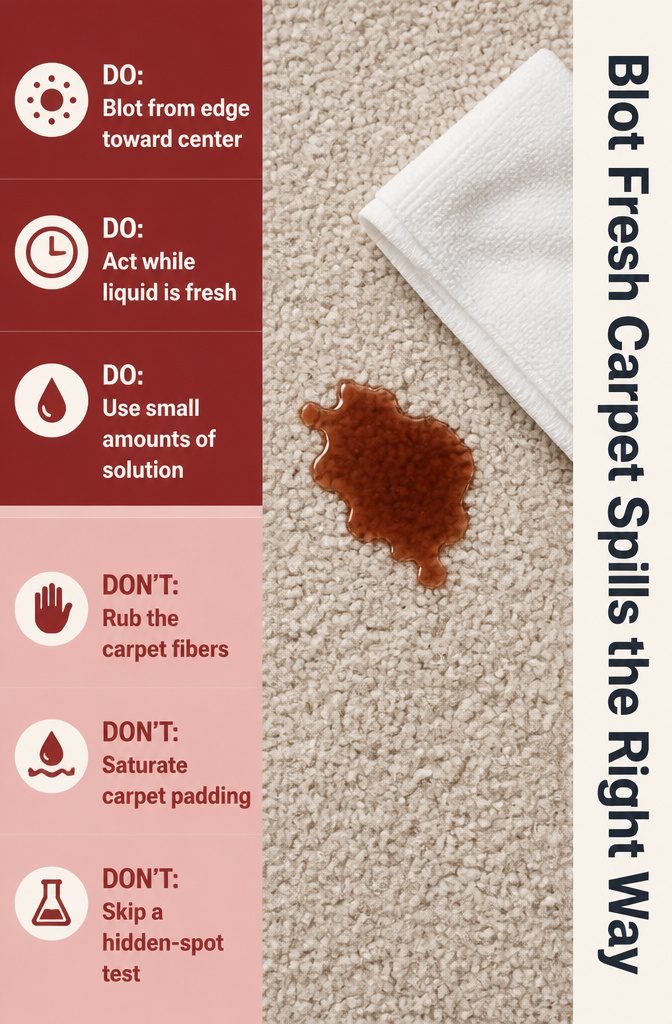
Blotting matters more than the product you reach for. Work from the outer edge of the spill toward the center, using a clean white cloth or paper towels, so you’re containing the stain rather than spreading it across more fibers.
Rubbing pushes liquid deeper into the pile and makes the stain larger.
Speed decides whether a spill becomes a permanent problem. Fresh liquid hasn’t bonded to fibers yet, and a few quick blots can pull most of it out before it sets.
Use small amounts of any cleaning solution at a time.
Saturating the carpet soaks the padding underneath, which leads to slow drying and can leave odors. Test any product on a hidden spot first, because even mild solutions can lift color from certain fibers….
Match the Cleaner to the Fiber
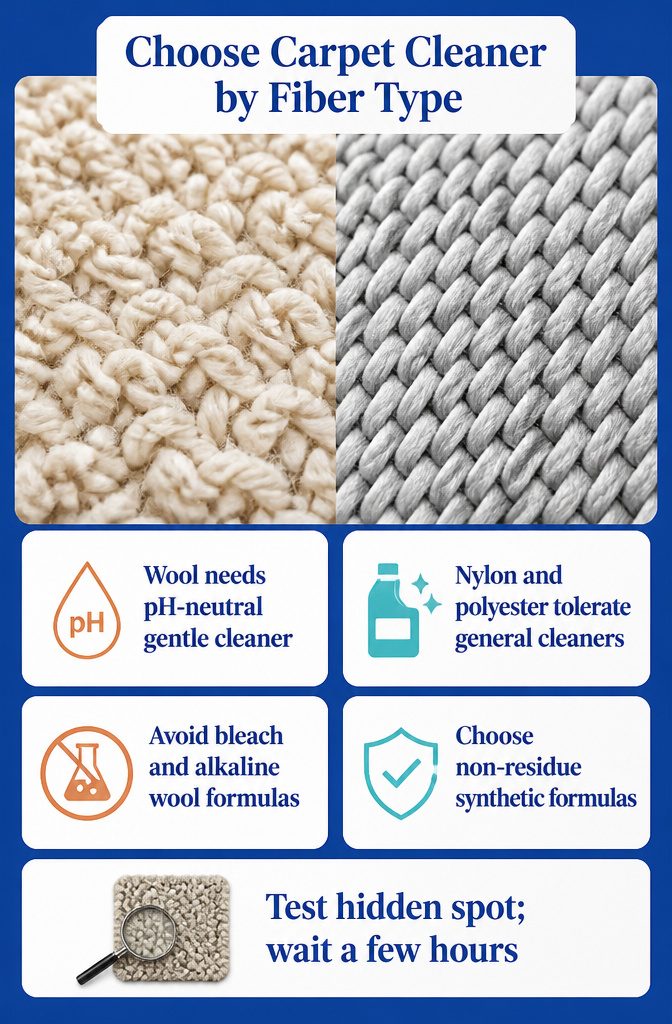
Carpet fiber decides whether a product cleans or damages. Wool carpets need pH-neutral, gentle formulations and can shrink or discolor with bleach-based cleaners, alkaline solutions, or anything with strong optical brighteners.
Synthetic fibers like nylon and polyester tolerate general-purpose cleaners, but aerosol spot treatments sometimes leave residue that pulls dirt back faster than the stain you just lifted.
I read the label on every bottle before I buy it. The product should state explicitly which fibers it works on.
For wool, a dedicated spot removal kit matters more than improvising. For synthetics, a non-residue formula keeps the carpet cleaner longer after treatment.
Before treating the whole floor, test the cleaner on a hidden corner and wait a few hours.
Check for color shift, texture change, or fiber breakdown. If the test patch looks wrong, the rest of the carpet will look worse.
When to Call a Professional
I’ll try home methods on a new stain or light soil, but stubborn marks, delicate rugs, and heavily soiled carpet are the point where I call someone in.
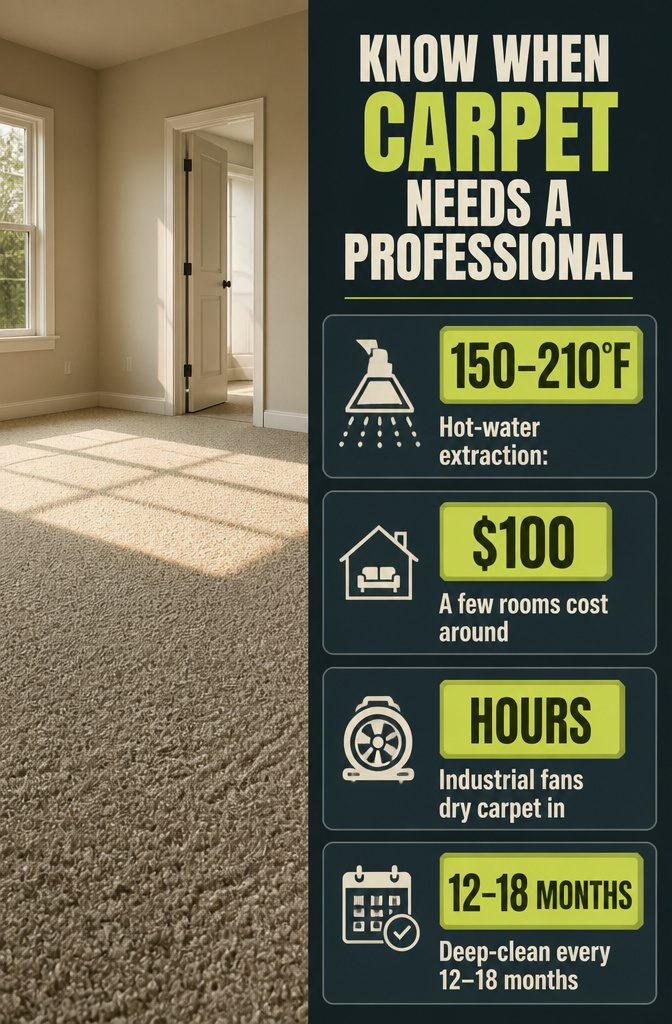
Professional hot-water extraction systems run water between 150 and 210°F, and that sustained heat does what home machines cannot reach.
A few rooms cleaned typically runs around $100, about the same as renting a machine, but you get commercial-grade equipment, moisture meters, and industrial fans that cut drying time to hours instead of a full day.
Depending where you live, you can often have a few rooms cleaned for around $100 (about what you’ll spend renting one of those machines). With that, you’re getting a skilled expert and their professional equipment including steam cleaners, moisture readers, and powerful fans that will speed up the drying process.
You also get their insurance, so if anything goes wrong it’s on them to replace it. Beyond spot treatment, the IICRC recommends deep cleaning every 12–18 months for typical homes to pull out embedded dirt and allergens that vacuuming leaves behind.
Prevent Dirt Before It Reaches the Carpet
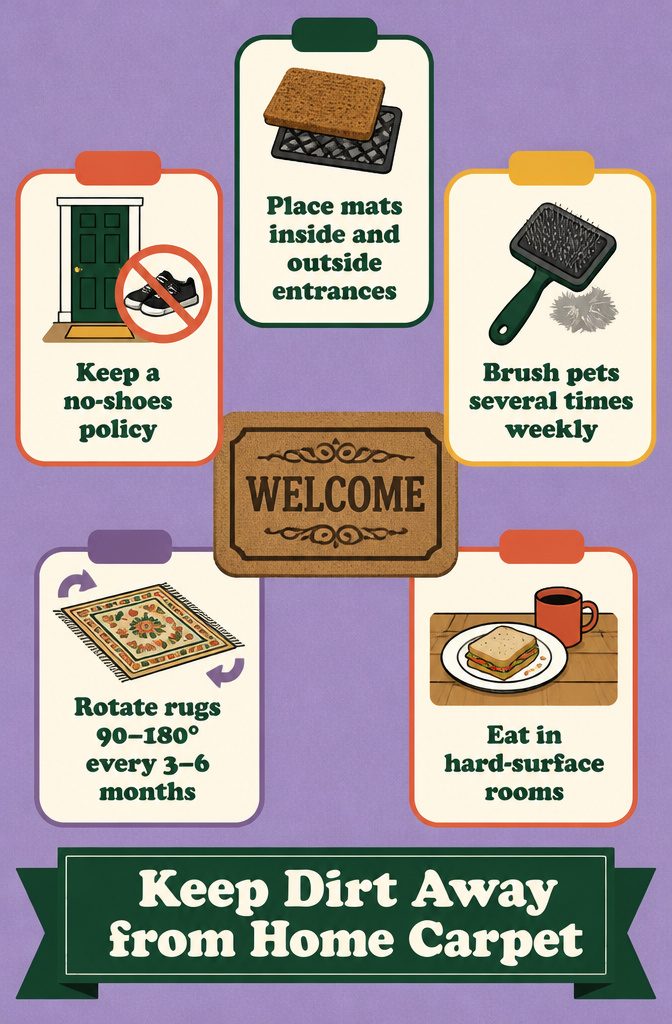
Stop dirt at the door and half the cleaning work disappears. A few repeating moves keep soil off the carpet in the first place.
- Place doormats inside and outside every entrance to catch tracked-in grit before it reaches the fiber. Pair that with a no-shoes policy and the carpet stays cleaner for weeks longer between deep cleans.
- Brush pets several times a week to pull loose fur before it lands on the floor. Regular grooming also means less dander circulating through the room, and keeping nails trimmed prevents snags in looped carpet styles.
- Rotate area rugs 90 to 180 degrees every three to six months so foot traffic and sunlight hit different parts of the fiber. Uneven wear shows up as paths and faded spots that no amount of cleaning reverses.
- Limit eating to hard-surface rooms when you can. Crumbs and spills that never touch the carpet are problems you never have to solve.
Frequently Asked Questions
How do you clean carpet at home?
Vacuum thoroughly to remove dry dirt, pre-treat stains with a foam spot cleaner, then run a carpet machine with hot water and formula in slow, overlapping passes.
Make multiple dry suction passes over each section until the machine stops pulling up visible water, then dry the carpet completely with fans before walking on it.
How do you keep carpets clean?
Place doormats at every entrance, enforce a no-shoes policy, and vacuum high-traffic areas at least once a week. Brush pets regularly to catch loose fur before it hits the floor, and treat spills the same day they happen.
How do you clean carpet quickly?
Vacuum slowly in overlapping passes, then spot-treat fresh stains immediately with a foam carpet cleaner and a clean white cloth. Blotting right away lifts most spills before they set into the fibers.
What’s the best way to treat common carpet stains?
Lift any solid debris without pushing it deeper, then blot wet spots with a white cloth.
Spray a foam cleaner like Blue Magic Carpet Stain and Spot Lifter on the stain, let it sit one minute, and blot again with a fresh cloth until the mark lifts.
How do you clean a carpet with baking soda?
Sprinkle Arm & Hammer Carpet & Room Extra Strength Odor Eliminator directly on the stain and leave it 1 to 3 hours, then vacuum it up.
Baking soda absorbs odors and breaks down grease, but rinse your vacuum filter with a water-vinegar solution afterward because the powder can clog the machine.
How do you clean wool carpets?
Use only pH-neutral, gentle formulations on wool, because bleach-based or alkaline cleaners can shrink or discolor the fibers. Test any product on a hidden corner first, and avoid heat or excess water during cleaning.
How do you know if you need professional carpet cleaning?
Call in a professional for stubborn stains, heavily soiled carpet, or delicate rugs that home methods cannot fix.
Professional hot-water extraction systems reach 150 to 210°F and include moisture meters and industrial fans that cut drying time to hours, and their work is covered by insurance if anything goes wrong.
What are the three levels of cleaning carpet at home?
Routine vacuuming removes up to 80% of dry soil before it grinds into fibers.
Spot response means treating spills within minutes, when almost anything comes out easily. Scheduled deep cleaning uses a machine to flush embedded dirt from the full pile depth.
Should you vacuum after deep cleaning your carpet?
Yes, vacuum once the carpet feels completely dry to a firm hand press. That final pass lifts the pile back up and pulls out soil that wicked to the surface as the water evaporated.
How long does carpet take to dry after a deep clean at home?
Steam-cleaned carpet usually dries in 2 to 4 hours with good airflow, while shampooed carpet can take up to 24 hours because more water goes down. Run fans across the floor and open windows to speed the process.
What is the best homemade cleaner for a carpet machine?
Mix 1 gallon hot water with 1/4 cup white vinegar and 1 teaspoon clear dish soap. This simple formula cleans without leaving heavy residue.
What is carpet pre-treatment, and do you really need it?
Pre-treatment is a solution you spray on traffic lanes and stained spots 10 to 15 minutes before running the machine. It breaks down oily buildup so the machine can lift it instead of just pushing it around during the pass.
Can a vacuum alone deep clean carpet?
No, vacuuming only removes dry soil sitting at the surface. Deep cleaning with hot water and extraction is needed to flush out oily grime and embedded dirt that vacuuming leaves behind.
What is the difference between deep cleaning and regular carpet cleaning?
Regular cleaning is vacuuming and spot treatment, which handles surface soil. Deep cleaning uses hot water and extraction to flush embedded dirt from the full depth of the pile.
How do you keep carpet clean longer after a deep clean?
Vacuum at least once a week in high-traffic areas, treat spills the same day they happen, and place walk-off mats at every entrance. Those three habits stop most dirt before it reaches the carpet.