
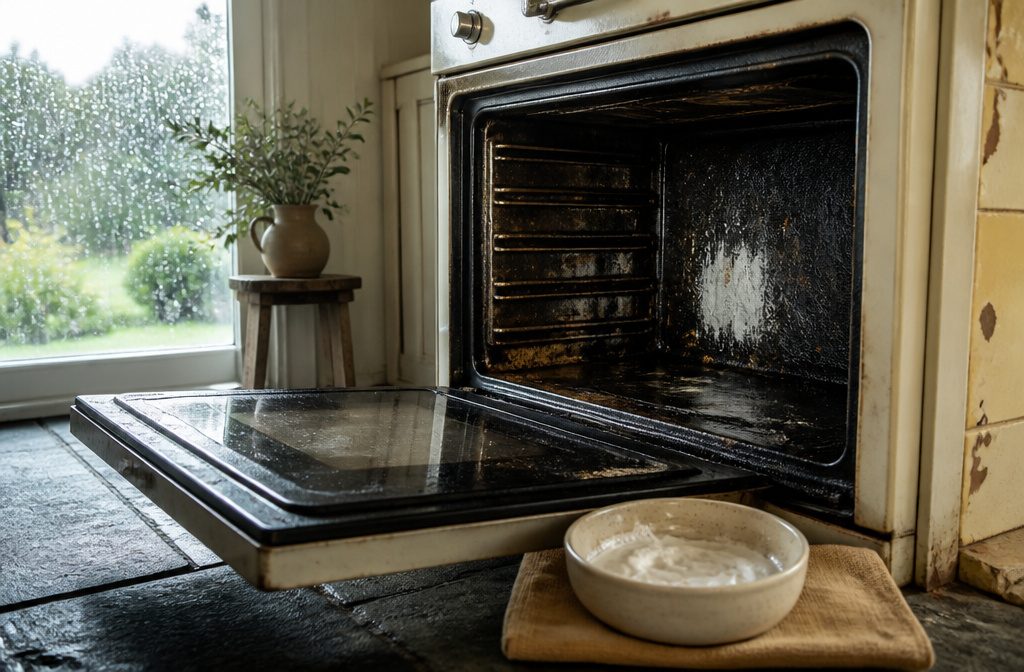
A greasy oven takes an hour to two hours to scrub clean with baking soda paste or commercial spray, or four to ten hours if you run the self-cleaning cycle instead.
Most people skip the loose debris first and then fight a gritty mess once water hits it.
Natural methods lose against months of baked-on grease, though a twelve-hour soak with three parts baking soda to one part water handles routine buildup without fumes.
1. Choose Your Method and Check the Manual
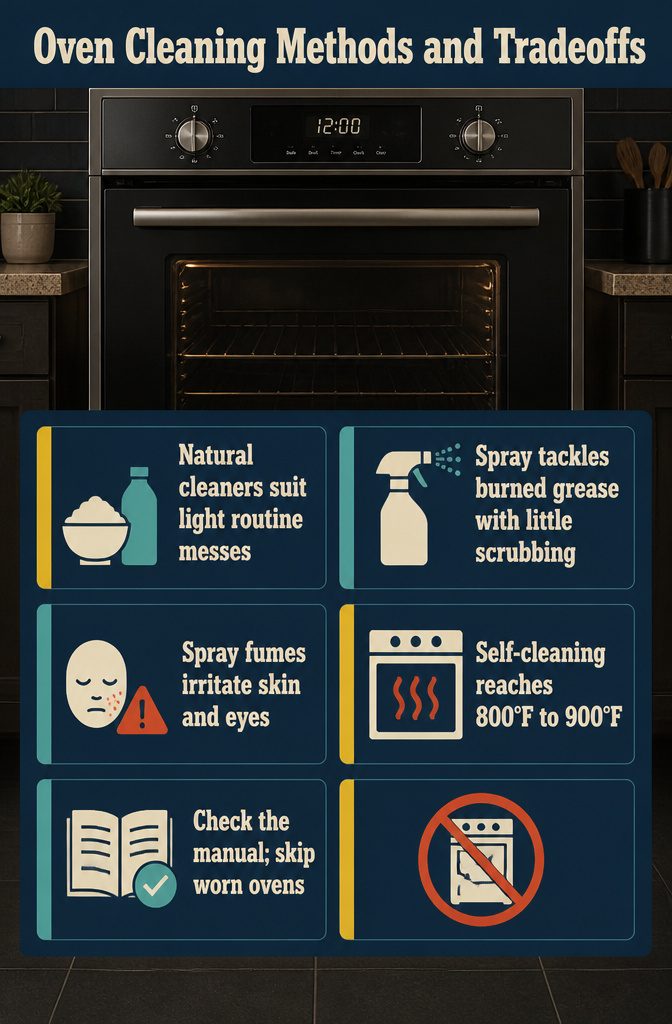
You’ve got three ways to tackle a greasy oven: natural cleaners like baking soda and vinegar, commercial oven spray, or the self-cleaning mode that comes with most newer ovens.
Natural methods handle routine cleanup and light messes — the baking soda scrubs while the vinegar cuts through grease — but they lose the fight against baked-on grime that’s been sitting there for months.
Commercial cleaners break down stubborn burned-on grease with almost no scrubbing, though they cost more and the fumes can irritate your skin and eyes. Keep the windows open and wear gloves if you go that route.
The self-cleaning option sounds easiest because the oven does the work, heating to 800 or 900 degrees to burn off everything inside. That high heat can save you half the scrubbing time, but it comes with a catch:
This feature is generally safe to use, but our reporting has found it can break an older or compromised oven.
Check your manual before you turn it on. If your oven’s older or already showing signs of wear, skip it and scrub by hand instead.
2. Remove Loose Crumbs Before You Start
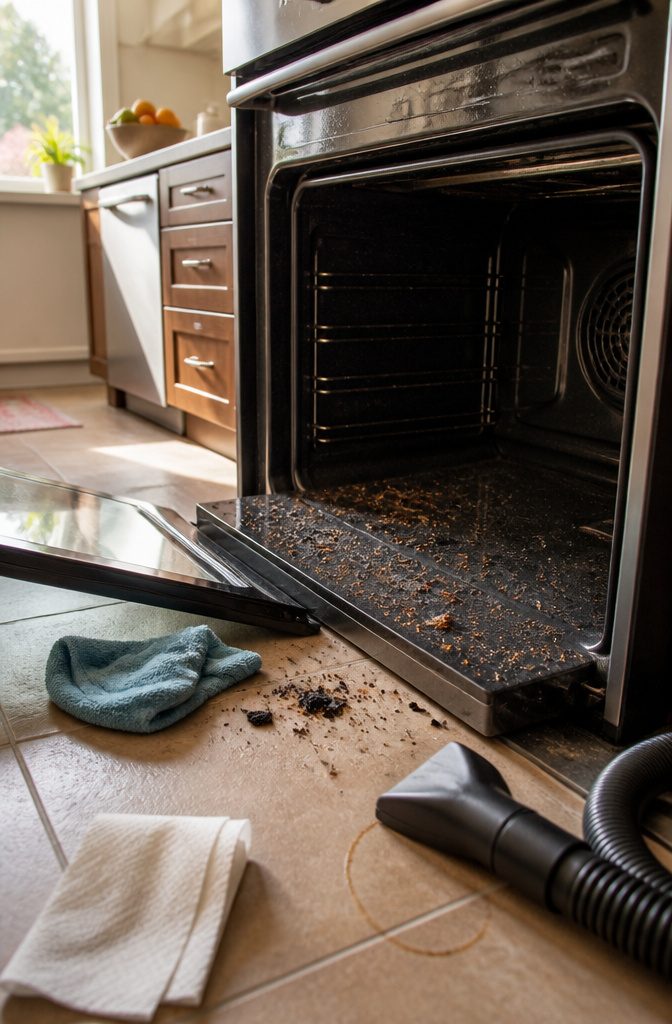
Before mixing paste or pulling on gloves, wipe out anything loose that will turn into a gritty mess once water hits it.
A damp cloth picks up most of the film and crumbs from the bottom and sides without pushing debris into corners.
If charred bits or cracker crumbs have collected along the base, a paper towel gets them out quickly, or you can lift the heating element in an electric oven and vacuum underneath with a hose attachment.
Just be careful not to force the element if it resists.
The racks need to come out entirely. You cannot reach the back wall, the door hinge area, or the floor properly with them in place, and trying to work around them leaves grease in the seams.
Pull all of them and set them aside for their own soak later. That clears the whole interior so paste or cleaner reaches every surface when you apply it.
3. Apply the Cleaning Agent
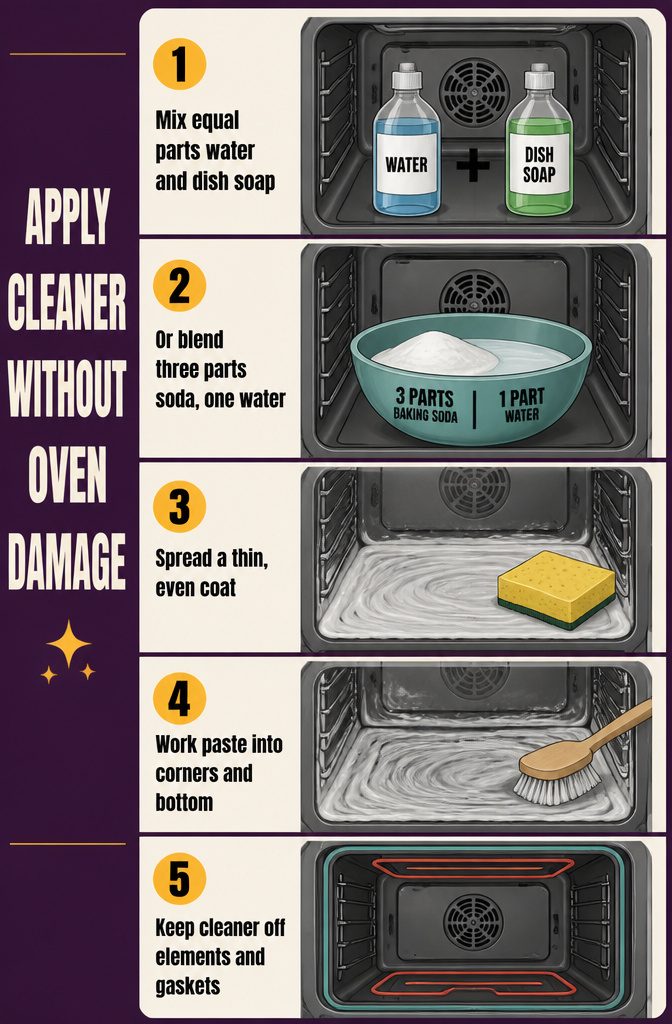
Once you have the right surface and the oven is cool, the next step is getting your cleaning agent on. The ratio you choose depends on whether you want a spray or a paste.
For a spray cleaner, mix equal parts water and dishwashing liquid in a bottle and apply it lightly over the interior. Spread a thin, even coat that won’t pool at the bottom.
For a paste, combine three parts baking soda with one part water until the consistency matches creamy peanut butter.
Spread it across all greasy surfaces with a sponge or brush, working it into the corners and the bottom where grease collects.
You can also go with a half-cup of baking soda mixed with a few tablespoons of water if you prefer a looser paste. Commercial cleaners work too, applied per the label instructions.
Whatever you use, keep it off the heating elements and any rubber gaskets around the door. Coating those can damage them or leave residue that burns when you heat the oven again.
4. Let It Sit to Loosen the Grime
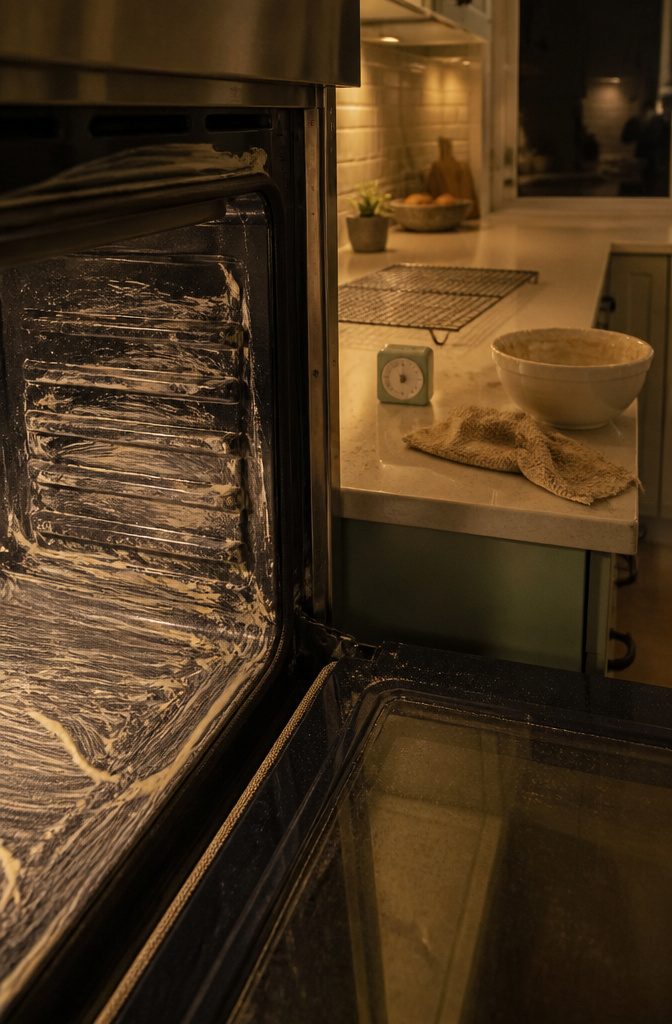
Wait time matters more than you’d think. Dishwashing liquid needs 40 minutes to work through a film of grease, though crusty buildup calls for heat instead: two hours at 250°F, then let the oven cool until you can touch the walls.
Baking soda paste sits overnight or at least 12 hours before you scrub, which is why I start it before bed. Commercial sprays cut that to 30 to 60 minutes.
Steam loosens what scrubbing alone won’t budge: the juice of two lemons in a pan of water, or a cup of vinegar heated in a low oven for an hour, both soften baked-on spots without chemicals.
The longer sit pays off when you wipe, but if you need the oven back fast, the spray or the steam method keeps the timeline reasonable.
5. Wipe or Scrub the Interior
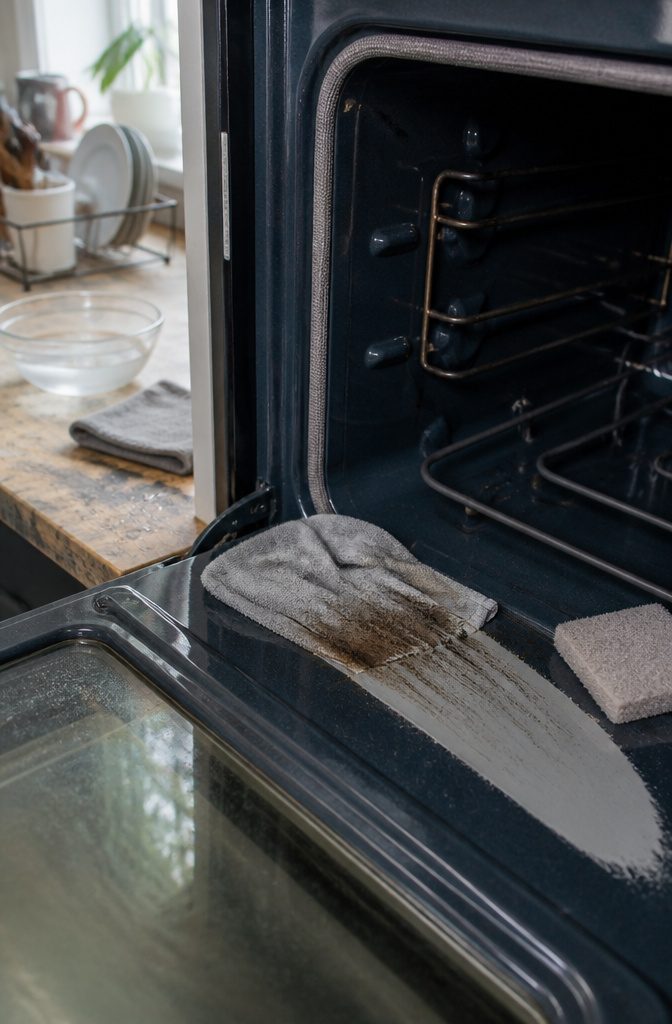
Once the loosened grime has had time to work free, wipe it away with a damp cloth or sponge, rinsing the cloth frequently as it picks up grease.
The cloth should be damp enough to lift residue but not so wet that cleaning liquid pools on the oven floor or runs through the vents.
For spots that resist the first pass, a nonabrasive pad handles the job without scratching enamel or glass.
Keep the pad and the cleaning solution away from heating elements and rubber gaskets, both of which can degrade or fail if coated with cleaner.
Work in sections, wiping clean as you go rather than letting paste dry back onto the surface. The process is repetitive but straightforward, and switching to a fresh cloth halfway through keeps you from spreading the same grease around.
6. Treat Remaining Stains
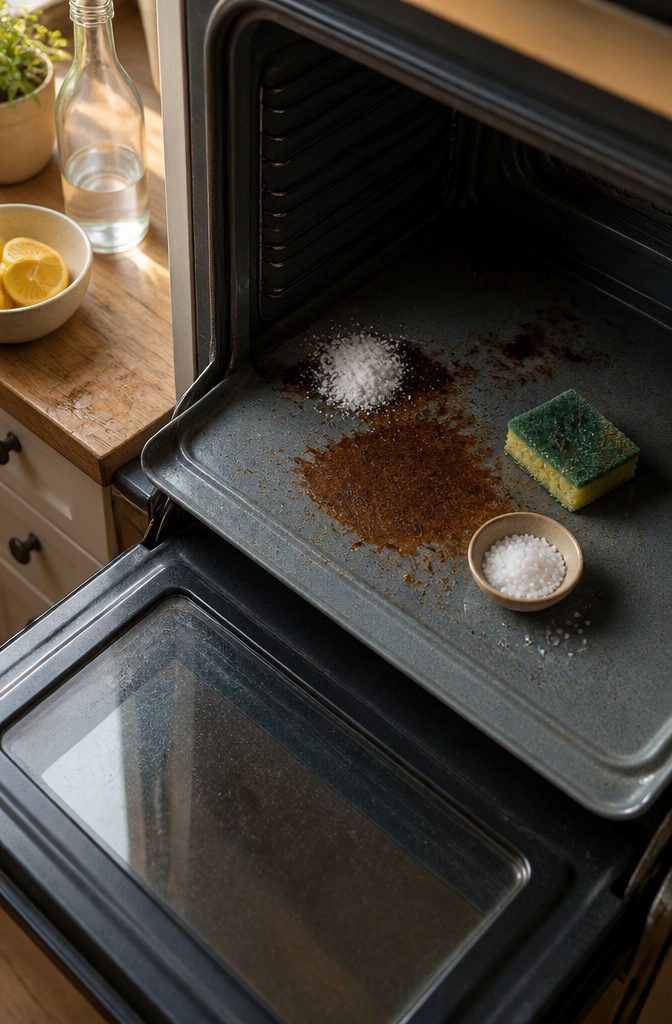
Once the broad grease and grime come off, a few stubborn spots usually remain.
Bar Keepers Friend works well on these without the wait—the cleaner lifts rust and baked-on stains from metal and oven glass when you scrub it lightly and rinse right away rather than letting it sit.
The formula is mostly plant-derived and cuts through what dish soap leaves behind.
If you would rather stay with pantry ingredients, vinegar and salt both handle residue that survived the first pass.
Sprinkle salt over the stain and scrub with a damp sponge—the abrasive crystals dig into tough marks without scratching. Lemon juice works the same way vinegar does, loosening grime with acid.
Pumice is another option for spots that refuse to budge, though it requires a gentler hand on any surface that scratches easily. These methods take more elbow work than a commercial powder, but they keep the ingredient list short.
7. Clean the Racks Separately
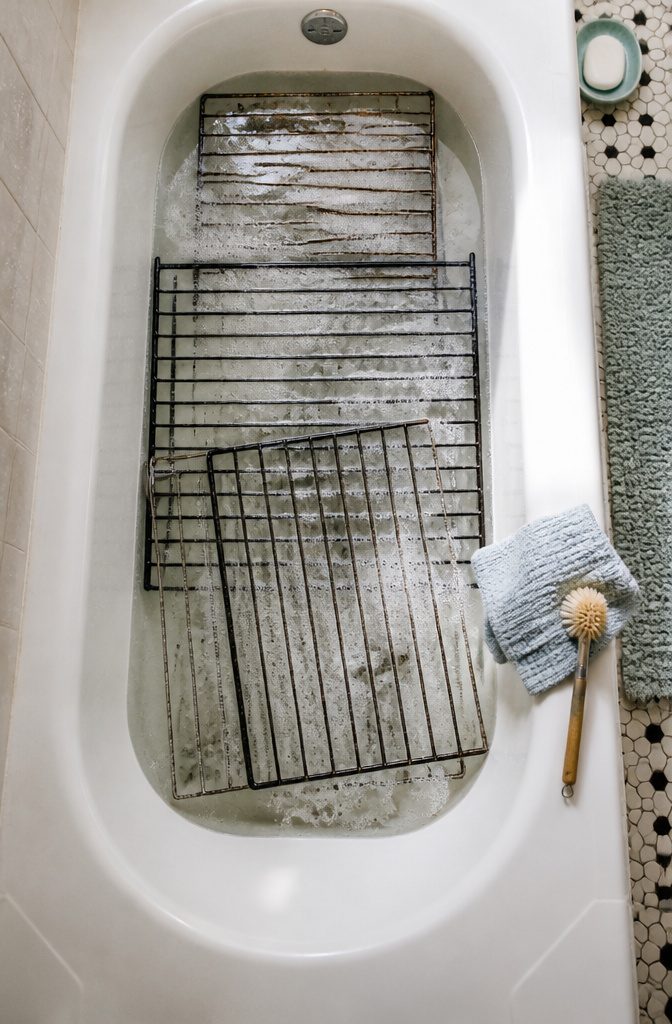
I pull the racks out before I do anything else and set them soaking in hot water and dish soap.
The bathtub gives me room to lay them flat without the awkward angle you get leaning them in a kitchen sink, and the soak does most of the work while I’m dealing with the oven itself.
They need at least thirty minutes in the water to loosen the baked-on grease, though I’ll leave them longer if the buildup is heavy.
Once the soak has done its job, I scrub them with a scouring pad or brush, rinse them thoroughly, and let them dry before sliding them back in.
Washing them separately keeps the grime off the oven interior you just cleaned and means you’re not trying to scrub around them while they’re still mounted.
8. Finish With a Clean Damp Wipe
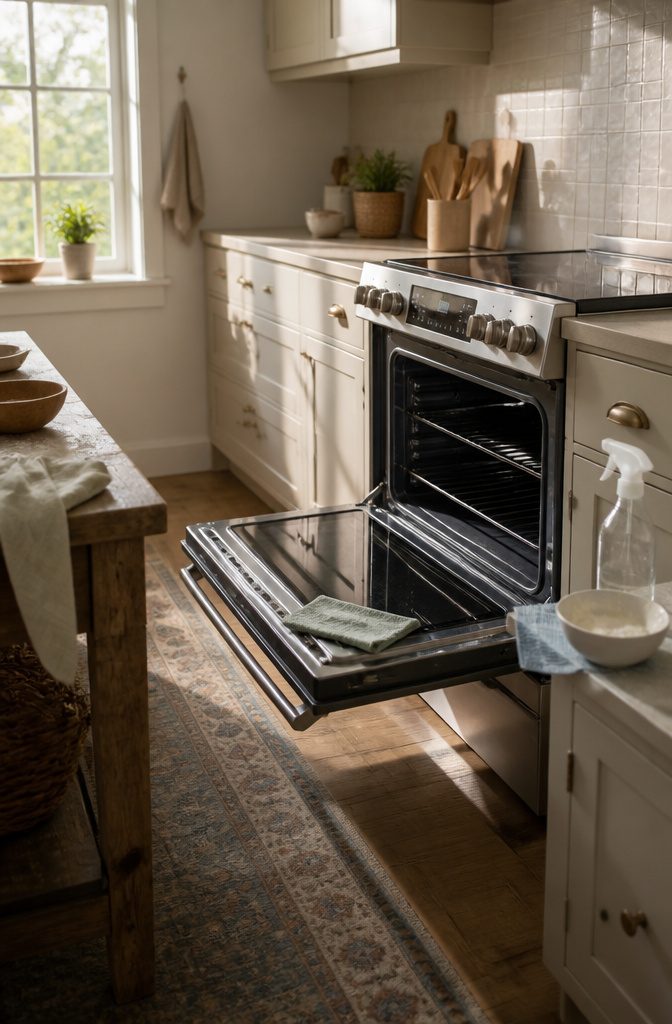
Once the oven interior looks clean, wipe down all surfaces with a damp microfiber cloth to remove any remaining cleaner or residue.
A film of baking soda or commercial product left behind can bake onto the surfaces the next time you fire up the oven, and it shows as a haze or streak.
I find it easier to rinse and wring the cloth a few times during this pass rather than dragging the same dirty cloth around and spreading what I just loosened.
The oven door and exterior get the same treatment. A paste made from three parts baking soda and one part water handles baked-on grease on the glass, and a spray of white vinegar dissolves the paste once it stops fizzing.
Wipe that away with a clean microfiber cloth, then spray the door and exterior with vinegar and wipe them down. Dry everything with a separate dry cloth so water spots do not set on the glass or stainless finish.
Self-Cleaning Mode Cuts Scrubbing Time but Carries Risk
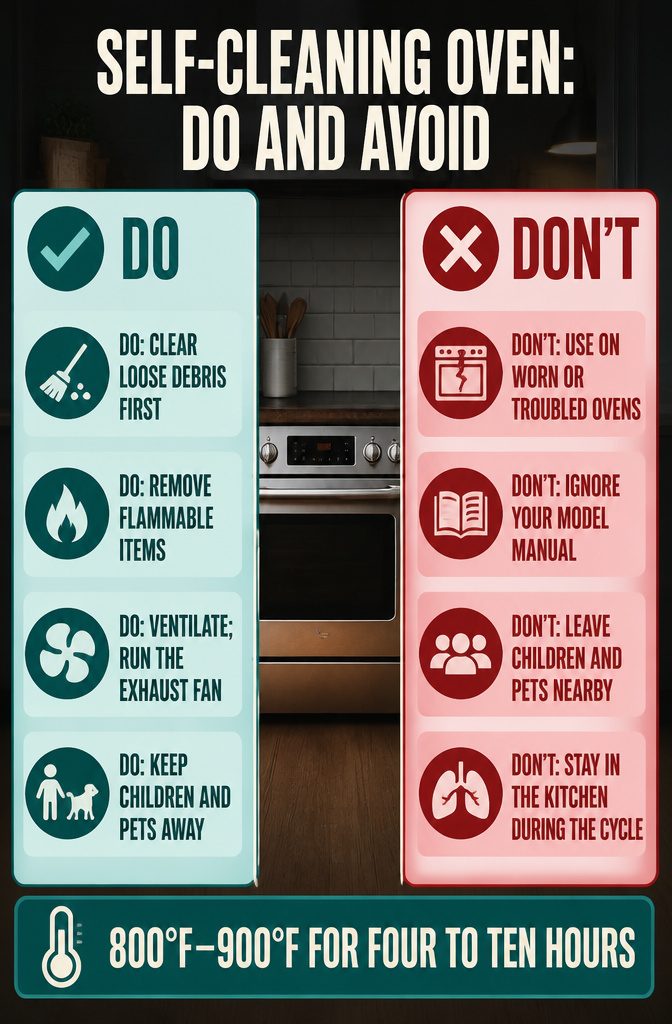
Self-cleaning mode runs the oven at 800°F to 900°F for four to ten hours, burning off grease and grime so you can wipe the ash away instead of scrubbing.
According to Great Green Cleaning crew, using it can cut your scrubbing time in half.
It can break an older oven or one already compromised by wear, so I’d skip it if yours has had issues with the door latch, heating element, or control board.
If you do use it, clear out any loose debris first and make sure nothing flammable is sitting inside. Run your exhaust fan and open windows, because the fumes get heavy.
Keep kids, pets, and anyone with breathing problems out of the kitchen while the cycle runs. The manual will walk you through the steps for your model.
If the oven is newer and you trust it, the time savings are real. If you’re not comfortable with the risk, stick to manual scrubbing with dish soap or baking soda.
Natural Against Commercial Cleaners
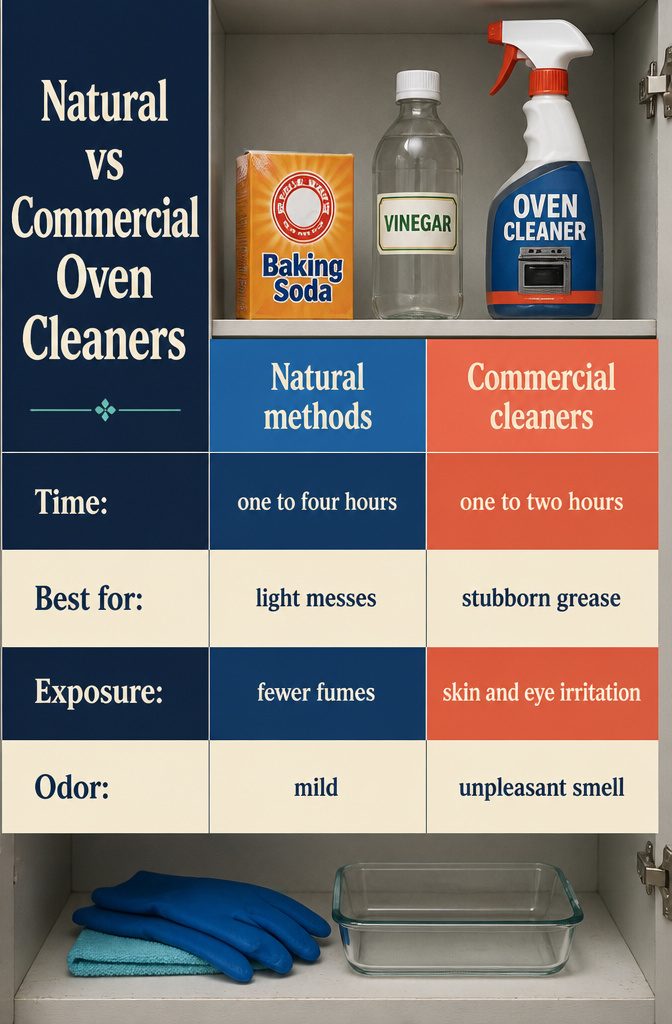
Natural methods like baking soda and vinegar can handle routine or light messes, but they struggle with built-up grime.
Time against chemical exposure: a natural approach may take one to four hours and works best when you clean regularly, while a commercial cleaner cuts through stubborn grease in one to two hours but brings skin and eye irritation plus an unpleasant smell.
If you go commercial, wear gloves and open windows.
For crusty spills that resist baking soda, place half a cup of ammonia in a shallow glass pan and leave it in a cold oven overnight. The fumes soften the residue by morning.
Another shortcut: preheat the oven to 225°F for about ten minutes after applying a commercial cleaner that contains caustic soda. The gentle heat loosens baked-on grease so it wipes away with a paper towel instead of requiring heavy scrubbing.
Between Deep Cleans
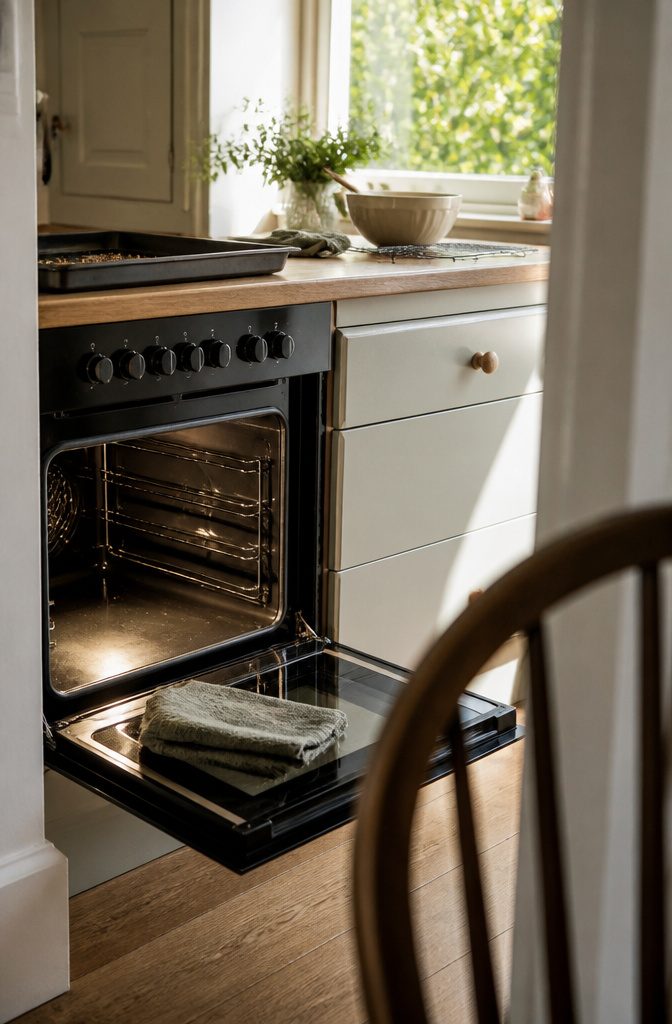
A regular wipe-down saves you from scrubbing later. Wiping the oven down after you bake or roast catches grease before it carbonizes, and dealing with spills right away keeps them from baking into a glaze on the next preheat.
A damp cloth through the interior once a week handles most of what lands on the floor or sidewalls.
Plan a full clean every three months if you use the oven a few times a week.
More often than that, or if you notice grease pooling or smoke when the oven heats, move the schedule up. Frequent roasting or anything that spatters shortens the gap.
Regular wipe-downs buy time between the scrubbing sessions, but they don’t replace them. Grease builds regardless, just slower.
Frequently Asked Questions
What is the easiest way to clean a really dirty oven?
Commercial oven cleaner cuts through heavy buildup fastest, breaking down stubborn baked-on grease with minimal scrubbing. You’ll need gloves and open windows because the fumes irritate skin and eyes, but it handles what natural methods can’t.
If your oven hasn’t reached that level of grime, baking soda paste left overnight works for routine messes without the chemical exposure.
Will vinegar and Dawn dish soap clean an oven?
They work for light grease and minor spills but lose against baked-on buildup.
A spray of equal parts water and dish soap handles routine film if you apply it and wait 40 minutes before wiping. For anything crusty or carbonized, you’ll need baking soda paste or a commercial cleaner instead.
How often should I clean my oven?
Every 3 months if you use it a few times a week. Move that schedule up if you roast frequently, notice grease pooling, or see smoke when the oven heats.
Wiping spills right away and running a damp cloth through the interior once a week buys time between deep cleans but doesn’t replace them.
What happens when you put a bowl of vinegar in the oven?
Heating a cup of vinegar in a low oven for an hour loosens baked-on spots with steam, softening what scrubbing alone won’t budge.
The acid in the vapor works through grime without chemicals, and you can wipe the interior clean once the oven cools. Lemon juice heated in a pan of water does the same thing.
How do I clean brown stains from my oven door glass?
Spread a paste of 3 parts baking soda and 1 part water over the glass, let it sit, then spray with white vinegar once it stops fizzing.
Wipe it away with a clean microfiber cloth and dry the glass to prevent water spots. Bar Keepers Friend also lifts stains from oven glass when you scrub lightly and rinse right away.
How long does it take to clean an oven?
1 to 4 hours for a natural method like baking soda paste, most of that waiting time while it sits overnight.
Commercial cleaner cuts it to 1 to 2 hours, and self-cleaning mode runs 4 to 10 hours at high heat but leaves only ash to wipe away. The actual scrubbing takes 30 to 60 minutes once the cleaner has loosened the grime.