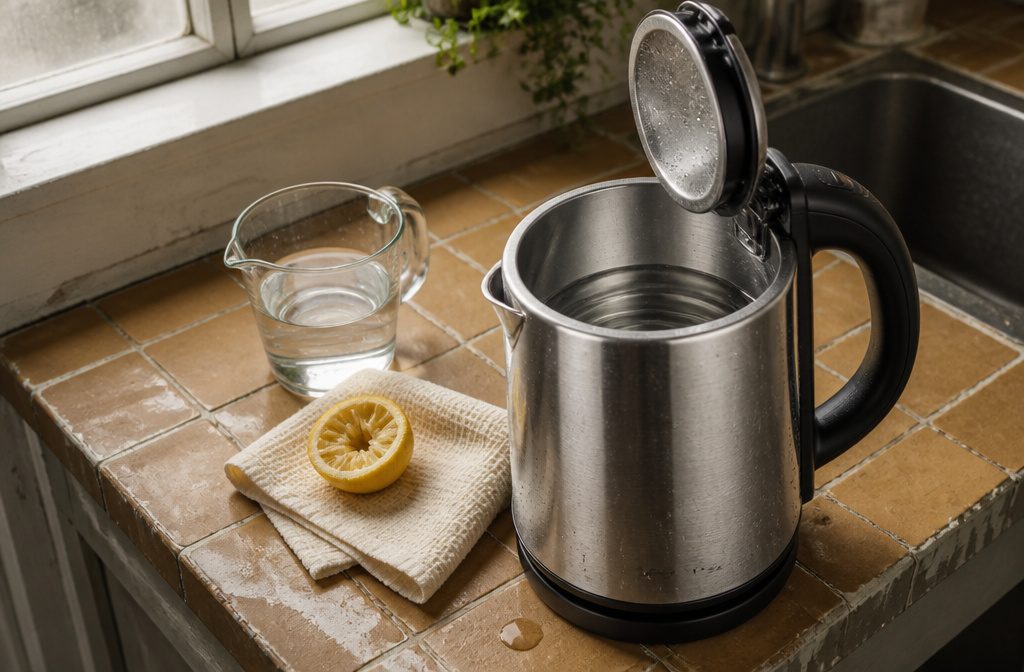
A kettle descaled with vinegar or citric acid clears visible limescale in 20 minutes of boiling plus a 20-minute soak, using ingredients you already own.
Most people skip the final boil with clean water, which leaves a sour aftertaste in the next cup of tea.
The vinegar ratio splits straight down the middle: equal parts vinegar and water for heavy buildup, or one part vinegar to three parts water if the smell bothers you.
Why Limescale Builds Up and What It Does
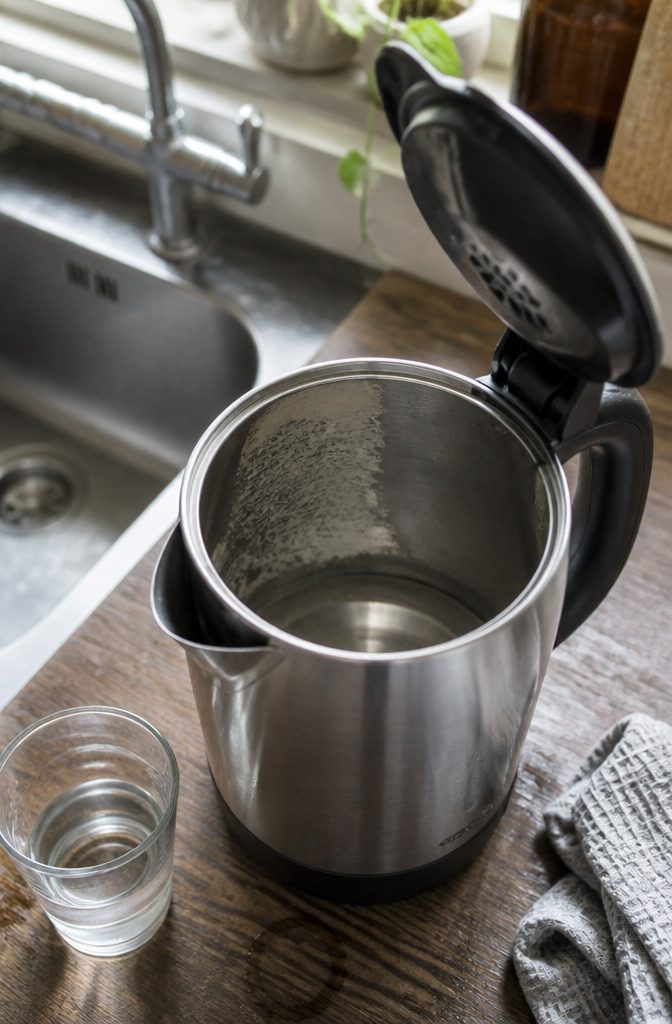
Limescale is calcium carbonate left behind when water boils, along with magnesium and other minerals naturally present in tap water.
The water evaporates, the minerals crystallize, and you’re left with that white or cloudy buildup on the inside of the kettle. It’s the same stuff that collects around faucet spouts and inside showerheads.
The buildup itself isn’t harmful, but it can affect taste and make your kettle look pretty rough.
If it gets thick enough, it can slow down boiling performance or keep the heating element from working properly. How fast it accumulates depends on your water.
Hard water areas see more buildup, which means more frequent cleaning. Either way, descaling keeps the inside smooth and the water tasting clean.
1. Fill the Kettle With Your Cleaning Solution
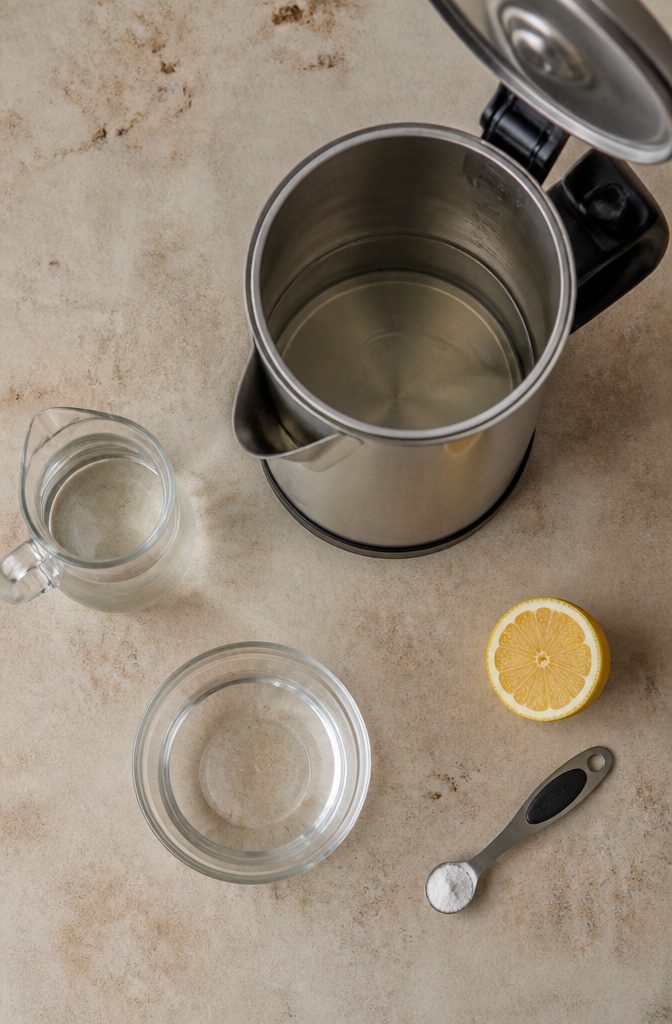
Start with equal parts white vinegar and water if you want the simplest ratio to remember. Fill the kettle halfway and you’re done measuring.
Some sources dial it back to one part vinegar and three parts water, which cuts the smell a bit and still lifts the scale—worth trying first if the vinegar scent bothers you.
Lemon juice works the same way mineral acid does, and you only need one to two tablespoons in a kettle filled to the top line.
The citric acid in it breaks down limescale just as well as vinegar, and the smell is milder. If you keep citric acid powder around, use the same amount—one to two tablespoons in a full kettle.
Baking soda is the third option: one to two teaspoons in a half-full kettle. It’s gentler than the acidic routes, so I’d save it for light buildup or a kettle you clean often enough that nothing’s caked on.
2. Boil the Mixture
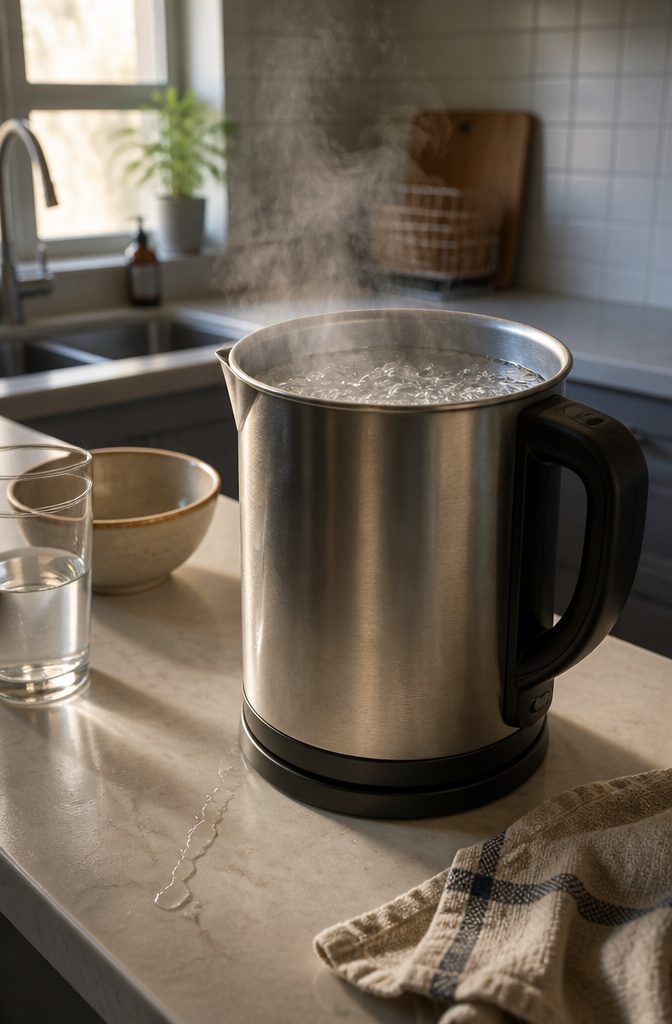
Bring the solution to a boil, then decide how long to keep it there based on how stubborn the buildup looks.
For vinegar, boil for 15–20 minutes if the limescale is thick and visible; for lighter deposits, you can turn the kettle off as soon as it reaches a full boil.
Baking soda follows a similar pattern: let it boil for 20 minutes if the interior is coated, or switch it off right away if you’re just maintaining a kettle that’s already fairly clean.
Citric acid and flat soda work the same way—boil once, turn off, and let the heat do the loosening work.
The longer boil gives the acid or alkali more contact time with the mineral crust, but it’s not always necessary. A kettle I descale every month or two rarely needs the full soak; one I ignored for six months does.
3. Let It Sit
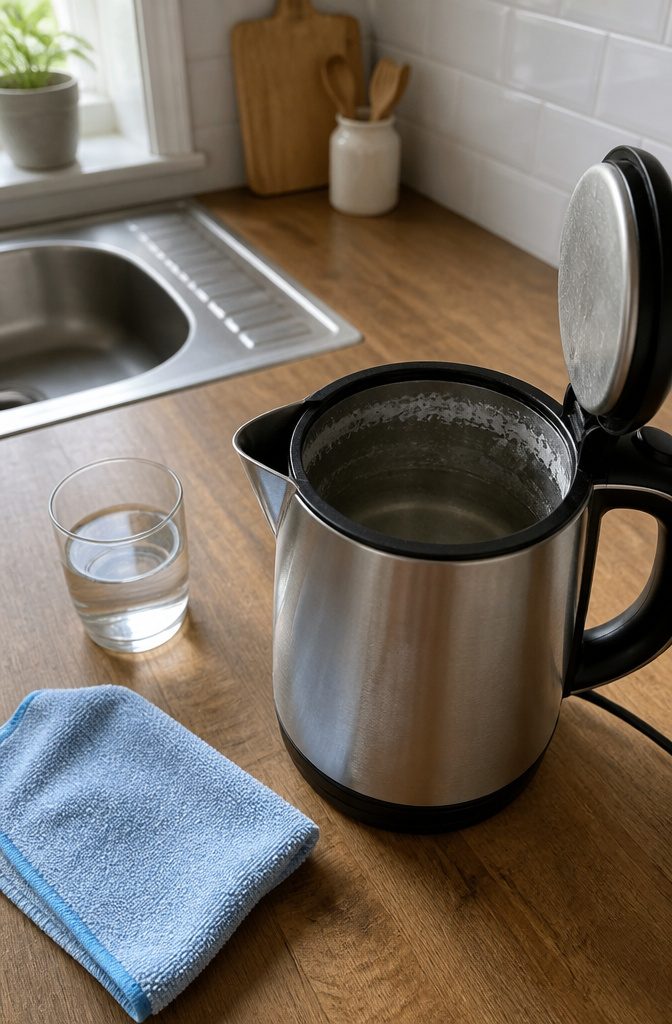
Once you hit that boil and drop in the cleaning solution, patience is the ingredient that actually works. The acid needs time to break down the mineral scale, and rushing it means coming back to do this again sooner.
Most methods need about 20 minutes — enough for the vinegar or citric acid to soften the buildup so it rinses away without scrubbing.
Let your DIY solution sit for about 10 minutes, then rinse with fresh warm water until the inside of the kettle looks as good as new. If the buildup is really bad, you may need to let it soak a little longer or repeat this process. You can also let it soak overnight.
Citric acid moves faster — 10 minutes covers most kettles — but if you’re staring at thick white crust that has been there since last year, let the solution sit overnight.
The longer soak handles heavy deposits without adding a second round of boiling.
4. Empty and Rinse
Pour out the cleaning solution and rinse the kettle with clean water. Most kettles need at least two or three rinses to clear out any lingering taste or smell from the vinegar or citric acid.
I fill the kettle with fresh water, swish it around, dump it, and repeat until the water runs clear and odorless.
If you still see flakes of scale stuck to the interior after rinsing, dip a soft cloth into a little of the leftover cleaning solution and wipe them away.
A microfiber cloth works well for this. Skip the scrubby brush or anything abrasive; you want to protect the heating element at the bottom.
Once the interior looks clean, fill the kettle one more time with plain water, bring it to a boil, and pour it out. That final boil clears any residue you might have missed in the rinse.
5. Boil Clean Water to Clear Residue
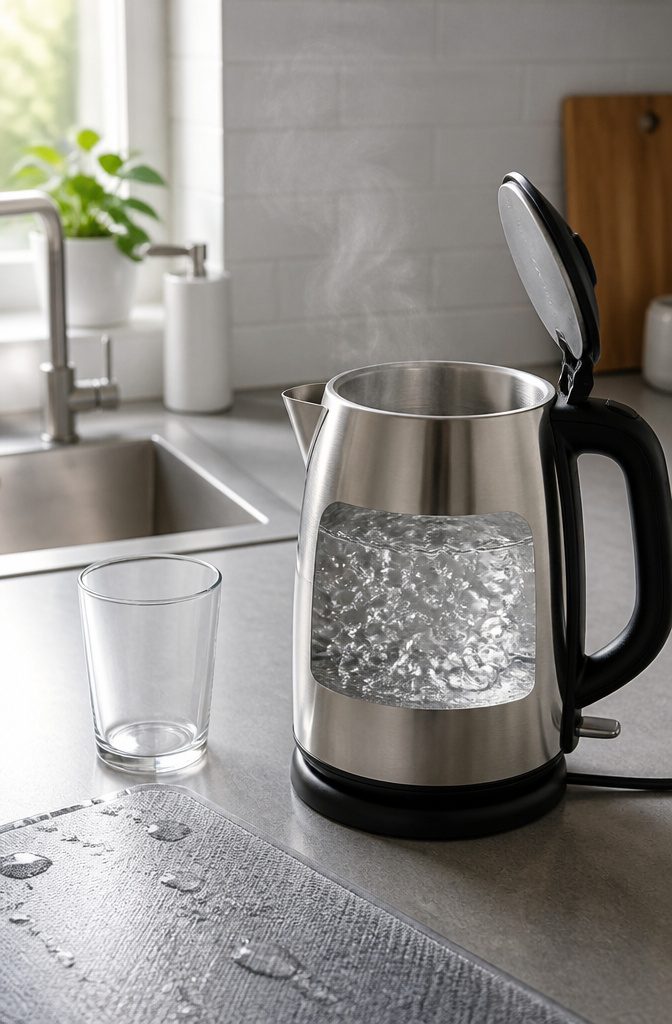
Once you’ve rinsed out the kettle, boil one or two full kettles of clean water and pour them out. This final step clears any lingering taste or smell from the vinegar or citric acid you used to descale.
The water from that first boil might still carry a faint chemical or sour note, which is why most sources call for two rounds if you can spare the time.
I skip this step if I’m in a hurry and the kettle smells fine, but I regret it the moment my tea tastes slightly off.
The difference between one boil and two is noticeable if you used a full-strength vinegar solution. If you diluted it or used citric acid, one round usually does the job.
6. Wipe the Exterior
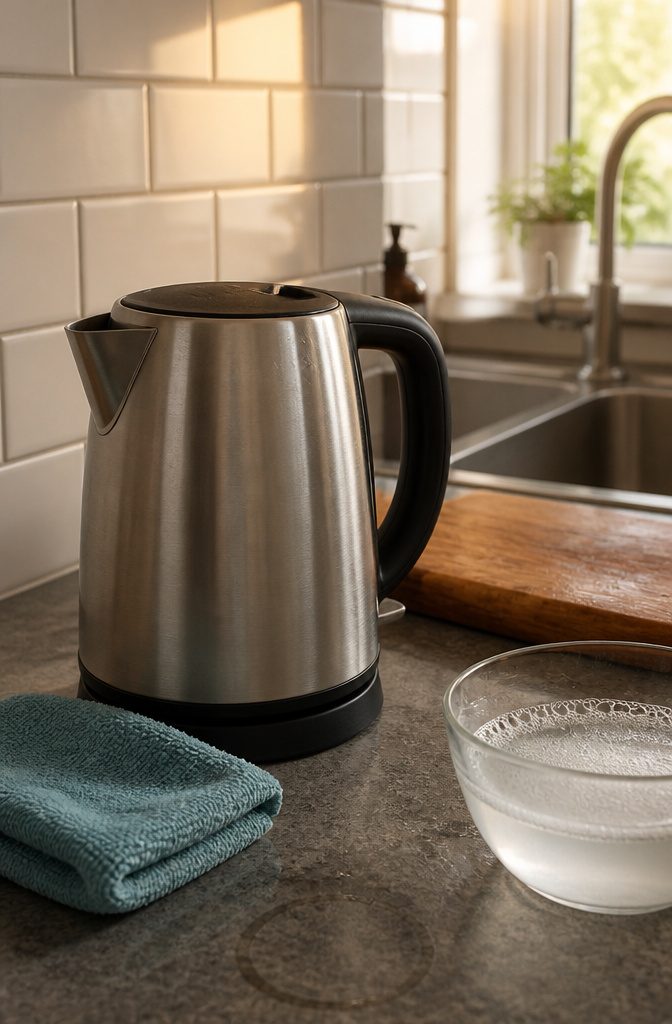
Unplug the kettle and let it cool completely before you touch the outside.
A damp microfiber cloth works for routine wipes. If the surface has picked up fingerprints or splatter, add a drop of dish soap to warm water, wring the cloth until it is just damp, and wipe the kettle down.
You can also dip the cloth into whatever vinegar solution you used inside.
Rinse soap off with a clean damp cloth.
Do not run water over the kettle or dunk it in the sink. Water that reaches the electrical base ruins the electronics.
The same goes for the dishwasher. A cotton swab dipped in the soapy water gets into tight spots around the spout and handle.
How Often to Repeat This
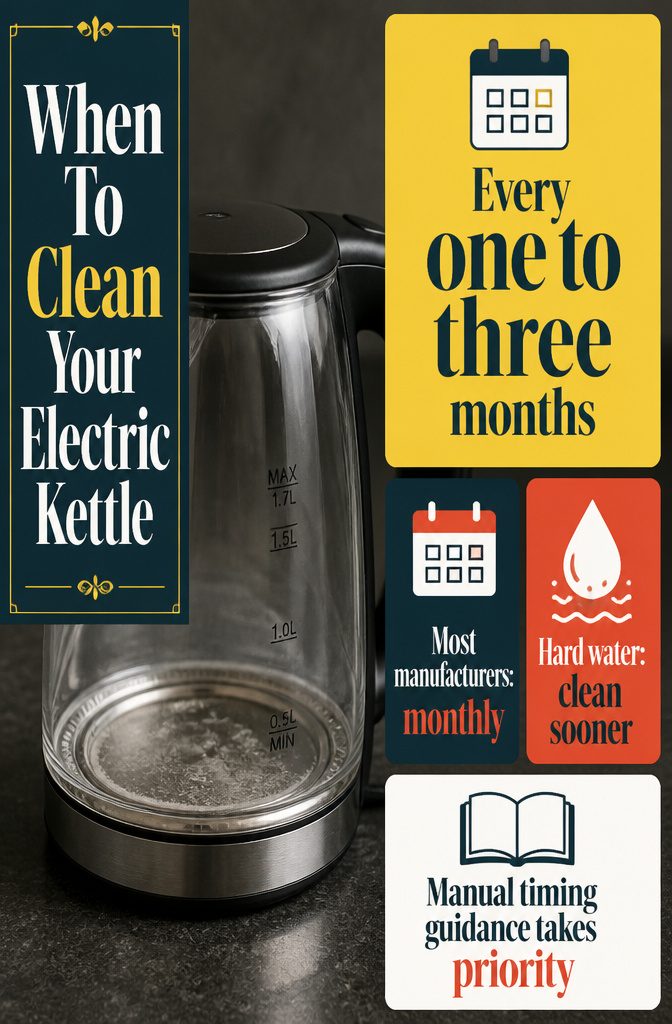
Run through this every one to three months. Most manufacturers land on monthly, though you can stretch it to three months if you use the kettle less often or your water is on the softer side.
Hard water leaves scale faster, so if you see a chalky white layer forming inside a glass kettle or notice the heating element starting to look crusty, that’s your signal to clean sooner rather than wait for the calendar.
Some kettles ship with timing guidance in the manual, and those numbers beat any general rule—manufacturers know how their heating elements and interior coatings hold up, so follow what they wrote if you still have the booklet.
What Not to Do Inside the Kettle
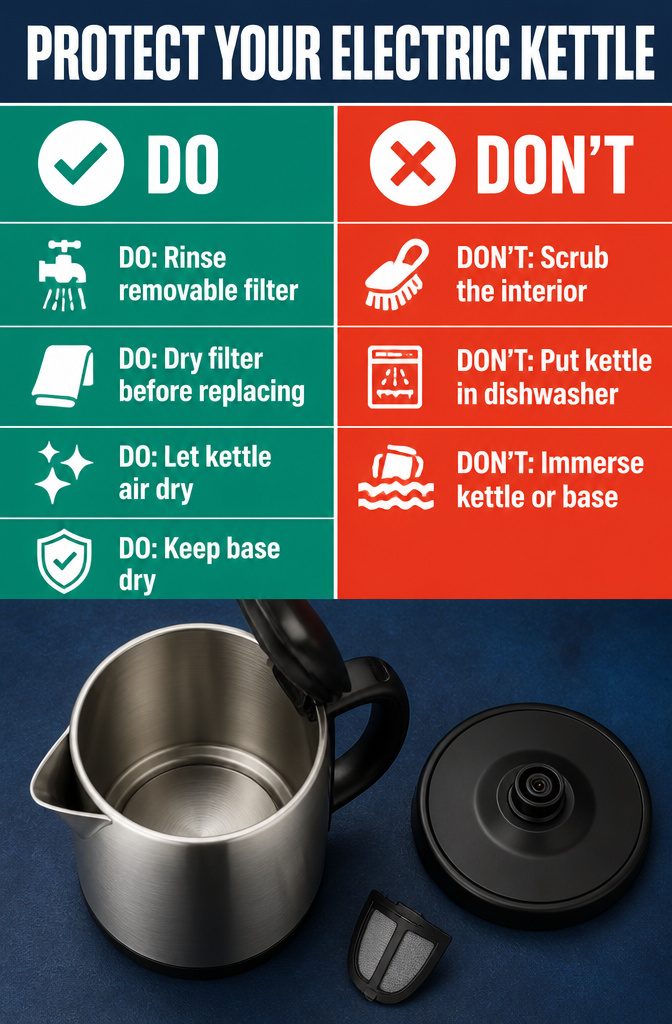
A few simple rules protect the heating element and the electronics while the kettle cleans itself.
- Do not scrub the inside. Brushes and rough sponges can scratch the heating element or damage sensors and electronic parts near the bottom.
- Skip the dishwasher. The kettle and its base are not built for that kind of heat or water pressure.
- Never immerse the kettle in water or hold it under the tap. Water inside the base will damage the electrical components.
- If your kettle has a removable filter, rinse it under running water and dry it with a clean cloth before putting it back.
The vinegar or citric acid does the work. You rinse afterward, but the inside never needs a scrub brush.
The Vinegar Disagreement
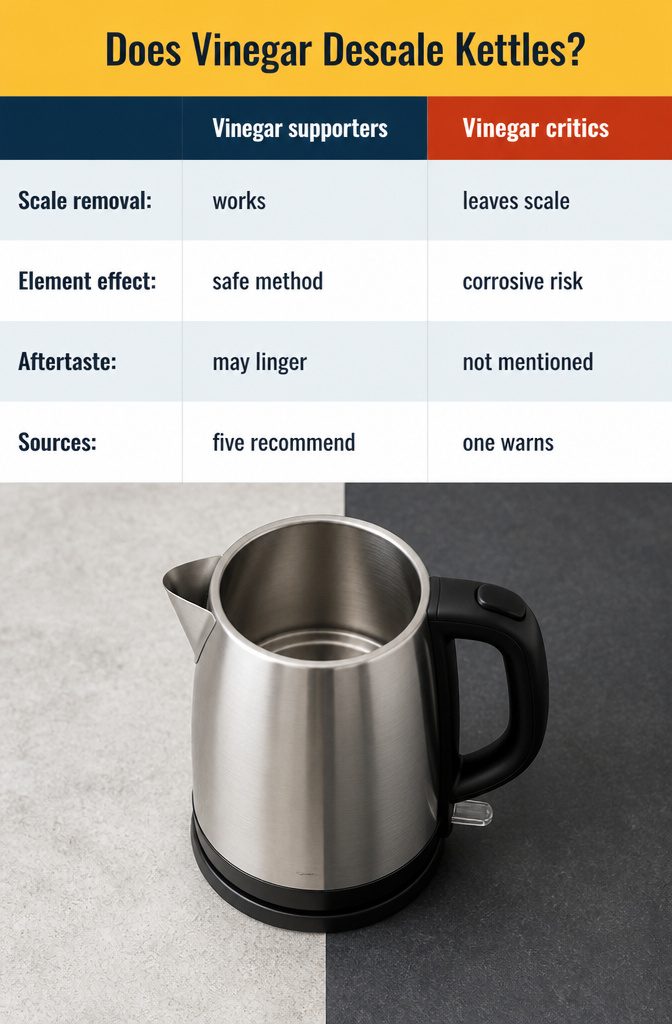
The instructions on vinegar split straight down the middle. One source calls it corrosive and says it leaves limescale behind; five others walk you through vinegar descaling methods and recommend them outright.
A third objects to the aftertaste more than the method itself, noting the smell and taste can linger for hours even after rinsing.
The disagreement is not subtle. One camp treats vinegar as the standard household fix for mineral buildup; the other treats it as the thing that damages the heating element while failing to do the job.
Both cite the acid, but they land on opposite conclusions about what that acid does to the kettle over time. I have not found a middle position that reconciles them, and the limescale either comes off or it does not.
Frequently Asked Questions
How often should you clean an electric kettle?
Clean your electric kettle every 1 to 3 months. Hard water leaves scale faster, so if you notice a chalky layer forming or the heating element looks crusty, clean it sooner.
Check your kettle’s manual if you still have it; manufacturers know how their specific models hold up and will give you the best timing.
What is the best thing to clean an electric kettle with?
White vinegar or citric acid both break down mineral deposits effectively. Mix equal parts vinegar and water, or use 1 to 2 tablespoons of citric acid powder in a full kettle.
Lemon juice works the same way citric acid does and leaves a milder smell. Baking soda is gentler and handles light buildup when you clean regularly.
Can I boil vinegar in my electric kettle to clean it?
Yes, boil a vinegar and water solution for 15 to 20 minutes if limescale is thick, or turn it off right after it reaches a boil for lighter deposits.
Rinse thoroughly afterward and boil 1 or 2 kettles of clean water to clear any lingering taste or smell.
How long to leave vinegar in kettle to descale?
Let the vinegar solution sit for about 20 minutes after boiling for standard buildup.
If the limescale is thick and has been there for months, let it soak overnight. The longer contact time gives the acid more opportunity to break down heavy mineral deposits.
Is distilled vinegar the same as white vinegar for descaling?
Both work equally well for removing limescale.
Distilled vinegar is clearer and has a softer smell, but the two are very similar since both contain acetic acid. Use whichever one you already have at home.
How do I sanitize my electric kettle?
Boiling lemon juice or citric acid sanitizes the inside while descaling.
Fill the kettle to the top line, add 1 to 2 tablespoons of lemon juice or citric acid, and bring it to a boil. Let it sit for 10 to 20 minutes, then rinse thoroughly with clean water.
How to remove sediment from an electric water kettle?
Boil a vinegar and water solution or citric acid mixture for 15 to 20 minutes, then let it sit so the acid can dissolve the sediment.
Pour out the solution and rinse 2 to 3 times with clean water. If flakes remain after rinsing, wipe them away with a soft cloth dipped in the cleaning solution.