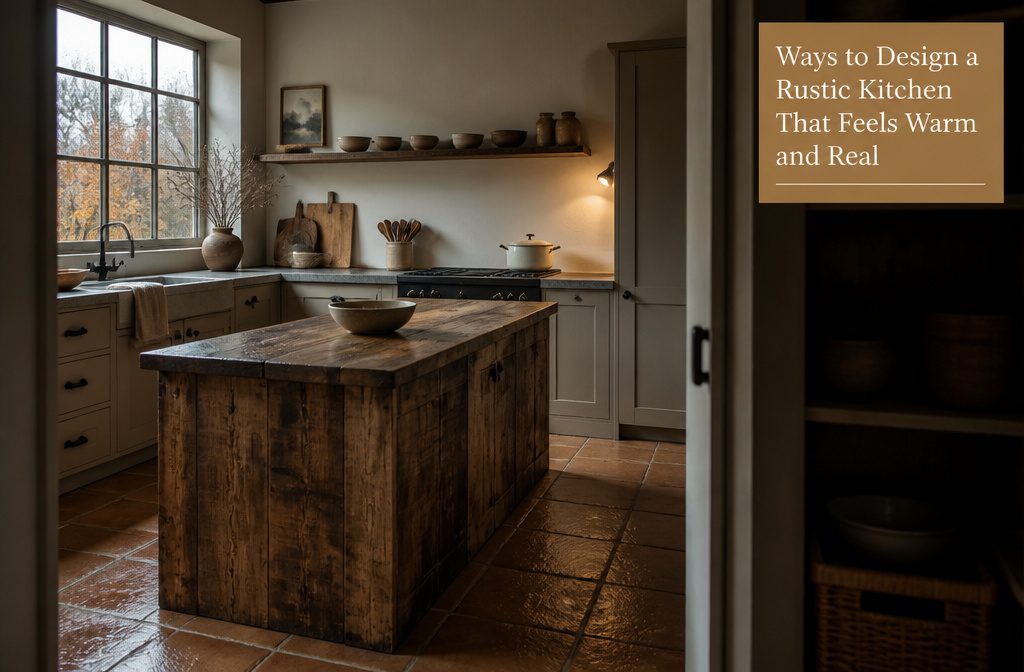
A rustic kitchen can run anywhere from stripped-back Scandinavian to layered American farmhouse, and which one works comes down to how much ornament you let into the room.
The difference shows fastest in the cabinets: Shaker doors and concrete counters land modern rustic, while raised panels and corbels read traditional.
Knotty alder and hickory both deliver visible grain, but reclaimed oak carries the patina you’d otherwise wait years to earn.
1. Use Natural, Textured Wood
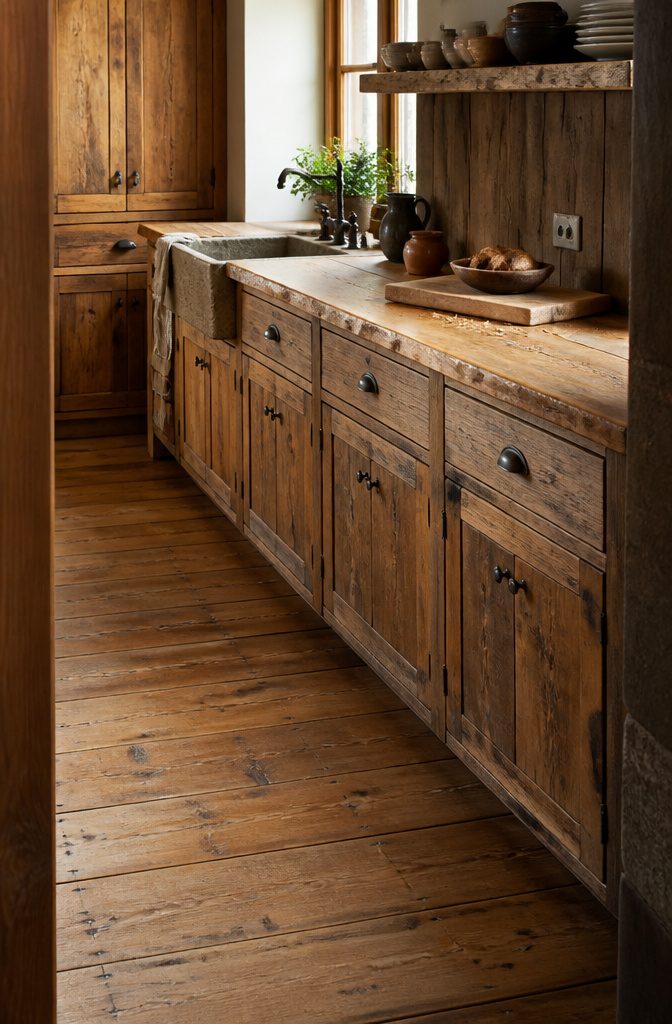
Wood brings the warmth into a rustic kitchen faster than anything else I know how to specify. The grain matters more than the species list: you want visible knots, mineral streaks, and color variation showing through whatever finish you choose.
Knotty alder delivers natural knots right in the face of the board. Hickory runs bold grain with enough durability to handle high-use spots.
Reclaimed oak carries a time-worn patina and the kind of history you can see in the surface. Pine costs less and ages beautifully if you take care of it.
I lean toward distressed or weathered finishes that look like decades of use rather than a factory attempt at character. Hand-scraped surfaces and live-edge details pull attention to the organic imperfections instead of hiding them.
Reclaimed wood works especially well for cabinetry and ceiling beams, and countertops in solid wood develop more personality as they weather. The rugged look stays functional as long as you match the wood to the wear it will take.
2. Add Stone, Brick, or Other Raw Materials
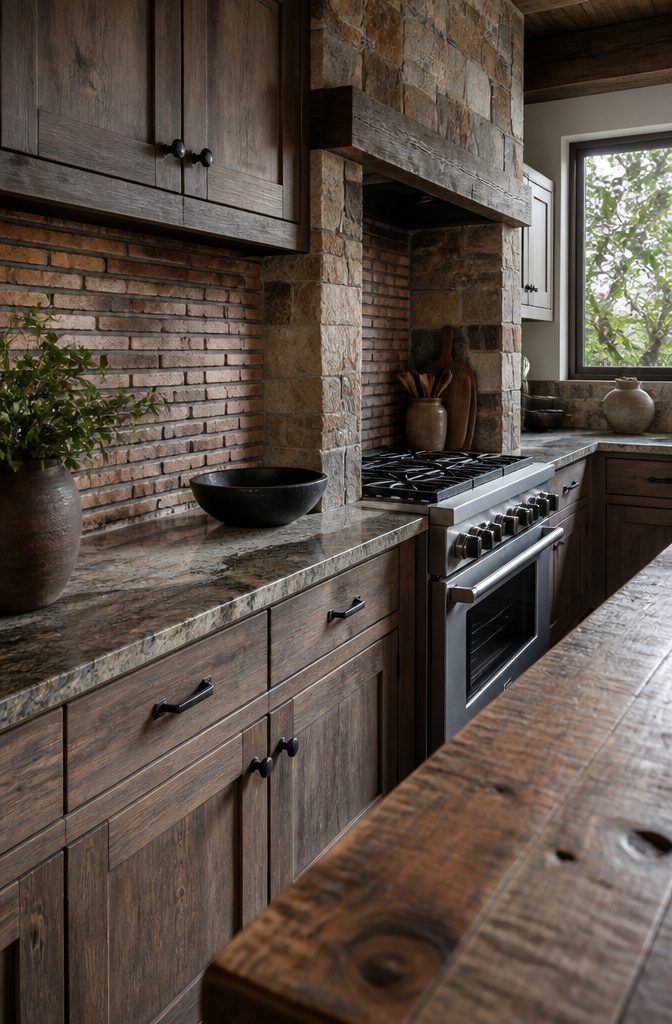
Natural stone and brick bring texture you can see and feel.
Irregular surfaces catch light differently than polished counters, and that shifting texture makes a kitchen feel less like a showroom and more like it has been there a long while.
Marble and granite work for counters if you want that one-piece look, heavy enough to seem permanent. The veins and speckles in natural stone add color without requiring pattern elsewhere.
Thin brick fits where full-thickness brick would not. Each piece runs 7⅛ inches long, 2½ inches high, and ⅞ inch thick, which makes it manageable for a backsplash or a range surround without stealing counter depth.
The joints between bricks add shadow lines that tile does not give you. Stone mosaics do something similar if you prefer smaller scale and more grout.
I prefer stone or brick as an accent rather than covering every surface. A stone wall behind the range or a brick backsplash over the sink gives you the organic feel without making the whole room look like a cave.
3. Choose Warm, Nature-Based Colors
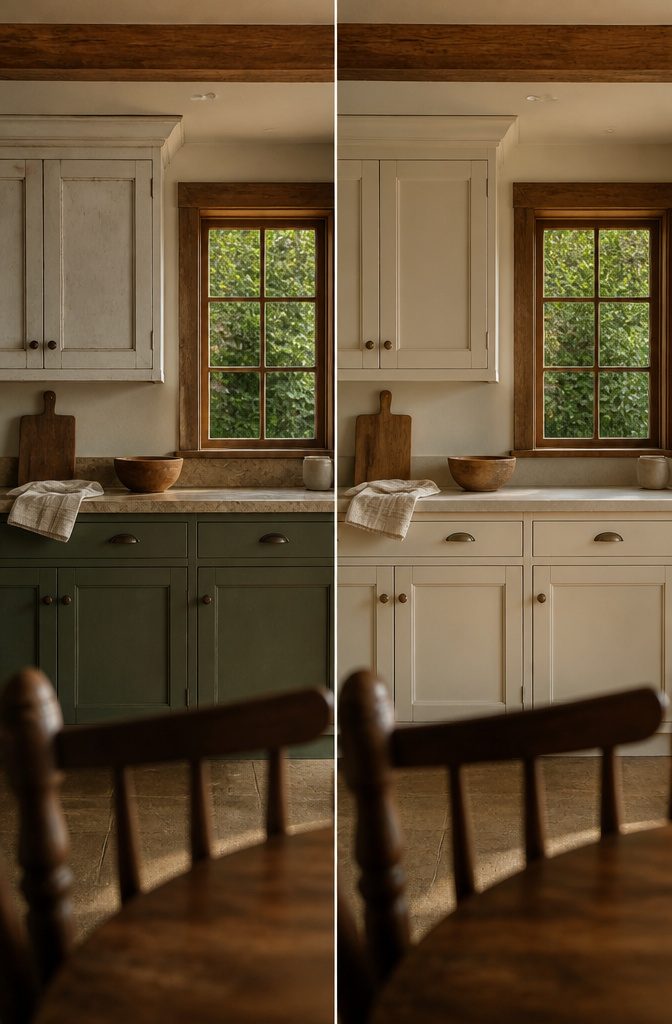
I started with warm neutrals and earthy tones when I planned my kitchen color scheme: creams, browns, deep greens, weathered whites.
Those anchor the room without fighting the wood or stone. Terracotta works when the light is warm; cool whites and pale blues pull the opposite direction if the space leans Scandinavian.
I’ve seen Tuscan schemes go for golden yellow with the terracotta, and American farmhouse kitchens stay with white cabinetry and black accents.
For paint, I kept coming back to a short list: Sherwin-Williams Grizzle Gray SW 7068 or Extra White, Benjamin Moore Gettysburg Gray HC-107, Farrow & Ball Studio Green.
The greens and warm grays read richer than plain white but still let the wood be the headline. Muted greens especially—they tie back to the natural materials without going full forest.
4. Use Vintage, Antique, or Distressed Details
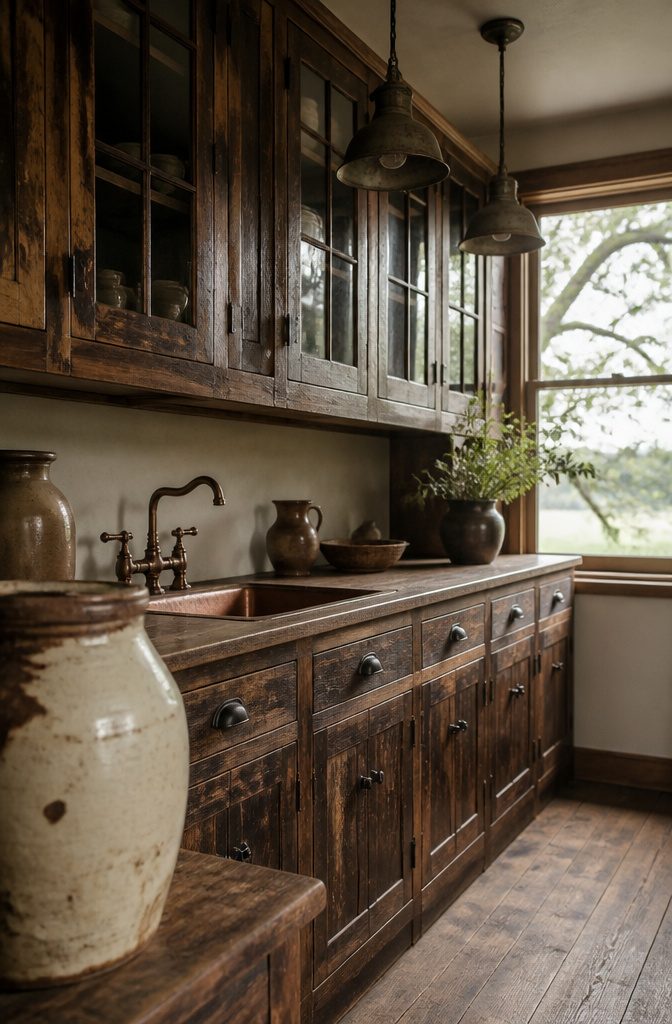
Aged hardware shifts a kitchen’s character faster than almost anything else I’ve worked with.
Antique-effect handles arrive with the worn finish that takes years to earn — blackened tones, surface wear patterns, the kind of patina you’d otherwise wait a decade to see.
Rocky Mountain Hardware’s Olympus collection in White Bronze Medium carries that weight without the guesswork of actual vintage pieces that may not fit standard drilling.
Real vintage finds take more hunting but land harder when they work.
I’ve seen Colonial Dream granite paired with distressed cherry cabinets and iron hardware pulled from an Atlanta antique market, the whole assembly reading like it accumulated over time rather than arriving in one order.
Brass or copper sinks need a cleanup before they go in, but once they’re buffed they hold up for years on a countertop.
A repurposed dresser with glass-front doors keeps inherited plates or old pitchers visible without turning into a dust trap — open shelving tells the same story but asks for weekly attention.
Weathered pendants or bronze lanterns finish the effect overhead without requiring a single structural change.
5. Display Useful Items on Open Shelves or in a Dresser
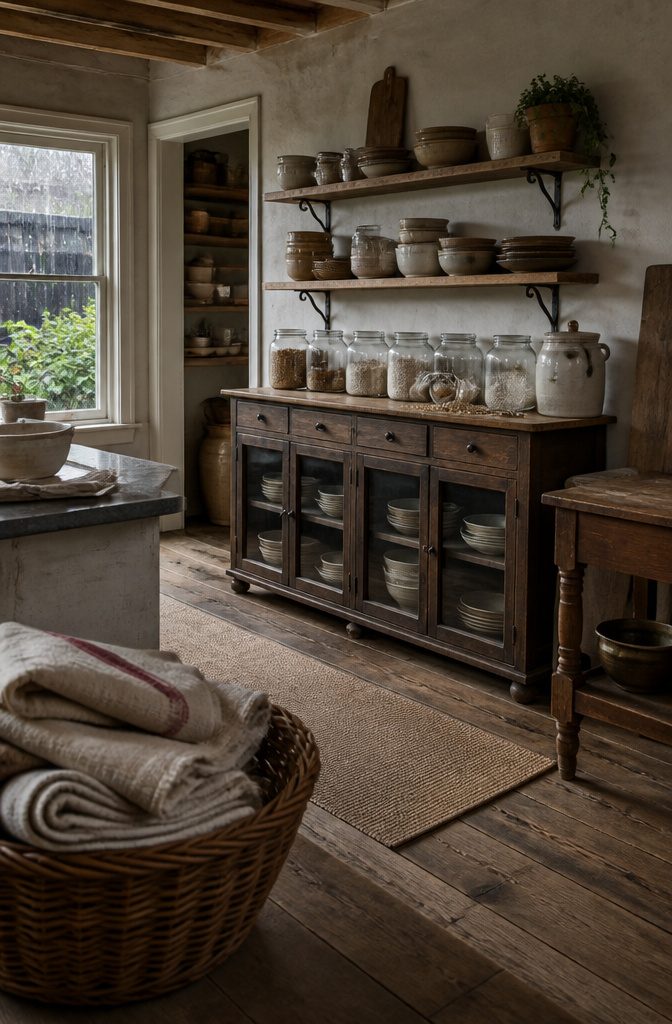
Open shelves and a vintage dresser let you keep everyday dishes where you can grab them while putting the textures that make a rustic kitchen feel lived-in right at eye level.
A stack of stoneware bowls or a row of glass jars filled with dry goods does more than fill the cabinet: it becomes part of the room itself.
Oak door balconies are another way to increase the natural quota, extending a rustic theme through to the interior of a unit. These shallow shelves tuck neatly behind door fronts to offer more storage for herbs, spices, and bottles. They are sturdy too, and can carry up to 10kg of weight.
— Howdens
That weight capacity means a pantry door becomes useful vertical storage without tipping the door balance or requiring extra reinforcement.
Open shelving cuts the visual bulk that comes with a wall of closed cabinets.
Floating wood shelves on wrought iron brackets or a tall farmhouse dresser shows the outline of each piece rather than hiding it all behind a single flat front.
The trick works best when what sits on the shelves matches the room: earthenware crocks, mismatched crockery, vintage tins.
6. Mix Rustic Elements with Modern Features
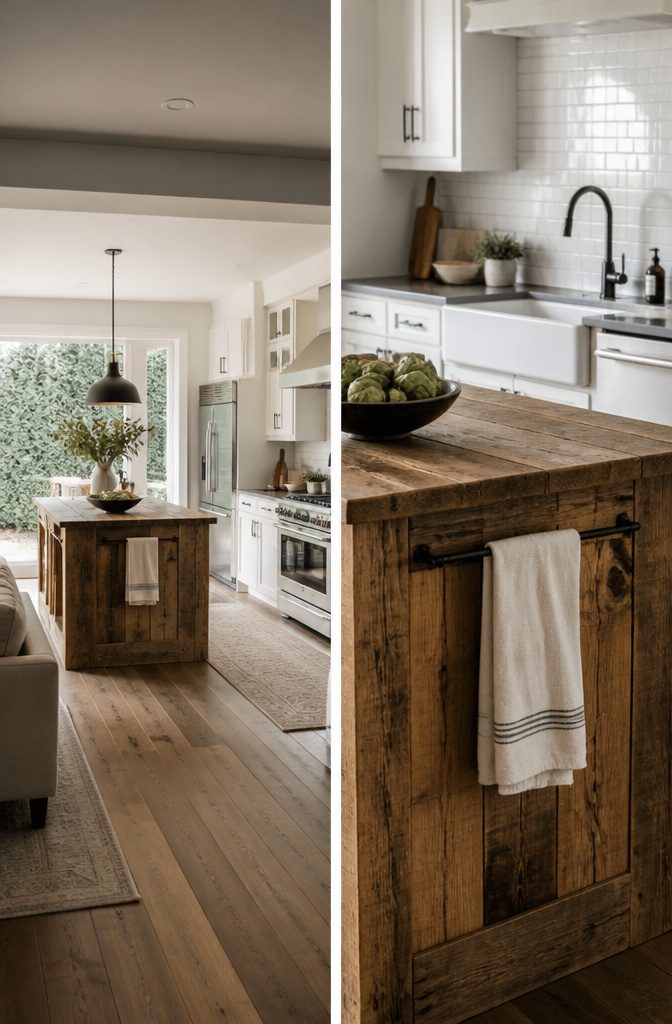
Reclaimed wood next to stainless appliances makes the room feel intentional the second you step inside. Clean-lined cabinets or matte black fixtures ground the warmth of barn board or exposed beams without letting the room tip into theme-park territory.
A farmhouse sink works beside gray countertops; glossy subway tile holds its own against knotty pine. The contrast keeps things from reading as a single note.
The kitchens I return to most often layer natural textures with contemporary finishes rather than choosing one or the other.
White shaker cabinets paired with a salvaged wood island, concrete countertops next to vintage lighting, paneled appliances that let the grain do the talking.
What makes this readable as a working kitchen instead of a set piece is restraint: the rustic elements anchor the room, and the modern ones keep it from feeling like it belongs to a different century.
You get the warmth without the roughness, the character without the date stamp.
7. Layer Lighting and Architectural Features
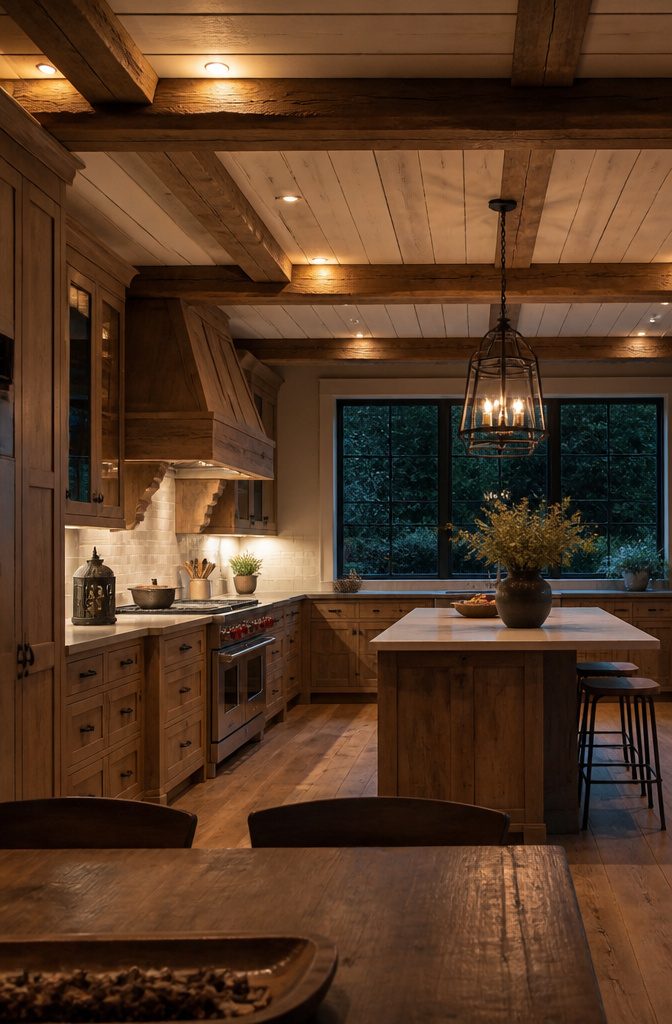
Ambient light from recessed fixtures handles the whole room, task light under the cabinets puts direct light on the counter where you work, and accent light aimed at beams or paneling adds depth after dark.
All three working together keeps the space functional while the architectural features stay visible instead of disappearing into shadow.
Wrought iron chandeliers or industrial pendants over an island give you both light and a focal point. Vintage-inspired sconces on the walls pick up the rustic thread without competing for attention.
I look for fixtures that read as honest metal or aged finishes rather than polished reproductions, because the patina carries more weight in a rustic kitchen than shine does.
Beams and paneling build the room’s character before a single light turns on.
Rough sawn pine beams or ship lap ceilings painted off-white and rubbed with stain wax layer texture overhead. Tongue-and-groove paneling on the walls introduces pattern and can take a distressed finish if the cabin feel is what you want.
Natural light from large windows or skylights ties the kitchen to what is outside and means you rely less on fixtures during the day.
8. Bring in Natural Textiles and Woven Pieces
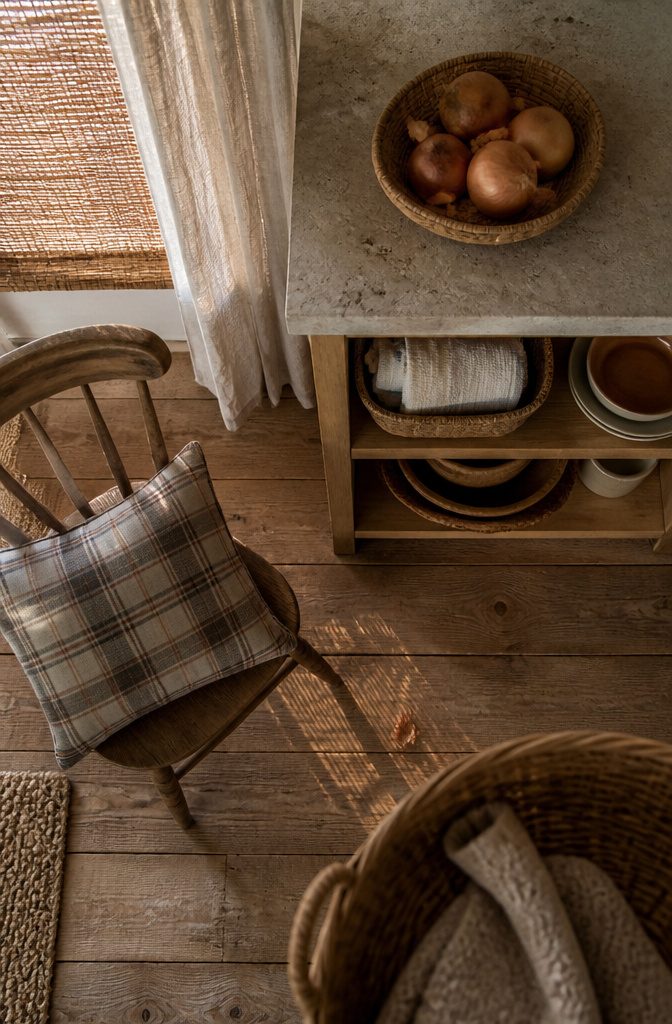
Textured fabrics and woven pieces soften the harder surfaces that dominate a rustic kitchen.
Linen, cotton, and burlap in window treatments and seat cushions add weight without clutter, and woven wood shades layer in organic texture where metal mini-blinds once sat.
The contrast matters more than matching: stone counters and plank floors need something that bends.
Baskets pull double duty. I keep them on open shelves for dish towels or on the counter for vegetables that store better outside the fridge, and a few clustered on the wall read as decoration rather than storage.
The woven detail shows best when the basket itself is empty or holding something simple.
Patterns stay quiet. Plaid, gingham, and small florals add softness to seating or curtains without competing with the wood grain, and the subtlety lets the texture do the work.
A rocker by the window with a linen cushion, a few buckets of cut flowers, and the room feels warmer without adding a single built-in.
9. Repurpose Found or Inherited Objects
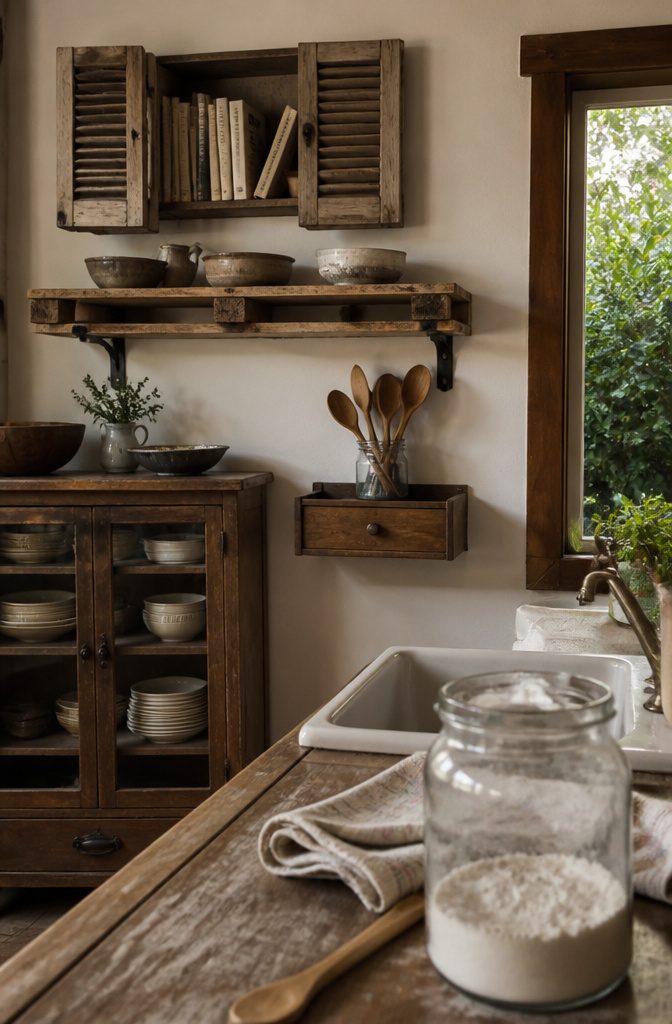
Repurpose Found or Inherited Objects
An old dresser becomes storage and display space for plates you inherited or bowls you actually use.
Wood shutters can hold cookbooks, shipping pallets can turn into floating shelves, and a drawer pulled from something else mounts to the wall as a narrow ledge.
Rustic design expects you to figure out what works with what you already have rather than buying everything new.
Mason jars hold utensils or dry goods. Woven baskets hang as light fixtures if you wire them properly.
A wood baluster propped on brackets turns into a towel bar. Old wood gets a second job instead of the bin, costs nothing, and keeps the room from looking like everything came from the same catalog order.
Open shelving works for this because reclaimed wood or wrought iron brackets let you display things that tell the actual story of who lives there.
Glass doors on a dresser unit keep dust off inherited plates while breaking up solid runs of cabinet fronts. You get storage, you get personality, and you skip the purchase.
10. Plan for Gathering and Practical Use
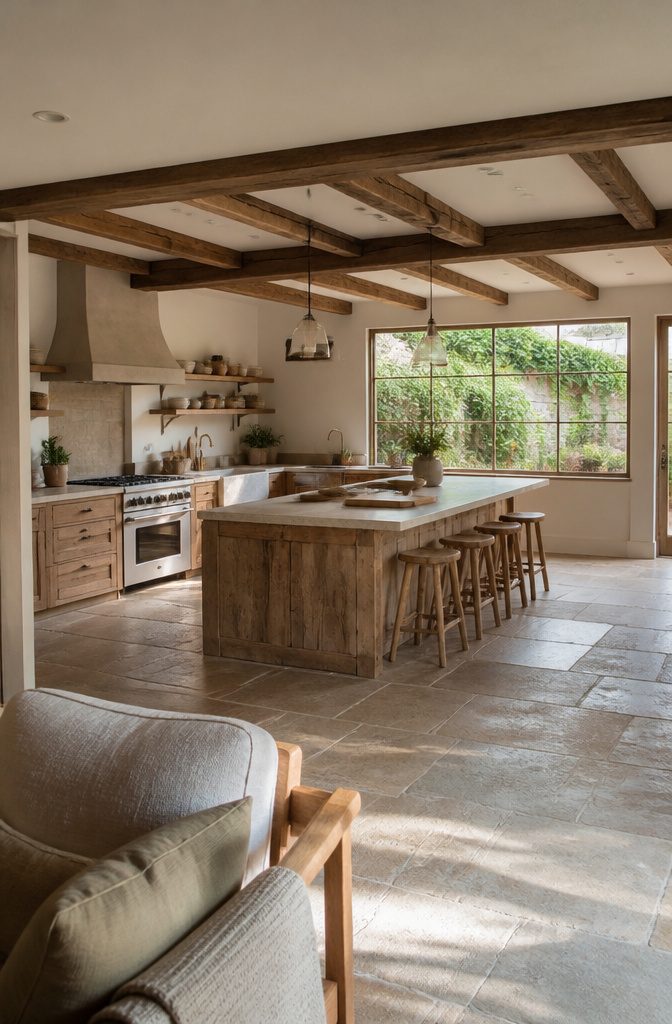
A rustic kitchen stops working the moment you can’t actually cook in it with other people around.
The layout needs to handle daily prep and give everyone a place to land, whether that’s chopping next to you or sitting with coffee while you work.
A peninsula or island does both: it adds counter space where you need it and creates a natural spot for stools or informal seating without claiming a separate table footprint.
Size matters here. Islands in functional rustic kitchens often measure 4 feet by 9 feet, or larger if the room allows it (one example stretches 10 feet 5½ inches by 5 feet 8½ inches, another runs 127 7/16 inches wide by 53 inches deep).
That scale isn’t decoration. It gives you room to prep on one side and stack dishes or set out breakfast on the other, so two people aren’t fighting for the same six inches of counter.
For the surrounding layout, U-shaped plans offer the most counter and storage in a compact footprint, while L-shaped setups open the kitchen to adjacent rooms and make the space feel less closed off.
Open-concept layouts work especially well for rustic kitchens because the style already leans communal rather than formal.
What Modern Rustic and Traditional Rustic Look Like
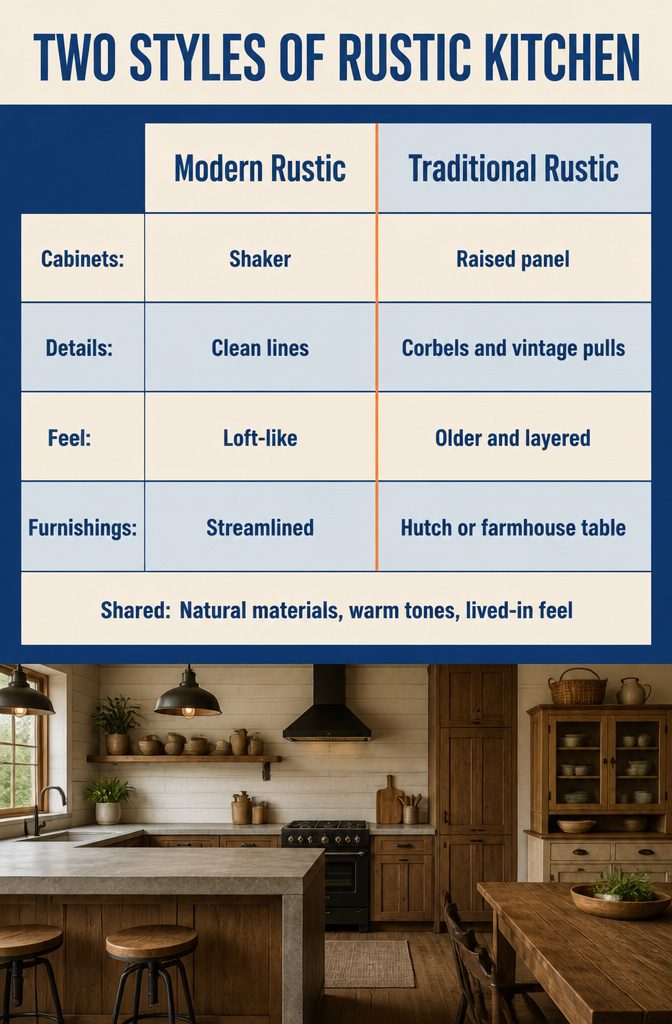
Modern rustic keeps the surfaces quiet. Shaker cabinets in warm wood, concrete countertops, and industrial-style pendants bring the material in without fussing over it — the grain does the work, and the lines stay clean.
You get the warmth of wood without corbels, and the effect sits closer to a loft kitchen than a farmhouse.
Traditional rustic pulls the opposite direction. Raised panel doors, turned corbels under the counters, vintage drawer pulls — the details stack up, and the kitchen reads older and more layered because of it.
A flea-market hutch or a repurposed farmhouse table fits this version better than the streamlined one.
Both share the same baseline: natural materials, warm tones, and that lived-in feeling that keeps a kitchen from reading like a showroom. The split is how much ornament you let into the room.
If you want the rustic warmth but prefer your cabinets unadorned, modern rustic wins. If vintage details make the space feel more honest to you, traditional rustic gives you room to collect them.
Cabinet Care to Keep Wood Looking Right
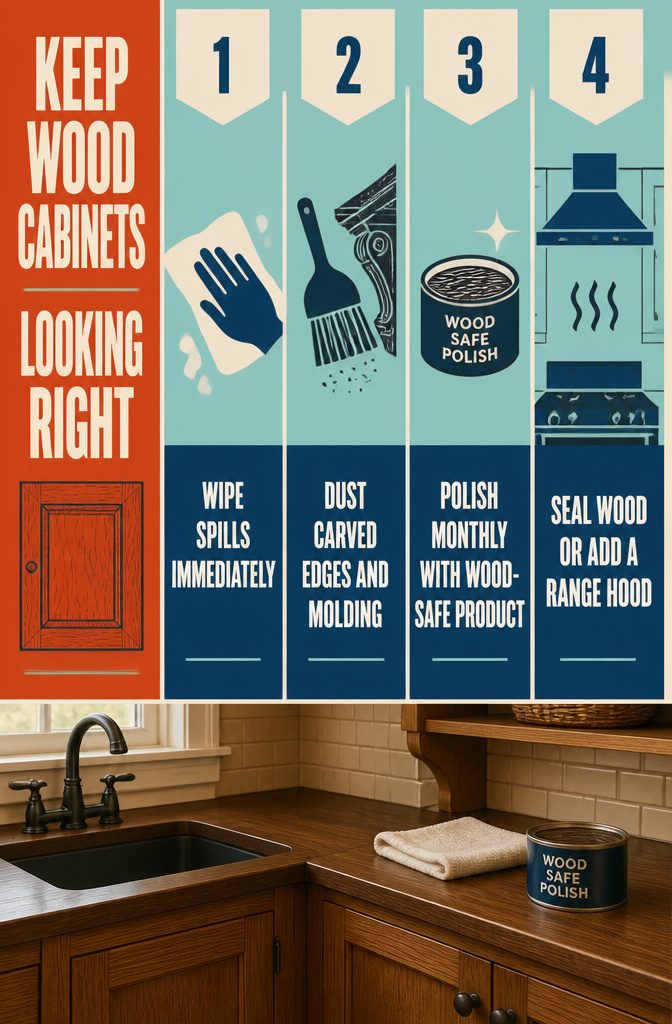
Wood cabinets last longer when you keep heat and moisture from sitting on the surface. Wipe spills the moment they happen, especially near the sink and stove, and dust carved edges and molding where grime collects without you noticing it.
A few monthly habits keep the finish intact:
- Use mild, wood-safe cleaners only. Harsh chemicals strip the color and texture from natural wood, particularly on cabinets with a dark stain or distressed finish.
- Apply wood-safe polish once a month to lock in the rich tone and grain detail.
- Seal wood with a clear coat or install a range hood near the stove if your cabinets sit in high-traffic or high-heat zones.
If scratches do show up, touch-up stain brings the color back without refinishing the whole door. The same care applies to open shelving, wood countertops, and ceiling beams if you have them.
Frequently Asked Questions
What’s the difference between modern rustic and traditional rustic kitchen design?
Modern rustic sticks to clean lines with natural materials like concrete countertops and industrial lighting, while traditional rustic layers in ornate details such as raised panel doors, turned corbels, and vintage drawer pulls.
Both use warm wood and natural tones, but modern rustic keeps surfaces quiet and traditional rustic lets the details stack up.
What are the best wood species for rustic kitchen cabinets?
Knotty alder shows natural knots in the face of the board, hickory delivers bold grain with high durability, reclaimed oak carries a time-worn patina, and pine costs less while aging well with proper care.
Pick the species based on the grain detail you want visible and the wear the spot will take.
How can I create a rustic kitchen on a budget?
Start with paint, open shelves, and new hardware instead of replacing cabinets, then look for flea-market finds and architectural salvage for pieces like dressers, vintage lighting, or drawer pulls.
Repurposing what you already have or picking up used wood keeps the cost down while adding character a catalog purchase would not.
What colors work best in a rustic kitchen design?
Warm neutrals like creams, browns, and weathered whites anchor the room without competing with wood or stone.
Terracotta, deep greens, and muted grays tie back to natural materials, while regional styles shift the palette: Tuscan kitchens use golden yellow with terracotta, Scandinavian leans on cool whites and pale blues, and American farmhouse stays with white and black accents.