
Small yard landscaping ideas range from a $65 bubbling urn to a full paver patio you lay yourself, and the right choice depends on whether you own the space or answer to a landlord.
The projects that last share one condition: they account for the freeze-thaw cycle that warped my cedar trellis by March.
Metal brackets into fence pickets loosen; anchor to posts or build freestanding frames with paver feet, or you will rebuild it the following spring.
1. Vertical Gardens
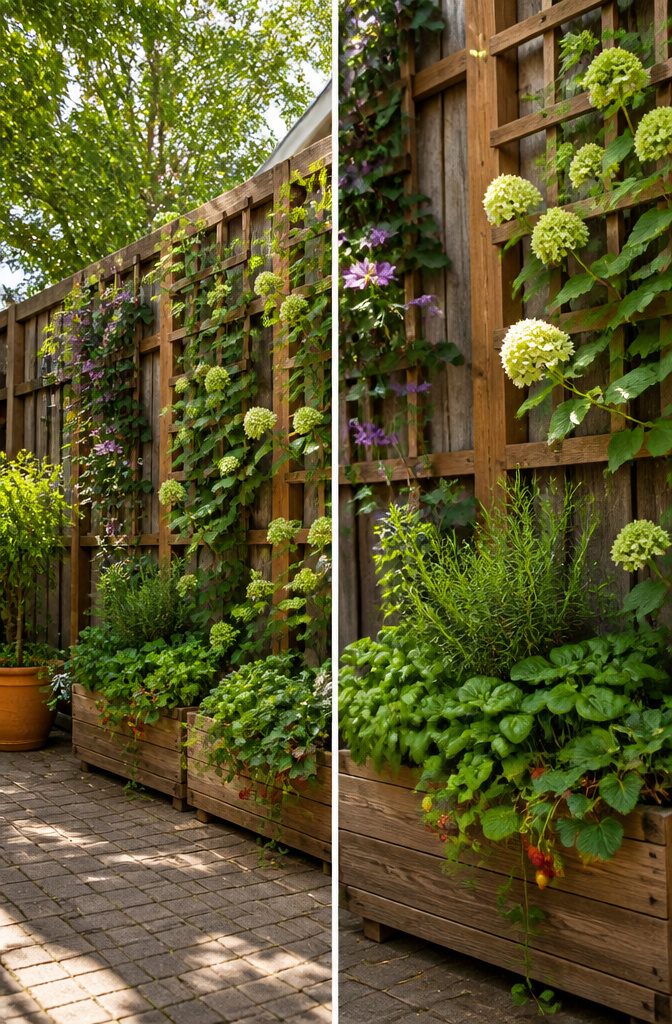
Wall planters and trellises let you garden in three dimensions when the ground runs out.
I learned this the hard way after my first attempt: a $40 cedar trellis from the hardware store, bolted to the fence with brackets that looked sturdy enough in September.
By March the freeze-thaw cycle had pulled the lag bolts half an inch out of the rotting pickets, and the whole thing leaned like a sail in the wind.
Metal brackets into wood fence pickets will loosen after one winter; anchor to posts or use a freestanding frame with feet that sit on pavers.
For compact plants that read tall without reading wide, Fire Light Tidbit Hydrangea stays a neat 3′ x 3′ and still gives you the pink-blushing white blooms of its larger cousins.
Sky Pencil Holly reaches 8–10′ tall but only 18" across, a green exclamation point that needs almost no footprint.
Trellises work best when you train something with manageable ambition: climbing hydrangea is slow to establish but stays where you put it, unlike the ramparts some vines build.
Wall planters suit herbs or trailing strawberries; hanging systems over a railing keep the floor clear for the one chair that makes the space usable.
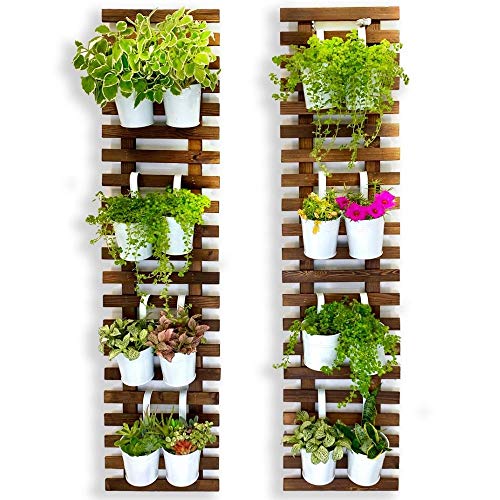
29x120cm (11.4" x 47.2") x 2 pcs. Plants, flowers, pots, decorations are NOT included

Tall trellis: 29x150cm (11.4" x 59.1") x 1 pc. Pick the right size for your garden to prevent unpleasant experience and potential wastage of resources. Plants, flowers, pots, decorations are NOT included
2. Container Gardening
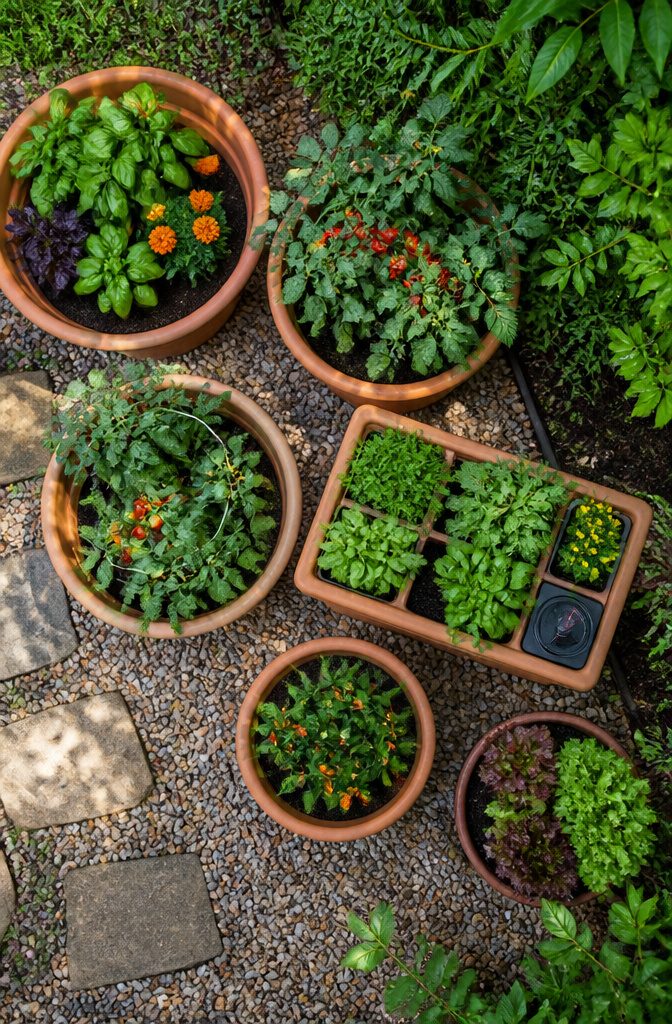
Pots and planters turn a small yard into something you can rearrange without a shovel, which matters when you rent or just like to experiment.
I started with a cluster of 10-inch terracotta pots along the railing, thinking dwarf tomatoes would be happy enough.
They were not. July heat pulled the moisture out of that small soil volume before noon, and I was watering twice a day just to keep leaves from crisping.
A 24-inch pot holds enough soil to carry a dwarf tomato through August without that kind of babysitting. The switch that actually saved the season was moving to self-watering boxes.
The reservoir buys you a day or two of forgiveness, and for anyone who works weekdays, that gap is the difference between a plant that survives and one that does not.
Bowls, wooden boxes, standard nursery pots, each has its place, but the container needs scale to match the plant’s appetite.
Small pots work for annuals you swap out seasonally. For anything you want to last the summer, soil volume is the detail that decides it.

ELEGANT GARDEN ARCH TRELLIS – Transform your backyard into a beautiful garden retreat with this classic black metal garden arch. Create an inviting entrance along pathways, over garden beds, or among your favorite flowers and climbing plants.

SUPPORTING PLANT GROWTH:1 pack garden trellis, helps plants grow upright, improving ventilation and lighting, and increasing yield and quality.

2 Pack for Variety: you will receive 2 pack of garden trellis, you can use individually or install side by side to boost stability and expand coverage, about 47.64 H x 10 W inches/ 121 x 25 cm, fits most yards, flower beds, or vegetable patches; Measurements include 8 inch stakes
3. Creating Zones
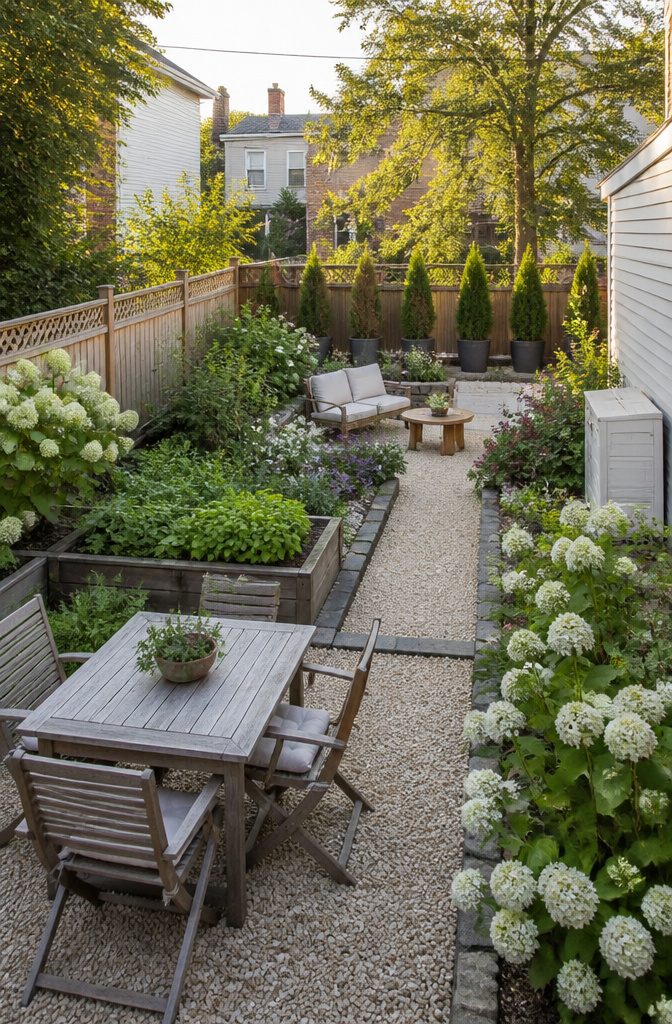
Dividing a small yard into zones sounds backward until you try it.
My own space is 12′ by 16′, about the size of a modest patio, and the open lawn always felt like a landing strip with no place to settle.
Splitting it into three areas, eating, sitting, and growing, changed that completely.
I ran 30-inch gravel paths between the zones, just wide enough for a wheelbarrow or two people passing, and the yard immediately read larger because the eye travels a path instead of swallowing emptiness.
The paths do the heavy lifting, but low plantings or a shift in ground material work too. Repeating the same gravel or the same plant shape from zone to zone keeps the parts from feeling chopped up.
A dining table on one end, a bench and a couple of chairs on the other, and a raised bed or potted herbs in between gives each area a reason to exist.
The sitting spot anchors near the house where hardscaping is already practical; the growing zone pushes to the perimeter for light and for structure that reads as privacy from the side.
What surprised me was how little division it takes. A few potted plants, a change from gravel to pavers, or simply turning a bench to face inward rather than the fence does enough to signal a new room.
The goal is not walls but suggestions, enough that someone standing in the eating area does not automatically see the whole yard at once. That partial concealment, even slight, is what makes the whole feel bigger than the sum.

Self watering feature keeps plants consistently hydrated and healthy, reducing maintenance while ensuring lush, thriving displays that elevate any setting with effortless beauty

Durable Window Boxes: We use 100% high-grade Polyethylene resin in the manufacturing process, which makes our products durable, lightweight and highly shock resistant

Durable Window Boxes: We use 100% high-grade Polyethylene resin in the manufacturing process, which makes our products durable, lightweight and highly shock resistant
4. Multi-Functional Furniture
A bench that swallows your clutter is the first upgrade that actually earns its square footage. I bought a cedar storage bench for $280 that held seat cushions, a trowel set, and the hose splitter I kept losing behind the grill.
The lid lifted on gas struts, which mattered more than I expected; prop rods snap in coastal humidity, and I had already replaced one on a cheaper unit.
The mistake was skipping the sealer because the wood looked fine that first spring.
Two seasons later the seat boards had cupped enough that the lid stuck, and water pooled in the storage bay every time it rained. The hardware outlasted the carcass, which is backward for outdoor furniture.
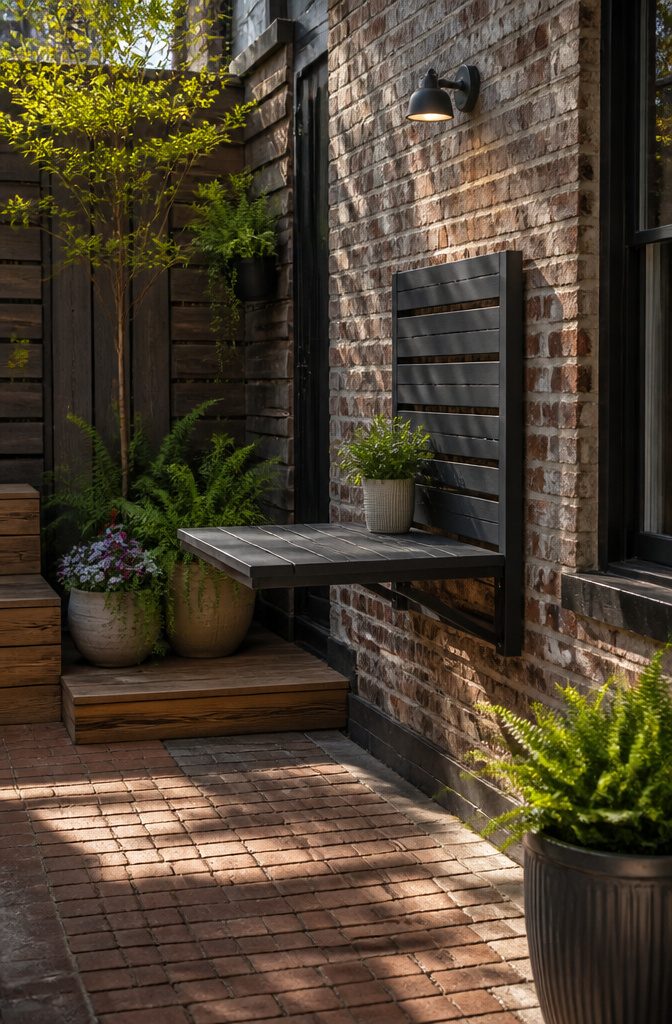
The $90 folding table that replaced it mounts to the brick wall of my narrow side yard and drops flat when I need the path clear.
It does not store anything, but it also does not rot where I cannot see it, and that trade has held up better.
For the fire pit conversion some tables offer, my take is simpler: the mechanisms jam with ash grit, and a small yard already has enough surface area without one piece trying to be three.

Wet-Area Ready, No Sealing Required: Pre-finished with cured linseed oil — a natural plant-based wood finish — these tiles install straight from the box — no sealant, no prep, no waiting. Raised base channels water underneath for patios, balconies, pool surrounds, and shower floors

Wet-Area Ready, No Sealing Required: Pre-finished with cured linseed oil — a natural plant-based wood finish — these tiles install straight from the box — no sealant, no prep, no waiting. Raised base channels water underneath for patios, balconies, pool surrounds, and shower floors

Wet-Area Ready, No Sealing Required: Pre-finished with cured linseed oil — a natural plant-based wood finish — these tiles install straight from the box — no sealant, no prep, no waiting. Raised base channels water underneath for patios, balconies, pool surrounds, and shower floors
5. Use of Color
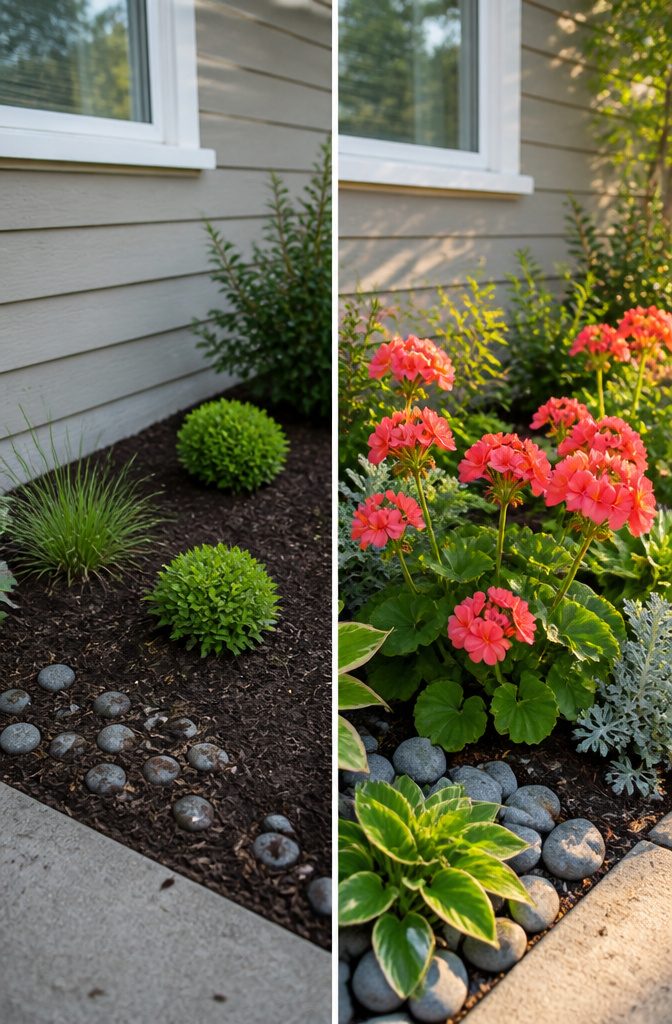
Saturated color at the front edge of a bed does something pale tones never manage: it stops the eye and pushes the boundary outward, so the whole yard feels deeper than the tape measure says.
I learned this the hard way one spring when I filled a narrow foundation bed with pale pink impatiens. From the sidewalk they melted into the concrete, and the bed looked even shallower than its eighteen inches.
The next season I swapped in coral geraniums, nothing else changed, and guests asked if I had expanded the bed. The space read as twice the depth because the bright forward color created a clear visual front wall.
The sources agree on a hard rule here: limit yourself to two or three main colors, plus whatever white or gray you need for breathing room.
More than that, and a small yard fragments into noise; the coherence that makes the space feel intentional collapses.
Repeat those chosen colors in three to five places across the yard so the eye recognizes the pattern and relaxes. Repetition makes the color work as architecture instead of decoration.

50-Piece Anchors Only Refill Pack For Trellis, Wall Climb Plants, Vine and Lighting Strip,

BUILT TO LAST: Reinforced with glass fibers for superior rigidity, load-bearing performance

INNOVATIVE SPIRAL DESIGN - Our trampoline stakes anchors high wind easily with a full spiral blade for deep grip and high wind stability. Ideal ground screws for trampolines, swing sets, sheds, and metal carport. Stronger, safer, and engineered for lasting performance. Made from premium stainless steel metal stakes for ground, ensuring long-lasting durability and rust resistance.
6. Water Features
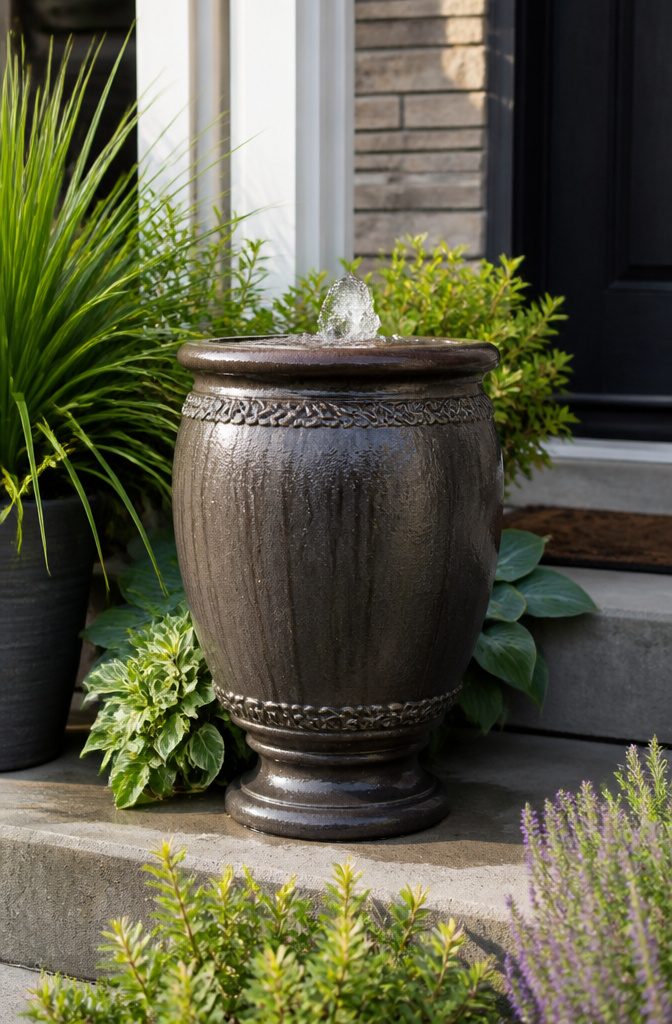
A bubbling urn fits on a concrete stoop that has no business pretending to be a lawn. Water recirculates through a hidden pump, so the whole thing weighs maybe thirty pounds and lifts away when the lease ends.
The sound masks traffic in a way that wind chimes never could, steady and low instead of random and sharp.
The $65 solar fountain ran strong from April through August, then sputtered out in September when the autumn angle of light no longer hit the panel square.
Moving it every three days to chase the sun got old fast. The plug-in replacement cost $40 more, draws from an outdoor outlet, and still runs at four in the afternoon in late October when the yard has already gone dim.
The cord is the compromise, but it is the one that made the cut.

【Rust-Resistant Material】: Cucumber trellis is constructed with high-quality galvanized steel inner pipes and an exterior plastic coating, forming a dual-layer rust-proof barrier to ensure long-lasting durability

Premium Quality 2-Pack Set: The vertical garden planter is made of high quality natural wood. This wall planter set includes 2 wooden trellis 11.42" width in 4 lengths: 15.7", 23.6", 35.4", or 47.2". You can also mix and match different sizes
7. Raised Beds
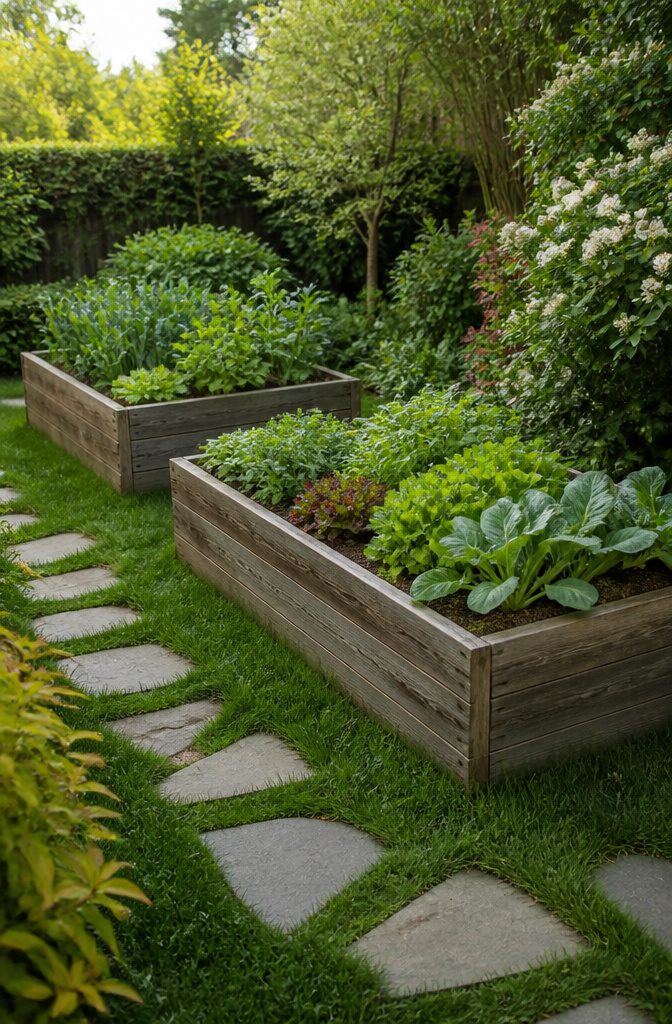
Soil in a small yard stays cold longer and holds water where you don’t want it, which is why raised beds became my first real project.
The framing lifts the growing zone above the compacted ground, so the mix warms faster in spring and drains instead of pooling after rain.
For the soil itself to do its job, you need 2 to 3 feet of workable depth; anything less and roots hit a hard ceiling just like they would in the ground.
My two beds that work are 3 by 6 feet, built from cedar fence pickets for about $35 each.
The third bed I made 4 feet wide, thinking more surface meant more vegetables. I cannot reach the middle without stepping in and compressing exactly the soil I spent time loosening, so that bed grows weeds better than tomatoes.
Stick to a width you can work from both sides, or you will build yourself a planter you cannot plant.

1. SET OF 2 DECORATIVE TRELLIS PANELS: Includes two 28” iron trellises perfect for supporting plants and enhancing garden spaces

【GARDEN TRELLIS ONGOING SUPPORT】Adjustable Height (6.2FT/74.4") is the perfect size to work as a trellis for climbing plants outdoor. This garden trellis can be adjusted by increasing or decreasing the connecting rings based on different plant heights, giving a more adaptable space for plants to grow
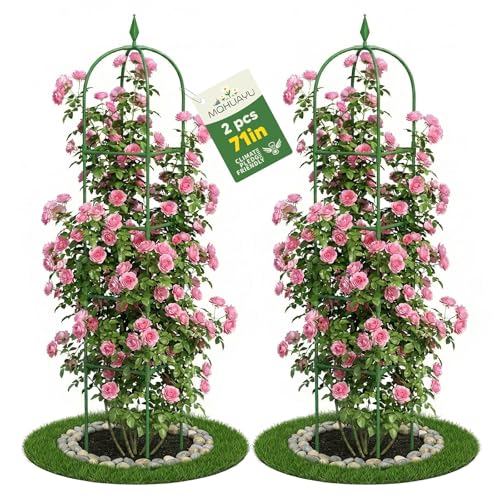
【6 Ft Adjustable Height】This 4-tier garden trellis for climbing plants provides ample space to plant thrive. With removable 4-way connectors, you can easily adjust the height as your plants grow—reaching up to 6 feet tall. It offers the flexibility needed for healthy vertical development
8. Minimalist Design
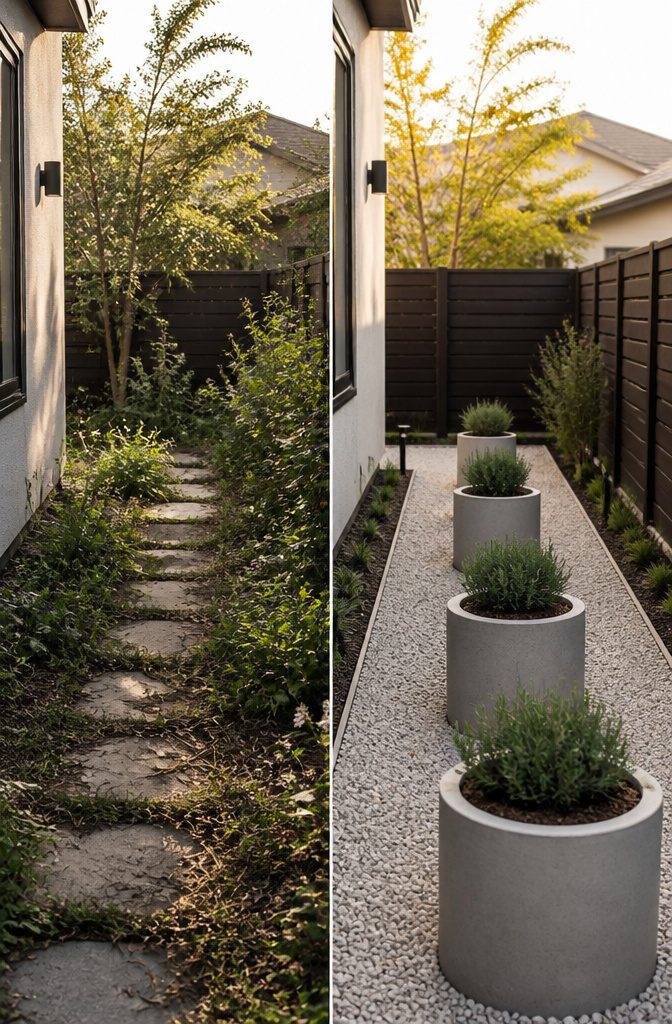
A small yard shrinks fastest under visual clutter.
Twelve different pot styles crowded my patio last spring, each one bought on its own impulse, and the space felt like a thrift store display. Three matching planters in a repeated material replaced the whole collection.
The geometry matters as much as the count: rectangles and clean arcs read as intentional, while random curves turn compact gardens fussy. The visual noise dropped enough that the same concrete square felt twice as calm.
Repeating a single plant form through those three pots helped, too. Fewer species, placed more than once, pull the eye outward instead of trapping it in a dozen competing focal points.
My rule now is one hardscape material for surfaces, one planter style, and a palette narrow enough to count on one hand. The space did not grow, but the perception of it did.

Built-in self-watering system keeps plants consistently hydrated with less effort, supporting healthy growth without daily watering. A smart solution for outdoor planters and plant lovers alike.

Self watering feature keeps plants consistently hydrated and healthy, reducing maintenance while ensuring lush, thriving displays that elevate any setting with effortless beauty

Durable Window Boxes: We use 100% high-grade Polyethylene resin in the manufacturing process, which makes our products durable, lightweight and highly shock resistant
9. Hardscaping
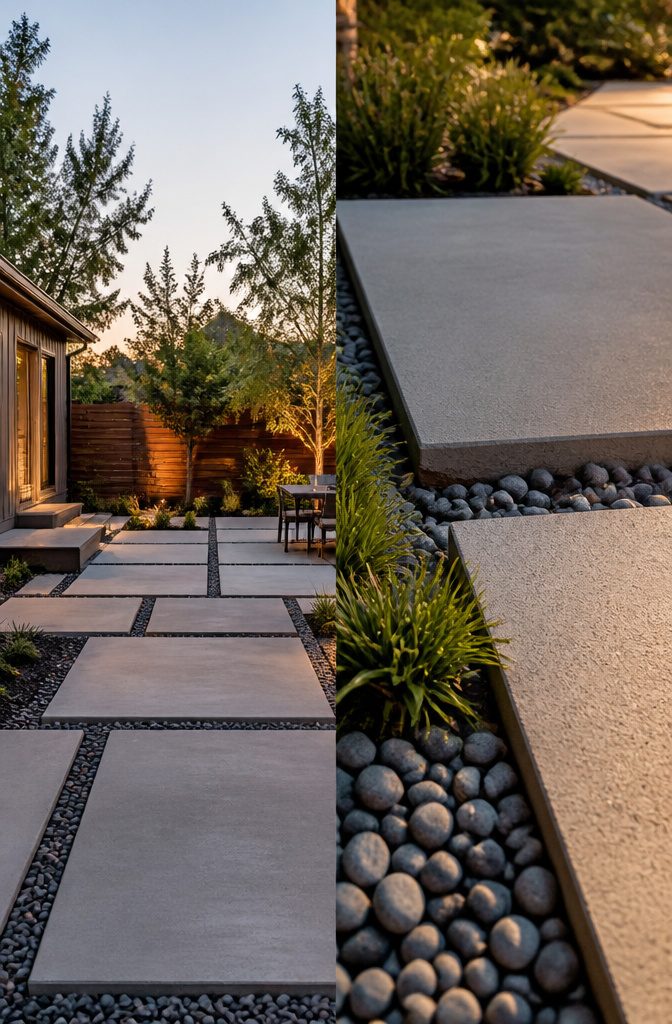
Hardscaping eats up the space that would otherwise sprawl into weedy chaos, and for a weekend project it asks less of you than turf ever will.
Concrete pavers run about $3–5 per square foot for the material, and laying 100 square feet over a Saturday and Sunday is reasonable if you rent a plate compactor for $65 a day.
I was quoted $1,800 for the same job by a landscaper who would have taken half a morning. The compactor is non-negotiable; without it the sand base shifts and the joints open within two seasons.
Gravel costs less and installs faster, though it migrates toward feet and deserves a contained edge.
Decking warms a yard visually but needs airflow underneath or the boards cup; raised sleepers solve this on uneven ground. Stone, whether flagstone or cut granite, outlasts both but usually needs professional delivery and a second pair of hands.
Permeable pavers, the kind with built-in spacers for drainage, handle runoff where a solid slab would puddle or send water toward the foundation.
Cities with impervious-surface limits sometimes rebate the cost. Even without the rebate, the drainage they provide keeps the subgrade from heaving in freeze-thaw cycles, which saves the repair that cheap jobs always seem to need by year three.

Sturdy & Anticorrosive Pine Wood Material: This 8.2ft x 16.5in garden walkway is made of carbonized pine for improved UV, moisture, and corrosion resistance—durable for year-round use. Note: Carbonisation improves weather and corrosion resistance, but extreme sun, heat, or dry climates may still cause aging or cracking; applying an outdoor sealant helps extend service life
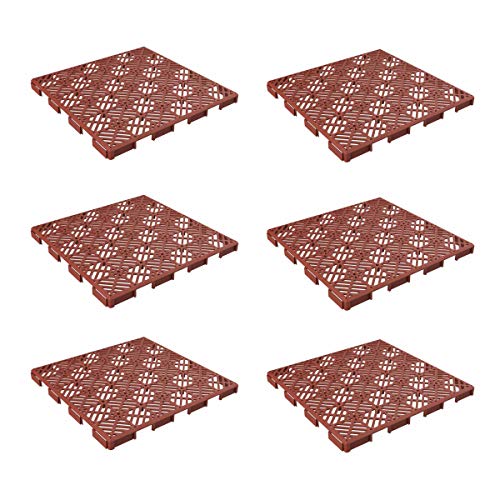
OUTDOOR PAVERS - This 6-pack of balcony flooring boasts a design that enables airflow and drainage for durability. Constructed from weather- and fade-resistant materials, these interlocking deck tiles won’t swell or decay and work well in direct sunlight.

Easy to install Bring new life to old patios, decks and floors
10. Plant Selection for Scale
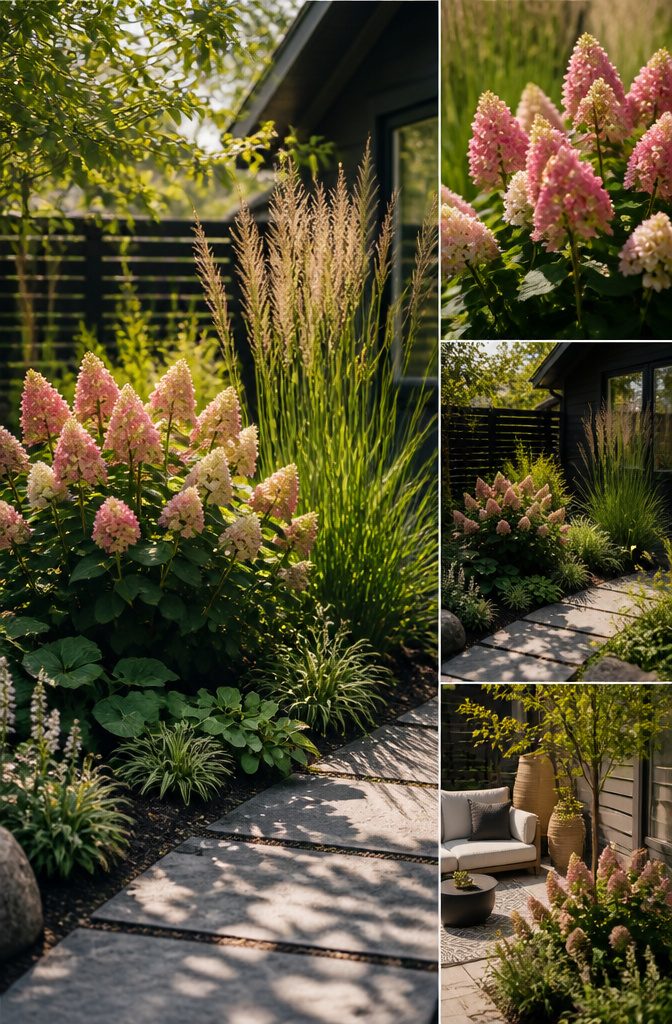
The first hydrangea I planted in my small yard was a standard Limelight. By year three it had sprawled to six feet wide and swallowed the stepping-stone path entirely.
I had to dig it out, root ball and all, and start over with the lesson burned in: mature size is the only number that matters in a small space.
That replacement was a Fire Light Tidbit Hydrangea, which tops out at a tidy 3′ x 3′. It delivers the same pink-blushing white flower heads without the territorial takeover.
For vertical drama that respects width limits, Karl Foerster Feather Reed Grass grows 4–5′ tall but needs only 18" of ground space. Its dried winter form still reads as architecture when everything else has gone bare.
Ground layer strategy matters just as much as the focal points. Mondo Grass works as a low, clumping carpet that defines edges without creeping beyond its bounds.
The mistake most people make, and I made with that first hydrangea, is buying for the flower in the nursery pot and ignoring the five-year footprint.
A compact shrub, a narrow grass, and a disciplined ground cover repeated in larger drifts will read as intentional design. A single oversized plant reads as a weed you have not dealt with yet.
11. Outdoor Living Rooms
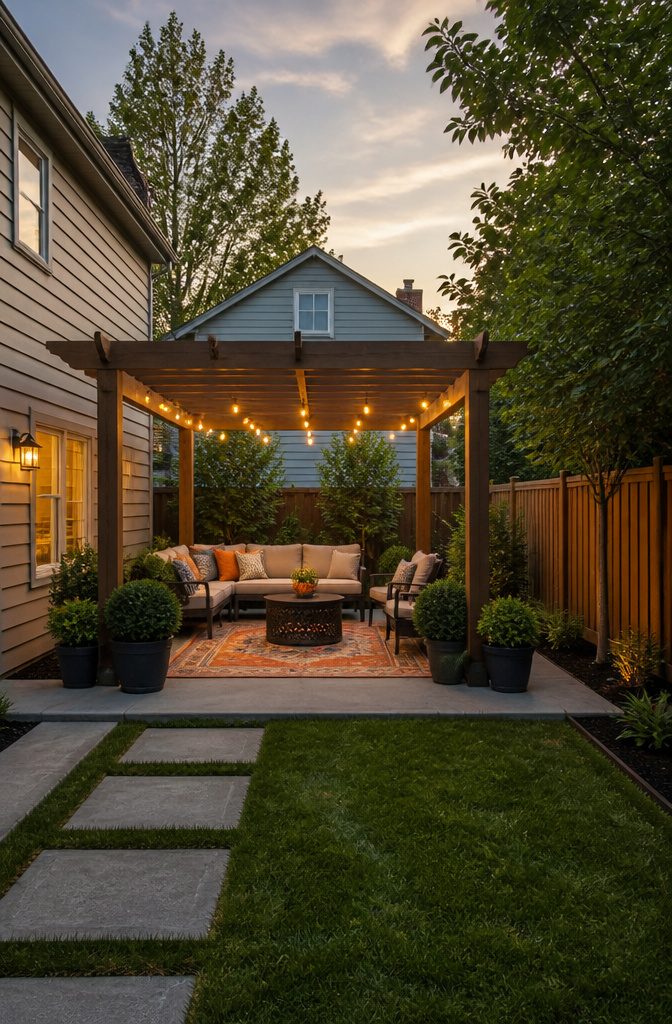
A pergola over a 10′ x 12′ corner of my patio gave the space a ceiling, and a $45 outdoor rug I found on clearance laid down the floor.
String lights wove through the slats for evenings when the mosquitoes let us stay out past eight. The room felt complete, bounded by the fence on two sides and a row of potted boxwoods on the third.
The rug taught me the hard lesson about storage.
I rolled it up wet in October and by spring the mildew had stained the pattern permanently. Hanging it would have cost nothing and saved the whole purchase.
The string lights stayed up through winter because taking them down felt like admitting the season was over, until an ice storm last January snapped three strands and left glass in the mulch.
Now I treat them like the annuals they are, packing them away with the cushions by Thanksgiving.
12. Privacy Solutions
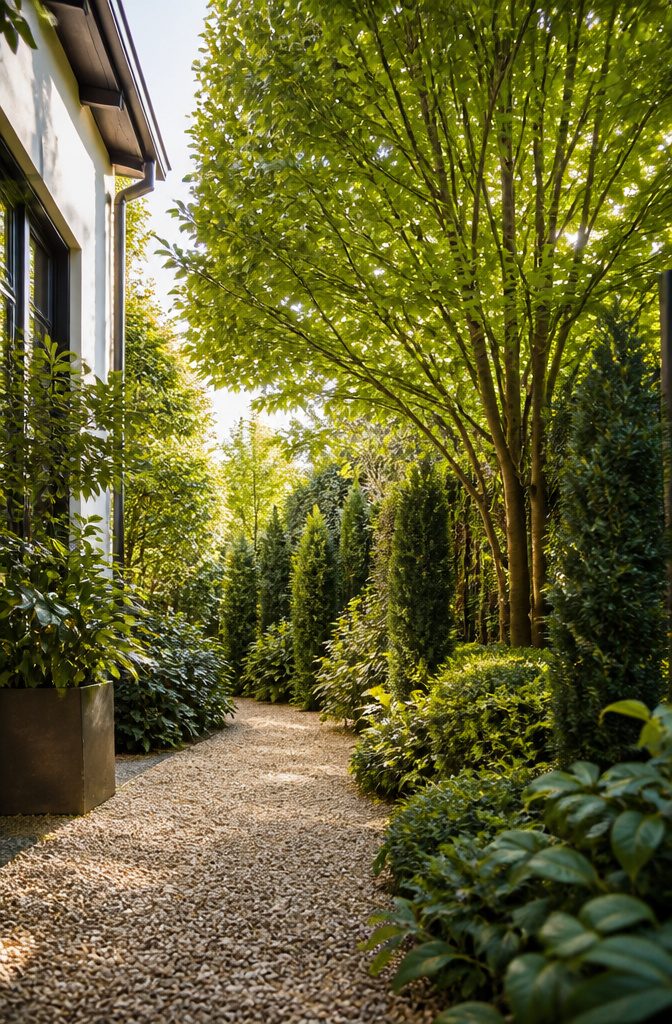
Layered plantings turned out to be the only privacy trick that did not backfire on me.
A solid hedge I tried first made the patio feel like a stockade; mixed heights of airy shrubs, a small tree, and grasses let the space breathe while still blocking the sightline I cared about.
The Frans Fontaine Hornbeam stays narrow enough for tight spots, just 8–12 feet wide while reaching 40 feet tall, and takes pruning without looking scalped.
For the narrowest gaps, Sky Pencil Holly measures roughly 18 inches across and reads like green punctuation against a fence.
I angled a lattice panel at 45 degrees to interrupt one neighbor’s second-story window without walling off airflow; morning glories climbed it that first summer, and the breeze still carried through.
Trellis planting works best when you treat it as selective screening rather than wrapping the whole perimeter. Shield where you actually sit, and the yard feels sheltered instead of boxed in.
What I Spend and What Lasts
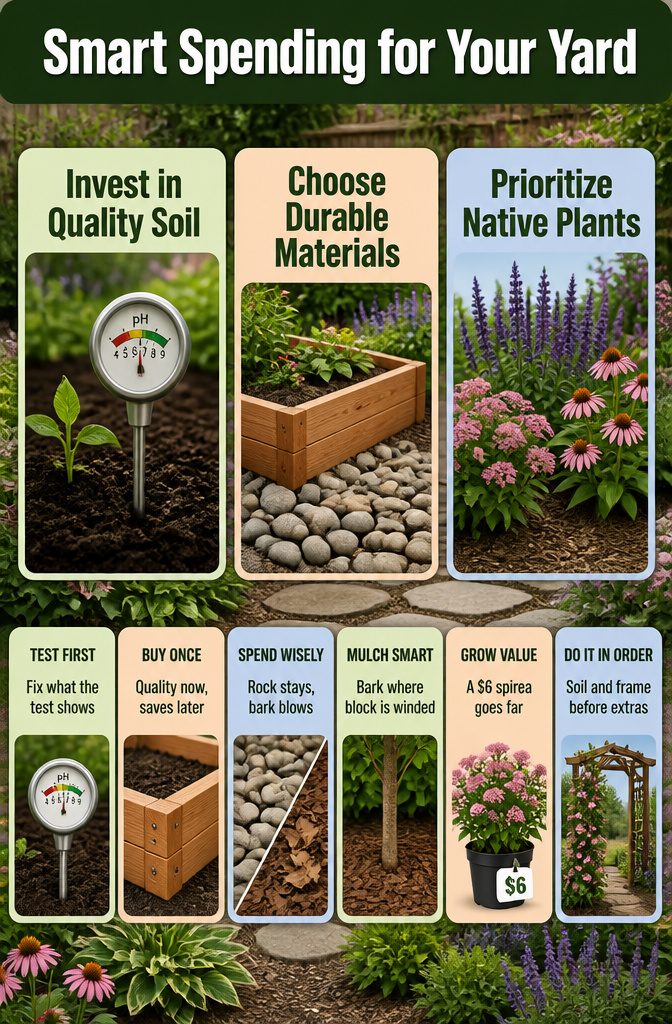
Soil is where the money goes first, and it is the place where cheaping out costs twice. In my first yard, I bought bagged topsoil from the big-box pile and amended new planting areas with it.
The drainage stayed poor, the plants sat in muck, and I was back the next spring buying compost to do the job over.
Now I test pH and consistency upfront, then spend on the amendment that fixes what the test shows. That layer is the one you walk on and dig in; everything above it is decoration.
Structure comes next.
Treated lumber for a raised bed runs more than the scrap-wood version I built one March, but that frame warped by June and I replaced it with redwood the following year. The redwood bed is still square.
For ground cover, river rock cost more upfront than the large bark I used at my last place, but the bark blew into the neighbor’s yard every windy afternoon and needed fresh bags twice a season.
The rock stayed put. I keep small bark mulch around trees and shrubs where wind is blocked, because it does hold moisture better, and that trade is worth it where the rock would look harsh.
Plants are the last place to open the wallet, and the easiest to do cheaply.
Native plants and low-cost perennials like spirea or salvia fill space fast, bloom repeatedly through summer, and survive the drought weeks when I forget to drag the hose out.
A $6 spirea in year three is a shrub that covers ground a gallon pot from the nursery never manages in the same time. The arbor and the clematis came later, after the soil and the frame were right.
Tools I Borrow and Tools I Buy
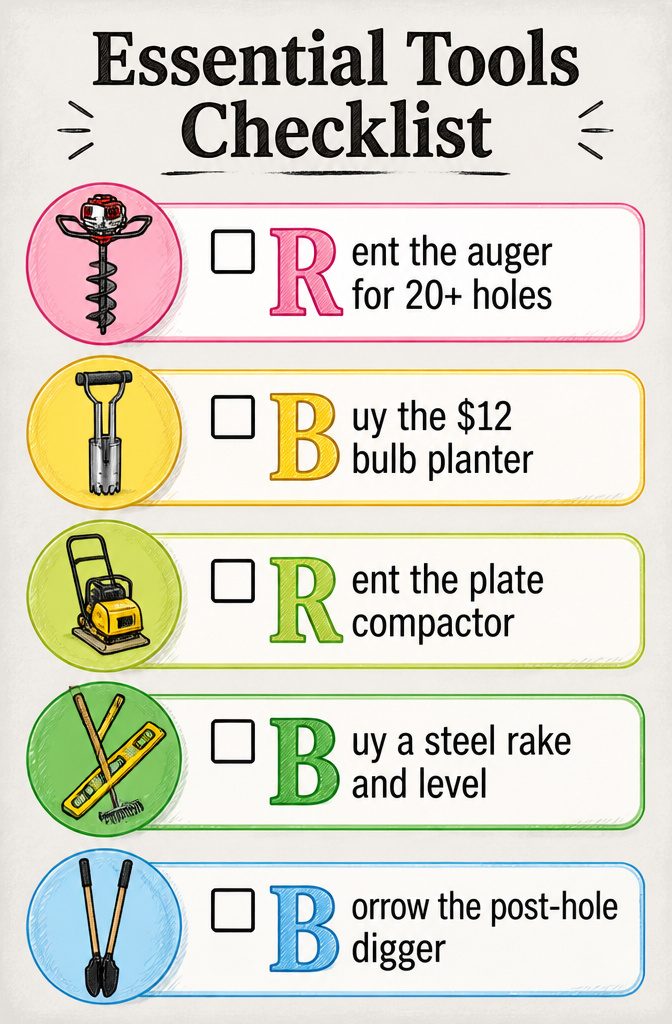
A yard full of small projects means a garage full of tools you use once, so I keep a running list of what actually earns its keep.
- Rent the auger only for 20+ holes. Home centers rent gas-powered augers by the day for about $50. I used one for a row of privacy trees and finished in an hour, but for six tulips it was absurd. The machine sat idle while I hand-dug between roots anyway.
- Buy the $12 bulb planter and call it done. The stepped, T-handled kind cuts a plug of soil you lift straight out. Pop the bulb in, drop the plug back. Six holes, ten minutes, no fuel mix to return.
- Rent the plate compactor for paver bases. Thirty bucks for four hours beats owning something that weighs 150 pounds and gets used every third year.
- Buy a good steel rake and a 48-inch level. Under $30 together, and you will reach for them on every project. The rake spreads and grades; the level checks both the paver bed and the container shelf you build next weekend.
- Borrow the post-hole digger if your neighbor has one. I did this once for a single arbor post, returned it with a six-pack, and have not needed one since. Two holes do not justify the $40 purchase or the storage.
When I Start Over
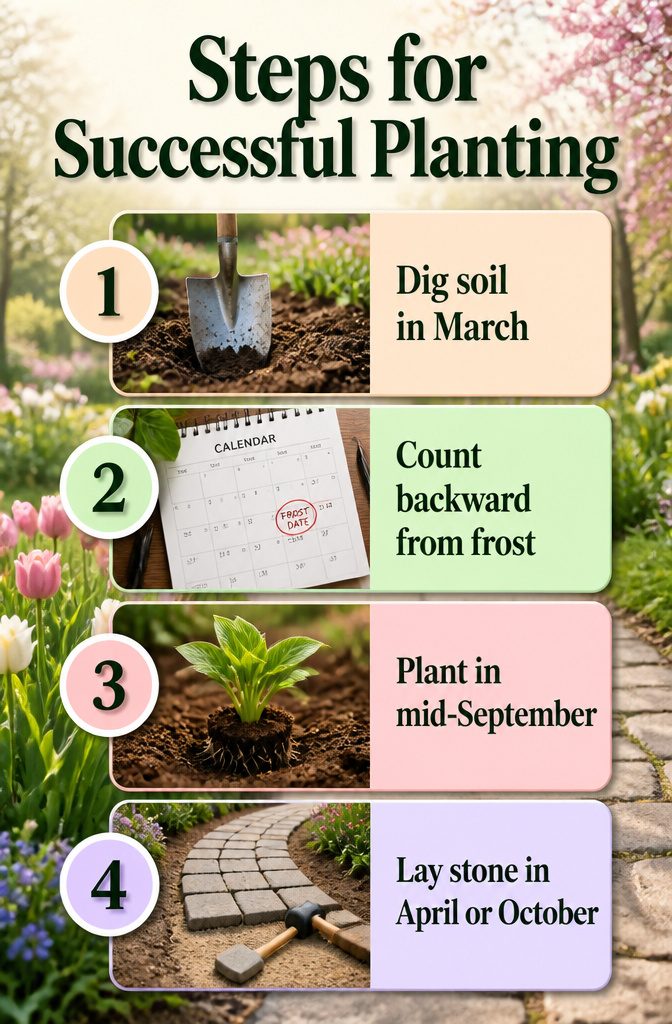
March is when the soil finally softens enough to dig without breaking a shovel, and that window matters more than the thermometer suggests.
I once planted tomatoes in late May, two weeks past the safe date for my zone, and watched the young leaves curl and brown by July. The heat arrived before the roots had depth enough to find moisture.
September weekends carry their own deadline. The soil still holds summer warmth, which roots need to establish, but the first frost date sits close enough that I count backward from it before putting anything in the ground.
That mid-September window is my last reliable chance for perennials or anything that needs six weeks to settle.
Hardscaping in July taught me the same calendar lesson from the other side.
The year I started a paver path then, the base material dried before I could level it, the sand stuck to my gloves, and the work took three weekends instead of one.
The heat added misery without adding progress. Now I lay stone in April or October, when the ground cooperates and my back does too.
Frequently Asked Questions
How do I make a small backyard feel bigger?
Divide it into zones with paths between them, grow upward with trellises and wall planters, and keep the design minimalist with repeated materials and a tight color palette.
A 12′ by 16′ yard with three zones and 30-inch gravel paths reads larger because the eye travels instead of swallowing emptiness.
What are some good plants for small backyards?
Fire Light Tidbit Hydrangea stays 3′ x 3′, Sky Pencil Holly reaches 8–10′ tall but only 18′ across, and Karl Foerster Feather Reed Grass grows 4–5′ tall in a narrow footprint.
Choose plants bred for compact spaces and always check mature size before buying; the flower in the nursery pot means nothing compared to the five-year spread.
How can I create privacy in a small yard?
Layer mixed heights of airy shrubs, a small tree, and grasses rather than building a solid hedge that turns the space into a stockade.
Frans Fontaine Hornbeam stays narrow at 8–12′ wide while reaching 40′ tall, and Sky Pencil Holly fits gaps at just 18′ across. Angle a lattice panel for selective screening where you actually sit, not around the whole perimeter.