A kitchen table can look spare and unfinished or so styled that clearing it for dinner becomes a chore.
The difference comes down to keeping at least 24 inches of open space per person while still anchoring the surface with something that reads as a choice rather than leftovers from breakfast.
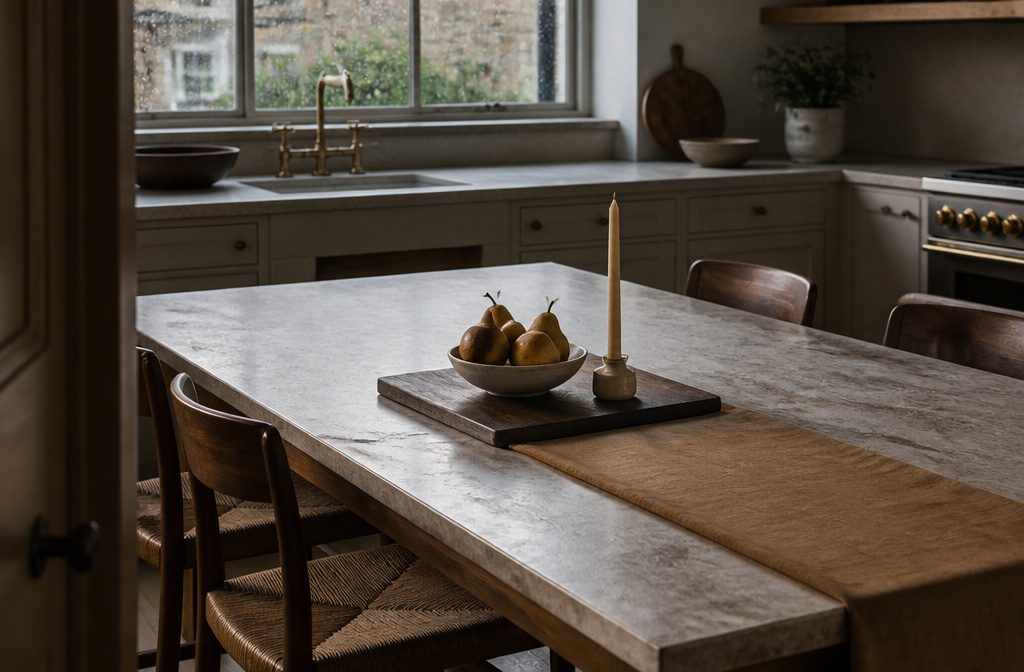
The quickest fix is one strong focal point in the center: a vase of flowers, a potted plant, a bowl of fruit, or a cluster of candles at different heights.
If no single object feels substantial enough, group smaller items on a tray or wooden board so they register as one deliberate display instead of scattered clutter.
1. Use a Centerpiece or Focal Point
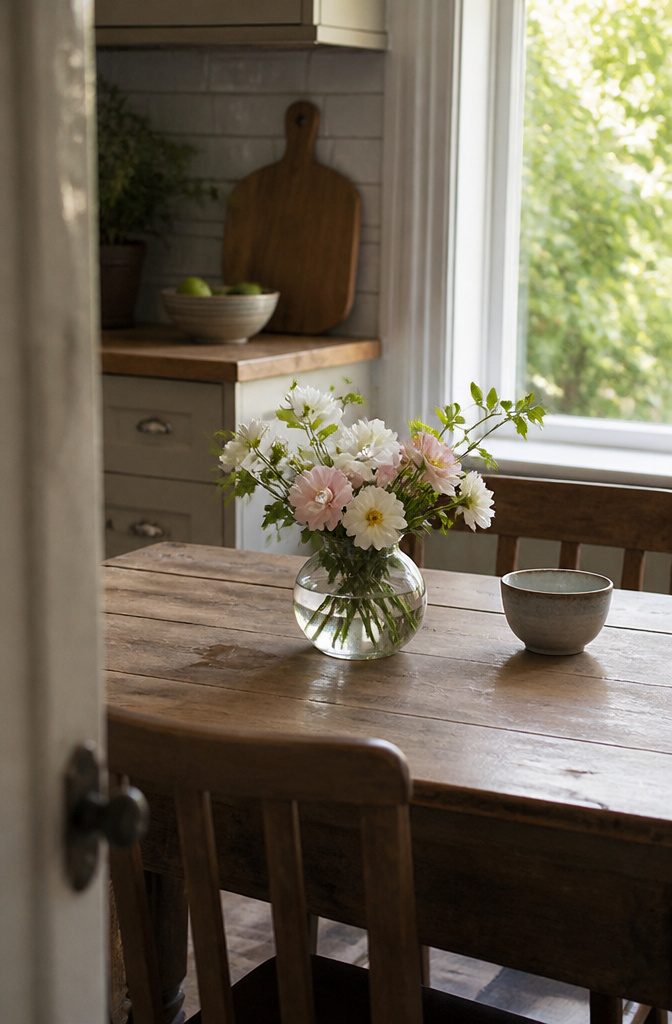
The simplest way to make a kitchen table look finished is to anchor it with one strong focal point: a vase of flowers, a potted plant, a bowl of fruit, candles, a sculpture, or a decorative tray.
A single centerpiece pulls the eye to the middle of the table and gives the whole setup a sense of intention, where scattered objects can look like clutter that never got put away.
I look for something that fits the table’s scale. A small round table takes a simple vase or a potted orchid; a larger rectangular table can handle a group of candles or a chic sculpture.
The focal point should sit low enough that people can talk across the table without leaning around it, which rules out tall arrangements at a working kitchen table.
If no single object feels substantial enough, a tray lets you group smaller items together and read them as one focal point.
A large antique bread board works the same way. Either option keeps the arrangement easy to lift off when you need the table clear.
Art makes a strong centerpiece if it suits the room: a cluster of glass figurines, a statement piece, or an elaborate ceramic pot.
Coordinate it with wall art directly above the table and the whole corner turns into a focal point instead of competing for attention.
2. Arrange a Balanced Display
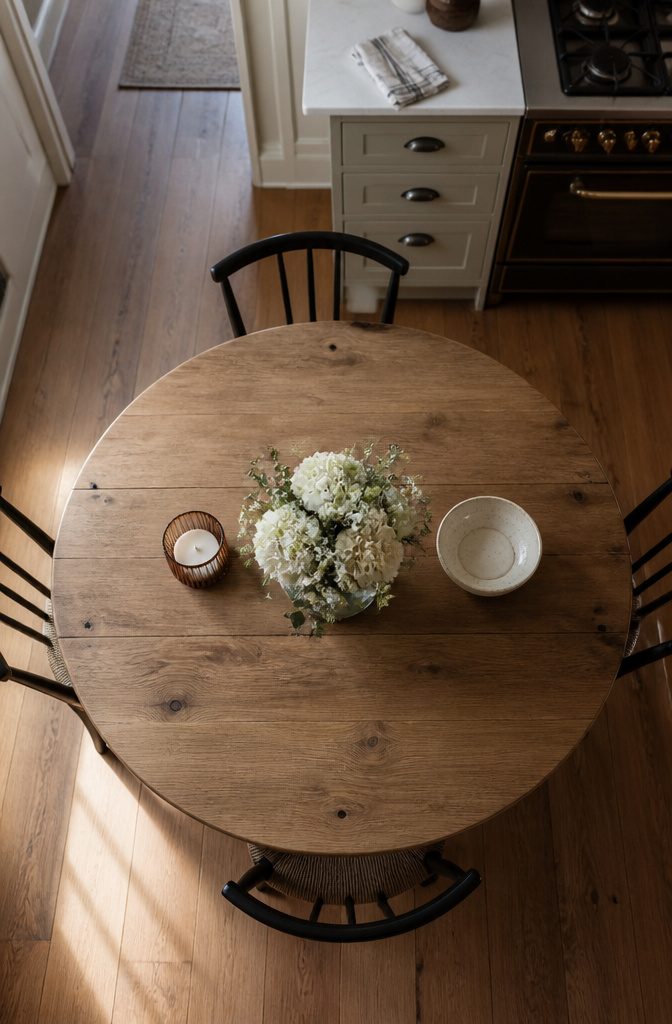
Symmetry or a central focal piece with matching accents on either side gives a kitchen table arrangement that looks planned.
A large centerpiece paired with smaller items placed evenly on each side anchors the table and keeps the display from feeling lopsided.
That balance matters even more on a round table, where the arrangement sits in full view from every angle around the room.
Round tables need decor that reads well from all sides. Step back and check that your eye lands on the center without anything feeling too heavy or uneven.
If the table sits in an open floor plan, walk the room and see how the setup looks from the doorway, the stove, and the seats.
A vase of fresh flowers or a low grouping of candles works for smaller round tables, while a chic sculpture or decorative tray with a few objects suits a larger surface.
Just keep the profile low so the display doesn’t block conversation across the table.
3. Choose Decor to Suit the Table’s Shape and Size
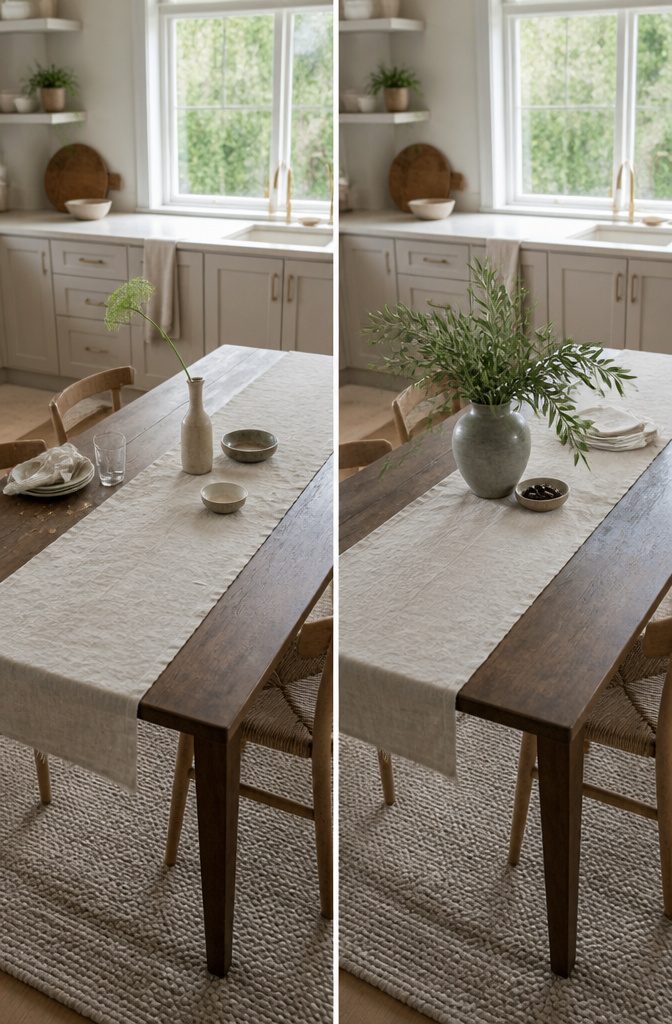
A round table wants round placemats or a small round centerpiece that respects the circle.
A rectangular table shows off a runner that emphasizes the length — you can use one alone or lay two across each other in the middle for more coverage.
The runner works because it repeats the shape of the table itself, drawing your eye the long way and balancing the proportions.
Match the rug to the table shape, too. A round rug under a round table keeps the geometry consistent, while a rectangular table sits best on a rectangular rug.
The same thinking applies to linens: if you use a tablecloth instead of placemats, pick one that matches the table’s outline. When the shapes line up, the whole setup looks intentional rather than improvised.
Scale matters as much as shape. Smaller items — vases, bowls, single stems — suit a round table better than a long arrangement that fights the curve.
On a rectangular table, you have room to run objects the length of the surface, either as one continuous piece or a series of smaller ones placed end to end.
4. Use Flowers, Greenery, or Plants
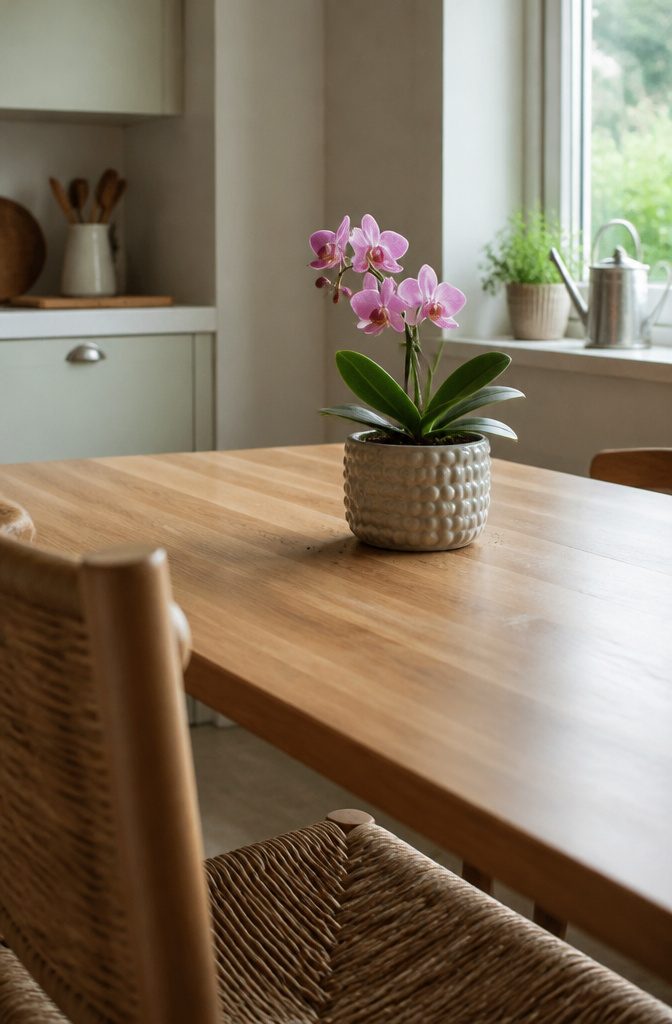
A single potted orchid or a vase of fresh green branches brings color and life to the table without blocking conversation.
Keep arrangements low enough that someone seated can see across the table—that usually means under twelve inches tall if you need a guideline.
Potted plants last longer and can move to a windowsill when you need the space, while cut flowers let you change the look weekly or match the season.
Wildflowers and greenery read rustic, roses and orchids feel formal, and tulips or daffodils brighten the room in spring without much effort.
I like potted plants for everyday styling because they stay put and don’t need constant replacement, but I’ll cut branches from the yard when I want something tall and sculptural in the center.
The vase matters too—it can add its own color or texture even when it sits empty between arrangements.
5. Add Fruit or a Bowl of Fruit
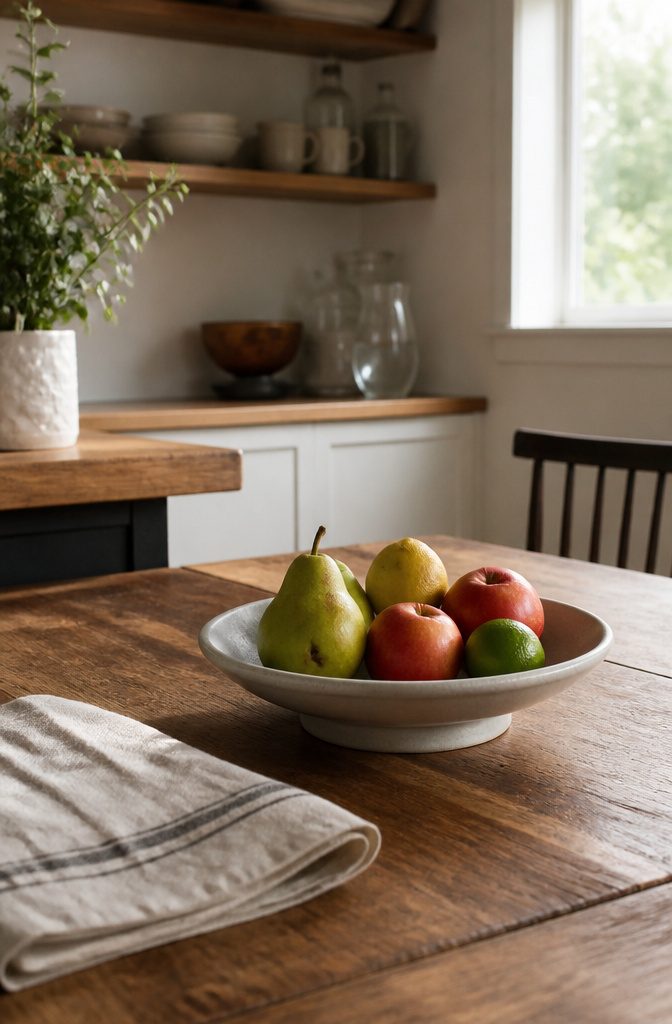
A bowl of fruit works when it looks arranged, not accidental. Citrus, apples and pears hold up for at least a week without refrigeration, so they sit long enough to function as decor before you eat them or toss them.
Bananas brown too fast to keep out. Berries are worse.
I put five or six pieces in a low bowl and mix the colors: green pears with red apples, lemons with limes.
The variety registers as a choice. Three identical apples in a heap reads as leftovers.
If the fruit sits in a footed bowl or on a cake stand, it gains enough height to anchor one end of the table without blocking conversation across it. A flat plate leaves it low and forgettable.
Fake fruit skips the spoilage problem but looks fake under daylight unless you spend more than the real thing would have cost over a month.
I replace the real bowl twice a week and consider it kitchen inventory that happens to look good in the meantime.
6. Use Candles or Candleholders
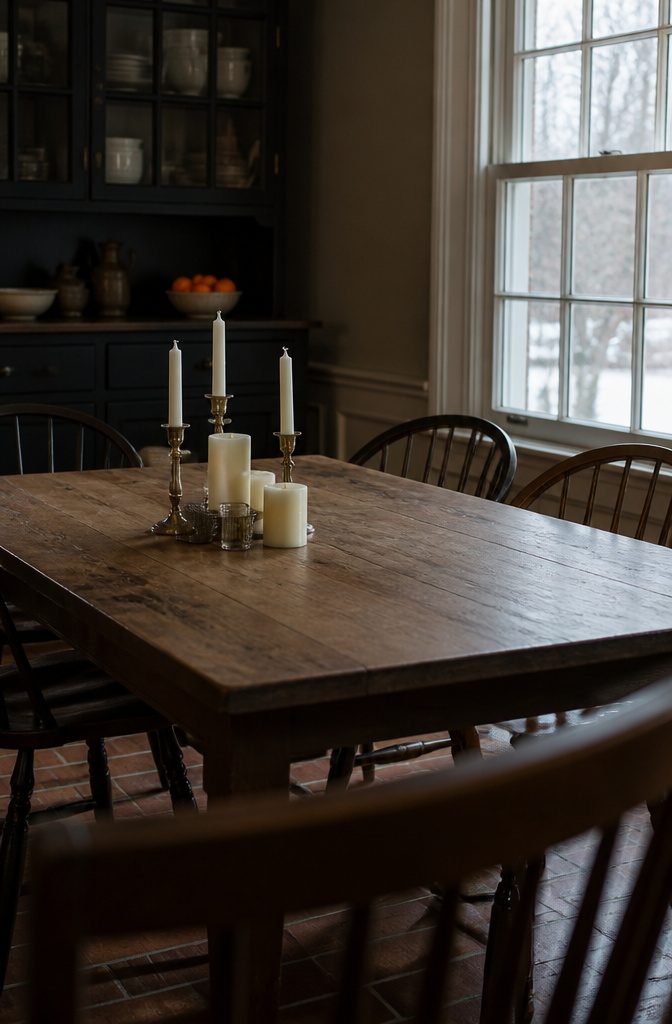
A cluster of candles in various heights and styles brings intimate, ambient light to the table without taking up space a larger centerpiece would.
I group tapers with pillars or votives rather than committing to one kind, since the mix breaks up the line and holds attention longer.
Tapers give you vertical drama in narrow holders, pillars anchor the center with body, and votives tuck into corners or flank the main arrangement.
Different heights matter more than matching materials. A single row of identical votives reads flat; stagger three or five candles from four inches to ten and the grouping looks deliberate instead of leftover.
You can arrange them yourself or use a candelabra if the style fits the room.
Scented candles work when the fragrance stays subtle enough not to compete with food, though I skip them during dinner and save them for when the table sits empty between meals.
7. Add Table Linens, Runners, or Placemats
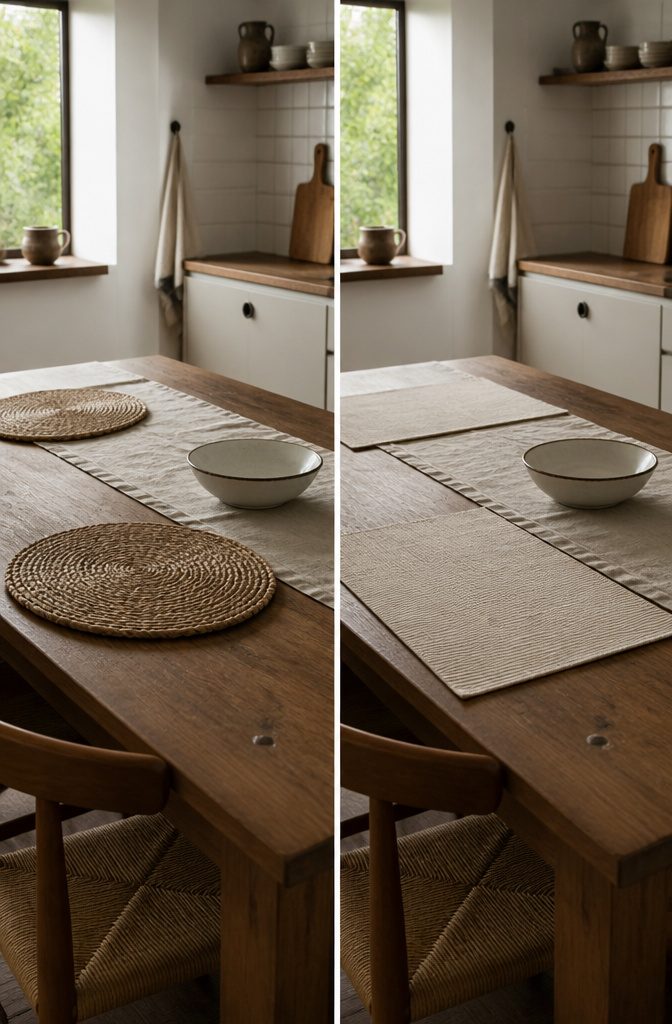
A table runner or placemats protect the surface and bring in pattern or texture without covering the whole thing.
Match the material to your table type: wicker placemats look right on wood if you want a rustic feel, but they clash with glass — ceramic or stone reads cleaner there.
A runner works well on its own, or you can cross two in the middle for a more layered look.
Placemats suit everyday use better since you can pull them for each person; a runner is quicker to style for a centered display.
Linen, woven materials and faux fur all add warmth, and you can switch them with the season — berber or faux fur draped over wood works particularly well in winter.
Pick colors that tie to the rest of the room, whether that means staying neutral or adding a pop that complements what is already there.
High-quality linens hold up longer and look intentional rather than temporary, so buy once and rotate them instead of replacing cheap ones twice a year.
8. Layer Textures and Materials
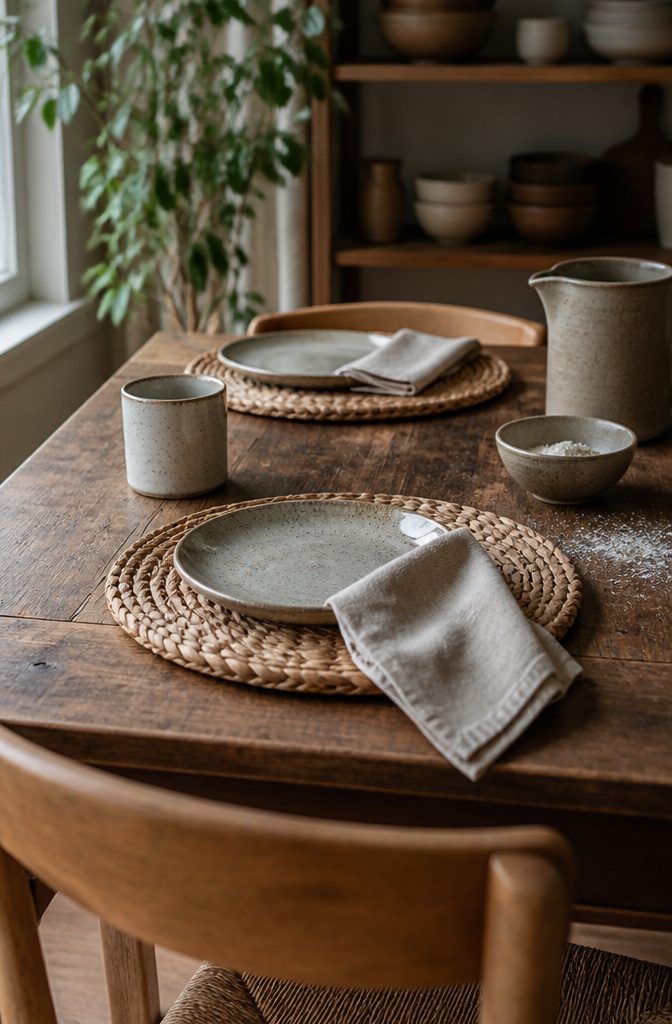
Mix woven placemats with linen napkins and textured pottery to give your table the kind of depth that makes it feel considered rather than flat.
The woven texture under the plate plays against the soft drape of fabric and the matte or glazed finish of ceramic, and that contrast holds attention without needing pattern or bright color to do the work.
Wood and linen sit naturally together. If your table surface is already wood, layer cotton napkins or bunny tail branches alongside textured pottery instead of adding a tablecloth.
The grain of the table becomes part of the composition that way, and you skip a layer that can read fussy on a surface that already has character.
Material pairings do break down when the tactile qualities fight each other.
Wicker placemats look right on wood if you want a rustic-meets-contemporary feel, but wicker on glass reads awkward. Ceramic or stone coasters and mats hold their own against the slick hardness of glass in a way woven materials do not.
Match the hardness and weight of your accents to the surface they are sitting on, and the mix will look intentional rather than accidental.
9. Coordinate Color with the Room
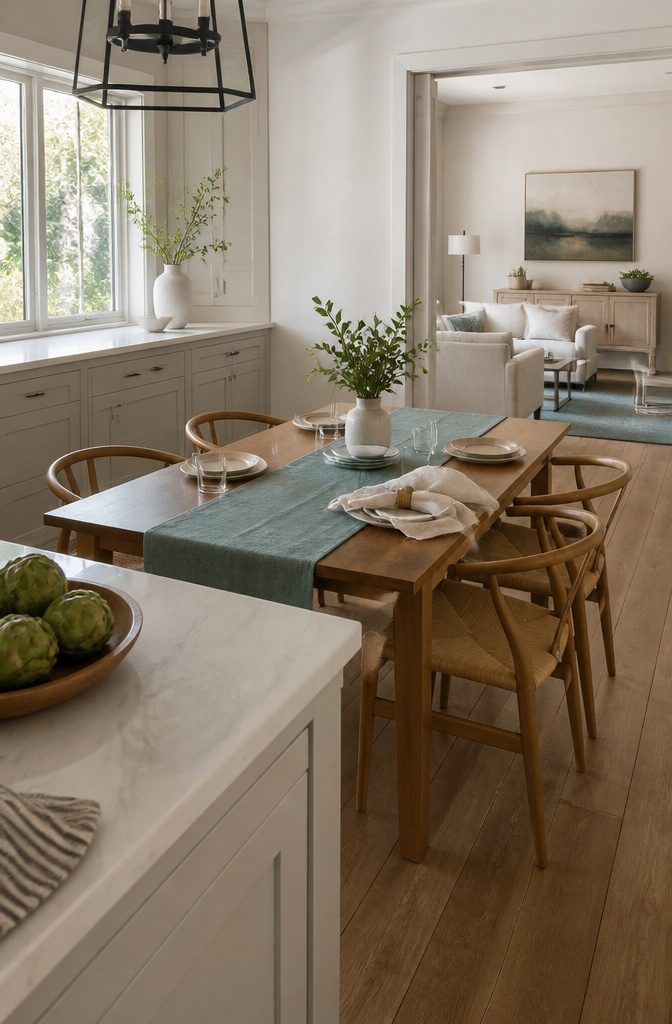
The table can echo the room’s palette or bring in one accent that complements what is already there.
If the space leans neutral with grays, whites, or soft beiges, placemats and napkins in those same tones keep the look unified and calm.
A pop of color works when it ties to something else nearby: a runner in the same teal as a rug in the adjoining living room, or candles that match an accent wall.
Make the table feel like it belongs in the room instead of decorating it separately.
Darker rooms with richer tones can handle deeper, more opulent colors in the table decor.
Think burgundy napkins, gold accents, or navy runners that lean into the room’s existing mood. Lighter, airier spaces do better with pastels or brighter accents that lift the whole scene without overpowering it.
I look at what the walls, cabinets, and nearby furniture are doing first, then pick table colors that either blend right in or pull from the accent already working in the room.
10. Style Seasonally or for an Occasion
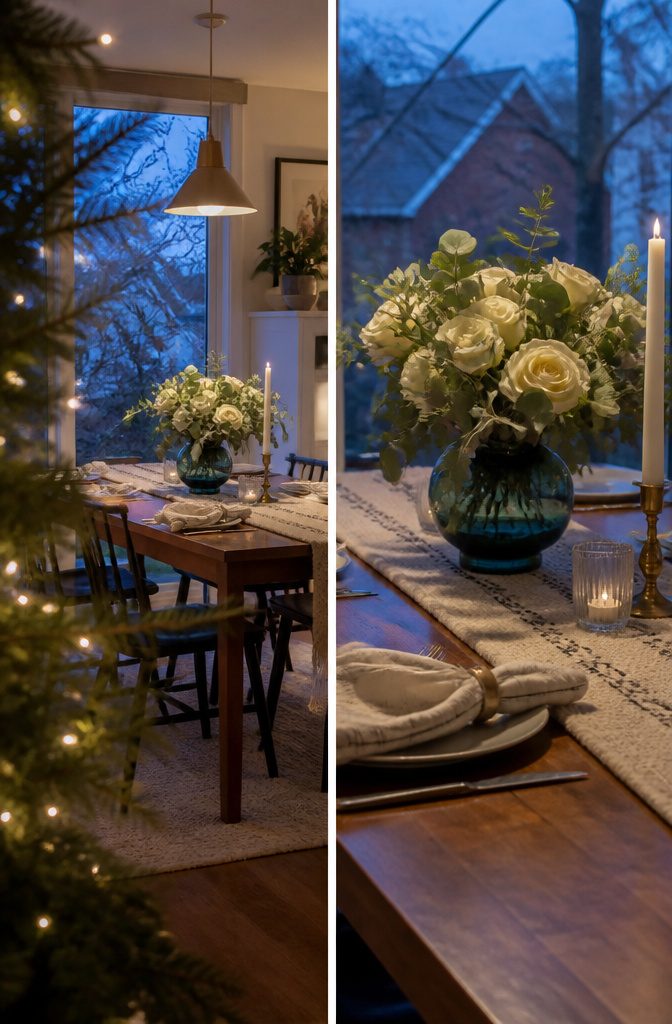
I rotate what sits on the table every six to eight weeks, and sometimes more often if I’m hosting.
Flowers are the fastest change: tulips and daffodils in spring, sunflowers or wildflowers in summer, burgundy dahlias or rust-colored mums in fall, white roses or eucalyptus branches in winter.
The vase itself can shift the mood without spending on new stems—a ceramic pitcher reads farmhouse, a clear glass cylinder leans modern, and a colored glass vessel becomes the ornament whether flowers fill it or not.
Linens follow the same rotation. I drape a berber or faux fur runner over the wood table in winter for warmth and switch to linen in warmer months.
Tablecloths protect the surface and let me stamp a seasonal palette—deep reds and whites for December, oranges and neutrals for October—without repainting a wall.
For hosting, I add candles, swap everyday fruit for a styled bowl of seasonal produce, and pull out placemats that match the occasion. The everyday setup stays simple so I can set it back fast.
11. Make the Display Personal
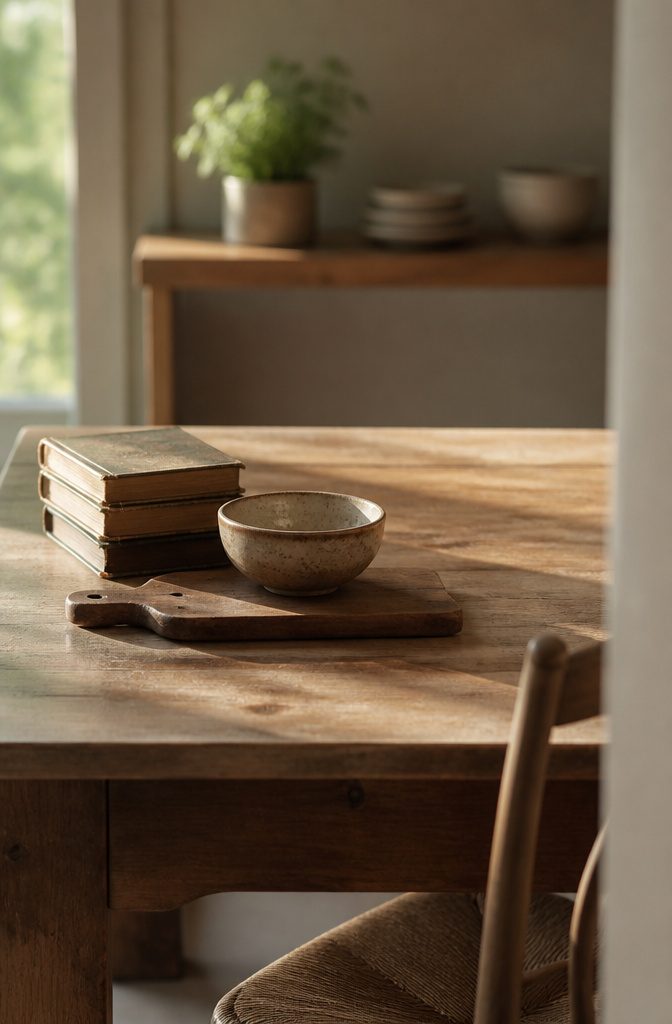
Personal objects tell the real story.
A stack of vintage cookbooks you actually use, a pottery bowl you picked up on a trip, travel souvenirs arranged by memory rather than by size—these pieces give the table a sense of someone’s taste instead of a catalog shot.
The objects should reflect an actual interest. A collection works better than random pieces because it reads as intentional, even when the grouping is informal.
The same goes for sentimental items.
Family photos in simple frames, your own pottery if you make it, or a wooden serving board left out as both decor and function all anchor the table in real use. The pieces don’t need to match.
What keeps the display from looking cluttered is restraint in quantity and a loose visual link between objects, whether that’s material, scale, or color. A few meaningful pieces beats a crowded surface every time.
12. Keep the Setup Functional for Meals and Daily Activities
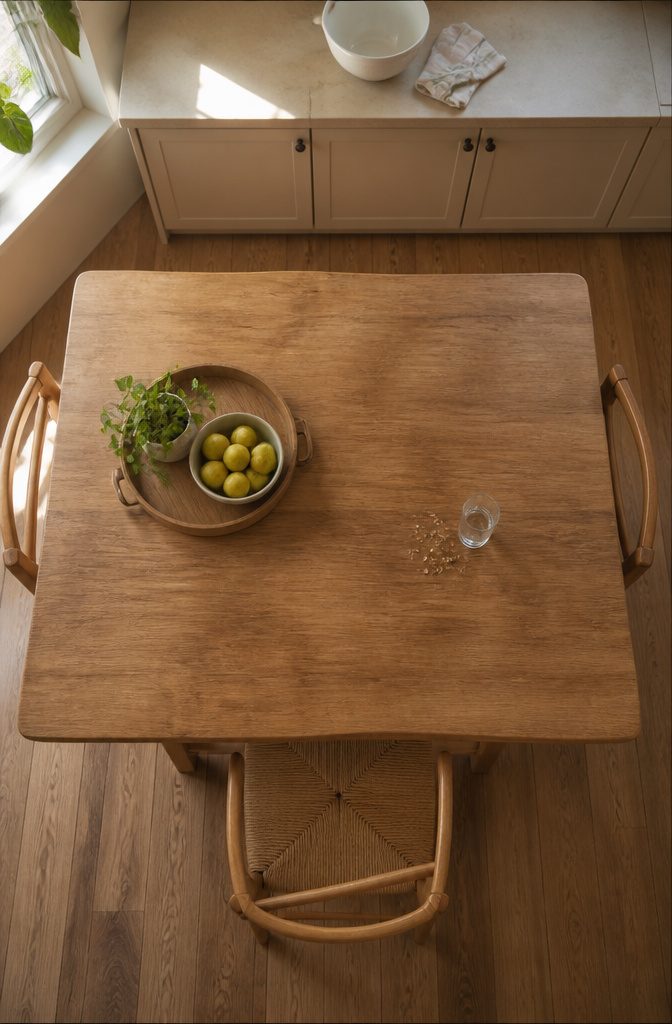
The decor can look beautiful, but it loses all appeal the moment someone has to clear it away just to set down a plate.
Leave at least 24 inches of open space per person at the table so everyone has room for dishes and elbows without crowding.
That figure comes up repeatedly when stylists talk about what actually works for daily dining, and I find it holds up whether the table is round or rectangular.
Stick with centerpieces and accents that move easily or already serve a purpose. A low vase, a fruit bowl, or a small potted plant can lift off the table in seconds when you need the surface.
Tall or heavy pieces that block sightlines across the table or take two hands to relocate become friction rather than function.
If your table doubles as homework space or meal prep overflow, lightweight items win every time. You want styling that feels finished but does not turn every meal into a game of musical chairs with your decor.
13. Consider Table Material and Existing Room Style
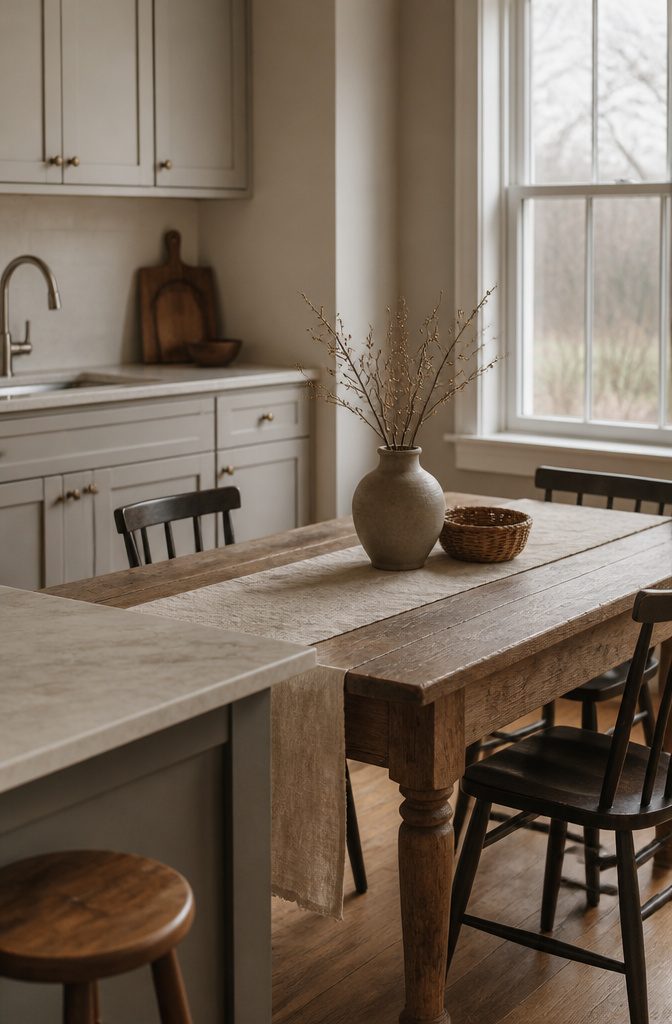
Match the material to what already sits in the room. A farmhouse wood table takes differently to decor than a modern glass one does, and forcing the wrong look onto either reads as staged rather than cohesive.
Wood tables, especially those with visible grain or a weathered finish, pair naturally with ceramic, woven baskets, and linen. Glass tables call for clean shapes and reflective or metallic finishes that echo the surface without cluttering the view through it.
Metal bases or industrial frames work with matte pottery and raw stems in simple vases, while laminate tables in neutral tones stay flexible and can lean rustic or contemporary depending on what you layer onto them.
The room’s existing style narrows the field further. A modern space with sharp lines and neutral walls supports minimal decor in one or two materials, while a warmer traditional room can carry heavier arrangements and mixed textures.
I start by identifying the dominant finish in the room, whether that is brushed nickel, oil-rubbed bronze, warm wood, or painted cabinetry, and repeat it somewhere in the table styling so the setup feels deliberate rather than random.
14. Use Lighting as Part of the Styling
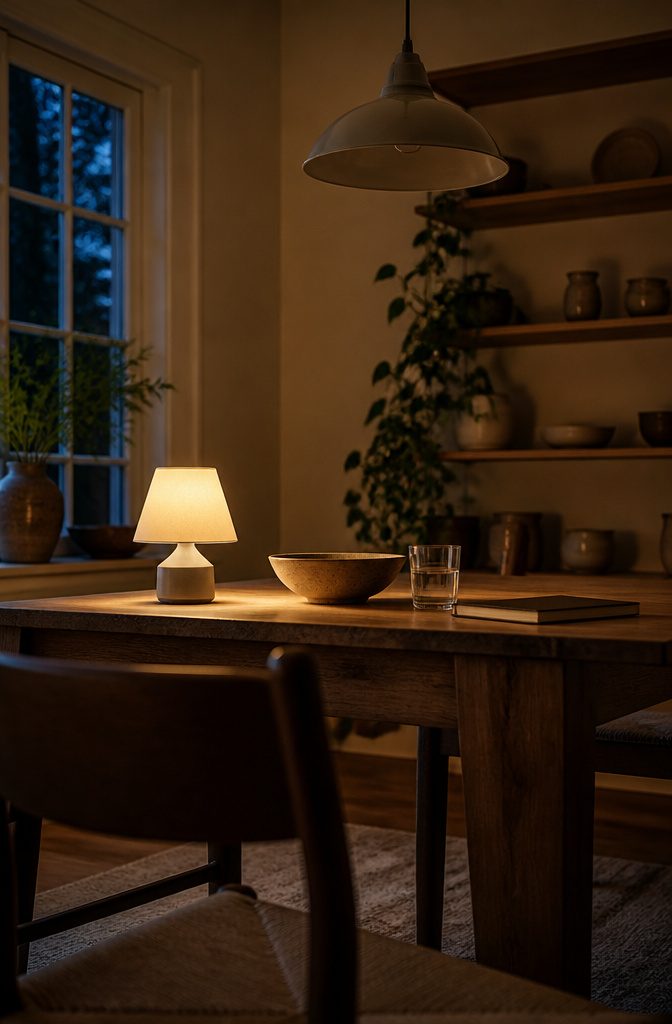
The fixture overhead sets the table’s mood before you arrange a single object. A chandelier or pendant light becomes a focal point on its own and makes whatever sits below it part of the same statement.
If you hang something big or elaborate, the table underneath can stay fairly simple. A striking array of white pendants, for example, keeps the eye up and gives the seating area definition without needing much surface decor at all.
If your centerpiece is tall, check that it won’t compete with the fixture.
A dramatic vase or branch arrangement that reaches into the chandelier’s sightline looks more like a collision than a composition. Rooms with two separate lights give you more freedom to go vertical in the center without that clash.
Table lamps are another option when overhead lighting isn’t installed or when you want an intimate restaurant feel. A cordless lamp gives ambient lighting for everyday meals and doubles as decor you can move without calling an electrician.
Candles do similar work, though that falls into a separate styling category altogether. The fixture choice shapes what belongs on the table, and getting the height relationship right makes the difference between cohesive and crowded.
15. Select Chairs to Complement the Table
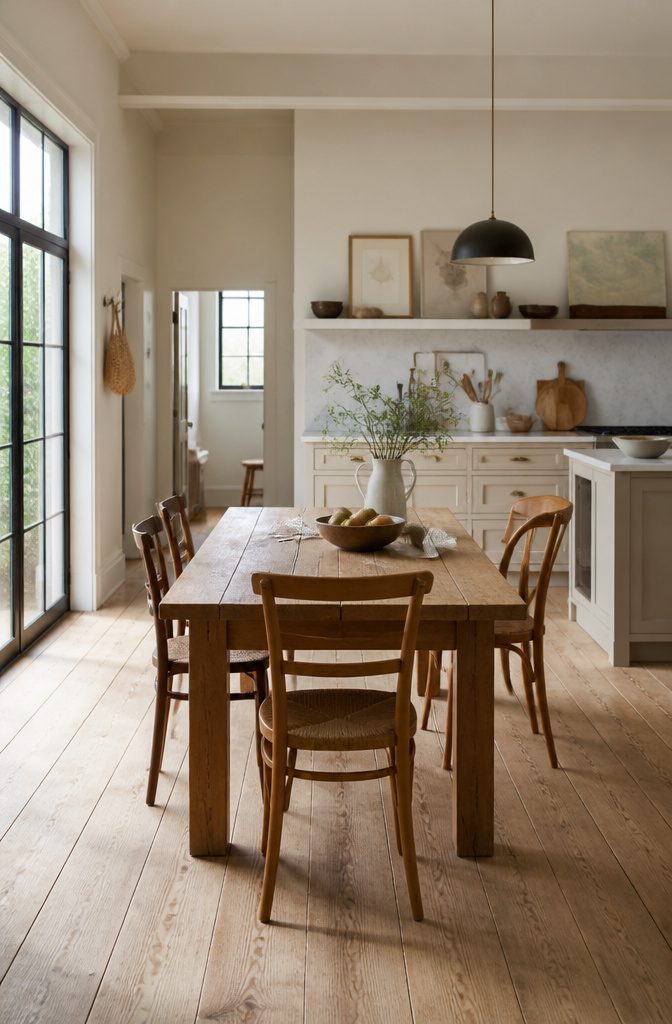
Chair shape and scale decide whether your table feels cohesive or mismatched. Match the chair lines to the table’s profile: straight-leg chairs with clean angles work with modern rectangular tables, while curved or spindle-back chairs suit round pedestal bases.
Aim for visual conversation, not identical style. A farmhouse table can carry midcentury molded chairs if the leg style echoes the table’s proportions.
Size matters more than most people expect. Chairs too small make a heavy table look overpowering; chairs too tall or wide crowd the space and make seating feel awkward.
I look at seat height first (standard is 18 inches from the floor), then compare the chair back height to the table’s visual weight. A delicate table needs slimmer chair frames; a thick plank top can handle heftier profiles.
Mixing works when one element ties them together. Different chair styles around the same table succeed if they share a finish, a similar seat height, or a repeated material.
The table acts as the anchor, so the chairs can vary as long as they respect its scale and don’t fight its lines.
16. Add a Rug Beneath the Table
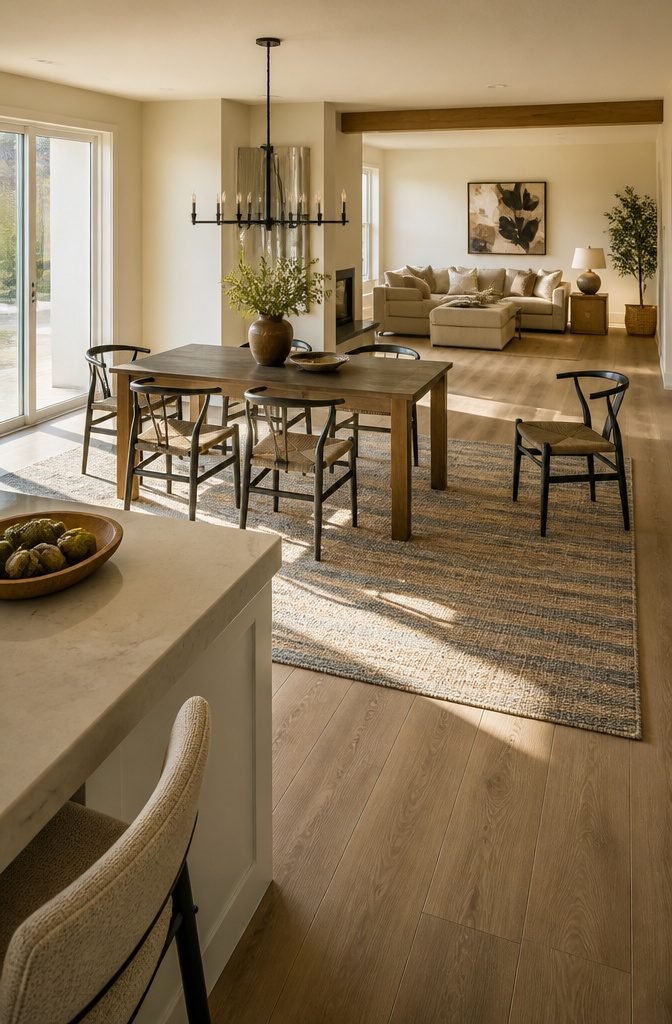
A rug grounds the table and defines the dining zone, which matters most in open-plan kitchens where the table otherwise floats in the middle of a larger space.
The rug should extend at least 24 inches beyond the table on all sides so chairs stay on the rug when pulled out.
For a standard 36×60-inch rectangular table, that means a rug around 8×10 feet; round tables follow the same 24-inch clearance from the edge.
Material choice separates the rugs that last from the ones that need replacing in six months. Flatweave wool, jute, and indoor-outdoor polypropylene all handle foot traffic and spills better than high-pile or looped styles that trap crumbs.
Natural fiber rugs add texture but stain easily, so I save those for tables that see lighter use. Polypropylene cleans with a hose and dries fast, which wins for families.
The rug’s color and pattern should tie back to the room without matching the table exactly.
A patterned rug in the room’s accent colors brings the table into the palette, while a solid rug in a neutral keeps the focus on what sits on the table itself.
17. Group Smaller Objects on a Tray or Board
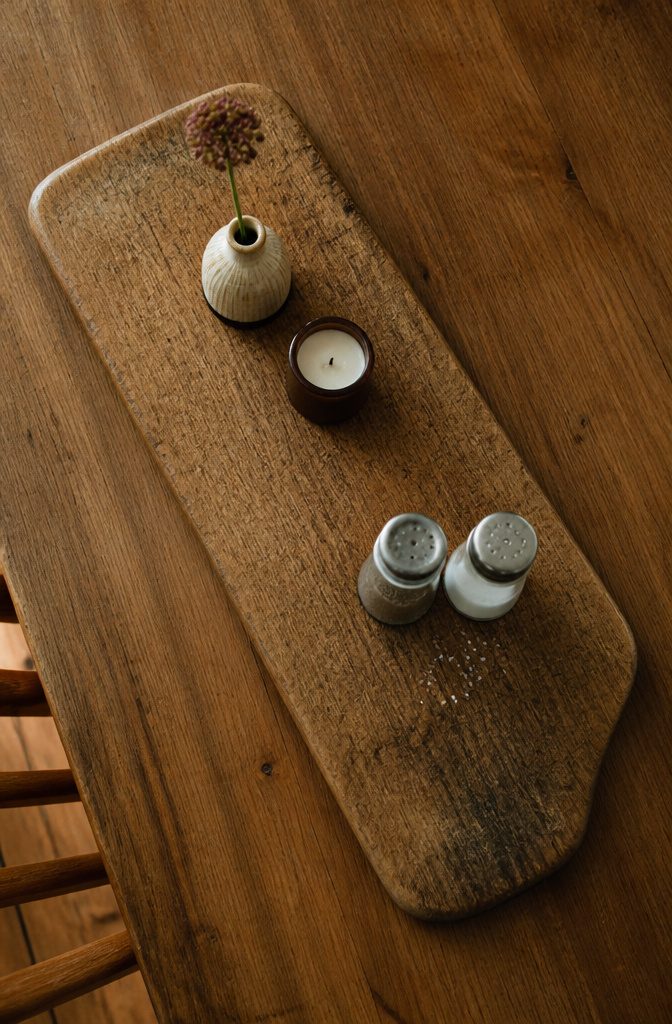
When no single piece is large enough to hold the center, group smaller items on a tray or board so they read as one display instead of scattered clutter.
A rectangular dough bowl works the same way. The tray pulls salt and pepper shakers, a small vase, and a candle into something that looks intentional rather than leftovers from breakfast.
I look for trays wide enough that the objects inside do not crowd each other but narrow enough that the whole thing still fits the table without blocking sight lines.
An antique bread board brings the same visual weight as a purpose-made tray and costs less at estate sales.
The board’s worn surface makes new objects look less matchy, which I prefer to a lineup of things that all came from the same store on the same afternoon.
Odd numbers arrange easier than even. Three items give you a tall one in back, a medium to one side, and a low sprawl in front without the symmetry that makes grouped objects feel like a set piece.
18. Use a Long, Linear Arrangement
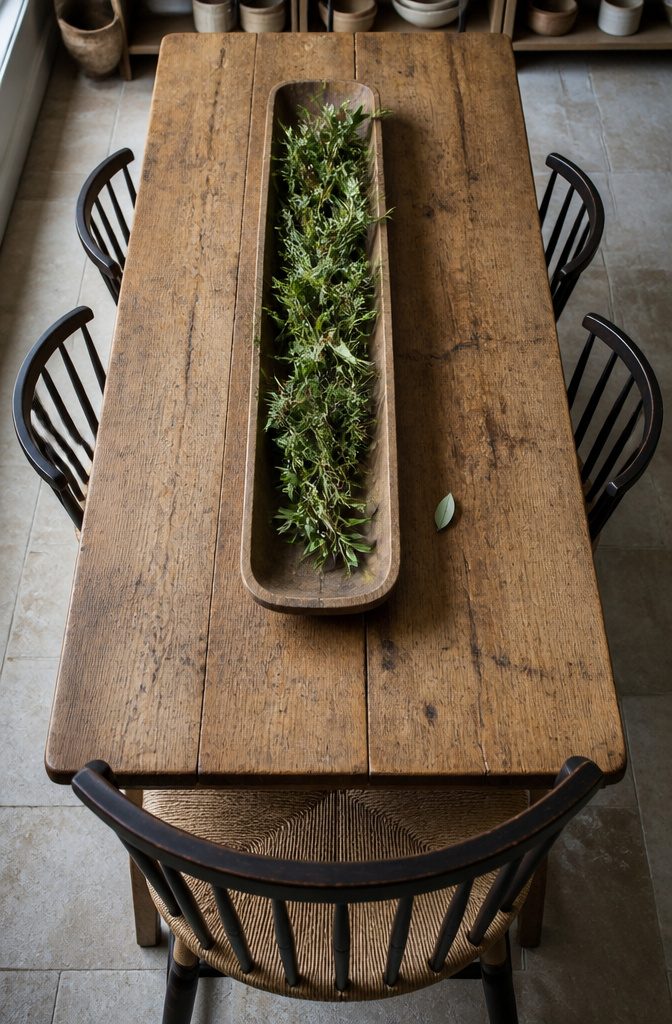
One long object down the center or a series of smaller pieces in a line gives you a finished look without blocking sightlines across the table.
Keep everything low and narrow enough that someone sitting at one end can still see and talk to someone at the other.
A rectangular dough bowl is one of the easiest single pieces to run lengthwise.
It anchors the table without taking up much width, and you can fill it with seasonal stems, lemons, or leave it empty if the wood grain is interesting enough.
If you don’t have one long item, you can repeat smaller objects instead: three or four identical votives, small bowls, or bud vases spaced evenly down the line. The spacing matters more than you’d think.
Too close and they read as clutter, too far apart and the line breaks. I aim for roughly equal gaps between each piece so the whole arrangement holds together visually.
19. Mix Styles or Objects for an Eclectic Display
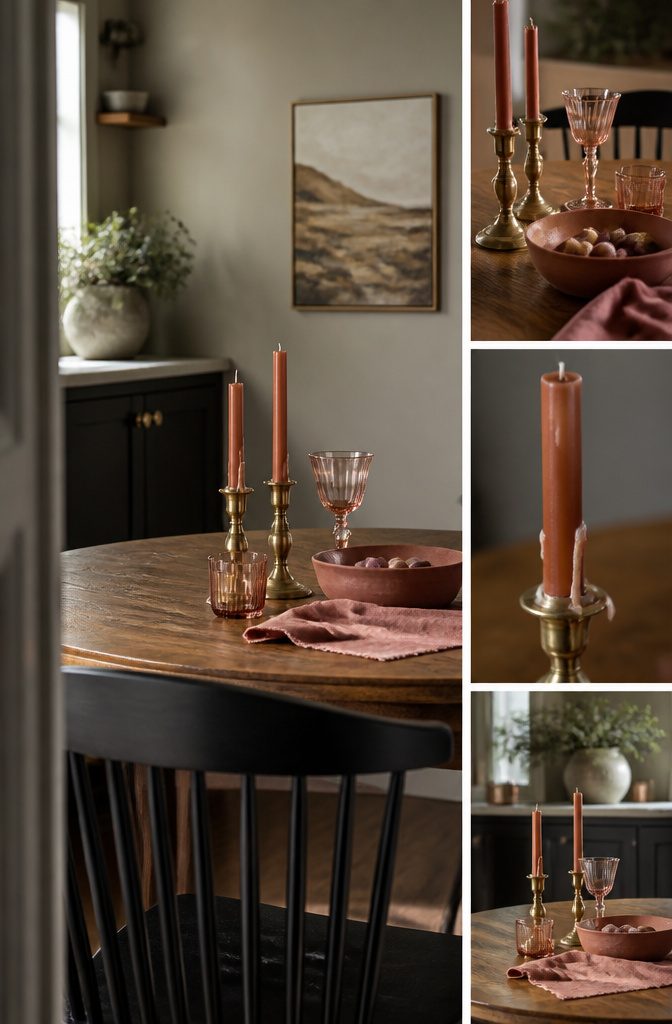
I’ve always thought the secret to pulling off an eclectic table is one clear thread running through it.
That might be color: a mix of vintage glassware, a ceramic bowl, and brass candlesticks all work together when they share a warm terracotta or dusty rose.
Or it could be material, like wood tones in different finishes, or shape, where round plates and a round vase echo each other even when nothing else matches.
Without that thread, the eye doesn’t know where to land and the whole thing reads as clutter.
The colors in your dining room set the boundary. A monochromatic palette in the room lets you add one or two accent colors on the table without the display fighting the walls.
If your room already leans colorful, stick to textures and varied shapes instead of piling on more hue.
Mixing materials helps too: vintage china next to steel or glass keeps things from looking too carefully matched, which is the point. Eclectic means intentional variety, not random.
Round Table Styling Choices
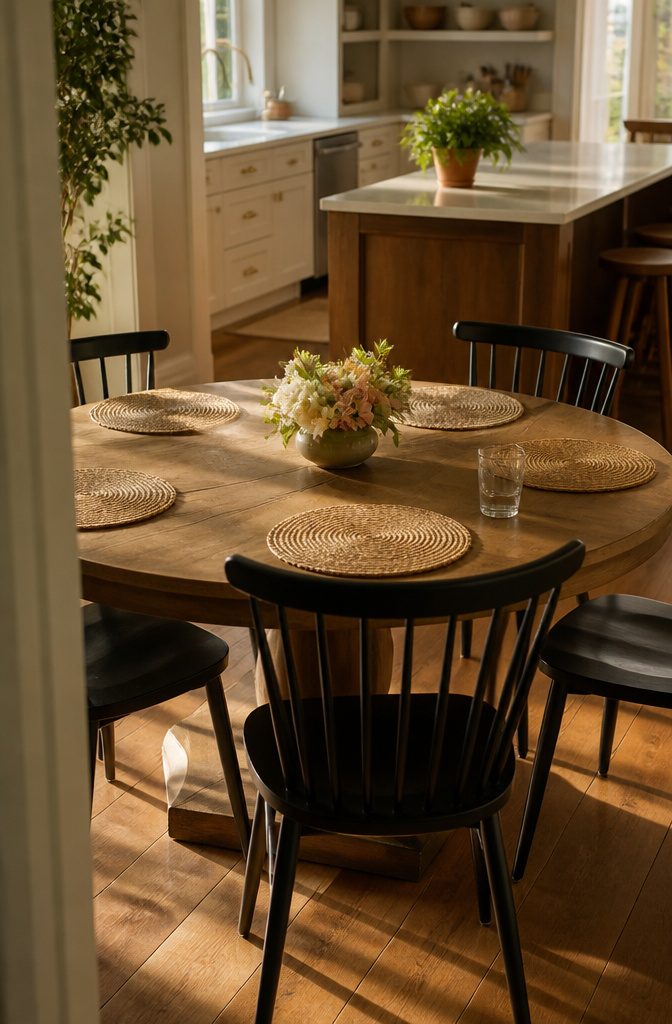
A round table looks balanced when you work with the geometry instead of against it.
Low-profile centerpieces prevent sightline blocks across the diameter — a vase of fresh flowers, a potted plant, or a bowl of fruit sits at the right height for smaller tables.
Larger rounds take groupings: candles, a tray with a few key items, or a small sculpture.
Round placemats and round plates reinforce the shape better than rectangular ones. The circular repetition reads as intentional rather than accidental.
Check the view from every seat. Because a round table has no head or foot, your styling gets seen from all angles, especially in open floor plans.
The center should pull the eye without dominating it. Balance matters more here than on a rectangle, where symmetry solves the problem for you.
Keep it movable. If the table doubles as homework space or prep surface, lightweight pieces you can shift in two seconds beat bulky centerpieces that turn into an obstacle course.
Rectangular Table Styling Choices
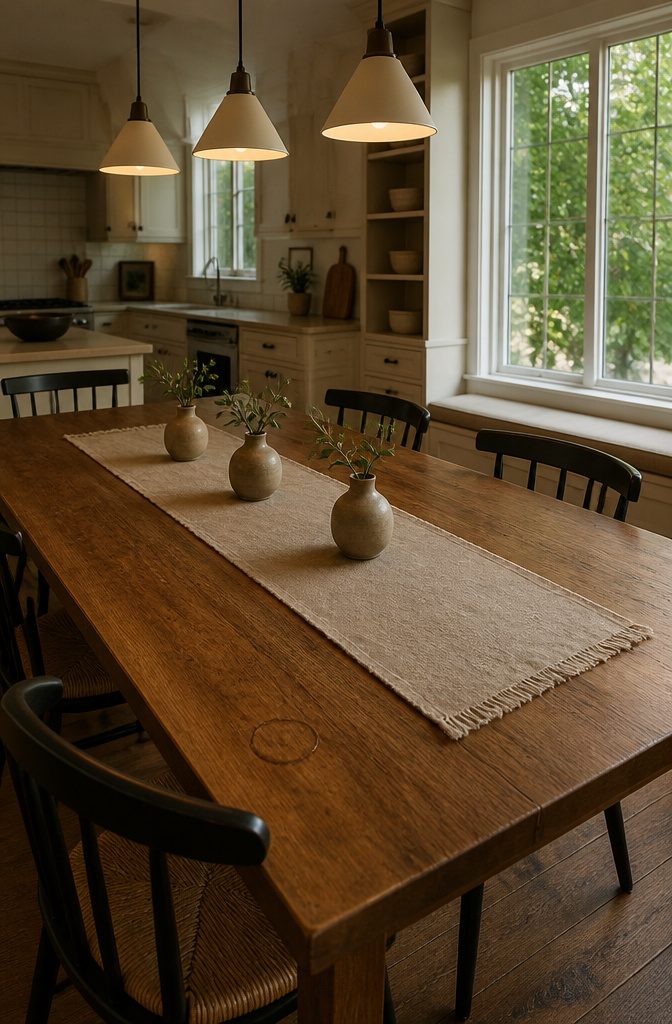
A runner down the center follows the long axis of a rectangular table and makes the proportions feel intentional rather than accidental.
I use one that leaves about a foot of bare table on each side, which keeps the setup from looking cramped.
Multiple pendants spaced evenly along the table’s length work better than a single fixture off to one side, because they light the whole surface without dead zones at the ends.
If you prefer one light, a large statement pendant centered above the table does the job, but it needs enough visual weight to hold the space — a small fixture looks lost over a long table.
The dough bowls and linear arrangements that work on rectangular tables fail on round ones, so lean into the shape: length is the advantage here, and a runner or a series of smaller objects spaced down the middle uses it.
Everyday Versus Occasion Styling
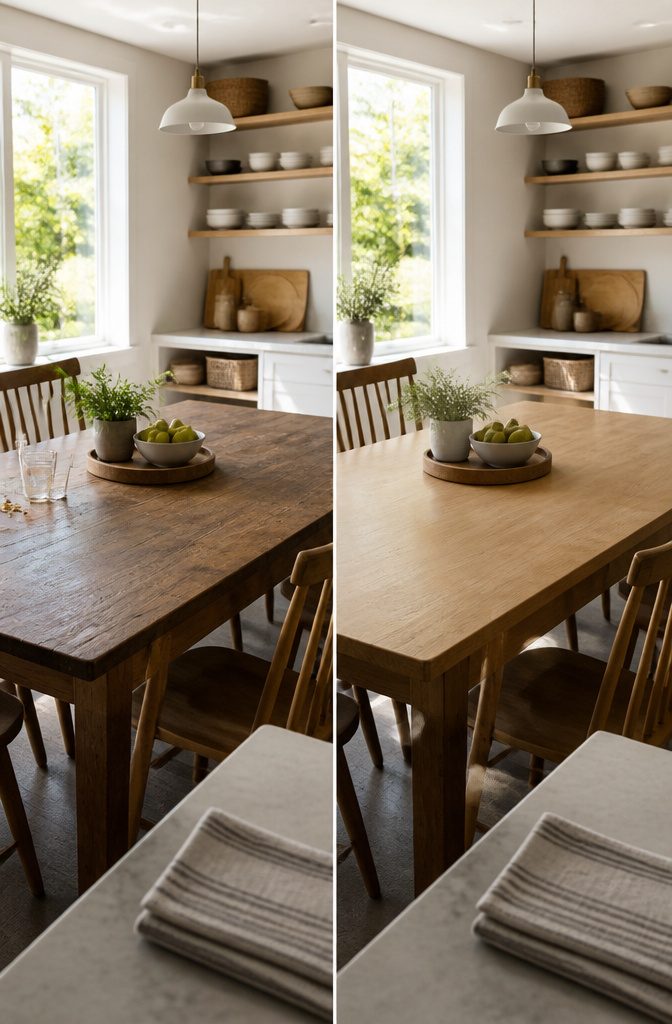
Everyday styling keeps the table ready to use.
The pieces stay minimal and cohesive with the rest of your home: a single centerpiece, a low tray, a bowl of fruit or greenery that can stay put through breakfast and dinner without anyone moving it out of the way.
Choose something attractive that does not interfere with function, pulling from what already works in the room instead of introducing a new theme just for the table.
Hosting or seasonal setups let you go bolder.
Linens appear, flowers in larger arrangements, layered metals, ornaments or wreaths, gourds and pumpkins in fall or pastel stems in spring. Color can shift with the mood or the occasion regardless of whether it matches the everyday palette.
You can build a full tablescape around a theme, a season, or a specific event without worrying about cohesion with the rest of the house, because it is temporary and everyone knows it.
Frequently Asked Questions
How to make a small table look nice?
Start with one strong centerpiece that fits the table’s scale: a single vase, potted plant, or small bowl of fruit anchors a compact surface without crowding it.
Keep arrangements low (under 12 inches tall) so they don’t block conversation, and use lightweight items you can move quickly when you need the table clear.
A simple runner or a pair of placemats adds texture without taking up the whole surface, and grouping small objects on a tray keeps them from reading as clutter.
What is the 3-5-7 rule in decorating?
Group decorative objects in odd numbers (3, 5, or 7 items) to create visual interest and avoid the static look of even numbers.
Odd groupings arrange more naturally: you can place a tall piece in back, a medium one to the side, and a low piece in front without the symmetry that makes displays feel stiff.
This applies to vases on a tray, candles down the center of the table, or any collection you’re styling together.