
A small balcony turns into usable space when you choose furniture that folds or stacks, build vertical instead of spreading outward, and pick what the space is actually for before the first chair arrives.
Most renters lose square footage to pieces that look good in the store but claim too much room once they’re home.
No-drill curtain rod brackets rated to 20 pounds let you hang privacy screens or outdoor curtains without lease trouble, and a ladder propped against the wall becomes instant shelf space for votives, lanterns or potted succulents.
1. Choose Compact Seating That Fits the Space
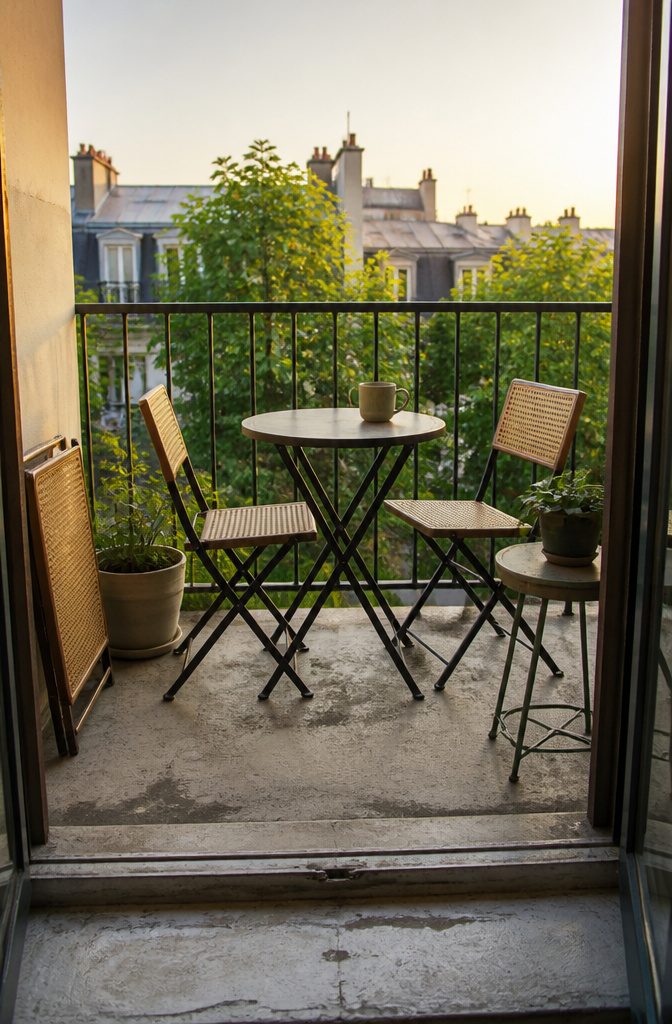
The furniture needs to match the square footage you actually have, not the set you fell for in the catalog. Start with compact, lightweight pieces that suit how you plan to use the space.
A foldable bistro table and two chairs handle morning coffee or a quick lunch without claiming every inch. Foldable and stackable chairs let you tuck seating away when it’s not in use, and they cost less than fixed pieces.
Cane chairs work well for a relaxed feel. If you want something lower and more casual, mudda stools take up less visual space than full chairs.
The move is to prioritize what you’ll actually do out there. If you read more than you eat, one chair and a side table beat a dining setup you never touch.
Avoid filling the balcony just because you have options.
Two cane chairs and a couple of planters can be enough. Choose pieces rated for weather, and test that you can shift them around before you commit to a layout.
2. Add Plants and Greenery
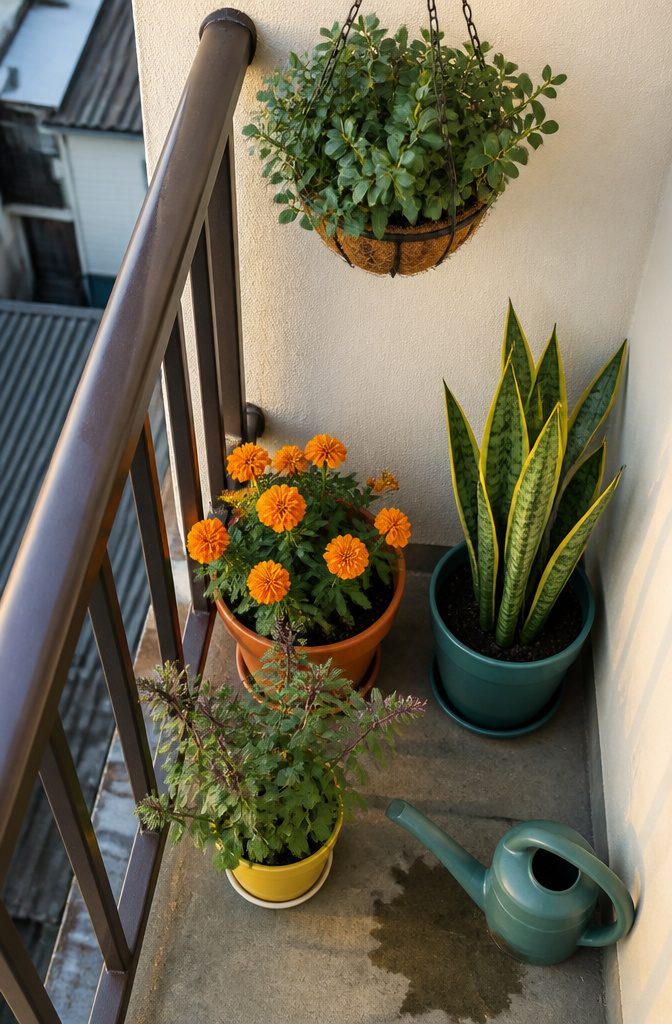
Plants are the shortest route to a balcony that feels finished. Two to three pots create a serene ambiance without crowding the floor, and varying the planter sizes adds depth even when square footage is tight.
Marigolds, roses, Indian basil, and snake plants work well for renters who want color or texture without a steep learning curve.
Hanging baskets and wall-mounted planters keep greenery off the ground entirely.
Succulents, lavender, and small flowers sit in colorful pots on window sills or railings, and climbing plants like ivy or wisteria trained up a trellis add vertical coverage without claiming floor space.
A multi-layered stand holds herbs that are both decorative and functional, though the stand itself takes up room that hanging arrangements do not.
Low-maintenance plants win when watering schedules compete with real life.
Succulents tolerate missed weekends, and snake plants handle low light better than most flowering options. If neighbors are below, add liners to every pot so dirt and water stay contained.
3. Use Vertical Space for Plants and Storage
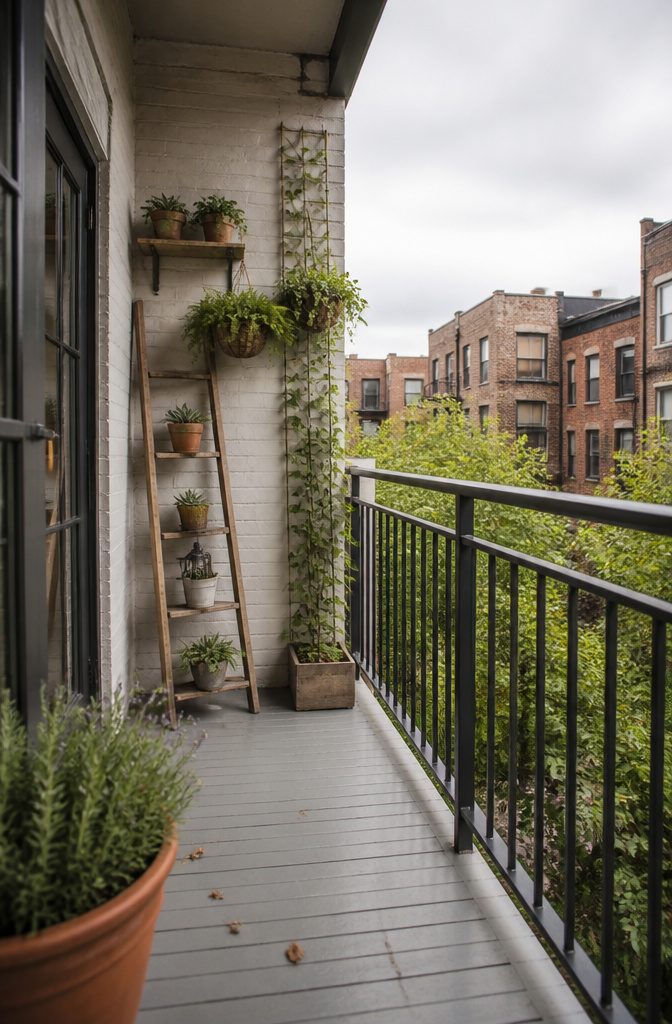
When floor space is measured in feet, the answer is to build up. Wall-mounted shelves, ladder planters, and hanging baskets let you stack greenery and storage without surrendering another inch of standing room.
A vertical garden gives the impression of a larger balcony than it is in actual measurement.
That perception shift matters more than the square footage you technically save.
A ladder propped against the wall becomes instant shelf space: votives, lanterns, or potted succulents line the rungs. Hang the same ladder from the ceiling and you gain hooks for lights or trailing plants without touching the deck.
Climbing plants trained up a trellis add greenery vertically, and the floor stays clear. Ivy and wisteria work if you have sun.
Hanging baskets or vertical planters hold herbs or flowers at eye level, where they register as decoration instead of clutter at your feet. The floor reads open, and open space is what a small balcony never has enough of.
4. Add Soft Furnishings and Rugs
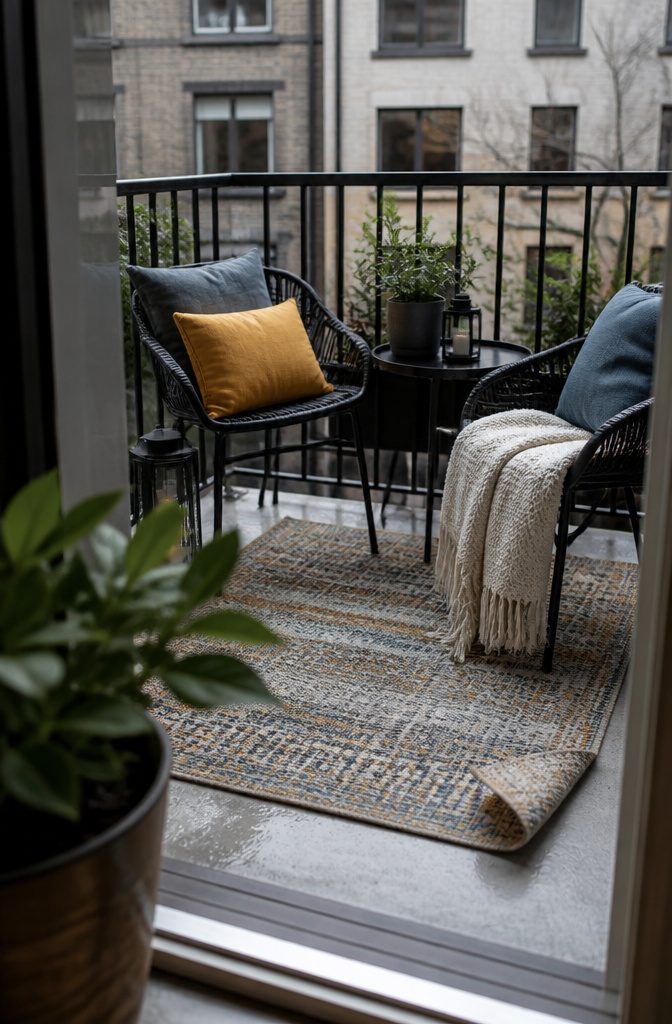
Cushions and throw pillows make a balcony feel lived-in without taking up square footage.
I look for outdoor cushions made from weather-resistant materials so they hold up through summer rain and UV exposure without fading or going flat after one season.
A few on your chairs or piled in a corner work just as well as a full seating arrangement, and they double as a way to bring in color if the rest of the space leans neutral.
Blankets are practical for cool evenings when you want to stay outside past sunset.
They don’t need dedicated storage and can drape over a chair arm between uses. On a covered balcony, even an old indoor rug works underfoot.
If you’re buying new, woven styles or bold patterns tend to wear better outdoors. A rug changes the feel of concrete or composite decking immediately and makes barefoot mornings more comfortable.
5. Add Lighting for Atmosphere
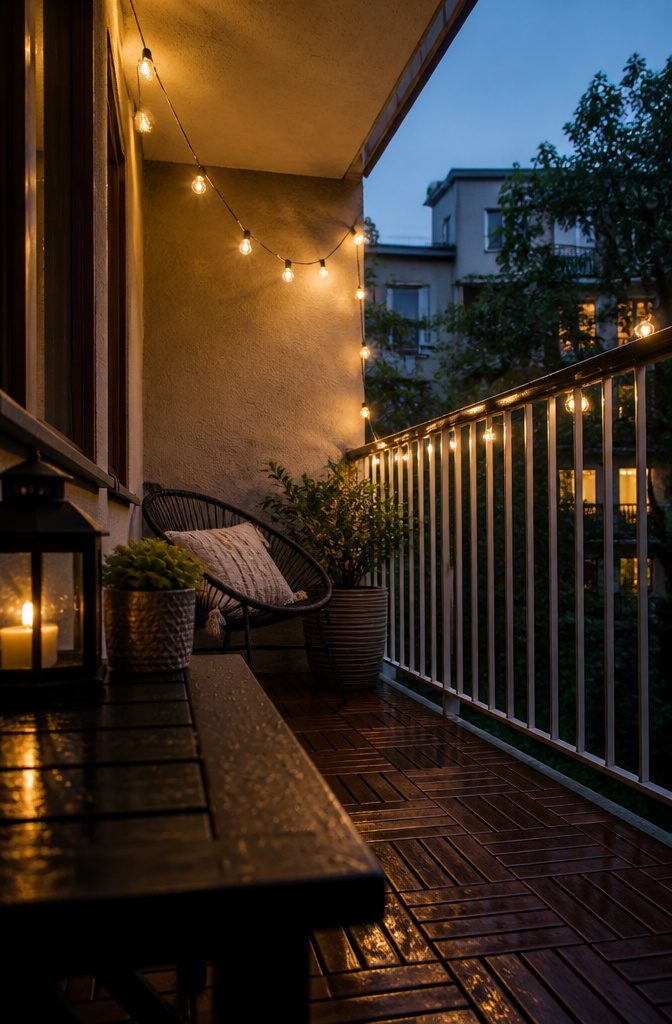
Add Lighting for Atmosphere
String lights or fairy lights can turn a small balcony into something that feels warm and inviting after dark without eating into the limited floor space you have.
Solar-powered lights are a practical choice since they need no outlet and no wiring, and battery-operated LED lights work just as well if you want to skip the flame.
Hang them from the ceiling or wrap them around a handrail, as long as they’re rated for outdoor use.
Lanterns add another layer of atmosphere. Paper lanterns hung from above keep surfaces clear, and candle lanterns on a side table or the floor bring in that flicker of real flame.
Weatherproof candle holders protect against wind and rain, though I prefer a natural flame when I can get one.
TIKI Brand table torches fit a small balcony well, and the line includes a Geo Globe, Painted Glass, and Mixed Material Votive that each bring a different finish without taking up much room.
6. Add Privacy or Shade
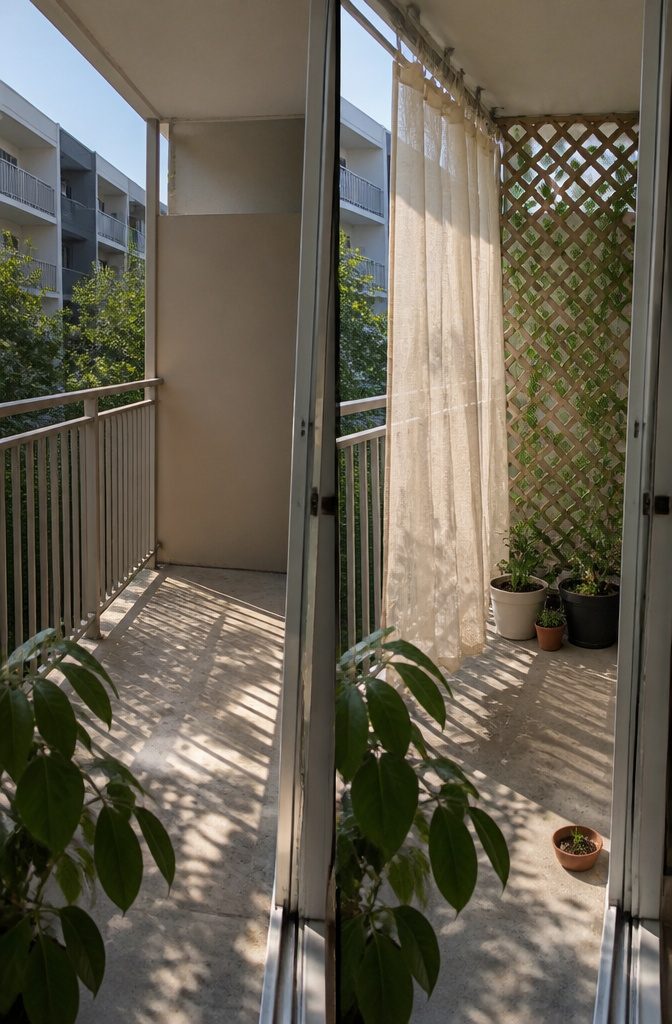
Privacy screens and outdoor curtains solve two problems at once: they block sightlines from neighboring balconies and cut direct sun without closing off the space entirely.
A simple outdoor curtain filters light while airflow still moves through, which keeps the balcony cooler than a solid panel would. Retractable screens give you control over when you want separation and when you want the space to feel open.
Lattice or trellis panels are sturdier and let air through while still screening the view.
You can lace them with string lights or hang small potted plants to take advantage of vertical height, and climbing vines turn a plain panel into a green wall over time.
No-drill curtain rod brackets rated up to 20 pounds make curtain hanging renter-friendly and reversible, so you can switch them out or remove them without damage when the lease ends.
Both options turn an exposed balcony into something that feels more private and more usable.
7. Personalize with Decorative Accents
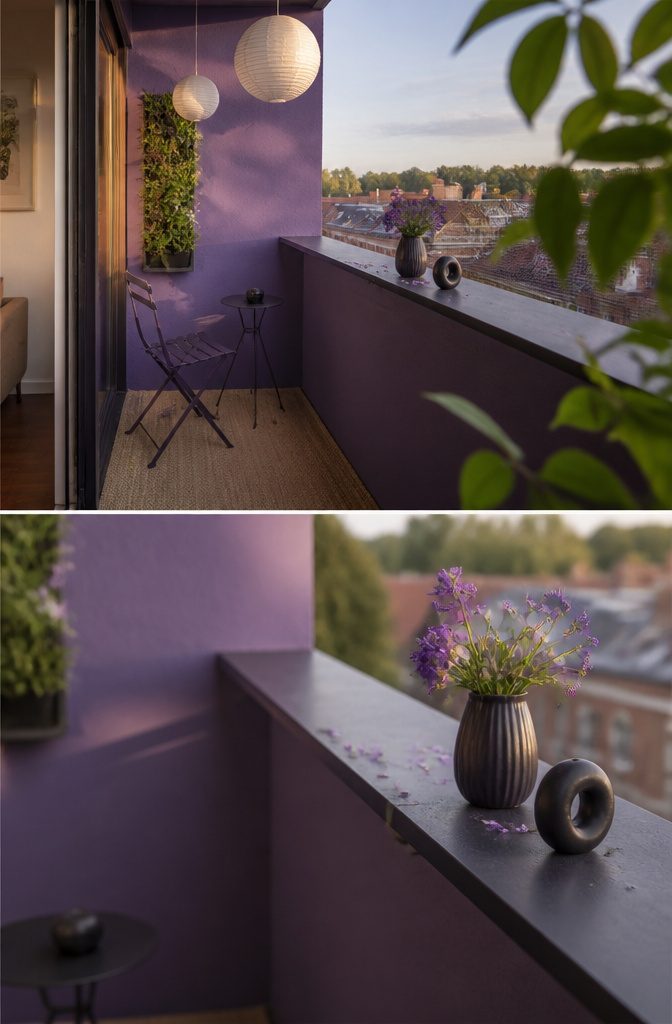
The decorative layer is what stops a balcony from feeling like a hallway you happen to step into.
Framed art or a fun sign mounted to the wall saves floor space and gives the eye something to land on that isn’t just furniture.
A planter’s box hung vertically works the same way if you want function and ornament in one piece.
Purple walls add drama without taking up a centimeter of usable floor.
Paint is one of the cheapest moves that reads from across the room, and bold color holds up better outdoors than pale pastels that wash out in direct sun.
String up paper lanterns if you want something softer overhead without the permanence of a fixed fixture.
Wind chimes and small vases keep character without bulk.
A single sculptural object on a side table or a slim shelf anchored to the railing does more than a crowd of lightweight accessories. You want pieces that feel chosen, not collected by accident.
Plan the Space Before You Buy
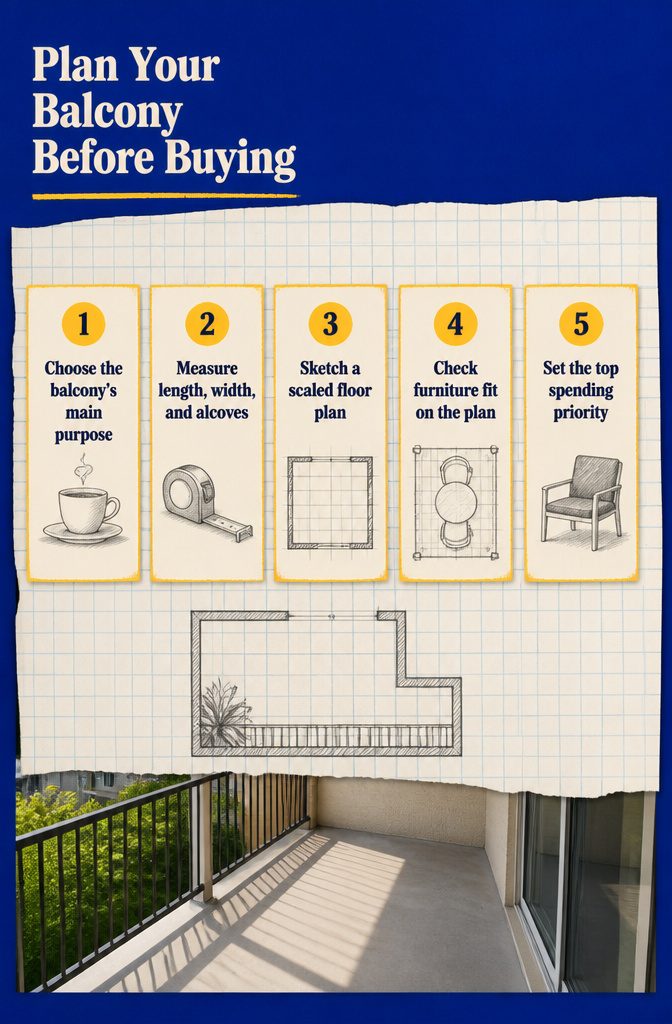
The decision that saves most people from buying furniture twice is deciding what the balcony is for before a single piece goes in the cart.
A place to drink coffee alone needs a different setup than one meant for hosting two friends, and trying to do both on forty square feet usually means neither works well.
Measure the balcony before anything else.
Length, width, and the depth of any alcoves or corners where furniture might tuck in. Those numbers go straight into a floor plan, which does not require software or any particular skill with a pencil.
Sketch it on graph paper if that feels easier, or use a free online room planner like the ones Living Spaces, IKEA, and Wayfair offer.
The IKEA and Wayfair versions let you drop in furniture from their catalogs and see whether a bistro set actually fits or whether the rug you want leaves six inches on all sides.
The floor plan shows what fits and what does not, which keeps the space from reading as cluttered once everything arrives.
Setting priorities before purchasing helps too. Privacy, looks, and function rarely get equal weight in a small space, so pick the one that matters most and let that decide where the budget goes.
Check Lease Rules and Outdoor Suitability
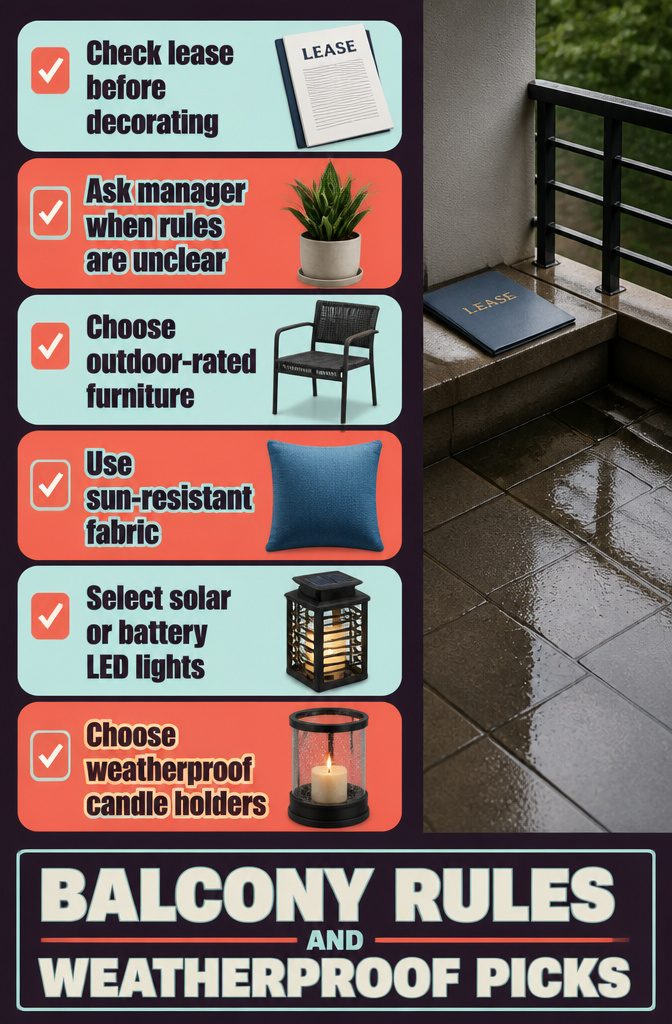
Before you move furniture or hang lights, check your lease for what’s allowed on the balcony. Most apartment communities restrict displays to plants, outdoor furniture, and décor made for outside use — string lights, lattice, wind chimes.
Anything beyond that usually needs approval, and fixing a mistake after the fact is harder than asking first. If the lease is silent or unclear, ask your property manager before you start.
Once you know the rules, choose materials that can take the weather. Rain ruins indoor cushions and fades fabric not rated for sun.
Outdoor-rated pieces last longer and need less replacement, which matters when you’re working on a tight budget. The same applies to lighting: solar-powered or battery-operated LED lights work outdoors without wiring, and weatherproof holders keep candles usable through a storm.
A balcony that looks good in June should still look good in September, and weather-resistant materials are how you get there.
Frequently Asked Questions
How do you style a small balcony?
Start with compact seating that fits your actual square footage, then layer in soft furnishings like cushions and an outdoor rug.
Add string lights or lanterns for atmosphere, bring in 2 to 3 plants in varying heights, and finish with a few decorative accents like framed art or a bold wall color. You want pieces that feel chosen, not collected by accident.
How do you maximize space on a small balcony?
Choose minimal furniture with clean lines, then use vertical wall space for plants and storage instead of claiming floor area.
Wall-mounted shelves, ladder planters, and hanging baskets let you stack greenery without surrendering standing room. Keeping the floor clear makes the space read as larger than its actual measurement.
How can I make my apartment balcony more private?
Outdoor curtains or privacy screens block sightlines from neighboring balconies while still allowing airflow.
Lattice or trellis panels are sturdier and let you hang lights or train climbing vines for a green wall over time. No-drill curtain rod brackets rated up to 20 pounds make hanging curtains renter-friendly and reversible.
How do you decorate a small balcony on a budget?
Start from the floor up by placing a rug or flooring first, then arrange furniture until the placement works.
Finish with accessories like plants, pillows, lights, and wall hangings. Paint is one of the cheapest moves that reads from across the room, and bold color holds up better outdoors than pale pastels that wash out in direct sun.
How do you make a small balcony look bigger?
Go vertical with tall furniture, hanging plants, and wall-mounted storage to spread up instead of out.
Choose furniture that fits the current space rather than overfilling it, and stick to a few items you will actually use. A vertical garden gives the impression of a larger balcony than its actual measurement.
What should I put on my balcony?
Decide what the balcony is for before buying anything. A space for morning coffee needs a foldable bistro table and 2 chairs, while a reading spot works better with one chair and a side table.
Add 2 to 3 plants for a finished look, string lights for atmosphere, and an outdoor rug to change the feel of concrete or composite decking. Check your lease first for what displays are allowed.
How do I make my balcony beautiful?
Layer in plants at varying heights, add soft furnishings like weather-resistant cushions and a rug, and bring in lighting that works after dark.
Personalize with decorative accents like framed art, a bold wall color, or wind chimes that add character without bulk. A few well-chosen pieces do more than a crowd of lightweight accessories.
What can I put on my small balcony?
Most apartment communities restrict displays to plants, outdoor furniture, and décor made for outside use like string lights, lattice, and wind chimes.
Anything beyond that usually needs approval from your property manager. Choose materials rated for weather so rain does not ruin cushions and sun does not fade fabric within one season.