
A large home stays clean when high-traffic zones get attention daily and the rest rotates through the week on a fixed schedule.
Most people try to clean the entire house in one session and burn out before the system takes hold.
The work becomes manageable once you divide the house into zones, assign bathrooms and kitchens to the daily list, and push guest rooms and formal spaces to a longer cycle.
1. Plan the Work and Divide the House Into Zones
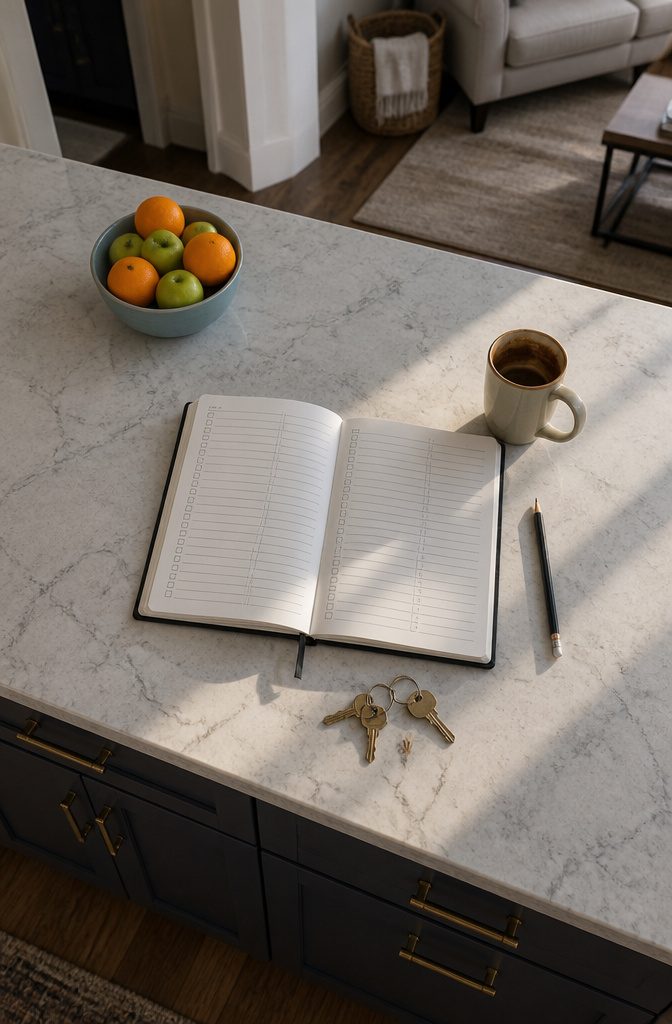
The work starts with a task list that separates what must happen daily from what can rotate through the week.
Write down the rooms you have, the specific tasks each one needs, and any problem areas that collect clutter faster than the rest.
High-traffic spaces like the kitchen, bathrooms, and living room need attention more often than guest rooms or formal dining areas that might sit empty most of the week.
Getting input from everyone in the household makes the plan stick. Each person knows which rooms they use and which messes they create, so their perspective helps you catch trouble spots you might otherwise miss.
Prioritize based on use and visible mess, not size. A small mudroom that sees constant foot traffic beats a large bedroom that stays tidy.
Cleaning the whole house in one day is optional, not required.
The pages that keep large homes running well all point to the same structure: clean high-use zones daily or every other day, then rotate the remaining rooms through the week on a predictable schedule.
That rhythm keeps the workload manageable and the house consistently clean without losing a weekend to it.
2. Tidy and Declutter Before You Clean
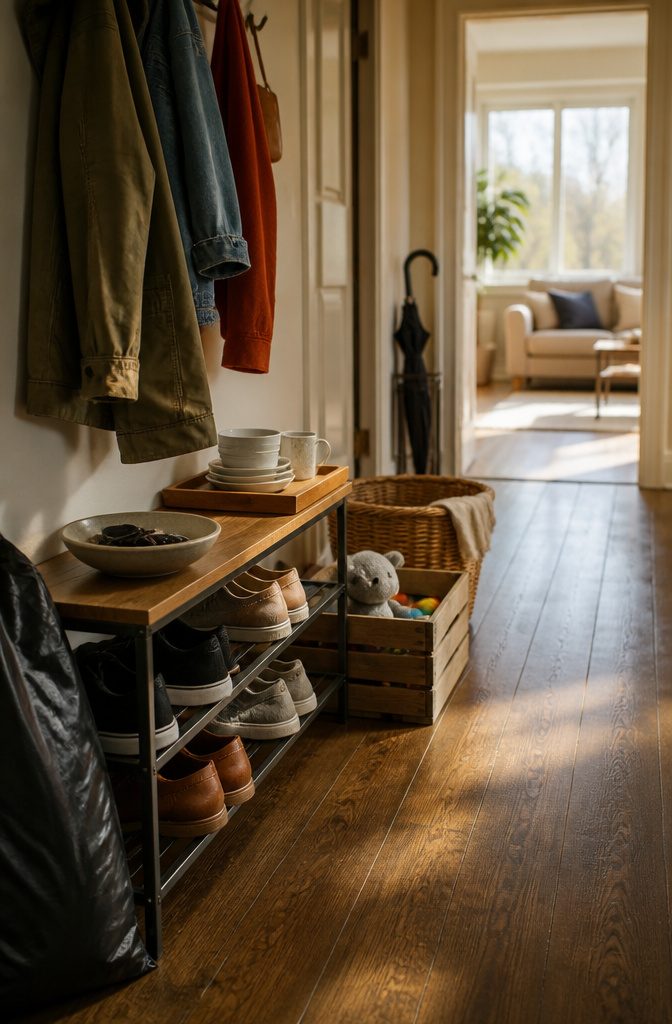
Tidy and declutter before you clean. Cleaning takes longer and uses more product when you work around piles.
I start by moving through each room with a trash bag and a laundry basket, picking up as I go. Shoes, toys, dishes, anything that does not belong gets staged to go back where it should.
The key move is giving frequently misplaced items a designated spot in the first place.
Keys need a hook or bowl near the door. Shoes need a rack at the entrance or a clear landing zone in the bedroom.
Coats need hooks, laundry needs a hamper within arm’s reach of where clothes come off, and toys need crates or bins that kids can actually reach and use. When belongings have no assigned home, they land wherever and stay there.
A 10-minute pickup after dinner or before bed keeps clutter from building back up between cleaning days.
Empty the sink, put stray items back, take out full trash. These small daily resets cut the time the real cleaning takes by half.
3. Gather Supplies and Prepare
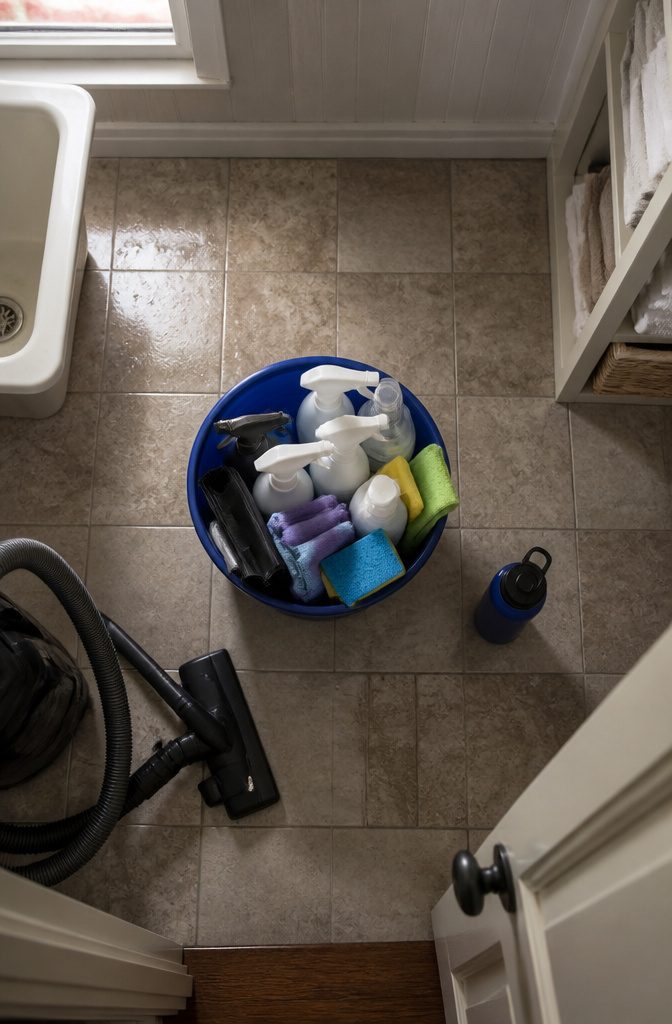
I collect everything before I start: all-purpose cleaner, glass cleaner, disinfectant, microfiber cloths, sponges, a vacuum with attachments, and a stack of garbage bags.
Keeping it all in one caddy or bucket means no trips back to the supply closet halfway through a room. I have been using a plain bucket for years, though a caddy with dividers would keep spray bottles from tipping.
Read the directions on each product before you use it so you know how much to apply and whether it needs time to sit.
The label also tells you if something should not mix with another cleaner or needs ventilation. Store everything out of reach if children are in the house, and keep it that way while you work.
Before I start a cleaning session, I get dressed in something I can move in, eat something so I am not stopping an hour in, and fill a water bottle.
A focused few hours goes better when the basics are handled first.
4. Start High and Work Downward
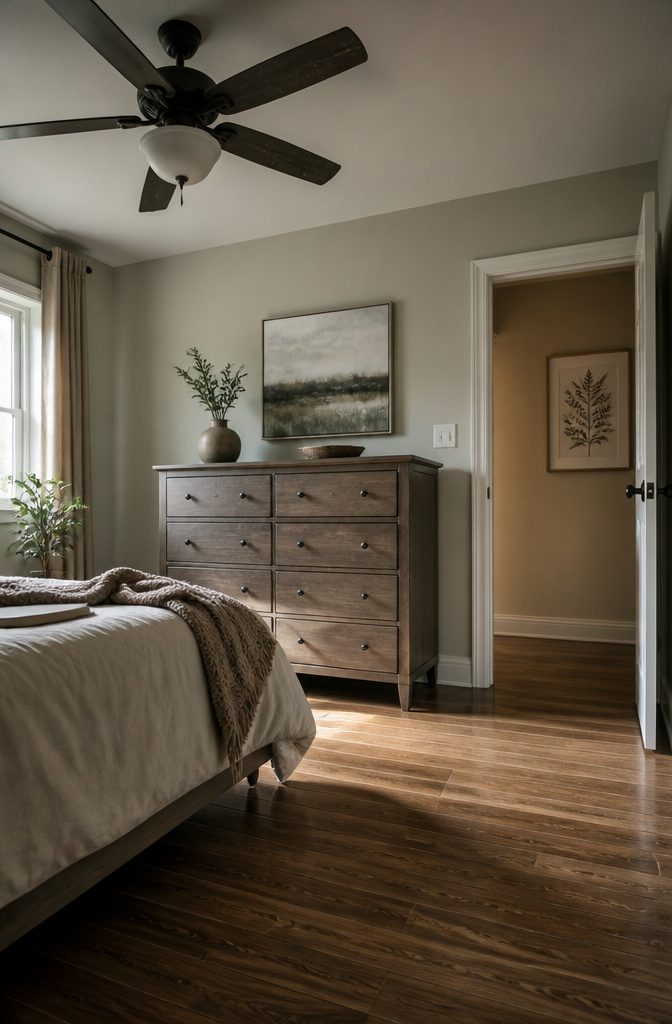
Start High and Work Downward
The rule that keeps you from cleaning the same spot twice is clean high to low, and it applies to the whole house and to each room inside it.
Dust from a ceiling fan or light fixture lands on furniture, then on baseboards, then on the floor. Clean the upper story before the lower one, and falling debris settles where you have not worked yet.
Within each room, start at the ceiling fixtures and work your way down to the baseboards. Floors come last, once dust has finished settling.
In a bathroom, that means dusting the light fixture first and mopping your way backward out the door. In a bedroom, start with the fan and vacuum your way out, then down the hall or the stairs.
This also means working back to front through the house and doing one task across all the rooms before moving to the next. Clean left to right within a room so you know where you stopped.
5. Clean Rooms or Zones in a Planned Order
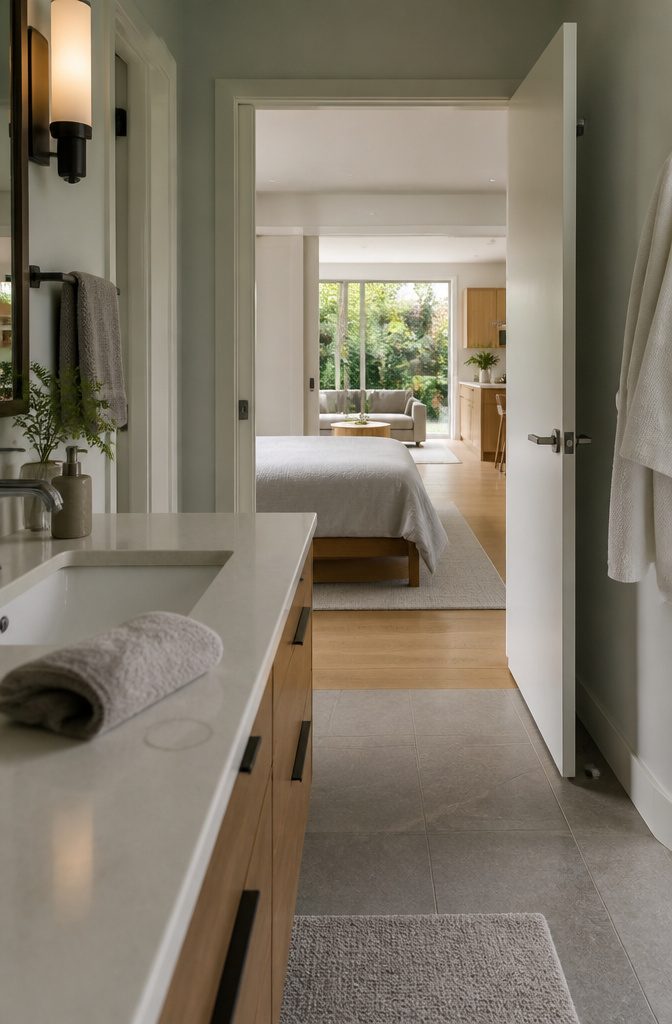
Bathrooms first, then bedrooms, then living spaces.
That order keeps you from tracking dust or grime back into rooms you already finished. I start with bathrooms because once they’re done, the whole house feels cleaner even if I’m still working through the rest.
Bedrooms come next, and then I move on to living spaces. In the living areas, the kitchen goes first since it usually takes the longest.
The flow changes depending on your layout. If you have bathrooms on multiple floors, you might clean all of them in one pass or handle the upstairs bathrooms with the upstairs bedrooms before heading down.
The principle holds either way: finish one room completely before you move to the next.
That means dusting, wiping surfaces, and vacuuming or mopping your way out. You see progress faster, and you don’t waste time walking back and forth with half-finished spaces scattered across the house.
Rooms that don’t see much daily use can rotate on a longer schedule. A guest bedroom might get a full clean every other week instead of weekly, while the main bathroom and kitchen stay on the tighter rhythm.
6. Finish Floors and Set a Recurring Routine
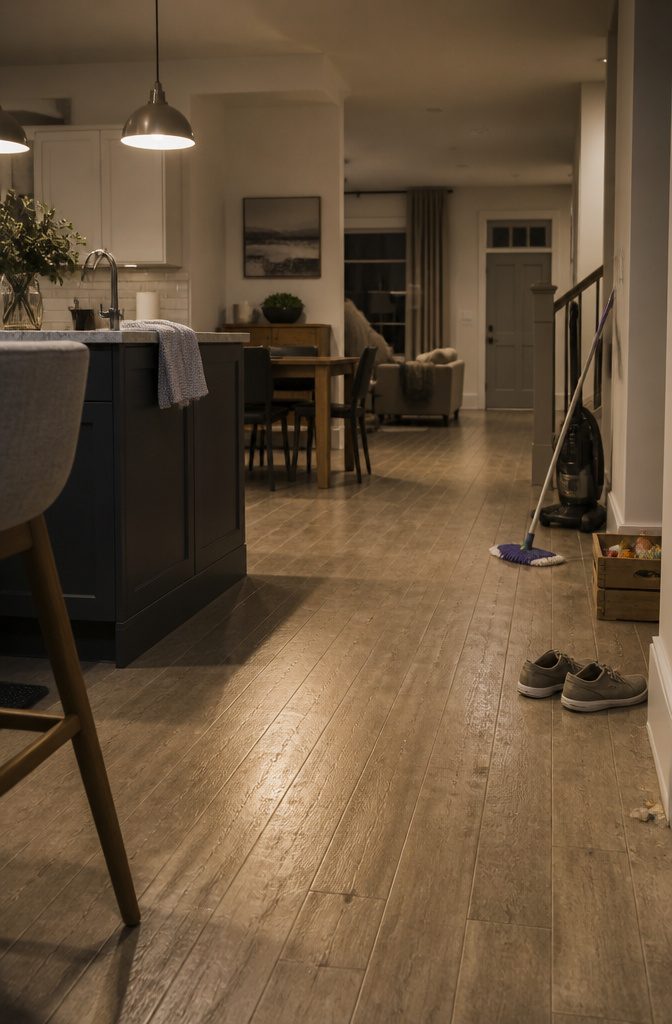
Floors come last, after dust and counters, so you sweep and vacuum what fell rather than doing it twice. Start from the far corner of each room and work toward the door, pushing debris ahead of you.
Vacuum hard floors and carpets together if you have the right attachment, or mop hard surfaces after vacuuming, so the floor is completely done before you move on.
The work stays manageable when daily tasks keep the mess from stacking up.
A load of laundry every other day prevents the weekend mountain. Five or ten minutes after dinner for putting away shoes, toys, and anything out of place makes a visible difference.
The kitchen, entry, and main living area take the most traffic in nearly every home, and a ten to fifteen minute reset of those spaces each evening clears counters, wipes the table, and picks up the floor.
The whole house feels under control even when the rest waits.
Share the Work With Family
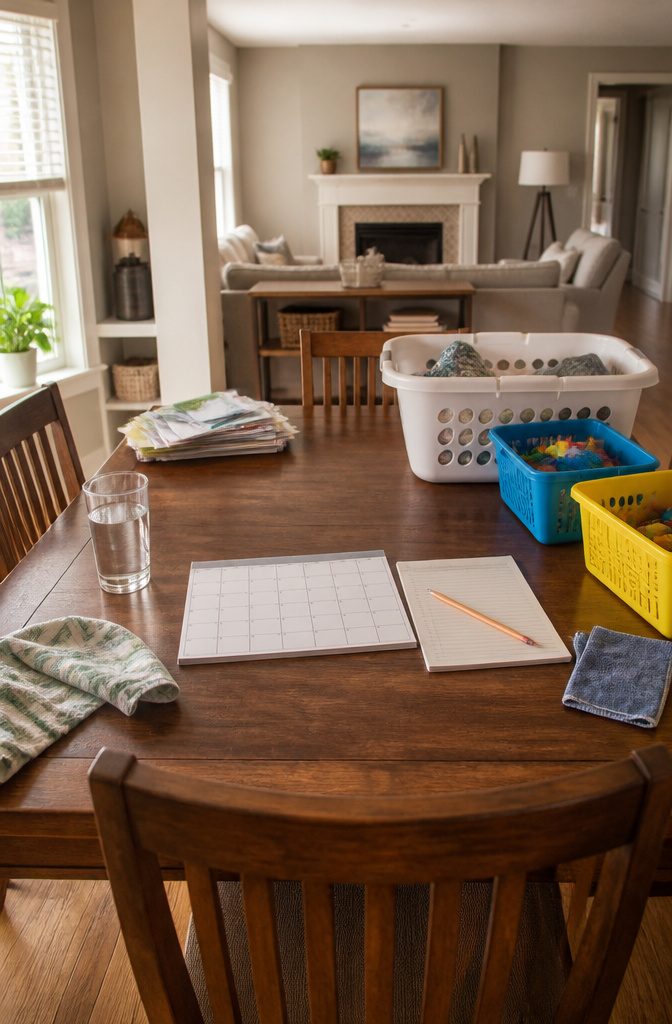
Families make cleaning possible in a large home, but only when everyone knows what to do and actually does it.
Hold a quick family meeting once a week or once a month to assign tasks, talk through what’s getting skipped, and adjust who does what if one person is overloaded.
Make the assignments specific:
- Ages 2 to 4: Put toys in bins, carry their plate to the sink, wipe up small spills with help.
- Ages 5 to 7: Make their bed, set the table, sort laundry by color, dust low surfaces.
- Ages 8 to 11: Load the dishwasher, vacuum one room, take out trash, clean bathroom sinks.
- Ages 12 and up: Clean a full bathroom, mop floors, do their own laundry, cook simple meals.
Check the family calendar before you assign anything.
If someone has practice three nights this week, they get a lighter load. Rotate the harder tasks so the same person isn’t scrubbing toilets every single time.
When to Deep Clean and When to Hire Help
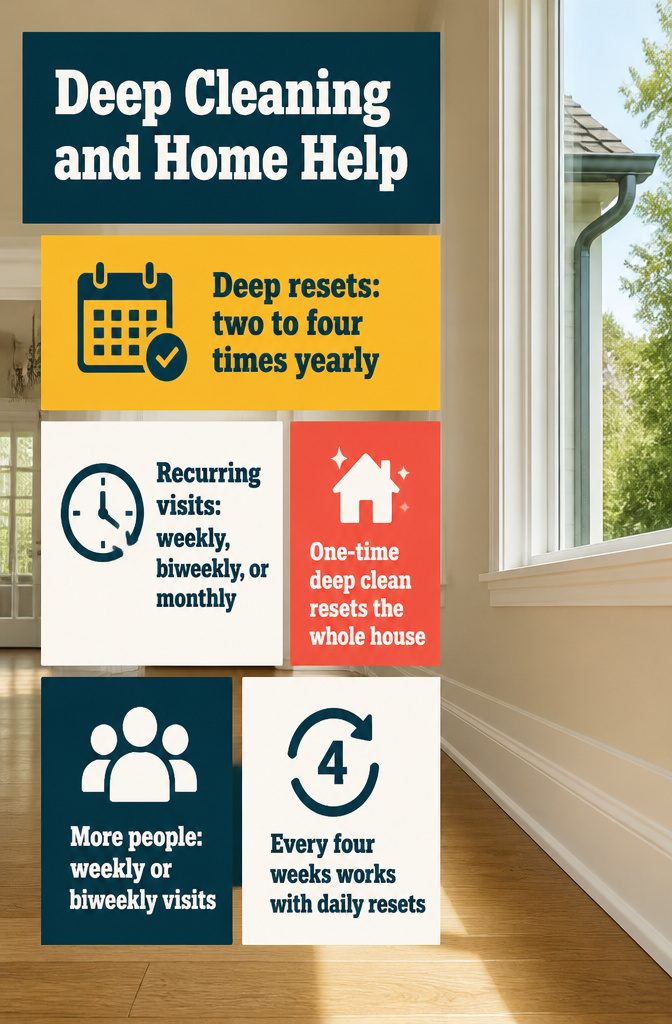
Deep cleaning is different work. Washing windows, cleaning gutters, wiping down baseboards room by room — tasks that take hours but only need doing two to four times a year.
I handle the weekly surface work myself and save the deeper reset for when the house genuinely needs it, usually every few months or once a year depending on the room.
Professional help makes sense when time runs short. A recurring plan covers the high-use bathrooms, floors and dusting on a weekly, biweekly or monthly schedule, so those tasks stop piling up during busy stretches.
If the whole house needs a reset first, a one-time deep cleaning gets it there.
For families with more people in the house, weekly or biweekly visits keep pace with how fast messes build. Every four weeks can work if daily resets happen in between.
What to Clean When You Only Have 30 Minutes or an Hour
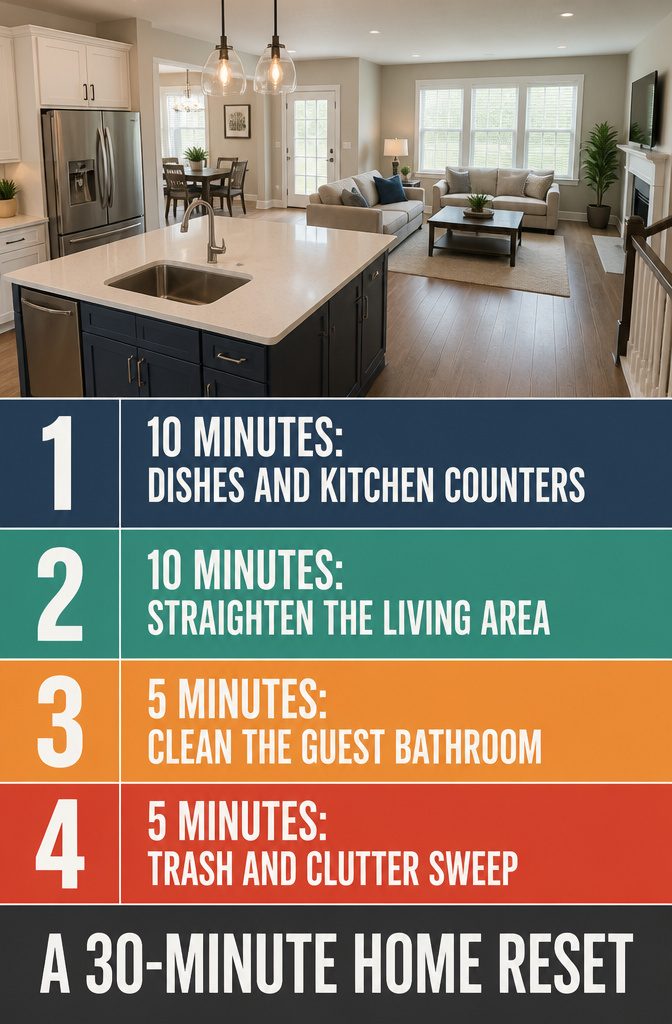
When you need the house presentable in half an hour, skip perfection and focus on what guests will actually see.
Spend 10 minutes on dishes and kitchen counters, 10 minutes straightening the living area, 5 minutes cleaning the guest bathroom, and the last 5 minutes taking out trash and doing a final sweep for clutter.
That sequence hits the spots where mess shows most and keeps you from getting stuck scrubbing one room while the rest stays untouched.
With a full hour, you have options. Pick the zone that needs attention most, not the room you dislike least.
An hour covers all the bathrooms in most large homes, and clean bathrooms make the whole house feel cleaner. Or spend that hour on living spaces only: kitchen, living room, dining room, anywhere you actually spend your day.
You can also dedicate the hour to bedrooms, giving each one 15 minutes for dusting and vacuuming. The real decision is whether you want one area truly clean or several areas lightly improved.
Frequently Asked Questions
How long should it take to clean a house?
A baseline is 2 to 3 hours for most homes, though the actual time changes with size, number of bathrooms, children, pets, and how much clutter you’re working around.
Larger homes take longer if you clean the whole house in one pass, but most people spread the work across the week instead.
What should I clean if I only have 30 minutes?
Spend 10 minutes on the kitchen, 10 minutes straightening the living area, 5 minutes on the guest bathroom, and the last 5 minutes taking out trash and clearing visible clutter.
That sequence hits the spots where mess shows most without getting stuck in one room.
What should I clean if I only have 1 hour?
Pick the zone that needs attention most: either all the bathrooms, the main living spaces (kitchen, living room, dining room), or all the bedrooms at 15 minutes each.
Clean bathrooms make the whole house feel cleaner, so that’s usually the best choice.
How do you keep a big house clean with a big family?
Clean high-traffic zones daily or every other day, rotate the remaining rooms through the week, and share chores across the family. A 10-minute pickup after dinner or before bed keeps clutter from building back up between cleaning days.
Do I need to clean every room every day?
No.
High-use spaces like the kitchen, bathrooms, and living room need attention more often, while guest rooms or bedrooms that stay tidy can be cleaned weekly. Prioritize based on use and visible mess, not size.
At what age can kids start helping with chores?
Children can start simple tasks around ages 2 to 4, like putting toys in bins or carrying their plate to the sink.
Responsibilities grow with age: kids 5 to 7 can make beds and dust low surfaces, 8 to 11 can load the dishwasher and vacuum, and 12 and up can clean a full bathroom or do their own laundry.
How often should a large family home be professionally cleaned?
Many households choose weekly or biweekly visits since more people means messes build faster. Every four weeks can work if the family keeps up with daily resets in between.
How often should a large home be cleaned?
High-use rooms get cleaned weekly or every other day, while rooms that see less traffic can rotate on a longer schedule, like every other week. Deep cleaning tasks like washing windows or wiping down baseboards happen 2 to 4 times a year.
Do unused rooms need to be cleaned?
Yes, but less often.
Dust builds up and closed rooms can get stale. A light clean every few weeks keeps them fresh without the weekly attention that active rooms need.