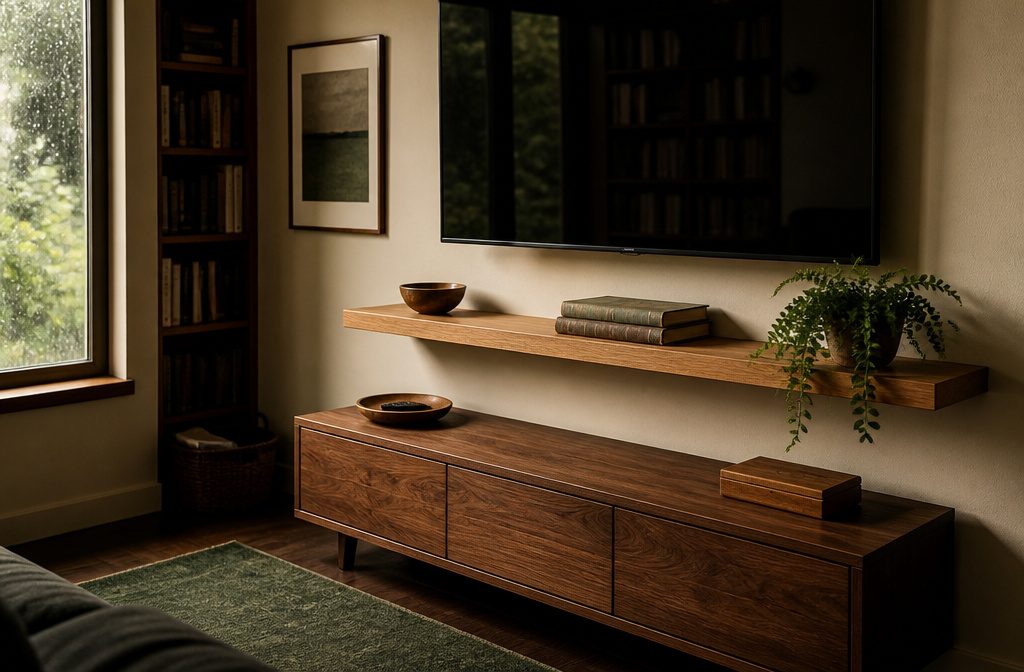
A floating shelf under the TV creates a display layer between the screen and whatever sits below it, but only if the width runs past the edges of the screen without overshooting the console underneath.
Most people skip the proportion check and mount a shelf that fits the TV but looks wrong against the furniture or the wall.
The shelf needs to sit about 8 inches below the screen to separate décor from the stand without pushing objects so low they disappear.
Why Shelf Placement and Proportion Matter First
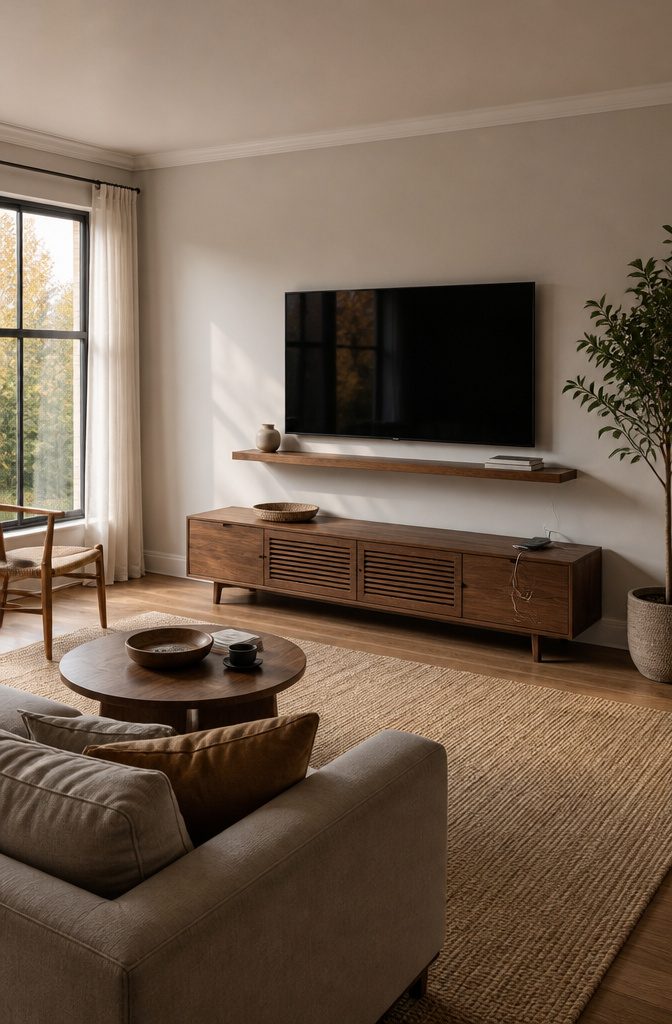
The shelf needs to relate to the TV in two directions at once: wider than the screen but narrower than whatever sits below it, whether that’s a stand or a console.
I placed mine about 8 inches above the TV, which gave enough breathing room without pushing décor so low it looked like it belonged to the furniture instead.
The shelf ran about 4 inches past each edge of the screen, though I’d go a few inches longer if I did it again—the extra span would have balanced better against the width of the stand.
Depth matters more than I expected. A shallow shelf keeps the profile tight against the wall, but anything you stand upright tips easily, and stacking books flat eats the space fast.
I went with 8 inches and that handles most of what I put up there without objects jutting past the edge or crowding backward into the screen.
The proportion has to answer to the wall, too. A shelf that fits the TV perfectly can still look pinched if the wall runs wide on both sides, or oversized if the TV fills most of the available width already.
1. Books and Magazines for Height and Color
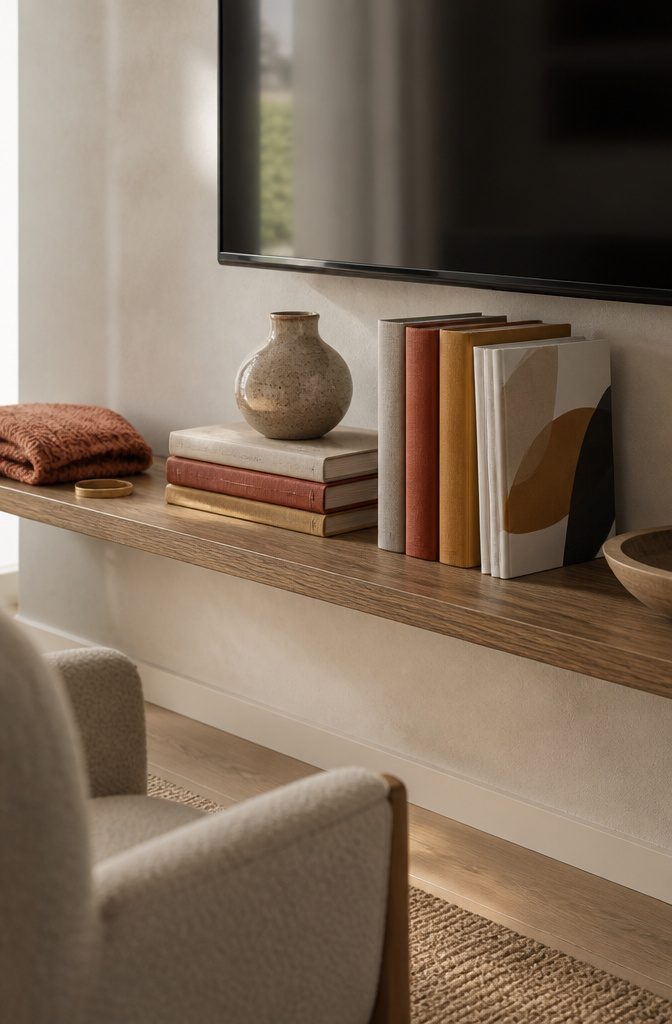
Books bring height variation and color to the shelf without a lot of expense.
Stack a few horizontally to create a platform for smaller objects, or stand them vertically if the shelf is shallow and you need to keep depth in check.
Both ways work, and you can mix them on the same shelf for different levels.
The covers and spines matter more here than in a bookcase.
Choose books with colors or graphics that tie back to your room rather than showing off every title you own. If your palette is warm, pull out books with rust, gold, or cream spines.
If you lean cooler, look for blues, grays, or black and white covers. Magazines work the same way and often have bolder covers that read from across the room, which helps when the shelf sits several feet below the TV.
2. Plants and Greenery to Soften the Display
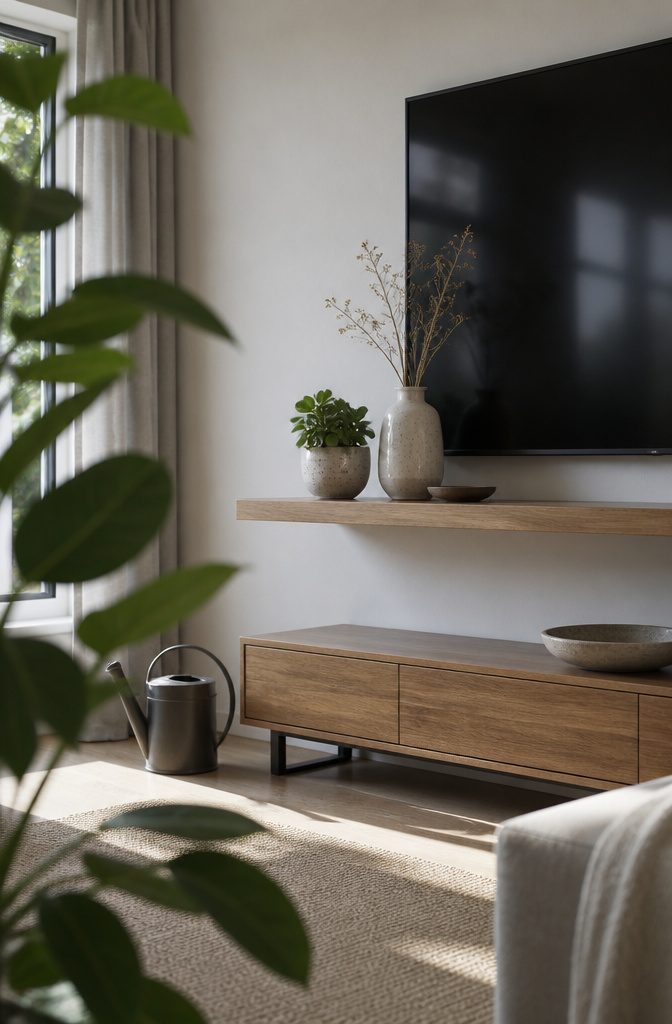
Plants bring natural color and softer shapes to the TV wall, and a small potted plant or a few sprigs in a ceramic vase can break up the straight lines of shelves and electronics.
The fluid shape of foliage calms the stiffness that screens and metal brackets can bring, making the entire wall feel more welcoming rather than purely functional.
Succulents in unique pots add texture without demanding much care, and dried branches last indefinitely if you want something that needs no watering at all.
Just check that there’s enough room for the plant to grow and that the shelf gets the light the plant needs.
A trailing vine or a compact snake plant both work, depending on the space and the light the wall actually gets.
Even a minimal addition of green encourages the eye to linger instead of racing past the technology below, turning the TV into part of a balanced composition rather than the only thing you see.
3. Art, Photos, and Personal Objects
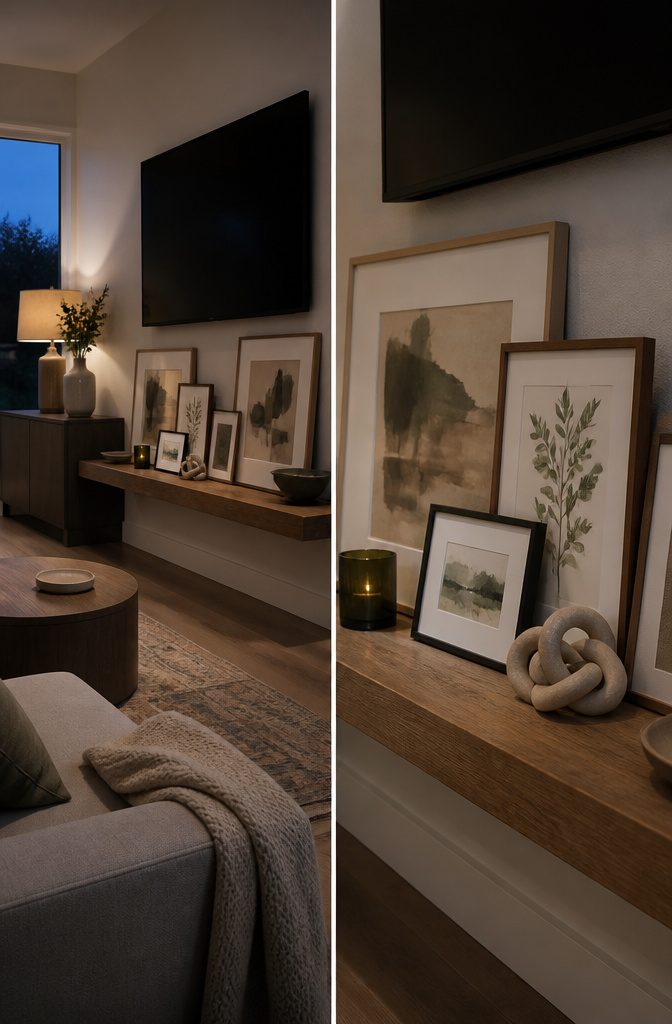
Framed prints and family photos turn the shelf into something that actually belongs to you rather than a stage set. Overlapping the frames slightly instead of spacing them evenly gives the arrangement a collected-over-time look that feels less deliberate.
Five prints in different frames, chosen because they work together rather than because they match, can fill a 48-inch ledge without looking rigid.
Travel pieces and small art add the same weight. A framed postcard from a trip or a small watercolor you picked up at a local market tells more than another generic print would.
The frames themselves can be totally different and still hold together if the art inside shares a tone or subject.
Depth matters when you overlap frames, so check the ledge measurement before you buy.
A shallow shelf forces everything into a single line, which flattens the whole display. Pay attention to what sits behind what—larger frames go in back, smaller detailed pieces come forward where you can actually see them.
4. Functional Objects and Containers for Storage
Functional Objects and Containers for Storage
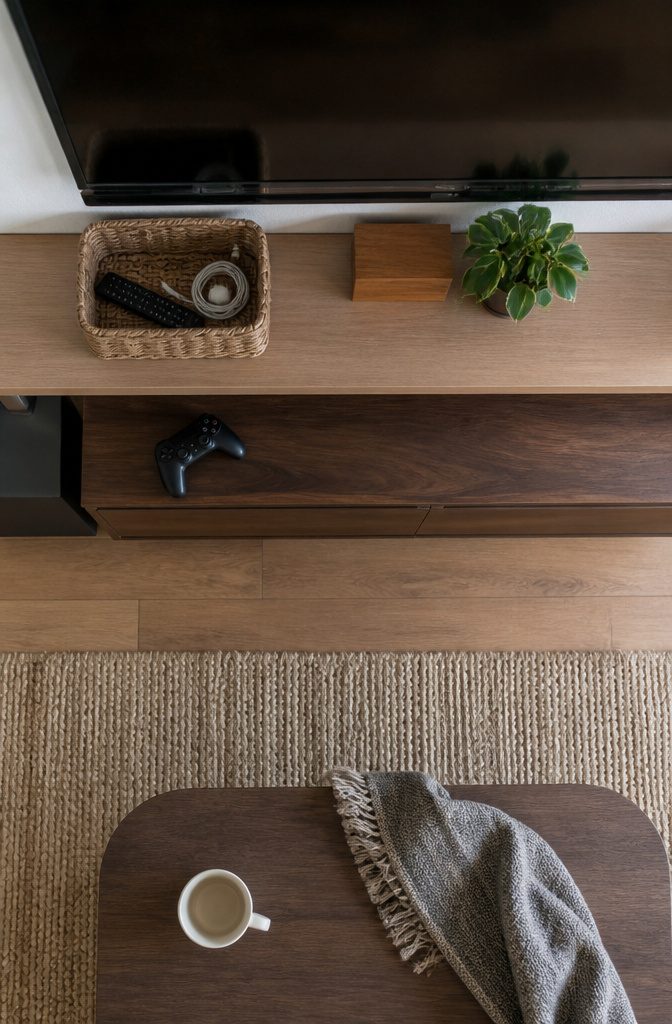
Baskets and boxes turn the shelf into something you can actually use. A low woven basket holds remotes, game controllers, or charging cables without making the shelf look like a dumping ground.
I like natural fiber for warmth against the screen, but a fabric bin in a color that picks up the room works just as well and costs less.
Pair one container with one or two decorative pieces rather than lining the whole shelf with storage.
A small wooden box next to a plant and a candle reads as intentional. Three identical baskets in a row looks like you ran out of ideas.
The container should sit low enough that it doesn’t block the TV from where you sit, which usually means keeping it under five inches tall if the shelf is shallow.
Shelf Materials and Finishes
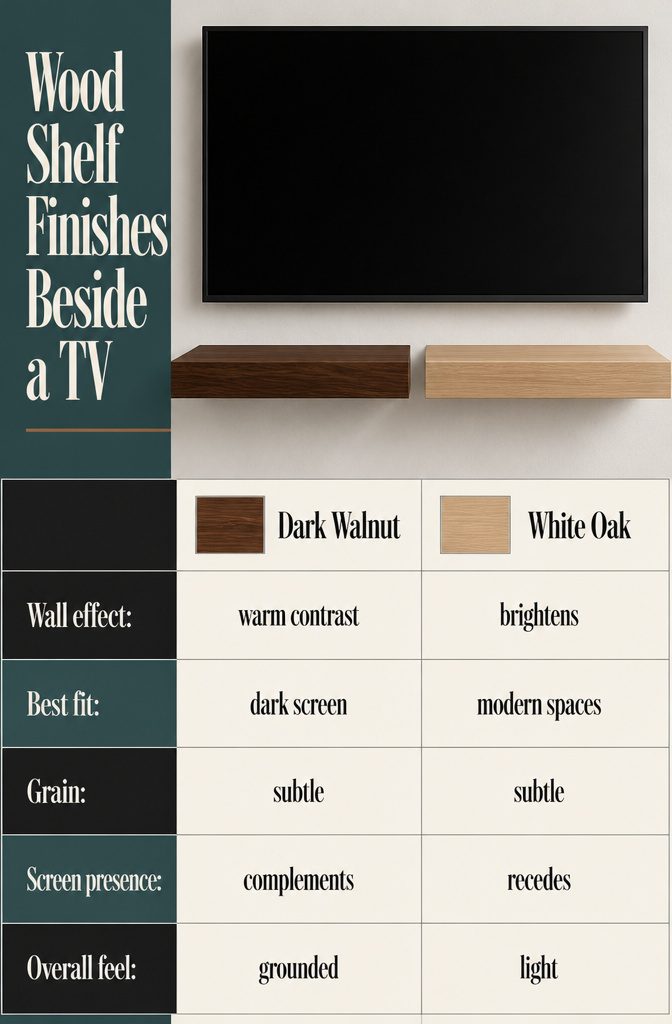
The TV is a giant black rectangle, so the shelf sitting underneath has to either complement that or fight it. Dark walnut shelves create a warm contrast against light walls and pair naturally with the dark screen.
White oak works well in lighter, more modern spaces. The grain is subtle enough that it doesn’t compete with whatever’s on screen, and it brightens the wall instead of weighing it down.
Maple and cherry are also available if you want something in between. Black shelves disappear next to the TV in the best way, and white shelves pop against darker walls and make the whole composition feel lighter.
For a sleek, modern look, metal or glass shelves fit that direction. Glass lets light pass through and keeps the wall feeling open, though it shows fingerprints easily.
Metal brackets paired with wood give an industrial edge. Stone options like marble, granite, or slate make a statement but require professional installation and cost more.
Bamboo, cork, and recycled materials are worth considering if you want something sustainable. The finish matters too: glossy reads modern, matte fits traditional rooms better.
Mounting and Support That Holds
Mounting and Support That Holds
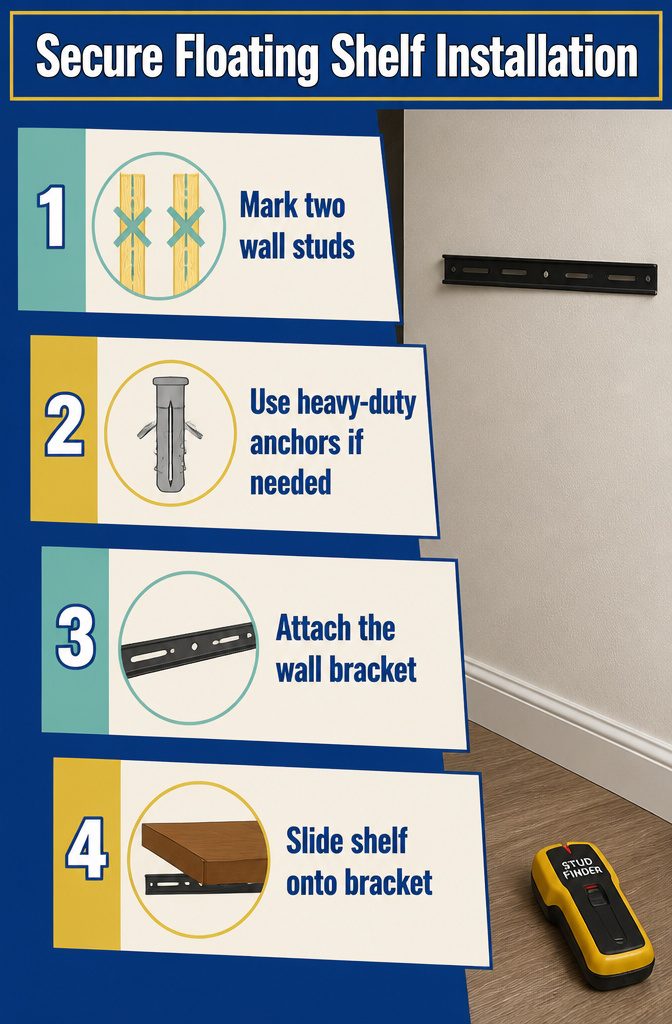
The wall-mounted metal strip matters more than the shelf itself. The system uses a matching strip on the back of the shelf that slides onto the wall bracket, and hitting two studs is the minimum for a secure install.
Use a stud finder to mark both, or if studs cannot be found, use heavy-duty anchors in the proper size to support the shelf weight plus everything you plan to load on it.
Most floating shelves top out at 20 to 30 pounds of capacity.
That covers a candle and a picture frame, not a soundbar, books, and a receiver. The Hovr bracket holds 150 pounds per stud, so a 36-inch shelf hitting two studs has 300 pounds of capacity.
For heavy setups with full home theater gear, hit three studs if your wall allows it. Follow the shelf instructions that came with your specific bracket, but the stud math holds across systems.
Lighting and Cable Management
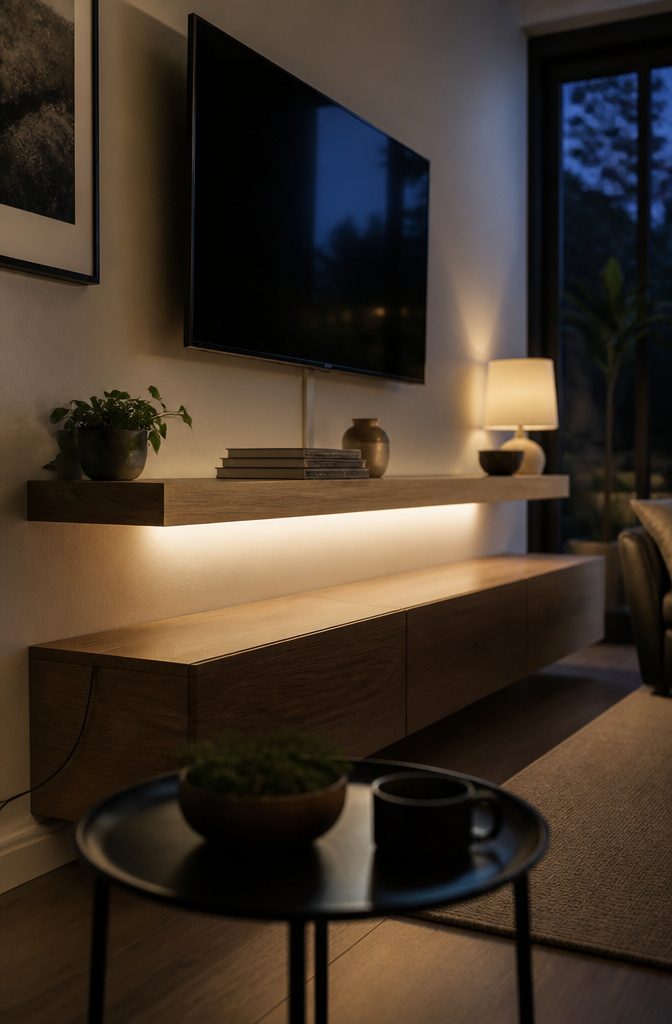
Lighting changes how everything on the shelf reads. LED strips tucked underneath the shelf add a soft glow that lifts small objects out of shadow and makes the whole display feel intentional rather than stuck there.
The strips also work as bias lighting if you mount them close to the TV, which cuts glare and makes evening viewing easier on your eyes.
I route LED channels directly into the underside of the wood so there is no adhesive peeling off six months later. It is a cleaner install than surface-mount strips, and the light stays where you put it.
If routing feels like more work than the shelf is worth, small decorative lamps work too, placed at the ends or tucked between larger objects for warmth without the wiring commitment.
Plan for cords before the shelf goes up. Decide where the TV cables drop and whether the shelf will hide them or whether you need cord concealers running down the wall.
Some floating shelves come with built-in cable management channels, which saves you from tacking plastic raceways to drywall after the fact. Position the shelf to help, not fight, where the wires actually need to go.
Frequently Asked Questions
How much weight can floating shelves hold?
Most floating shelves hold 20 to 30 pounds, which covers lightweight décor like candles and frames.
For heavier setups with books or electronics, look for brackets like the Hovr system that hold 150 pounds per stud. A 36-inch shelf mounted into 2 studs can support 300 pounds total.
Are floating shelves out of style in 2026?
Floating shelves remain a practical choice for TV walls because they add storage and display space without the visual weight of brackets.
The style adapts to current design trends through material and finish choices. Dark walnut suits warm spaces, white oak fits modern rooms, and black shelves create a sleek look that blends with the TV.
What can I use instead of shelf brackets?
Wall-mounted metal strips hidden inside the shelf eliminate visible brackets while providing strong support. These systems use a matching strip on the back of the shelf that slides onto the wall bracket.
Install into 2 studs minimum, or use heavy-duty anchors rated for the combined weight of the shelf and everything you plan to put on it.