
Concrete outdoor planters are cast stone and poured concrete vessels built heavy enough to stay put in wind, freeze-thaw cycles, and full sun.
The catch is that same weight: a 99-pound Rustic Palazzo urn or a 75-pound Rumba in Ice Black will not budge once planted, so your first placement is close to permanent.
Cast Stone Urn Planters
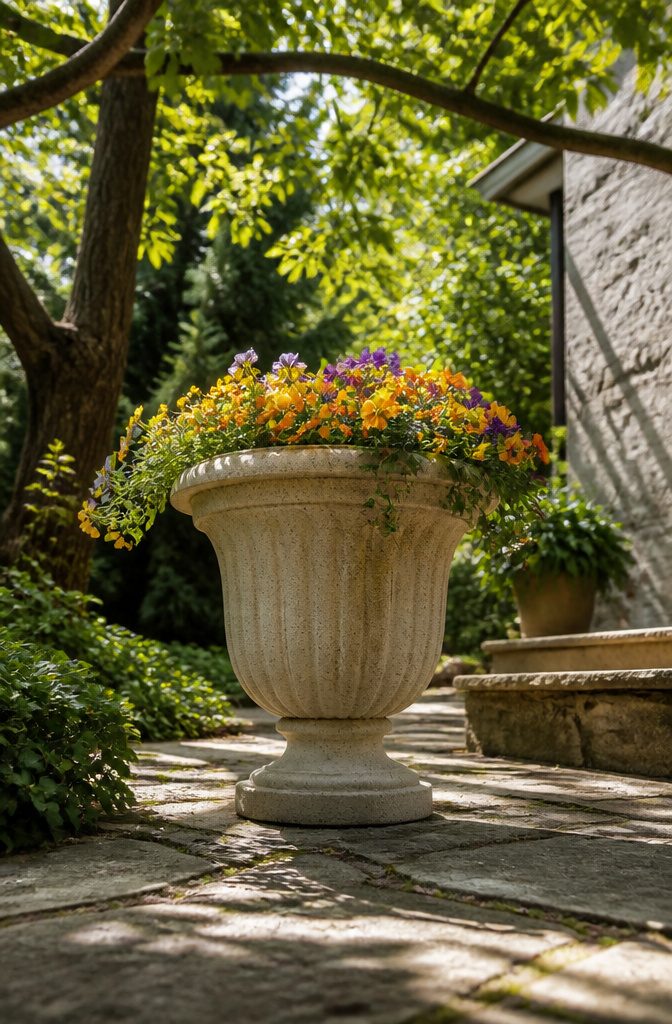
Cast stone urns carry the curved silhouette and fluted detail of carved limestone without the fragility or the price tag that comes with hauling actual quarried stone onto a patio.
The material is a concrete blend, poured into molds and finished to read as weathered natural stone once it sits outside for a season or two.
The Linwood urn planter runs 15.75 inches tall and weighs 45 lbs, a scale that sits well on a front step or flanking a garden gate without needing a crew to move it.
The Rustic Palazzo is shorter at 13.5 inches but far heavier at 99 lbs, the kind of piece you plant once and trust not to wander in a windstorm.
Both gain their heft from dense cast stone construction that handles freeze-thaw cycles better than standard terracotta, though neither is light enough to casually reposition once the soil goes in.
A third option, the Lisette urn planter, measures 9.25 inches tall and weighs just 11 lbs. That difference matters if you are working a rental balcony or a deck where load limits count.
The smaller profile reads as an accent rather than an anchor, and the weight means you can lift it to sweep underneath without planning your afternoon around the task.

【Outdoor Lightweight Concrete Planter】Add a touch of rustic elegance to your outdoor space with this cast stone planter. Its smooth finish and beautiful brown wood texture create a unique blend of modern and natural aesthetics, perfect for patios, gardens, or entryways
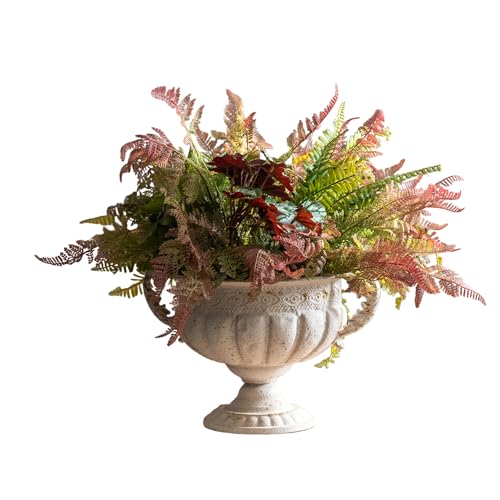
Vintage Urn Planter with Timeless Charm – Featuring a classic round urn shape with antique imitation stonefinish and embossed patterns, this decorative planter adds a touch of old-world elegance to your garden, patio, or home.

VERSATILE LOW-PROFILE DESIGN: Featuring a wide 17.7-inch bowl and a 14.5-inch height, this low-profile urn is ideal for tabletop displays, porch railings, or creating lush, low-growing flower arrangements that won't block your view.
Farmers Pots
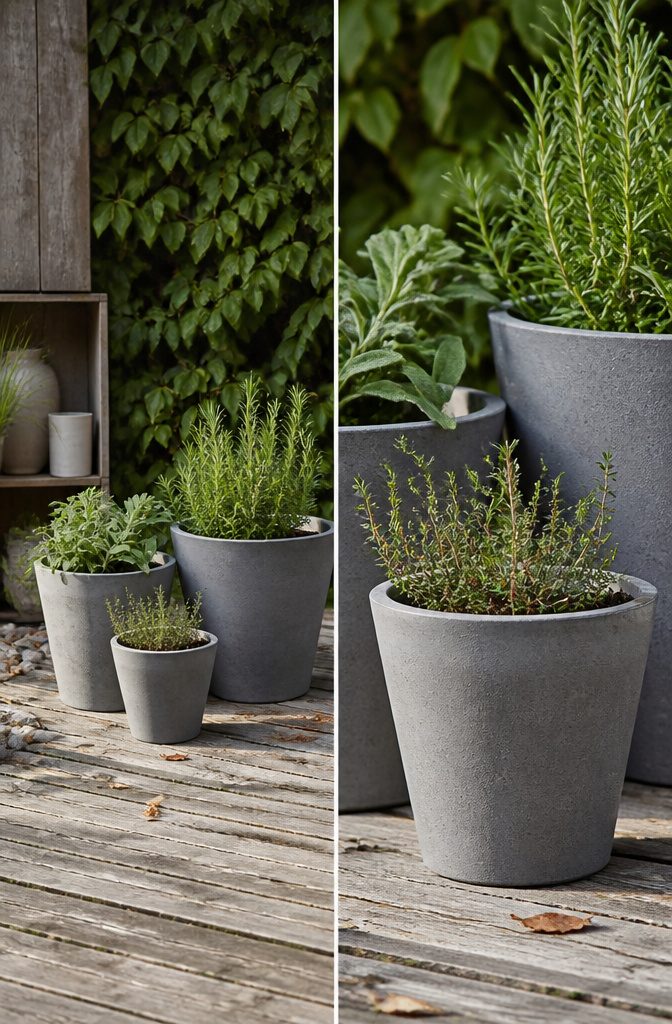
The tapered sides on these concrete outdoor planters sit wider at the rim than the base, which keeps the center of gravity low and stops a top-heavy rosemary or small boxwood from tipping in a wind gust.
That utility-first shape reads more farmyard than formal, and that is exactly why it works on a rental patio or a first-home stoop where you are not trying to stage a magazine shot.
Lyla Decor lists three sizes in this line. The 14900L1 runs 9 inches across and weighs 62 lbs, heavy enough that you will want to decide where it lives before you fill it with soil.
The 14901M1 drops to 7 inches and a still-solid weight, and the 14902S1 comes in at 6 inches and 4 lbs, light enough to move around with one hand when the herbs need chasing the sun.
All three carry the same matte grey finish, a neutral that does not fight whatever green you plant inside.
The scale range matters more than it looks at first.
The 6-inch pot fits a windowsill or a narrow balcony rail without crowding the walkway. The 9-inch holds enough depth for a dwarf shrub to overwinter, if you are in a zone where that is worth trying.
For most renters, the middle 7-inch hits the balance: big enough for a small thyme hedge or a single patio tomato, small enough that you can still take it with you when the lease ends.

Classic Urn Shape: 14-inch black resin planter brings a formal, pedestal-style silhouette to patios, porches, and entryways
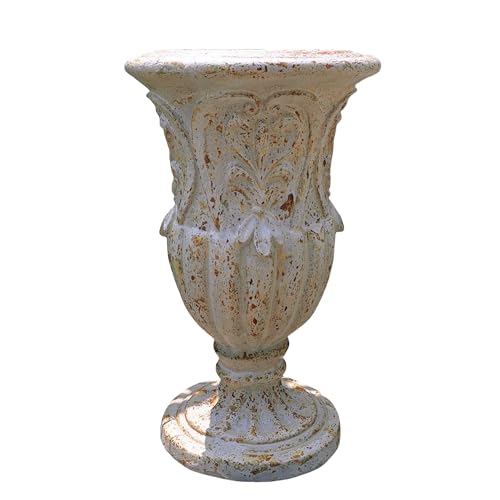
GENEROUS DIMENSIONS: Measures 24.8 inches tall with a 15.3-inch base diameter and a 10.6-inch opening, this planter is perfect for your plants.

Elegant Roman Design Planter Box: Elevate your space with our stunning planter featuring intricate botanical accents and a timeless round base, delivering a high-end faux-stone finish that enhances any decor, from classic to contemporary
Antico Square Planters
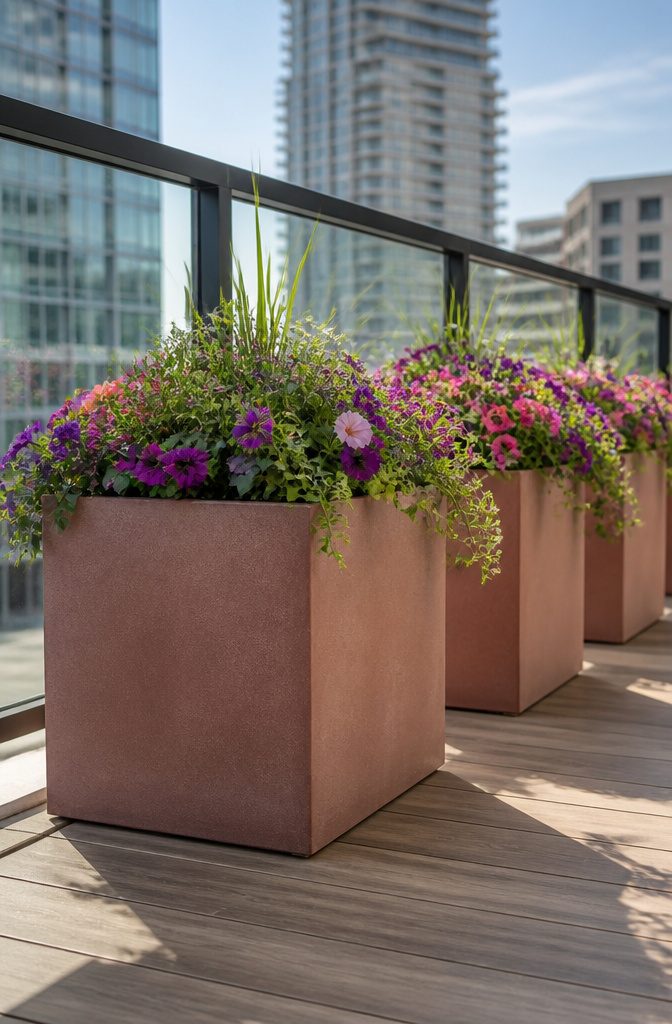
The Antico Square line is the one that stopped me mid-scroll when I was looking for something that read modern rather than classical.
Clean edges and a terra cotta finish that warms up the concrete without trying to look like real clay, which matters on a balcony where actual terra cotta cracks in freeze-thaw cycles.
Three sizes cover most layouts. The 6039-6600 runs 18.5 inches tall and weighs 62 lbs, with a 15.5 inch base that sits stable on decking without rocking.
The 6039-6601 steps down to 14.5 inches and 40 lbs; its base is 13.5 inches. For tight corners or grouped clusters, the 6039-6602 is 11 inches and 18 lbs, light enough to move solo when the light shifts across the season.
That weight spread matters more than the height numbers suggest.
The two larger ones need two people to reposition safely, especially once soil and a mature root ball add up. The smallest handles alone, which I ended up appreciating more than I expected for rotating sun-loving herbs through the day.

✅ Lightweight Concrete Composite – 70% Lighter, Easy to Move: Kante patented lightweight concrete composite delivers authentic cement texture and matte finish at just 30% of the weight. No more struggling with heavy planters. You can easily rearrange your patio, balcony or living room even when full of soil. Fits 2–5-gallon nursery pots perfectly.

Stylish Concrete Planter - Unveil a modern design boasting graceful curves and an authentic surface finish! Enhance your space's allure with this contemporary masterpiece adorned with visible pores for an enchanting touch of charm.

💪 Lightweight & Weather-Resistant Concrete Advanced lightweight formula – strong enough for freezing winters and hot summers, but easy to lift with one hand. Won’t crack or fade like ordinary cement. Use it indoors or leave it on the patio year-round
Glazed Delphine Planters
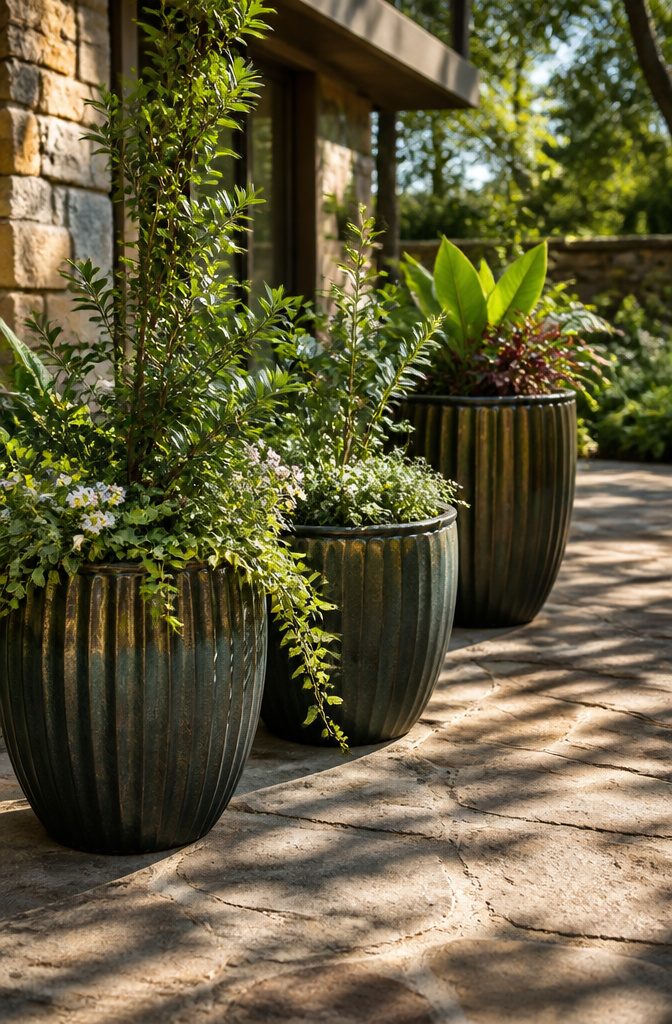
A thin glaze over cast concrete does more than seal the surface; it gives the material a color depth that raw planters never pick up, catching light with a slight sheen that reads as ceramic from a few steps away.
The Delphine line is where I first noticed the difference working in practice, since the finish sits on a fluted form that already catches shadow.
The Bronze Jade glaze runs from a near-black at the shoulder to an oxidized green at the foot, and it is heavy enough to stay put in wind.
The large size runs 16.5 inches tall on a 14 inch base, 25 lbs., while the extra-large jumps to 21 inches, 44 lbs.—the kind of difference that matters if you are hauling it up stairs alone.
Size step-downs run through medium, small and extra-small, so the same silhouette works grouped on a wide step or holds its own flanking a doorway.
Bronze Sapphire and Sierra sit on the same form, which means the color choice becomes the main variable once you have the scale locked.

Stylish Concrete Planter - Unveil a modern design boasting graceful curves and an authentic surface finish! Enhance your space's allure with this contemporary masterpiece adorned with visible pores for an enchanting touch of charm.

24" Tall Floor Planter for Empty Corners: Designed to add height and presence,this 24-inch tall with a 16.9-inch wide belly planter creates an instant focal point for empty corners, entryways, patios, and spacious indoor areas.

Elegant Concrete Planter – Discover a modern design with smooth, flowing curves and a naturally weathered finish that exudes timeless appeal. Crafted with care, this statement piece seamlessly blends contemporary style with organic texture, featuring subtle pores that enhance its authenticity. It adds a refined touch of character to different surroundings.
Estrella Planters
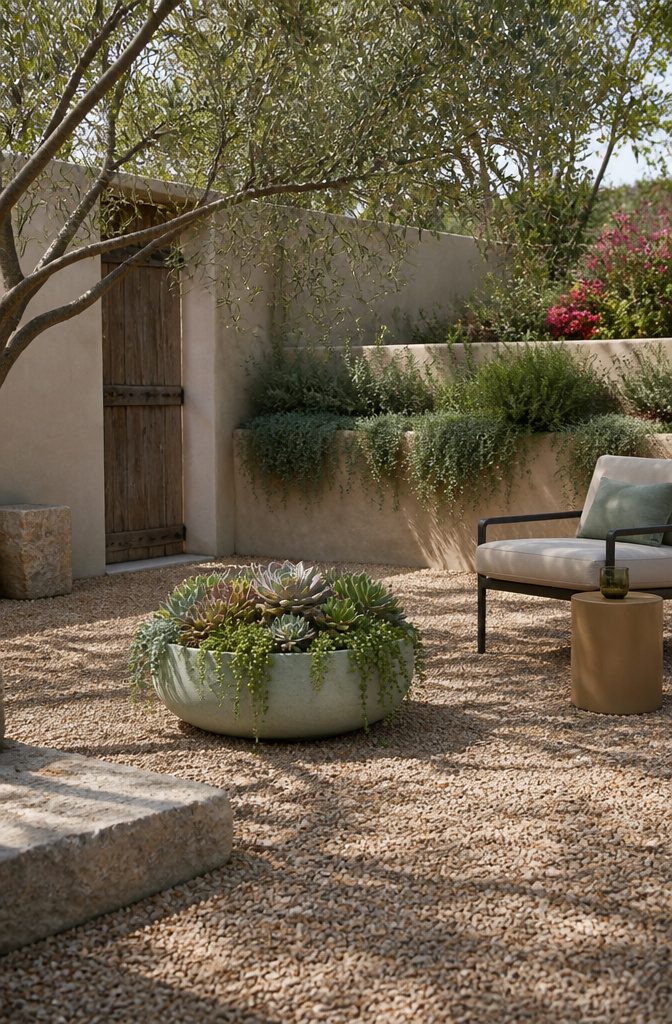
Rounded concrete outdoor planters carry weight differently than cornered ones, and the Estrella line makes that literal. The large Jade finish planter runs 22 inches across, 17.75 inches tall, with a 12.5-inch base that spreads the load to 50 lbs.
That bowl-like profile sits lower and wider than an urn of similar volume, so it does not tip in wind the way a narrow-necked piece might.
I would not park it on a deck rail, but on a concrete stoop or packed gravel patio the mass works in its favor.
The Bronze Dore and Jade finishes read as two moods from the same mold. Bronze Dore warms against gray siding or pale stone; Jade goes cooler and reads almost as aged copper from a distance.
Both pair naturally with the Ipanema square planters in matching finishes, the round form softening where the square one would read too architectural.
Medium and small sizes step down to 15.75 inches and 11.75 inches across respectively, keeping the proportions identical for grouping.

Modern Industrial Design – Unglazed gray cement construction offers a sleek, minimalist look ideal for contemporary, rustic, or urban spaces

Multipurpose planter that complements your interior or exterior décor

【Premium Cement Material】 This plant pot maintains the original color of the cement, closer to nature, and the weight of the concrete material makes it more stable, great for your succulents and cactus, snake plant, aloe, herbs and other flower planters
Maia Planters
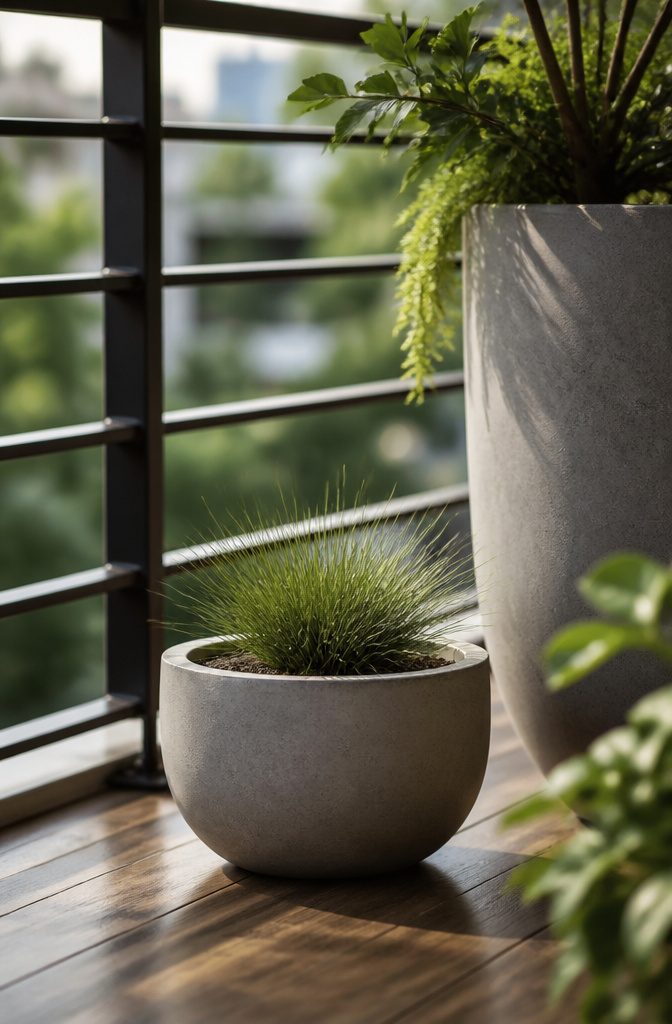
The Maia planter sits lower and wider than it looks in photos, with a rounded belly that reads almost bowl-like from a few steps back.
At 11.75 inches tall on a 14-inch base, it is one of the smaller rounded concrete outdoor planters in the line, and the 37-pound weight still means two hands for moving it once it is planted.
The Galaxy finish has a soft, mottled gray that catches light unevenly, so the surface looks slightly different at 8 a.m. than at 6 p.m.
That compact proportion works best where you want the plant to read louder than the pot.
I have seen these clustered in threes on apartment balconies, each holding a different height of ornamental grass, and the low silhouette keeps the arrangement from turning into a barricade.
On a tabletop, the single planter holds enough soil for a small Japanese maple or a seasonal swap of forced bulbs without crowding the surface.
The weight is enough that a gust will not send it sliding, but lifting it onto a narrow ledge is a two-person job once the soil is wet.

【Patio Standing Planter】Elevate your outdoor decor with intricate hand-carved details inspired by iconic Moai statues, adding cultural charm and a handmade aesthetic to your patio, garden, or entryway. These details add cultural charm and a handmade aesthetic to your outdoor space, whether it be a patio, garden, or entryway

PREMIUM POLYSTONE CONSTRUCTION: Crafted from premium polystone which is a durable blend of quality resin and natural stone powder, this decorative planter offers the elegant appearance of carved stone with lasting durability for both indoor and outdoor use.

CLASSIC PEDESTAL URN DESIGN (SET OF 2): Timeless architectural urns with a pedestal profile, designed to frame entryways, front porches, patios, and garden paths with symmetry and presence.
Rumba Planters
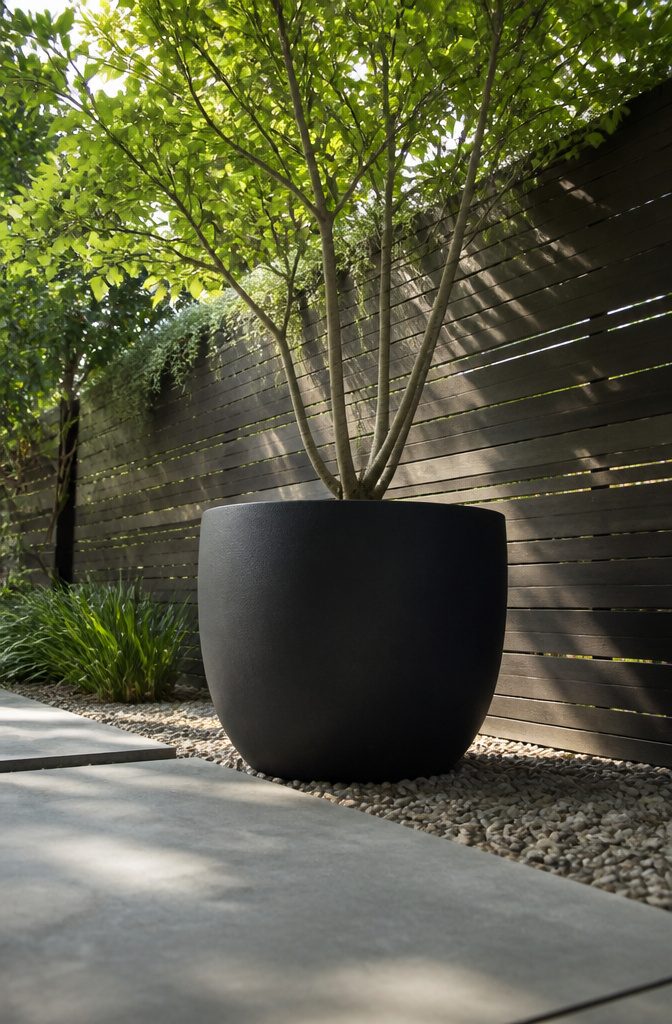
The Rumba planter in Ice Black carries some serious mass: 18 inches tall, 12.75 inches at the base, and 75 lbs of cast concrete.
That weight puts it among the heaviest concrete outdoor planters in this lineup, which shapes how you actually use it.
Wind stability is the obvious payoff. I have watched lighter pots skid across a patio in a hard gust, soil and all.
The Rumba does not move until you decide it moves. The tradeoff comes the moment you need to shift it for a party, a cleaning, or a plant that wants different sun.
Two people can manage it, barely, but this is not the planter you nudge around solo every season. Placement is close to permanent, so getting the spot right the first time matters more than usual.
The wide, rounded body fills space without reading bulky. At 18 inches it sits below eye level for most adults, which keeps the plant the focus rather than the container.
The Ice Black finish reads as near-graphite in direct sun and softens to charcoal in shade, a range that hides water spots and soil splash better than lighter glazes.
A 75 lb planter is overkill for a tabletop herb. For a boxwood, a small Japanese maple, or anything you want to stay put through a storm, the heft is the feature.
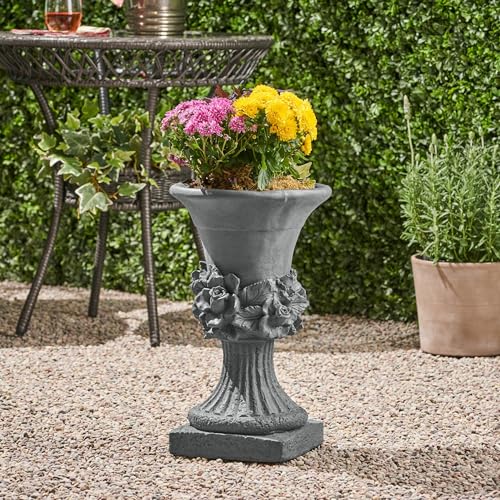
【Modern Planter】Elevate your gardening experience with our lightweight concrete planter that offers a sophisticated faux-stone look, beautifully designed with Roman accents and a stylish square base, making it a stunning addition to any garden or home décor

FUNCTIONAL OUTDOOR SEATING: Lightweight and durable, this fiberclay bench makes a marvelous addition to your garden, porch, patio, deck, or poolside area
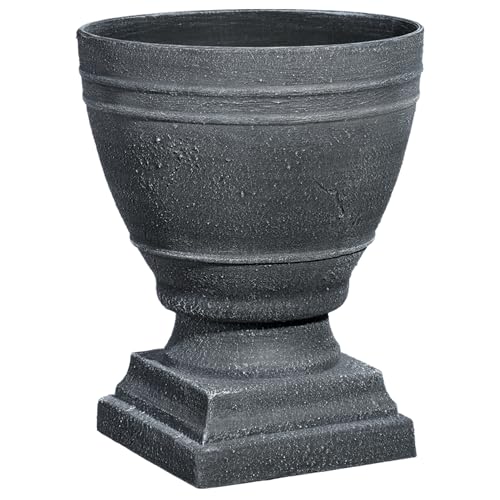
CLASSIC DESIGN: Add a distinctive touch to any setting with our classic garden urn. These lightweight urn planters feature a 2-piece design that screws together in seconds and seamlessly blends with various decor styles.
Symi Planters
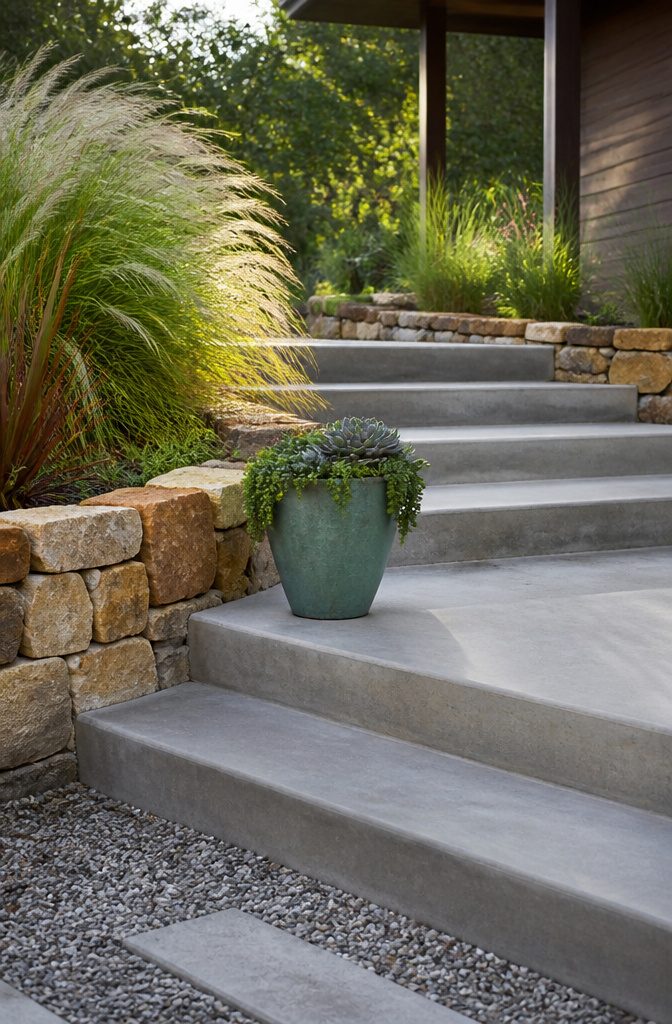
The Symi planter stands 16.5 inches tall on a 9.75-inch base, and that narrower footprint changes where you can put it.
At 50 pounds it will not wander in a breeze, but the height-to-width ratio means a bump from a passing shoulder or an enthusiastic dog matters more than with a squat pot.
I would not set it at the edge of a stoop or on a narrow rail without something solid behind it.
The Angkor Green Mist finish reads as weathered bronze in direct sun and shifts toward gray-green in shade, which makes the taper look sharper than it photographs.
The walls thicken toward the base, so the interior volume is smaller than the exterior suggests; a root ball much over 10 inches will crowd.
For a renter, the weight is enough to stay put through a lease but not so much that two people cannot wrestle it onto a moving blanket.
I would pair it with something low and wide nearby to anchor the grouping visually, or let it stand alone where no one brushes past.

Stylish Concrete Planter - Unveil a modern design boasting graceful curves and an authentic surface finish! Enhance your space's allure with this contemporary masterpiece adorned with visible pores for an enchanting touch of charm.

Stylish Concrete Planter - Unveil a modern design boasting graceful curves and an authentic surface finish! Enhance your space's allure with this seamless, contemporary masterpiece adorned with visible pores for an enchanting touch of charm.
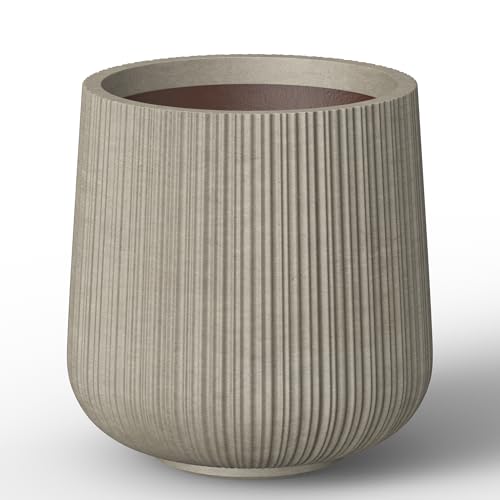
Premium Concrete Planter - Discover a modern design with smooth, flowing curves and a naturally weathered finish that exudes timeless appeal. Crafted with care, this statement piece seamlessly blends contemporary style with organic texture, featuring subtle pores and a softly tinted interior that enrich its calm and refined sophistication, adding a refined touch of character to various surroundings.
Tecate Planters
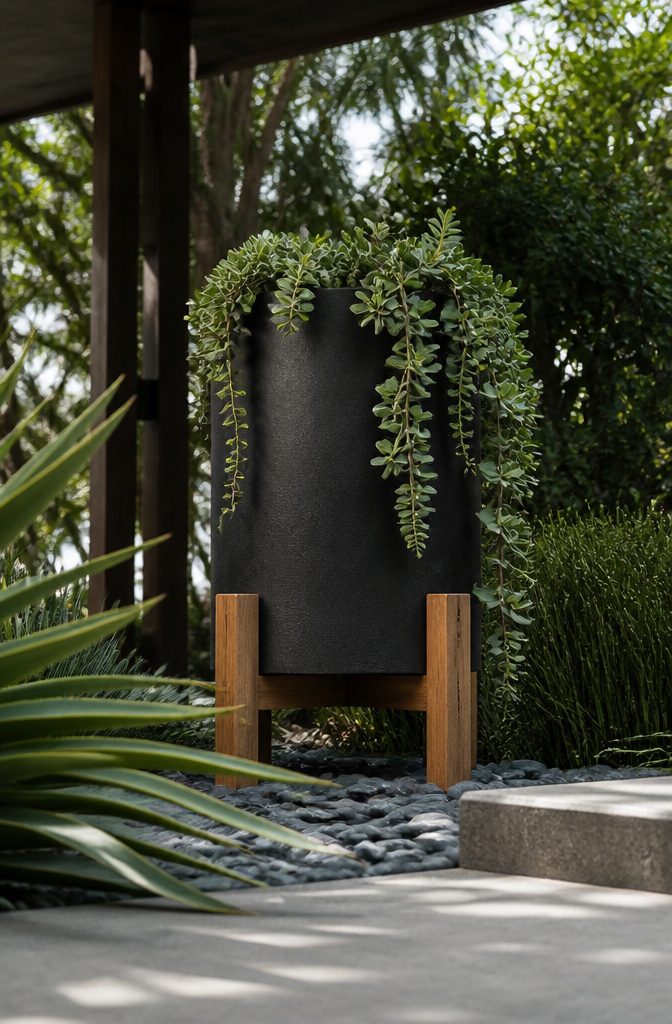
A tall cylinder changes the whole posture of a planting.
The Tecate line pushes 19.75 inches in height against a 10.25-inch base, which reads as vertical emphasis rather than volume, and at 59 lbs it still moves with two people and a hand truck.
The Playa Noche finish reads near-black in direct sun and softens to charcoal in shade, so the color shifts with the hour rather than flattening out.
This is the tallest planter in the lineup, which makes it the obvious choice for anything that trails.
A pothos or string of pearls needs that drop to read properly; set one on a pedestal and the plant spends half its energy fighting the height instead of cascading.
The weight sits in the base-heavy range, so wind is less of a factor than with a tapered urn of similar height, though a narrow footprint still means checking the level after the first hard rain settles the soil.
I would not try to center a shrub here; the proportions turn stubby fast.
The cylinder wants something that falls, or something that climbs and then falls, and the finish is dark enough that green reads brighter against it than it would on warm concrete.

Stylish Concrete Planter - Unveil a modern design boasting graceful curves and an authentic surface finish! Enhance your space's allure with this contemporary masterpiece adorned with visible pores for an enchanting touch of charm.

Modern Concrete Planter – Experience a contemporary design that effortlessly blends graceful curves, radiating an authentic, natural charm. Elevate your space with this modern masterpiece, adorned with subtle visible pores that add an enchanting touch of organic elegance and sophistication.

Tall Tapered Concrete Design: The clean, tapered silhouette creates a balanced vertical profile, making this black planter a natural fit for modern, minimalist, contemporary and architectural spaces.
Concrete and Cast Stone Materials
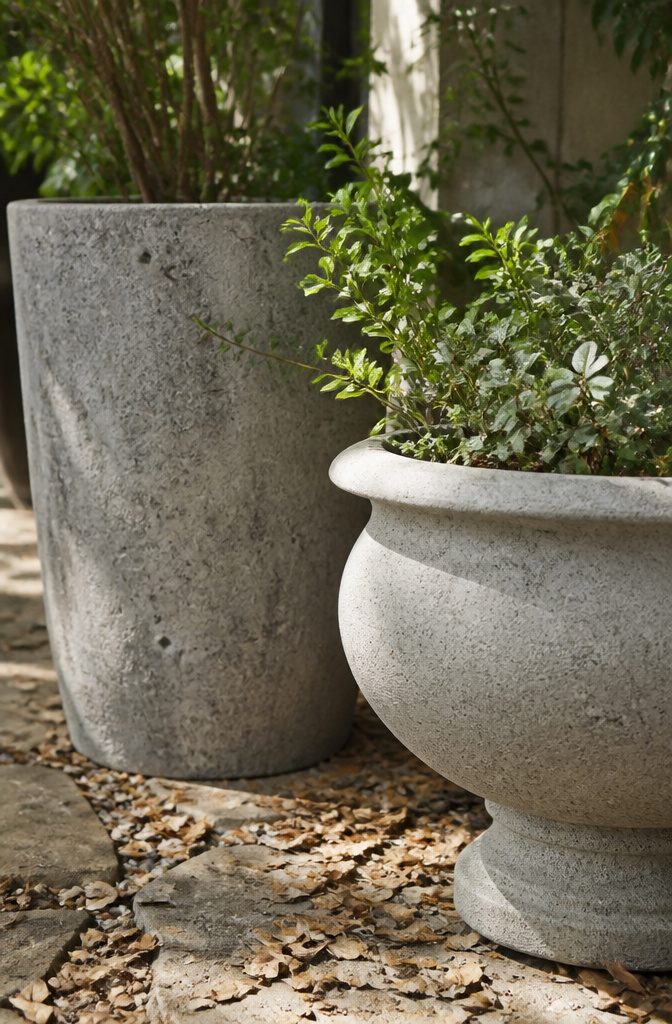
Poured concrete and cast stone start with the same basic idea, but they land in different places.
True poured concrete mixes larger aggregate with cement and water, then sets in a mold as-is. The result is strong, honest, and slightly rough; up close you see the gravel texture, which reads industrial rather than carved.
Cast stone does extra work. Manufacturers use finer aggregate, add pigments, and often cast in molds taken from actual stone pieces.
That finer mix lets the surface pick up subtle veining and softer edges, so from a few feet away most people read it as quarried limestone or sandstone.
Both materials handle weather because concrete keeps gaining strength for years while remaining slightly porous.
That porosity matters: water that soaks in can drain back out instead of pooling and cracking the surface in a freeze. Cast stone tends toward slightly higher density, which trades a fraction of breathability for smoother finish retention.
Neither one is immune to freeze-thaw damage if water sits inside through a hard winter, but both outperform terracotta or thin resin by a wide margin.
Weight is the double bind.
A substantial planter stays where the wind puts it, full soil and all. The same planter may need two people to shift, and a balcony or deck needs checking before you commit.
For renters, that permanence is worth planning around; for a first patio, the weight that keeps a planter upright in a storm is the same weight that makes it a weekend project to relocate.
Multipurpose planter that complements your interior or exterior décor

MODERN TALL CONCRETE PLANTERS: This modern contemporary tall planters with soft curves and authentic natural concrete finish with visible pores will increase curb appeal and add an elegant touch to your décor
Size and Weight Ranges
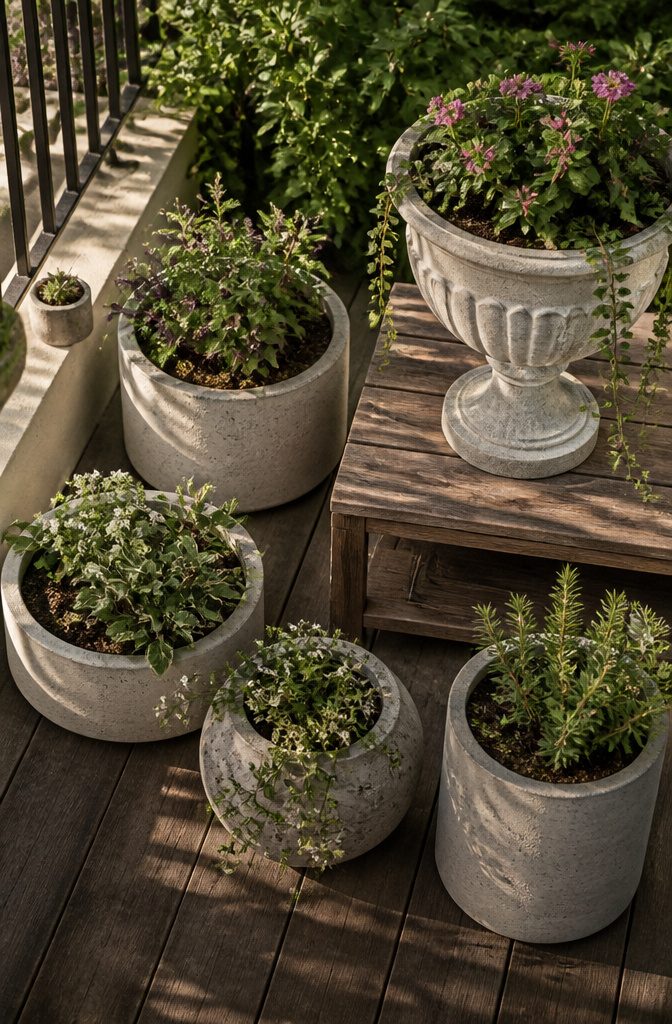
Concrete outdoor planters run the full gamut from something you tuck under one arm to something that needs two people and a hand truck.
The smallest Farmers Pot measures 5 inches across and weighs just 4 pounds, small enough to cluster on a balcony railing without stressing the structure.
At the other end, the Rustic Palazzo Urn stands 19.75 inches tall and hits 99 pounds, a statement piece that stays wherever you first set it down.
| Planter | Height | Base Width | Weight |
|---|---|---|---|
| Farmers Pot (Small) | 5 in | 6 in | 4 lb |
| Farmers Pot (Medium) | 6.75 in | 7 in | n/a |
| Farmers Pot (Large) | 8.25 in | 9 in | n/a |
| Lisette Urn | 9.25 in | 9 in | 11 lb |
| Antico Square (Small) | 11.5 in | 8.75 in | 18 lb |
| Moreland Urn | 14 in | 10.5 in | 26 lb |
| Antico Square (Medium) | 15.25 in | 13.5 in | 40 lb |
| Townbridge Small Urn | 16.25 in | 16.25 in | 72 lb |
| Berkeley Small Planter | 17.5 in | 15 in | 54 lb |
| Antico Square (Large) | 19.75 in | 15.5 in | 62 lb |
| Rustic Palazzo Urn | 19.75 in | 13.5 in | 99 lb |
| Basic Element Planter | 22 in | 6.5 in | 33 lb |
The weight jumps are not gradual.
You can manage the 11-pound Lisette alone, but the Townbridge at 72 pounds demands a dolly and a plan. For renters, that 40-pound Antico Medium is about the limit of what you want to haul up stairs more than once.
Color Finishes
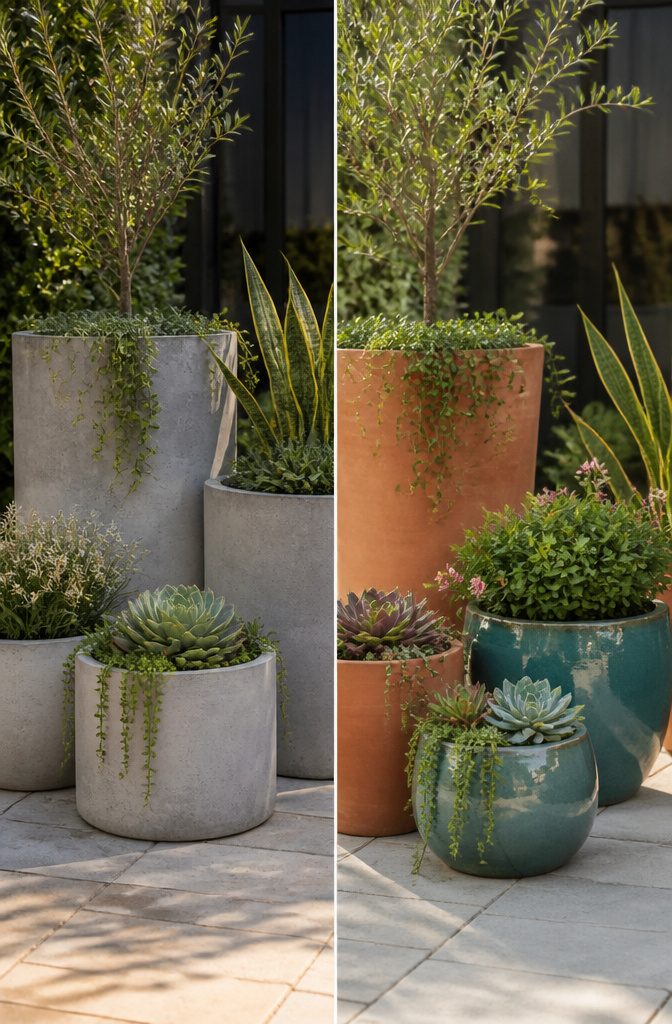
Raw grey concrete reads utilitarian at first, but in a modern courtyard it holds its own against steel furniture and pale gravel.
The surface ages visibly, picking up water marks and leaf stain that some people chase off with a pressure washer every spring and others simply let become part of the piece.
Terra cotta warms the tone without drifting into rustic cliché. It works on a covered porch where the iron oxide tone picks up brick or wood siding, though direct sun will push it toward pinker notes over a few seasons.
That shift is gradual enough that most owners notice only when they add a second pot and see the mismatch.
Glazed finishes are where the line gets interesting. Bronze Jade carries a metallic undertone that hides dust and handprints better than any solid color, which matters if your planter sits beside a door people touch.
Angkor Green Mist sits lighter in value and shows splashed soil more readily, but against white stucco or pale stone it reads as intentional accent rather than afterthought.
Solid tones make the boldest claim. Ice Black holds heat in full southern sun, enough that root balls can stress in midsummer unless you size up to give soil mass some thermal inertia.
Playa Noche, a deep warm charcoal, avoids that trap and still reads as near-black against green foliage.
For traditional beds and borders, the darker solids recede and let plants carry the visual weight; in modern settings they become sculptural objects in their own right.
Design Styles
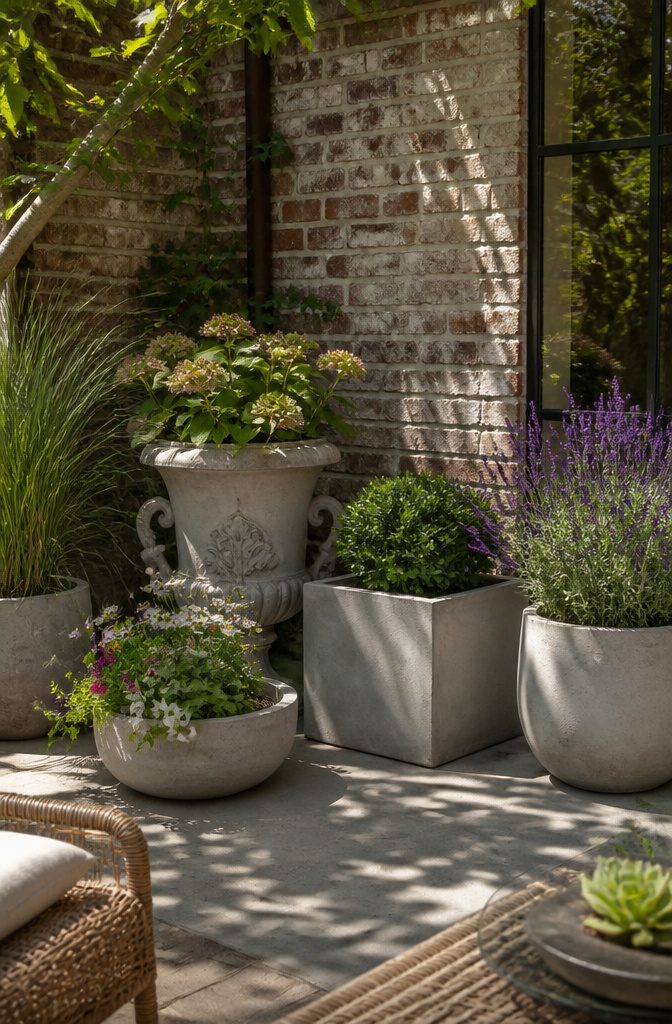
Concrete outdoor planters tend to fall into four visual camps, and the mismatch between planter and porch is what makes a new buy sit in the garage for two seasons.
Ornate urns carry scrollwork, fluted rims, and pedestal bases that read formal against a brick stoop or a wrought-iron railing. Clean modern squares with sharp corners and unbroken faces line up with mid-century concrete slabs or anything flat-roofed and minimal.
Rounded contemporary bowls soften the edge of a deck with horizontal siding; their low profile keeps sight lines open where a tall urn would block the door.
Utilitarian tapered pots, wider at the mouth than the base, stack neatly on apartment balconies and pair with utilitarian architecture, painted railings, or anywhere the plant itself is meant to star.
What convinced me, paging through enough catalogs to blur together, is that material texture matters more than silhouette.
A rough cast-stone urn against smooth stucco looks borrowed; the same urn against weathered brick looks settled in. Match the surface energy, not just the shape, and the planter stops looking like a new purchase.
What to Know Before Ordering
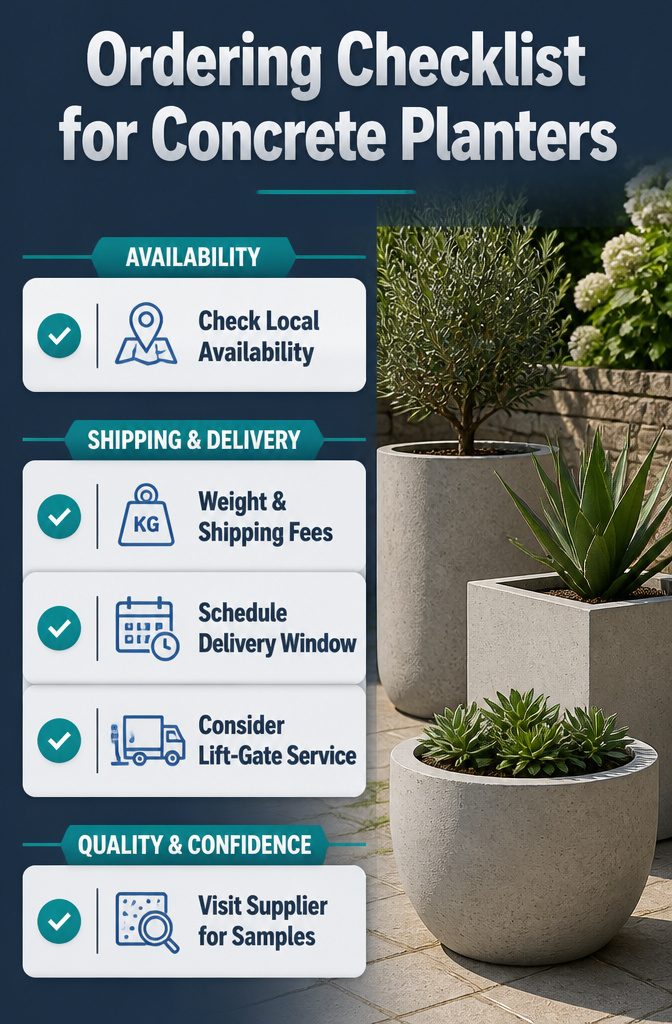
Concrete outdoor planters rarely show prices on the listing page, and the weight makes the shipping math matter more than the sticker price.
Most pieces over thirty or forty pounds move by freight, not the parcel truck that drops boxes by your door. That means scheduling a window, sometimes a lift-gate fee, and a driveway delivery rather than a porch one.
The planter itself sits where you place it, because once it is filled with soil, it is not moving again without a crew or a dolly and a prayer.
Online stock photos are not a promise of regional availability. Cast stone mixes and concrete formulas vary with the plant that made them, and a style shipping from California may not have a matching batch running in Georgia.
Calling a local concrete or landscape supplier first can turn up the same silhouette without the freight line, or at least let you see the finish in person before you commit.
What convinced me, reading through a dozen of these listings, was how many "in stock" badges quietly converted to freight quotes at checkout.
Frequently Asked Questions
What are the different types of concrete outdoor planters?
The main types are cast stone urns, farmers pots, square planters, rounded bowls, and tall cylinders. Urns carry classical detail like fluted rims and pedestal bases.
Farmers pots taper wider at the rim for stability. Square and rounded planters read modern, while tall cylinders add vertical emphasis for trailing plants.
What sizes do concrete outdoor planters come in?
Sizes run from 5 inches across and 4 pounds, like the small Farmers Pot, up to 22 inches tall or 21 inches in height for extra-large glazed pieces.
The smallest fit windowsills; the largest need two people and a hand truck to move. Most renters find the middle range, around 7 to 15 inches tall, hits the practical balance.
What colors are available for concrete outdoor planters?
Raw grey concrete is standard, with terra cotta finishes that warm the tone without looking like real clay.
Glazed options include Bronze Jade, Bronze Sapphire, Sierra, Angkor Green Mist, Ice Black, and Playa Noche, a deep warm charcoal. The Farmers Pot line also comes in white and black.