
Flower garden design is the process of planning a bed so plants survive past their first bloom. The part most people skip is mapping light before buying anything; six hours of noon sun against vinyl siding cooks roots differently than six hours of gentle morning exposure. A cheap light meter or a notebook and one clear Saturday will keep you from planting full-sun coneflowers in a patch that goes shady by noon, which is exactly the mistake that killed my first bed.
1. Start With What You Already Have

The fastest way to waste a Saturday and a hundred dollars is planting before you look. Three years ago I mapped sun on our rental’s side yard, watched the patch go from bright at 7 a.m. to full shade by noon, and still bought "full sun" coneflowers because the tag said six hours. They stretched, sulked, and died. Full sun means six or more hours of direct light, but the tag won’t tell you whether those hours are gentle morning exposure or the harsh late-afternoon kind that bakes roots in a narrow bed against siding.
Track your space with a cheap light meter or just a notebook. Sketch the bed, check every two hours across one clear summer day, and note where shadows fall. Some plants listed for part shade will handle morning sun but fry in hot afternoon exposure; the difference matters more than the tag suggests.
Soil checks are simpler. Dig a few inches down in several spots. Standing water after rain means poor drainage, and most flowers won’t tolerate it unless you commit to bog-specific plants. If the dirt clumps hard or smells sour, plan time to turn the top layer and let it settle before you buy anything. The garden center on Saturday morning is a bad place to discover you needed Friday afternoon prep.

Classifies Sunlight Exposure in Real Environments. Accurately identifies Full Sun, Partial Sun, Partial Shade, or Shade based on DLI (Daily Light Integral) levels—helping gardeners and designers optimize plant placement.

Measures Photosynthetically Active Radiation (PAR) light, which drives photosynthesis in plants

Kindly NOTE: This soil tester can not be applied to test pH value of any other liquid. If the soil is too dry the indicator will not move, and water it before testing.
2. Pick a Style That Fits Your Life

A cottage bed stuffed with hollyhocks and foxgloves looks romantic on Pinterest, but those plants need deadheading every few days or they go to seed and look weedy by July. I learned that the hard way the summer I tried to keep one going while traveling twice a month for work. If you are gone for more than a long weekend, cottage style will punish you. Formal beds with clipped boxwood or geometric annual plantings demand even more regular attention; the structure shows every omission.
Wildflower meadows and container groupings are the forgiving choices for renters and busy schedules. A meadow mix established in spring can coast through a week of neglect once it is settled, and the looser look disguises a few weeds. Containers let you move the whole garden when you move, or when a landlord decides to repaint the deck. That portability is what sold me on starting with pots at my last rental; the iris and asters came with me to the next place in the back of a sedan.
The style you pick sets every limit that follows. A formal plan needs symmetry, measured spacing, and plants that stay the height you bought them. A container approach means choosing varieties that handle root constriction and matching soil mixes to each group’s needs. Wildflower plantings work best with poor soil left alone, which saves you from amending a bed you do not own. Decide this first, or you will find yourself forcing a cottage palette into pots built for succulents, or trying to keep a meadow tidy enough for a townhouse patio.

Quick, at home results for Soil pH, Nitrogen, Phosphorous and Potash Innovative and inexpensive soil test kit features an easy-to-use capsule system and patented color comparators

KNOW BEFORE YOU GROW | Grow the healthiest, sustainable lawn and garden with the most accurate and easy to use professional soil test kit on the market

150 STRIPS SOIL pH TESTS STRIPS : This Soil pH test kit contains 150counts test strips (3–9 Range)
3. Build Around a Focal Point

A flower bed without a focal point reads like a sentence with no period. The eye keeps searching for where to land. The tallest element should sit roughly one-third back from the front edge, not dead center, and definitely not repeated at the same height across the whole bed. I made that mistake my first season: three matching lavender shrubs spaced like fence posts. Nothing stood out; everything competed.
For renters, the fix is simpler than you’d think. A glazed ceramic pot grouping, a lightweight trellis in a weighted base, or even a small birdbath on a paver can anchor the design without digging into soil you don’t own. Move it when the lease ends, or when the afternoon sun shifts and the whole composition needs rebalancing. The portable pieces let you test placement before committing, which matters more than you’d expect. A trellis that reads as charming from the driveway can block the living room window once the clematis fills in.
Height rules change by bed type. In an island bed you walk around, tallest plants go in the middle and step down toward every edge. In a border against a house or fence, tallest goes in back, shortest in front. Perennials complicate this: many won’t reach their mature height until year two or three, so the focal point you need now may have to come from something non-living while the plants catch up. A piece of yard art or a fountain does that job without the wait.

GARDENING ESSENTIAL: Small bypass blade design of Fiskars Floral Pruner has a cut capacity of 1/2 in. and is ideal for light pruning, deadheading & working with cut flowers and floral arrangements

12 Piece Succulent Kit For Planting Succulents, Gardening, Bonsai Trees, Cactus, Transplanting and other necessary tools.

COMPLETE GARDEN TOOL KIT FOR EVERY TASK:This 6-piece gardening tool set includes a a garden trowel, 5-tine rake, 9-tine leaf rake, double hoe with 3 prongs, cultivator, and crack & crevice weeder. Ideal for digging, planting, weeding, loosening soil, transplanting flowers, and maintaining raised beds, vegetable gardens, flower beds, and backyard landscapes.
4. Layer Heights Front to Back

Tallest plants go in the back third of a border bed, or the center of an island bed, with the shortest up front. A smooth gradation means the tallest plants should be no taller than about two-thirds the width of the bed, or half the width for island beds. I ignored that rule once and ended up with a wall of Joe Pye weed swallowing everything behind it.
For actual spacing, think in thirds: front layer under one foot, middle layer one to three feet, back layer over three feet at maturity. Perennials won’t hit those numbers until year two or three, so check the tag and believe it.
The thriller-filler-spiller frame from container gardening translates easily. Thriller becomes your back-row vertical accent, filler spreads through the middle to knit rows together, and spiller cascades from the front edge to break the line. Ground beds give you more room to stagger plants in odd-numbered groupings rather than straight rows, which keeps the whole thing from looking like a stadium staircase. Bring a few tall plants forward and tuck some short ones back to keep the eye moving.

Package Includes: You will receive 2 black garden shade covers, each measuring 3.94 x 2.62 feet, good size to provide suitable light conditions for the healthy growth of plants and trees in summer
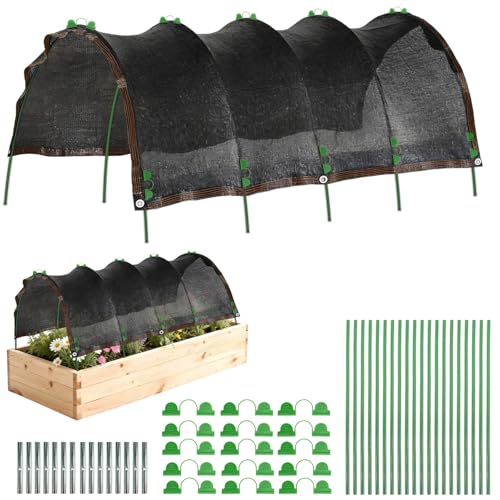
[Garden Shade Cloth Kit ]:COZYDIG Garden shade kit includes 1 pcs 3.3 x 6.5FT (1 x 2m) black shade cloth, 20 pcs straight tubes, 15 pcs connectors,15 clips and 1 pair of gloves. The design of the mesh allows light and rain to still get through so the plants will thrive.

[Garden Shade Cloth Kit]:COZYDIG Garden shade kit includes 1 pcs 3.3 x 6.5FT (1 x 2m) dark green shade cloth, 4 metal stakes(39.37inch long), A roll of rope (about 33FT),10 U-shaped ground anchors,The design of the mesh allows light and rain to still get through so the plants will thrive.
5. Plan for Bloom Succession

The first spring I tried flower garden design, I walked out of the nursery in May with a car full of coral bells, dianthus, and one impulse-buy peony, all in full bloom. By July the bed looked like a garage sale: green leaves, zero color, and me standing there with a watering can wondering where I went wrong.
Bloom succession is what separates a garden that sings from one that fizzles. You want something flowering from March through the first hard frost, which in most zones lands somewhere between late October and mid-November. Break the season into four slots: early spring (March–April), late spring to early summer (May–June), midsummer (July–August), and late summer into fall (September–first frost). For the first slot, hellebores and lungwort carry the weight. May and June are where peonies, salvias, and alliums earn their keep. July is the gap that gets most people, so plan deliberately for it: black-eyed Susans, coneflowers, and Russian sage are the workhorses. Then asters and sedum pick up from September onward.
Nursery tags mostly brag about color and height. The bloom time is usually there in small print, sometimes as a month range, sometimes as "early," "mid," or "late" season. That vague language is why I now photograph tags and cross-check against a perennial list before I buy. "Midseason" on a salvia means June; on a daylily it can mean July. The color sells the plant, but the month range is what keeps your bed from going silent for six weeks straight. I still buy the occasional showy pink in a weak moment, but only if I can name exactly which gap it fills.
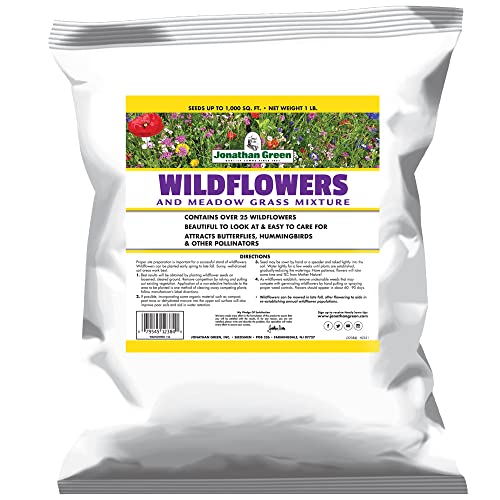
CREATES A BEAUTIFUL LANDSCAPE - Our Wildflower and Meadow Grass Mix contains over 25 annual and perennial wildflowers, hard fescue grass seed, and birdsfoot trefoil. It's perfect for creating a natural landscape with little maintenance.

100% Pure, Non-GMO Seeds - No fillers, favorites only! Includes 19 easy-to-grow species: Siberian Wallflower, Shasta Daisy, Lance Leaf Coreopsis, Sweet William, Foxglove, Purple Coneflower, Blanket Flower, Blue Flax, Perennial Lupine, Mexican Hat, Gloriosa Daisy, Black Eyed Susan, Candytuft, Gayfeather/Blazing Star, Maltese Cross

🌼 “American Meadow Magic” Wildflower Seed Mix: Our signature PlantMe blend features 25 diverse wildflower varieties, specially curated to create a stunning, natural meadow right in your own backyard. Experience the magic of a flourishing, colorful ecosystem.
6. Choose Colors That Work Together

A flower bed with too many colors reads like a clearance rack. Limit the palette to two or three main colors plus green, and the whole thing suddenly looks like you planned it.
Warm tones, the reds and oranges and yellows, want to stay together. Cool tones, your blues and purples, do the same. Crossing them takes intention. Purple and orange only work when something mediates between them. White does that job quietly. Silver foliage, like lamb’s ear or dusty miller, works even harder because it carries green’s neutrality while reflecting light back into the bed.
I learned the warm-cool rule after planting a coral zinnia against a blue salvia. Each color dulled the other. The fix was pulling one. Two warm colors, say coral and yellow, plus green, need no bridge. They already speak the same language. A cool bed of blue and lavender reads calm without help.
White functions as punctuation, not a main color. Use it between clashing neighbors or at the bed’s edge where the eye rests. Silver fills gaps between seasons when flowers are sparse. Both keep a limited palette from feeling monotonous without adding a fourth voice to the chorus.

Quantify the total amount of photons received by plants per square meter over the course of a day. The unit is mol/m²/d (DLI). After connecting to your phone for the first time, the meter automatically records daily DLI values. Each time you check the data, simply press the button and connect your phone to update records — up to 180 days of history.

✅【2 in 1 PAR & DLI Meter】DANOPLUS PAR DLI Meter is easy to measure PPFD (Photosynthetic photon flux density) and DLI (Daily Light Integral), the range of the PPFD is 0-5000 μmol/m2/sec, the wavelength is from 400nm to 700nm
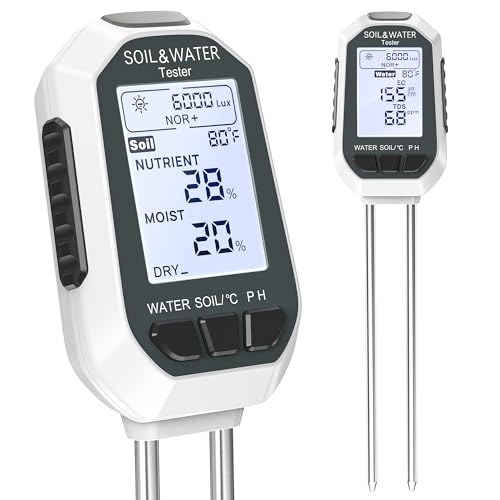
【7-in-1 Features】This is a 7-in-1 multi-function soil tester. Our soil tester quickly measures soil moisture, pH, temperature and light intensity, and its fertility function helps you take better care of your plants. With this device you can measure the soil moisture, pH, temperature and light intensity for your plants and with the EC and TDS functions you will know when it is time to water the soil.
7. Mix Perennials and Annuals by Budget

Perennials cost more upfront but drop to nearly zero by year three, while annuals demand fresh cash every spring. A new bed usually splits somewhere between 60/40 and 70/30 perennial to annual, which keeps the first season from feeling bare without breaking the budget twice.
Some perennials, like black-eyed Susan and salvia, flower reliably their first year from a nursery pot. Others, including most peonies and many ornamental grasses, spend that season building roots and look sparse until the following summer. I plan those slower fillers toward the back where annuals can mask them.
The real math hits with how you buy annuals. A flat of 36 plugs runs roughly half what you’d pay for the same count in 4-inch pots, sometimes less. Plugs need a few weeks to look like anything, so they work best tucked between established clumps. Pots give instant coverage but can push a single bed’s annual budget from thirty dollars toward eighty. For a weekend timeline with tight funds, plugs plus a handful of pot-grown annuals for the edges usually wins.

Accurate Soil pH Testing: Dewildetradingco Soil pH Test Strips offer measurements of soil pH levels (pH 3.5-9). As an essential tool for every gardener and grower, these test strips help determine the optimal pH for various plants, such as outdoor plants, indoor plants, gardens, grass lawns, fruit trees, flowers, vegetables, and forest shrubs.
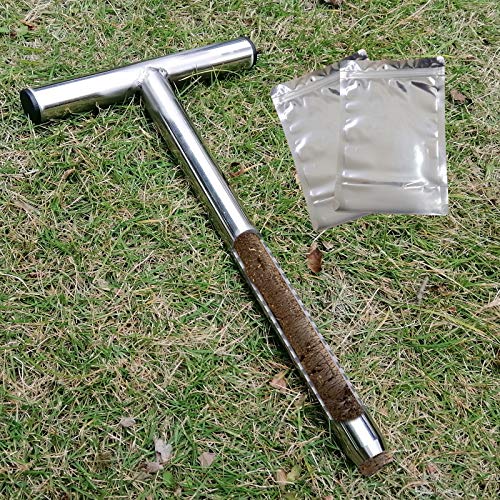
STAINLESS STEEL MATERIAL: Made with the exceptional workmanship and stainless steel materials, our soil probes are finely machined for smooth, easy sampling, and long-lasting durability

Quick, at home results for Soil pH, Nitrogen, Phosphrous and Potash
8. Add Hardscape Without Digging

Permanent hardscape feels like a commitment most renters cannot afford, but structure still matters for a flower garden design that looks intentional. Containers do the heavy lifting here. A 20-inch resin planter runs about $35, holds enough soil for a dwarf hydrangea, and empties out in under ten minutes when the lease ends. For balconies, stay under 40 pounds per square foot total; wet soil in a glazed ceramic pot can hit that faster than you would expect, so resin or fabric grow bags keep the load manageable.
Raised beds on legs lift everything off the ground, skirt most lease restrictions, and spare your back. A cedar version at 24 by 48 inches costs roughly $80–120 and folds flat for a move. Gravel paths laid over landscape fabric read as garden infrastructure but lift away clean; pea gravel runs $4–6 per bag at hardware stores, and the fabric underneath keeps it from sinking into mud. For edging, steel landscape strips hammered in by hand leave no holes worth mentioning, while rubber or bamboo rolls simply unspool and get weighed down with stones. What counts as temporary for deposit purposes usually comes down to whether a screwdriver and thirty minutes can erase it. If it needs a saw or leaves anchor holes deeper than a finger, landlords notice.


Comes with a zippered canvas case for easy carrying

CHARMING PINK GARDEN TOOLS SET - Includes 2 in 1 detachable storage bag, spatula, transplanter, rake, weeder, tiller, scissors, non-slip gloves, sleeves, knee pads. Most importantly, if this is a gift, you will get the love of that woman for you.
9. Mulch and Water for the First Season

The first six weeks after planting are when a bed lives or dies, and most of that comes down to water moving through soil the right way. Two to three inches of shredded bark or straw mulch keeps the ground cool and slows evaporation without smothering stems. Pile it right up to the base and you invite rot; leave a small ring clear around each plant and the roots stay breathable.
Watering frequency shifts with temperature. Cool spring days might need one deep soak every seven to ten days. Once highs climb past 85°F, that tightens to twice weekly. The common mistake is the daily sprinkle, which wets only the top inch and trains roots to stay shallow and thirsty. A slow, deep application that reaches six to eight inches builds the kind of root system that survives a missed weekend.
Signs of trouble run opposite to what people guess. Yellowing lower leaves with wet soil usually mean too much water; crispy edges with dry soil two inches down signal not enough. For renters without a spigot, a five-gallon can filled at the kitchen sink works fine for small beds. A flat-soaker hose run from a bathtub faucet, left to trickle for twenty minutes, covers larger spaces without the spray that knocks over seedlings.


UV STABILIZED HIGH QUALITY MATERIAL – Using only high-quality HDPE ensures the Garden Netting to last long. Fabric is UV stabilized to withstand fading and retain material strength. Thick metal grommets about every 24'' on all four sides.

HIGH QUALITY MATERIAL - Our rectangle sun shade sail is made of 180GSM high-density polyethylene, finished with the strong stitching seam and double webbing. It is durable and fade-resistant, but not waterproof.
What I Spend on a Weekend Bed

A new 4×8 foot bed built from scratch runs me about $180–$220. The soil amendment is the bite: two bags of compost and a bag of peat or coir to break up clay runs $45–$60, and this is the place I refuse to cut. Plants from a mid-tier nursery, a mix of six-packs and 4-inch perennials, land around $70. Hardwood mulch, two bags, is $16. The rest goes to edging, maybe some cheap steel or recycled brick.
Refreshing an existing bed flips the ratio. I spend maybe $30 on a single bag of compost to work into tired soil, $50–$80 on new plants to swap out what died or bored me, and skip the mulch if last year’s layer still holds. The hardscape stays put.
Fall clearance changes everything. Nurseries here start marking perennials down 40–60% by late September, and the plants do not care that I am buying them out of season. I stick them in the ground six weeks before frost, let the roots settle through winter, and wake up to a bed that already looks like June for the price of April annuals. The catch is selection: what is left is what nobody else wanted, so I plan my color scheme loose and shop with a backup list.

EXTRA LARGE PACKET contains over 1 full ounce of pure live seeds (7,500+ seeds) - Enough to cover 100 square feet.

POLLINATOR PARADISE: Over 20000 wildflower seeds create thriving habitats for monarchs, bees and hummingbirds; Perfect blend of milkweed seeds for monarch butterflies and nectar-rich flowers; Creates vibrant meadows and beds while supporting essential biodiversity

This gorgeous selection of 18 annual and perennial flower seeds provides easy-to-grow Rocky Mountain Wildflower Seeds . Wildflower seeds bulk for planting in your garden, farm, or field. Our "Rocky Mountain" region wildflower mix also attracts bees and other pollinators to support a healthy, sustainable ecosystem.
Tools That Stay Useful

A hand trowel, a three-tine cultivator, a pair of bypass pruners, a Korean hand plow, and a Japanese hori-hori knife handle almost every task in a flower bed. Buy the pruners and the hori-hori new, at around the $40 mark, because the steel quality shows up fast in use. The cheaper pruners I tried dulled after two seasons and started crushing stems instead of slicing them. The trowel and cultivator are fine at $15; thrift store finds work if the handles are solid wood or fiberglass, not the hollow kind that flexes.
The Korean hand plow sits in a strange middle space. I have seen decent ones for $12 and bad ones for $35, so handle feel matters more than price. Skip bulb planters entirely; the hori-hori does that job and ten others.
For storage without a shed, a five-gallon bucket with a canvas tool roll inside keeps everything dry and fits on a balcony. A magnetic strip meant for kitchen knives, mounted with removable strips on a rental wall, holds metal tools where you can see them.
Plants I Stopped Buying

Some plants earn their spot on the nursery bench year after year, and it is rarely the plant’s fault. The gap between a tag that reads "hardy to zone 5" and what actually survives your particular corner of the yard can swallow whole weekends and fifty-dollar bills before you notice the pattern. I stopped buying delphiniums after three summers of watching them leaf out beautifully in May, then collapse in July when the afternoon sun hit the bed against my garage wall. The tag said full sun; my microclimate turned that into a convection oven reflected off vinyl siding. Switching to Salvia nemorosa in that spot cost about the same per plant and handled the heat without the drama.
"Deer resistant" has become nearly useless as a filter. After my neighbor’s hosta collection turned into a salad bar, I planted what three different labels called resistant varieties. The deer ate two of them that first September, apparently not having read the packaging. Now I assume the term means "slightly less preferred" and plan for physical protection the first season regardless. Similarly, "drought tolerant" often translates to "established plants can survive periodic dryness," which is not the same as thriving through a July heat wave in sandy soil with no irrigation. Sedum and Russian sage have replaced several casualties in my dry spots; both looked rough the first year while roots found their depth, then filled out without the hand-holding.