
A house plant pot is any container that holds soil and a root system while managing how water leaves it. The difference between a thriving fern and a rotting succulent usually comes down to whether the walls let moisture escape, and at what speed. The Bergs Potter Copenhagen line, drawn from an 1860 design for a Danish palace, ships in nine sizes with matching saucers and glazes that run well past raw terra-cotta.
1. Bergs Potter Copenhagen Terracotta

The Copenhagen line from Bergs Potter draws on a design the Danish company traces back to 1860, when similar pots were made for Fredensborg Palace. The company has been working with Italian clay for close to a century, and the result is a nine-size range in the regular height, plus three low-profile and three tall options. Each pot ships with a matching saucer, and the glaze colors run beyond the raw terra-cotta I tend to picture first.
Terracotta’s porosity is the practical reason to reach for it. The clay pulls moisture from the soil and lets it evaporate through the walls, which suits succulents, cacti, and Mediterranean herbs that want their roots to dry between waterings. Thyme in a 4.4-inch pot on a kitchen counter is the use that comes to mind: the plant stays happy, and the warm, slightly imperfect surface softens the clutter around it. If you are tending ferns or calatheas that want steady dampness, this material works against you unless you are prepared to water more often or line the interior.

Premium Materials: Crafted from high-quality clay and baked at high temperatures, our pots promote quick soil drying and optimal plant growth, drawing out excess water.
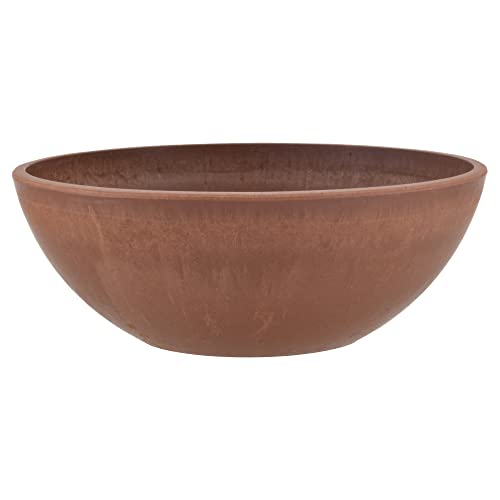
Made with Recycled Materials: A blend of recycled plastic, stone powder, and wood dust, PSW Pots are eye-catching and long-lasting for mindful gardening.

【Premium Quality】Made of top quality clay and baked at high temperature , terracotta pots features great durability and crack resistance,all the productscome well. packaged to ensure the planters remained intact duringthe delivery process
2. IKEA Chilistrån Hanging Planter

The Chilistrån hanging planter fixes two problems that usually chase people away from ceiling pots. Most hanging planters with a drainage hole drip onto whatever sits below. Those without one tend to be bowl-shaped, so a standard nursery pot just floats around inside and your plant ends up sitting in water. The Chilistrån is closed on the bottom, which means your shelf or windowsill stays dry, and its narrow shape grips a 6-inch inner pot snugly enough that nothing shifts when you lift it down to water.
At $13, it is cheap enough to buy in multiples, which matters because the pots link together into a dangling chain. That turns a single hook into a vertical row of plants, useful in a rental where you would rather not drill five holes across a wall. A tradescantia or any trailing thing that likes bright indirect light will drape down through the opening and look intentional within a couple of weeks. The planter comes in black or white, so it does not fight the room it hangs in.
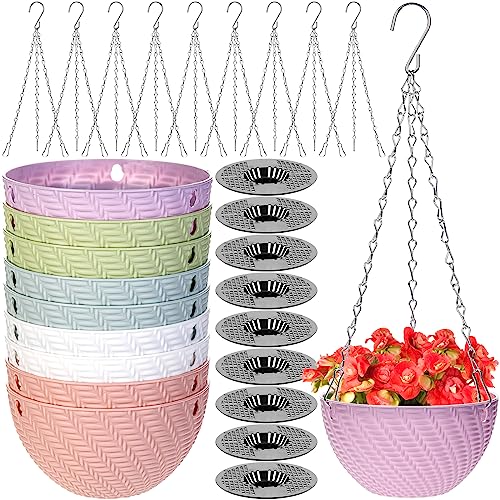
Colorful Planter Set: A set of 10 hanging planters in 5 colors (white, purple, blue, green, pink). Each hanging planter come with a self-watering insert, a metal hanging chain and a drainage plug for switching between indoor or outdoor use. An excellent choice for your lovely flowers and plants.

Self Watering Planters Unique Style Design - The appearance and structural design of the self watering hanging planters for indoor plants are conducive to plant growth, and are suitable for matching various hanging plants. Such as ivy, herbs, ferns, philodendrons, succulents, flowers or other plants. Please Note: Plants NOT included.

Self Watering Planters Unique Style Design - The appearance and structural design of the self watering hanging planters for indoor plants are conducive to plant growth, and are suitable for matching various hanging plants. Such as ivy, herbs, ferns, philodendrons, succulents, flowers or other plants. Please Note: Plants NOT included.
3. Capra Designs Archie Pot

Resin has a reputation for feeling cheap, but the $79 Capra Designs Archie Pot carries itself like ceramic. The material is weighty enough to stay put on a shelf, and the speckled finish gives it a terrazzo-like texture that reads as intentional rather than plastic. At roughly 5 inches in diameter, the pot sits on a separate arched base that catches runoff water and adds a few inches of height to the whole assembly.
The two-piece design is what separates this from standard nursery pots. The columnar shape rises taller than most containers at this width, which makes it useful for building vertical interest among shorter pots. I would not trust it with a heavy trailing plant; the narrow footprint wants something upright, like a sansevieria or a compact herb, where the architectural base stays visible. The seven color options keep the speckled finish from feeling too singular, though the brighter terrazzo reads as cheerful in a way that quieter rooms may not want.

Yarlung 6 pack self watering planters, measure 5''L x 5''W x 4.3''H, white external pot, black internal 4.7''L x 4.7''W x 4''H. Made of durable plastic materials, unbreakable, it will not leak water on your tables, floors or indoor garden. Square lovely plant pots are perfect for holding and displaying orchid, herb, succulent, cactus, aloe and flowers, decorate your living space

🌿 【Efficient Self-Watering System for Low-Maintenance Plant Care】 The Fielda 8-inch self-watering pots for indoor plants use COTTON WICKS to auto-feed plants for 7-10 days! Ideal for busy individuals or frequent travelers, this design reduces the need for daily watering, promoting healthier plant growth.

🌱 AUTOMATIC SELF-WATERING SYSTEM – Features a removable wick-based watering feeder that automatically hydrates plants for up to 2 weeks. Perfect for worry-free plant care during travel or busy schedules.
4. Accent Decor Amber Glass Pot

Glass pots sit at the edge of most plant advice, but the $59 amber version from Accent Decor changed how I think about them. Roots normally stay buried for good reason: many house plants rot or stall when light hits them. The amber tint cuts that risk without hiding what you need to see. Water pooling at the bottom, roots pressing the glass, early crowding, all of it shows through the warm cast.
I keep one for finicky plants where root health is the first thing to go wrong. A clear nursery pot does the same job cheaper, but it looks like a science experiment on a shelf. The amber glass reads as decor first, which matters when the pot lives in a room you actually sit in. The saucer is built in, so the whole setup drains without leaving a ring.
Dark-rooted plants like snake plants or ZZ plants will not thank you for the spotlight, even filtered. Use this pot for plants that tolerate some root light, or accept that you are trading a little stress for the information you get back.
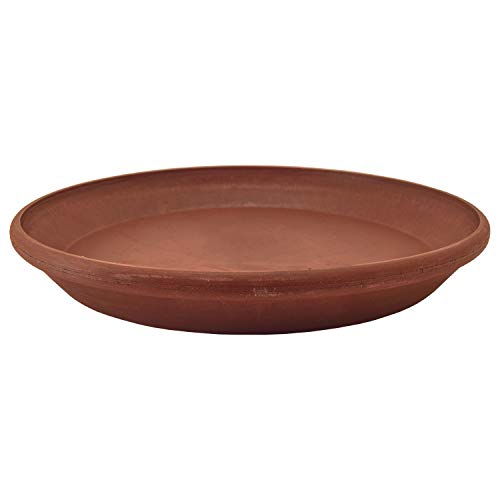
Made with Recycled Materials: A blend of recycled plastic, stone powder, and wood dust, saucers from the PSW Pot Collection are eye-catching and long-lasting for mindful gardening.

Made with Recycled Materials: A blend of recycled plastic, stone powder, and wood dust, saucers from the PSW Pot Collection are eye-catching and long-lasting for mindful gardening.

PLANT SAUCER VALUE - These plant drip trays are made of sturdy plastic. The package includes 2 packs of 6 inch trays. Each saucer is 6.5" top, 6" bottom, 1.18" deep, great for various uses. Pot saucers for plants, suitable for ceramic and plastic pots
5. Pennington Small Terra Cotta Clay Cylindrical Pot

The Pennington Small Terra Cotta Clay Cylindrical Pot runs about $6 at Home Depot, and that price is the whole point. At six bucks, terra-cotta becomes something you buy in armfuls rather than debating over, which matters when you are filling a first apartment or switching pots every season as plants outgrow them.
The cylinder shape is what separates it from the standard V-shaped terra-cotta most of us picture. A 5.5-inch diameter and straight sides sit cleaner on a windowsill, and the source notes these fit neatly on 5-inch-deep ledges where flared pots overhang and tip. The material is the same porous, unglazed clay you will find on a Bergs Potter, but the Danish pot costs roughly ten times as much and arrives with a saucer and a pedigree. The Pennington skips the saucer and the heritage branding; what you get is raw clay that wicks moisture and ages with mineral stains, same as the expensive stuff, just without the ceremony.
I have spray-painted cheap terra-cotta when the orange tired me, flipped them upside-down for plant stands, and cracked a few by leaving them out through a freeze. The cylinder version holds up to the same abuse at the same price, and when one breaks, the replacement costs less than a coffee. For starting out or buying in bulk, the math is hard to beat.

PLANT POTS WITH DRAINAGE: Each ceramic planter features a drainage hole and a matching ceramic saucer permanently attached to the bottom, eliminating the hassle of loose trays while helping catch excess water and protect furniture surfaces. Five premium mesh pads are included to prevent soil loss while promoting healthy root growth. These plant pots with drainage make plant care simple and convenient, allowing both beginners and experienced plant lovers to enjoy healthier plants with less effort.

Versatile Pots for Everyday Plants: This four-pack works well with flowers, herbs, pothos, aloe and popular houseplants for everyday indoor or outdoor planting

Embossed Design: This 5 inch ceramic flower pot features a stunning blue floral design and dark gold embossed artwork, giving each indoor flowerpot a unique artistic charm. Four beautifully embossed patterns make this decorative pot not only a container for plants, but a stylish piece that adds a touch of elegance to any home decor, office space or garden decor
6. Bruning Pottery Standard Planter

At $18, the Bruning Pottery Standard Planter lands in a strange spot between mass-produced and handmade, and that is exactly where its value sits. Each piece is glazed ceramic from a small Pacific Northwest operation, so the finish varies slightly pot to pot in a way factory molds never allow. The integrated saucer is the real convenience: the drainage hole sits low on the side seam where pot meets saucer, not punched through the bottom. Water exits freely, and you lift the whole unit to pour off excess without sliding a separate dish across the counter and trailing drips. The turned-in rim keeps soil from spilling when you do.
Ceramic holds moisture longer than terracotta, which matters for plants that want consistent soil dampness and risks root rot for those that do not. I would not park a succulent in this for long without adjusting the watering schedule, but a monstera or anything tropical settles right in. The saucer attachment alone saves enough daily hassle that I would take this over a prettier detached piece every time.

Premium Quality: These terra cotta pots are constructed of high-quality clay, which allows more water and air to circulate freely within the pots while yet maintaining their structural integrity. It's an excellent choice for cactus, succulents, and other plants that thrive in dry soil, and it's also appropriate for areas with lower temperatures. The high air permeability of the pot walls helps the soil to dry out more quickly

Round Cylinder Design – Porous terracotta clay material for succulent plants.

【Premium Quality】Made of Top-Quality clay and baked at 1796°F high temperature, each Terracotta Pots features great durability and crack resistance. All packages have passed the 3-foot drop test to ensure the pots stay intact during delivery.
7. FGBNM 8-inch Disco Ball Planter

The FGBNM 8-inch Disco Ball Planter runs about $23 and delivers exactly what the name promises: a hanging sphere of mirror tiles that throws light around the room like a proper dance-floor relic. The included chain sets it up to spin, though the macrame hanger that comes in the box can stay in the drawer.
The catch is right there in the construction. No drainage hole means water sits where it lands, so standard potting mix and most houseplants will rot. Two ways to use it without killing something green: drop in a nursery pot and treat the disco ball as a cachepot you pull out to water in the sink, or plant directly with succulents or cacti that can handle the dry stretch between drinks. The 8-inch size fits a small nursery pot with a little finessing, though the larger sizes leave too much gap and the tabletop versions obviously will not hang.
Those stick-on mirror tiles look fragile up close. The sparkle when afternoon sun hits is real, but the tiles may not stay stuck forever.

【Versatile for Home and Office Spaces】Available in three soft stylish colorways : fresh sky blue , gentle blush pink and muted sage green with universal matching aesthetic . Perfect suspended decor for living rooms , balconies and office indoor environments

Appropriate Size 7.28" Opening: The diameter of the pot opening is 7.28 inches, width 8.23 inches, height 4.1 inches. Please ensure that the size is what you need. It will be suitable for a variety of indoor or outdoor plants. Whether you want to plant flowers, leaves, vines, or succulents, it is a beautiful container of appropriate size, such as cacti, succulents, snake plants, aloe vera, and most other plants.
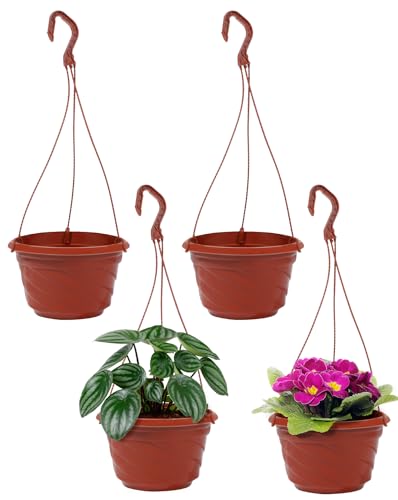
MODERN HANGING PLANTERS:This attractive set of beige white/red round hanging planters for outdoor plants(4.13”Dx3.54”H) Comes with finishing triple-chain hanger,The detachable hook, strong and balanced, ensuring secure support while hanging are an ideal way to display your favorite plants and flowers. Fit for indoor and outdoor areas.
8. Franca Stacked Planter

The Franca Stacked Planter runs $94 at West Elm, a price that stings less once you realize you’re getting two pots in one. The waist is cinched, and that’s where the drainage hole lives: flip it so the narrow end sits in the saucer for a tall, stately profile, or invert it and plant into the wider bowl for something lower and more spread out. The included cup catches water either way, so you’re not hunting for a matching saucer that actually fits.
Root depth decides which orientation works. A rosemary with a deep taproot wants the tall setup; a shallow-rooted pothos or a cluster of succulents sits happier in the wide, low bowl. The ceramic comes in several colors and sizes, but the reversible shape is what earns the space on a shelf. At ninety-four dollars, dual function matters: you’re covering two plant profiles with one purchase instead of storing an extra pot you’ll swap in maybe once a year.

🌿【Self-Watering Pots with Water Level Indicator】 Designed for busy plant lovers, our 8/10/12 self-watering pots feature a built-in ABSORBENT COTTON WICK SYSTEM that automatically draws water from the detachable bottom tray. The TRANSPARENT WATER LEVEL WINDOW WITH MEASUREMENT MARKINGS lets you monitor hydration at a glance, ensuring no overwatering or underwatering. Perfect for indoor/outdoor plants, this system keeps soil evenly moist for up to 7-10 days—ideal for vacations or hectic schedules.

SELF WARERING SYSTEM - This self watering pot has two holes in the bottom, thread the cotton rope through them, and rope will absorb water and keeps the soil moist. Self watering pot has large capacity reservoir is a boon, especially when on holiday, ensuring your plants stay hydrated hassle free.

Self Watering Pots for Indoor Plants: These plant pots feature a cotton rope that absorbs water, keeping the soil consistently moist. This convenient design eliminates the need for daily watering, and never worry about overwatering.
9. Matr Boomie Vasanta Terracotta House Planter

The Matr Boomie Vasanta Terracotta House Planter runs $33 at Garmentory, or $44 direct from Matr Boomie. At four inches square, it is sized for a four-inch nursery pot, though the interior leaves enough room that a small philodendron settles in just as well.
Plain terracotta does the work of drainage and breathability; the hand-painted finish here does the rest. A scalloped roof line and painted details turn the pot itself into the decorative element, which saves the step of nesting a plastic grower pot inside something prettier. For renters and first-home owners who do not want to buy two vessels every time a plant moves in, that consolidation matters.
The company is Indian-owned and works fair trade, so the price carries that layer. Whether that shifts the value depends on how you weight sourcing. The pot has a drainage hole, so water management works the standard way: saucer or sink, no self-watering trick. It is a straightforward piece that happens to arrive already dressed up.

Sturdy Ceramic Material: Crafted from durable ceramic, our plant pot saucer 12 inch is designed to be sturdy, keeps water from seeping in, not easy to fade and maintains its shape, ensuring long-lasting use for indoor outdoor

【Modern Style Planters】 Flower pots with saucers provide a unique,nice style circular swirl pattern design which gives an understated elegance that will enhance the beauty of your plant.Plastic flower pots would be a beautiful addition to anyone’s deck or sunroom or house! for indoor and outdoor .
Made with Recycled Materials: A blend of recycled plastic, stone powder, and wood dust, saucers from the PSW Pot Collection are eye-catching and long-lasting for mindful gardening.
10. IKEA Gradvis Plant Pot

The $12 Gradvis from IKEA has been sitting around my living room for two years now, still doing exactly what it was built for: hiding a plastic nursery pot inside a decent-looking ceramic shell. It comes in two sizes, 4.75 inches and 6 inches. My 4.75-inch one in matte pink swallows a 5-inch nursery pot whole, no wobble, no exposed plastic rim.
This is the cachepot method in its simplest form. Water the plant in the sink, let it drain through the nursery pot’s holes, then set it back in the Gradvis. The ceramic stays dry, your shelf stays dry, and you don’t need a saucer competing for space on a windowsill.
The catch is regimented watering. Succulents and cacti that want to dry out completely between drinks will sulk if any residual moisture lingers at the bottom of the cachepot. Fungus gnats find that setup irresistible. I kept a pothos happy in mine for months because it could handle the slight humidity bump; a snake plant I tried the same way started yellowing at the base inside a month.
The soft matte colors and ridged texture let it read as a background piece or pair with louder pots without fighting them. For twelve dollars, that flexibility is the whole point.

2-Piece Size Combination:6.6 + 5.5 inch planters meet different planting needs—perfect for small succulents, herbs, medium potted plants (snake plants, pothos) to decorate your space hierarchically.

Small Succulent Planter With Drainage Holes and Mesh Pad: Large drain holes are good for draining, and with leak-proof mesh pads, it keeps soil from running away, suitable for orchids, succulents, cacti, other flowers and green plants, perfect for home decoration.

Right Size - The 6-Pack 4-Inch Indoor Plant Pots are ideal for small indoor and outdoor Plants and flowers, such as Orchids, aloe, snake plants, peace lilies, ZZ plants, succulents, mint, cacti, and herbs.
11. Bloem Saturn Planter

Plastic pots rarely get the credit they deserve, and the Bloem Saturn Planter at about $12 is the one that changed my mind. It comes in five sizes and six colors, which matters more than it sounds like: a 6-inch version sits neat on a windowsill, while the larger sizes handle a fiddle-leaf fig without the weight of ceramic.
The Saturn looks finished enough to use on its own, though I have also dropped it inside a decorative planter with no drainage hole and let it do the actual growing. That is the main advantage of plastic. It is light, it holds moisture more evenly than terracotta, and you are not out much money if a plant fails. The downsides are real. The surface scratches, UV light will fade the color over a few summers, and the material does not breathe the way unglazed clay does. For a renter moving pots around or anyone starting out, the tradeoff usually wins.
Choosing by Plant Need

A pot that fits the root ball with one to two inches of clearance on all sides gives the plant room to grow without drowning in wet soil. Most of my early losses came from going too generous; extra soil holds extra water, and a small root system in a big pot rots before it fills the space.
Drainage holes matter more than the material itself for anything that likes to dry out between waterings. Succulents and snake plants in closed containers lasted maybe a season for me. A cachepot without holes works fine for moisture-loving ferns, but the nursery pot stays inside it, lifted on a layer of pebbles so it is not sitting in runoff.
Glazed ceramic and plastic hold moisture longer, which suits tropical species that wilt at the first dry spell. Unglazed terracotta pulls water away from the roots; that same porous wall saved a lavender I had overwatered into yellow leaves, though I had to soak it more often once it recovered. Weight is the last thing I check. A top-heavy fiddle-leaf fig in lightweight plastic tips over with every window adjustment; the same plant in concrete stays put but needs a plan for moving it.
Drainage: What the Hole Actually Does

A drainage hole at the bottom of house plant pots does one thing: it lets excess water leave instead of pooling around roots. That pool is what turns into root rot, because roots sitting in saturated soil stop breathing and start dying. The hole is not decorative, and sealing it with a coffee filter or gravel layer does not fix the problem; water still sits at the bottom of an unbroken water column.
Some house plant pots come with an integrated saucer molded to the base. These catch runoff cleanly and look tidier on a shelf, though tipping them to discard water takes a steadier hand. Separate bases work fine too and let you swap saucers when one cracks, which they do.
When you fall for a pot with no hole, three paths are open. A masonry bit on a cordless drill will open most ceramic, slowly, with water to keep the bit cool. Inserting the plant in its nursery pot inside the decorative one keeps drainage intact and makes repotting easier later. Or you commit to plants that tolerate dry spells between waterings, where a little residual dampness is less dangerous. The nursery pot trick is the safest move for a renter who does not want to explain drilled terracotta dust to a landlord.
Material Tradeoffs

Terracotta wicks moisture outward, which keeps roots from rotting but also means the pot itself can soak through and stain wood underneath. Ceramic holds water longer and looks finished, yet the glazed ones I see in stores chip at the rim the first time a trowel slips. Resin and plastic trade honesty for convenience: they are light enough to hang from a curtain rod, but a sunny window will fade cheap plastic in a single season and resin can hold that faint petroleum smell. Glass is the outlier, beautiful for a propagation station and useless for anything that wants its roots dry between waterings.
| Material | Water retention | Weight | Durability note | Best use case |
|---|---|---|---|---|
| Terracotta | Low; wicks outward | Heavy | Breaks on impact; soaks through to surface below | Succulents, cacti, any plant prone to root rot |
| Ceramic | Moderate to high | Heavy | Glaze chips at edges; body cracks if dropped | Ferns, tropicals, finished living-room display |
| Resin | Moderate | Light | UV-fades; may retain odor | Hanging planters, high shelves, rentals |
| Plastic | High | Very light | UV-fades and can become brittle | Seed starting, temporary quarantine, budget projects |
| Glass | Very high; no evaporation through walls | Moderate | Breaks; offers no root aeration | Water propagation, humidity-loving tropicals |
Terracotta saucers still leak, so a cork mat or trivet underneath beats trusting the saucer alone on a windowsill. The weight of ceramic is real: a 10-inch filled pot can cross thirty pounds, which rules out most floating shelves without checking their load rating first.
Self-Watering and Repurposed Options

Self-watering pots trade a little upfront cost for fewer weekends spent nursing crispy ferns. A reservoir at the base lets the plant pull moisture up through a wick or porous insert, which evens out the swings between drought and flood that kill more houseplants than actual neglect. The catch is that the reservoir still needs refilling, just far less often, and in humid months the soil can stay too wet if the reservoir stays full. I would not trust one with a succulent, but for a peace lily that sulks the second I turn my back, the buffer is worth it.
Repurposed planters are where the interesting shapes hide. Vintage enamel pots, ceramic crocks, even solid-walled metal buckets can all work if you drill or punch a drainage hole, or if you nest a standard nursery pot inside and treat the outer shell as a saucer with style. Secondhand shops and estate sales turn up sizes and glazes no current catalog carries, and the price is usually a few dollars rather than the thirty-plus a new designer pot commands. The limit is weight: a thick ceramic crock that looks perfect on the shelf becomes a problem when the plant needs water and the whole thing clocks in past twenty pounds.
Frequently Asked Questions
What are the best house plant pots?
The best house plant pots depend on what you are growing. Terracotta suits succulents, cacti, and anything prone to root rot because the clay pulls moisture from soil and lets it evaporate. Glazed ceramic and plastic hold water longer, which works better for tropical plants like ferns and monsteras that want steady dampness. Resin and glass fill specific roles, resin for weight and glass for watching root health, but neither fits every plant.
How do I choose the right house plant pot for my plant?
Match the pot to the root ball plus one to two inches of clearance on all sides, so the plant has room without drowning in wet soil. Check drainage next: anything that likes drying out needs a hole, while moisture lovers can live in cachepots if you lift the nursery pot on pebbles. Weight matters too; a fiddle-leaf fig in plastic tips over, but thirty pounds of ceramic needs a shelf rated for the load.
What are self-watering house plant pots?
Self-watering house plant pots hold a reservoir at the base that lets the plant pull moisture up through a wick or porous insert, which smooths out the dry spells that kill more houseplants than actual neglect. The reservoir still needs refilling, just far less often, and in humid months the soil can stay too wet if you keep it full. Skip them for succulents, but they work well for peace lilies and other plants that sulk the moment you look away.