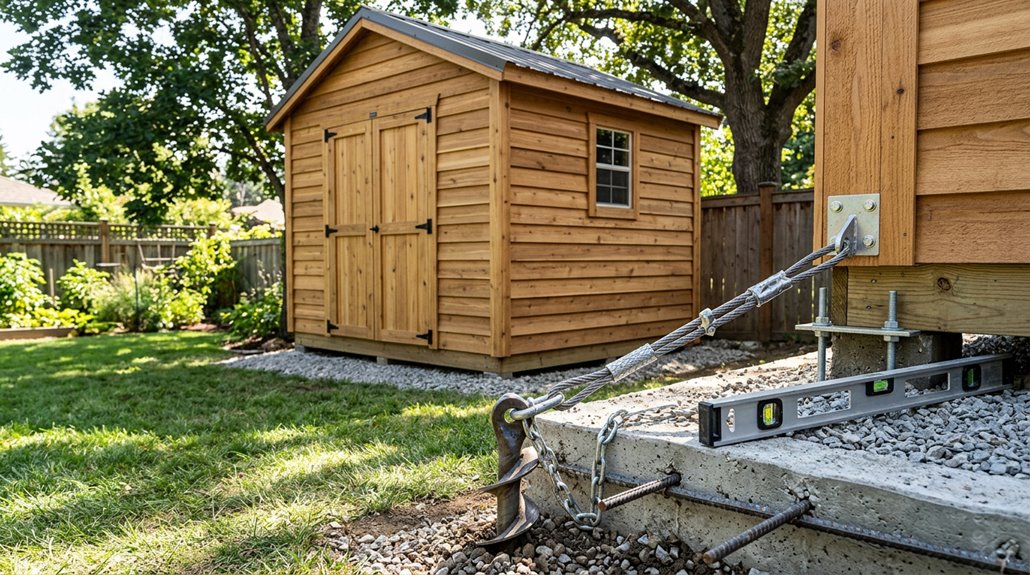
I’ll walk you through anchoring your shed so it doesn’t end up as your neighbor’s problem. First, scout your site for level ground, as slopes create installation problems. Next, lay pressure-treated skids as your foundation baseline. Then pick anchors matching your soil: auger-style for loose dirt, penetrators for firm ground, straight McAdams for rock-hard clay. Drive them 18-24 inches deep at corners, then cable everything down tight. Finally, inspect seasonally and retighten fasteners because soil shifts over time.
Assess Your Shed Site Before Anchoring
Why does location matter so much when you’re anchoring a shed? A bad site choice will create ongoing problems.
A poor shed location creates lasting structural problems. Choose your site wisely to avoid expensive repairs down the road.
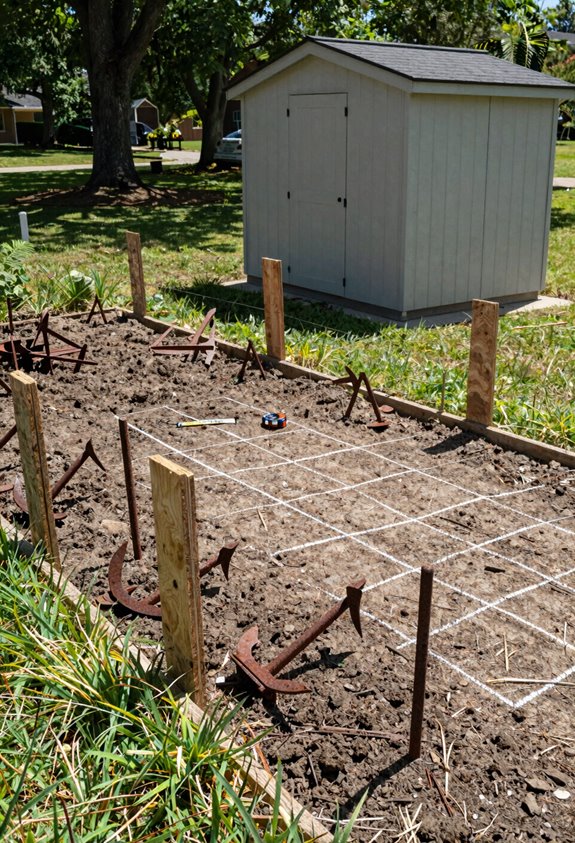
Picking the right anchor shed site makes everything easier. You’ll want level ground, not a slope that’ll destabilize your shed. Scout for debris and standing water; moisture compromises your foundation.
Soil conditions determine which anchoring methods work. Clay soil and sandy soil require different approaches. Before you commit, check what’s underneath by digging a small test hole.
Verify the spot allows tool access and future maintenance. You need to be able to reach your shed for repairs and inspections. A gravel base provides stability by ensuring proper drainage and soil settlement.
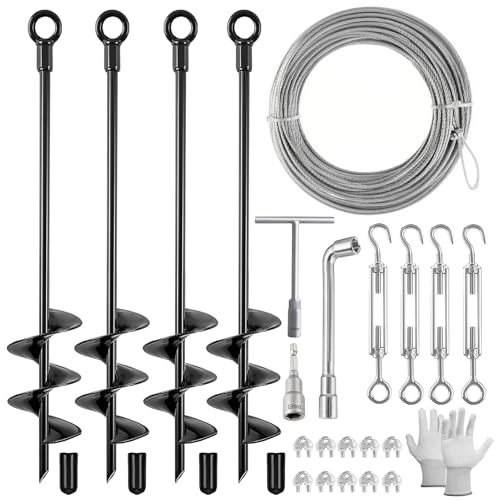
Complete Shed Anchor Kit: Includes 4 heavy-duty 18" ground anchors with removable eyes, 50 ft galvanized steel cable, 10 rope clamps, 4 adjustable turnbuckles,1 drill adapter, clamp wrench, T-handle wrench and gloves for anchoring outdoor structures

Complete Heavy-Duty Ground Anchor Kit: Comes with 4×18″ ground anchors, 50 ft of galvanized cable, bolt-type clamps, extra-wide tree straps, drill adapter, T-Socket & clamp wrench—all you need to secure sheds, mobile home, tents, trampolines, and canopies
Set Up Skids and Position Ground Anchors
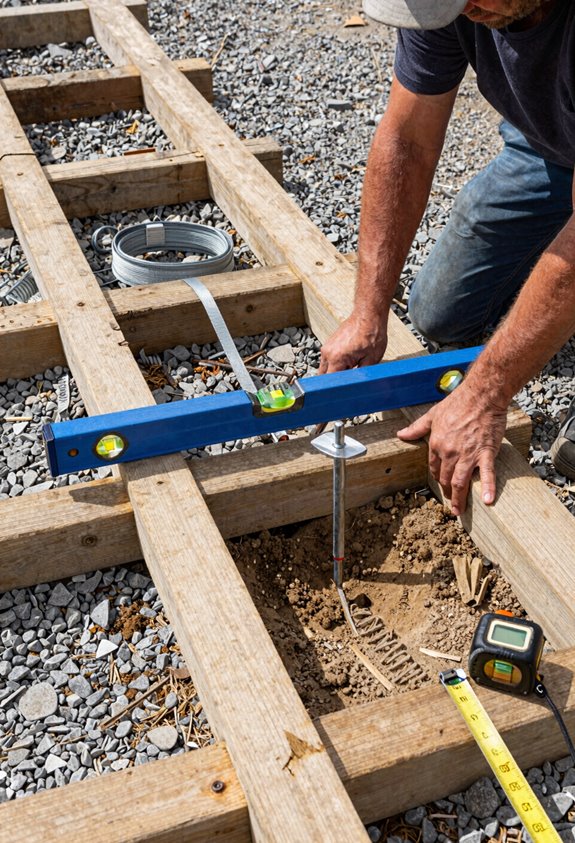
Once you’ve got your site locked down, it’s time to build the foundation. Lay pressure-treated 4×4 or 4×6 skids parallel to your shed’s longest side, ensuring they’re level and spaced evenly. Skids function as the shed’s baseline; they distribute weight and prevent sagging.
For ground anchors, position them at each corner and strategic driver points while carefully avoiding the skids themselves. This maximizes uplift resistance during high winds. Before anchoring shed components, drill pilot holes through the floor into those skids, then secure everything with heavy-duty bolts or screws. Finally, attach weather-resistant straps or cables from the ground anchors to the shed, tightening until snug. Properly installed skids provide structural stability.

【Quick Installation】: The ground anchors set contains ground stakes, a T-type wrench and a 14mm electric drill socket. Used with a drilling rig for a faster and more labor-saving installation method.

✅ Will Not Budge, Even in High Winds - : Each Steel storage shed anchor pressure tested in high winds at 1000 lbs per auger anchor – that means they’ll hold down anything - making them the ideal ground anchor, swing set anchor, kids deer stand anchor, playset anchors, or as anchor shed augers.

HEAVY DUTY GROUND ANCHORS: Each earth anchor features a fully welded 2 in wide spiralblade joined to a carbon steel shaft. As the screw-in ground anchor drives into suitable ground, thebroad spiral engages more soil for reliable holding support in grass, soil, sand, hard clay and rockyground. Designed for sheds, swing sets, playsets and other outdoor structures, these earth anchorshelp provide dependable anchoring in windy conditions when properly installed.
Pick the Right Anchor for Your Soil Type
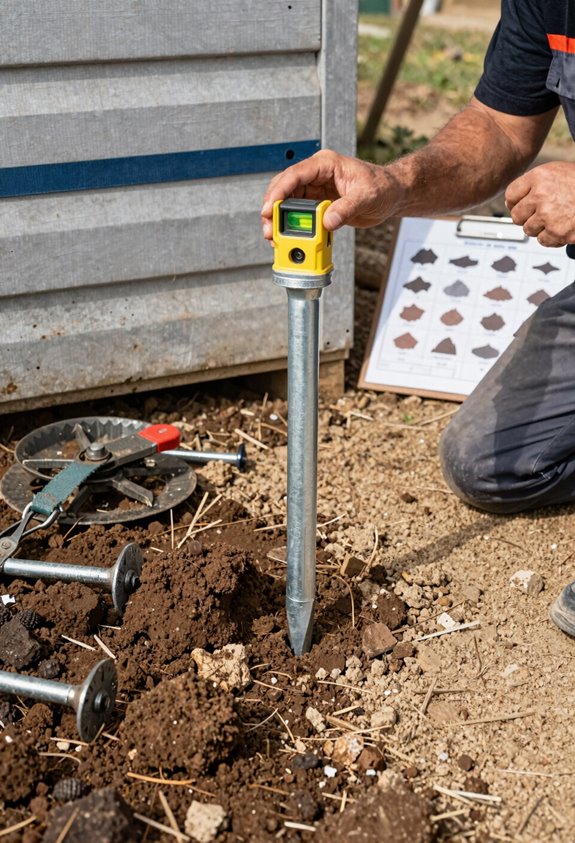
one size doesn’t fit all, and choosing the wrong one is like trying to hammer a nail with a screwdriver. It’s technically possible, but ineffective. Anchor soil type makes all the difference in shed anchoring success.
Here’s what I match to my ground:
- Loose soil – I use auger-style ground anchors that screw deep into soft earth
- Firm ground – Penetrator anchors work best, driving straight down with serious holding power
- Rocky or compacted soil – Straight McAdam anchors handle these tough conditions without breaking
The real secret involves spacing equally. Maintain minimum spacing equal to anchor depth. This prevents cone-of-soil interference and keeps your shed locked down tight. Get these anchoring techniques right, and your structure stays put through seasons of weather.

[EXQUISITE CRAFTSMANSHIP] Heavy-duty ground anchors are made of high-quality metal material, and the spiral is 360° precision welded to the shaft, making it more sturdy and durable. The surface is coated with black paint to minimize rust and damage, further extending the life of the ground anchor. Constructed with solid casting, these earth anchors are strong enough to withstand various weather conditions and maintain their performance over time

Designed to provide a tight, secure hold for gazebos, trampolines, tents, swing sets, sheds, greenhouses, and more, even in high winds and hurricane-level conditions, helping prevent tipping, shifting, and structural damage for long-lasting outdoor safety and peace of mind

Full Spiral Blade Anchors: Upgrade Version full spiral blade design make easier to drill into the ground, 2.21mm/0.087in Thick blade, 40mm/1.6in Wide blade and Overall length 38cm/15in, top ring design provides greater resistance, holds Firmly in place even on high wind
Drive Anchors Into Ground and Cable Them to Your Shed
Now that you’ve got the right anchors matched to your soil, it’s time to actually get them in the ground. This part requires significant physical effort. You’ll need a sledge hammer or drive rod, depending on your anchor type, and driving ground anchors is physically demanding work that produces visible results.
Aim for 18 to 24 inches of depth, similar to planting a tree that will remain secure. Space your anchors at each corner so they don’t interfere with each other. Once they’re secure, loop heavy-duty weather-resistant straps from each anchor eyelet directly to your shed’s frame. Tighten them snug. This connection prevents wind damage to your shed.
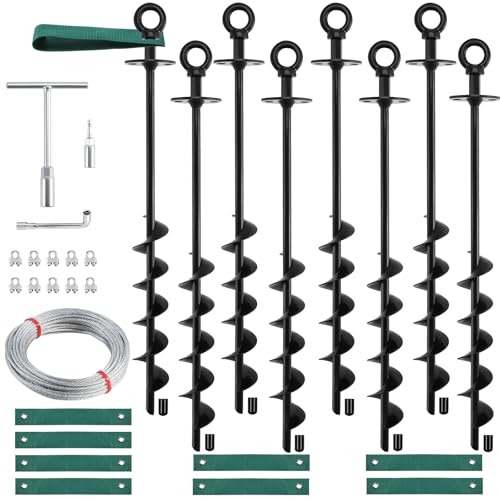
Complete Heavy-Duty Ground Anchor Kit: Comes with 8×18″ ground anchors, 50 ft of galvanized cable, bolt-type clamps, extra-wide tree straps, drill adapter, T-Socket & clamp wrench—all you need to secure sheds, mobile home, tents, trampolines, and canopies

Complete Heavy-Duty Ground Anchor Kit: Comes with 3×18″ ground anchors, 50 ft of galvanized cable, bolt-type clamps, extra-wide tree straps, drill adapter, T-Socket & clamp wrench—all you need to secure sheds, mobile home, tents, trampolines, and canopies

Complete Shed Anchor Kit: Includes 4 pack 18" ground anchors, 50 ft 1/8" galvanized cable, 10 rope clamps, 2 turnbuckles, 1 drill adapter and 1 clamp wrench. This ground anchor kit can also be used as trampoline anchors for backyard trampoline, shed, canopy and gazebo tie-down projects
Inspect and Retighten Anchors Regularly
Why do we ignore things that work perfectly fine? Your anchors need regular inspection just like your car does. Neglect catches up fast. I check mine seasonally and after storms, and you should too.
What I focus on:
- Visual inspection – I scan for corrosion, wear, or loose fasteners that signal trouble ahead
- Re-torque fasteners – I tighten everything down because soil shifts and vibrations loosen connections over time
- Check the base connection – I look for cracked wood or bent hardware where anchors meet your shed
Document what you find. Keep records. This maintenance schedule prevents problems and protects your shed’s stability. Catching issues early prevents dealing with a crooked shed later.

COMPLETE KIT – ANCHORS WITH RATCHET STRAPS: Includes 4 pcs 18 inch ground anchors and 4 pcs 12 ft ratchet tie down straps, giving you everything needed to secure outdoor setups without extra tools or complicated hardware.
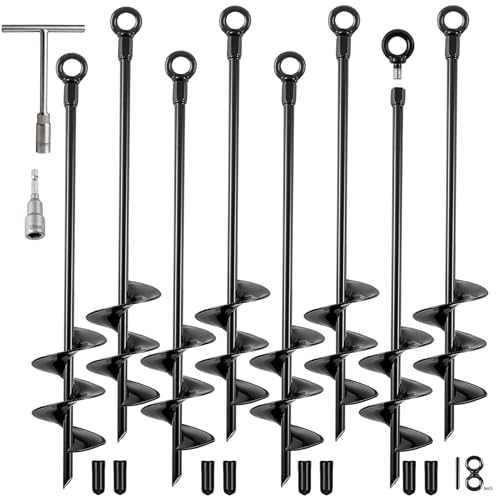
[EXQUISITE CRAFTSMANSHIP] Heavy-duty ground anchors are made of high-quality metal material, and the spiral is 360° precision welded to the shaft, making it more sturdy and durable. The surface is coated with black paint to minimize rust and damage, further extending the life of the ground anchor. Constructed with solid casting, these earth anchors are strong enough to withstand various weather conditions and maintain their performance over time

[HEAVY DUTY GROUND ANCHORS] Ground anchors are made of high-quality metal and coated with black paint to minimize rust and damage. The spiral connection is fully welded, making it more sturdy, further extending the lifespan of the screw in ground anchors. These ground anchors are solid and possess excellent wind resistance, ensuring the stability and safety of tents in adverse weather conditions