
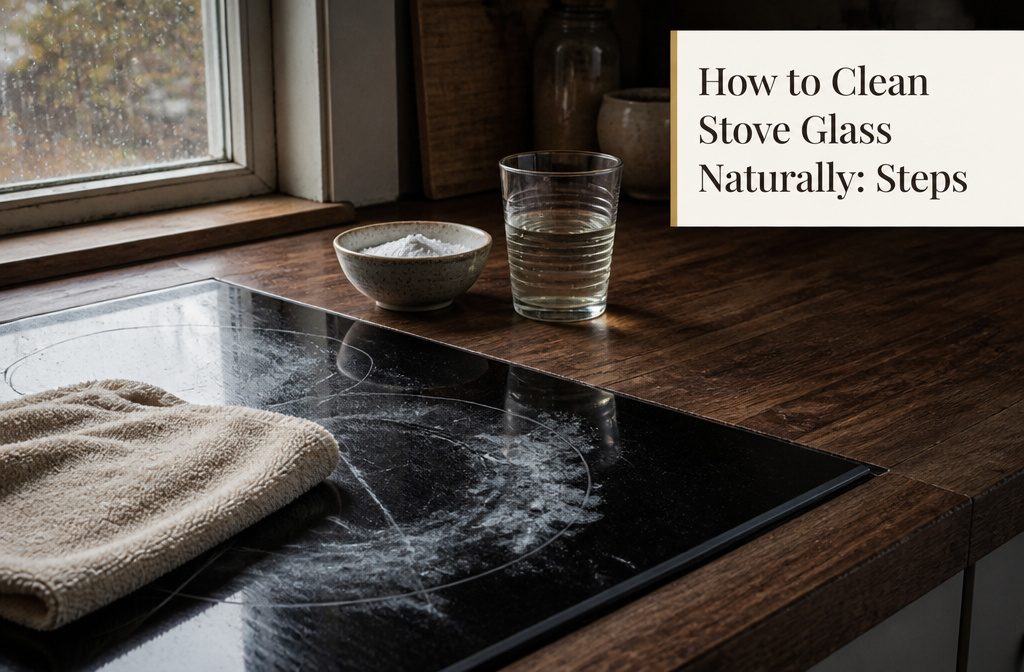
A glass cooktop can come clean with baking soda, vinegar and a microfiber cloth in about fifteen minutes for light grime, or thirty minutes to a couple of hours if you’re dealing with baked-on sugar or hard-water haze.
The mistake is scrubbing hard from the start instead of letting a warm, damp towel soften the residue first.
1. Make Sure the Cooktop Is Cool and Remove Loose Debris
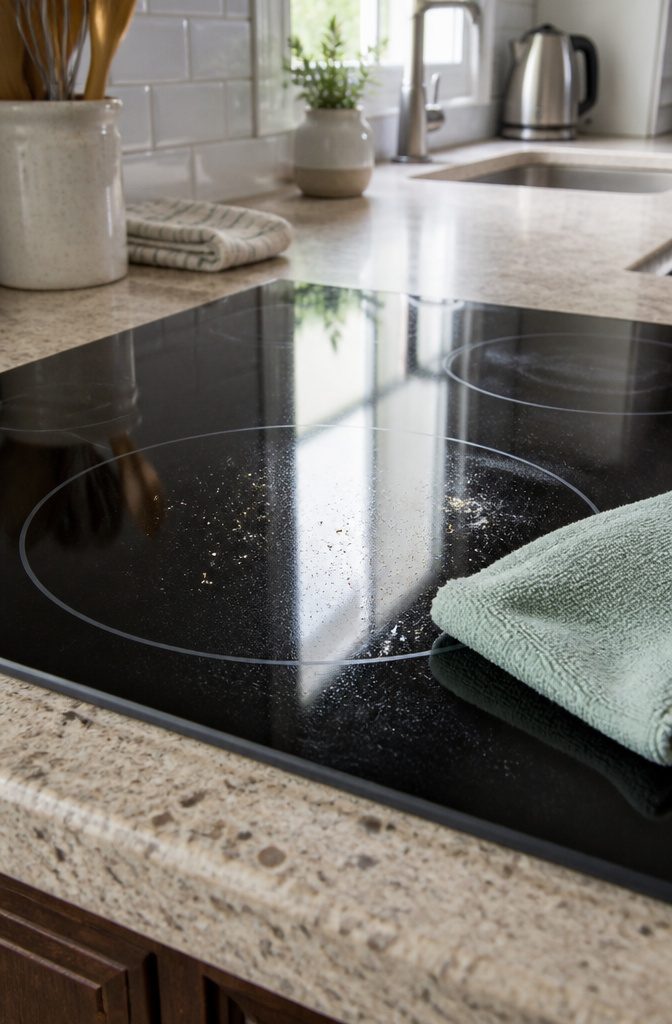
Make Sure the Cooktop Is Cool and Remove Loose Debris
The surface must be fully cool before you start.
Cleaning while any heat remains can streak the glass or even damage it, and of course you risk burning yourself. If the cooktop still feels warm, wait.
Once it’s cool, wipe away any crumbs or dry debris with a damp cloth or paper towel. Getting the loose bits off first reduces the chance of scratching the glass when you start scrubbing.
A quick pass is enough; you’re not cleaning yet, just clearing the way for the cleaner to reach the surface without dragging grit across it.
2. Choose a Natural Cleaning Method
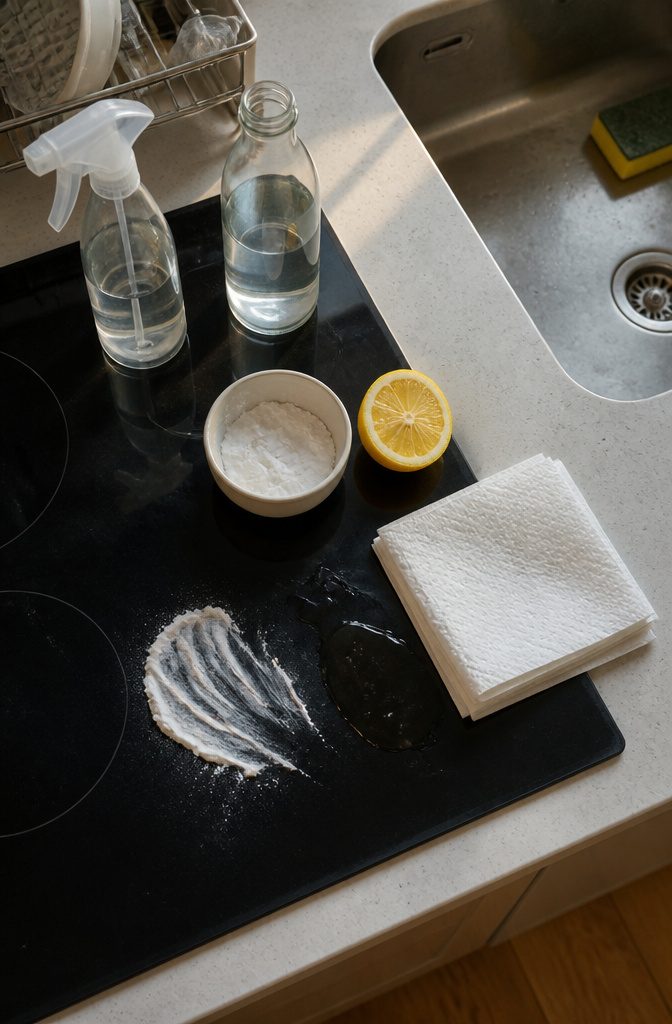
The main contenders are baking soda mixed with water or dish soap into a paste, lemon juice squeezed directly onto the glass and topped with baking soda, white vinegar soaked into paper towels and laid over the stain, or dish soap sprayed straight on.
I reach for the baking-soda paste most often because it sits where you put it and gives you control, but vinegar works faster on grease if you can wait fifteen minutes under a damp towel.
Lemon adds citric acid to the baking soda’s mild alkaline, which helps on baked-on spills, though it takes longer to prep. Dawn Power Wash gets named specifically in one method, paired with baking soda and vinegar for stubborn cloudiness.
No single recipe wins across every stain or every cooktop, so if the first attempt leaves a haze, try a different combination rather than scrubbing harder.
3. Let the Cleaner Work
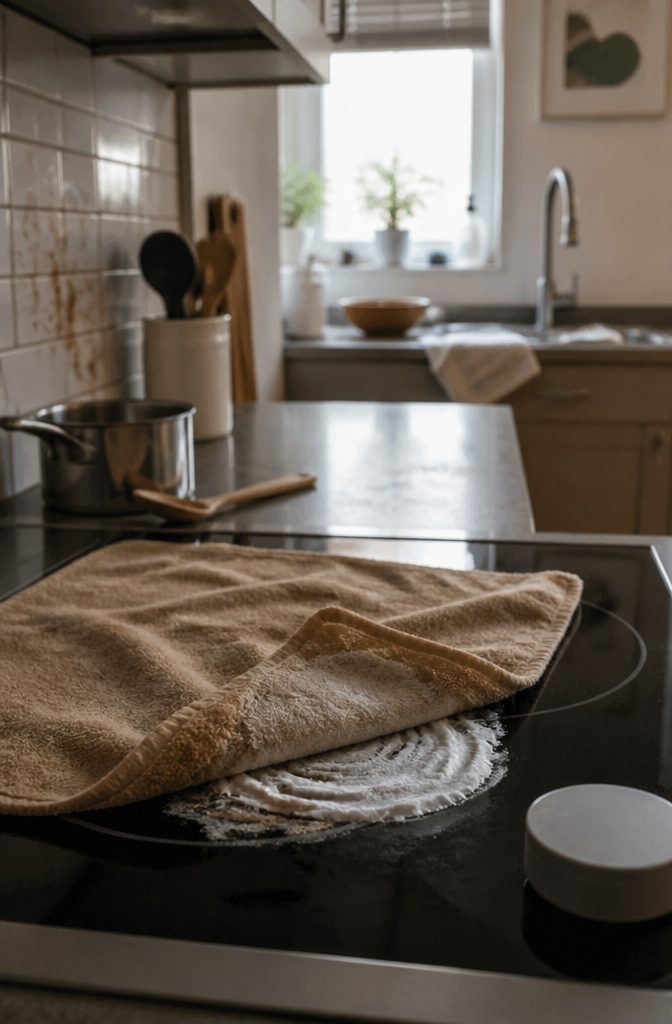
Once the cleaner is on the glass, give it time to do the work so you don’t have to scrub as hard. A warm, damp towel placed over the baking-soda paste softens baked-on residue in 10 to 15 minutes.
For heavier buildup—rings around the burners, sugary boil-overs—leave the towel in place for at least 30 minutes, and longer if you can. The heat and moisture loosen what would otherwise need a scraper.
Vinegar-soaked paper towels can sit a few hours or overnight if you’re dealing with cloudy hard-water film or old stains that didn’t lift the first time.
I’ve left a paste under a damp towel for a couple of hours on a particularly stubborn ring, and it wiped clean with almost no pressure.
The wait feels passive, but it’s the difference between gentle wiping and leaning into a sponge that might scratch.
4. Wipe or Gently Scrub the Residue Away
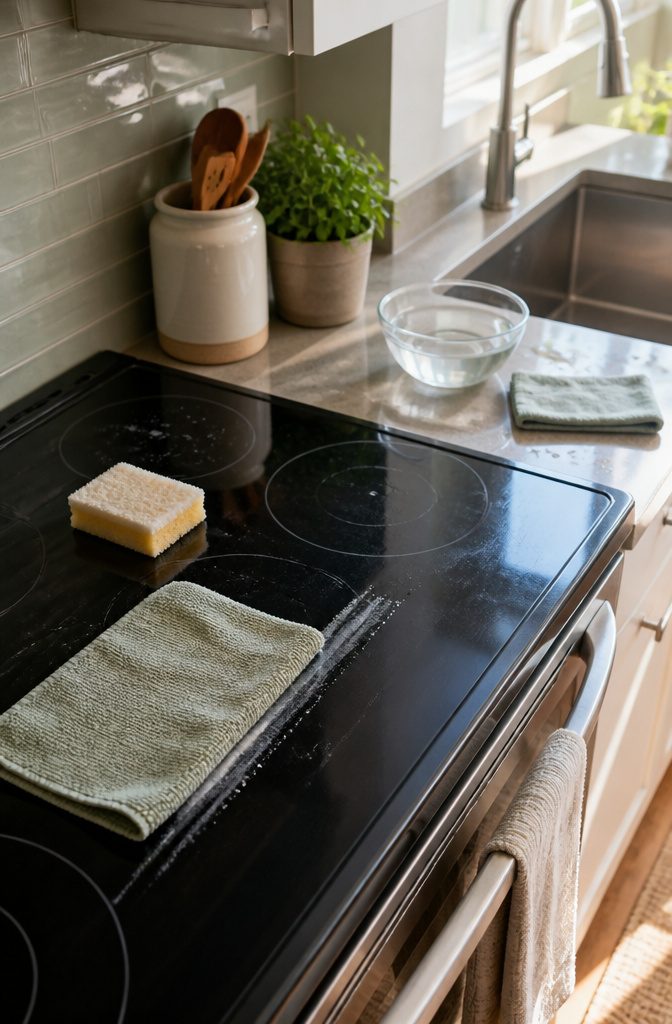
Once you’ve let the cleaner sit, use a damp microfiber cloth or non-abrasive sponge to wipe the surface.
Gentle pressure is what works here. Glass scratches easily, so soft materials matter more than hard scrubbing.
I work in long, even strokes rather than tight circles, and I rinse the cloth as soon as it picks up grime so I’m not dragging debris back across the glass.
If a stain doesn’t lift on the first pass, the fix is to repeat the soak rather than press harder.
Place another warm, damp towel over the spot for another 10 to 15 minutes, then try again. Stubborn spots respond to time better than force, and pushing too hard is what leaves marks you can’t undo.
5. Use a Scraper Only for Stubborn Residue
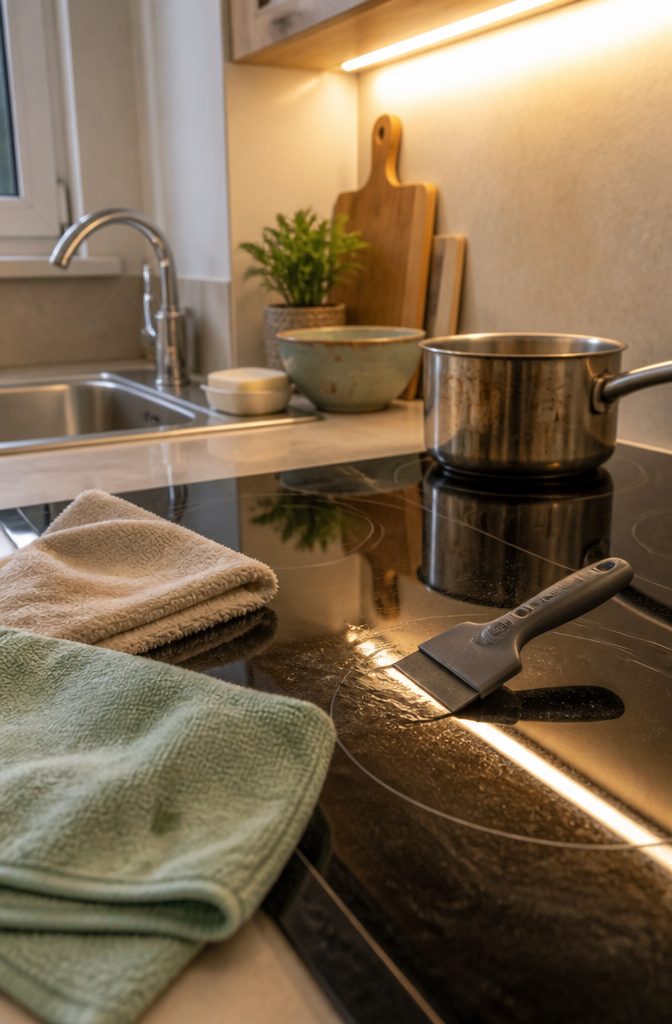
Use a Scraper Only for Stubborn Residue
A scraper should be your last resort after a natural cleaner has had a chance to loosen the residue.
The cleaning solution does most of the work if you give it time, so loosen the food first rather than attacking it with force straight away.
An old credit card or plastic scraper is the safer option for most jobs.
If you need something sharper, a razor blade held at a very shallow angle can lift stubborn spots, but metal can scratch or damage the cooktop if the angle is wrong or you press too hard.
Use multiple passes with light pressure instead of scraping with all your strength. That control matters more than the tool itself.
Spread a little dish soap on the area before you scrape.
The soap helps the scraper glide and reduces the chance of catching an edge. Wipe the surface with a damp microfiber cloth after scraping, then follow with a dry one so no streaks are left behind.
6. Remove Remaining Cleaner and Buff the Surface Dry
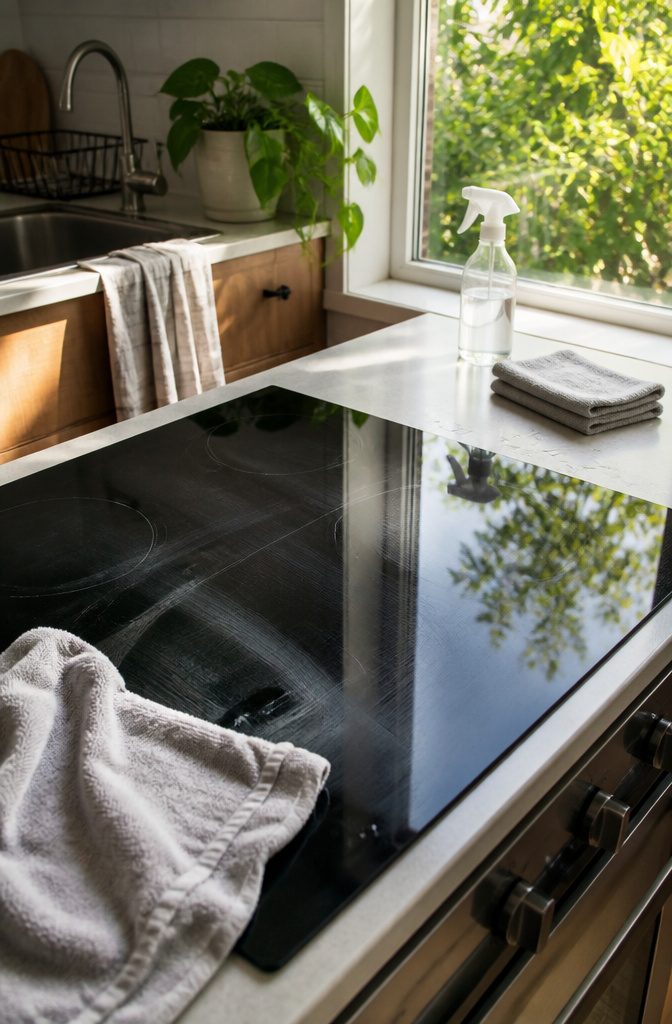
Once all the grime is gone, wipe the entire surface with a clean, damp microfiber cloth to pick up any leftover cleaner or residue.
If the glass looks hazy after that first pass, it usually means there’s a thin film left behind from soap or grease.
Spray a gentle cleaner one more time and wipe in long horizontal strokes, then switch to vertical. That crosshatch pattern catches what a single direction misses.
Distilled white vinegar works well here too. A quick spray and a pass with a dry cloth cuts through streaks and brings back the shine without leaving watermarks.
Either way, finish with a dry section of cloth and buff the glass until it’s completely clear. No streaks, no cloudiness, just smooth glass ready for the next meal.
Why Cooktops Get Cloudy or Stained
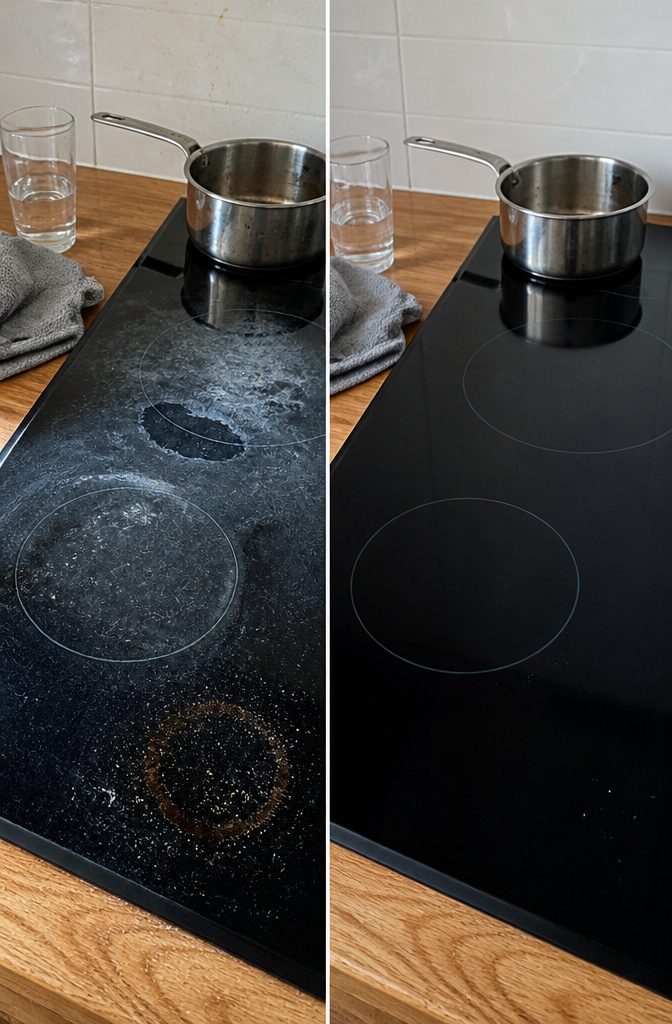
Cloudy spots and brown stains build up from boil-overs, sugary spills, hard-water mineral deposits, pan residue, and the tiny scratches left behind when you slide a pot instead of lifting it.
Each one leaves a different mark. Sugar caramelizes and bonds to glass.
Minerals from tap water dry into a haze. Grease from the bottom of a dirty pan bakes on and turns amber under heat.
Make sure you take that extra moment to wipe down your glass stove top after it cools down (and before you go to your next task and forget about it). This will stop food and oils from hardening and staying put.
Wiping after the surface cools catches most of it before it sets. But when something does stick, baking soda and vinegar under a hot towel for fifteen minutes loosens what a regular wipe won’t touch.
What to Avoid When Cleaning a Glass Cooktop
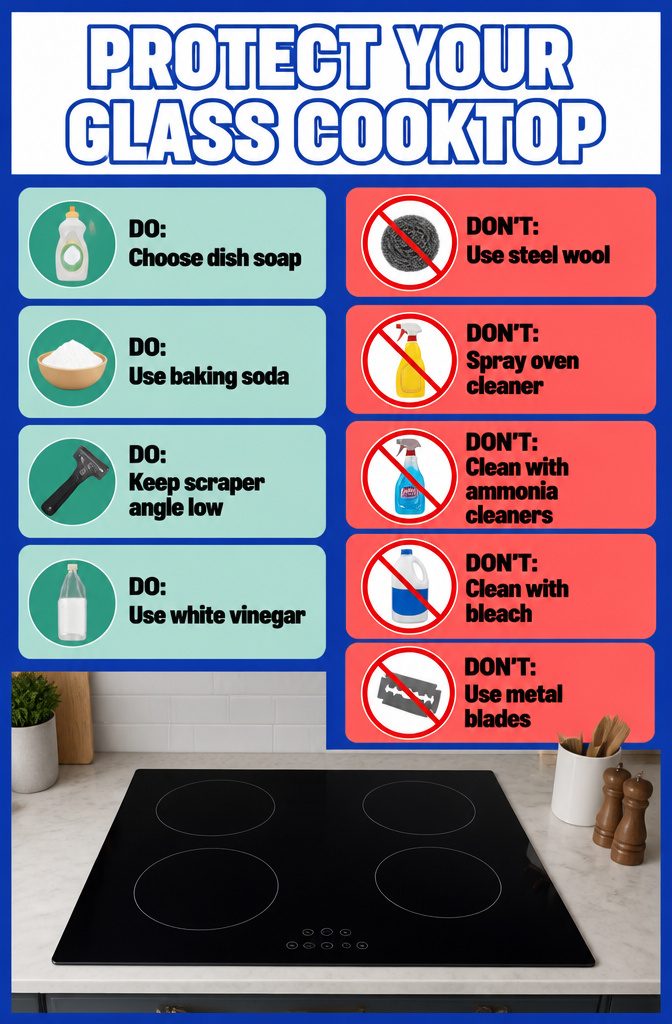
Glass cooktops scratch more easily than they look like they can handle. A few common products and tools can dull the surface or leave permanent marks, even when they work fine on other kitchen surfaces.
Skip these when you clean:
- Steel wool and scouring pads — the rough texture scratches the glass and leaves visible marks
- Magic Eraser — too abrasive over time, even though it feels soft
- Oven cleaner — formulated for different surfaces and too harsh for cooktop glass
- Windex and other ammonia-based glass cleaners — they can damage the surface and release fumes near your cooking area
- Metal blades not designed for cooktops — even a standard razor blade can nick or scratch if it catches wrong
- Chlorine bleach — damages the glass and leaves residue
Dish soap, baking soda, and white vinegar handle most jobs without any risk to the finish. If you do use a scraper, make sure it is sold specifically for glass cooktops and keep the angle low.
Frequently Asked Questions
How often should I clean my glass stove top?
Wipe the cooktop after every use once it cools down, which stops spills from hardening.
Do a deeper clean with baking soda or vinegar about once a week, and use a scraper at least weekly to prevent buildup from getting stubborn.
What should you not use on a glass stove top?
Skip steel wool, scouring pads, Magic Erasers, oven cleaner, Windex or ammonia-based glass cleaners, and chlorine bleach. All of them can scratch the glass or damage the surface, even when they work fine on other kitchen surfaces.
How do you get stubborn marks off a glass stove top?
Let a baking soda paste sit under a warm, damp towel for 30 minutes or longer to soften the residue.
If that doesn’t lift it, try vinegar-soaked paper towels left for a few hours, then gently wipe or use a plastic scraper at a shallow angle with dish soap.
How do I get brown stains off my glass stove top?
Brown stains come from baked-on grease, sugar, or pan residue.
Apply baking soda paste or vinegar under a hot, damp towel for 15 to 30 minutes to loosen the stain, then wipe with a microfiber cloth. Repeat the soak if the first pass doesn’t clear it.
How do you clean a burnt glass stove top?
Put baking soda paste on the burnt area and cover it with a warm, damp towel for at least 30 minutes.
Wipe with a non-abrasive sponge or microfiber cloth, and if anything remains, use a plastic scraper with dish soap before wiping again.
How do you clean a black glass stove top?
Black glass shows streaks and water spots more than clear glass does.
Use baking soda paste or dish soap, wipe with a damp microfiber cloth in long strokes, then finish with a dry cloth or a quick vinegar spray to cut through any haze.