
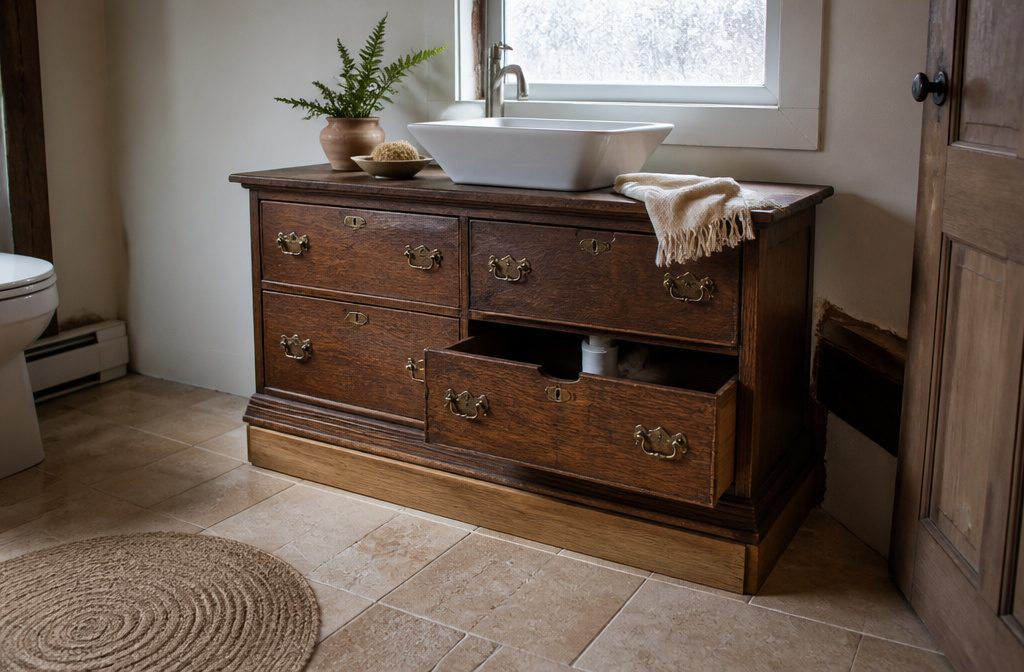
An old dresser can become a bathroom vanity for $35 if you’re willing to cut out the back panel and hollow the drawers around the plumbing.
The piece has to land near counter height or close enough that stacking lumber underneath gets it there — one cabinet started at 30 inches and got lifted with a 4×4 and a 2×4 to reach working level.
1. Antique Dresser or Cabinet as a Vanity
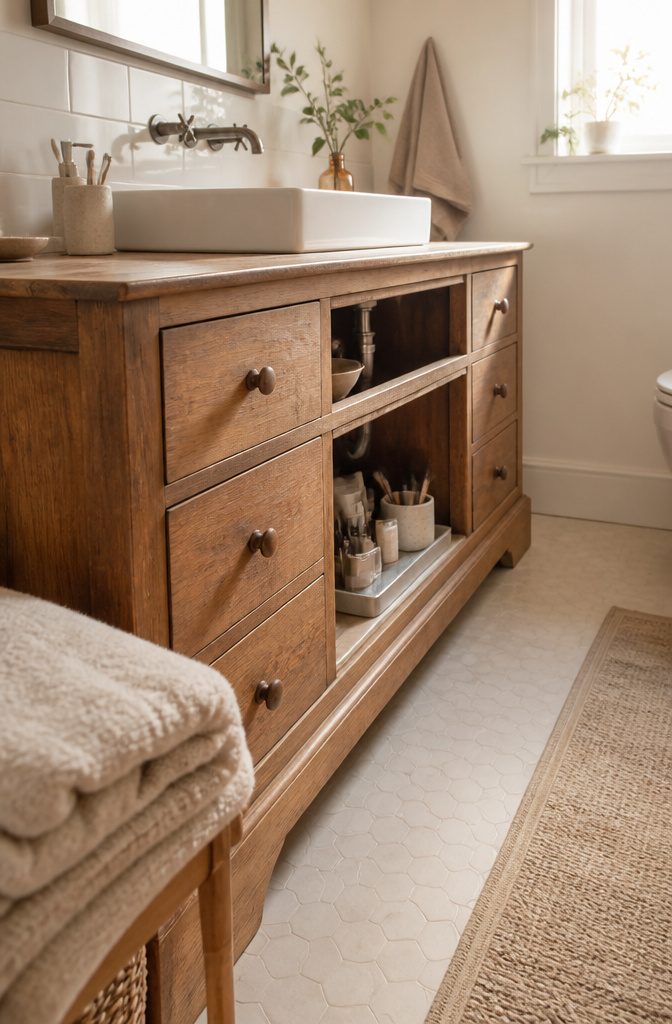
A solid-wood dresser or cabinet with drawers can turn into a vanity that still gives you storage, and the right size and a few structural tweaks make it work around plumbing without losing function.
The piece needs to fit the space first: look for something 24 inches long by 18 inches wide if the bathroom is tight, and check that the height sits somewhere near standard vanity range or can be raised easily.
One cabinet bought for $35 started at 30 inches high and got lifted with a 4×4 and a 2×4 stacked underneath, which brought it up to a comfortable working height and left room for baseboard trim at the base.
Plumbing access means removing the back panel entirely so pipes can run straight to the wall, and the drawers stay functional if you cut out their centers to fit around the pipes.
Add a wood frame around the opening inside the drawer so smaller items don’t drop into the cabinet below.
You lose some drawer depth, but what remains still holds makeup, toothbrushes, and the everyday things that used to clutter the counter.
2. Table or Console as a Vanity
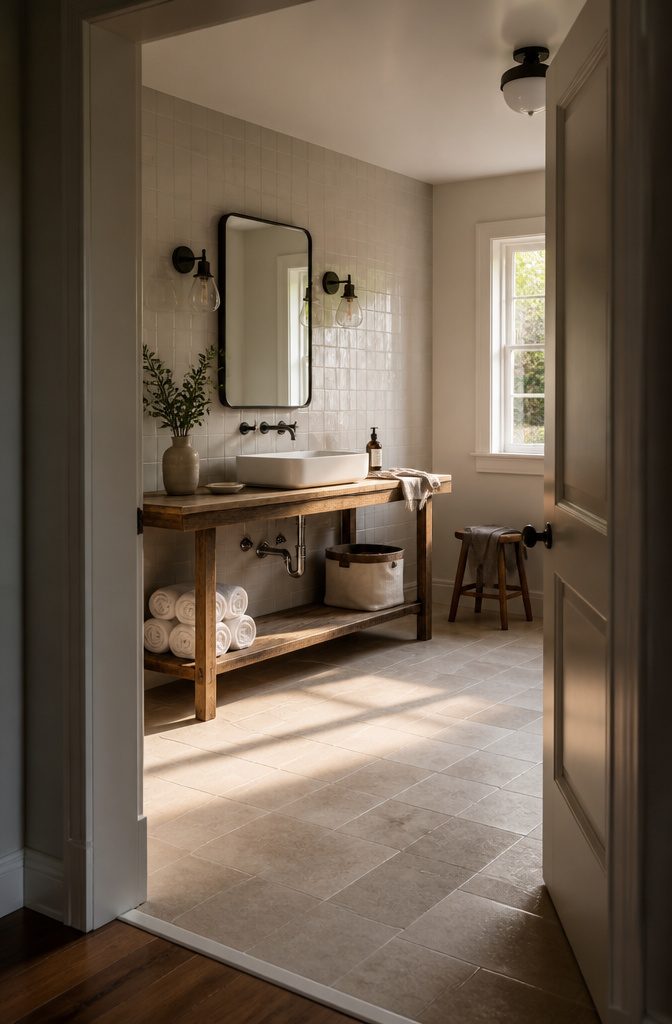
Table or Console as a Vanity
An old table works well as a vanity base if you’re comfortable with exposed pipes underneath. The plumbing stays visible, which keeps the look open and gives you space for baskets or bins where storage would otherwise hide.
The setup suits bathrooms where concealed plumbing isn’t a priority and the style benefits from airiness rather than closed cabinetry. A farmhouse table or narrow console brings that lightness naturally.
The open space below means you can tuck in rolled towels, cleaning supplies, or a small stool without building drawers.
The downside is obvious: anything stored there sits in view, so baskets or fabric bins keep it from looking cluttered. This approach works best in a powder room or guest bath where everyday chaos stays manageable.
3. Sewing-Machine Table as a Vanity Base
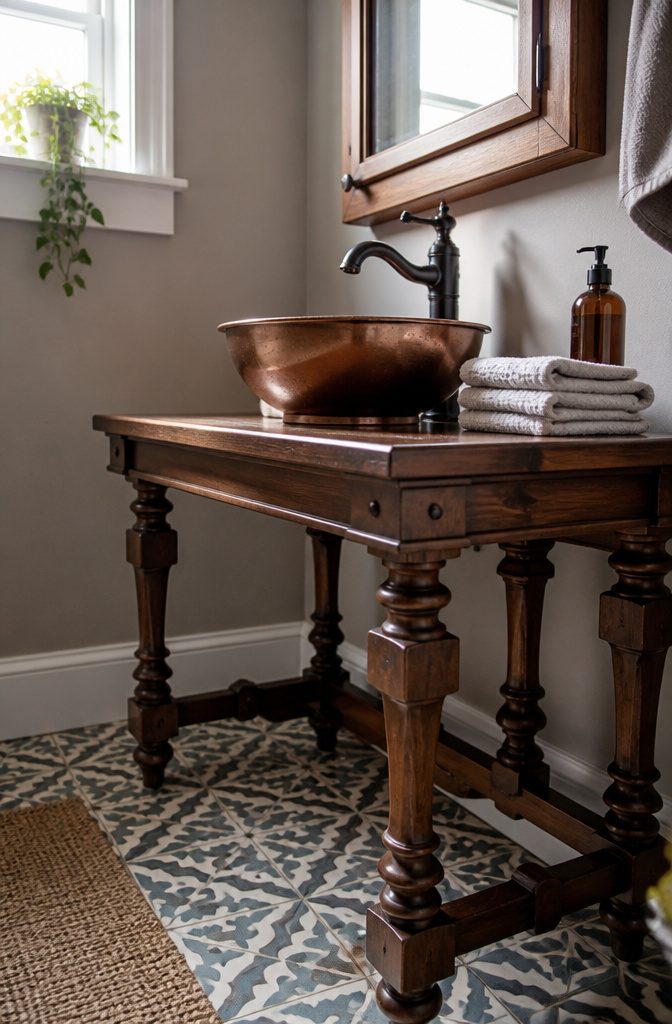
A sewing-machine table makes a dramatic vanity in a powder room, especially when you pair it with a copper or bowl sink.
The base already brings decorative legs and vintage character, so the sink can stay simple or lean into the same metal-and-wood aesthetic.
Bowl sinks sit on top, which saves you from cutting a full undermount hole if you’re nervous about losing too much of the original surface.
The wood will need protection. I’d plan on quite a few coats of sealer to keep moisture from warping the top or darkening the finish around the sink.
Most sewing tables weren’t built to sit near water, so treating the surface properly is what decides whether the piece lasts or starts to peel in six months.
The effort is worth it for the look, but it’s not a shortcut project.
4. Buffet or Sideboard as a Double Vanity
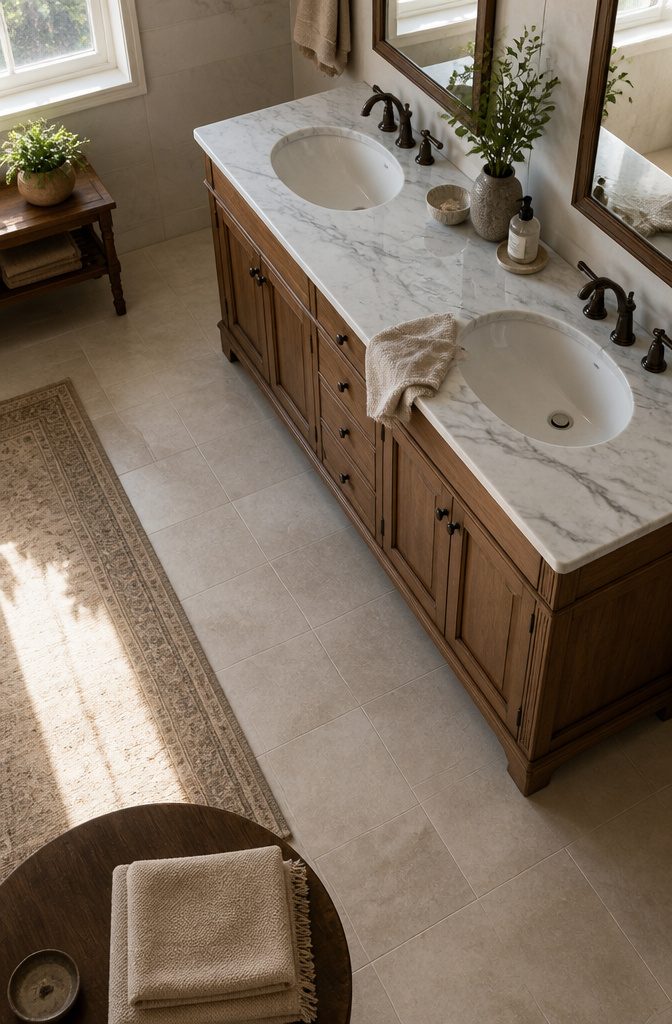
A buffet or sideboard gives you enough width to set two sinks without one person crowding the other — most run 60 to 72 inches, and that span puts the sinks far enough apart that two people can get ready at the same time.
The existing compartments usually fall in a way that gives each sink its own drawer stack or cabinet door, so you’re not fighting over the same shelf.
If the piece has a center drawer flanked by cabinets, one sink drops into each cabinet section and the drawer between them holds the things both of you reach for.
The top matters more than you’d think.
A marble or butcher-block surface takes cutouts cleanly and seals well once the sinks go in; veneer over particleboard tends to swell at the edges if water sits there, and refinishing the whole top beforehand is worth the afternoon it takes.
The deeper the cabinet, the more room you have behind the faucets for plumbing without the trap hitting the back wall.
5. Unusual Pieces That Work
Unusual Pieces That Work
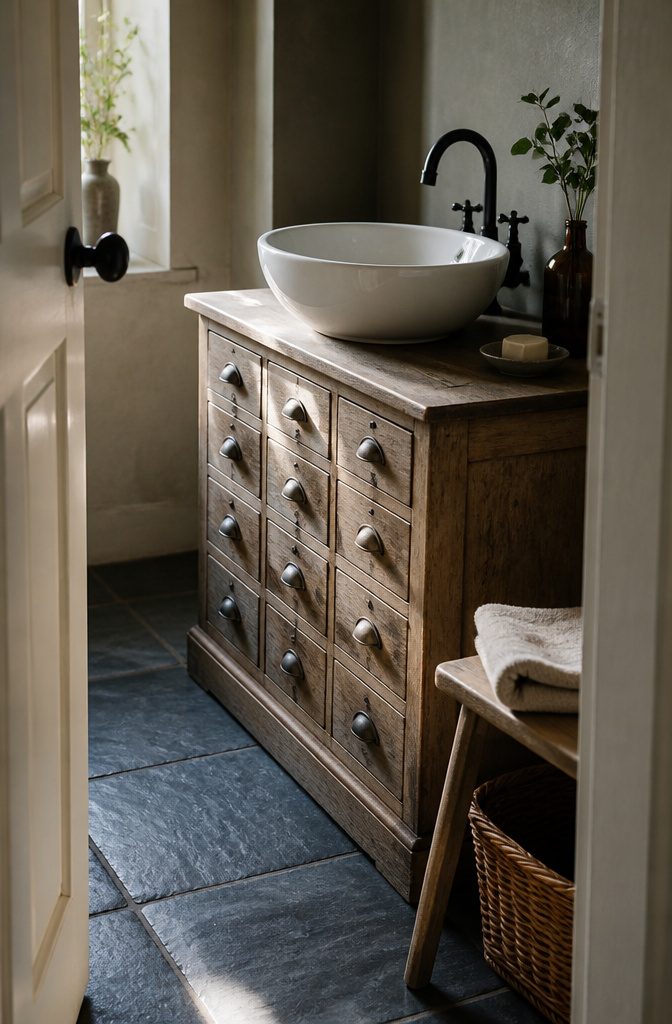
An old soda machine. An antique hardware cabinet.
A dry sink with a faucet shaped like a water pump. These are not obvious vanity candidates, but they work if the height and footprint land in the right zone.
Counter height matters more than pedigree. Anything over 34 inches tall puts the sink at a comfortable working level, and a footprint under 28 inches fits most tight bathrooms without blocking the door swing.
The soda machine satisfies both and brings vintage character that no catalog dresser can touch.
The hardware cabinet adds texture through mixed finishes and chunky vintage handles. The dry sink keeps its original function legible while doing a new job, especially when you pair the pump-style faucet with the piece’s old patina.
A full sewing machine table works the same way. The base is already the right height, and if you add a round bowl sink on top, you skip the step of cutting a hole for an undermount.
The antique handles stay in place and match a vintage faucet without any styling effort.
Not every unusual piece needs a finish overhaul. Some chip-and-peel cabinets look better left alone, and a light wood cabinet benefits from pairing with dark fixtures and flooring rather than paint.
You’re looking for something sturdy with the dimensions you need, then letting the object tell you how much to change.
Where to Find the Right Piece
Where to Find the Right Piece
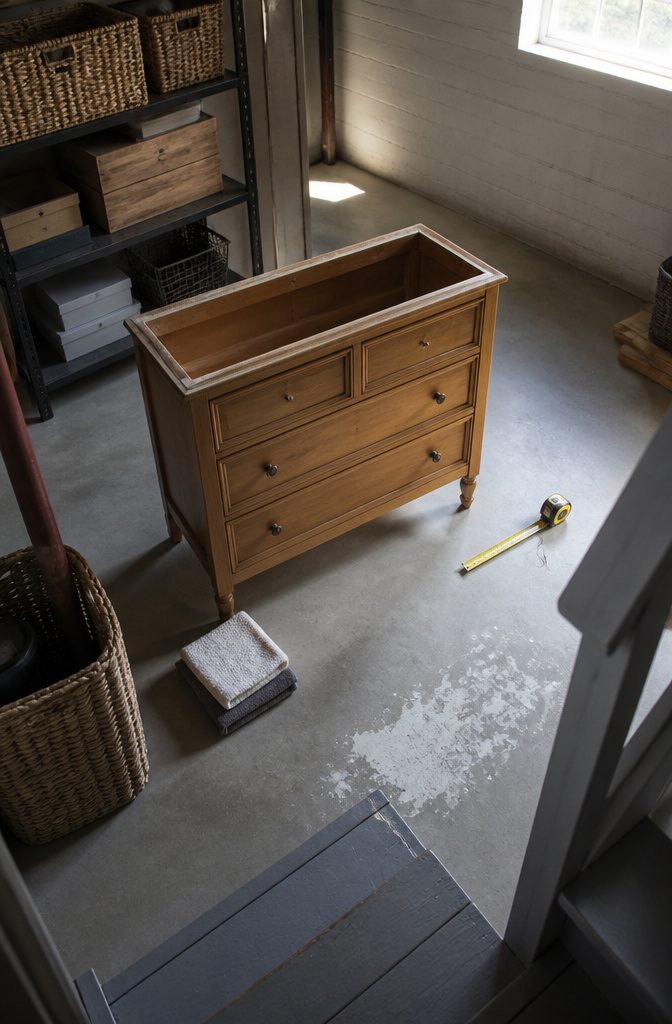
Check what you already have at home before you spend anything. An old dresser in the basement or a cabinet you stopped using might have the right size and save the entire furniture cost.
If you need to buy something, these spots turn up solid pieces for less:
- Facebook Marketplace – easier to filter by dimensions than scrolling through a thrift store, and you can message the seller to confirm height and depth before you drive
- Thrift and vintage stores – hit several if the first one doesn’t have anything counter height; good pieces move fast
- Craigslist – still worth checking in smaller markets where Marketplace hasn’t taken over
- Garage sales and flea markets – best for grabbing something cheap when the measurements are close enough and you can add feet or cut it down
Solid wood beats laminate if you plan to sand or stain, and anything over 34 inches tall puts the sink at a comfortable height.
One cabinet that checked all the boxes cost $35; finding it meant checking a lot of spots that didn’t have the right size.
Cutting for the Sink and Faucet
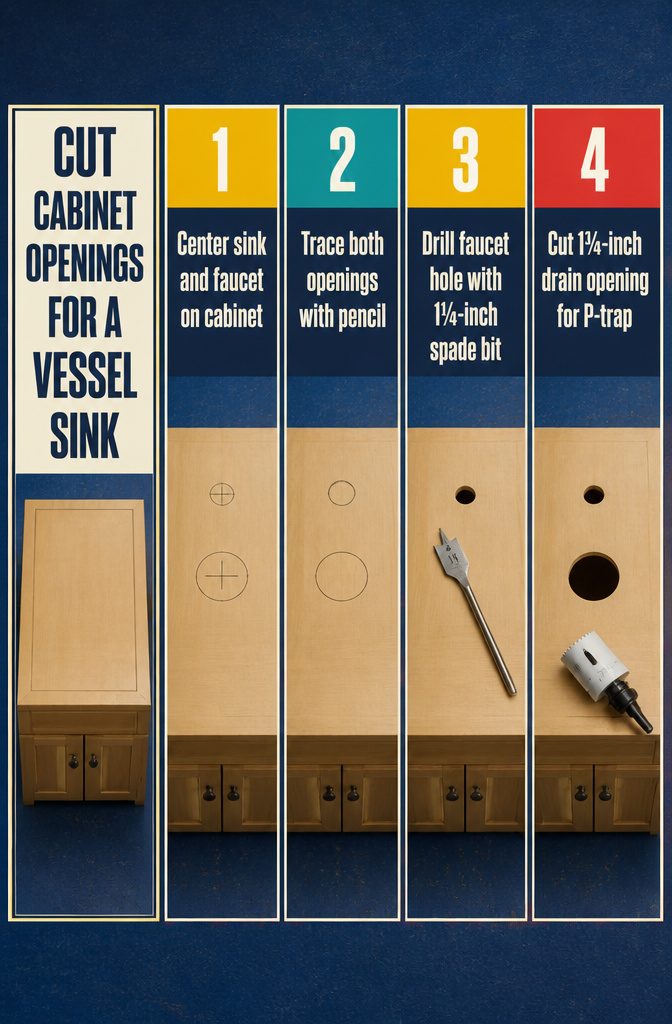
A vessel sink needs two openings: one for the faucet and a larger one underneath for the drain pipe to pass through.
I center both on the cabinet so the sink sits exactly where I want it, then trace each circle with a pencil before drilling.
For the faucet hole, I use a 1¼-inch spade bit; for the drain, a 1¾-inch hole dozer. The drain opening has to be bigger because the P-trap and tailpiece run through it.
If cutting those openings feels like too much risk on a piece you care about, a bowl sink solves the problem.
It sits on top of the cabinet instead of dropping in, so the only hole you drill is the small faucet opening.
You lose a bit of counter space around the basin, but you keep the cabinet intact and the install is faster.
Frequently Asked Questions
How to repurpose old cabinets?
Remove the back panel completely so pipes can reach the wall, then cut out drawer centers to fit around plumbing while adding a wood frame inside to keep small items from falling through.
Raise the cabinet to counter height if needed by stacking lumber underneath, and seal the top surface with multiple coats if it wasn’t built to handle water. The cabinet keeps its storage function while serving as a vanity base.
What to do with an old bathroom vanity?
Convert it into storage for another room if it no longer fits your bathroom style, or refinish the existing piece by painting the cabinet and replacing hardware instead of buying new.
A dated vanity in good structural condition only needs surface updates to match current fixtures and tile.
How to refurbish bathroom cabinets?
Sand the existing finish if the cabinet is solid wood, then apply paint or stain followed by a water-resistant sealer to protect against moisture.
Replace outdated hardware with new pulls or knobs, and add feet or trim at the base if you need extra height. Refurbishing costs less than replacement and lets you keep a quality piece that already fits the space.