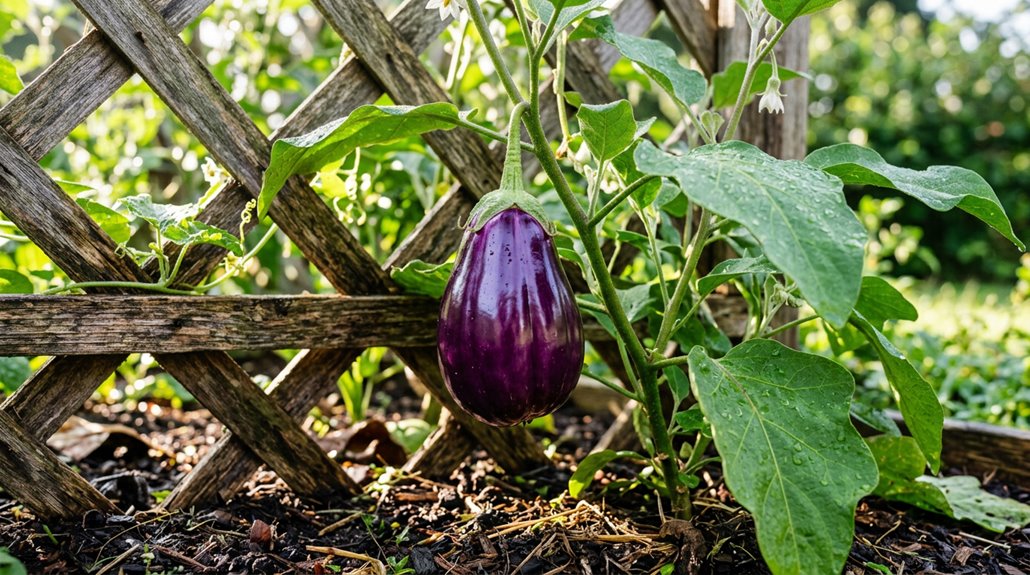
Eggplants don’t strictly need a trellis to survive, but those heavy fruits will snap branches right off without support.
Tall varieties, such as 6–7 feet varieties, collapse under their own weight.
Beyond preventing breakage, staking keeps fruit off soil where disease lurks, improves airflow so leaves dry faster, and gives you straight, beautiful eggplants instead of twisted ones.
If you want a thriving harvest instead of a frustrating mess, support is necessary for optimal plant health and fruit quality.
Do Eggplants Really Need Support?
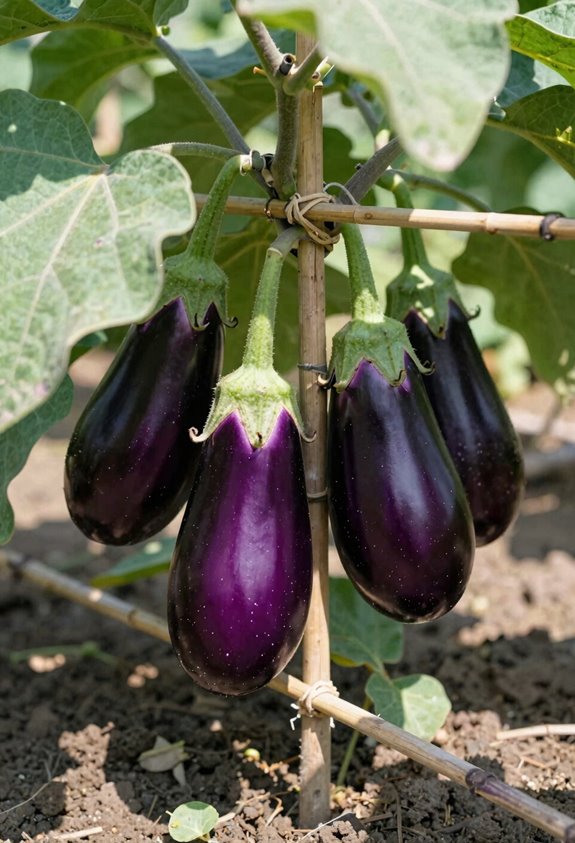
Why do some eggplants flop over like they’ve given up on life? It’s simple—heavy fruit pulls them down. While smaller varieties can stand on their own, heavier ones like Rampicante need stability support. Many gardeners skip staking, thinking their plants look sturdy enough, only to watch them collapse under their own weight.
Staking isn’t just about appearance. It keeps fruit off the soil, which means fewer diseases and better air circulation around your plants. Driving a 4–6 foot wooden or metal stake 1–2 inches from the plant gives your eggplants the stability they need.
Even wind can cause problems. Adding support protects against both heavy loads and unexpected gusts.

[Package Contents] You will receive 3 three-layers plant support cages, 3 grow bags and 1 use manual. The tomato cages are composed of 27 straight poles, 27 connecting rods and 18 connecting joints. These three complete sets will help you to train and support the upward growth of the plants.

【High-quality 】The tomato cage features steel pipe wrapping, ensuring rust resistance.Reinforced thick steel pipes that provide enhanced strength and stability, ensuring its durability and longevity.

40PCS: Package includes 20 pieces tomato support hooks with 32.8 feet rope+20Pcs Tomato Clips, tomato plant clips has 1.2 inch round hole is convenient for better fixing vines, beans and stems and other plants.
Heavy Fruit Loads Make Staking Worth It
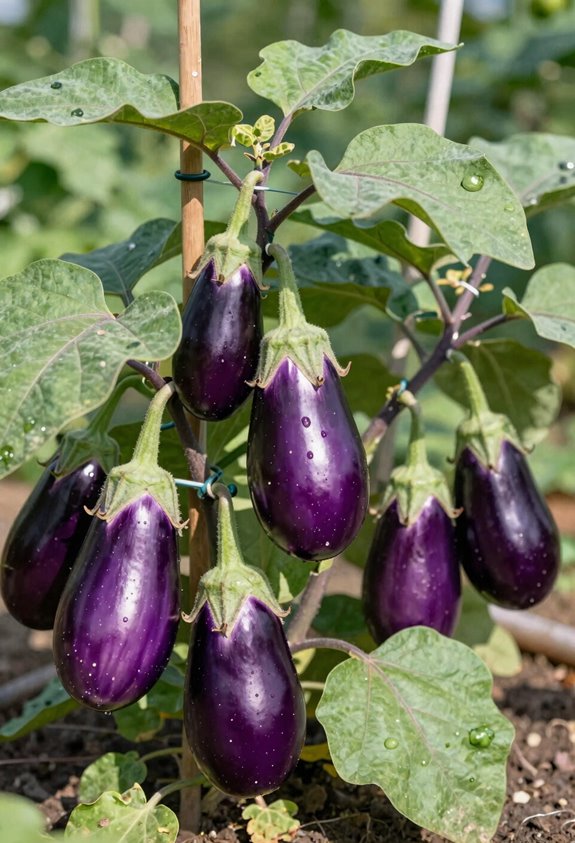
Those heavy fruits aren’t just impressive, they’re actually a problem waiting to happen. I’ve watched eggplant stems snap like twigs under the weight of a successful harvest. That’s where staking becomes your secret weapon for stability.
Why staking matters:
- Heavy fruit clusters pull stems downward without support, causing them to bend or break completely
- Fruits touching soil invite rot and disease that’ll ruin your entire crop
- Proper staking improves airflow around those dense fruit clusters
- Taller stakes (4–6 feet) work best for long varieties that get seriously heavy
I adjust ties regularly as my plants grow, preventing stem stress while accommodating increasing weight. Regular adjustment prevents crop loss from stem failure and disease.

【Heavy-Duty Steel Core + Thickened Rustproof Coating】Crafted from hollow steel plant stakes with an extra-thick green plastic coating, these 48 inch garden stakes and 58 inch tomato stakes resist bending, cracking, and corrosion far better than bamboo or wood. The rustproof plant stakes are built to support heavy fruiting plants season after season — no peeling, no rust spots. Ideal for heavy duty plant supports in any vegetable garden.
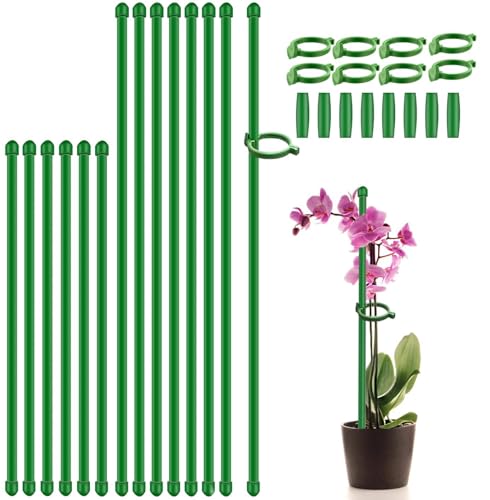
💐[PACKAGE INCLUDE]--16Pcs thick plant sticks(17inch and 11inch each 8pcs),16 ring buckles and 8 connectors,20 strapping tapes.

[DURABLE AND STURDY] Crafted from robust hollow steel, this garden stakes features a fade-resistant green plastic coating, offering reliable protection against wind, rain, and rust. With anti-slip ridges, it's easy to tie on plant ties, aiding in plant climbing. the pointed bottom design of tomato stakes enables effortless soil insertion, ensuring a secure anchoring effect with minimal effort
Disease Prevention Through Better Air Circulation
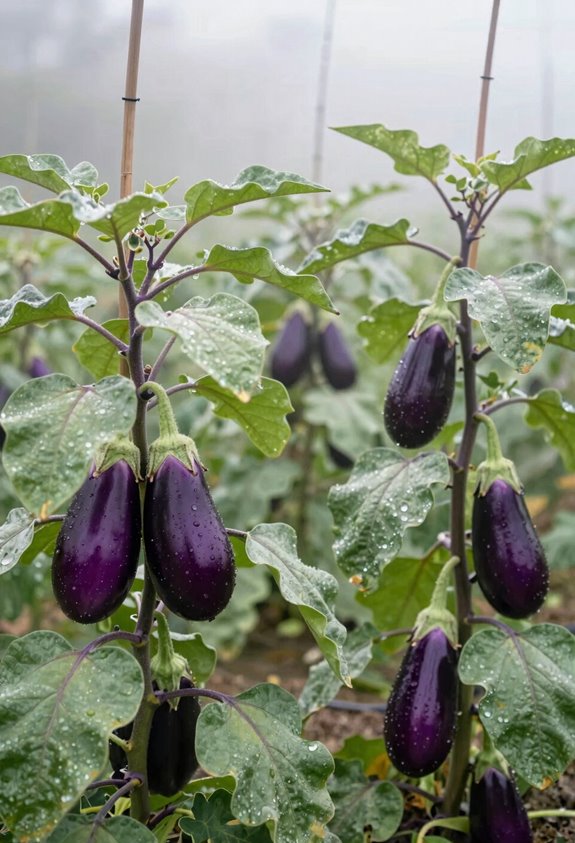
When you’re staking and trellising those eggplants upward, you’re not just preventing stem breakage. You’re actually creating an invisible shield against disease. I learned this after watching powdery mildew wreck a crowded eggplant patch.
Air circulation is crucial for disease prevention. When plants grow upright with proper spacing, leaves dry faster between waterings. That means less moisture lingers where fungal infections thrive. Soil splash, that sneaky disease carrier, can’t reach fruits dangling several inches off the ground either.
I keep my ties loose and regularly adjust them as plants grow. This prevents the suffocating canopy density where leaf spot and powdery mildew thrive. Space matters. Good air circulation is essential disease prevention.

One or Multiple Arches: wider arch(7.5 feet Wide * 6.4 Feet High ) or a higher arch (4.6 Feet Wide*7.9 Feet High) by Removable sections for desired Length.

Enhance Your Garden with Vertical Elegance – The TCBWFY Obelisk Trellis is the perfect solution for supporting your climbing plants, vines, and flowers. This 6.7 FT tall metal garden trellis not only offers stability but also provides a visually striking vertical element to your garden or indoor space. Made with thickened PE plastic-coated metal pipes, this obelisk trellis ensures long-lasting durability and support, making it ideal for climbing plants such as roses,tomatoes,clematis,and more!

【Rust-Resistant and Durable Metal Steel Pipe】- The inside of this garden stake is made of sturdy steel,with a fade-resistant green plastic coating on the surface,having excellent UV resistance and chemical resistance. Have a longer lifespan compared to bamboo and wooden stakes.
Superior Fruit Shape With Vertical Growing
Beyond just keeping leaves dry and healthy, supporting your eggplants vertically transforms the actual fruit itself. When I started staking eggplant in my garden, I noticed my fruits actually looked like eggplants, not lumpy, misshapen blobs. Vertical growing works through these mechanisms:
- Elongated varieties develop their proper shape without bending or twisting
- Heavy fruits stay elevated, avoiding ground contact that causes scarring
- Consistent air circulation around each fruit prevents flat spots and uneven ripening
- Better visibility of harvest cues means you catch ripe fruits at peak quality
Trellising essentially gives your plants permission to reach their full potential. Those drooping branches disappear. Your eggplants now grow straight and uniform, making them actually beautiful. The result is superior fruit quality on your dinner table and measurable improvement in your harvest appearance.

Vesuvio Napoli Collection Brand Mens Solid Color NeckTie and Matching Handkerchief Pocket Square Set.

Solid Color Vesuvio Napoli Collection Boys CLip-On Neck Tie.

Pre-tied solid tie with clip on mechanism, just one click to put it on your shirt
When Support Becomes Essential: Tall Varieties, Wind, and Soil
Some eggplant varieties grow to 6–7 feet tall and will collapse without proper support, particularly in windy conditions or loose, sandy soil that cannot anchor them securely. When large fruits weigh down branches and wind threatens to snap them, stakes driven 4–6 feet deep become necessary rather than optional. The key is installing supports at transplanting time so your plants grow tall and sturdy instead of spending the season struggling to remain upright.

Soft & Elastic: Our plant ties designed to gently support growing plants without scratching or damaging stems, ideal garden ties for plants, vines, tomatoes and delicate indoor or outdoor greenery

LONG ENOUGH: This plant ties are 492 feet (150 m) per volume. Durable and long enough for your use.

MADE FROM 65% RECYCLED PLASTIC - Reusable so you can reduce waste; supports the move toward a sustainable future whether using as indoor plant support, or replacing garden wire in the yard
Tall Varieties Require Support
Why do some eggplants seem determined to stage a dramatic collapse halfway through summer? Tall varieties, reaching 6–7 feet, absolutely need support, and this becomes clear through observation. Here’s what matters:
- Heavy fruit weighs down long stems without a stake or trellis
- Root disturbance happens when unsupported plants lean constantly
- Disease spreads faster when fruit touches soil
- Air circulation improves dramatically with proper support systems
Think of it like this: your eggplant’s basically a teenager. It needs guidance to reach its potential without toppling over. A sturdy 6-foot stake driven deep into soil keeps everything stable. Installing support early beats replanting mid-season. Your tall eggplants will produce healthier fruit and remain structurally sound without support failure.
Wind And Soil Challenges
Once you’ve got a 6–7 foot eggplant in your garden, Mother Nature becomes its biggest opponent. Wind’s relentless push can snap stems or send your plant leaning like a tired sunbather without proper support. I’ve watched heavy fruit loads turn into disaster during a breezy afternoon.
Your soil matters significantly. Loose, sandy soil won’t grip roots firmly, making toppling inevitable when gusts hit. Staking eggplants early, right at transplant time, gives them the anchor they need while preventing root damage later.
Supports function as practical protection. They keep plants upright, improve air circulation around leaves, and reduce disease risk. You’re essentially giving your eggplants the structural support needed to withstand wind and compensate for weak soil conditions.
Choosing Your Support Method: Stakes vs. Cages vs. Trellises
So supporting eggplants requires choosing the right method for your situation. Your options include:
- Stakes (4-6 feet long) driven 1-2 inches from your plant with wooden or metal options
- Cages that contain heavy fruit and keep branches off the ground
- Trellises for vertical growing if you want a space-efficient setup
- Tie-down materials like garden twine, old laces, or pantyhose to secure stems gently
The key is avoiding overly tight ties. Plants need room to breathe and grow. Stakes work best for smaller plants, while cages handle eggplants that produce heavy fruit loads.

Premium Materials - Strong wire plastic coated for long life, these stakes are rust resistant and can be used for many growing seasons.

ADJUSTABLE SIZE: This climbing plant trellis can be used to reinforce existing cages or set up your tomato plants or any other plants you want to grow. From seedlings to harvest, this cage is sufficient to support the healthy growth of your plants.

【Stable Square Design】Our strawberry plant holders are differnet from round and tapered strawberry stand on the market. it is a square design,wider surface which allows hold more straberries and other fruits. And the bottom with 4 surpport,provides excellent stability,eliminates the issue of shaking.
Install Stakes at Transplanting Time
When should you actually get that stake in the ground? Right at transplanting time; don’t procrastinate on this one. I drive a 4 to 6-foot stake just 1 to 2 inches from my eggplant, positioning it on one side to guide growth without strangling the plant.
I use stakes between 3/8 to 1 inch thick, sturdy but not overkill. Wooden or metal both work well. Tie loosely with garden twine, old laces, or pantyhose below the stems. Leave slack. Your eggplant needs room to grow, not a straightjacket. If stakes aren’t your style, a trellis works too, but early installation matters regardless. Getting ahead now saves you from wrestling an overgrown plant later.

【DIY Kit】 This kit contains 20 stakes, each 17" in length and 0.335" in diameter, along with 14 connectors, 14 rotatable clips, 14 plant clips. You can connect two or more stakes to achieve the desired length.

Package includes 36 pcs tomato cage connectors. Length: 11.8 Inch with 2 Buckles. Specifically crafted for the 7/16" (11mm) plant stakes.
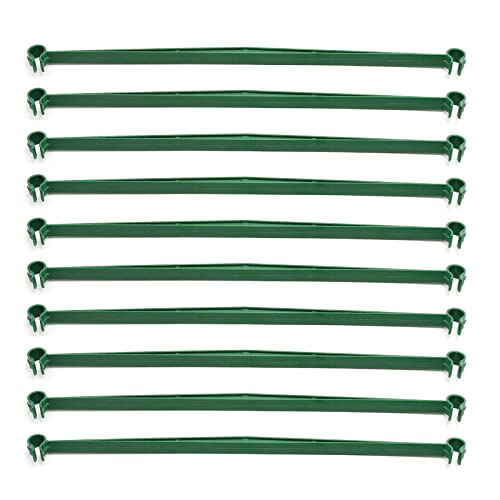
Expandable Stake Arms: Tomato cage connectors support clips are made of sturdy plastic material, strong and lightweight
Secure Plants With Soft Ties
How do you tie up an eggplant without damaging it? The right tying technique makes all the difference.
- Use garden twine or soft, adjustable ties that won’t dig into stems
- Secure plants below stems—never at the fruit itself
- Leave slack in your ties to let growth happen naturally
- Re-tie regularly as plants get heavier and taller
The critical concern is preventing girdling, which strangles your plant as it matures. Keep ties loose enough to slip a finger underneath. This approach allows your stakes to support the plant without restricting growth. Your eggplants stay upright and productive.

15-SECTION NATURAL WOODEN LADDER:Crafted from 15 pieces of durable, natural wood, this wooden ladder plant trellis offers strong and rust-free support for your indoor and outdoor climbing plants. The smooth wood finish promotes healthy vine growth while adding a touch of natural elegance to your space.

Small Trellis - Length: 10.2"/26 cm; Upside width: 6.1"(15.5 cm); Underside width: 2.2"(5.5 cm), perfect indoor plant trellis. Dark green makes it invisible for beauty
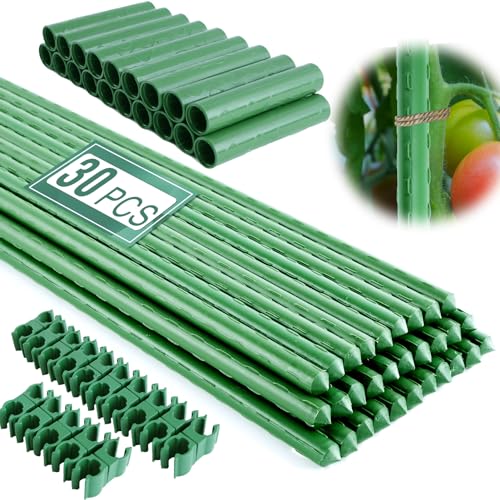
[DURABLE AND STURDY] Crafted from robust hollow steel, this garden stakes features a fade-resistant green plastic coating, offering reliable protection against wind, rain, and rust. With anti-slip ridges, it's easy to tie on plant ties, aiding in plant climbing. the pointed bottom design of tomato stakes enables effortless soil insertion, ensuring a secure anchoring effect with minimal effort
Add Higher Support as Plants Grow
As your eggplants shoot up like they’re competing in a height contest, you’ve got to raise those supports right along with them, like a growing kid needing bigger shoes. Add new tie points every 12 to 18 inches of growth, moving them higher on the stake or trellis to keep the stems from doing that frustrating lean-and-sag thing when those heavy fruits show up. This approach is far less stressful on your plants than suddenly yanking them upright mid-season.

[Material] The set is made from Polyester, color as picture showes; Package includes: necktie & pocket square, with a gift box

Perfect Size: Whole length is approx 10m/32.8ft, Package contents:10 PCS tomato support hooks.

Vesuvio Napoli Collection Brand Mens NeckTie.
Adjusting Support Height
Why do eggplants keep growing even after you’ve staked them? They’re ambitious little plants, kind of like me at a buffet. As your eggplants shoot upward, you’ll need to adjust your support height regularly. Follow these steps:
- Tie stems to center stakes first, securing them gently
- Raise twine or trellis sections every 2–3 weeks as plants grow
- Keep fruits suspended off the ground to prevent branch breakage
- Plan for 6–7 foot indeterminate varieties by using extendable stakes
I learned this the hard way after watching heavy fruit pull my branches down like sad spaghetti. Don’t wait until disaster strikes. Incremental adjustments protect developing fruits while maintaining airflow. Regular support adjustments prevent structural failure and reduce disease pressure from fruit contact with soil.
Managing Vertical Growth
When does your eggplant finally stop reaching skyward. Your plants will keep growing taller, heavier with fruit, and increasingly wobbly if you’re not ready. Initial stakes or trellising aren’t enough; you’ve got to keep adjusting as they climb. Start with supports at transplanting, then raise ties higher as stems push past previous heights. For taller varieties, install 4–6 foot stakes early and add extra ties or panels higher up. Use elastic ties that stretch with growth without strangling stems. Regularly inspect everything, adjusting to keep stems straight and allowing air around developing fruit. Just as a growing teenager outgrows their clothes, your eggplants outgrow their supports.
Supporting Single Plants: Simple Staking Techniques
Got a sprawling eggplant that’s threatening to flop over like a noodle. Simple staking techniques will keep your plants standing tall.
Here’s what to do:
- Drive a 4 to 6-foot stake 6 to 8 inches deep, placing it 1 to 2 inches from your plant
- Use garden twine or old pantyhose to tie below the stems, leaving plenty of slack for growth
- Avoid tight bindings that’ll strangle your plant. Use a gentle approach rather than a vice grip.
- Re-tie as your eggplant grows, adjusting for wind and those heavy fruits developing
This approach keeps your plants upright without fuss. One stake per plant works perfectly for most situations. Your eggplants will produce beautiful, accessible fruit that’s easy to harvest.

LONG AND THICK ENOUGH - Long: 656 Feet Thick: 2mm Very durable, you can use our jute twine for a long time

Includes 4 x 28 inch moss pole, 2 x 6.6 feet jute ropes, 2 x green tape,which make it easy to attach your climbing plants to the poles.
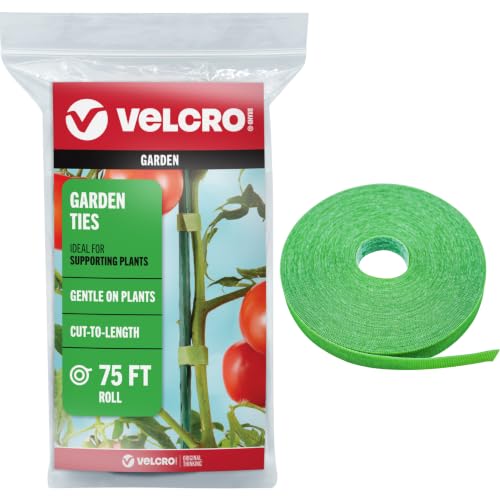
SECURE AND DURABLE: Strong Velcro Brand One-Wrap Garden Ties With Non-Slip Grip Keeps Flowers And Plants Staked, Supported, And Securely Bundled Together
Supporting Row Plantings: Multi-Plant Systems
How do you keep an entire row of eggplants from collapsing into a tangled mess? A solid multi-plant support system is your hidden weapon.
I use two sturdy wooden stakes per bed row, drilled with holes spaced 6–8 inches apart and about 1.5 inches wide. Then comes the jute twine. I thread it through those holes and tie it securely at each end, creating taut lines, either crossed or parallel, that run the length of your row.
Space your two plant rows roughly a foot apart. As your eggplants grow taller, I keep adding higher twine levels to maintain those upright stems. This setup improves airflow, keeps fruit off the ground, and prevents sag during windy weather. Your plants will benefit from proper support.
Harvest Easier With Staked Eggplants
When I stake my eggplants, finding those ripe, glossy fruits becomes almost embarrassingly easy since they’re elevated and visible instead of hiding under a leafy mess. I can reach in without doing awkward yoga moves or destroying my back, and I can actually see what needs pruning versus what’s ready to pick, which saves me from accidentally snapping off stems or harvesting green fruits too early. Your knees and your harvest will benefit once you realize how much smoother picking becomes when everything’s organized vertically instead of sprawled across the ground like a teenager’s bedroom.
Spotting Ripe Fruits Easily
Why do I keep finding eggplants hiding under their own leaves like they’re playing the world’s most annoying game of hide-and-seek? When I stake my eggplants, visibility transforms everything. Here’s what changes:
- Ripe fruits sit exposed at eye level instead of buried in foliage
- Color shifts from green to deep purple become instantly obvious
- Size maturity shows clearly without hunting through dense leaves
- Harvest timing improves dramatically when you can actually see what’s ready
Staking lifts those heavy fruits away from the tangle of stems, so I’m not crouching around like a detective anymore. I spot that glossy, deep-purple skin from across the garden. No more surprises of overripe eggplants I’d completely missed. Your harvest becomes faster, cleaner, and far less frustrating when your plants cooperate with visibility.
Accessing Plants Without Bending
There’s nothing quite like the relief of harvesting eggplants without turning into a contortionist. When I stake my eggplants, I give myself a gift: no more bending, twisting, or groaning.
Staked plants offer serious stability and harvestability. Your eggplants grow upright instead of sprawling everywhere, which means ripe fruits dangle at eye level rather than hiding in a leafy jungle near your ankles. Position your stakes at transplanting time, when plants are young and roots aren’t established yet.
As they grow, adjust ties loosely. Make them snug enough for support, loose enough that stems breathe. This setup transforms harvest day from a back-breaking chore into something you’ll actually enjoy. Your knees will benefit.
Pruning and Picking Efficiently
How do you actually get those heavy eggplants off the plant without snapping branches. Use this approach to harvest effectively:
- Use pruning shears to detach fruit with a short stem attached
- Never yank by hand, as this causes damage
- Remove excessive side shoots early to improve airflow
- Stake plants firmly so they don’t topple under fruit weight
Staking matters tremendously. When you tie eggplants to stakes early, harvesting becomes easier because branches stay sturdy and accessible. Focus your pruning energy on just a few main fruit-bearing stems, and you’ll redirect the plant’s power exactly where you want it. Pick when skin’s glossy and seeds are still immature. Proper support in place reduces frustration during harvest.
Troubleshooting: Common Staking Mistakes
When you’re staking eggplants, it’s shockingly easy to mess things up. The biggest culprit? Tying knots too tight. I’ve watched gardeners cinch those twine ties like they’re securing a boat in a hurricane, essentially strangling the poor plant. Your knot should be snug but loose enough to slide a finger underneath. Think of it as a gentle hug, not a chokehold.
Another blunder: forgetting to adjust ties as plants grow. That stake you drove 1 to 2 inches from the stem in June will strangle branches laden with heavy fruit by August. Check your ties monthly. Slack matters too. Leave wiggle room for growth, or you’ll watch stems snap despite your best support efforts. Monthly tie adjustments and proper slack prevent stem damage and allow the plant to develop naturally.