

A cleaning schedule that matches what the household actually generates keeps most rooms handled in under 20 minutes a day instead of losing entire weekends to catch-up sessions.
The part people get wrong is frequency: they assign tasks based on what sounds reasonable rather than what the floors, counters and laundry actually demand, so the schedule fails within a month when a weekly chore turns out to need attention twice a week or a daily task only matters every few days.
1. Walk Through the Home and List What Actually Needs Cleaning
Walk Through the Home and List What Actually Needs Cleaning
Start by walking through the house room by room, treating it like an inspection.
Stop in each space and notice what works and what doesn’t. If clutter overwhelms a room, set a date to declutter it before you plan the cleaning schedule.
Write down every cleaning task you wish you could accomplish, and be specific. Instead of "dusting," break it into dust furniture, dust moldings, dust lampshades and fixtures.
Consider the size of the home, the number of people living there, and your lifestyle.
Pet owners and households with children face different challenges than a single renter in a studio. This assessment shapes which tasks matter most and how often they need attention.
Define what clean actually means for your household.
Is it a spotless kitchen sink, fresh bathrooms, or laundry never piling up? Write those priorities down.
That list becomes your cleaning checklist and keeps expectations realistic. Knowing what cleanliness looks like for you makes it possible to maintain the home without losing your weekends to it.
2. Group Tasks by Room, Frequency, or Type of Work
Once the list exists, the work splits into manageable pieces.
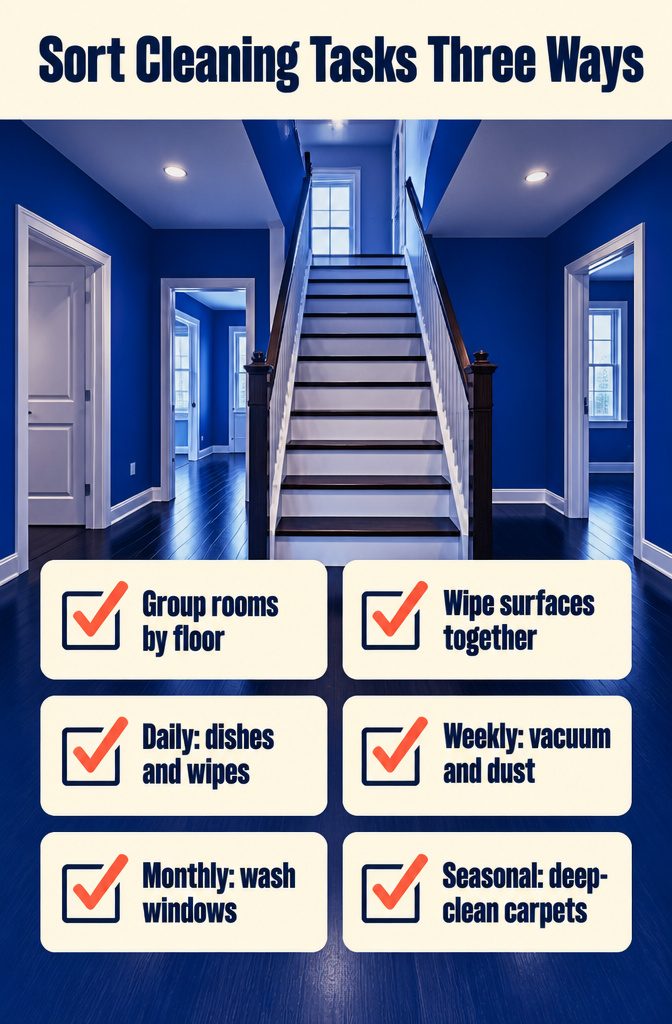
I sort first by room or by floor if the house has more than one level — dusting the living room, the bedrooms and the office becomes one line rather than three, and grouping by floor means I finish one level before moving to the next instead of climbing stairs all morning.
Then I sort by the kind of work: wiping surfaces goes with wiping surfaces, vacuuming with vacuuming, even if they happen in different rooms.
The last cut is frequency.
Daily tasks like dishes and surface wipes stay separate from weekly ones like vacuuming and dusting, and those stay separate from monthly work like washing windows. Seasonal or annual jobs — deep cleaning carpets, say — get their own category.
Some people add a layer for importance or estimated time, but starting with room, type and frequency gets most of the sorting done and makes the schedule easier to test.
3. Assign Each Task a Frequency That Fits the Household
Decide how often each chore needs doing based on what the household actually generates: a solo apartment with hardwood might get by vacuuming every ten days, while a house with kids and carpet can need it twice a week.
The weekly house cleaning checklist is a useful starting point for what typically gets cleaned once a week — toilets, kitchen counters, dusting — but treat the frequency as negotiable.
One person’s weekly mopping is another’s every-other-week job, and comfort with grime varies more than any template admits.
Once the frequency is set, assign tasks to specific days that match energy and commitments.
Some households knock out all cleaning on Saturday morning; others spread it across the week and keep weekends clear. Consider who else can share the work, when motivation runs highest, and what other obligations already fill certain days.
There is no universally correct schedule. Build a rhythm that holds up against the actual week, not an ideal one.
4. Rank by Impact and Break Large Jobs Into Smaller Ones
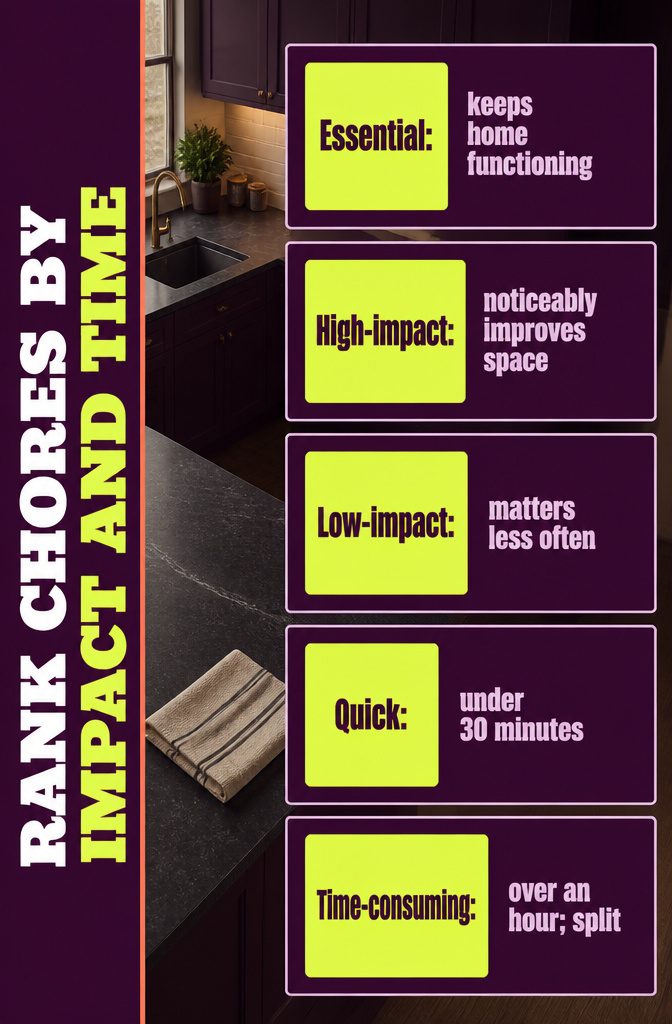
Once you have a list of tasks, sorting them by merit and time keeps the schedule realistic. The WSAHM Matrix splits work into three levels of merit: essential, high-impact, and low-impact.
Essential tasks are the ones that keep the house functioning at minimum, high-impact tasks are the ones that noticeably improve how the space feels, and low-impact tasks are things that matter less often or to fewer people.
Each task also gets a time estimate: quick takes less than 30 minutes, time-notable runs about an hour, and time-consuming stretches past an hour.
Most tasks should land in the quick or time-notable range.
When several sit in the time-consuming category, break them into smaller pieces so no single block feels overwhelming. Doing the dishes becomes emptying the dishwasher, loading it, wiping the counters, and clearing the table.
Each piece fits into a different slot during the week, and none of them eat up an entire afternoon. Breaking large chores into manageable chunks makes the whole system easier to start and easier to stick with.
5. Write the Schedule Down and Assign Chores to Household Members
Once you’ve built a routine, write it down. A checklist or calendar keeps the plan from drifting, and it helps the rest of the household see what they’re responsible for without having to ask.
I fill out a printed cleaning schedule with daily and weekly slots, then check it each morning to see what’s on for the day.
Some people use an app like Tody to assign chores and track what’s due, especially if multiple people share the work.
Splitting the load makes a bigger difference than most of us expect.
Four sources back sharing chores among household members, and one suggests matching tasks to what each person prefers or does well. A kid who likes organizing might take the coat closet; someone who doesn’t mind repetition can load the dishwasher.
When I allocate tasks, I write each person’s name next to their assigned chore on the schedule, so there’s no confusion about who’s handling what.
For younger children, a chore chart they can personalize turns the list into something they want to use.
6. Try It, Shift What You Miss, and Adjust as Life Changes
Try the schedule for a few weeks, then move any missed work to the next available slot rather than abandoning the whole plan.
Shift a forgotten weekly bathroom scrub to the following day or swap two rooms if one took longer than expected. Keep the system running instead of starting from scratch every time something slips.
After a month or two, patterns show up. A task marked weekly might actually need attention twice a week, or a chore you thought belonged on the daily list turns out to be fine once every few days.
Adjust the frequency based on what the household actually directs at the floors, counters, and laundry rather than what sounded reasonable on paper.
Life changes the requirements. A new pet, a toddler who starts walking, a roommate who moves out, or a schedule shift at work all mean the cleaning load moves with it.
Revisit the list every few months and rebalance timing or expectations to match the current household instead of the one you planned for six months ago.
Why a Written Checklist Helps You Stay on Track
I write cleaning tasks down because I forget which bathroom I already scrubbed and which bedroom got skipped.
A physical list or a digital checklist sitting where I see it keeps me from wandering off track or doing the same room twice.
Every cleaning routine guide I read recommended putting the schedule somewhere visible.
Some people tape a printable to the fridge, some set up a checklist app that pings reminders. The format matters less than the fact that the plan exists outside your head.
When the task is written down, you look at it, check it off, and move to the next line instead of standing in the kitchen wondering what comes next.
A checklist also stops you from cleaning the same high-traffic zones over and over while the guest bathroom collects dust for a month.
The act of writing forces you to decide what gets done and when, and once that decision is made, you follow the list instead of reinventing the routine every Saturday morning.
How Breaking Chores Into Smaller Tasks Makes Cleaning Manageable
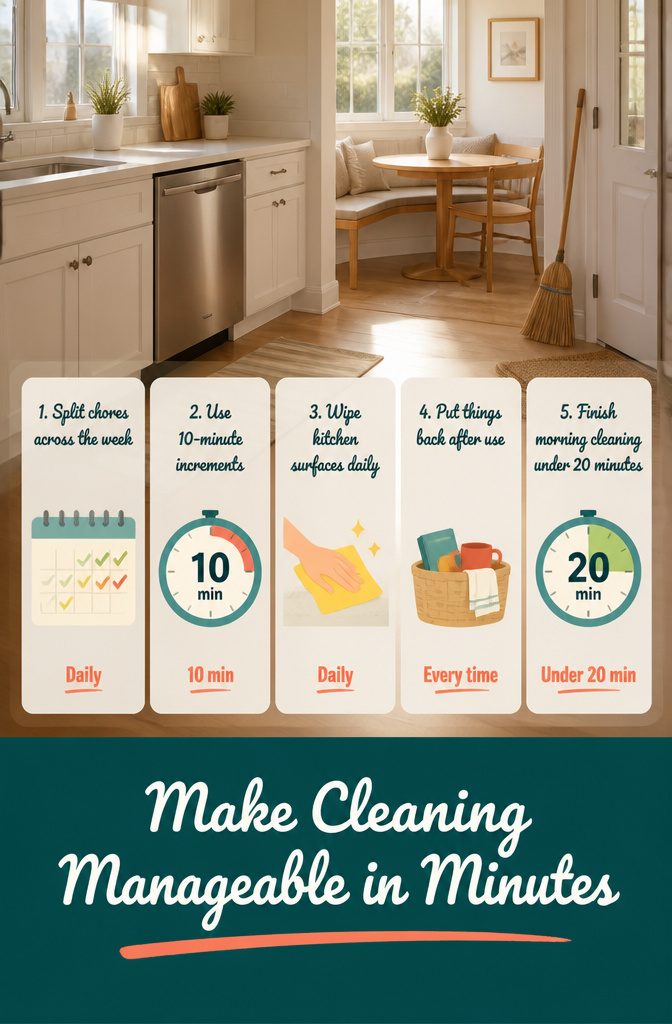
The difference between staying on top of the house and surrendering to a whole-day cleaning marathon comes down to splitting work across the week rather than saving it all for one session.
Sources frame routines around 10-minute increments, which means you can empty the dishwasher between calls, wipe down the bathroom sink before you turn on your phone, or sweep the entryway while dinner simmers.
One source finishes morning cleaning in less than 20 minutes because the work gets done in batches instead of piling up.
Small recurring tasks prevent buildup better than intensive sessions do.
Wiping down kitchen surfaces daily keeps grease from hardening into a scrubbing job. Making the bed and putting things back after use cuts clutter before it spreads.
You trade the overwhelming Saturday for a few minutes most mornings, and the house stays cleaner longer because dirt never gets the chance to settle in. The work feels manageable because it actually is manageable.
Sample Weekly Schedules and Room-by-Room Task Examples
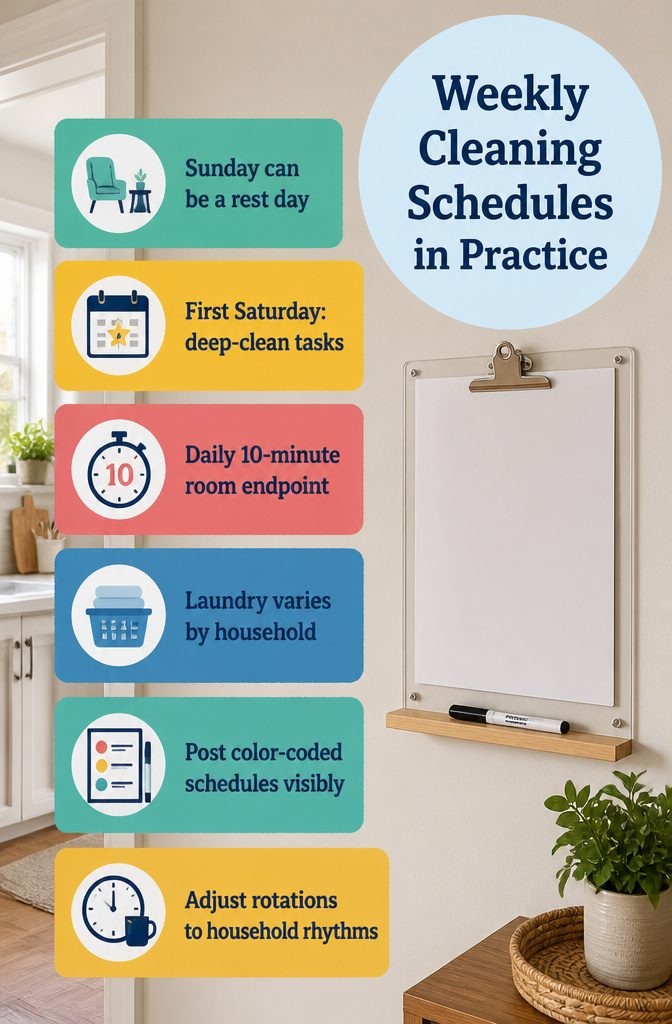
Most sources break the week into days, each claiming a room. Here’s what that looks like in practice:
- Monday through Sunday with a rest day built in: kitchen and dining on Monday, bathrooms Tuesday, bedrooms Wednesday, living areas Thursday, floors and dusting Friday, deep tasks Saturday, Sunday off.
- First Saturday of the month reserved for deep cleaning: that’s when the oven, baseboards, and overlooked zones get their turn rather than sitting on a someday list that never comes.
- Monday rotation centered on kitchen and dining: the space that sees the most traffic starts the week, bathrooms follow on Tuesday.
- Daily 10-minute increments instead of marathon sessions: one room, one surface, one clear endpoint before moving on.
- Laundry folded into the master list by day: some schedules assign it to a single weekday, others spread loads across the week depending on sports schedules and who’s home.
- Color-coded tracking systems and dry-erase sheet protectors: readers report posting schedules on walls where they’ll see them, highlighting priorities day by day, and not beating themselves up when a task slips to the next rotation.
The patterns don’t match across sources because no two households keep the same rhythm. One schedule has vacuuming at 5:30 a.m. with coffee, weekly chores after kids leave for school, monthly tasks after lunch.
Another adjusts the whole rotation around a partner’s days off. The structure matters more than the specific assignments.
Frequently Asked Questions
How do I organize cleaning tasks?
Walk through your home room by room and write down every cleaning task that needs doing, being specific about what each involves. Group tasks by room, type of work, and how often they need doing (daily, weekly, monthly).
Assign each task a frequency that fits your household’s actual needs, write the schedule down, and adjust it after a few weeks based on what you actually complete.
What should I remove first when decluttering?
Set a date to declutter any room where clutter overwhelms the space before you plan the cleaning schedule for it.
Clearing clutter first makes it possible to see what actually needs cleaning and prevents you from organizing around mess that shouldn’t be there.
Can I adjust the schedule if I miss a day?
Yes. Move any missed work to the next available slot rather than abandoning the whole plan.
Shift a forgotten task to the following day or swap two rooms if one took longer than expected, and keep the system running instead of starting over.
How do I involve my kids in the cleaning schedule?
Assign age-appropriate tasks and match chores to what each child prefers or does well.
Write each person’s name next to their assigned task on the schedule so there’s no confusion about who handles what. A chore chart kids can personalize turns the list into something they want to use.
What cleaning supplies should I keep on hand?
Keep an all-purpose cleaner, microfiber cloths, sponges, a broom, a mop, and gloves accessible. Having supplies ready in the rooms where you use them cuts the time spent hunting for what you need mid-task.
How do I stay motivated to stick to the schedule?
Set small, achievable goals and keep the schedule visible where you’ll see it. Involve the rest of the household so the work is shared, and remind yourself that staying on top of cleaning in short bursts frees up your weekends.
What if my cleaning needs change over time?
Revisit the list every few months and rebalance timing or expectations to match the current household.
A new pet, a toddler who starts walking, a roommate who moves out, or a work schedule shift all mean the cleaning load moves with it.